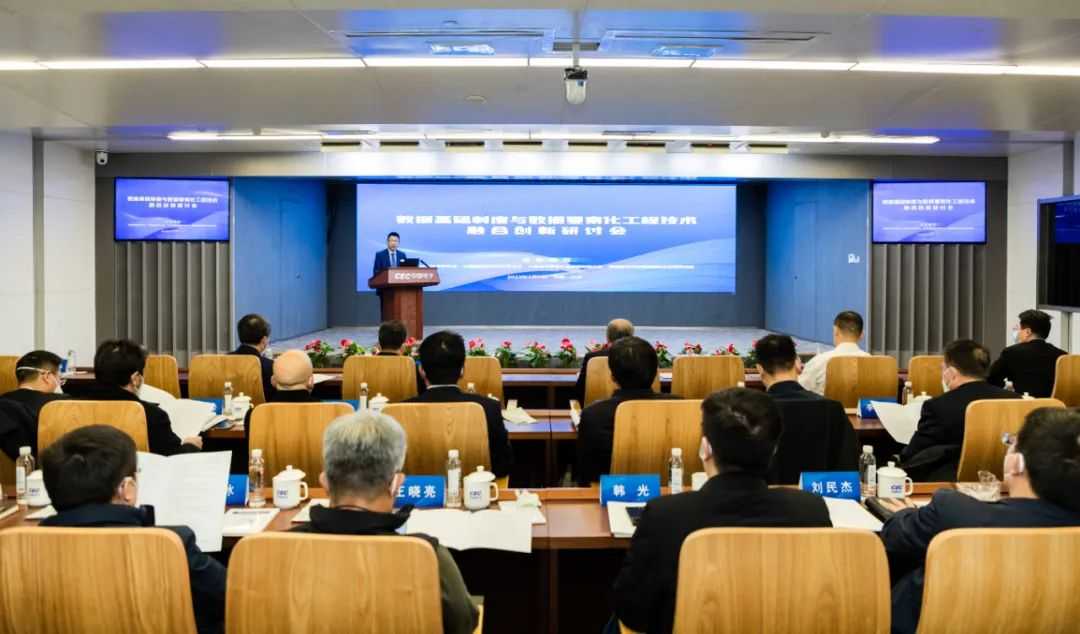
1月7日,为深入学习贯彻中共中央、国务院《关于构建数据基础制度更好发挥数据要素作用的意见》(简称“数据二十条”),中国电子联合中国经济体制改革研究会、中国经济改革研究基金会在北京共同主办“数据基础制度与数据要素化工程技术融合创新研讨会”。本次研讨会邀请国家发展改革委员会有关部门负责同志对“数据二十条”进行深入解读,中国电子正式发布数据基础制度与数据要素化工程技术融合创新成果。中国电子党组书记、董事长曾毅,国家发改委原副主任、中国经济体制改革研究会会长彭森出席会议并致辞。
曾毅指出,“数据二十条”为后续数据要素的实践和探索指明了方向、提供了遵循,也必将对深入推进数字经济发展和数据要素市场化配置改革产生积极而又深远的战略影响。中国电子围绕打造国家网信事业核心战略科技力量,超前布局数据安全与数据要素化体系性研究与实践,成立了中央企业首家数据产业集团。中国电子将以这次交流研讨为契机,深入学习党中央关于数据要素的重要要求,深入了解地方省市数据领域的实际需要,发挥自身的平台、产业、产品、技术、人才等优势,进一步丰富完善数据安全和数据要素化工程方案,深入推进工程实践,打造面向部委、地方政府、央企的数字化服务平台,为显著提升国家数据安全保障能力和数据要素市场化配置能力、做强做优做大数字经济作出更大贡献。
彭森指出,“数据二十条”系统性布局了数据基础制度体系的“四梁八柱”,绘制了数据要素发展的长远蓝图,具有里程碑式的重要意义。近年来,中国电子联合清华大学成立数据治理工程联合研究院,也联合中国经济体制改革研究会、中国经济研究改革基金会成立数据要素市场化配置综合改革研究院,研发了以工程化、技术化路径落实数据基础制度的创新方案,得到了多位院士及专家的好评,地方试点运行良好。我们要贯彻落实好数据基础制度,加强相应关键技术攻关与突破,下一步结合研究和试点的推进,不断调整完善工程化方案,为落实数据基础制度做出新的更大贡献。
国家发展和改革委员会有关部门负责同志以《加快构建中国特色的数据基础制度》为主题,体系化地介绍了“数据二十条”出台的背景、意义和主要内容,强调“数据二十条”是一次理论和制度创新,为我国加快构建数据要素基础制度、更好发挥数据要素作用描绘了清晰蓝图;着重就数据产权、流通交易、收益分配、安全治理四个方面制度内容做了全面、系统、透彻的解读;在下一步工作安排上,将围绕健全配套政策和法规、推进实施试点示范、培育数据要素市场、夯实数据要素基础设施、强化数据要素高质量供给、加强工作整体统筹力度等六方面系统推进。同时指出,“数据二十条”的出台只是一个起点,还有很多制度细化工作需要不断摸索、持续完善,并在实践的基础上推进立法等工作。
中国电子党组成员、副总经理陆志鹏重点阐述了以构建数据基础制度为引领、推动数据要素化的三大关键工程技术体系,包括原始数据与数据应用解耦技术体系、数据要素(元件)加工与交易技术体系、数据安全技术体系,并发布了面向城市和行业的数据基础制度与数据要素化工程技术融合创新成果,包括数据金库、数据创新中心和安全可信数据空间三大产品。
中国电子数据产业集团筹备组组长杨林介绍中国电子数据产业集团发展战略,清华大学公共管理学院教授、博士生导师,教育部“长江学者”特聘教授、清华大学-中国电子数据治理工程联合研究院院长孟庆国对德阳数据要素化工程实践案例启示进行介绍。
圆桌研讨环节由中国经济体制改革研究会副秘书长、中国经济改革研究基金会秘书长石明磊主持,清华大学智能法治研究院院长、法学院教授申卫星,吉林省政务服务和数字化建设管理局局长宋刚,广东省政务服务数据管理局副局长熊雄,安徽省数据资源管理局副局长王爱学,四川省大数据中心副主任何雨,贵安新区党工委管委会委员、副主任毛胤强,中汽创智汽车行业专家付东红等来自地方、行业和高校的领导专家就落实数据基础制度方面的好经验、好做法展开研讨。来自德阳、郑州、成都、温州、合肥、贵阳、杭州、福建等省市代表也就相关工作计划与需求积极踊跃发言。
活动由中国电子总经理助理朱立锋主持,集团公司、中国经济体制改革研究会、中国经济改革研究基金会有关负责同志、地方政府代表、专家学者代表等参加活动。
翻译:
On January 7th, in order to further study and implement the Opinions of the CPC Central Committee and The State Council on Building a Data Based System to Better Play the Role of Data Factors (referred to as the “Twenty Data Articles”), China Electronics. China Economic System Reform Research Society and China Economic Reform Research Foundation co-hosted the “Data Based System and Data Factors Engineering Technology Integration Innovation Seminar” in Beijing.
This seminar invited the relevant departments of the National Development and Reform Commission to give an in-depth interpretation of “Article 20 of Data”. China Electronics officially released the innovation results of the integration of data basic system and data factor engineering technology. Zeng Yi, Secretary of the Party Leading Group and Chairman of China Electronics, Peng Sen. Former Deputy director of the National Development and Reform Commission and President of the China Society of Economic Restructuring attended the meeting and addressed.
“Article 20 Data”
Zeng Yi pointed out that “Article 20 of Data” points out the direction and provides guidelines for the subsequent practice and exploration of data elements.
And will also have a positive and far-reaching strategic impact on further promoting the development of digital economy and the reform of market-oriented allocation of data elements. Centering on building the core strategic scientific and technological force of the national network and information industry. China Electronics advanced the systematic research and practice of data security. And data factionalization, and established the first data industry group of the central enterprise.
China Electronics will take this exchange and discussion as an opportunity to deeply study the important requirements of the CPC Central Committee on data elements. Deeply understand the actual needs of local provinces and cities in the data field, give full play to its own advantages in platforms, industries, products, technology and talents. Further enrich and improve data security and data factor engineering programs, and further promote engineering practices. We will build a digital service platform for ministries, local governments and central soes, and make greater contributions to significantly improving national data security capabilities and market-based allocation of data elements, as well as strengthening, optimizing and expanding the digital economy.
Penson pointed out that “Article 20 of Data” systematically laid out the “four beams and eight pillars” of the basic system of data and drew a long-term blueprint for the development of data elements.
Which is of landmark significance. In recent years, China Electronics established the Joint Research Institute of Data Governance Engineering in collaboration with Tsinghua University. And the Comprehensive Reform Research Institute of Market-oriented Allocation of Data Elements in collaboration with China Society of Economic Restructuring and China Foundation for Economic Research and Reform.
The Institute has developed innovative plans for implementing the data base system through engineering and technicalization. Which have been well received by many academicians and experts. Local pilot programs are working well. We should implement the data base system well, strengthen the relevant key technology research and breakthrough. The next step combined with the promotion of research and pilot, constantly adjust and improve the engineering program, to make new and greater contributions to the implementation of the data base system.
National Development and Reform Commission relevant departments responsible comrade stressed
Senior officials from relevant departments of the National Development and Reform Commission systematically introduced the background. Significance and main contents of the “Article 20 of Data” under the theme of “Accelerating the Construction of a Basic Data System with Chinese Characteristics”, stressing that the “Article 20 of Data” is a theoretical and institutional innovation. It also draws a clear blueprint for constructing the basic system of data factors and making better use of the functions of data factors.
Emphasis on data property rights, circulation transactions, income distribution, security governance four aspects of the system content to do a comprehensive, systematic. Thorough interpretation; In terms of the next work arrangement, systematic progress will be made in six aspects. Including perfecting supporting policies and regulations, promoting the implementation of pilot demonstration, cultivating data factor market, consolidating data factor infrastructure, strengthening the high-quality supply of data factor. And strengthening the overall coordination of work. At the same time. It is pointed out that the introduction of “Article 20 of Data” is just a starting point. And there are many detailed work of the system needs to be explored and improved continuously. And legislation and other work should be promoted on the basis of practice.
Three key engineering technology systems
Lu Zhipeng, a member of the Party Leading Group and vice general manager of China Electronics. Focused on the three key engineering technology systems that take the construction of data basic system as the guide and promote data factor. Including the decoupling technology system of raw data and data application. The processing and trading technology system of data elements (components), and the data security technology system. And released the city and industry oriented data basic system and data factor engineering technology integration innovation results. Including data vault, data innovation center and safe and trusted data space three products.
Yang Lin, head of the preparatory Group of China Electronic Data Industry Group. Introduced the development strategy of China Electronic Data Industry Group. Meng Qingguo, professor and doctoral supervisor of School of Public Administration of Tsinghua University, distinguished professor of “Changjiang Scholar” of Ministry of Education. And dean of the Joint Research Institute of Tsinghua University-China Electronic Data Governance Engineering, introduced the enlightenment of the practical case of Deyang data factor engineering.
Round table discussion
The roundtable discussion was hosted by Shi Minglei. Deputy Secretary General of China Society of Economic Restructuring and Secretary General of China Economic Reform Research Foundation; Shen Weixing. Director of Intelligent Rule of Law Institute of Tsinghua University and Professor of Law School. Song Gang, Director of Jilin Provincial Government Service and Digital Construction Administration Bureau. Xiong Xiong, Deputy Director of Guangdong Provincial Government Service Data Administration Bureau; Representatives from Deyang, Zhengzhou, Chengdu, Wenzhou, Hefei, Guiyang, Hangzhou, Fujian and other provinces and cities also spoke actively on relevant work plans and needs.
The activity was presided over by Zhu Lifeng, assistant general manager of China Electronics. Relevant leaders of the Group company, China Society of Economic Restructuring, China Economic Reform Research Foundation. Representatives of local governments, experts and scholars participated in the activity.
本文由数字化转型网(www.szhzxw.cn)转载而成,来源:CEC中国电子;编辑/翻译:数字化转型网宁檬树。

免责声明: 本网站(http://www.szhzxw.cn/)内容主要来自原创、合作媒体供稿和第三方投稿,凡在本网站出现的信息,均仅供参考。本网站将尽力确保所提供信息的准确性及可靠性,但不保证有关资料的准确性及可靠性,读者在使用前请进一步核实,并对任何自主决定的行为负责。本网站对有关资料所引致的错误、不确或遗漏,概不负任何法律责任。
本网站刊载的所有内容(包括但不仅限文字、图片、LOGO、音频、视频、软件、程序等) 版权归原作者所有。任何单位或个人认为本网站中的内容可能涉嫌侵犯其知识产权或存在不实内容时,请及时通知本站,予以删除。