两年多以前,沃尔玛在中国市场开始发力开展电商和数字化,加速度的数字化带来很多新变化。其在门店推行的“扫玛购”小程序目前拥有高达2000万活跃用户,是中国市场小程序用户最多的零售商,也因此荣获2018年数字化转型与创新评选“年度数字化服务典范”奖。
《首席数字官》采访了沃尔玛中国电商及科技高级副总裁霍斯博 (Ben Hassing),由于其过去几年在沃尔玛中国数字化推进的的成绩,他也获选2018年“数字化贡献人物”奖项。
1年半以前,在沃尔玛工作了20多年的霍斯博 (Ben Hassing)上任沃尔玛中国电子商务及科技高级副总裁。
与《首席数字官》见到的,他在2018中国数字化转型与创新案例大会演讲时西装革履的装束不同,平日里,他和团队伙伴最通常的打扮是穿着运动鞋和T恤。这很符合目前他们的工作状态。

图片来源:首席数字官
“我们要奔跑着去解决问题,非常快速地去用数字化创新推动在本地市场的零售变革。”
事实上,在美国零售巨头沃尔玛50多年的发展历史中,一直以创新能力、技术领先闻名。但在两年半之前,沃尔玛中国还没有电商业务,面对中国市场互联网和电商的飞速发展,沃尔玛中国当时面临巨大的挑战——如何缩短在市场上和同行的差距。
现在,沃尔玛中国看起来已经找到了自己的感觉。以业绩指标举例,中国沃尔玛在过去十年的增长是最快的,增长主要来自电子商务板块,并且,电子商务的增长几乎100%是由数字化创新直接驱动的。
同时,在线下实体店的数字化变革方面。在2018年,沃尔玛在深圳和成都,分别开了两种业态的新型全渠道零售店:一家是大约1000多平米的小型惠选超市。另外一家,则是在12月成都新开业的新一代大卖场门店,缩小一半面积,增加更多餐饮和线下体验,两种门店,全部通过其投资的达达-京东到家,实现1小时达到家服务。
这两家全新门店是沃尔玛中国适应市场新的消费需求,利用新的数字化技术武装实体店,增加即时配送服务,改善用户体验,同时,也极大提高了传统线下门店的运营效率。
由于沃尔玛在中国门店没有在美国市场那么多,所以,着眼于满足中国消费者对于配送速度和线下门店体验的需求,沃尔玛正在试图在改变传统门店的功能——门店不仅为顾客直接提供服务,同时,还能为线上订单提供配送服务。
“在北京就有一个店,每天可以处理的O2O订单高达几千单。这只是一家门店处理的线上订单量,全国门店的业绩是非常惊人的。”
而在沃尔玛山姆会员门店无法覆盖的地区,沃尔玛还在2018年新拓展了云仓,门店的服务范围得以扩大,门店也变成了线上顾客的一个体验场所。
在沃尔玛的电商和科技部门,有一个“70-20-10理论”。10%是算法,20%是基础架构构建,而70%是关于人。这意味着,沃尔玛想成为一家以人为本、科技赋能的公司。
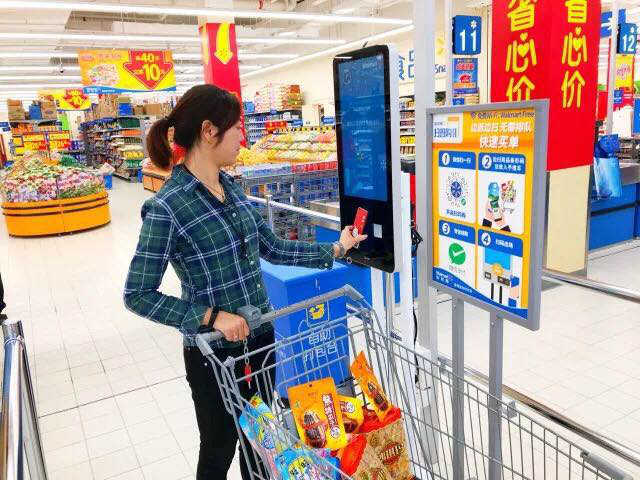
在与霍斯博的沟通中,《首席数字官》了解到,沃尔玛中国今年开始和腾讯合作,在门店推进的小程序“扫玛购”,可以让消费者自助快速结账,不必排队,同时也极大提高门店的运营效率,减少收银员配置。
通过小程序,沃尔玛在中国开始建立了自己的客户体系,实现了对“消费者”的数字化。
在沃尔玛惠选超市,用“扫玛购”数字化方式完成的交易量在单店最高渗透率可超过50%。沃尔玛是中国市场第一家宣布拥有1000万小程序用户的零售商,截止到2018年12月中旬,沃尔玛小程序已经达到了两千万活跃用户,是中国市场小程序应用用户最多的的零售商。
此外,为了实现通过技术对门店进行效率改造,提升消费者的体验。沃尔玛中国甚至引进了沃尔玛在美国总部的一个举措,建立了一个Omega 8创新平台,邀请国内本地50多家创新公司上线,为沃尔玛提供各种在技术创新上的新解决方案。
比如,如何提高门店分拣速度,如何帮助消费者简单轻松地完成自助称重……霍斯博告诉《首席数字官》:“我们希望大量挖掘这样的技术,将其规模化,去解决行业痛点,更好地服务顾客,从而打造一个良性可持续的科技创新生态系统。”
以下为霍斯博在2018中国数字化转型与创新案例大会上的主题是《数字化创新推动零售变革》演讲,《首席数字官》略有编辑和删节:
我今天要讲的就是沃尔玛零售业的故事,关于我们过去两年是如何以惊人的速度快速进行数字化变革的故事。
在全球,我们已经是一家非常有规模的公司, 但在中国,沃尔玛零售业务起步于1996年,我们在深圳开设了第一家门店。如今,沃尔玛在中国22年,开设400多家门店,包括沃尔玛大卖场和惠选超市、山姆会员商店。
在全球,沃尔玛已有50多年的历史,我自己从事零售行业也有20多年。我并不是一个有典型技术背景的人,在零售业的20多年工作经历里,我负责沃尔玛中国的科技部只有一年半的时间。在过去四年当中,沃尔玛以并购的方式将公司的整体数字化进程大幅推进。从美国到印度,先后完成20多次并购。在中国,战略合作伙伴方面,我们投资了京东,还有达达-京东到家,它们都是沃尔玛O2O战略发展的重要伙伴,我们和腾讯的合作也非常紧密。
一、始终领先 从未止步
刚才前一位演讲者提到的Glenn Habern先生,是我个人非常尊敬的一位挚友和前辈,他是世界上第一位被任命为首席信息官(CIO)的人。
事实上,在沃尔玛50多年历史中,我们是以自身的创新能力、技术领先闻名的。
早在1975年,沃尔玛建立了科技基础设施POS, UPC 。再比如,我们是第一个建立自己卫星系统的公司,从而帮助沃尔玛在当时实现实时追踪400多家门店的每一笔交易。RFID技术在2004年沃尔玛已经应用了。
在沃尔玛全球,我们还有很多行业领先的例子,包括在配送中心使用无人机、在店内使用机器人扫描货架识别缺货情况、移动支付等。在科技创新的道路上,尤其是将前沿科技应用到零售业,沃尔玛从未止步。
在这里,我更想谈谈沃尔玛在中国的举措。我们在中国市场的电商,基本上是从“1号店”开始。我也是从那时接手沃尔玛中国电子商务相关工作的。可以说,我们当时几乎是从零起步。两年半之前,我们还面临着巨大的挑战,如何缩短在市场上和同行的差距。
首先,技术团队的定位需要做出改变。
科技部在企业里不仅是一个成本中心,更是为企业提供服务和价值的部门。技术为企业带来价值,但同时,科技的使用也是需要成本的,所以,我们需要进行组织结构的去中心化。公司业务的核心职能部门,比如采购部、财务部、业务发展部、门店运营部,他们都不是十分清楚业务中蕴含着哪些科技资源。只有一个团队,有数百个项目,大家都看不到这些项目的价值所在。
我们把技术部门组织架构进行去中心化。科技部门的每一个团队都能清楚了解工程研发资源和资金,使得科技能够更好地支持公司的业务战略。
二、70-20-10:以人为本
在数字化转型过程中,我们推行的是70-20-10理论。其中,10%是算法,20%是基础架构构建,而70%是关于人。现今时代是一个完全不同的时代。不仅要考虑到生产和供给,更要考虑到消费和需求,我们需要具备数字化的思维模式。当我们谈到技术,我们从来不会说,我们要成为一家纯科技公司,我们致力于成为一家以人为本、科技赋能的公司。我们懂得,零售是关乎于人的业务,离不开人的因素,我们非常相信的一点。
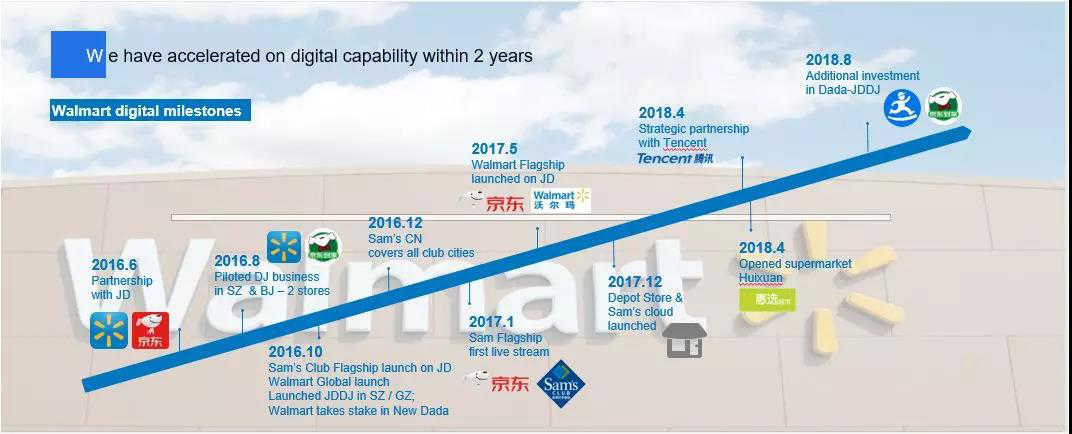
从这张演示图可以看到,沃尔玛过去两年多的发展历史和路线,我们是怎样成功地追赶上市场的速度。
其实,平时我的穿着和今天很不一样,我们团队的同事在办公室都穿T恤衫和运动鞋,因为,我们经常需要跑着去开会。我们必须要非常努力的工作,对市场上的变化做出快速地响应,才能实现我们的目标。
如果以业绩指标举例,中国沃尔玛在过去十年的增长是最快的,增长主要来自电子商务板块,并且,几乎100%是由数字化创新直接驱动的。
三、实体门店的数字化转型
让我们谈谈沃尔玛跟京东的合作。双方利用现有的基础架构、供应链和商品优势,进行互通和整合。沃尔玛在京东平台上建立了多家旗舰店,包括沃尔玛和山姆旗舰店。在跨境电商领域也有合作,通过全球购旗舰店,我们把沃尔玛美国、英国、日本、墨西哥等市场的畅销商品带给中国消费者。
在这个过程中,实体店开始发挥和过往传统门店完全不一样的作用。门店不仅为顾客直接提供服务,同时,还能为线上订单提供配送服务。
我们在北京就有一个店,每天可以处理的O2O订单高达5000多单。这只是一家门店处理的线上订单量,全国门店的业绩是非常惊人的。
实体门店在数字化转型过程中,还有一个新职能:为云仓补货,成为云仓的“母店”。在零售O2O模式里,其中一个发展瓶颈是覆盖范围。比如,达达目前所能提供的1小时送达服务,仅限于门店3公里范围内
而北京市场或者上海,地理面积非常大,有非常大的消费潜力有待挖掘,我们有足够的品牌号召力,只需要让我们的服务唾手可得。于是,在门店无法覆盖的地区我们开设了云仓,门店的服务范围得以扩大,门店也变成了线上顾客的一个体验场所。可见,店内数字化对我们至关重要。
四、数字化推进精准服务
在开展线上业务之前,我们在中国并不能准确知道我们的顾客是谁,他们走进门店,买了东西离开,整个过程我们无法知道他们是谁。每一位惠顾沃尔玛的顾客,都可以享受到天天低价的商品,之前我们为了贯彻这个政策从未推行会员制度。现在,游戏的规则发生了改变,顾客在使用数字化产品和工具中,和我们产生大量的触点和交互,从而让我们认识他们是谁。所以,数字化转型,不仅要考虑顾客体验、运营效率,还要考虑到如何深入了解顾客。
举一个例子,关于“扫玛购”小程序的应用,沃尔玛在行业一直处于领先地位。
我们是第一个突破1000万活跃用户的零售商超,在12月15日这周,沃尔玛扫玛购的用户已经达到了2000万。这是成功在全国400多家门店跨职能部门合作实现的。
数字化创新实现快速增长,不能只谈技术,更关于如何部署,关于人,关于直接接触新技术的各个岗位。他们有些是直接操作这些技术的人, 有些是负责门店防损的,有些是管理培训的,每一个岗位的人都要以非常敏捷的方式来面对数字化转型。
对比只在线下购物的人,数字化顾客在一年里花在沃尔玛的时间多出一倍。因为,在数字化工具的帮助下,他们更容易触达沃尔玛。
我们的数字化进程一直在继续,比如,我们还有个小程序要叫“找找货”。假设你在一个三层楼空间的购物中心,要买10样东西,你不知道要先去哪里找。现在我们对购物路径进行优化,顾客可以像开车时用导航一样,利用“找找货”快速找到想买的商品。另外一个例子关于购物车。在门店,过去,顾客需要投币一块钱来解锁一辆购物车,我们现在也在将此进行数字化。
五、拥抱变革 搭建创新生态系统
在中国,可以看到越来越多来自美国的游客,在用微信交流,这在以前是难以想象的,但也是我们可以充分利用的变化之一。零售业也是一部历史,我大学的专业是研究历史。20年前、30年前的时候,大家想象一下那个时候的购物车,购物车能有什么样的价值呢?
我来谈谈我们是如何从购物车得到价值的。我们在全球比价、采购,通过规模化直采降低购物车的成本。今天,在沃尔玛全球门店有500多万个购物车,用规模化采购就能节省很多成本。在下一个历史阶段,大概15年前,就是如何让购物车产生更多的商业价值,甚至能怎么用它做广告创造利润。
我们现在还在测试数字化购物车。顾客把商品放进车内,购物车就可以识别商品,让顾客获得快速结账的购物体验。
零售业有大量的基础性工作要做。零售领域还存在很多行业痛点,我们的顾客和同事每天都可能会遇到的一些难题。所以,我们在建立一个平台,叫做Omega 8。这个平台汇集了北京、上海、深圳的50多家初创企业。我们会与他们分享目前零售行业的痛点,我们的顾客和同事遇到的痛点。这些初创企业拥有能够满足其他行业需求的技术,同时也可能会适用零售行业的技术。
举个例子。大家知道,冰柜里有非常多的商品品类。比如,一个顾客来到冰柜前,从冰柜里的众多冷冻商品中翻拣出一件并拿走,这时,沃尔玛员工很难从肉眼判断冰柜中的哪些商品处于缺货状态。
假设,冰柜平时有20个商品品类,但实际上只有16个商品品类,数量差距很难用肉眼判断。所以,我们就在冰柜中放置一个商品识别设备。每当顾客打开冷冻柜门时,就会自动开启相机拍下电子影像,记录下哪个位置的哪件商品被取走了,缺货问题5分钟就能得以解决了。
这样的问题,在原来可能需要30天时间、若干员工沟通各种环节互通流程去解决,现在轻而易举地用新科技解决了。我们希望大量挖掘这样的技术,将其规模化,去解决行业痛点,更好地服务顾客,从而打造一个良性可持续的科技创新生态系统。
翻译:
More than two years ago, Walmart began to develop e-commerce and digitalization in the Chinese market, and the acceleration of digitalization has brought many new changes. The “Shaomao” mini program implemented in its stores currently has up to 20 million active users, which is the largest small program user retailer in the Chinese market, and thus won the “Annual Digital Service Model” award in the 2018 Digital Transformation and Innovation award.
The Chief Digital Officer interviewed Ben Hassing, senior Vice president of e-commerce and technology at Walmart China, who was also selected as a “Digital Contributor” in 2018 for his achievements in the digital promotion of Walmart China in the past few years.
A year and a half ago, Ben Hassing, who has worked at Walmart for more than 20 years, became senior vice president of e-commerce and technology at Walmart China.
Unlike the “Chief Digital Officer” who saw him in a suit when he gave a speech at the 2018 China Digital Transformation and Innovation Case Conference, on weekdays, he and his team partners most often dress up in sneakers and T-shirts. This is very much in line with their current state of work.
Ben Hassing, senior vice president of e-commerce and technology at Walmart China
Photo credit: Chief Digital Officer
“We’re going to run and solve problems, and very quickly use digital innovation to drive retail change in local markets.”
In fact, in the US retail giant Walmart’s more than 50 years of development history, it has always been known for its innovative ability and technological leadership.
However, two and a half years ago, Walmart China has no e-commerce business, in the face of the rapid development of the Internet and e-commerce in the Chinese market, Walmart China was faced with a huge challenge – how to shorten the gap in the market and peers.
Now Walmart China seems to have found its own feel. Taking performance indicators as an example, Walmart in China has seen the fastest growth in the past decade, mainly in the e-commerce sector, and almost 100% of the growth in e-commerce is directly driven by digital innovation.
At the same time, in the digital transformation of offline physical stores. In 2018, Walmart opened two types of new omni-channel retail stores in Shenzhen and Chengdu: one is a small selected supermarket of about 1,000 square meters. The other is a new generation of hypermarket stores newly opened in Chengdu in December, reducing the area by half, adding more catering and offline experience, both kinds of stores, all through its investment in Dada – Jingdong home, to achieve 1 hour to reach home service.
These two new stores are Wal-Mart China to adapt to the new consumer demand in the market, the use of new digital technology to arm physical stores, increase instant delivery services, improve user experience, but also greatly improve the operational efficiency of traditional offline stores.
Because Walmart does not have as many stores in China as it does in the United States
Because Walmart does not have as many stores in China as it does in the United States, it is trying to change the function of traditional stores to meet Chinese consumers’ demand for delivery speed and offline store experience – stores not only serve customers directly, but also provide delivery services for online orders.
“There is a store in Beijing that can handle up to thousands of O2O orders every day. That’s just the volume of online orders handled by one store, and the results across the country are phenomenal.”
In areas that cannot be covered by Walmart’s Sam’s Club stores, Walmart also expanded its cloud warehouse in 2018, expanding the scope of store services and turning the store into an experience place for online customers.
In Walmart’s e-commerce and technology departments, there is a “70-20-10 theory.” 10% is about algorithms, 20% is about infrastructure building, and 70% is about people. That means Walmart wants to be a people – and technology-enabled company.
In the communication with Hossbo, the chief Digital Officer learned that Walmart China began to cooperate with Tencent this year to promote the small program “sweep Ma purchase” in the store, which can allow consumers to self-checkout quickly, without queuing, but also greatly improve the operating efficiency of the store and reduce the cashier configuration.
Through the small program, Walmart began to establish its own customer system in China and realized the digitalization of “consumers”.
In the Walmart Select supermarket, the transaction volume completed by the digital way of “sweep shopping” can exceed 50% in the maximum penetration rate of a single store. Walmart is the first retailer in the Chinese market to announce that it has 10 million mini program users, and as of mid-December 2018, Walmart mini program has reached 20 million active users, making it the retailer with the most mini program users in the Chinese market.
Photo credit: Walmart China
In addition, in order to achieve efficient transformation of stores through technology, enhance the consumer experience. Walmart China even introduced an initiative of Walmart headquarters in the United States, established an Omega 8 innovation platform, invited more than 50 local innovative companies online, to provide Walmart with a variety of new solutions in technological innovation.
For example, how to improve the sorting speed of stores, how to help consumers simply and easily complete self-service weighing…
“We want to find a lot of these technologies and scale them to solve industry pain points, better serve customers, and create a benign and sustainable tech innovation ecosystem,” Hossbaugh told CTO.
The following is Hossbo’s speech at the 2018 China Digital Transformation and Innovation Case Conference on the theme of “Digital Innovation Driving Retail Change”, slightly edited and abridged by Chief Digital Officer:
So what I’m going to tell you today is the story of Walmart retail, the story of how we’ve changed digitally at an incredible pace over the last two years.
Globally, we are already a very large company, but in China, Wal-Mart retail started in 1996 when we opened our first store in Shenzhen. Today, Walmart has opened more than 400 stores in China after 22 years, including Wal-Mart Hypermarkets and select supermarkets and Sam’s Club stores.
Globally, Walmart has been around for more than 50 years, and I myself have been in retail for more than 20 years. I don’t come from a typical technical background. In more than 20 years of retail experience, I’ve only been in charge of Walmart China’s technology department for a year and a half. Over the past four years, Walmart has dramatically accelerated its overall digital drive through acquisitions. From the United States to India, has completed more than 20 mergers and acquisitions. In China, in terms of strategic partners, we have invested in Jingdong, as well as Dada – Jingdong Home, they are important partners in the development of Walmart’s O2O strategy, and we have a very close cooperation with Tencent.
Always leading and never stopping
Mr. Glenn Habern, who was mentioned by the previous speaker, a dear friend and predecessor of mine who I have great personal respect for, was the first person in the world to be appointed Chief Information Officer (CIO).
In fact, for more than 50 years of Walmart’s history, we have been known for our innovation and technological leadership.
Back in 1975, Walmart built the technology infrastructure POS, UPC. For example, we were the first company to build our own satellite system, which allowed Walmart to track every transaction in over 400 stores in real time. RFID technology was introduced at Walmart in 2004.
At Walmart Worldwide, we have many other industry-leading examples, including the use of drones in distribution centers, the use of robots in stores to scan shelves to identify out-of-stock situations, and mobile payments. On the road of technological innovation, especially the application of cutting-edge technology to the retail industry, Walmart has never stopped.
Here, I would like to talk more about Walmart’s initiatives in China. Our e-commerce in the Chinese market basically starts from the “No. 1 store”. That’s when I took over e-commerce related work at Walmart China. You could say we were starting pretty much from zero.
Two and a half years ago, we were faced with the huge challenge of how to close the gap between us and our peers in the market.
First, the positioning of technical teams needs to change.
The Ministry of Science and Technology is not only a cost center in the enterprise, but also a department that provides services and value for the enterprise. Technology brings value to enterprises, but at the same time, the use of technology is also costly, so we need to decentralize the organizational structure. The core functions of the company’s business, such as purchasing department, finance department, business development department, store operation department, they are not very clear about what technology resources are contained in the business. With one team and hundreds of projects, no one could see the value in them.
We decentralized the technology department. Every team in the technology department has a clear understanding of engineering resources and funding, so that technology can better support the company’s business strategy.
70-20-10: people-oriented
In the process of digital transformation, we implement the 70-20-10 theory. Of that, 10% is algorithms, 20% is infrastructure building, and 70% is about people. The present era is a very different one. To consider not only production and supply, but also consumption and demand, we need to have a digital mindset. When we talk about technology, we never say we’re going to be a pure technology company, we’re going to be a people-centered, technology-enabled company. We understand that retail is a people business, and we believe very strongly in the human element.
Photo credit: Walmart China
From this presentation, you can see the history and path of Wal-Mart over the past two years, and how we have successfully caught up with the market speed.
In fact, my usual dress is very different from today, my colleagues in the team wear T-shirts and sneakers in the office, because we often have to run to meetings. We have to work very hard and respond quickly to changes in the market to achieve our goals.
If you look at performance metrics, Wal-Mart in China has seen the fastest growth over the past decade, mainly in the e-commerce sector, and almost 100% is directly driven by digital innovation.
Digital transformation of physical stores
Let’s talk about Walmart’s partnership with JD.com. The two sides will leverage existing infrastructure, supply chains and commodity advantages to interconnect and integrate. Walmart has established several flagship stores on JD’s platform, including Walmart and Sam’s Flagship Store. We also cooperate in the field of cross-border e-commerce. Through the global purchase flagship store, we bring the best-selling products of Walmart in the United States. The United Kingdom, Japan, Mexico and other markets to Chinese consumers.
In this process, physical stores began to play a completely different role than traditional stores in the past. Stores not only provide direct services to customers, but also provide delivery services for online orders.
We have a store in Beijing that can handle more than 5,000 O2O orders per day. This is just the number of online orders processed by one store. And the performance of stores across the country is very impressive.
In the process of digital transformation, physical stores also have a new function: replenishment for Yuncang and becoming the “mother store” of Yuncang. In the retail O2O model, one of the bottlenecks is coverage. For example, Dada’s current one-hour delivery service is limited to a 3km radius of a store
The Beijing market or Shanghai, the geographical area is very large, there is a very large consumption potential to be tapped. We have enough brand appeal, we just need to make our services readily available. As a result, we opened cloud warehouses in areas that the store could not cover, expanding the service range of the store and turning the store into an experience place for online customers. So in-store digitalization is very important to us.
Digital promotion of precision services
Before we started our online business, we didn’t know exactly who our customers were in China. They walked into the store, bought something and left, and we had no way of knowing who they were. Every Walmart customer can enjoy everyday low prices. We have never introduced a membership system in order to implement this policy. Now, the rules of the game have changed, and customers are using digital products and tools to create a lot of touch points and interactions with us, so that we know who they are. Therefore, digital transformation should not only consider customer experience and operational efficiency, but also consider how to deeply understand customers.
For example, regarding the application of the “sweep Ma purchase” mini program, Walmart has been in a leading position in the industry.
We were the first retailer to hit 10 million active users, and in the week of December 15th, Walmart reached 20 million users. This was achieved through cross-functional cooperation in more than 400 stores across the country.
The rapid growth of digital innovation is not only about technology. But also about how to deploy it, about people, and about the various positions that directly touch the new technology. Some of them are directly operating these technologies, some are responsible for store loss prevention. Some are management training, and everyone has to face digital transformation in a very agile way.
Digital customers spend twice as much time at Walmart in a year as those who shop only offline. Because, with the help of digital tools, they can more easily reach Wal-Mart.
Our digital process is continuing, for example, we have a little program called “Find goods.” Let’s say you’re in a three-story shopping mall and you need 10 things. And you don’t know where to look first. Now we have optimized the shopping route, and customers can use “find goods” to quickly find the items they want to buy, just like they use navigation when driving. Another example is shopping carts. In stores, customers used to have to deposit a dollar to unlock a shopping cart, and we’re digitizing that now.
Embrace change and build an innovation ecosystem
In China, you can see more and more tourists from the United States using wechat to communicate, which was unimaginable before,. But it is one of the changes that we can take full advantage of. Retail is also a history. I majored in history in college. 20 years ago, 30 years ago, we imagine the shopping cart at that time. What kind of value can the shopping cart have?
Let me talk about how we get value from shopping carts. We compare prices globally, purchase, and reduce the cost of shopping carts through direct procurement at scale. Today, with more than 5 million shopping carts in Walmart stores around the world. You can save a lot of money by buying at scale. The next historical phase, about 15 years ago, was how to make shopping carts generate more commercial value, and even how to use them for advertising to create profits.
We are still testing digital shopping carts. When the customer puts the item in the car, the shopping cart can recognize the item, allowing the customer to get a quick checkout shopping experience.
There is a lot of ground work to be done in retail. There are many industry pain points in the retail space that our customers and colleagues may encounter on a daily basis. So, we’re building a platform called Omega 8. The platform brings together more than 50 startups in Beijing, Shanghai and Shenzhen. We share with them the pain points of the retail industry right now. The pain points of our customers and colleagues. These start-ups have technology that can meet the needs of other industries. But may also be adapted to the retail industry.
Here’s an example. As you know, there are many categories of goods in the freezer. For example, if a customer comes to the freezer, picks out one of the many frozen items in the freezer and takes it away. It is difficult for a Walmart employee to tell from the naked eye which items in the freezer are out of stock.
Suppose that the freezer usually has 20 product categories. But in fact there are only 16 product categories, and the quantity gap is difficult to judge with the naked eye. So, we put a product identification device in the freezer. Each time the customer opens the freezer door, the camera automatically turns on to take an electronic image. Recording which item has been taken from which location, and the problem can be solved in five minutes.
Such a problem, which may have taken 30 days and several employees to communicate various links and interworking processes to solve, can now be easily solved with new technology. We hope to excavate a large number of such technologies and scale them to solve the pain points of the industry and better serve customers. So as to create a benign and sustainable technological innovation ecosystem.
本文由数字化转型网(www.szhzxw.cn)转载而成,来源于首席数字官;编辑/翻译:数字化转型网宁檬树。

免责声明: 本网站(http://www.szhzxw.cn/)内容主要来自原创、合作媒体供稿和第三方投稿,凡在本网站出现的信息,均仅供参考。本网站将尽力确保所提供信息的准确性及可靠性,但不保证有关资料的准确性及可靠性,读者在使用前请进一步核实,并对任何自主决定的行为负责。本网站对有关资料所引致的错误、不确或遗漏,概不负任何法律责任。
本网站刊载的所有内容(包括但不仅限文字、图片、LOGO、音频、视频、软件、程序等) 版权归原作者所有。任何单位或个人认为本网站中的内容可能涉嫌侵犯其知识产权或存在不实内容时,请及时通知本站,予以删除。