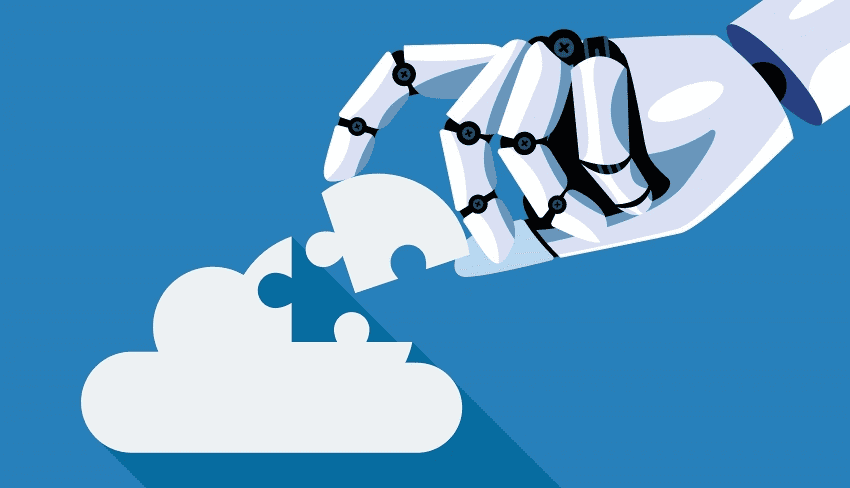
众所周知,人工智能和云计算已经彻底改变了技术。现在,这两股深刻的力量正在联合起来,重塑企业,并最终重塑我们的生活。
商业咨询公司普华永道(PwC)合伙人兼美国Microsoft业务负责人Matt Hobbs表示,云提供商正在利用自己在人工智能方面的进步来推动从供应链可预测性和代码生成到网络威胁检测和响应以及业务功能生产力的所有工作。
人工智能正在加速云计算的采用,同时也使云提供商能够增强平台解决方案和服务,德勤咨询公司负责人蒂姆·波特(Tim Potter)观察到。“大多数人工智能解决方案要么是由云超大规模企业直接提供的服务,要么是建立在超大规模企业云基础设施之上的解决方案,”他说。
云采用者通过访问超大规模企业开发的人工智能工具加速了人工智能的探索和应用,商业咨询公司West Monroe的高级合伙人Andy Sealock说。他观察到,已经在云中的企业可以轻松访问托管解决方案,以开发、测试和实施新的基于 AI 的应用程序。
Sealock指出,许多超大规模云提供商正在加入人工智能的潮流,推出一系列现成的基于人工智能的解决方案,如聊天机器人和虚拟代理,客户可以实施这些解决方案来满足业务需求,而不会产生在内部构建这些功能的时间和费用。
Sealock表示,他不会将AI和云计算之间的关系描述为变革性的,而是将两种技术协同作用,同时在增长和采用以及进化,成熟和完善方面加速。
一、AI人工智能与云计算结合带来的多重优势
在从云存储数据中提取的同时集成生成式人工智能可以带来更敏捷、更高效和响应更快的业务流程,技术研究和咨询公司 ISG 的合伙人 Alex Manders 说。“这种集成可确保根据实时数据不断完善流程,从而简化工作负载、改善资源分配并提高整体业务绩效。”
Potter预测,已经在云中的组织 – 这意味着他们的核心客户和交易数据托管在云平台上 – 将更容易利用人工智能和机器学习解决方案。“根据他们的架构,这些公司可以开始试验、评估并最终利用人工智能服务,比那些没有采用云的公司要快得多。
二、AI人工智能的需求给整个云基础设施带来了压力
对人工智能的需求给整个云基础设施带来了压力,霍布斯说。“我们看到这反映在云提供商的收益预测中,该预测显示,用于扩展和改造数据中心以及部署GPU和TPU的预计资本支出显着增加 – 这是AI所需的主要增量硬件组件。
Potter说,随着云AI技术的成熟,提供商继续推出旨在降低匝道陡峭的服务。他指出:“支持云迁移的自动化工具正变得越来越复杂,使组织能够治理和保护的平台解决方案也在不断改进。“此外,云提供商正在提供许多激励措施和投资,以帮助组织规划他们的云之旅,包括教育和提高他们的技术专业人员的技能。
Sealock观察到,超大规模云提供商现在正在推出各种即用型AI服务,例如数据提取,聊天机器人和虚拟代理以及数据异常检测。“用户可以实现这些人工智能功能,因为它们可以相对较快地解决业务问题,并且不会产生在内部构建这些功能的时间和费用。
三、人工智能云计算面临的挑战和潜在的缺点
人工智能云计算面临着开发和部署大型人工智能模型的绝对成本和能源要求的挑战,IBM研究院混合云平台和开发人员生产力副总裁Priya Nagpurkar说。她还指出,员工需要具备复杂的技能,并对核心人工智能和自动化原则(如可解释性、可靠性和安全性)有透彻的理解。
霍布斯指出,其他担忧是人工智能的幻觉和偏见,它们可能导致意想不到的后果。他认为,通过部署适当的保障措施和设计实践,可以减轻这些担忧。
Sealock警告说,将人工智能应用于云计算还可能将敏感或专有信息暴露给未经授权的人员或组织。“为了确保敏感信息的安全,应该采取额外的控制和数据保护措施,特别是考虑到正确训练人工智能引擎通常需要非常大的数据集,”他建议道。
最终,将云和人工智能结合起来的好处将超过任何缺点,Potter预测。“对于几乎所有组织来说,构建必要的计算基础设施来大规模支持人工智能工作负载本身在财务上是不可行的,也不会在各自的市场中提供竞争差异化,”他解释道。
四、展望AI人工智能与云计算结合后的未来
Nagpurkar预测,人工智能将使云采用更容易、更快、更具成本效益。“除了这些核心优势…人工智能模型可以高效、大规模地创建和部署,利用云计算的弹性、一致性和可扩展性。她补充说,人工智能还将有助于提高可消费性和可移植性,抽象层用于隐藏基础设施复杂性并简化访问,在各种环境中提供统一的体验和可移植性属性。
这是技术领域最激动人心的时刻之一,霍布斯说。“以前,人工智能的力量仅限于相对较小的数据科学家,”他指出。“创新的速度和规模,加上通过自然语言界面的广泛访问和广泛的意识,使具有各种背景的人能够展示他们的创造力。
英文原文:
How AI is Transforming Cloud Computing
Artificial intelligence and cloud computing are a natural match. Learn how this power-couple can help your organization reach new heights.
It’s no secret that artificial intelligence and cloud computing have revolutionized technology. Now, these two profound forces are joining together to reshape businesses and, ultimately, all of our lives.
Cloud providers are leveraging their own advancements in AI to drive everything from supply chain predictability and code generation to cyber threat detection and response and business function productivity, says Matt Hobbs, a partner and US Microsoft practice leader at business advisory firm PwC.
AI is accelerating the adoption of cloud computing while also enabling cloud providers to enhance platform solutions and services, observes Tim Potter, a principal with Deloitte Consulting. “Most AI solutions are either services offered directly by cloud hyperscalers or solutions built on top of a hyperscaler’s cloud infrastructure,” he says.
Cloud adopters accelerate their exploration and application of AI through access to AI tools developed by hyperscalers, says Andy Sealock, a senior partner at business consulting firm West Monroe in the firm’s IT advisory and transformation practice. He observes that enterprises already in the cloud can easily access a hosting solution for developing, testing, and implementing new AI-based apps.
Many hyperscaler cloud providers are jumping on the AI bandwagon with an array of ready-to-use AI-based solutions, such as chatbots and virtual agents, that customers can implement to address business needs without incurring the time and expense of building those capabilities internally, Sealock notes.
Sealock says he wouldn’t describe the relationship between AI and cloud computing as transformative, but rather as two technologies that are synergistic and simultaneously accelerating in terms of both growth and adoption, as well as evolution, maturity, and refinement.
Multiple Benefits
Integrating generative AI while drawing from cloud-stored data can lead to more agile, efficient and responsive business processes, says Alex Manders, a partner with technology research and advisory firm ISG. “This integration ensures that processes are continuously refined based on real-time data, leading to streamlined workloads, improved resource allocation, and enhanced overall business performance.”
Organizations already in the cloud — meaning their core customer and transactional data are hosted on cloud platforms — will have a far easier time taking advantage of AI and machine learning solutions, Potter predicts. “Depending on their architecture, these companies can begin experimenting, evaluating, and ultimately taking advantage of AI services much faster than those that haven’t adopted the cloud.”
Pressure Builds
The demand for AI is putting pressure on the entire cloud infrastructure, Hobbs says. “We see this reflected in the cloud providers’ earnings forecasts that show a significant increase in projected capital expenditures to expand and retrofit data centers and deploy GPUs and TPUs — the main incremental hardware components necessary for AI.”
As cloud AI technology matures, providers continue to introduce services designed to make the on-ramp less steep, Potter says. “Automated tooling to support cloud migration is becoming more sophisticated, and platform solutions that enable organizations to govern and secure continue to be improved,” he notes. “Additionally, cloud providers are offering numerous incentives and investments to help organizations plan their journey to the cloud, including educating and upskilling their technology professionals.”
Sealock observes that hyperscaler cloud providers are now rolling out various ready-to-use AI services, such as data extraction, chatbots and virtual agents, and data anomaly detection. “Users can implement these AI capabilities. Since they solve business problems relatively quickly and without incurring the time and expense of building those capabilities internally.”
Potential Drawbacks
AI cloud computing is challenged by the sheer cost and energy requirements of developing and deploying large AI models. Says Priya Nagpurkar, vice president, hybrid cloud platform and developer productivity, at IBM Research. She also points to the need for staff members possessing complex skills and a thorough understanding of core AI and automation principles. Such as explainability, reliability, and safety.
Additional concerns, Hobbs notes, are AI hallucinations and biases that could lead to unintended consequences. He believes that these concerns can be mitigated by deploying appropriate safeguards and design practices.
Applying AI to cloud computing can also potentially expose sensitive or proprietary information to unauthorized people or organizations, Sealock warns. “To ensure that sensitive information remains secure, additional controls and data protection measures should be put in place. Especially given the very large data sets that are often needed to train the AI engine properly,” he advises.
Ultimately, the benefits of combining the cloud and AI will outweigh any downsides, Potter predicts. “For almost all organizations, building the necessary compute infrastructure to support AI workloads at scale by themselves is not financially viable. nor would it provide competitive differentiation in their respective markets,” he explains.
Looking Ahead
AI will make cloud adoption easier, faster, and more cost-effective, Nagpurkar forecasts. “Besides these core benefits … AI models can be created and deployed efficiently and at scale, taking advantage of cloud computing’s elasticity, consistency, and scalability.” She adds that AI will also help enhance consumability and portability. With abstraction layers used to hide infrastructure complexities and simplify access, providing uniform experience and portability attributes across various environments.
Exciting times
This is one of the most exciting times to be in technology, Hobbs says. “Previously, the power of AI was limited to a relatively small set of data scientists,” he notes. “The speed and scale of innovation, coupled with broad access through natural language interfaces and widespread awareness, is allowing people with all types of backgrounds to show their creativity.”
本文由数字化转型网(www.szhzxw.cn)转载而成,来源于数智化转型网;编辑/翻译:数字化转型网默然。

免责声明: 本网站(http://www.szhzxw.cn/)内容主要来自原创、合作媒体供稿和第三方投稿,凡在本网站出现的信息,均仅供参考。本网站将尽力确保所提供信息的准确性及可靠性,但不保证有关资料的准确性及可靠性,读者在使用前请进一步核实,并对任何自主决定的行为负责。本网站对有关资料所引致的错误、不确或遗漏,概不负任何法律责任。
本网站刊载的所有内容(包括但不仅限文字、图片、LOGO、音频、视频、软件、程序等) 版权归原作者所有。任何单位或个人认为本网站中的内容可能涉嫌侵犯其知识产权或存在不实内容时,请及时通知本站,予以删除。