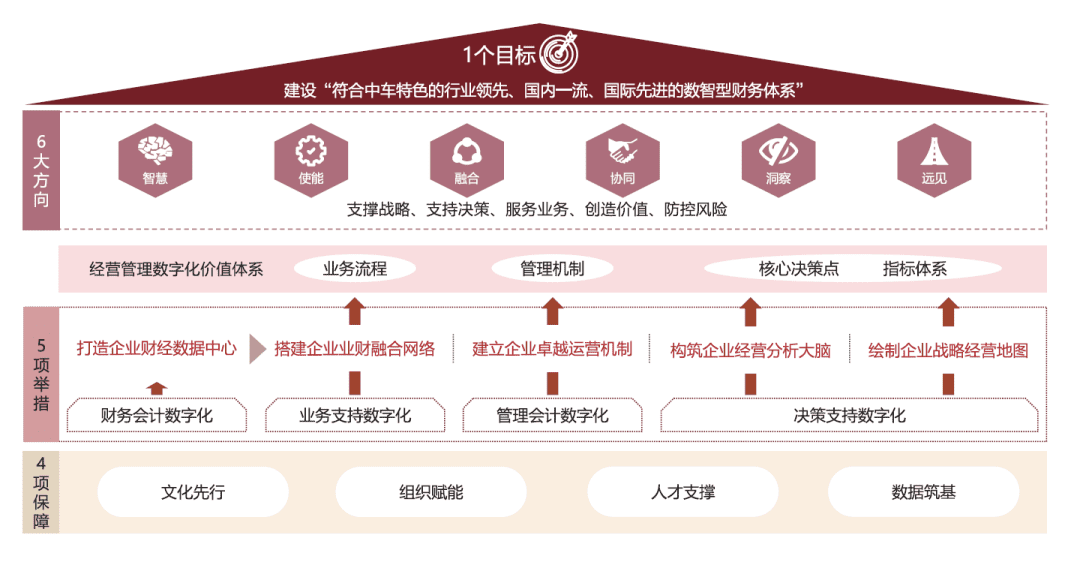
“数据是企业最为宝贵的资产之一”已成为业界普遍共识,新冠肺炎疫情给全球经济带来巨大冲击,加速了以物联网、大数据、云计算、人工智能等新科技为驱动力的数字经济时代的到来。中冶宝钢于2021年6月发布《中冶宝钢“十四五”产业数字化转型规划》,而数据治理是数字化转型中的关键步骤,对数字化转型的成败起着承上启下的关键性作用,是有效管理企业数据的重要举措,为此公司制定并发布了《中冶宝钢数据治理规划(2022-2025)》。
一、现状与形式
(一)全球数据治理发展现状
共识:数据是企业最为宝贵的资产之一
两大支柱:互联互通、制度规范
主要问题:重数据生成,轻系统性管理;重数据数量,轻数据质量管理;重数据使用,轻数据增值利用
(二)国内数据治理发展现状
日益推广:数字化生产模式、大数据平台
驱动力:一是互联互通,二是业务效率和客户满意度
数据资产化:政策有引导,领先企业有经验
(三)公司数据治理发展基础
数据孤岛:数据分散在各系统中,没有实现互联互通
待系统性提高:数据标准、数据质量、数据安全、一致性、数据共享
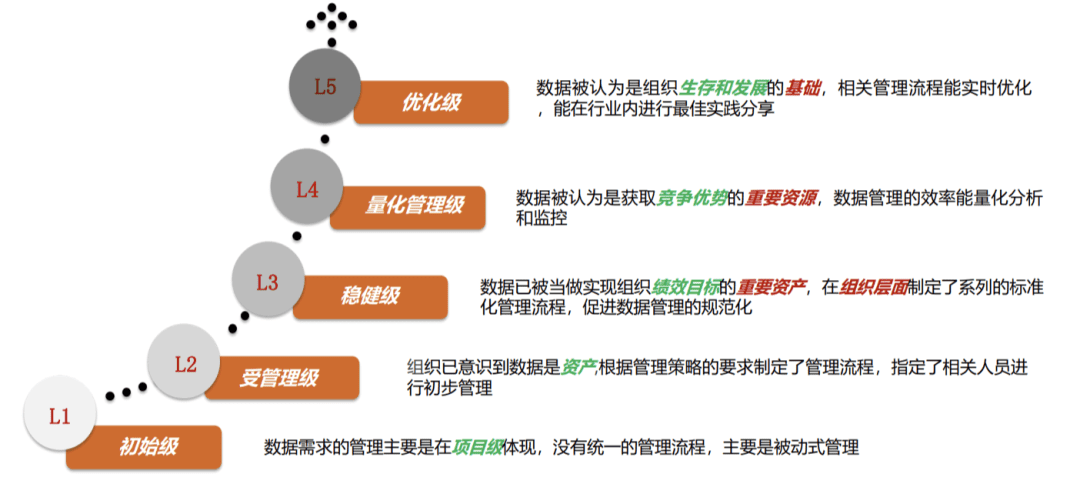
数据管理能力成熟度:处于“受管理级”(L2)水平
二、总体思路
(一)指导思想
中冶宝钢数据治理将以“数据资产化”为中心,聚焦于数据资源转化为数据资产、数据资产开发利用、数据驱动企业战略和业务发展三个主线。同时强调数据治理要服务业务数字化,并应用于业务治理;要抓牢“数据治理是数字化企业根本性基础”的定位,即要立足长远、夯实基础,又要长短结合、持续迭代。
(二)工作目标
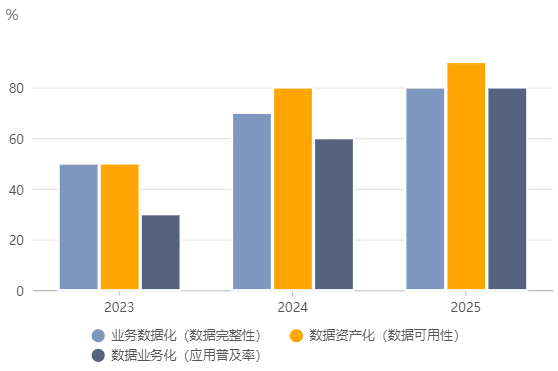
以“公司数字化能力成熟度持续提升”为目标,在“十四五”期间,数据管理成熟度达到“量化管理级”水平——即数据可量化定义业务,以业务目标为导向,通过推动业务数据的互联互通,建立“全局、微观、量化、客观”的数据视野。在统一数据架构与数据资产中心的基础上,通过数据治理,提供可靠、可用、可信的数据资源与业务管理数据指标,从而完成业务数据化到数据业务化的过程。同时设定了目标的量化评价指标,即:到2025年数据完整性达到80%、可用性达到90%、普及率达到80%。
(三)数据治理业务框架
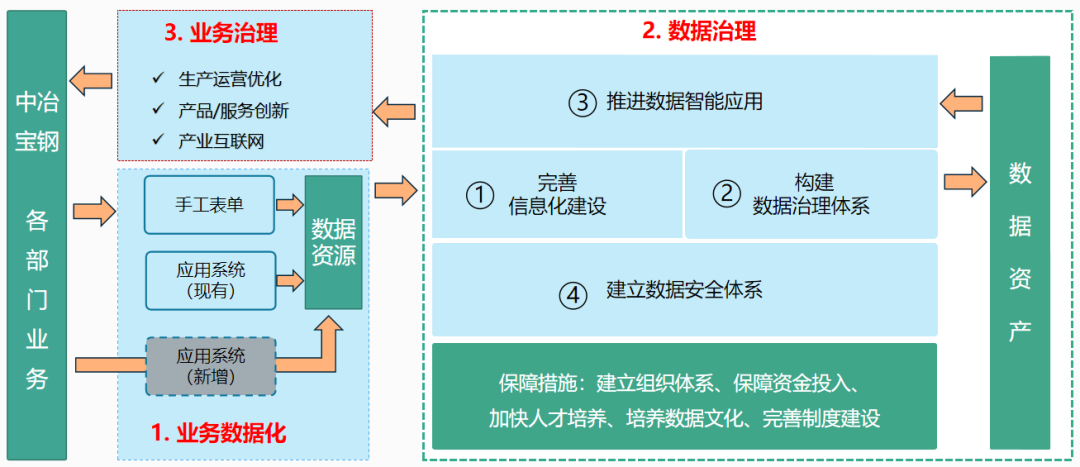
数据治理工作依托于各部门业务系统,以业务数据作为输入,服务“业务数字化”进程,且将应用于下一步的“业务治理”。数据治理的核心工作,是完成数据资源到数据资产的转化,并以此开展数据管理实现数据资产保值增值、推进数据智能应用实现价值创造。
(四)实施步骤
第一阶段(2022年):平台化, 打造数据底座
完善信息化应用基础,启动数据治理工程,推进数据互联互通;
开展数据治理组织建设、数据管理制度建设和数据治理人才储备;
启动检修业务合同盈利分析示范项目,推进检修业务数字化,牵引数据治理体系建设。“
第二阶段(2023年-2024年):资产化,构建数据资产
深化信息化应用建设,覆盖“1+3”业务;
深化数据治理体系建设,构建数据资产中心,推进数据资产的融合共享;
开展经营决策数字化建设,在前期示范项目的基础上,启动数据智能应用。
第三阶段(2024年~):智能化,推进数据应用
开展数据资产增值运营,提供数据服务;
深化检修业务数字化建设,量化检修作业活动、进程,应用检修业务规范和知识,
实现从宏观到微观的穿透;
深化经营决策数字化建设,量化业务指标,实现从局部到全局的覆盖。
三、重点任务
任务一:完善信息化建设,夯实数字化基础
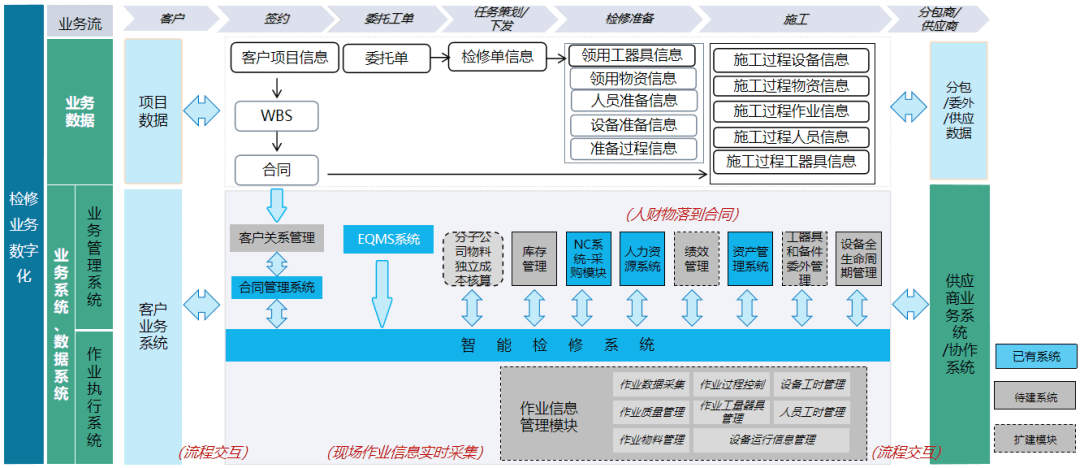
1.完善检修作业执行管理信息化,在智能检修平台上添加检修作业信息管理模块和客户设备管理模块。
2.完善人力资源管理信息化,在人力资源系统中添加人员招聘与绩效管理模块。
3.完善资产管理信息化,新建设备全生命周期管理系统。
4.完善物料核算信息化,新建物流仓储管理系统。
5.完善客户管理信息化,新建客户关系管理系统。
任务二:构建数据治理体系,实现数据增值运营
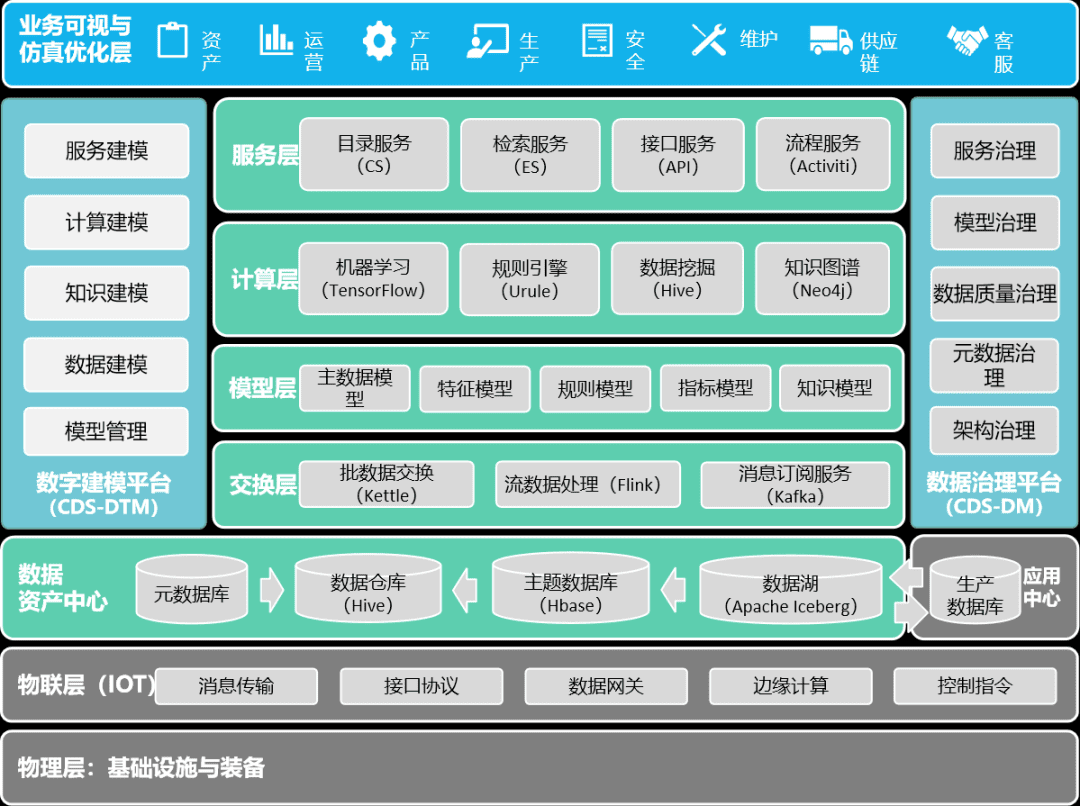
1.建设数据底座
数据管理平台-数据湖技术
数据计算平台-计算引擎
知识管理平台-知识图谱
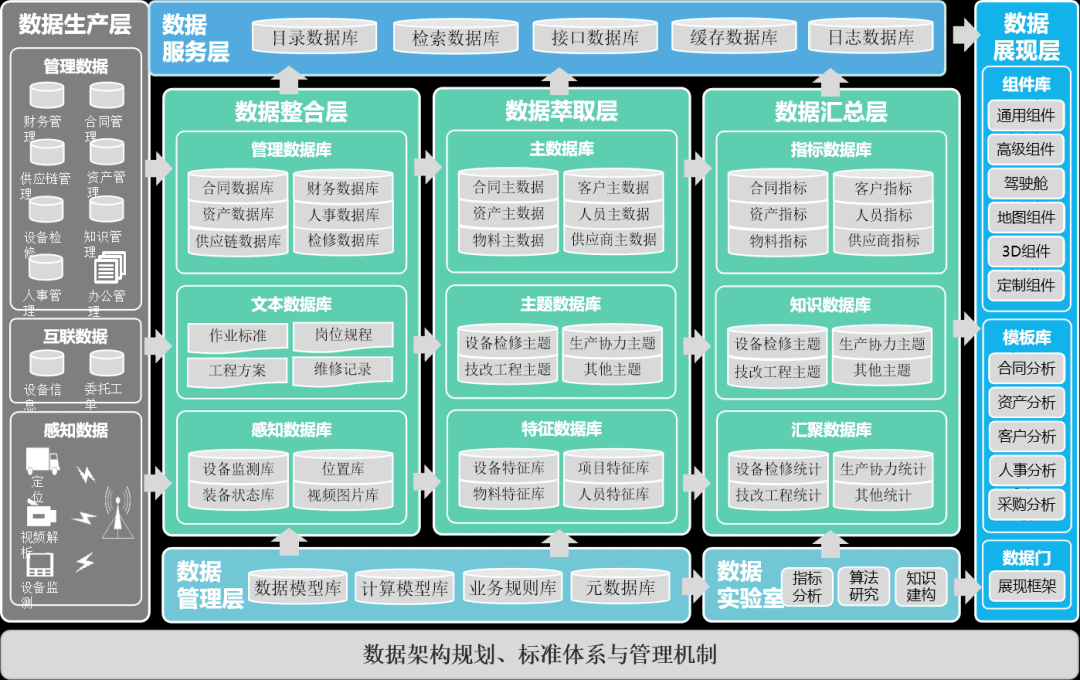
2.构建数据资产
数据资产标准编制
数据资产融合
数据资产管理
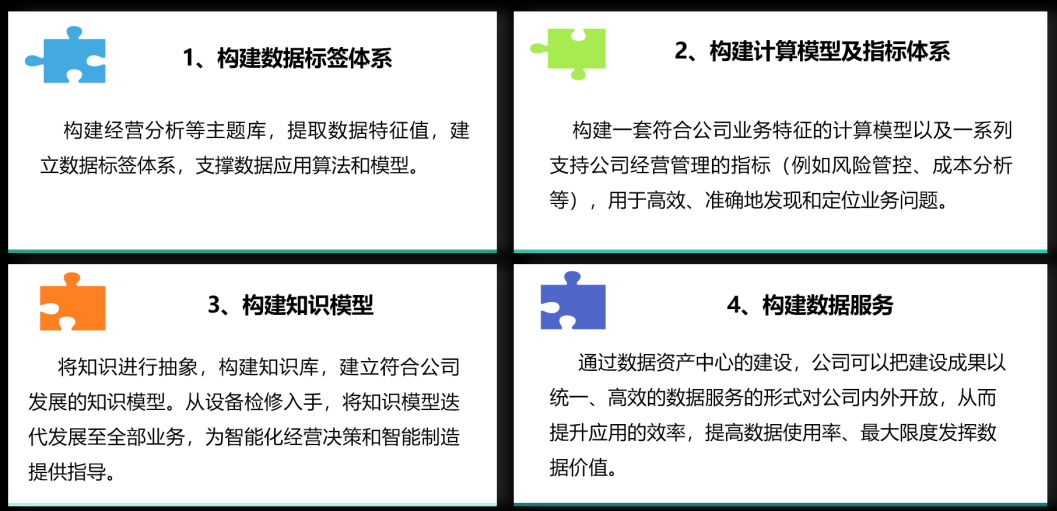
3.运营数据资产
构建数据标签体系
构建计算模型及指标体系
构建知识模型
构建数据服务
任务三:推进数据智能应用,赋能企业转型升级
横向打通职能域:横向整合和资源决策、风险、效益相关的职能,打开部门边界,实现信息的互通共享,拉通管理职能,实现端到端的一体化管理。把所有职能目标整合到实现业务目标上来,让企业的职能联合起来,以最高效的方式协同,通过经营决策数字化,建立从战略到管理再到执行,从目标到现值再到差异的指标分析体系和智能决策模型,支持企业做价值创造。
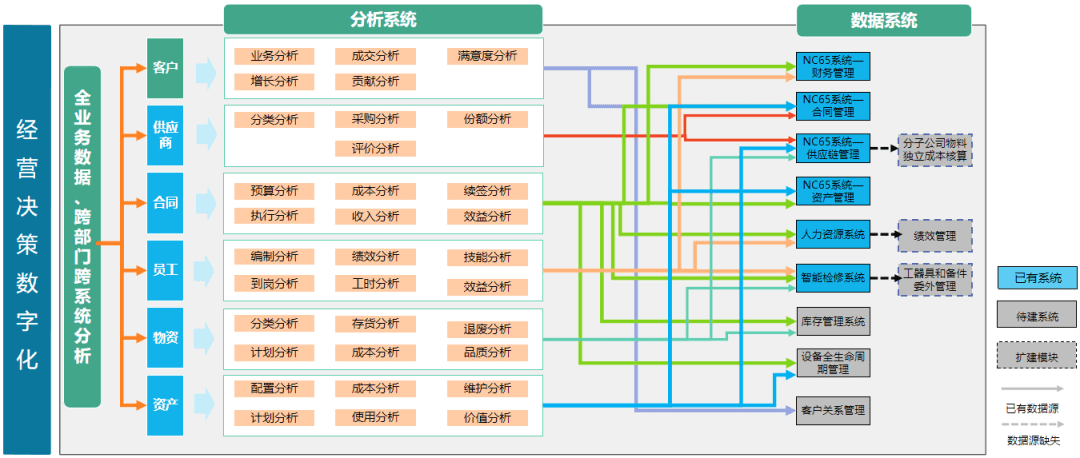
纵向打通业务线:纵向整合和检修作业执行相关的资源和信息,加强公司对检修业务的资源供应、作业执行、验收交付全过程的数字化程度,精细化管控检修业务作业过程,使人财物信息能落实到单个合同和项目上,实现单合同的精准盈利结果分析,为经营决策提供数据分析,使企业能在业务运作中掌握主动,从而提升各个业务活动阶段的效率。
任务四:建立数据安全体系, 提升安全防护能力
管理:制定数据治理安全制度
1.明确数据所有人的确认原则、确认流程和确认方式;
2.明确数据安全等级和数据敏感度分类;
3.设立相应的审批流程;
4.明确数据安全策略,对信息在存储、传输、处理、共享和备份时分等级实行安全保护;
5.信息系统的建立要符合相关信息安全等级保护的要求;
6.对信息系统中发生的信息安全事件分等级响应、处置。
技术:搭建数据安全技术平台
1.数据存储安全:数据存储物理安全、数据存储安全策略、数据空间区分和加密、安全等级管理、数据安全溯源等;
2.数据传输安全:针对不同安全等级,明确数据传输加密方式、配置加密类型、加密方法等;
3.数据应用安全:让数据权限与组织绑定,对组织授予数据访问权限;让数据权限随人员流动而改变,动态管控个人用户数据权限。
四、保障措施
建立组织体系
公司成立数据治理委员会;任命CDO(首席数据官);科技与信息化管理部增设数据管理室,作为公司数据管理部门;设备智能运维技术研究院作为公司数据治理的技术支撑单位。各部门各单位设立数据管理专员(专/兼职人员)。
保障资金投入
公司应保证数据治理资金的持续投入;
多渠道筹措资金,如申请上级集团的资金支持,各级政府的产业补贴、创新补助、研发支持、人才补助等。
加快人才培养
理论知识:聚焦在数据资产的治理和数据管理,建立数据的认知和管理思维;
积极实践:积极参与数据管理实践,结合业务特点和数据特征,积极参与数据治理建设任务。
培育数据文化
营造 “用数据说话、用数据管理、用数据决策,用数据指导行动、用数据驱动创新”的数据思维;
强调“谁生产谁负责,谁拥有谁负责,谁管理谁负责”的理念。
完善制度建设
明确数据管理的职责、流程和规范;
制定相关管理制度,开展数据及数据资产的管理;
建立考核评价体系,对数据治理的重点环节进行量化考核。
翻译:
MCC Baosteel Data Governance Plan (2022-2025)
“Data is one of the most valuable assets of enterprises” has become a general consensus in the industry, and the COVID-19 epidemic has brought a huge impact on the global economy, accelerating the arrival of the digital economy era driven by new technologies such as the Internet of Things, big data, cloud computing and artificial intelligence. In June 2021, MCC Baosteel released the “14th Five-Year Plan for Industrial Digital Transformation of MCC Baosteel”, and data governance is a key step in digital transformation, which plays a key role in the success or failure of digital transformation, and is an important measure to effectively manage enterprise data. To this end, the company formulated and issued the “MCC Baosteel Data Governance Plan (2022-2025)”.
First, current situation and form
(1) Current status of global data governance
Consensus: Data is one of your most valuable assets
Two pillars: connectivity and institutional norms
Main problems: Emphasis on data generation, light systematic management; Emphasis on data quantity, light data quality management; Heavy data use, light value-added use of data
(2) Current situation of domestic data governance development
Increasingly promoted: digital production model, big data platform
Driving force: One is connectivity, the other is business efficiency and customer satisfaction
Data assets: policy guidance, leading enterprises have experience
(3) Foundation for the development of corporate data governance
Data silos: Data is scattered in various systems without interconnection
To be systematically improved: data standards, data quality, data security, consistency, data sharing
Data management capability Maturity: at the “managed” (L2) level
Second, the general idea
(1) Guiding ideology
MCC Baosteel data governance will focus on the “data assets” as the center, focusing on data resources into data assets, data assets development and utilization, data-driven enterprise strategy and business development of three main lines. At the same time, it emphasizes that data governance should serve business digitization and be applied to business governance. It is necessary to grasp the positioning of “data governance is the fundamental foundation of digital enterprises”, that is, to base on the long-term, consolidate the foundation, and to combine the length and length of continuous iteration.
(2) Work objectives
With the goal of “continuous improvement of the company’s digital capability maturity”, during the “14th Five-Year Plan” period, the maturity of data management reached the level of “quantitative management level” – that is, data can be quantified to define the business, oriented by business goals, and establish a “global, micro, quantitative and objective” data vision by promoting the interconnection of business data. On the basis of unified data architecture and data asset center, it provides reliable, available and trusted data resources and business management data indicators through data governance, so as to complete the process of business datalization to data business. At the same time, the quantitative evaluation indicators of the target are set, namely: data integrity of 80%, availability of 90%, and penetration of 80% by 2025.
(3) Data governance business framework
The data governance work relies on the business system of each department, takes business data as input, serves the process of “business digitization”, and will be applied to the next step of “business governance”. The core work of data governance is to complete the transformation of data resources to data assets, and carry out data management to realize the preservation and appreciation of data assets, and promote the intelligent application of data to achieve value creation.
(4) Implementation steps
The first stage (2022) : platform, build data base
We will improve the foundation for IT application, launch data governance projects, and promote data connectivity.
Carry out data governance organization construction, data management system construction and data governance talent reserve;
Start the maintenance business contract profit analysis demonstration project, promote the digitalization of maintenance business, and lead the construction of data governance system. “
The second stage (2023-2024) : capitalizing, building data assets
Deepen the application of information technology, covering the “1+3” business;
Deepen the construction of data governance system, build data asset centers, and promote the integration and sharing of data assets;
Carry out the digital construction of business decision-making, and start the application of data intelligence on the basis of the previous demonstration project.
The third stage (2024 ~) : intelligent, promote data application
Carry out value-added operations of data assets and provide data services;
Deepen the digital construction of maintenance business, quantify maintenance activities and processes, apply maintenance business norms and knowledge,
Achieve penetration from macro to micro;
Deepen the digital construction of business decision-making, quantify business indicators, and achieve coverage from local to global.
Third, key tasks
Task 1: Improve information construction and consolidate the digital foundation
- Improve maintenance operation execution management information, and add maintenance operation information management module and customer equipment management module to the intelligent maintenance platform.
- Improve the information of human resource management and add personnel recruitment and performance management modules to the human resource system.
- Improve asset management informatization and build a new equipment life cycle management system.
- Improve material accounting information and build a new logistics and warehousing management system.
- Improve customer management information and build a new customer relationship management system.
Task 2: Build a data governance system to achieve value-added data operations
- Build a data base
Data management platform – Data Lake technology
Data computing Platform – Computing Engine
Knowledge Management Platform – Knowledge Graph
- Build data assets
Data asset standards development
Data asset fusion
Data asset management
- Operate data assets
Construct data label system
Construct calculation model and index system
Building knowledge model
Build data services
Task 3: Promote the intelligent application of data and empower enterprises to transform and upgrade
Horizontally open functional domains: horizontally integrate functions related to resource decision-making, risk and benefit, open the boundaries of departments, realize information sharing, pull through management functions, and achieve end-to-end integrated management. Integrate all functional objectives into the realization of business objectives, let the functions of the enterprise unite and collaborate in the most efficient way, through the digitization of business decision-making, establish an indicator analysis system and intelligent decision-making model from strategy to management to execution, from goal to present value to difference, and support enterprises to do value creation.
Vertical integration of business lines: vertical integration of resources and information related to maintenance operation execution, strengthening the digitization of the whole process of resource supply, operation execution, acceptance and delivery of maintenance business, fine control of maintenance operation process, so that human and financial information can be implemented on a single contract and project, and accurate profit result analysis of a single contract can be achieved. Provide data analysis for business decisions, so that enterprises can take the initiative in business operations, thereby improving the efficiency of each stage of business activities.
Task 4: Establish a data security system and improve security protection capabilities
Management: Develop a data governance security system
- Clarify the principle, process and method of confirmation of the data owner;
- Clarify data security level and data sensitivity classification;
- Set up the corresponding approval process;
- Clarify data security policies, and implement security protection for information in storage, transmission, processing, sharing and backup;
- The establishment of the information system shall meet the requirements of the relevant information security level protection;
- Graded response and disposal of information security incidents occurring in the information system.
Technology: Build data security technology platform
- Data storage security: data storage physical security, data storage security policy, data space differentiation and encryption, security level management, data security traceability, etc.;
- Data transmission security: According to different security levels, clear data transmission encryption methods, encryption types, encryption methods, etc.;
- Data application security: Bind data permissions to the organization and grant data access permissions to the organization; Allow data rights to change with the flow of people, and dynamically control individual user data rights.
Fourth, safeguard measures
Establish an organizational system
The company establishes a data governance committee; Appointment of a CDO (Chief Data Officer); The Technology and Information Management Department set up a data management room as the company’s data management department; Equipment Intelligent operation and maintenance Technology Research Institute as the company’s data governance technical support unit. Data Management officers (professional/part-time staff) are established in all departments and units.
Guarantee the investment of funds
The company shall ensure the continuous investment of data governance funds;
Raise funds through multiple channels, such as applying for financial support from superior groups, industrial subsidies, innovation subsidies, research and development support, talent subsidies, etc., from governments at all levels.
Accelerate personnel training
Theoretical knowledge: Focus on the governance of data assets and data management, establish data cognition and management thinking;
Active practice: Actively participate in data management practices, combined with business characteristics and data characteristics, actively participate in data governance construction tasks.
Fostering a data culture
Create a data thinking of “speaking with data, managing with data, making decisions with data, guiding actions with data, and driving innovation with data”;
It emphasizes the concept of “who produces who is responsible, who owns who is responsible, who manages who is responsible”.
Improve institutional construction
Clarify data management responsibilities, processes and specifications;
Develop relevant management system, carry out data and data assets management;
Establish an assessment and evaluation system to conduct quantitative assessment of the key links of data governance.
本文由数字化转型网(www.szhzxw.cn)转载而成,来源于国脉数据资产;编辑/翻译:数字化转型网小汤圆。

免责声明: 本网站(http://www.szhzxw.cn/)内容主要来自原创、合作媒体供稿和第三方投稿,凡在本网站出现的信息,均仅供参考。本网站将尽力确保所提供信息的准确性及可靠性,但不保证有关资料的准确性及可靠性,读者在使用前请进一步核实,并对任何自主决定的行为负责。本网站对有关资料所引致的错误、不确或遗漏,概不负任何法律责任。
本网站刊载的所有内容(包括但不仅限文字、图片、LOGO、音频、视频、软件、程序等) 版权归原作者所有。任何单位或个人认为本网站中的内容可能涉嫌侵犯其知识产权或存在不实内容时,请及时通知本站,予以删除。