随着数字化技术的发展,传统型材生产企业在原有信息化及自动化技术基础上,可通过系统升级、数据化改造,使数据可赋能更多生产场景,从而支撑型材生产企业智能化应用,实现型材生产过程智能制造。
本文基于鞍钢大型厂轨梁分厂产线,针对轨梁产线特点提出了轨梁生产数字化改造方案,实现了鞍钢轨梁生产过程数字化,为型材钢企智能制造提供了参考。 数字化转型网(www.szhzxw.cn)
一、传统型材生产流程数字化面临主要问题
与先进板带生产流程工艺装备不同,型钢生产(如轨梁)主要采用基础自动化系统(L1)实现生产线控制,MES 系统进行整体物料平衡与生产作业安排,生产线的关键工艺参数与过程物料间无直接关联,也没有 L2 系统进行过程控制,缺少 L2 模型系统进行全线工艺参数优化,导致库存作业效率低下。
此外,型钢生产主要工序及设备较多、设备供应厂商不一,不同的设备制造商因配备了不同的外联通信接口或工业现场总线协议,导致异构网络综合集成互联难度较大,影响产品的一体化接入和互联互通。而且整个生产线各设备控制系统之间相互独立,未形成统一控制网络,不能将各生产工序间的生产过程参数及工艺参数进行统一管理。 数字化转型网(www.szhzxw.cn)
目前的型材生产企业并没有建立统一的数字化平台,不同维度的生产数据分布在不同系统中,各类基础数据互不联通,导致生产工序间形成信息孤岛;部分生产工序并未配备数采设备,导致一线数据信息无法被准确收集,从而导致型材企业实现数字化存在一定困难。型材生产企业控制系统缺少相应的数学模型,无法对系统的运行情况进行预测和控制。生产设备缺少生产大数据系统和前馈调节模型,不具备物联条件,控轧控冷设备也缺少自学习功能。生产线关键工序虽然实现了单体设备的基础自动化,但关键设备工艺参数调整还依赖于人工作业,导致产品质量不稳定、生产节奏低下。
此外,型材生产企业还存在生产效率低、能耗成本高、工人劳动强度大,智能化程度低、无法进行远程集中操控从而提高设备可靠性的问题,同时,数据采集效率低、物料跟踪难,质量管控弱,成品质量差、库区混乱,成本高等问题也是型材生产企业存在的共性问题。
二、面向质量精细化管控的数字化整体解决方案
根据目前型材企业存在的问题,本文提出了针对型材生产过程的精细化管控的数字化整体解决方案,通过数据中台将企业内外多源异构的数据进行采集、治理、建模和分析,同时对内优化管理、赋能业务,对外开展数据合作,释放数据价值;同时聚合和治理跨域数据,将数据封装抽象成服务,以业务价值的逻辑概念提供给前台;对设备及控制系统进行适应性改造,建立制造执行平台、质量大数据平台及数字化孪生平台。 数字化转型网(www.szhzxw.cn)
在此基础上,生产全过程数字化的重点工作是打通各种数据流,包括从生产计划到生产执行(ERP与MES)的数据流、MES 与控制设备和监视设备之间的数据流、现场设备与控制设备之间的数据流。有条件的企业可以自主研发或委托开发生产数字化集成平台,将不同生产环节的设备、软件和人员无缝地集成为一个协同工作的系统,实现互联、互通、互操作。具体实施方案包括以下几个方面:
(1)需求分析:对企业的质量管控需求进行详细分析,明确目标和要求。
(2)技术选型:根据需求分析结果,选择适合的数据采集、处理和分析技术,以及质量管控系统和自动化生产技术。 数字化转型网(www.szhzxw.cn)
(3)系统设计:根据选定的技术,设计数字化工厂的整体架构和各个模块的功能和接口。
(4)设备采购与安装:根据系统设计,采购和安装相应的设备和软件,确保系统的正常运行。
(5)数据接入与集成:将各个设备和系统的数据接入到数据中心,进行数据集成和处理。
(6)系统调试与优化:对系统进行调试和优化,确保系统的稳定性和可靠性。
(7)培训与推广:对相关人员进行培训,使其熟悉系统的使用和操作,并推广系统在企业内部的应用。
(8)持续改进:根据实际应用情况,不断进行系统的改进和优化,提高系统的性能和效果。
三、鞍钢大型厂轨梁分厂数字化工厂项目实践
鞍钢大型厂轨梁分厂是国内最早建设的轨梁生产线,于 1933 年由日伪昭和制钢所施工建设,并于 1935年 4 月投产。新中国成立后的 1953 年 11 月 26 日恢复生产,1953 年 11 月 30 日产出新中国第一条 25m 重轨。 数字化转型网(www.szhzxw.cn)
经过建国后几十年的发展,结合国内铁路、尤其是高铁建设需求,鞍钢轨梁厂分别于 2000 年、2002 年、2007年进行了三期技术改造。鞍钢轨梁厂凭借高洁净度、高强度、高精度、高平直度的产品整体质量指标,最早开发生产 200km 时速高速重轨,并成功铺设在中国第一条高速铁路秦沈客运专线上。
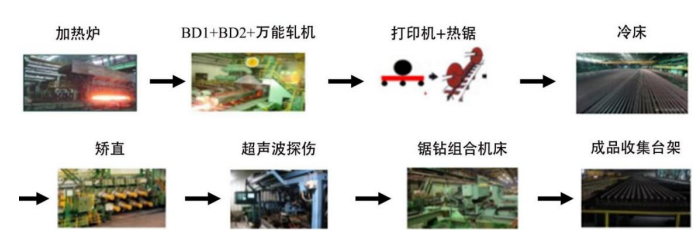
随着中国高速铁路网建设的高速发展,对轨梁质量提出了更高要求,无论是力学性能,还是断面、平直度、扭转等规格质量,甚至内部缺陷质量等的品质要求越来越严格。鞍钢轨梁厂作为国内最早建设的轨梁生产线,亟待从生产全工序角度实现过程受控、工艺和质量可追溯,持续实现质量提升,为此迫切需要探索轨梁类型材生产的数字化车间建设方案,轨梁分厂生产流程如图 1 所示.
1. 具体实施情况
结合鞍钢轨梁生产工艺流程特点,北科大项目团队提出了鞍钢轨梁分厂数字化车间的整体解决方案,对鞍钢轨梁生产线进行了数字化改造,实现了生产过程数据采集、物料跟踪、精细化质量管控及 3D 可视化等功能,并与增加的无人化设备(如机器人标识、搬运)、自动化检验、能耗管理与优化等功能整合,提升了轨梁生产过程的数字化、智能化水平。主要技术特点如下:
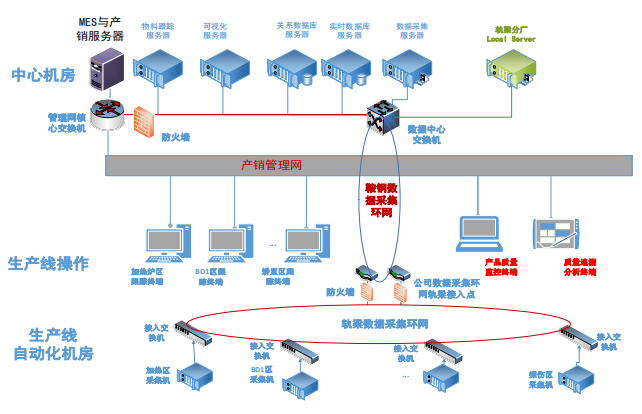
(1)时空统一、高可用的数据采集技术实现了轨梁制造过程的所有工艺装备及控制系统、大型仪表、MES系统和产销系统中多源异构数据采集、融合。通过工业以太网将所有边缘采集适配系统连接起来,并利用硬件防火墙方式隔离应用层与数据采集层之间数据访问,防止非法入侵及病毒在网内传播对控制系统造成影响。采集的多源、异构工艺质量数据统一时空,并建立其基本的标识语义。数据采集网络及硬件配置如图 2 所示。 数字化转型网(www.szhzxw.cn)
(2)根据关键装备工艺、设备动作逻辑和先验知识构建了热段工序和冷段工序的生产跟踪系统,热段工序主要包括加热炉区域和轧制区域,冷段工序从快速横移、热预弯工序至成品入库。在热段工序物料跟踪以设备动作逻辑为主实现自动化的物料跟踪,建立装备-物料-工艺参数间内在关联,并根据先验知识、机理等对工艺数据进行增广处理;在冷段工序以设备动作、各检测信号等为主建立装备-物料-位置-工艺参数间内在逻辑。在物料位置跟踪基础之上,建立物料与 MES 系统作业计划指令等匹配逻辑,形成全线的物料跟踪系统。
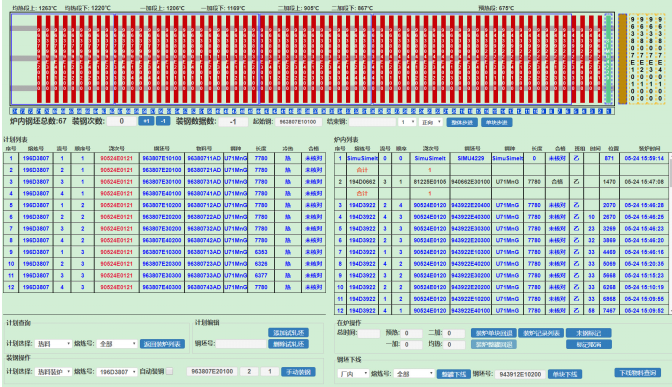
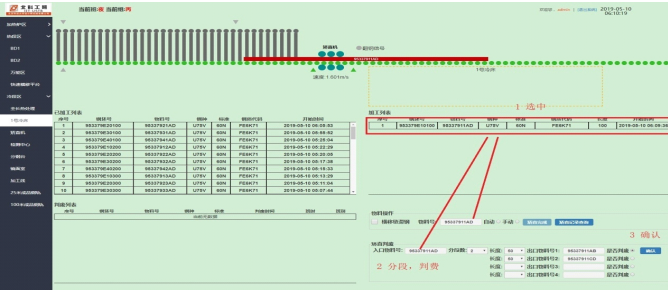
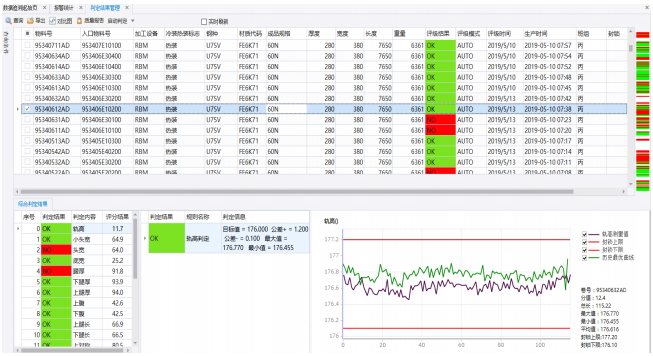
(3)面向质量精细化管控需求的产品质量智能管控应用实现对制造过程工艺质量信息全面在线监控、预警,并进行轨梁多维质量综合评价,同时评价结果为后工序轨梁修复等操作参考;另外出现质量问题时可以快速追溯制造全过程关键工艺参数变化,可进行多种方式对比分析、异常定位分析,帮助业务人员找到质量异常原因,以实现工艺质量持续优化与改进。 数字化转型网(www.szhzxw.cn)
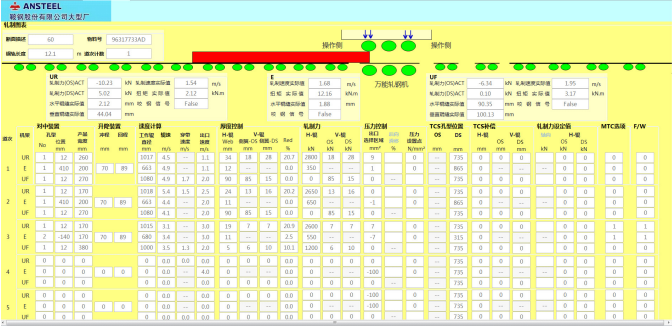
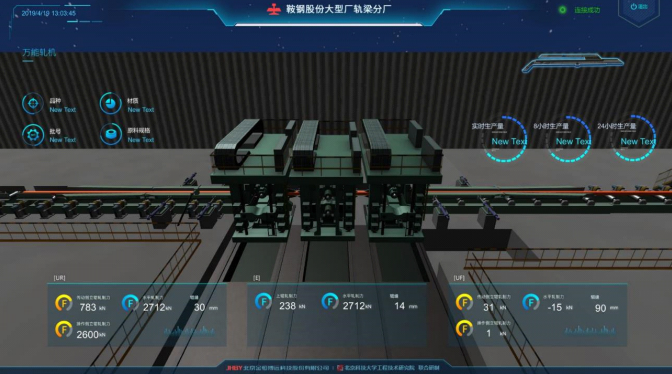
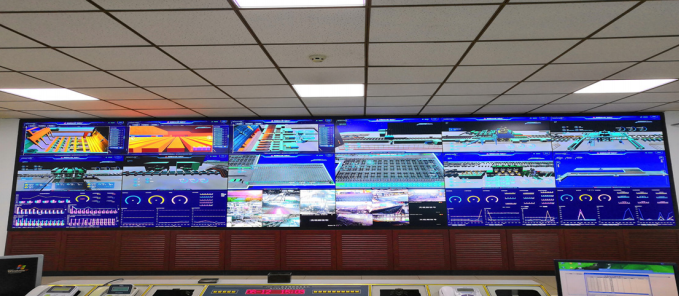
(4)基于 3D 数字孪生的制造过程可视化监控技术通过 3D 虚拟仿真技术建模,以实时工业过程数据驱动将轨梁分厂生产过程真实生产场景以虚拟化形式进行展现,数字孪生模型与真实场景同步运行,实现展示制造过程关键的工艺状态信息以及加热炉内部的物料跟踪、运行状态信息,为业务人员提供了比传统视频监控更为丰富的运行过程监控信息,使业务人员的决策更为科学、合理。
2. 作用与贡献
该项目于 2019 年 10 月全面上线运行,实现了项目预期目标,为鞍钢在智能制造领域探索了一条传统型材流程数字化工厂建设的可行途径。同时以该项目形成的数据平台为基础,在 2020 年扩展了机器人贴标、字符识别、轨型仪及能耗监控与分析、设备状态监控等功能,形成了具有鞍钢特色的数字化轨梁生产车间。 数字化转型网(www.szhzxw.cn)
该项目的实施对鞍钢大型厂轨梁分厂数字化、智能化应用水平提升作用明显,在提高全线管控水平同时,也保证了实物质量稳定性水平,主要作用如下:
(1)质量管控、分析由传统批次管理到“件次”管理转变,使得许多技术措施、质量异常定位、指标考核等更为精细、有效,也促使企业质量管控水平逐步提升;
(2)传统“事后”抽检转变为“事中”在线的质量管控模式,并实时向管控、操作人员进行反馈,有效避免了批量质量事故的发生,提高了产品质量合格率。系统上线后,未再发生批量质量异事故;
(3)全线精准的物料跟踪及基于 3D 数字孪生模型的全过程生产监控技术为生产管控人员和现场作业人员提供了丰富、详实的制造过程需求、生产实绩信息,使业务操作、决策目标明确、清晰,同时可根据实际情况对制造过程及时干预;
(4)全面、准确的轨梁产品质量多评综合评价技术及全面的工艺质量数据分析技术应用,使生产技术人员可快速掌控制造过程质量异常原因、变化趋势等,同时也保证了最终实物质量的稳定性。鞍钢轨梁产品实物质量在系统上线后提升明显。 数字化转型网(www.szhzxw.cn)
四、结论
针对国内型材钢企设备工艺、自动化与信息化现状,结合钢铁行业智能制造整体解决方案及高端棒线、型钢等产品质量精细化管控需求,提出了以制造过程工艺质量数据驱动的型材钢企数字化工厂实施方案,在多源异构工艺质量数据建立内在关联、深度融合基础上,构建面向各类典型需求的数字化、智能化应用,实现面向产品质量精细化管控需求。借助现代质量管理理念,在全流程产品工艺质量数据整合基础上,将传统的“事后”抽检质量管控模式转为“事中”实时管控或“事前”预控相结合的质量管控模式,通过大数据分析和智能技术进行数据深度挖掘与知识提取,实现了产品质量在线实时监控及质量判定,并提供丰富的“事后”建模、预测、诊断、优化的技术手段,实现生产可管控、异常可预警、过程可追溯、缺陷可诊断、能力可评价、质量可预测,支持企业产品质量持续改进。

翻译:
Case | Quality fine control project practice of Angang Rail and beam Digital factory
With the development of digital technology, on the basis of the original information and automation technology, traditional profile production enterprises can enable more production scenarios through system upgrading and data transformation, so as to support the intelligent application of profile production enterprises and realize the intelligent manufacturing of profile production process.
In this paper, based on the production line of the rail and beam branch of the large plant of Angang Steel, the paper puts forward the digital transformation plan of rail and beam production, realizes the digitization of the rail and beam production process of Angang Steel, and provides a reference for the intelligent manufacturing of profile steel enterprises.
First, the digitalization of the traditional profile production process is facing major problems
Different from the advanced plate and strip production process equipment, the section steel production (such as rail beam) mainly uses the basic automation system (L1) to achieve production line control, MES system for the overall material balance and production operation arrangement, the key process parameters of the production line and process materials are not directly related, and there is no L2 system for process control. The lack of L2 model system to optimize process parameters throughout the line resulted in inefficient inventory operations. 数字化转型网(www.szhzxw.cn)
In addition, the main processes and equipment of steel production are more, and the equipment suppliers are different, and different equipment manufacturers are equipped with different external communication interfaces or industrial fieldbus protocols, which leads to the difficulty of integrated interconnection of heterogeneous networks, affecting the integrated access and interconnection of products. Moreover, the control system of each equipment in the entire production line is independent of each other, and there is no unified control network, and the production process parameters and technological parameters between the production processes can not be unified management.
At present, the profile production enterprises have not established a unified digital platform, the production data of different dimensions are distributed in different systems, and all kinds of basic data are not connected to each other, resulting in the formation of information islands between production processes; Some production processes are not equipped with digital acquisition equipment, resulting in front-line data information can not be accurately collected, which leads to certain difficulties in the realization of digital profile companies. The control system of profile production enterprises lacks the corresponding mathematical model, which can not predict and control the operation of the system. The production equipment lacks the production big data system and feedforward adjustment model, does not have the conditions of the Internet of Things, and the controlled rolling and cooling equipment also lacks the self-learning function. Although the key process of the production line has realized the basic automation of the single equipment, the adjustment of the process parameters of the key equipment still relies on manual work, resulting in unstable product quality and low production rhythm.
In addition, profile production enterprises also have low production efficiency, high energy consumption costs, large labor intensity of workers, low degree of intelligence, remote centralized control can not be carried out to improve the reliability of equipment, at the same time, low data collection efficiency, material tracking is difficult, weak quality control, poor quality of finished products, confusion in the reservoir area, high cost problems are also common problems existing in profile production enterprises.
Second, the digital overall solution for fine quality control
According to the existing problems of profile enterprises, this paper proposes a digital overall solution for the fine control of the profile production process. Through the data center, the multi-source heterogeneous data inside and outside the enterprise is collected, managed, modeled and analyzed. At the same time, the internal management is optimized and the business is empowered, and the external data cooperation is carried out to release the data value. At the same time, aggregate and govern cross-domain data, encapsulate data into services, and provide them to the foreground with the logical concept of business value; Adaptive transformation of equipment and control system, establishment of manufacturing execution platform, quality big data platform and digital twin platform.
On this basis, the focus of the digitalization of the whole process of production is to open up various data flows, including the data flow from production planning to production execution (ERP and MES), the data flow between MES and control equipment and monitoring equipment, and the data flow between field equipment and control equipment. Qualified enterprises can independently develop or commission the development of production digital integration platform, the equipment, software and personnel of different production links seamlessly integrated into a collaborative working system, to achieve interconnection, interoperability and interoperability. The specific implementation plan includes the following aspects: 数字化转型网(www.szhzxw.cn)
(1) Demand analysis: Conduct a detailed analysis of the quality control needs of the enterprise, and clarify the objectives and requirements.
(2) Technology selection: According to the demand analysis results, choose the appropriate data collection, processing and analysis technology, as well as quality control system and automated production technology.
(3) System design: According to the selected technology, design the overall architecture of the digital factory and the functions and interfaces of each module.
(4) Equipment procurement and installation: according to the system design, purchase and install the corresponding equipment and software to ensure the normal operation of the system.
(5) Data access and integration: the data of each device and system is accessed to the data center for data integration and processing. 数字化转型网(www.szhzxw.cn)
(6) System debugging and optimization: debugging and optimization of the system to ensure the stability and reliability of the system.
(7) Training and promotion: Train relevant personnel to familiarize them with the use and operation of the system, and promote the application of the system in the enterprise.
(8) Continuous improvement: according to the actual application situation, continuous improvement and optimization of the system to improve the performance and effect of the system.
Third, the digital factory project practice of the rail and beam branch plant of Angang Steel
The rail and beam branch of Angang Large Plant is the first rail and beam production line built in China, which was constructed in 1933 by Japan Showa Steel Co., LTD., and put into operation in April 1935. After the founding of New China, production resumed on November 26, 1953, and the first 25m heavy rail in New China was produced on November 30, 1953. 数字化转型网(www.szhzxw.cn)
After decades of development after the founding of the People’s Republic of China, combined with the needs of domestic railway, especially high-speed railway construction, Angang rail and beam factory carried out three stages of technical transformation in 2000, 2002 and 2007. With the overall product quality index of high cleanliness, high strength, high precision and high flatness, Angang Rail and Beam Factory was the first to develop and produce 200km/h high-speed heavy rail, and successfully laid on China’s first high-speed railway Qinhuang-Shenyang passenger dedicated line.
With the rapid development of China’s high-speed railway network construction, higher requirements have been put forward for rail and beam quality, whether it is mechanical properties, cross-section, flatness, torsion and other specifications, or even internal defect quality requirements are becoming more and more stringent. As the earliest rail and beam production line built in China, Angang Rail and Beam Factory urgently needs to realize process control, process and quality traceability from the perspective of the whole production process, and continuous quality improvement. Therefore, it is urgent to explore the construction plan of digital workshop for rail and beam profile production.
FIG. 1 Rail beam production process of Anshan Steel large-scale plant
- Specific implementation
Combined with the characteristics of the rail and beam production process of Angang, the project team of Beijing University of Science and Technology proposed the overall solution of the digital workshop of the rail and beam branch factory of Angang, carried out the digital transformation of the rail and beam production line of Angang, and realized the functions of data collection, material tracking, fine quality control and 3D visualization in the production process. And with the increase of unmanned equipment (such as robot identification, handling), automated inspection, energy consumption management and optimization and other functions of integration, improve the digital and intelligent level of rail and beam production process. The main technical features are as follows:
(1) The time-space unified, highly available data acquisition technology realizes the multi-source heterogeneous data acquisition and fusion of all process equipment and control systems, large instruments, MES systems and production and marketing systems in the rail and beam manufacturing process. All edge acquisition adaptation systems are connected through industrial Ethernet, and data access between application layer and data acquisition layer is isolated by hardware firewall to prevent illegal intrusion and virus propagation in the network from affecting the control system. The collected multi-source and heterogeneous process quality data are unified in time and space, and their basic identification semantics are established. Data acquisition network and hardware configuration are shown in Figure 2. 数字化转型网(www.szhzxw.cn)
Figure 2 Data acquisition and main hardware network
(2) According to the key equipment process, equipment operation logic and prior knowledge, the production tracking system of the hot section and the cold section is constructed. The hot section mainly includes the heating furnace area and the rolling area, and the cold section includes the rapid transverse movement, the hot prebending process and the finished product storage. In the hot process material tracking, the automatic material tracking is based on the equipment action logic, the internal correlation between equipment, material and process parameters is established, and the process data is augmented according to the prior knowledge and mechanism. In the cold process, the internal logic between equipment, material, position and process parameters is established based on the equipment action and each detection signal. On the basis of material location tracking, the matching logic of material and MES system operation plan instruction is established to form a full-line material tracking system.
Figure 3 Hot forging sequence – heating furnace tracking screen
Figure 4. Tracking screen of materials in the cold section – straightening area
(3) The application of product quality intelligent management and control oriented to the needs of quality fine control can realize the comprehensive online monitoring and early warning of the process quality information of the manufacturing process, and carry out the multidimensional quality evaluation of the rail and beam, and the evaluation results can be used as a reference for the operation of the rail and beam repair in the post-process; In addition, when quality problems occur, it can quickly trace the change of key process parameters in the whole manufacturing process, carry out comparative analysis and abnormal positioning analysis in various ways, and help business personnel find the cause of quality anomalies to achieve continuous optimization and improvement of process quality.
FIG. 5 Comprehensive process parameter monitoring and early warning of rail beam rolling process
(4) Manufacturing process visualization monitoring technology based on 3D digital twin is modeled by 3D virtual simulation technology, and the real production scene of rail and beam branch production process is displayed in virtual form driven by real-time industrial process data. The digital twin model runs synchronously with the real scene. To realize the display of the key process state information of the manufacturing process and the material tracking and operating state information inside the heating furnace, it provides the business personnel with more abundant operating process monitoring information than the traditional video surveillance, so that the decision of the business personnel is more scientific and reasonable. 数字化转型网(www.szhzxw.cn)
FIG. 6 Application picture of multi-dimensional process quality integrated evaluation for rail beam
Figure 7 3D real-time monitoring interface of key equipment running status
Figure 8 Job scheduling center with 3D digital twin model as the core
- Role and contribution
The project was fully put into operation in October 2019, achieving the expected goals of the project and exploring a feasible way for Angang to build a digital factory for traditional profile processes in the field of intelligent manufacturing. At the same time, based on the data platform formed by the project, in 2020, the functions of robot labeling, character recognition, rail profile instrument, energy consumption monitoring and analysis, equipment status monitoring and other functions will be expanded, and a digital rail and beam production workshop with Angang characteristics will be formed.
The implementation of the project has an obvious effect on the improvement of the digital and intelligent application level of the rail and beam branch of the large plant of Angang Steel. While improving the control level of the whole line, it also ensures the stability level of the physical quality. The main effects are as follows:
(1) The transformation of quality control and analysis from traditional batch management to “piece-by-piece” management makes many technical measures, quality anomaly positioning, index assessment, etc., more precise and effective, and also promotes the gradual improvement of the quality control level of enterprises; 数字化转型网(www.szhzxw.cn)
(2) The traditional “post-event” sampling inspection is transformed into the “in-process” online quality control mode, and feedback is provided to the management and control personnel in real time, effectively avoiding the occurrence of batch quality accidents and improving the product quality pass rate. After the system went online, there was no batch quality difference accident.
(3) Full-line accurate material tracking and whole-process production monitoring technology based on 3D digital twin model provide rich and detailed manufacturing process requirements and production performance information for production control personnel and field operators, so that business operations and decision-making goals are clear and clear, and timely intervention in the manufacturing process according to the actual situation; 数字化转型网(www.szhzxw.cn)
(4) Comprehensive and accurate rail and beam product quality multi-evaluation comprehensive evaluation technology and comprehensive process quality data analysis technology application, so that production technicians can quickly control the abnormal causes of manufacturing process quality, change trends, but also to ensure the stability of the final physical quality. The physical quality of rail and beam products of Anshan Iron and Steel has improved significantly after the system has been launched.
Conclusion
In view of the current situation of equipment process, automation and information technology of domestic profile steel enterprises, combined with the overall solution of intelligent manufacturing in the steel industry and the fine quality control needs of high-end rod lines, shaped steel and other products, the implementation plan of digital factory of profile steel enterprises driven by manufacturing process quality data is proposed. Build digital and intelligent applications for all kinds of typical needs, and achieve fine control requirements for product quality. With the help of modern quality management concepts, on the basis of the integration of product process quality data in the whole process, the traditional “post” sampling quality control mode is transformed into “in-process” real-time control or “pre-control” combined quality control mode. Through big data analysis and intelligent technology, data depth mining and knowledge extraction are carried out to realize online real-time monitoring and quality judgment of product quality. And provide a wealth of “post-event” modeling, prediction, diagnosis, optimization of technical means, to achieve production control, anomaly early warning, process traceability, defect diagnosis, ability evaluation, quality predictability, to support the continuous improvement of enterprise product quality. 数字化转型网(www.szhzxw.cn)
本文由数字化转型网(www.szhzxw.cn)转载而成,来源于新工业网;编辑/翻译:数字化转型网宁檬树。
免责声明: 本网站(http://www.szhzxw.cn/)内容主要来自原创、合作媒体供稿和第三方投稿,凡在本网站出现的信息,均仅供参考。本网站将尽力确保所提供信息的准确性及可靠性,但不保证有关资料的准确性及可靠性,读者在使用前请进一步核实,并对任何自主决定的行为负责。本网站对有关资料所引致的错误、不确或遗漏,概不负任何法律责任。
本网站刊载的所有内容(包括但不仅限文字、图片、LOGO、音频、视频、软件、程序等) 版权归原作者所有。任何单位或个人认为本网站中的内容可能涉嫌侵犯其知识产权或存在不实内容时,请及时通知本站,予以删除。