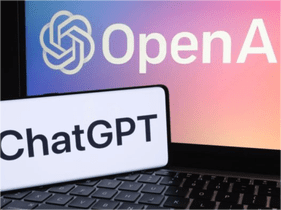
面对ChatGPT的来势汹汹,谷歌彻底慌了。数字化转型网szhzxw.cn
OpenAI发布ChatGPT也不过是4个月之前。但是在这4个月里,已经有不少预言,称ChatGPT带来的变革,将会颠覆谷歌的现有搜索产品和商业模式。
于是,谷歌CEO桑达尔·皮柴(Sundar Pichai) 开启“战备”状态:先是在ChatGPT问世两周内就拉起了“红色警报”,然后创始人拉里·佩奇和谢尔盖·布林时隔3年再度被紧急唤回。数字化转型网szhzxw.cn
今天皮柴更是在官网上称,谷歌一直在研发一款名为Bard的实验性对话AI服务,今天起,谷歌将把它对信任的开发者开放,然后将在接下来的几周内,把它向更广泛的受众开放。数字化转型网szhzxw.cn
谷歌终于加入了这场智能聊天机器人对搜索引擎发动的大战。
一、谷歌宣战数字化转型网szhzxw.cn
谷歌的第23号员工,Gmail的缔造者保罗·布赫海特在2月1号发推悲观表示,谷歌将会在一两年内被彻底颠覆——当人们的搜索需求能够被封装好的、语义清晰的答案满足,搜索广告将会没有生存余地。而占据全球接近84%搜索市场的谷歌,到现在仍然是一家50%营收直接来自搜索广告的公司。
眼看ChatGPT引起的战火烧到了自家主场,谷歌终于反应过来,在今天宣布推出类ChatGPT产品——一款实验性的对话AI服务Bard。
皮柴在今天发出的博文里称,谷歌一直希望通过大语言模型,把这些深度研究和突破变成产品来帮助人们。两年前,谷歌推出了大语言模型LaMDA,此后,谷歌就在LaMDA的基础上,开发出了Bard。数字化转型网szhzxw.cn
今天,谷歌将先对信任的开发者开放这项服务,然后将在接下来的几周内,把它向更广泛的受众开放。数字化转型网szhzxw.cn
谷歌强调,Bard会把世界上的信息知识和谷歌的大语言模型所带来的能力和智能相结合,它会获取网络上的信息,来提供新鲜的、高质量的回复。这意味着和ChatGPT受限于2021年以前的数据不同,Bard会是基于实时网络数据的,谷歌将把它与LaMDA的轻量级模型版本一起发布。
从博文里的图片来看,Bard也是和ChatGPT类似的聊天框形态,能做的事除了简化复杂的主题,比如”向9岁的孩子解释NASA的韦伯望远镜带来的新发现“,还能帮助人们做一些复杂的任务,包括”计划朋友的新生儿派对“、”比较两部奥斯卡提名的电影“和”根据冰箱里的食物给出一些午餐点子”等。
在谷歌看来,这个小得多的模型需要更少的算力,从而可以扩展到更多的用户,获得更多的反馈。他们会将外部反馈与自己的内部测试相结合,以确保 Bard 的回答在质量、安全性和真实信息的基础性方面达到高标准。谷歌希望通过这一阶段的测试,来提高 Bard 的质量和速度。
皮柴还在博文里称,很快,谷歌还将很快在搜索中整合基于AI的功能。除了像ChatGPT一样会将复杂的信息和多个视角提炼成易于理解的回答,谷歌还将进一步提供更多网页信息的选择。数字化转型网szhzxw.cn
不过,根据硅星人获得的消息,Bard大部分由华人团队开发,而且这次Bard的发布有点赶,在内部算不上完全准备好,所以才在现在以面向有限开发者的形式推出,而非像ChatGPT一样,一开始便开放给大众使用。
同时,谷歌内部对ChatGPT感到恐惧的另外一层原因,是人才的流失。和很多公司一样,谷歌内部也采用赛马制,有好几个做类似模型的团队,但内部其它大语言模型团队向OpenAI流失人才的情况比较严重。数字化转型网szhzxw.cn
当然,不管内里如何焦虑,皮柴至少在博文里信心满满地宣布,下个月,谷歌将开始让个人开发者、创作者和企业尝试自家的生成语言 API (Generative Language API),该 API 最初会由 LaMDA 提供支持,并有一系列模型可供选择。“随着时间的推移,我们打算创建一套工具和 API,让其他人可以轻松地使用 AI 构建更具创新性的应用程序。”数字化转型网szhzxw.cn
与此同时,ChatGPT开发者OpenAI背后的金主微软,也在紧锣密鼓地想要把ChatGPT整合进自己产品中。数字化转型网szhzxw.cn
微软正在与OpenAI洽谈一笔100亿美元的投资,并在年初传出计划将ChatGPT添加到自己的搜索引擎Bing中,搜索结果将首次显示为带有信息来源的完整句子,这个新的版本会在3月左右发布。数字化转型网szhzxw.cn
而就在皮柴的博文发出不久,微软就宣布,将在明天召开一场发布会,主要就是关于微软和OpenAI的合作,以及ChatGPT和微软Bing搜索的整合。
与此前的危机都不同的是,这是谷歌的搜索根基在20多年后第一次受到挑战。几年以后“Google it.”会不会让位给“ChatGPT it.”?这是让人兴奋的地方。Bing和百度们想追上谷歌,谷歌不想变成雅虎。
谷歌的搜索霸权会在今年被动摇吗?数字化转型网szhzxw.cn
二、停滞的搜索
让我们的目光先回到谷歌诞生之初。数字化转型网szhzxw.cn
拉里·佩奇和谢尔盖·布林在千禧年前夕嗅到了互联网繁荣在即与信息检索陈旧逻辑之间的间隙,贯穿谷歌生命的算法Page Rank由此诞生。
20世纪90年代,互联网仅仅是一个为全球2%的人受用的先锋概念。网络资源匮乏,雅虎甚至以手工录入的方式就足够建立起最初的互联网搜索概念。1995年Alta Vista出现,互联网历史上有了第一个全网页内容的索引工具,后者第一次设计出爬虫技术(web crawl),并在1995年8月完整完成了第一次网络爬取。
但以Alta Vista为首的搜索工具对搜索关键词与索引结果之间的关联分析仍然十分薄弱,这很大程度源于搜索工具最初的受用人群。在互联网普及之前,信息搜索只是服务于文献查找的工具,其框架长久建立在学术圈以关键词加权平均为信息搜索基础的逻辑上。数字化转型网szhzxw.cn
极度理性且表达精确的学术内容搜索逻辑并不适用于互联网的信息抓取。反映在Alta Vista上,就是它能搜索到大量信息,但准确性却非常低。
只有拉里·佩奇注意到了互联网信息之间关联性的利用潜力。
他将互联网想象成一个多节点的矩阵,每一个网页都是“点”,网页之间的超链接关系则是“边”。指向一个网页的超链接越多,则这个网页被判断为越重要,这个过程中每个网页都可以找到统一标尺下的重要性参数。数字化转型网szhzxw.cn
这个这是日后知识图谱技术甚至图计算的最初想象,也是算法作为一种思维第一次进入搜索领域。数字化转型网szhzxw.cn
受制于互联网的发展阶段,雅虎和Alta Vista是不可能产生算法思维的,而Page Rank对Alta Vista的取代则成为“搜索”历史上最闪耀的时刻。
但至今关于“搜索”的所有变革,也在24年前Page Rank诞生那一刻就宣告结束了。
无论是2001年出现的百度,2009年出现的Bing(当然也包括使用Bing核心搜索技术的雅虎),都再也没有逃出以Page Rank所建立起的逻辑框架,即把用户的开放性问题转换成互联网信息图谱上具有关联性优先级的、一个更具体的选项扩列,再还给用户去甄别。数字化转型网szhzxw.cn
2021年新兴的搜索引擎You.com,最大的卖点仅仅是集成式的把推特等其他平台的搜索结果分门类得纳入到了信息搜索结果中,并且赋予用户对于信息来源平台一定的权重设计能力。数字化转型网szhzxw.cn
在搜索的发展停滞中,这样一个“谷歌的挑战者”就足够获得2000万美元的种子轮融资。数字化转型网szhzxw.cn
中文互联网世界里没有另一个综合搜索引擎获得长期繁荣,反倒是在移动互联网信息孤岛的压迫下,微信和字节跳动提供的更垂直的搜索服务开始占领百度的内容盲区。
类似You.com的搜索引擎短期内仍然不会在国内出现,这是百度遗憾的地方。而无论抖音搜索或是微信搜一搜,也都没有从搜索技术效率上取代百度的野心。一个自有生态内的内容连接器角色已是这类垂直搜索服务的上限,这本质上是新的互联网巨头们适应各自商业逻辑所做的模式创新,而非技术创新。
所以抖音搜索们对抖音重要,对“搜索”却不重要。
2002年加入谷歌并主导设计了后者日中韩文搜索算法的吴军在2012年出版的《浪潮之巅》中这样描述Page Rank:
“虽然今天Google和其他搜索引擎相比当初的Google已有了长足的进步,但是这种进步基本上属于量变。搜索引擎领域迄今为止的质变只有Page Rank取代Alta Vista那一次。”数字化转型网szhzxw.cn
这个判断到现在仍不过时,直到ChatGPT带着生成式搜索的面目出现。
三、谷歌,百度和ChatGPT的大混战开始
ChatGPT可以写代码、需求文档甚至初步实现所有办公软件的AI化,但大部分人用不着这些——就像大部分搜索引擎的用户只是简单的提问,然后要一个答案。
于是撇开这些,ChatGPT与谷歌(或者百度)相比最大的优势,是它可以——几乎是毕其功于一役的——生成一个极高质量的首条信息结果。
康乃尔大学的研究人员曾经通过眼部追踪实验获得了精确的谷歌搜索结果的用户行为分析。分析结果显示,首条结果获得了 56.38% 的搜索流量,第二条和第三条结果的排名依次降低,但远低于排名第一的结果。数字化转型网szhzxw.cn
这十分考验ChatGPT生成内容的准确性,而这个大型语言模型背后是一个信息来源与即时性的黑盒。数字化转型网szhzxw.cn
由于ChatGPT的回答中并不展示信息来源,用户目前无法从回答中分辨信息真伪。
在即时性上,ChatGPT无论是以频繁增加标注数据并一次次重新对模型进行预训练的方式,还是用Fine-Ture的思路来修改现成的训练结果,都会遇到新的问题。前者是极大的算力成本,后者是新知识对原有知识的过度覆盖隐患。
ChatGPT是搜索领域苦等的一次效率革命,被认为是一种“导弹”对“弓箭”的降维打击。但如果说Page Rank是算法逻辑第一次进入搜索领域,ChatGPT也并没有背离这个技术原点。数字化转型网szhzxw.cn
ChatGPT的成功基于一场以1万个英伟达V100 GPU支撑、用深度学习和人工智能对人类信息历史反复咀嚼的苦功。从这个角度上看,它仍然是渐进式的,并非一个完全的颠覆者。
而哪怕谷歌本身,也并不意外ChatGPT在技术层面所实现的东西,
去年开发者大会 I/O 上,谷歌展示了大语言模型LaMDA如何以冥王星作为对话主体来与人进行交流,这种回答是即时生成的,并不是学习了大量预定义的结果。大语言模型LaMDA和多模态多任务模型MUM所表现出来的素质,意味着谷歌已经具备与ChatGPT相近的AI能力。数字化转型网szhzxw.cn
而让皮柴感到紧张的是,ChatGPT在上线五天就成功吸引了超过100万的用户,这个数字在两个月后涨到1亿。
OpenAI做了第一个吃螃蟹的人,而大众接受了它。数字化转型网szhzxw.cn
而一家市值超过1.4万亿美元的大公司注定比小型创业公司更保守。
谷歌人工智能负责人杰夫·迪恩在几个月前对员工表示,倘若通过(ChatGPT)这样的服务提供错误信息,会给谷歌带来更大的“声誉风险”。
谷歌的一位高级工程师曾在去年公开表示大语言模型LaMDA“有意识,有灵魂”,随即被勒令停职。他在被停职的前一天把一些包含谷歌及其技术涉嫌宗教歧视的证据交到了一名美国参议员的办公室。
种种困扰,让谷歌即使有了大语言模型LaMDA,也无法轻易抛出一个可能会乱说话,又容易动摇自己商业化根基的聊天机器人。
但Open AI可以冒这样的风险。
这看起来就像曾经拉里·佩奇和谢尔盖·布林在对雅虎所做的事。现在时隔多年再次因为搜索业务现身谷歌硅谷办公室所需要面对的,是一个神奇,却仍然算力成本困扰笼罩,生成内容充满漏洞的ChatGPT,两人或许在Open AI的莽撞中看到了曾经的自己。数字化转型网szhzxw.cn
1997年,拉里·佩奇和谢尔盖·布林在买下google.com域名后,提着穷的叮当响的西装口袋为谷歌找了一年的投资,最后终于在1998年遇到了斯坦福校友、太阳公司创始人安迪·贝托谢姆的一张10万美元的支票。
今时已不同往日,根据CB Insights提供的市场情报,与生成式AI概念相关的初创公司已经达到250家以上,其中有接近7成已经拿到至少天使轮的融资,其中11%的公司已经走到B轮以上。在这众多初创公司中,价值最高的就是OpenAI。
那张陈年的10万美元支票打开了一扇互联网搜索引擎的门,而人们现在对于ChatGPT的信心和期望,也几乎是从那个成功的谷歌延续而来。
谷歌也在近日拿出了3亿美元提前布局与OpenAI的攻守战。这笔投资给到了Anthropic——一家以前OpenAI核心员工为骨干,同样做生成式AI,并且此前估值已高达50亿美元的人工智能公司——换取了后者10%的股份,以及一个独家云提供商的身份。
此外,谷歌选择对内部的类ChatGPT项目Bard压下重注。
与ChatGPT不同的是,Bard在描述中可以涉及当下的时事,这意味着其可以解决ChatGPT所欠缺的信息即时性问题。
百度的“ChatGPT计划”也将以生成式搜索的形式出现。目前在内部“高度机密”,甚至不可以被公开讨论,最终这项会融入目前的百度搜索引擎中。
李彦宏在去年年底的一次内部讲话中表示,AIGC和ChatGPT这些新的技术进展会变成什么样的AI产品,数字化转型网szhzxw.cn
仍然有很多不确定性,但这件事“百度必须做”。对于这个即将在下个月面世的项目,李彦宏给出的定位是“引领搜索体验的代际变革”。
现在无论主动还是被动的,蝴蝶效应已起。
“搜索”这片已经平静20多年的湖面,一颗石子久违地抛下了。
翻译:数字化转型网szhzxw.cn
In the face of ChatGPT’s onslaught, Google panicked.
OpenAI released ChatGPT only four months ago. But in the four months since, there have been predictions that ChatGPT will revolutionize Google’s search products and business model.
So Sundar Pichai, Google’s chief executive, went into war mode: first a “red alert” was raised within two weeks of ChatGPT’s launch, then founders Larry Page and Sergey Brin were summoned back for the first time in three years.
Today, Pichai announced on his website that Google has been working on an experimental conversational AI service called Bard. Starting today, Google will make it available to trusted developers, and then to a wider audience in the coming weeks.
Google has finally entered the battle of intelligent chatbots against search engines.
Google declared war数字化转型网szhzxw.cn
Paul Buchheit, Google’s employee No. 23 and the creator of Gmail, tweeted on Feb. 1 that Google will be completely disrupted within a year or two — that when people’s search needs can be met with encapsulated, semantically clear answers, search advertising will no longer survive. Google, with nearly 84 percent of the global search market, is still a company that derives 50 percent of its revenue directly from search advertising.
Google has finally reacted to the Chatgpt-like fire on its home front, announcing today the launch of an experimental conversational AI service called Bard.
Pichai said in a blog post today that Google has always wanted to turn these deep research and breakthroughs into products that can help people through large language models. Two years ago, Google introduced LaMDA, a large language model, and Bard was built on top of LaMDA.
Google is opening up the service to trusted developers today, and will make it available to a wider audience over the next few weeks.
Google emphasized that Bard would combine the world’s information knowledge with the power and intelligence of Google’s large language model to capture information on the Web and provide fresh, high-quality responses. This means that unlike ChatGPT, which is limited to pre-2021 data, Bard will be based on real-time web data, and Google will ship it with a lightweight model version of LaMDA.数字化转型网szhzxw.cn
Based on the images in the blog post, Bard is a Chatgpt-like chat box, capable of simplifying complex topics
Based on the images in the blog post, Bard is a Chatgpt-like chat box, capable of simplifying complex topics, such as “explaining new discoveries from NASA’s Webb Telescope to a nine-year-old,” and helping people with complex tasks, These include “planning a friend’s baby shower”, “comparing two Oscar-nominated movies” and “giving lunch ideas based on what’s in the fridge”.
From Google’s point of view, this much smaller model requires less computing power, allowing it to be scaled up to more users and get more feedback. They combine external feedback with their own internal testing to ensure that the Bard’s responses meet high standards in terms of quality, safety, and the basics of truthful information. Through this phase of testing, Google hopes to improve the Bard’s quality and speed.数字化转型网szhzxw.cn
Pichai also said in his blog post that Google will soon incorporate AI-based features into its search. In addition to distilling complex information and multiple perspectives into easy-to-understand answers, as ChatGPT does, Google will go a step further by offering more options for information on the web.
However, according to sources from Silicon Man, Bard was mostly developed by Chinese teams, and this time the Bard was a bit rushed and not quite ready internally, which is why it is being launched now as a limited developer, rather than as ChatGPT, which is open to the public from the start.
Another reason for the ChatGPT fear inside Google, meanwhile, is the brain drain.
Another reason for the ChatGPT fear inside Google, meanwhile, is the brain drain. Google, like many companies, runs a horse race internally, with several teams working on similar models, but the other large language model teams within the company are losing talent to OpenAI.
Of course, despite his anxieties, Pichai at least felt confident enough to announce in his blog post that, next month, Google will begin letting individual developers, creators and enterprises experiment with their own Generative Language API, which will initially be powered by LaMDA, And a range of models to choose from. “Over time, we intend to create a set of tools and apis that will make it easy for others to use AI to build more innovative applications.”
Meanwhile, Microsoft, the company behind ChatGPT’s developer OpenAI, is also working hard to integrate ChatGPT into its own products.
Microsoft is in talks with OpenAI for a $10 billion investment, and earlier this year announced plans to add ChatGPT to its own search engine, Bing, where search results will for the first time display complete sentences with information sources. The new version will be released around March.数字化转型网szhzxw.cn
Shortly after Pichai’s blog post, Microsoft announced that it would be holding an event tomorrow that would focus on the OpenAI partnership and the integration of ChatGPT with Microsoft’s Bing search.
Unlike previous crises, this is the first time in more than two decades that Google’s search roots have been challenged. Will “Google it.” give way to “ChatGPT it.” in a few years? That’s the exciting part. Bing and Baidu want to catch up with Google. Google doesn’t want to become Yahoo.
Will Google’s search supremacy be shaken this year?
Stalled search
Let’s go back to the beginning of Google.
Larry Page and Sergey Brin sensed a gap between the impending Internet boom and the antiquated logic of information retrieval on the eve of the millennium, and Page Rank, the algorithm that ran through Google’s life, was born.
In the 1990s, the Internet was a pioneering concept for just 2% of the world’s population. Internet resources were scarce, and Yahoo! Even manually typed in enough to establish the initial concept of Internet search. In 1995, Alta Vista appeared, and the first indexing tool for full web content was created in the history of the Internet. The latter first designed web crawl technology and completed the first web crawl in August 1995.
However, search tools, led by Alta Vista, are still weak in their analysis of the correlation between search keywords and index results, largely due to the initial audience of search tools. Before the popularization of the Internet, information search was only a tool to serve literature search, and its framework was long established on the logic of keyword weighted average as the basis of information search in academic circles.数字化转型网szhzxw.cn
The extremely rational and precise logic of academic content search is not suitable for information capture on the Internet. In Alta Vista, it can search a lot of information, but with very little accuracy.
Only Larry Page noticed the potential of the interconnectedness of information on the Internet.
He imagines the Internet as a multi-node matrix, with each web page as a “point” and the hyperlinked relationships between web pages as “edges”. The more hyperlinks to a webpage, the more important the webpage is judged to be. In this process, each webpage can find the importance parameter under the same scale.数字化转型网szhzxw.cn
This is the initial imagination of knowledge graph technology and even graph computation in the future, and it is also the first time that algorithms enter the search field as a kind of thinking.数字化转型网szhzxw.cn
Yahoo and Alta Vista were unlikely to generate algorithmic thinking because of the stage of the Internet, and Page Rank’s replacement of Alta Vista was one of the most shining moments in the history of “search.”
But everything that has changed about search ended when Page Rank was born 24 years ago.
Neither Baidu, which emerged in 2001, nor Bing, which emerged in 2009 (as well as Yahoo, which uses Bing’s core search technology), has ever escaped the logical framework established by Page Rank, which transforms open questions of users into a more specific option expansion with relevance priority on the Internet information graph. Give it back to the user to screen.
The biggest selling point of You.com, a new search engine in 2021, is simply to integrate search results from Twitter and other platforms into information search results by category, and give users the ability to design the weight of the source platform.
Such a “challenger to Google” was enough to raise a $20 million seed round in search’s stalled growth.
No other integrated search engine has flourished in the Chinese Internet world for long. Instead, the more vertical search services offered by wechat and ByteDance have begun to dominate Baidu’s content dead zone, oppressed by the silos of mobile Internet information.
Baidu regrets that a search engine like You.com will not appear in China anytime soon. Neither Douyin search nor wechat search has any ambition to replace Baidu in terms of technical efficiency. The upper limit for such vertical search services is the role of a content connector in its own ecosystem, which is essentially a model rather than a technology innovation by the new Internet giants to suit their own business logic.数字化转型网szhzxw.cn
So Tiktok searchers are important to Tiktok, but not to “search”.
Wu Jun, who joined Google in 2002 and led the design of its Japanese-Chinese-Korean search algorithm, described Page Rank this way in his 2012 book Top of the Wave:
“While Google today has come a long way from other search engines, that progress is largely quantitative. The only qualitative change in search so far has been Page Rank replacing Alta Vista.”
That judgment is still out of date, until ChatGPT appears in the guise of generative search.数字化转型网szhzxw.cn
Google, Baidu and ChatGPT start their battle royale
ChatGPT can write code, requirements documents, and even begin to AI all of your office software, but most people don’t need that — just as most search engine users simply ask questions and ask for an answer.
So all that aside, ChatGPT’s biggest advantage over Google (or Baidu for that matter) is that it can — almost instantaneously — produce a very high quality first message result.
Researchers at Cornell University used eye-tracking experiments to get accurate user behavior analysis of Google search results. The analysis results showed that the first result obtained 56.38% of the search traffic, while the second and third results ranked lower in turn, but far lower than the first result.
This tests the accuracy of the content generated by ChatGPT, and behind this large language model is a black box of sources and immediacy.
Since ChatGPT’s answers don’t show the source of the information, users currently have no way to tell whether the information is true or false from the answers.数字化转型网szhzxw.cn
In terms of immediacy, ChatGPT will encounter new problems no matter it adds annotated data frequently and pretrains the model again and again, or modifies existing training results with Fine-Ture thinking. The former is the great cost of computing power. While the latter is the hidden danger of new knowledge overcovering the original knowledge.
ChatGPT is a revolution in efficiency in search and is considered a dimensionless strike of a missile against a bow and arrow.
ChatGPT is a revolution in efficiency in search and is considered a dimensionless strike of a missile against a bow and arrow. But if Page Rank was the first time algorithmic logic made its way into search, ChatGPT hasn’t strayed from that technical ground.
ChatGPT’s success is based on a painstaking effort to chew the history of human information with deep learning and artificial intelligence, powered by 10,000 Nvidia V100 Gpus. In that sense, it is still incremental, not a complete disruptor.
And even Google itself was not surprised by what ChatGPT had achieved on a technical level,
At last year’s developer conference I/O, Google showed how LaMDA. A large language model, uses Pluto as a conversational subject to communicate with people. And the responses are generated on the fly, rather than learning a lot of predefined results. The qualities demonstrated by LaMDA, a large language model, and MUM, a multimodal multitasking model, mean that Google already has AI capabilities close to ChatGPT’s.
What made Pichai nervous was that ChatGPT managed to attract more than 1 million users in its first five days, and 100 million in two months.
OpenAI was the first to eat it, and the public embraced it.
And a big company with a market cap of more than $1.4 trillion is bound to be more conservative than a small startup.
Jeff Dean, Google’s head of artificial intelligence, told employees a few months ago that there was a greater “reputational risk” for Google if misinformation was provided through a service like ChatGPT.数字化转型网szhzxw.cn
A senior Google engineer was suspended last year after he publicly described LaMDA. A large language model, as “conscious and soulful.” The day before he was suspended, he handed over evidence containing allegations of religious discrimination by Google and its technology to a US senator’s office.
All kinds of troubles make it difficult for Google to throw out a chatbot that may be disorderly and easily shake its commercial foundation even though it has a large language model LaMDA.
But Open AI can take such risks.
It looks like what Larry Page and Sergey Brin once did with Yahoo. Now, after years of reappearing in Google’s Silicon Valley offices for the search business. The two men may see themselves in Open AI’s brash, bug-filled ChatGPT, a magical but still computation-cost-obsessed Chatgpt.
After buying the google.com domain name in 1997, Larry Page and Sergey Brin spent a year digging through their clanging suit pockets looking for investment in Google before finally meeting a $100,000 check in 1998 from Stanford alumnus and Sun founder Andy Bechem.
This is no longer the case. According to CB Insights, there are more than 250 startups related to generative AI concepts. Nearly 70% of them have received at least angel round funding, and 11% of them have gone beyond Series B. The most valuable of these startups is OpenAI.
That old $100,000 check opened the door to an Internet search engine. And the confidence and expectations people have for ChatGPT today are almost a continuation of that successful Google.
Google also recently spent $300 million to prepare for the battle with OpenAI. The investment went to Anthropic, an artificial intelligence company based on former OpenAI core staff. Which also makes generative AI and was previously valued at $5 billion, in exchange for a 10% stake and an exclusive cloud provider.
In addition, Google chose to bet heavily on the internal ChatGPT like project Bard.数字化转型网szhzxw.cn
Unlike ChatGPT, Bard can address current events in its descriptions. Which means it can address the immediacy of information that ChatGPT lacks.
Baidu’s ChatGPT initiative will also take the form of generative search. It is currently “highly confidential” internally and cannot even be discussed publicly. And will eventually be incorporated into the current Baidu search engine.
In an internal talk at the end of last year, Robin Li said what new technological advances like AIGC and ChatGPT would become for AI products,
There is still a lot of uncertainty, but this is something that “Baidu has to do.” Li describes the project, which will launch next month, as “leading a generational change in the search experience.”
Now, whether active or passive, the butterfly effect has set in.
“Search” the lake has been calm for more than 20 years, a stone has been long lost.数字化转型网szhzxw.cn
本文由数字化转型网(www.szhzxw.cn)转载而成,来源:硅星人,作者:油醋;编辑/翻译:数字化转型网宁檬树。

免责声明: 本网站(http://www.szhzxw.cn/)内容主要来自原创、合作媒体供稿和第三方投稿,凡在本网站出现的信息,均仅供参考。本网站将尽力确保所提供信息的准确性及可靠性,但不保证有关资料的准确性及可靠性,读者在使用前请进一步核实,并对任何自主决定的行为负责。本网站对有关资料所引致的错误、不确或遗漏,概不负任何法律责任。
本网站刊载的所有内容(包括但不仅限文字、图片、LOGO、音频、视频、软件、程序等) 版权归原作者所有。任何单位或个人认为本网站中的内容可能涉嫌侵犯其知识产权或存在不实内容时,请及时通知本站,予以删除。