数字化转型网灯塔制造专题
数字化转型网灯塔智造专题活动将涵盖灯塔工厂、黑灯工厂、未来工厂、智能工厂等,从设计规划到落地实践的全流程。并融合人工智能、数字化转型、智能制造、机器人与自动化等技术与理念,帮助中国制造业企业打通客户订单到生产的全流程,实现世界一流灯塔标杆。

导 语:
对现有工厂的物流系统进行升级转型,需要建立在系统、全面的诊断和评审基础上,明确工厂存在的问题、机会以及约束等,选择与自身条件相匹配的、具有较好经济效益的切入点进行物流改造和优化。本文具体分析了工厂物流转型升级的基本模式、切入点、效益和约束。
在笔者团队咨询诊断过的诸多制造企业工厂中,其物流问题表现虽然各不相同,但总结起来主要体现为:缺少物流战略和对物流的正确认知;物流能力与生产能力不匹配;缺少物流计划的有效协同;缺少有效的物料管控;缺少专业物流组织和人才;物流管理基础薄弱;存在大量的物流孤岛等。除此之外,制造工厂还面临越来越大的用工成本、环境保护和能源成本方面的压力。由于工厂的物流存在各种问题,导致工厂生产不稳定、交付周期长、订单交付率低、库存周转率低、库存呆滞严重、工厂运营成本高等问题,使得工厂总体的绩效不佳,最终影响企业的产品成本、客户满意度、工厂现场表现等关键竞争力要素。
在对现有工厂的物流系统进行升级转型时,需要建立在系统、全面的诊断和评审基础上,明确工厂存在的问题、机会以及约束等,选择与自身条件相匹配的、具有较好经济效益的切入点进行物流改造和优化。
一、物流转型升级的基本模式
认识物流对于智能工厂运营的重要性
物流是工厂转型升级中的核心要素,其基本模式和内容如图1所示。
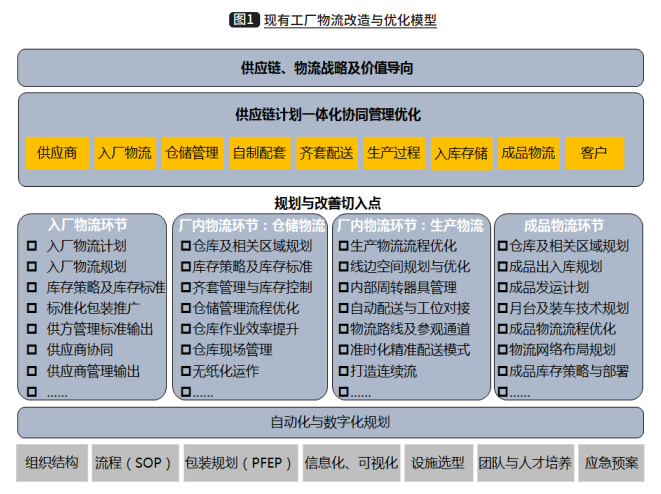
首先,工厂物流改造与优化需要确定企业的供应链、物流战略及价值导向,以形成发展方向上的相对聚焦,达成企业上下的共识与共行。对于工厂的经营而言,交付、成本、品质、服务、速度、效率等都需要兼顾,这些要素相互影响、制约和促进。所以,企业要结合行业环境和企业自身特征,选择对自身竞争力提升的关键要素作为重点。另外,对于工厂数字化、智能化发展方向也需要在战略中明确定义,明确中长期愿景,以达成各部门的共识与共行。 数字化转型网(www.szhzxw.cn)
其次,需要建立计划一体化协同管理体系,实现产销计划、生产计划、采购计划、物流计划、发运计划之间的协同联动。计划能力的最终体现是能够快速识别和应对市场波动,因此计划体系要打破“击鼓传花”式的串联机制,建立以供应链计划为核心的互联互通机制。当一个条件发生变化时,该体系能够快速识别风险和差异,并指引其他计划进行合理的判断和调整。
第三,需要寻找合适的规划与改善切入点,以此为抓手进行物流端到端的改造与优化。无论以入厂物流、厂内物流还是成品物流为主要切入点,物流改造过程中都应时刻把握其价值链的属性,物流链上每一个点都是承上启下、牵一发而动全身的,因此必然需要具备全局性、系统性的思维。在这个阶段,还需要持续关注组织、流程、包装、信息化与可视化、设施、团队与人才、应急物流等方面的提升和进步。
第四,在第一、二、三步取得一定成效的基础上,寻求自动化、数字化、智能化的突破。其重点在于智能单元化设计、自动化物流设施应用、人工智能设施应用、人机物数字化、物流场景数字化、物流计划智能化、物流信息平台建设等方面的逐步应用升级。 数字化转型网(www.szhzxw.cn)
二、物流转型升级的切入点
1. 制定物流战略
物流战略的逻辑引导价值判断体系的建成,将对后续所有的规划执行提供标准,判断相关物流技术、设备、软件选取的合理性,并指导整个运营落地过程中的方案优化,确保不管是规划还是运营都符合企业的物流战略和定位。
具体的智能工厂物流战略,是一步到位打造未来行业领先的标杆智能工厂,还是在现有基础上对标行业标杆企业实现稳步提升。不同的战略导向,使后续详细的规划方案差异较大。具体的智能工厂物流战略需要呈现的要素包括目标愿景、表现要素、要用到的技术支持、需要提升的基础条件等。
企业制定物流战略,旨在明确物流的发展定位、物流概念设计与价值导向、物流战略绩效与运营指标、物流发展路径引导等。物流战略的制定,和企业发展战略与目标、行业及产品特征、顾客需求和供应环境、持续改善理念等息息相关。 数字化转型网(www.szhzxw.cn)
2. 夯实物流基础
现有工厂的物流智能化升级是相对长期的目标,是持续改善的导向。对于大多数的现有制造工厂而言,当务之急是要以物流为主线,实现供应链上下游的协同运作,实现入厂物流、厂内物流和成品物流的协同,以提升工厂的运营效率。在这里,工厂的物流改造需要探讨的不是数字化、智能化的课题,而是理顺物流管理逻辑、夯实物流基础的过程,这是现有工厂通往智能化道路上的“必补之课”。
当工厂处在频繁缺货的漩涡当中时,需要解决的是建立物流计划与生产计划的有效联动,推动精细化的入厂物流管理,确保生产的安定化;当工厂产能无法满足市场需求时,需要通过提高物流的响应能力和速度,建立准时化的物料供应机制,节约更多的面积用于扩大生产;当工厂库存堆积如山时,需要的是建立合理有效的库存策略,以引导库存控制在合理的水平;当工厂成品库存居高不下而又频繁断货时,需要的是理顺客户需求和订单管理,建立销售与生产、物流的协同机制,以实现有效的订单优先级管理;当工厂自制件库存高企、占用大量生产面积时,需要的是拉通内部价值流,实现物理上或者计划上的联通,减少内部物流断点。
另一方面,现有工厂面临的很多基础性的问题,和数字化和智能化也没有必然的关系。当工厂总是出现账实不一致而导致管理混乱时,需要的是不断完善物料清单,提升实物流和信息流的一致性和同步性;当工厂物料包装五花八门、数量不准,导致物料接收、内部交接、点数、频繁切换包装、产线现场混乱等各种问题和浪费时,需要的是建立标准化、单元化、通用化的物料包装标准;当工厂面临各环节的物流现场混乱、效率低下且无法有效监控的管理时,需要的是建立各环节的物流运作标准和流程,使得物流运作“有法可依、违法可现”。
当工厂具有清楚的物流逻辑,也具备了较好的物流管理基础时,工厂才可以逐步推动物流自动化和数字化的建设。 数字化转型网(www.szhzxw.cn)
3. 消除物流断点
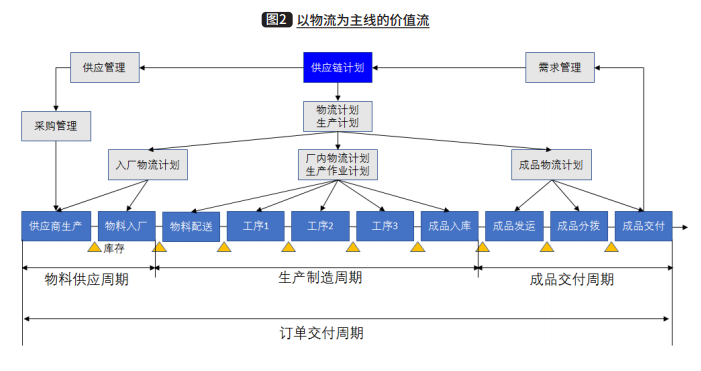
物流规划的重点在于创建连续流,创造快速流动的基础条件。如图2所示,以物流为主线,从端到端的角度看待价值流,其本质是用合理的、较低的成本提供较高的交付服务水平,在这样一个复杂系统中,整体均衡比局部高效更重要,全局协同比节点执行更重要。以物流为主线的价值流优化,应以计划协同为驱动,实现时间和库存的合理规划,其目的在于准确地响应需求、缩短交付时间和降低库存。因此,需要对物流过程进行整体的规划,以实现端到端“事实上的平衡”。
之所以说事实上的平衡,是因为企业不能“纠结”于理想的平衡或者理论上的平衡。物流端到端的过程就像是一条连续流生产线,对于一条真正的生产线,IE工程师通过工位平衡的方法进行理想的生产线平衡率设定,这样理论上每条线的实际产出能达到理论产出的90%甚至更高。但是实际运行的情况却并没有这么理想,因为在实际运行过程中总会有各种干扰情况出现,导致工程师为平衡生产而做出的许多努力可能劳而无功。因此,比分秒必争的工位平衡更为重要的,是在适当的工位平衡的基础上,预留好工时的缓冲(比如对于某些经常有干扰的工位保留20%左右的保护性产能)、设置好库存作为缓冲、管理好(削减)干扰和变异,以实现生产线整体产出最大化(而不是每个岗位产出最大化)。对于物流这条“生产线”而言,要实现整条“生产线”有效产出最大化,就要通过计划协同、线路规划、缓冲部署等措施,以实现整体效率的优化。

4. 发展专业化能力
建立物流管理组织,发展专业化能力。物流是端到端的思维,生产是“精确打击”的思维,因此,生产人员一般是管理不好物流的。在工厂中应该建立单独的物流管理组织,定义专业化的物流管理岗位,尤其应该重视物流规划、物流流程、库存管理、物流标准化以及物流自动化、数字化、智能化方面的人才培养和岗位建设。 数字化转型网(www.szhzxw.cn)
5. 物流技术和设施应用
物流系统虽然场景复杂,要满足比如大件和小件、整进整出和整进散出、分拣出库和直配岗位、各种尺寸规格的物料及产品单元等要求,但是经过物料包装的标准化设计,以及物流运作流程的标准化设计之后,不同行业、不同企业、不同产品物流系统中的关键装备、核心部件、控制系统和物流相关信息系统将具备很强的通用性;即便是非标系统的设计,也仅仅是外观尺寸的差异,其核心动作依然是“输送、转向、进出、拣选、抓取、堆码、定位、读取”等。也正因为如此,相关技术和设施在不断的应用过程中日趋成熟,这为工厂的物流智能化实现创造了极好的条件。
另一方面,现有工厂推进物流智能化改造,未必要一次性全部投入,可以按照“一次规划,分步实施”的步骤。横向上,可以先试点后复制,最大程度降低投资风险。纵向上,可以从一个环节、几个环节依次或同步展开。只要物流系统规划的逻辑正确,可以充分结合企业自身实际情况和试点情况进行节奏上的调整,就可以把风险控制在较低的水平。 数字化转型网(www.szhzxw.cn)
6. 物流数字化
物流数字化是物流智能化改造的必然过程,物流智能化需要建立在物流数字化基础之上。物流数字化的基本表现是物流过程全部“在线”、无纸化、数据采集与传递自动化、数据自动分析、风险与异常自动预警、可视化等。实质上,物流数字化是将工厂物流管理逻辑、经验和知识固化到信息系统中的过程。物流数字化的前提是“要素上线”,要通过RFID或条码技术的应用,实现物料及相关设备、人员的数字化,比如可感应的物料标签、设备标签、单据标签及人员标签等,实现人、机、料全部具备动态数据自动采集和双向沟通的条件。物流数字化基础包括物料、库位、路径、设施、人员等方面的数字化。
三、物流转型升级的效益
现有工厂进行物流优化,并逐步往数字化、智能化方向提升,结合众多进行物流改造的企业经验和成绩来看,从长远而言,将在以下多个方面为企业创造效益:
1.在价值链的维度上实现实物流和信息流的协同联动,打通企业经营的“任督二脉”,提升资金周转率,能够重塑企业供应链核心竞争优势;
2.打造除生产之外的又一条持续发展的通道,不断提升企业的运营效率,随着物流能力的提升,不断提升工厂的经营指标;
3.随着供应链-物流体系的不断优化,逐步走向协同、稳定、平衡,企业应对风险和需求变化的能力将变得越来越强; 数字化转型网(www.szhzxw.cn)
4.改变过去企业积重难返(高库存、高成本、低利润等)的窘境,当企业面临巨大的机会、风险、危机时,企业能够比竞争对手有更快的响应速度,这可能成为激烈竞争环境下企业成败的分水岭;
5.经过现有工厂的改善、改造和经验积累,企业在未来建立新工厂或智能工厂时,无论思想上、能力上和技术上都具有更高的起点。
工厂的改善从来都是一个持续的过程,如果已经在路上,就能拥有一个看得见的未来。而从短期而言,经过1~2年较大力度的改善,一般可以实现以下指标的提升:
(1)物流与生产的同步优化,可以实现工厂规划产能提升30%以上;
(2)总体库存周转率提升50%以上;
(3)直接物流人员减少50%以上;
(4)人均产出提升30%以上;
(5)交付周期缩短30%以上;
(6)综合运营成本降低20%以上。 数字化转型网(www.szhzxw.cn)
四、物流转型升级的约束
现有工厂进行物流改造升级刻不容缓,也能获得巨大的效益,但和新工厂建设相比,老工厂确实存在较多的约束条件,使得改造的过程困难重重。
首先是思维模式的转变。从孤岛式管理到端到端协同管理,从重生产到“大物流小生产”,从重硬件到重逻辑,工厂从高层开始,在思维惯性和情感上都会受到很大的约束,要转变传统的工厂管理思维,基于笔者过去积累的经验,这种转变往往容易停留在口头上,而无法形成真正影响行动的有效导向。
其次是物流人才的缺失。在传统的工厂运营环境下是无法培养出符合物流发展需求人才的,但任何技术的应用都需要有专业人才去规划、设计、持续改进,这也是为何很多工厂物流发展较慢的原因之一。
第三是现有布局和建筑约束。老工厂建设时间相对较早,过去建厂房都是“先建后用”,统一拿地后建设标准厂房,很少结合生产需要进行先期规划。而且,工厂经过多年的发展,可能在产品、产量、工艺、技术等方面都发生了一定程度的改变,因此可能存在一些建筑、大型设备、总体布局等方面的“硬”约束,比如物流动线难以全盘调整、厂房大小和尺寸设计不合理、厂房楼层和高度设计不合理、厂房功能区域布局不合理等。对于这些约束,需要进行综合分析和判断,有些改动投资大、效益低,则应该尽量沿用,以此为固定条件进行规划;而有些即便是投资比较大,但是对整个工厂的效率提升有很大的帮助,或者是对于工厂物流转型升级的必然之举,那就取决于企业管理者的决心和信心了。
第四是供应商的综合能力约束。智能工厂和智能物流的改造,不是单纯一个工厂的事情,而是整个价值链各个环节的综合优化,供应商无疑是价值链上至关重要的构成部分。制造企业的供应商很大一部分属于中小企业,其管理水平、物料包装、硬件基础和信息化条件相对于大企业而言都比较差,因此会在工厂(主机厂)进行改造的过程中形成约束。 数字化转型网(www.szhzxw.cn)
数字化转型网灯塔智造专题
数字化转型网灯塔智造专题活动将涵盖灯塔工厂、黑灯工厂、未来工厂、智能工厂等,从设计规划到落地实践的全流程。并融合人工智能、数字化转型、智能制造、机器人与自动化等技术与理念,帮助中国制造业企业打通客户订单到生产的全流程,实现世界一流灯塔标杆。数字化转型网灯塔智造专题活动包含以下内容:
1、灯塔智造外脑支持:通过平台外脑的力量,让决策者拥有更多的聘请超过100位的智能制造专家、超过1000家的智能制造软硬件技术公司、超过10000份学习资料,为企业提供强大的智造外脑支持,助力企业打造智能工厂、灯塔工厂。 数字化转型网(www.szhzxw.cn)
2、灯塔智造研习社:与制造业顶尖精英一起学习!数字化转型网建立了一个专门讨论智能制造、灯塔工厂等相关技术的研究学习社区,与各位同学一起成长!
3、灯塔智造论坛:智能浪潮!引领未来!数字化转型网打造的智造论坛,旨在通过高端对话推动行业树立正确理念,减少行业噪音,正本清源,助力行业发展!
4、灯塔工厂参观研学:目前灯塔工厂全球已有153家,目前中国已有62家,数字化转型网计划组织灯塔研习社的同学们先后参观国内的施耐德、海尔、博世、美的、三一重工、宁德时代、联合利华、宝洁、青岛啤酒等等,以及赴国外参观全球的灯塔工厂。
5、灯塔标杆案例研学:除了灯塔工厂外,数字化转型网仍然关注驱动整个制造业数字化转型、制造业智能制造、数字创新技术,我们将以不积跬步无以至千里的精神,关注每一个在细微处取得伟大成绩的“灯塔标杆”案例,组织灯塔研习社社员学习行业标杆!
更多灯塔工厂、黑灯工厂、未来工厂、智能制造等相关内容可扫码加入数字化转型网灯塔智造研习社




翻译:
Logistics intelligent transformation of traditional factories – “Smart factory logistics Construction” series
Digital Transformation network lighthouse manufacturing topic
The Digital transformation network lighthouse intelligent manufacturing special activities will cover the lighthouse factory, black light factory, future factory, smart factory, etc., from design planning to the whole process of landing practice. It integrates technologies and concepts such as artificial intelligence, digital transformation, intelligent manufacturing, robotics and automation to help Chinese manufacturing enterprises open the whole process from customer order to production, and achieve the world-class beacon. 数字化转型网(www.szhzxw.cn)
Leading words:
To upgrade and transform the logistics system of the existing factory, it is necessary to establish a systematic and comprehensive diagnosis and review basis, clarify the problems, opportunities and constraints of the factory, and select the entry point that matches its own conditions and has better economic benefits for logistics transformation and optimization. This paper analyzes the basic models, entry points, benefits and constraints of the transformation and upgrading of factory logistics.
In many manufacturing enterprises’ factories consulted and diagnosed by the author’s team, although the performance of logistics problems is different, it can be summarized as follows: lack of logistics strategy and correct cognition of logistics; Mismatch between logistics capacity and production capacity; Lack of effective coordination of logistics plans; Lack of effective material control; Lack of professional logistics organization and personnel; Weak foundation of logistics management; There are a lot of logistics islands. In addition, manufacturing plants face increasing pressure on labor costs, environmental protection and energy costs. Due to various problems in the logistics of the factory, the production of the factory is unstable, the delivery cycle is long, the order delivery rate is low, the inventory turnover rate is low, the inventory is sluggish, and the factory operating costs are high, which makes the overall performance of the factory poor, and ultimately affects the key competitiveness factors of the enterprise such as product cost, customer satisfaction, and factory field performance.
When upgrading and transforming the logistics system of the existing factory, it is necessary to establish a systematic and comprehensive diagnosis and review basis, clarify the problems, opportunities and constraints of the factory, and select the entry point that matches its own conditions and has better economic benefits for logistics transformation and optimization.
First, the basic mode of logistics transformation and upgrading
Recognize the importance of logistics for smart factory operations
Logistics is the core element in the transformation and upgrading of factories, and its basic mode and content are shown in Figure 1.
First of all, factory logistics transformation and optimization need to determine the supply chain, logistics strategy and value orientation of the enterprise, in order to form a relative focus on the development direction, and reach a consensus and a common line. For the operation of the factory, delivery, cost, quality, service, speed, efficiency, etc. need to be taken into account, and these factors affect, restrict and promote each other. Therefore, enterprises should combine the industry environment and their own characteristics, choose the key elements of their own competitiveness as the focus. In addition, the direction of digitization and intelligent development of the factory also needs to be clearly defined in the strategy, and the medium and long-term vision needs to be clearly defined to reach the consensus of all departments and work together. 数字化转型网(www.szhzxw.cn)
Secondly, it is necessary to establish a coordinated management system for planning integration to realize the synergy between production and marketing plans, production plans, procurement plans, logistics plans and shipping plans. The ultimate embodiment of planning ability is to quickly identify and respond to market fluctuations, so the planning system should break the series mechanism of “drumming and passing flowers” and establish an interconnection mechanism with supply chain planning as the core. When a condition changes, the system can quickly identify risks and discrepancies and guide other plans to make reasonable judgments and adjustments. 数字化转型网(www.szhzxw.cn)
Third, it is necessary to find a suitable planning and improvement entry point to carry out end-to-end transformation and optimization of logistics. Whether it is inbound logistics, in-plant logistics or finished product logistics as the main entry point, the logistics transformation process should always grasp the attributes of its value chain, and every point on the logistics chain is connected and affected by the whole body, so it is necessary to have a global and systematic thinking. At this stage, it is also necessary to continue to pay attention to the improvement and progress of organization, process, packaging, information and visualization, facilities, teams and talents, and emergency logistics.
Fourth, on the basis of certain results achieved in the first, second and third steps, we will seek breakthroughs in automation, digitalization and intelligence. It focuses on the gradual application and upgrading of intelligent unit design, application of automated logistics facilities, application of artificial intelligence facilities, digitization of man-machine objects, digitization of logistics scenes, intelligentization of logistics plans, and construction of logistics information platforms.
Second, the entry point of logistics transformation and upgrading
1. Develop logistics strategies
The logic of logistics strategy guides the construction of the value judgment system, which will provide standards for all subsequent planning and execution, judge the rationality of the selection of relevant logistics technology, equipment and software, and guide the optimization of the entire operation landing process to ensure that both planning and operation are in line with the logistics strategy and positioning of the enterprise. 数字化转型网(www.szhzxw.cn)
The specific smart factory logistics strategy is to build a future industry-leading benchmark smart factory in one step, or to achieve steady improvement of benchmarking industry benchmark enterprises on the existing basis. Different strategic orientations make the subsequent detailed planning schemes differ greatly. The specific elements of smart factory logistics strategy need to be presented include goal vision, performance elements, technical support to be used, and basic conditions that need to be improved.
The purpose of formulating logistics strategy is to clarify logistics development positioning, logistics concept design and value orientation, logistics strategic performance and operation indicators, and logistics development path guidance. The formulation of logistics strategy is closely related to enterprise development strategy and objectives, industry and product characteristics, customer demand and supply environment, and the concept of continuous improvement.
2. Consolidate logistics foundation
The intelligent upgrading of logistics in existing factories is a relatively long-term goal and a guide to continuous improvement. For most of the existing manufacturing plants, it is imperative to take logistics as the main line, achieve the coordination of upstream and downstream of the supply chain, achieve the coordination of inbound logistics, in-plant logistics and finished product logistics, in order to improve the operational efficiency of the factory. Here, the logistics transformation of the factory needs to discuss not the topic of digitalization and intelligence, but the process of rationalizing the logistics management logic and consolidating the logistics foundation, which is the “must-make up lesson” on the road to intelligence of the existing factory. 数字化转型网(www.szhzxw.cn)
When the factory is in the whirlpool of frequent stock shortage, the need to solve is to establish the effective linkage between logistics plan and production plan, promote refined inbound logistics management, and ensure the stability of production; When the factory capacity cannot meet the market demand, it is necessary to improve the response ability and speed of logistics, establish a just-in-time material supply mechanism, and save more area for expanding production. When the factory inventory is piling up, it is necessary to establish a reasonable and effective inventory strategy to guide the inventory control at a reasonable level; When the inventory of finished products in factories is high and frequently out of stock, it is necessary to straighten out customer demand and order management, and establish a collaborative mechanism between sales, production and logistics to achieve effective order priority management. When the inventory of homemade parts in the factory is high and occupies a large amount of production area, what is needed is to pull through the internal value stream, achieve physical or planned connectivity, and reduce internal logistics breakpoints.
On the other hand, many basic problems faced by existing factories are not necessarily related to digitalization and intelligence. When the factory is always inconsistent with the accounts and results in management confusion, what is needed is to constantly improve the bill of materials and improve the consistency and synchronization of the physical flow and information flow; When the packaging of materials in the factory is varied and the quantity is not allowed, resulting in various problems and waste such as material reception, internal handover, points, frequent switching of packaging, and chaos on the production line site, it is necessary to establish standardized, unitized and universal material packaging standards; When the factory is faced with the chaotic, inefficient and ineffective management of the logistics site of each link, it is necessary to establish the logistics operation standards and processes of each link, so that the logistics operation can be “law-based and illegal”.
When the factory has a clear logistics logic, but also has a better logistics management foundation, the factory can gradually promote the construction of logistics automation and digitalization.
3. Eliminate logistics breakpoints
The focus of logistics planning is to create continuous flow and create the basic conditions for rapid flow. As shown in Figure 2, taking logistics as the main line and viewing value stream from an end-to-end perspective, its essence is to provide a higher level of delivery service with reasonable and low cost. In such a complex system, the overall balance is more important than local efficiency, and global collaboration is more important than node execution. The value stream optimization with logistics as the main line should be driven by planning coordination to realize reasonable planning of time and inventory, which aims at accurately responding to demand, shortening delivery time and reducing inventory. Therefore, it is necessary to plan the logistics process as a whole to achieve “de facto balance” from end to end. 数字化转型网(www.szhzxw.cn)
The reason for saying that the actual balance is because the enterprise cannot “tangle” with the ideal balance or the theoretical balance. The end-to-end process of logistics is like a continuous flow production line. For a real production line, IE engineers set the ideal production line balance rate through the method of station balance, so that theoretically the actual output of each line can reach 90% or even higher of the theoretical output. However, the actual operation situation is not so ideal, because there are always various interference situations in the actual operation process, resulting in many efforts made by engineers to balance production may be futile. Therefore, more important than the minution-by-minute workstation balance is to reserve a good buffer of working hours on the basis of the appropriate workstation balance (such as reserving about 20% protective capacity for some stations that often have interference), set up a good inventory as a buffer, and manage (reduce) interference and variation. To maximize the output of the production line as a whole (not per position). For the logistics “production line”, in order to maximize the effective output of the whole “production line”, it is necessary to optimize the overall efficiency through planning coordination, line planning, buffer deployment and other measures. 数字化转型网(www.szhzxw.cn)
4. Develop professional capacity
Establish logistics management organization and develop professional capability. Logistics is an end-to-end thinking, production is a “precision strike” thinking, therefore, production personnel are generally not good at managing logistics. In the factory, a separate logistics management organization should be established to define professional logistics management positions, and particular attention should be paid to the training and job construction of personnel in logistics planning, logistics process, inventory management, logistics standardization, logistics automation, digitalization, and intelligence.
5. Logistics technology and facility application
Although the logistics system is complex, it needs to meet the requirements such as large and small pieces, integrated and integrated into and out, sorting out warehouses and direct distribution posts, materials and product units of various sizes and specifications, but after the standardized design of material packaging and the standardized design of logistics operation process, The key equipment, core components, control systems and logistics related information systems in different industries, different enterprises and different products logistics systems will have strong universality; Even if the design of the non-standard system is only the difference in appearance size, its core action is still “conveying, steering, entering and leaving, picking, grasping, stacking, positioning, reading” and so on. Because of this, relevant technologies and facilities are becoming more and more mature in the process of continuous application, which creates excellent conditions for the realization of logistics intelligence in factories.
On the other hand, to promote the intelligent transformation of logistics in existing factories, it is not necessary to invest all at once, but can follow the steps of “planning once and implementing step by step”. Horizontally, it can be replicated after the pilot to minimize the investment risk. Vertically, it can be developed from one link, several links in turn or synchronously. As long as the logic of the logistics system planning is correct, the rhythm of the adjustment can be fully combined with the actual situation of the enterprise and the pilot situation, and the risk can be controlled at a low level.
6. Logistics digitalization
Logistics digitization is the inevitable process of logistics intelligent transformation, logistics intelligence needs to be built on the basis of logistics digitization. The basic manifestation of logistics digitization is that all logistics processes are “online”, paperless, automatic data collection and transmission, automatic data analysis, automatic risk and anomaly warning, visualization, etc. In essence, logistics digitization is the process of solidifying the logic, experience and knowledge of factory logistics management into the information system. The premise of logistics digitization is the “element line”, through the application of RFID or bar code technology, to achieve the digitization of materials and related equipment and personnel, such as sensor material labels, equipment labels, bill labels and personnel labels, to achieve people, machines, materials all have dynamic data automatic collection and two-way communication conditions. The foundation of logistics digitization includes the digitization of materials, storage locations, paths, facilities, personnel and so on. 数字化转型网(www.szhzxw.cn)
Third, the benefits of logistics transformation and upgrading
1. Logistics optimization of existing factories, and gradually to digital, intelligent direction, combined with the experience and achievements of many logistics transformation enterprises, in the long run, will create benefits for enterprises in the following aspects:
2. In the dimension of value chain, it can realize the synergy between physical flow and information flow, open up the “two veins” of enterprise operation, improve the capital turnover rate, and reshape the core competitive advantage of enterprise supply chain.
3. Create another channel for sustainable development in addition to production, continuously improve the operation efficiency of the enterprise, and continuously improve the operation indicators of the factory with the improvement of logistics capacity;
4. With the continuous optimization of the supply-chain logistics system, it is gradually moving towards coordination, stability and balance, and the ability of enterprises to cope with risks and demand changes will become stronger and stronger. 数字化转型网(www.szhzxw.cn)
5. To change the dilemma of the past (high inventory, high cost, low profit, etc.), when the enterprise is faced with huge opportunities, risks and crises, the enterprise can have a faster response speed than the competitors, which may become the watershed of the success of the enterprise in the fierce competition environment; 数字化转型网(www.szhzxw.cn)
6. After the improvement, transformation and experience accumulation of existing factories, enterprises have a higher starting point in the future when building new factories or smart factories, regardless of ideology, ability and technology.
Factory improvement is always a continuous process, and if it is already on the way, it can have a visible future. In the short term, after 1 to 2 years of greater improvement, the following indicators can generally be achieved:
(1) Synchronous optimization of logistics and production, which can achieve more than 30% increase in factory planning capacity; 数字化转型网(www.szhzxw.cn)
(2) Overall inventory turnover increased by more than 50%;
(3) Reduce the number of direct logistics personnel by more than 50%;
(4) Increase per capita output by more than 30%;
(5) The delivery cycle is reduced by more than 30%;
(6) Comprehensive operating costs reduced by more than 20%.
Fourth, constraints on logistics transformation and upgrading
Fourth, constraints on logistics transformation and upgrading
The logistics upgrading of the existing factory is urgent and can obtain huge benefits, but compared with the construction of the new factory, the old factory does have more constraints, making the transformation process difficult. 数字化转型网(www.szhzxw.cn)
The first is a paradigm shift. From isolated management to end-to-end collaborative management, from heavy production to “big logistics and small production”, from heavy hardware to heavy logic, the factory starts from the top, in the inertia of thinking and emotion will be greatly constrained, to change the traditional factory management thinking, based on the author’s past experience, this change is often easy to stay in the mouth. They are unable to form effective directions that really affect action.
The second is the lack of logistics talents. In the traditional factory operation environment, it is impossible to train talents to meet the needs of logistics development, but the application of any technology requires professional talents to plan, design and continuous improvement, which is one of the reasons why many factory logistics development is slow.
The third is the existing layout and architectural constraints. The construction time of the old factory is relatively early, and the construction of the factory in the past is “build first and then use”, and the construction of the standard factory after the unified land is built, and the advance planning is rarely combined with the production needs. Moreover, after years of development, the factory may have changed to a certain extent in terms of product, output, process, technology, etc., so there may be some “hard” constraints in terms of construction, large equipment, overall layout, etc. For example, the material flow line is difficult to adjust completely, the plant size and size design is unreasonable, the plant floor and height design is unreasonable, and the layout of the plant function area is unreasonable. For these constraints, comprehensive analysis and judgment need to be carried out. Some changes should be adopted as far as possible with large investment and low benefit, and this is a fixed condition for planning. Even if the investment is relatively large, it will greatly help to improve the efficiency of the entire factory, or it is an inevitable move for the transformation and upgrading of the factory logistics, which depends on the determination and confidence of the enterprise manager.
The fourth is the supplier’s comprehensive ability constraints. The transformation of smart factory and smart logistics is not a simple matter of a factory, but a comprehensive optimization of all links of the entire value chain, and suppliers are undoubtedly a crucial part of the value chain. A large part of the suppliers of manufacturing enterprises belong to small and medium-sized enterprises, whose management level, material packaging, hardware foundation and information conditions are relatively poor compared with large enterprises, so it will form constraints in the process of factory (Oems) transformation. 数字化转型网(www.szhzxw.cn)
Digital Transformation network Lighthouse intelligence project
The Digital transformation network lighthouse intelligent manufacturing special activities will cover the lighthouse factory, black light factory, future factory, smart factory, etc., from design planning to the whole process of landing practice. It integrates technologies and concepts such as artificial intelligence, digital transformation, intelligent manufacturing, robotics and automation to help Chinese manufacturing enterprises open the whole process from customer order to production, and achieve the world-class beacon. The Digital Transformation Network Lighthouse Smart Building thematic event includes the following contents: 数字化转型网(www.szhzxw.cn)
1. Lighthouse intelligent manufacturing external brain support: through the power of the platform external brain, so that decision-makers have more than 100 intelligent manufacturing experts, more than 1,000 intelligent manufacturing hardware and software technology companies, more than 10,000 learning materials, to provide enterprises with strong intelligent manufacturing external brain support, help enterprises to build smart factories, lighthouse factories. Digital Transformation Network (www.szhzxw.cn)
2. Lighthouse Intelligent Manufacturing Learning Club: Study with the top elites in manufacturing! Digital Transformation Network has established a research and learning community dedicated to discussing intelligent manufacturing, lighthouse factory and other related technologies, and grow together with all students!
3. Lighthouse Intelligent Forum: Intelligent wave! Lead the future! The intelligent forum created by the digital transformation network aims to promote the industry to establish a correct concept through high-end dialogue, reduce industry noise, clean up the original source, and help the development of the industry! 数字化转型网(www.szhzxw.cn)
4. Lighthouse factory visit and study: Currently there are 153 lighthouse factories in the world, and 62 lighthouse factories in China. The Digital transformation network plans to organize students from the lighthouse Study club to visit Schneider, Haier, Bosch, Midea, Sany Heavy Industry, Ningde Times, Unilever, Procter & Gamble, Tsingtao Beer, etc., as well as to visit lighthouse factories in the world abroad.
5. Lighthouse benchmarking case study: In addition to the lighthouse factory, the digital transformation network is still concerned about driving the digital transformation of the entire manufacturing industry, intelligent manufacturing in the manufacturing industry, and digital innovation technology. We will pay attention to every “lighthouse benchmarking” case that has achieved great achievements in details with the spirit of “no steps or even thousands of miles”, and organize members of the lighthouse Study club to learn industry benchmarking!
More lighthouse factory, black light factory, future factory, intelligent manufacturing and other related content can be scanned to join the digital transformation network light tower intelligent manufacturing research club
本文由数字化转型网(www.szhzxw.cn)转载而成,来源于网络;编辑/翻译:数字化转型网宁檬树。