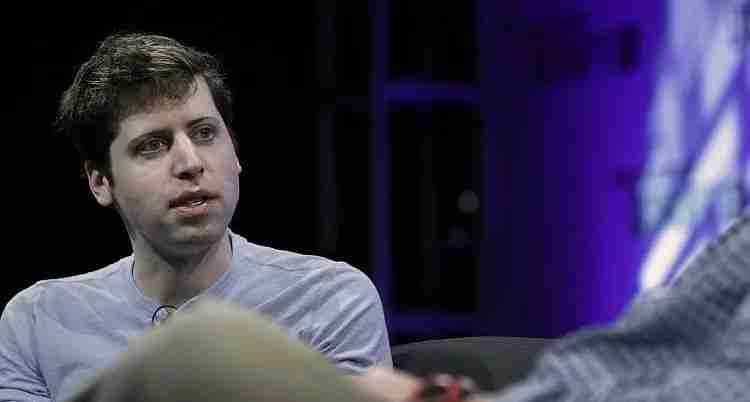
在1月中旬参观了OpenAI的旧金山办公室后,《福布斯》采访了这位最近不愿在媒体上露面的投资人和企业家,与他聊了聊ChatGPT、通用人工智能(AGI),以及他的人工智能工具是否会对谷歌搜索构成威胁等话题。
福布斯:随着人工智能ChatGPT的流行、将其变现的驱动力以及大家对你们与微软合作的关注,这一技术正处于一个拐点。从你的角度来看,OpenAI觉得它正处于一个什么样的阶段?你会如何描述这个拐点呢?
山姆·阿尔特曼:
这绝对是一个激动人心的时刻,但我认为这仍是它的一个非常早期的阶段。事实上,这将是一条持续的指数式的技术改进之路,并且它对社会的积极影响也将呈指数性攀升。
在发布GPT-3或DALL-E的时候,我们本就可以这样说了,但我们现在(对于ChatGPT)才这样说。我想我们今后还可以继续说这样的话。虽然我们有可能是错的,也可能会遇到一个此前或现在都没有预料到的绊脚石,但我认为,我们很有可能已经发现了一些重要的东西,而这种范式带我们走得很远很远。
福布斯:人们对人工智能ChatGPT的反应有让你感到惊讶吗?
山姆·阿尔特曼:
我一开始做它就是因为我认为它会成功。所以,虽然我对人们的反应规模感到有些惊讶,但我确实此前就希望并预料到它会受到人们的关注和喜爱。
福布斯:格雷格·布罗克曼 (Greg Brockman) 告诉我,你们的团队此前甚至不确定这款软件是否值得推出,所以不是每个人都是这么想。
山姆·阿尔特曼:
长期以来,我们的团队对于推出新产品的确都不太兴奋。我们只是会说,“我们试试吧,试试看会发生什么。”但是这一次,我为了这个项目做出了很大的努力,因为我真的认为它能成功。
福布斯:你曾经说过,你认为人们可能会对人工智能ChatGPT真正的构成和运行方式感到惊讶。你认为这中间存在哪些误解?
山姆·阿尔特曼:
其中一件事是,人工智能ChatGPT的基本模型已经在API中存在很长时间了,大概10个月吧,甚至更久。[编者注:ChatGPT是GPT-3模型的更新版本,于2020年首次作为API发布。]
我认为其中一个令人惊讶的情况就是,如果你做出一点微调,让(模型)以特定的方式对人们有所用途,并找出正确的交互范式,那么你就可以得到这个结果。实际上,这并不是一项全新的技术。(让它产生这个效果的)是其他的调整。我认为这一点还没有得到很好的理解。比如,很多人仍然不相信我们,他们认为这一定是GPT-4。
福布斯:人工智能生态系统的泡沫化是一个对你有帮助的趋势吗?还是说它会制造干扰,让你们的工作更加复杂?
山姆·阿尔特曼:
都有。肯定是两者都有。
福布斯:你认为该领域是否正在形成一个真正的生态系统,例如除了OpenAI之外,其他公司也在做着重要的工作?
山姆·阿尔特曼:
是的,我认为这个领域对一家公司来说太大了。实际上,我希望这里出现一个真正的生态系统。我觉得那样会更好。我认为在某个时候,世界上应该会出现多个AGI(通用人工智能),所以我真的很欢迎它的出现。
福布斯:你认为今天的人工智能市场与云计算、搜索引擎或其他技术的出现有什么相似之处吗?
山姆·阿尔特曼:
我认为它们总有相似之处,但同时也会有一些特异性的东西。大多数人会犯的一个错误是过多地谈论事物之间的相似之处,而不是谈论使它们不同于彼此的细微差别。
因此,假如你说,“啊,是的,这就像云计算之争一样,未来将会有多个这样的平台,而你只需要使用其中一个作为API就行了”——用这样的方式来谈论OpenAI是非常容易的,也是可以理解的,但事实上它们也有很多东西是大相径庭的,而且人们会做出非常不同的功能选择。不同公司的云在某些方面有很大的不同,但你把东西传上去,它就可以得到服务。我认为各种人工智能产品之间的差异会更大。
福布斯:人们想知道ChatGPT是否会取代传统的搜索引擎,比如谷歌搜索。这是让你感到兴奋或有所激励的事情吗?
山姆·阿尔特曼:
我不认为ChatGPT会取代搜索引擎,但我认为将来某一天的某个人工智能系统可能可以做到。
更重要的是,我认为如果你只关注昨天的新闻,你就会完全错过现在的机会。我更感兴趣的是思考搜索引擎之外的东西。我不记得在网络搜索引擎出现之前我们是怎么搜索信息的,我有点太年轻了。我想你也是如此……
福布斯:在我小的时候,我们有一张《大英百科全书》的光盘。
山姆·阿尔特曼:
是的,没错,我想起来了,就是那样。但是,过去没有人说:“啊,我要把《大英百科全书》的光盘做成一个稍微好一点的版本。”他们只会说,“嘿,实际上我们可以用一种非常不同的方式来做这件事。”
因此,让我对这些模型感到兴奋的并不是“如何用它们取代上网和使用搜索引擎查询信息的体验”,而是“我们能用它们做一些什么完全不同、而且更酷的事情?”
福布斯:这是AGI会实现的东西吗?还是在那之前就会发生了?
山姆·阿尔特曼:
哦,不,我希望它很快就会发生。
福布斯:你觉得我们是否已经接近了类似AGI的目标?以及我们怎么知道实现这一目标的是GPT的哪个版本,或者其他什么软件呢?
山姆·阿尔特曼:
我不认为我们已经快要实现AGI了。但是,我们如何知道(它何时会实现)是我最近一直在思考的问题。在过去五年里,或者说从我刚开始做这件事的时候算起——那还不止五年——我对此只有一个新的认识,那就是它不会是一蹴而就,而将是一个渐进的过程。这就是人们所说的“缓慢起飞”。人们对我们是什么时候实现AGI的不会达成共识。
福布斯:你认为这与你在OpenAI之外的其他兴趣有关系吗?比如你创办的Worldcoin和其他公司,它们是否都符合AGI理论?
山姆·阿尔特曼:
是的,有关系,至少这是我思考的框架。AGI是驱动我所有行动的推动力。可能我的有些行动比其他行动(与它的关联)更直接,但许多看起来不大相关的行动背后其实仍然是受它驱动。此外,我还有一个目标,那就是实现一个富足的世界。例如,我认为能源是非常重要的,而能源对创建AGI也非常重要。
福布斯:格雷格·布罗克曼说过,虽然OpenAI是受研究驱动的,但它并不反对资本主义。你如何在以营利为目的的投资者希望获得回报和OpenAI更广泛的目标之间取得平衡
山姆·阿尔特曼:
我认为资本主义很了不起。我热爱资本主义。在世界上所有的坏体系中,它是最好的一个,或者说是我们迄今为止发现的最不坏的一个。我希望我们能找到比它更好的体系。但我认为,如果AGI真的可以完全实现,我可以想象它会以各种方式打破资本主义。
据我所知,我们试图设计的是一种不同于其他任何公司结构的结构,因为我们真的相信我们正在做的事情。如果我们只是认为它将成为另一家科技公司,那我会说:“太好了,我知道这个剧本,因为我的整个职业生涯都在做这个,那就让我们做一家真正的大公司吧。”
但如果我们真的实现了AGI,而且它打破了(资本主义的范式),我们就需要(在公司结构上)有所不同。因此,我为我们的团队和我们的投资者能做到这么好而感到非常兴奋,但我认为人工智能领域不能被任何一家公司单独所有。如何分享AGI的利润,如何分享它的使用权,以及如何分配它的治理权限,这三个问题都需要新的思考。
福布斯:格雷格向我介绍了第三方API未来与第一方产品(也许是企业工具)并存的想法。在你们产品化的过程中,你们如何保持OpenAI的开放精神?
山姆·阿尔特曼:
我认为最重要的方法是推出像ChatGPT这样的开放工具。谷歌没有将这样的东西公之于众,其他一些研究实验室也因为一些原因没有这么做,还有人担心它不安全。但我真的相信,我们需要全社会去感受它,去与它互动,去看到它的好处,同时也理解它的缺点。所以我认为我们做的最重要的事情就是把它们向公众开放,这样全世界就可以开始了解接下来将要发生什么。在我为OpenAI感到骄傲的所有事情中,最令我感到骄傲的是,我们能够在AGI上以一种我认为是健康和重要的方式推动“奥弗顿之窗”的实现 [编者注:奥弗顿窗口是一种在特定时间内主流人群在政治上可以接受的一系列政策的模型。]——即使它有时会让人不舒服。
除此之外,我们还希望提供越来越强大的API,因为我们能够使它们更安全。另外,我们还会像开源CLIP [编者注:CLIP是Open AI于2021年发布的一款人工神经网络] 那样继续对一些软件进行开源。最近,我们又开源了Whisper和Triton(分别是一款自动语音识别程序和一个编程语言)。所以我认为这是一个多管齐下的策略,在平衡每件事情的风险和收益的同时,把这些东西推向世界。
福布斯:有些人可能会担心你在搭Satya Nadella (微软CEO) 和微软公司的便车,对于这些人你想说些什么?
山姆·阿尔特曼:
我想说的是,我们与他们达成的任何协议都是经过仔细考虑的,以确保我们仍然能够履行我们的使命。而且,Satya和微软都很棒。我认为到目前为止,他们是与我们的价值观最一致的科技公司。每次我们去找他们说,“嘿,我们要做一件奇怪的事情,你可能会讨厌它,因为它与标准交易的做法非常不同,比如限制你们的回报或设定一些安全优先条款”,他们都会说:“这太棒了。”
福布斯:所以你觉得OpenAI在盈利方面的商业压力或现实情况不会与公司的整体使命相冲突?
山姆·阿尔特曼:
一点也不。你可以去向任何人打听我。我是出了名的不会忍受任何我不想忍受的事情。如果我认为它们之间存在冲突,我就不会做任何交易。
福布斯:你们不是说“我们不想从中获利”的苦行僧,但与此同时,你们似乎也不以创造财富为动机。
山姆·阿尔特曼:
我认为这当中肯定有一种平衡。我们希望让员工获得很大的成功,让(他们的股权)获得很高的回报,那很好,只要它是处于一个正常、合理的水平。但如果整个AGI的事情真的实现了突破,那么我们想要一些不同的范式。我们现在想要的是如何与社会分享这些的能力。我认为我们已经以一种很好的、平衡的方式做到了这一点。
福布斯:到目前为止,你看到有人用人工智能ChatGPT做过的最酷的事情是什么?最让你害怕的事情又是什么?
山姆·阿尔特曼:
要选出一件最酷的事情真的很难。我看到了人们(用GPT)做的各种各样的事情,这是很了不起的。但我可以告诉你我在其中发现的最有个人价值的事情。(GPT的)总结概括功能对我来说意义重大,甚至比我之前想象的还要大得多。事实上,我可以用它来概括完整的文章或长邮件,这比我想象的要有用得多。此外,我还能向它问一些深奥的编程问题,或者让它帮我调试代码,这感觉就像我有一个超级出色的程序员可以与之交谈。
至于说最让我害怕的事情?我确实一直在密切关注开源图像生成器所生成的报复性色情图片。我认为这会造成巨大且可预见的伤害。
福布斯:你认为这些工具背后的公司有责任确保这种事情不会发生吗?还是说这只是人性中不可避免的一面?
山姆·阿尔特曼:
我认为两者都有。有一个问题是,你想在哪里监管它?从某种意义上来说,如果我们能指着这些公司说,”嘿,你不能做这些事”,那就太好了。但我认为,人们无论如何都会采用开源模型,而且这么做的结果在大多数情况下都是好的,但也会有一些不好的事情发生。在此基础上建立的公司,以及与终端用户有最后关系的公司也将不得不承担一些责任。因此,我认为这种情况将会采用共同责任和问责制度。
翻译
After visiting OpenAI’s San Francisco offices in mid-January, Forbes caught up with the recently media-shy investor and entrepreneur to chat about ChatGPT, General Artificial Intelligence (AGI), and whether his AI tools pose a threat to Google search.
Forbes: With the popularity of ChatGPT, the drive to monetize it, and the focus on your partnership with Microsoft, the technology is at an inflection point. From your perspective, what stage does OpenAI feel it is in? How would you describe this inflection point?
Sam Altman:
It’s definitely an exciting time, but I think it’s still a very early stage of it. In fact, it will be a continuous path of exponential technological improvement, and its positive impact on society will be exponentially higher.
We could have said that when we released GPT-3 or DALL-E, but we’re saying it now (for ChatGPT). I think we can continue to say that in the future. While we could be wrong and hit a stumbling block that was or is not anticipated, I think there’s a good chance that we’ve found something important, and this paradigm has taken us a long, long way.
Forbes: Have you been surprised by the reaction to ChatGPT?
Sam Altman:
I started doing it because I thought it would work. So while I was a little surprised by the scale of the reaction, I did hope and expect that it would be noticed and loved.
Forbes: Greg Brockman told me that your team wasn’t even sure it was worth launching, so not everyone felt that way.
Sam Altman:
For a long time, our team really didn’t get excited about launching new products. We just say, “Let’s try, let’s see what happens.” But this time, I put a lot of effort into this project because I really thought it would work.
Forbes: You’ve said in the past that you think people might be surprised by what ChatGPT is really made up of and how it works. What misunderstandings do you think exist?
Sam Altman:
One thing is that ChatGPT’s basic model has been in the API for a long time, maybe 10 months or more. [Editor’s note: ChatGPT is an updated version of the GPT-3 model, first released as an API in 2020.]
I think one of the surprising things is that if you tweak it a little bit, make [the model] useful to people in certain ways, and figure out the right interaction paradigm, then you can get this result. In fact, this technology is not entirely new. It’s the other tweaks. I don’t think that’s well understood. Like, a lot of people still don’t believe us, they think it must be GPT-4.
Forbes: Is the bubbling of AI ecosystems a trend that helps you? Or does it create distractions that complicate your work?
Sam Altman:
Both. It’s got to be both.
Forbes: Do you think there’s a real ecosystem emerging in this space, for example, where other companies besides OpenAI are doing important work?
Sam Altman:
Yes, I think the field is too big for one company. In fact, I want a real ecosystem to emerge here. I think that would be better. I think there should be multiple AGI [general artificial intelligence] in the world at some point, so I really welcome it.
Forbes: Do you see any parallels between today’s AI market and the emergence of cloud computing, search engines or other technologies?
Sam Altman:
I think there will always be similarities, but at the same time there will be something specific. One mistake most people make is to talk too much about the similarities between things instead of talking about the nuances that make them different from each other.
So if you say, “Ah, yeah, it’s like the cloud computing war, there’s going to be multiple platforms, and you’re just going to use one of them as an API” — it’s very easy and understandable to talk about OpenAI in that way, but there are a lot of things that are very different, And people make very different feature choices. Cloud from company to company varies a lot in some ways, but you upload something and it gets served. I think the differences between the various AI products will be even greater.
Forbes: People are wondering if ChatGPT will replace traditional search engines, like Google Search. Is it something that excites you or motivates you?
Sam Altman:
I don’t think ChatGPT will replace search engines, but I think some AI system might someday.
What’s more, I think if you only focus on yesterday’s news, you will miss the opportunity of the present completely. I’m more interested in thinking beyond search engines. I don’t remember how we searched for information before Internet search engines. I was a little too young. I think you do too…
Forbes: When I was a kid, we had a CD of the Encyclopaedia Britannica.
Sam Altman:
Yes, that’s right. I remember. That’s it. But nobody used to say, “Ah, I’ll make a slightly better version of the Encyclopaedia Britannica on disc.” They just say, “Hey, actually we can do this in a very different way.”
So what I’m excited about these models is not “how can we use them to replace the experience of surfing the web and using search engines to look up information?” but “What can we do with them that’s totally different and cooler?”
Forbes: Is this something that AGI will implement? Or was it going to happen before then?
Sam Altman:
Oh, no, I hope it will happen soon.
Forbes: Do you think we’re close to achieving something like AGI? And how do we know which version of GPT, or what other software, is achieving this goal?
Sam Altman:
I don’t think we’re on the verge of achieving AGI. But how we know is something I’ve been thinking about a lot lately. The only thing I’ve learned about this in the last five years, or since I started doing this — and that’s not five years — is that it’s not going to happen overnight. It’s going to be a gradual process. This is what people call a “slow takeoff.” People don’t agree on when we got AGI.
Forbes: Do you think this has anything to do with your other interests outside of OpenAI? For example, Worldcoin and other companies that you started, do they all conform to AGI theory?
Sam Altman:
Yes, it does, at least that’s how I think about it. AGI is the driving force behind all my actions. Some of my actions may be more direct than others, but many seemingly unrelated actions are still driven by it. In addition, I have another goal, which is to achieve a world of abundance. For example, I think energy is very important, and energy is very important for creating AGI.
Forbes: Greg Brockman has said that while OpenAI is research-driven, it’s not anti-capitalism. How do you balance the desire of for-profit investors to make a return with OpenAI’s broader goals?
Sam Altman:
I think capitalism is great. I love capitalism. Of all the bad systems in the world, it’s the best one, or the least bad one we’ve found so far. I hope we find a better system than that. But I think if AGI really can be fully realized, I can imagine it breaking up capitalism in all sorts of ways.
What we’re trying to design, as far as I can tell, is a structure unlike any other corporate structure, because we really believe in what we’re doing. If we just thought it was going to be another tech company, then I’d say, “Great, I know the playbook because I’ve been doing this my whole career, so let’s be a really big company.”
But if we do achieve AGI and it breaks [the capitalist paradigm], we need to be different [in our corporate structure]. So I’m very excited that our team and our investors are doing so well, but I don’t think AI can be owned by any one company alone. How to share AGI’s profits, how to share its access, and how to allocate its governance authority all three issues require new thinking.
Forbes: Greg introduced me to the idea of a future where third-party apis coexist with first-party products, perhaps enterprise tools. How do you maintain OpenAI’s open spirit as you productize?
Sam Altman:
I think the most important approach is to launch open tools like ChatGPT. Google has not made such a thing public, and some other research LABS have not done so for a number of reasons, and there are concerns that it is unsafe. But I really believe that we need society as a whole to feel it, to interact with it, to see its benefits, but also to understand its drawbacks.
So I think the most important thing we did was to open them up to the public so that the world could begin to understand what was going to happen next. Of all the things I’m proud of at OpenAI, I’m most proud that we’ve been able to drive the “Overton window” [Editor’s note: The Overton window is a model for a set of policies that are politically acceptable to the mainstream population at a given time] on AGI in a way that I think is healthy and important. — even if it can be uncomfortable sometimes.
Beyond that, we want to provide more and more powerful apis because we can make them more secure. In addition, we’re going to continue to Open source software like we did with CLIP [an artificial neural network released by Open AI in 2021]. We recently opened source Whisper and Triton, an automatic speech recognition program and a programming language, respectively. So I think it’s a multi-pronged strategy, balancing the risks and benefits of everything while putting these things out into the world.
Forbes: What do you say to those who might be concerned that you’re getting a free ride on Satya Nadella and Microsoft?
Sam Altman:
I would say that any agreements we make with them are carefully considered to ensure that we are still able to fulfill our mission. Also, Satya and Microsoft are great. I think they are by far the most aligned technology company with our values. Every time we go to them and say, “Hey, we’re going to do this weird thing that you’re going to hate because it’s so different from what standard deals do, like limiting your returns or setting some safety-first terms,” they say, “That’s great.”
Forbes: So you don’t feel that the business pressures or realities of monetizing OpenAI conflict with the company’s overall mission?
Sam Altman:
Not at all. You can ask anyone you want about me. I’m known for not putting up with anything I don’t want to put up with. If I thought there was a conflict between them, I wouldn’t make any deal.
Forbes: You’re not ascetics who say, “We don’t want to profit from this,” but at the same time, you don’t seem to be motivated by wealth creation.
Sam Altman:
I think there’s definitely a balance. We want people to have a lot of success and a lot of return [on their equity], and that’s fine, as long as it’s at a normal, reasonable level. But if the whole AGI thing really breaks through, then we want some different paradigms. What we want now is the ability to share this with society. I think we’ve done that in a good, balanced way.
Forbes: What’s the coolest thing you’ve seen someone do with GPT so far? What scares you the most?
Sam Altman:
It’s hard to pick the coolest thing ever. I’ve seen all sorts of things that people have done [with GPT], and it’s been remarkable. But I can tell you the most personal thing I found in it. The summary generalization function means a lot to me, even more than I thought it would. In fact, I can use it to encapsulate entire articles or long emails, which is much more useful than I thought. Plus, I can ask it deep programming questions or ask it to debug code for me, and it feels like I have a super awesome programmer to talk to.
As for what scares me the most? I do keep a close eye on revenge porn images generated by open source image generators. I think it’s going to cause huge and predictable harm.
Forbes: Do you think the companies behind these tools have a responsibility to make sure that doesn’t happen? Or is it just an inevitable part of human nature?
Sam Altman:
I think it’s both. One question is, where do you want to regulate it? In a sense, it would be great if we could point to these companies and say, “Hey, you can’t do these things.” But I think people will adopt the open source model anyway, and the results will be good in most cases, but some bad things will happen. Companies set up on this basis and that have a final relationship with the end user will also have to bear some responsibility. So I think this is a situation where there will be a system of shared responsibility and accountability.
本文由数字化转型网(www.szhzxw.cn)转载而成,来源:福布斯;编辑/翻译:数字化转型网Nancy.

免责声明: 本网站(http://www.szhzxw.cn/)内容主要来自原创、合作媒体供稿和第三方投稿,凡在本网站出现的信息,均仅供参考。本网站将尽力确保所提供信息的准确性及可靠性,但不保证有关资料的准确性及可靠性,读者在使用前请进一步核实,并对任何自主决定的行为负责。本网站对有关资料所引致的错误、不确或遗漏,概不负任何法律责任。
本网站刊载的所有内容(包括但不仅限文字、图片、LOGO、音频、视频、软件、程序等) 版权归原作者所有。任何单位或个人认为本网站中的内容可能涉嫌侵犯其知识产权或存在不实内容时,请及时通知本站,予以删除。