联邦学习是让多个参与方在不交换原始数据的前提下、通过交换模型参数或梯度信息共同训练一个全局模型的分布式机器学习范式,核心是数据不出本地而模型协同演进,能力包括按数据关系划分联邦类型、多种聚合算法与多层隐私增强。它解决的是数据孤岛下联合建模无法进行、原始数据共享存在合规风险的问题,并不解决参与方数据分布差异过大导致的协同效果打折问题。
联邦学习的核心是数据可用不可见,它可以帮助企业实现以下目标:
- 让多方数据在合规前提下联合建模。原始数据留在各方,参与方只交换模型更新。横向联邦适用于各参与方样本多而特征一致的场景,纵向联邦适用于同一批样本在不同机构持有不同特征的场景,跨机构联合建模因此具备落地路径。
- 让金融与医疗这类强合规场景可用起来。风控联合建模与影像协同分析在不出数据的前提下完成。聚合算法会按各参与方的数据量与分布特性调整权重,并在数据分布差异较大时引入正则项或方差缩减机制,避免个别参与方主导全局模型。
- 让参与方的贡献可以被度量。不同方的数据贡献在聚合过程中按权重体现,分配规则有据可依。
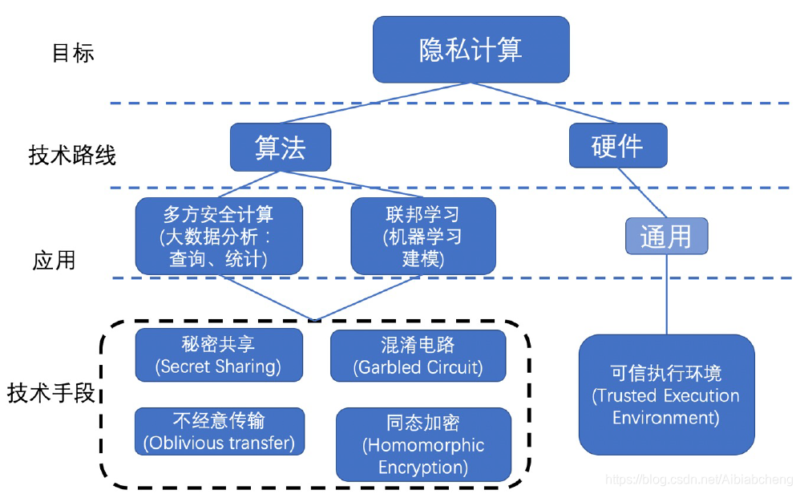
- 让隐私保护可以叠加。差分隐私、同态加密与安全多方计算可以与联邦框架组合使用。
总之,联邦学习可以帮助企业实现在数据要素化与隐私合规双重约束下的联合建模,把「数据可用不可见」从设想变成工程实践,降低跨机构数据协作的合规成本,支撑金融、医疗与政务场景的 AI 落地,是数据流通基础设施建设的重要支撑。
翻译
Federated learning is a distributed machine learning paradigm in which multiple parties jointly train a global model without exchanging raw data, instead exchanging model parameters or gradient information. Its core is that data stays local while models evolve together, with capabilities covering federated types classified by data relationship, multiple aggregation algorithms and layered privacy enhancement. It solves the problems of joint modeling being impossible across data silos and of raw data sharing carrying compliance risk, but it does not solve the problem of degraded collaboration caused by large distribution differences among participants.
At the heart of federated learning is usable but invisible data, which can help companies achieve the following:
- Let multiple parties jointly model within compliance limits. Raw data stays with each party and only model updates are exchanged.
- Make strictly regulated scenarios such as finance and healthcare usable. Joint risk modeling and collaborative imaging analysis complete without data leaving its owner.
- Let each party’s contribution be measured. The data contribution of different parties is reflected in weights during aggregation, making distribution rules evidence-based.
- Allow privacy protection to be layered. Differential privacy, homomorphic encryption and secure multi-party computation can be combined with the federated framework.
In short, federated learning can help enterprises achieve joint modeling under the dual constraints of data factorization and privacy compliance, turn usable-but-invisible data from an idea into engineering practice, lower the compliance cost of cross-institution data collaboration, support AI deployment in finance, healthcare and government scenarios, and constitute important backing for data circulation infrastructure.