近年来,政府政策支持、数字化覆盖、消费渠道增加等浓厚的供应链发展氛围为企业的成长按下快进键,不少企业开始进行供应链转型和升级。根据目前的发展趋势,未来供应链市场将围绕全球化、数字化、智能化、绿色化、多元化,聚焦供应链数字技术、物流配送速度、信息安全保障能力、ESG责任能力等方面进行资源优化和创新变革,全球产业布局和社会结构也将随之发生改变。
为进一步鼓励各市场参与者有序整合在供应链研发创新、生产技术等方面的要素资源,提升服务质量,促进相关领域的合作,毕马威中国联合菜鸟供应链管理有限公司发布《供应链物流5.0——构建全域数智供应链物流体系》报告。
(完整报告下载联系社群小助手思思:17757154048)
解读报告核心内容如下:
一、新型电商呈现“五维全域”特征,国内供应链正式进入5.0时代
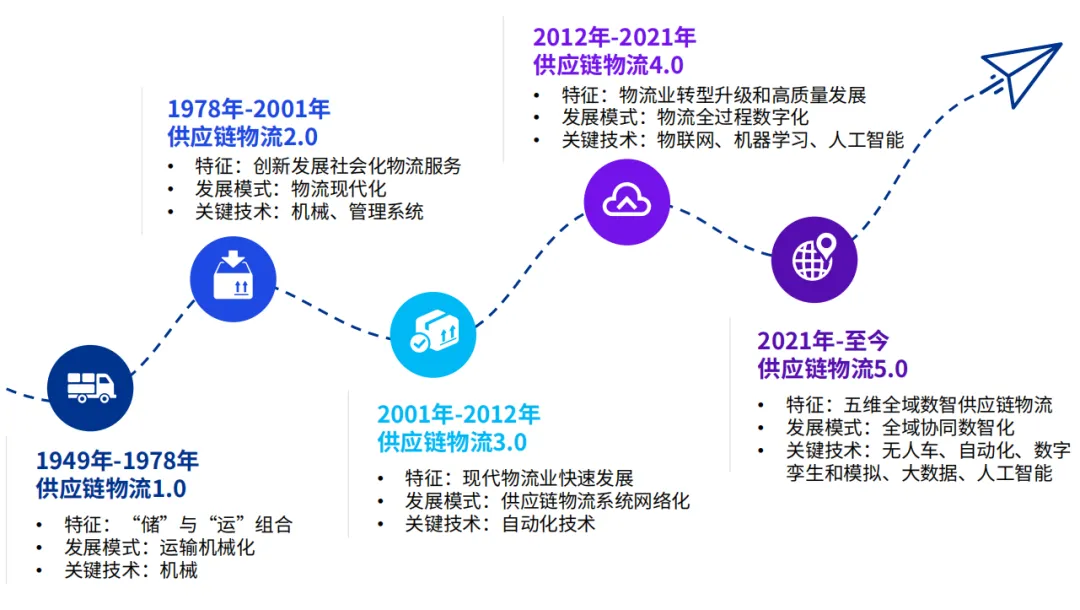
纵观物流业从过去到现在的历史产业演进,从物流1.0的运输机械化到2012年物流4.0的数字化创新升级,物流业发展速度惊人。伴随着2021年欧盟所提的工业5.0,物流5.0时代应运而生。进入供应链物流5.0时代,全域数智供应链物流成为众物流企业新的发展方向。
本报告提出供应链物流5.0时代——五维全域数智供应链物流体系是指全域数智供应链物流体的本质是集成与协同链条上的各个环节,利用数字化、智能化技术让生产端、销售端对需求端的把握更为精准,在“五维全域”(即多平台跨平台全域、线上线下全域、内容电商与货架电商全域、公私全域、国内外全域)让商品在最短的时间内送到消费者手中,最终使整个系统的成本最小化。

五维全域供应链物流是供应链物流5.0时代的核心概念,它代表了一种全新的供应链管理模式,具有以下五个维度的特征:
1. 多平台跨平台全域:企业不再局限于单一的电商平台,而是在多个平台和跨平台之间进行运营,实现更广泛的市场覆盖和客户触达。
2. 线上线下全域:线上商城和线下实体店的界限变得模糊,企业通过线上线下融合的方式提供无缝的购物体验,满足消费者的多元化需求。
3. 内容电商与货架电商全域:内容平台电商化和电商平台内容化的趋势使得短视频、直播等内容形式与商品销售相结合,形成新的购物模式。
4. 公私全域:公共领域和私有领域的资源和能力被整合,企业可以更灵活地调配资源,提高运营效率。
5. 国内外全域:跨境电商正在从外贸新业态转变为外贸新常态,企业不仅关注国内市场,也积极拓展国际市场,实现全球供应链的布局,满足不同地区消费者的个性化需求。

五维全域供应链物流体系的构建,旨在通过数字化、智能化技术的应用,实现生产端、销售端与需求端的精准对接,缩短商品从生产到消费者手中的时间,降低整个供应链系统的成本,提高效率。这一体系强调的是全链路的协同和整合,包括但不限于:
– 全链路数字化:利用大数据、物联网、人工智能等技术,实现供应链各环节的数字化管理。
– 智能决策:基于数据分析和算法模型,提高供应链的预测准确性和响应速度。
– 绿色供应链:推动供应链的绿色化、低碳化,实现可持续发展。
– 仓配一体化:整合仓储和配送资源,实现供应链的高效运作。
– 信息安全:加强数据保护和信息安全管理,确保供应链数据的安全和隐私。
– 供应链生态体系:与多方合作伙伴协同,共建供应链物流生态,提升整个供应链的竞争力和抗风险能力。
五维全域供应链物流体系的实施,有助于企业在复杂多变的市场环境中保持竞争力,实现供应链的优化和创新。
二、供应链物流5.0时代下物流企业发展趋势
趋势一:科技引擎重塑运营管理模式,加速智能决策。
物流企业通过应用物联网、人工智能、大数据等技术,实现运营管理的智能化和自动化,提高决策效率和准确性。

趋势二:加速新能源转型应对成本变化的不确定性。
为应对成本变化和环境要求,物流企业正加速采用新能源汽车和清洁能源,以降低运营成本并减少环境影响。
趋势三:绿色供应链促进物流生态可持续发展。
物流企业注重构建绿色供应链,通过电子面单、智能路径规划等手段减少碳排放,提升生态可持续性。
趋势四:全链路仓配一体化助力全球品牌敏捷降本,提升竞争实力。
通过整合仓储和配送资源,实现全链路的高效协同作业,降低成本并提高服务水平。
趋势五:加强供应链物流信息安全体系建设,合规发掘数据价值。
随着数字化的深入,物流企业越来越重视数据安全和隐私保护,构建信息安全体系,确保数据的合规使用。
趋势六:多方协同联动,共建供应链物流生态体系。
物流企业与供应商、客户及其他合作伙伴共同构建协同的供应链生态,提升整体竞争力。

趋势七:更加以客户为中心挖掘需求,着重打造供应链物流大模型预测能力。
利用大数据和人工智能技术,物流企业能够更准确地预测市场需求,优化库存和配送计划。
趋势八:注重建设全球物流基础设施,成为跨境电商品牌加速全球化步伐的助推器。
随着跨境电商的发展,物流企业加大全球物流基础设施建设,提高全球服务能力和效率。
这些趋势反映了物流企业在供应链物流5.0时代的发展方向,旨在通过技术创新和模式升级,提升服务质量,降低运营成本,并实现可持续发展。
三、如何打造五维全域数智供应链物流体系
消费领域正在向全渠道、全场景为代表的“五维全域”的业态进行转变,业态的转变也为供应链物流的建设提出越来越高的要求。要以数智技术为手段,深度参与全链路流通环节的物流建设,并兼顾柔性、弹性及韧性特征,精准响应消费需求的波动并做出前瞻性的业务指导。为了适应物流行业发展,供应链物流企业需要打造运营能力、客户需求导向能力、数智物流技术能力和ESG能力4个方面的能力,有效推动行业内的价值提升。

要打造运营能力、客户需求导向能力、数智物流技术能力和ESG能力这四个方面的能力,企业可以采取以下具体措施:
1. 运营能力
– 自建自营基础设施:投资建设仓库、配送中心和运输网络,确保物流服务的可控性和高效性。
– 流程优化:持续审视和优化供应链流程,减少不必要的步骤,提高效率。
– 技术集成:整合仓库管理系统(WMS)、运输管理系统(TMS)等,实现流程自动化。
2. 客户需求导向能力
– 市场研究:定期进行市场和客户需求研究,以便更好地理解市场趋势和客户需求。
– 定制化服务:提供定制化的物流解决方案,满足不同客户的特定需求。
– 客户反馈机制:建立有效的客户反馈收集和处理机制,不断改进服务。
3. 数智物流技术能力
– 投资先进技术:投资于物联网(IoT)、大数据分析、人工智能(AI)、机器学习等技术,提升物流智能化水平。
– 数据驱动决策:利用数据分析支持决策,提高预测准确性和运营效率。
– 创新研发:鼓励创新,研发新的物流技术和解决方案,保持竞争力。
4. ESG能力
– 环境责任:采取措施减少物流活动对环境的影响,如使用新能源运输工具,优化路线以减少碳排放。
– 社会责任:确保供应链中的劳动实践符合社会责任标准,支持社区发展。
– 公司治理:强化公司治理,确保透明度和道德行为,包括供应链的透明度。
通过这些措施,企业可以构建一个强大的五维全域数智供应链物流体系,不仅提升自身的竞争力,也为可持续发展做出贡献。
翻译:
“Supply Chain Logistics 5.0 — Building a Global digital intelligence Supply chain logistics System” was released
In recent years, the strong supply chain development atmosphere such as government policy support, digital coverage, and the increase of consumption channels has pressed the fast forward button for the growth of enterprises, and many enterprises have begun to transform and upgrade their supply chains. According to the current development trend, the future supply chain market will focus on globalization, digitalization, intelligence, green, and diversification, focusing on supply chain digital technology, logistics distribution speed, information security guarantee ability, ESG responsibility ability and other aspects of resource optimization and innovation, and the global industrial layout and social structure will also change.
In order to further encourage market participants to orderly integrate factor resources in supply chain R&D, innovation and production technology, improve service quality, and promote cooperation in related fields, KPMG China and Cainiao Supply Chain Management Co., Ltd. released the report “Supply Chain Logistics 5.0 – Building a Global digital intelligence Supply Chain Logistics System”.
(Full report download Contact community assistant Sisi: 17757154048)
The core contents of the report are as follows:
First, the new e-commerce presents the characteristics of “five-dimensional global”, and the domestic supply chain has officially entered the 5.0 era
Looking at the historical industrial evolution of the logistics industry from the past to the present, from the transportation mechanization of logistics 1.0 to the digital innovation and upgrading of logistics 4.0 in 2012, the development speed of the logistics industry is amazing. With Industry 5.0 proposed by the EU in 2021, the Logistics 5.0 era came into being. Entering the era of supply chain logistics 5.0, global digital-intelligent supply chain logistics has become a new development direction for many logistics enterprises.
Figure/Schematic diagram of supply chain logistics development stage
This report puts forward the era of supply chain logistics 5.0 — the five-dimensional global digital-intelligent supply chain logistics system refers to the essence of the global digital-intelligent supply chain logistics body is to integrate and coordinate all links on the chain, and use digital and intelligent technology to make the production end and sales end grasp the demand end more accurately. In the “five-dimensional global domain” (that is, multi-platform cross-platform global domain, online and offline global domain, content e-commerce and shelf e-commerce global domain, public and private global domain, domestic and foreign global domain), the goods are delivered to the hands of consumers in the shortest possible time, and ultimately the cost of the entire system is minimized.
Figure/Five-dimensional global supply chain logistics
Five-dimensional global supply chain logistics is the core concept of supply chain logistics 5.0 era, it represents a new supply chain management model, with the following five dimensions of characteristics:
- Multi-platform and cross-platform coverage: Enterprises are no longer limited to a single e-commerce platform, but operate across multiple platforms and cross-platforms to achieve broader market coverage and customer reach.
- Full range of online and offline: The line between online mall and offline physical store becomes blurred, and enterprises provide seamless shopping experience through the integration of online and offline to meet the diversified needs of consumers.
- Content e-commerce and shelf e-commerce: The trend of content platform e-commerce and e-commerce platform content has combined short video, live broadcast and other content forms with commodity sales to form a new shopping model.
- Public and private domain: the resources and capabilities of the public and private sectors are integrated, and enterprises can deploy resources more flexibly and improve operational efficiency.
- Full scope at home and abroad: cross-border e-commerce is transforming from a new form of foreign trade to a new normal of foreign trade. Enterprises not only pay attention to the domestic market, but also actively expand the international market, realize the layout of the global supply chain, and meet the personalized needs of consumers in different regions.
The construction of the five-dimensional global supply chain logistics system aims to realize the accurate docking of the production end, the sales end and the demand end through the application of digital and intelligent technology, shorten the time of goods from production to the hands of consumers, reduce the cost of the entire supply chain system and improve efficiency. This system emphasizes full-link collaboration and integration, including but not limited to:
- Full link digitalization: Using big data, Internet of Things, artificial intelligence and other technologies to achieve digital management of all links of the supply chain.
- Intelligent decision making: Based on data analysis and algorithmic models, improve forecasting accuracy and response speed in the supply chain.
- Green supply chain: promote the green and low-carbon supply chain to achieve sustainable development.
- Warehouse integration: Integrate warehousing and distribution resources to achieve efficient operation of the supply chain.
- Information security: Strengthen data protection and information security management to ensure the security and privacy of supply chain data.
- Supply chain ecosystem: Cooperate with multiple partners to build the supply chain logistics ecosystem and enhance the competitiveness and resilience of the entire supply chain.
The implementation of the five-dimensional global supply chain logistics system helps enterprises to maintain competitiveness in the complex and changeable market environment, and realize the optimization and innovation of the supply chain.
Second, the development trend of logistics enterprises in the era of supply chain logistics 5.0
Trend 1: The technology engine is reshaping operations management and accelerating intelligent decision making.
Through the application of technologies such as the Internet of Things, artificial intelligence, and big data, logistics enterprises can realize the intelligence and automation of operation management and improve the efficiency and accuracy of decision-making.
Figure/AI + Logistics market size from 2019 to 2025
Trend 2: Accelerating the transition to new energy to cope with the uncertainty of cost changes.
In response to cost changes and environmental requirements, logistics companies are accelerating the adoption of new energy vehicles and clean energy to reduce operating costs and reduce environmental impact.
Trend 3: Green supply chain promotes ecological sustainable development of logistics.
Logistics enterprises focus on building green supply chains, reducing carbon emissions and improving ecological sustainability through electronic bills, intelligent path planning and other means.
Trend 4: Full link warehouse integration to help global brands agile cost reduction, enhance competitive strength.
By integrating warehousing and distribution resources, full-link collaboration can be achieved to reduce costs and improve service levels.
Trend 5: Strengthen the construction of supply chain logistics information security system and explore data value in compliance.
With the deepening of digitalization, logistics enterprises pay more and more attention to data security and privacy protection, and build information security systems to ensure the compliant use of data.
Trend 6: Multi-party collaboration to build a supply chain logistics ecosystem.
Logistics companies work with suppliers, customers and other partners to build a synergistic supply chain ecosystem and enhance their overall competitiveness.
Figure/Schematic diagram of intelligent ecological logistics
Trend 7: More customer-centric mining demand, focusing on building supply chain logistics large model forecasting capabilities.
Using big data and artificial intelligence technology, logistics companies are able to more accurately predict market demand and optimize inventory and distribution plans.
Trend eight: Focus on the construction of global logistics infrastructure to become a booster for cross-border e-commerce brands to accelerate the pace of globalization.
With the development of cross-border e-commerce, logistics companies are increasing the construction of global logistics infrastructure to improve global service capabilities and efficiency.
These trends reflect the development direction of logistics enterprises in the era of supply chain logistics 5.0, which aims to improve service quality, reduce operating costs, and achieve sustainable development through technological innovation and model upgrading.
Third, how to build a five-dimensional global digital intelligence supply chain logistics system
The consumption field is changing to the “five-dimensional global” business mode represented by all-channel and all-scene, and the change of business mode also puts forward higher and higher requirements for the construction of supply chain logistics. It is necessary to take digital intelligence technology as a means to deeply participate in the logistics construction of the full link circulation link, and take into account the characteristics of flexibility, elasticity and toughness, accurately respond to the fluctuations of consumer demand and make forward-looking business guidance. In order to adapt to the development of the logistics industry, supply chain logistics enterprises need to build four aspects of operational capabilities, customer demand-oriented capabilities, digital logistics technology capabilities and ESG capabilities to effectively promote the value of the industry.
Figure/Five-dimensional global supply chain logistics capability derivation diagram
In order to build the ability of operation ability, customer demand-oriented ability, digital logistics technology ability and ESG ability, enterprises can take the following specific measures:
1. Operational capability
- Build your own infrastructure: Invest in warehouses, distribution centers and transportation networks to ensure the control and efficiency of logistics services.
- Process optimization: Continuously review and optimize supply chain processes to reduce unnecessary steps and improve efficiency.
- Technology integration: Integrate warehouse management system (WMS), transportation management system (TMS), etc., to achieve process automation.
2. Customer demand-oriented ability
- Market research: Conducts regular market and customer demand research in order to better understand market trends and customer needs.
- Customized services: Provide customized logistics solutions to meet the specific needs of different customers.
- Customer feedback mechanism: Establish an effective customer feedback collection and processing mechanism to continuously improve services.
3. Digital logistics technical ability
- Invest in advanced technologies: Invest in technologies such as the Internet of Things (IoT), big data analytics, artificial intelligence (AI), and machine learning to enhance the level of logistics intelligence.
- Data-driven decision making: Use data analytics to support decision making and improve forecast accuracy and operational efficiency.
- Innovative research and development: encourage innovation, develop new logistics technologies and solutions, and maintain competitiveness.
4. ESG ability
- Environmental responsibility: taking measures to reduce the environmental impact of logistics activities, such as the use of new energy means of transport and the optimization of routes to reduce carbon emissions.
- Social responsibility: Ensuring that labor practices in the supply chain meet socially responsible standards and support community development.
- Corporate governance: Strengthen corporate governance to ensure transparency and ethical behaviour, including in the supply chain.
Through these measures, enterprises can build a strong five-dimensional global digital intelligence supply chain logistics system, not only to enhance their own competitiveness, but also to contribute to sustainable development.