

中共中央、国务院近日印发了《党和国家机构改革方案》,其中明确了组建国家数据局。根据该方案,国家数据局将负责协调推进数据基础制度建设,统筹数据资源整合共享和开发利用,统筹推进数字中国、数字经济、数字社会规划和建设等,由国家发展和改革委员会管理。省级政府数据管理机构结合实际组建。数字化转型网szhzxw.cn
具体来讲,将中央网络安全和信息化委员会办公室承担的研究拟订数字中国建设方案、协调推动公共服务和社会治理信息化、协调促进智慧城市建设、协调国家重要信息资源开发利用与共享、推动信息资源跨行业跨部门互联互通等职责,国家发展和改革委员会承担的统筹推进数字经济发展、组织实施国家大数据战略、推进数据要素基础制度建设、推进数字基础设施布局建设等职责划入国家数据局。数字化转型网szhzxw.cn
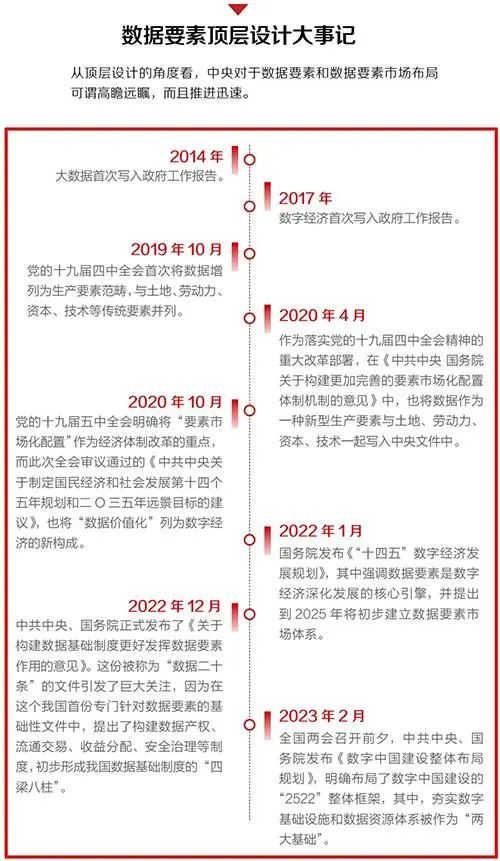
从中央把数据增列为生产要素,与土地、劳动力、资本、技术等传统要素并列,到陆续出台一系列发展规划和政策措施,推动数据要素化和数据要素市场建设,再到组建国家数据局,以数据要素为核心引擎推动数字经济发展和数字中国建设……中国都走在世界前列,与发达经济体相比毫不逊色。但这背后的顶层设计逻辑,你读懂了吗?数字化转型网szhzxw.cn
数据,被视为未来时代的“新石油”,之所以会有这样的类比,是因为数据将成为未来数字经济时代经济发展不可或缺的动能来源,就像石油曾经驱动了工业时代那样。
数据和石油类似,需要经过“冶炼加工”成为数据要素才能被使用并产生价值。但数据与石油又有很大区别,那就是它不会因为使用“燃烧”而消失,且可无限复制还成本极低,这意味着数据在为A所用之后,还可以继续为B、C、D、E……创造价值,具有价值倍增效应。但前提是数据要素必须要流动起来,当然,要在安全有序的前提下。数字化转型网szhzxw.cn
我国无疑是数据大国,但还并不是数据强国。在支撑数字经济的三大基石——算法、算力和数据中,算法和算力中国目前还处在“追赶者”的位置,但数据则是我国重要的禀赋优势。随着数据要素化的加速和数据要素市场的形成,无疑将成为我国发展数字经济和建设数字中国的强大动力。

一、“剑指”数据要素,组建国家数据局的高瞻远瞩与坚定决心
“在国家层面组建数据管理机构,透露出中央要把数据要素市场和数据流通相关制度建立和完善起来的坚定决心,也透露出从顶层设计角度高度重视数据要素市场,更好发挥数据对数字经济基础性支撑作用的坚定决心。”中国社科院数技经所数字经济研究室主任蔡跃洲在接受《中国经济周刊》记者采访时,如是总结组建国家数据局的重要意义。数字化转型网szhzxw.cn
作为数字经济领域的长期研究者,蔡跃洲对于组建国家数据局非常期待。蔡跃洲表示,在数字经济这种新经济形态的运行中,数据是核心关键要素。作为“新关键要素”,数据已经渗透融入到社会经济发展的方方面面,从根本上改变着生产生活和社会治理的模式。
蔡跃洲特别强调:“社会各界对数字经济的理解仍存在一定误区,数字经济并不是一个产业部门,而是一种经济形态。”数字化转型网szhzxw.cn
“数据是几乎所有数字经济新业态、新模式得以涌现和运行的基础。如果不是目前数据的获取、收集、处理、复制的实际边际成本接近为零,诸如网约车、外卖等诸多新业态、新模式是很难发展起来的。事实上,正是由于数据生成、处理、传输等成本的全方位大幅度降低,才使得企业在生成运营中会尽可能多地使用数据这种成本低且大规模可得的新关键要素;围绕数据要素的使用重塑生产经营模式,并最终实现技术—经济范式的转换。未来,经济社会发展将会越来越围绕数据要素的使用进行。”蔡跃洲表示。数字化转型网szhzxw.cn
“听到国家数据局组建的消息,不止我一个人,整个公司都非常兴奋,也充满了期待。”作为数字产业的从业者,百分点科技集团总裁高体伟告诉《中国经济周刊》记者。百分点科技成立于2009年,一直致力于数据技术和应用的创新实践。数字化转型网szhzxw.cn
“中国是全世界数据体量和数据种类最为丰富的国家之一,也是全球数字经济发展最快的国家之一,但这也使得我国数字经济和数字社会的快速发展与我们相对落后的数据基础制度之间的矛盾越来越突出。近年来,国家出台了很多政策文件,但在落地过程中或多或少会有一些有待完善的地方,比如有些制度缺少监督管理,有些制度因形势变化需要修正。作为企业,我们非常期待国家数据局的组建能够加快解决这些问题和矛盾。”高体伟表示。
在去年全国政协组织召开的“推动数字经济持续健康发展”专题协商会上,第十三届全国政协委员、中国证券监督管理委员会原主席肖钢曾表示:“调研中一些企业反映,目前大概有15个政府部门拥有数据管理权限,‘九龙治水’的现象较为突出,管理手段不适应,如何实施数据分级分类管理也存在不少问题,这些问题都需要尽快解决。”数字化转型网szhzxw.cn
“身处数据产业当中,整个行业对中央组建数据管理机构肯定是非常期盼的,但能这么快和这么大力度,其实是超出了行业的预期的。就是那种久旱盼雨,本来只是期待能有一场小雨,没想到来的却是一场大雨,这也足以体现出国家希望统筹和发展好数据要素市场的决心。”华控清交副总裁杨祖艳在接受《中国经济周刊》记者采访时,也难掩兴奋。数字化转型网szhzxw.cn
华控清交是由清华大学为转化科研成果于2018年6月发起的信息技术公司。目前,华控清交已经自主开发并推出了一系列基于多方安全计算的隐私计算技术。数字化转型网szhzxw.cn
杨祖艳对记者回忆,三年前,虽然党的十九届四中全会已经首次将数据增列为生产要素,但数据要素在产业层面仍是一个很陌生的词汇,更不要说在大众层面。“但短短三年时间,随着数据要素屡屡出现在中央文件中,尤其是去年‘数据二十条’的推出,数据要素一下子就火了。而今年组建国家数据局的消息,更是让数据要素再上新高度,成为全民话题。”她说。数字化转型网szhzxw.cn

二、数据管理机构先地方后中央,数据要素先讲安全再谈利用
国家数据局的组建让杨祖艳感受到了一个重要信号:“之前我们的数据制度设计更侧重安全,当然这是数据要素化和建设数据要素市场的基础。而此次组建的国家数据局的职责,则侧重在数据要素的流通和利用。数据和数据要素是两件事,数据能够成为生产要素基本前提是可机读和可流通,数据要素只有流动起来和被使用才能带来价值创造。”数字化转型网szhzxw.cn
“国家数据局的组建只是第一步,其接下来面临的挑战巨大,任务艰巨。”华东政法大学教授、数据法律研究中心主任,互联网法治研究院院长高富平在接受《中国经济周刊》记者采访时表示。他是“数据二十条”初稿蓝本的主要提供人,也正在参与政策落地相关指导意见的研究工作。
对于国家数据局的职责和任务,高富平认为,可以从横向和纵向两个维度去理解。从横向看,推动数据要素的开发、流通和利用会归到国家数据局,但数据安全的主要职责仍会归属中央网信办。
“但这两者并不是割裂的,安全是更高要求,发展必须在安全的框架下进行。不过,安全方面也会有分工。网信办会侧重公共安全和国家安全。而平等主体之间的权益安全,如侵害商业机密和个人隐私等,还是会归属国家数据局。因为这些问题也属于发展的内容,数据首先要安全合规,才能谈权利。”高富平补充。数字化转型网szhzxw.cn
而从纵向看,高富平表示,国家历次政府机构改革都是先中央后地方,目前中央国家数据局的职责定位已经明确,但各省区市的数据管理机构怎么改革和调整,还有很大的挑战。
建设和完善数据要素市场,我国不仅仅从中央顶层设计层面不断推进,也在地方层面开启“先行先试”的诸多探索。而且设立专门的数据管理机构也是先地方后中央,这在国家机构设置历史上也是非常少见的。数字化转型网szhzxw.cn
作为全国第一个省级数据管理机构,贵州省大数据发展管理局于2017年挂牌成立。之后,北京、重庆、广东、浙江、山东、广西、吉林、福建、安徽、河南等全国绝大多数省份均成立了省级大数据管理机构,不过不仅名称各异,归属和职能也不尽相同。而据不完全统计,地市级行政单位中设立的大数据管理机构有数百个。数字化转型网szhzxw.cn
据高富平了解,目前各省区市数据管理机构的主要职责是以公共数据(包括政务数据)开放为主,将来源于政府组织企事业单位的各类数据进行整合,形成了公共数据资源池。但各地方的数据管理机构的归属职权都不尽相同,有发改委、有经信委、有工信厅……未来如何安排,是改造还是重新组建,都有待进一步的“三定”(定职责、定机构、定编制)方案出台才能明确。
因为研究工作的需要,蔡跃洲曾梳理过各地大数据管理机构的基本情况,发现无论是省级还是地市级,各地大数据管理机构主要是依据本地特点和需求设置,其主要职能、职权归属、权限规模等存在较大差别。数字化转型网szhzxw.cn
“这确实也从一个侧面反映出,从国家宏观调控角度,对于数据治理和监管的体制机制还是需要从顶层设计上予以统筹。”蔡跃洲表示,数据管理涉及多个政府部门,如果缺乏有效协同,则难免会出现多头管理、“九龙治水”等问题,甚至存在由于各自为政、缺乏协同而出现合成谬误的可能性。因此,需要一个能够在不同职能部门之间进行统筹和沟通的部门,在明确各自的管理边界、组织高效的协同配合等方面发挥主导和推动作用。数字化转型网szhzxw.cn
但蔡跃洲也强调,这些地方的先行先试还是非常有意义的,因为这是对全社会的一种认知教育。无论是国家数据局还是各地方的数据管理机构,其职能定位和管理边界都需要在实践中慢慢磨合。
高体伟透露,百分点曾参与过多个地方政府大数据管理部门数据中台的搭建工作,具体了解,大部分地方的数据管理机构,初衷和主要职责是政府内部数据的整合和利用。当然,这已经能够看到非常明显的效果,比如对优化政府监管和服务的效率,提升企业的营商环境,提高老百姓办事的高效性和及时性等。但是,对于推动数据要素化,数据的交易、确权、流通等方面的思考和探索还比较少。数字化转型网szhzxw.cn
“数据背后是权利,包括经济的权利、个人的权利等,其制度设计的复杂度和难度都是非常高的。因此,这并不是单单组建一个国家数据局就能解决的问题,需要一系列制度配套。而且在构建数据要素市场方面,世界上也没有太多先例和经验可以借鉴,中国需要自己探索。”高富平表示。
蔡跃洲也表示:“美国、欧盟等在数据安全和隐私保护方面走得比较早,但我们也在迎头赶上。而在数据要素市场建设方面,中国应该说走在前面,率先提出了数据要素及数据要素市场的概念,并将其体现到相关政策文件中。”数字化转型网szhzxw.cn
三、数据要素市场提速:让数据活起来
《中国经济周刊》 记者 孙冰 | 北京报道数字化转型网szhzxw.cn
组建国家数据局,无疑是加速数据要素化和构建数据要素市场的重要里程碑。“负责协调推进数据基础制度建设,统筹数据资源整合共享和开发利用。”《党和国家机构改革方案》中,如是定位国家数据局的重要职责,这也意味着数据要素化的进程和数据要素市场的建设将被按下“快进键”。
不过,记者采访的多位专家学者和行业人士都认为,建立和完善数据要素市场需要一系列的制度安排,从数据的权属确权到流通交易,再到分配收益,还有安全治理,而且每一项制度安排也都需要很多配套工作,待解的难题还有很多。
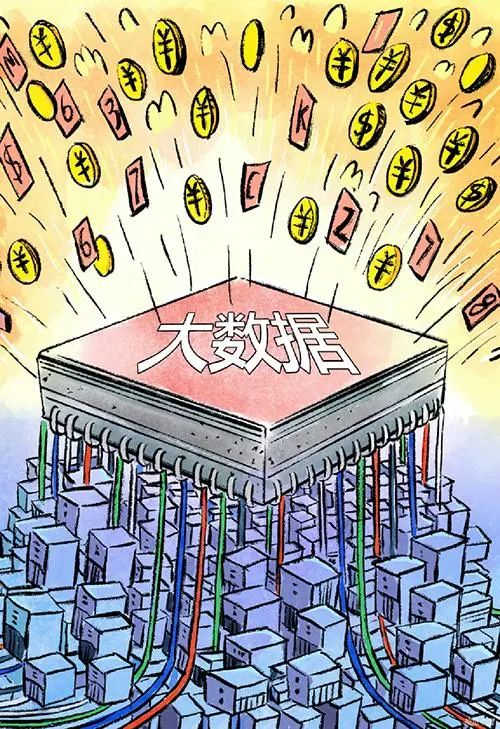
从数据到数据要素,如何让数据“活”起来?
我国无疑是一个数据大国。根据国家网信办发布的《数字中国发展报告(2021年)》,2017年到2021年,我国数据产量从2.3ZB增长至6.6ZB,在2021年全球占比9.9%,位居世界第二。
从“数据”到“数据要素”,两字之差,价值却惊人一跃,但这个转变并不简单,需要闯关攻坚,从制度设计到技术水平,都有诸多难题待解。
“在数字化时代,数据成为客观世界的映射,是对客观世界所存在的各种对象的某种描述和记录,是一种事实。因此,数据本身并没有价值,也不能交易。只有将数据通过加工处理分析后形成知识、洞见、预测、科学智能等,才能转化为生产力,成为人们认知和改造客观世界的工具。”华东政法大学教授、数据法律研究中心主任,互联网法治研究院院长高富平在接受《中国经济周刊》记者采访时如是解释数据要素化。
高富平认为,构建数据要素市场,首先要解决的就是让没有价值的数据转化为能产生价值的数据要素。“如果类比物质产品,从原材料通过生产加工成为产品,然后上市流通交易,数据产品也需要一个通过挖掘获取、分析加工后实现从原始数据到数据产品的过程,最终才能被用户使用而产生价值,即数据产业链。”他说。数字化转型网szhzxw.cn
但让数据“活”起来面临的第一道难题就是确权,即数据到底属于谁?这可以说是一个全世界都面临的难题。“数据二十条”(即《关于构建数据基础制度更好发挥数据要素作用的意见》)中就体现出了中国的制度智慧。数字化转型网szhzxw.cn
“‘数据二十条’的解决思路某种程度上是先搁置或淡化难以达成共识的所有权争议,创新性地对数据相关权属做了分拆,根据数据产生方式和不同类型,给予经营主体数据资源持有权、数据加工使用权和数据产品经营权。”中国社科院数技经所数字经济研究室主任蔡跃洲在接受《中国经济周刊》采访时如是总结。
作为参与“数据二十条”制定的主要专家,高富平解释了其科学性:与实物生产资料不同的是,数据持有权不是说持有就有权,不能说谁先占有了数据,谁就有所有权。因为占有就有所有权,这是物权法的逻辑,但并不适用于数据。
“数据使用权并不是一个绝对的、永久的、排他的权利,要让别人能够获取,至少是有偿的获取。因为数据占有就不能被别人使用的话,会妨碍知识的探索、思想的交流,人类的交往。”高富平表示。
华控清交副总裁杨祖艳在接受《中国经济周刊》记者采访时表示,建设数据要素市场现在一个最大的发展瓶颈就是供给不足,大量的数据在“沉睡”,并没有升维到数据要素。而这其中的症结虽然比较复杂,但最重要的原因是不愿或不敢。数字化转型网szhzxw.cn
“比如,互联网平台由于天然优势和先发优势,拥有了大量的数据,应该给予政策上鼓励,让他们愿意向社会开放和共享数据。再比如,另外一大数据富矿就是公共数据,如果把公共数据视为国有资产的话,也应该让这些数据活起来,更好地发挥其价值和作用。”杨祖艳说。
如果再深挖其原因,杨祖艳认为,有些数据采集方是有流通意愿的,但不知道怎样是合规的;有的则因为害怕担责而没有动力把数据分享或者流转出去,因为目前的制度设计中,数据采集方需要对数据安全负责。数字化转型网szhzxw.cn
据此,杨祖艳建议,把基于数据要素化目的的数据持有方的“权责利”,与原始数据采集方的“权责利”区分开来。这样就能够鼓励更多数据采集方把自己的数据开放、分享或流转出去,增加数据要素市场的供给。
杨祖艳还表示,组建国家数据局在统筹、治理和推动方面,都会发挥巨大的作用。但是数据要素市场的发展一定还会有一个过程,值得期待,但也要有耐心。“最重要的是先让数据活起来、动起来,这样就会有产业和生态生长出来,就会有人去探索各种可能性,从而创造出过去无法预想的新价值。”她说。
市场对数据流通需求旺盛,如何让数据“动”起来?数字化转型网szhzxw.cn
“无论是各级政府部门在社会管理中,还是各行各业企业在经营活动中,对于数据的需求都非常旺盛。”作为大数据行业的从业者,百分点科技集团总裁高体伟深有感触。
“比如,政府在应对突发灾难的应急管理中,会需要人口热力图,来研判救援方案。对企业安全生产行为的监管,需要电力数据来做一些支撑。企业更是如此。比如外贸企业需要数据来研判经济状态,对生产计划和库存作出调整。企业出问题很多都是因为对未来发展的预判错误了,可以说,数据不仅关乎成本效率,有时候甚至关乎生死。”高体伟告诉《中国经济周刊》。
现实的情况却是,很多企业没有依法合规的途径获取数据,但又有旺盛的需求。因此,目前的情况就是产生了很多场外的交易方式,更有甚者通过黑市去买卖数据。“为了获取更多的数据,现在大家基本上都是用爬虫来获取,实际上这是无序的。”高富平也表示了担忧。
“数据价值的实现,需要尽可能收集全面的数据,但现实情况是关于某一个对象的数据往往是分布在不同的主体,需要汇集起来,才能形成精准的描述和分析。无论是对一个人做用户画像,还是对一辆智能汽车或一台机械设备进行操控。这就需要设计一套数据流通机制,从而实现数据要素的社会化利用。让每一个主体产生的数据都能够有机会让别人使用,至少是有偿地获取和使用。”高富平表示。数字化转型网szhzxw.cn
为了推动数据要素的流通,我国同样采取了从各地方“先行先试”的模式。从2015年我国第一家落地数据交易所落户贵阳,根据数据交易网2022年10月公布的统计清单,全国累计成立数据交易中心(所)已有50余家,其中2021年和2022年成立的数量占总数的三分之一以上。
应该说,各地方数据交易所的成立取得不俗的成果,积累了建设数据要素市场构建的经验。但不可否认,交易额和之前的预期是有差距的,其交易额在整体数据市场中的占比还非常非常小。
根据工业信息安全发展研究中心的测算,2022年数据要素市场规模已突破900亿元,预计到2025年将达到近1750亿元,但当前规范的场内交易占比仅为2%~3%。当然,这个数据可能也是相对乐观的,毕竟有大量处于灰色地带的场外交易是无法被统计在内。
高富平早在2017年就参与过上海数字交易所的制度设计工作,他认为,各地数字交易所先行先试是应该鼓励的,但大多数的数据确实很难走到交易所。数字化转型网szhzxw.cn
高富平透露,“数据二十条”制定的研究讨论过程中,确实有这样的观点,认为数据都应该进入交易所交易。但高富平认为,数据的特性决定了其并不适合全都进入交易所交易,因为市场化交易需要产品高度标准化和高度可流转,但目前来看,标准化、可社会化利用的数据产品是比较少的。
高富平还进一步强调,数据流通可以采取开放、共享、交换、交易等多种方式,以货币为对价的数据交易只是一种特殊流通方式。“‘数据二十条’一个非常明显的特征就是淡化数据交易,重在数据的流通和利用。要实现数据的流通和利用主要方式不应该是交易,而更多应该是通过开放、共享的生态来实现。”他说。数字化转型网szhzxw.cn
蔡跃洲也表示,对于数据要素市场,当下社会和媒体关注的焦点更多集中在数据交易所上,这其实是一个误区。“数交所是数据交易的一种重要实现形式,但不是全部,其只能解决一部分需求。目前来看,大部分数据交易还是在场外以点对点的方式进行的。因此,构建数据要素市场,我们还是需要探索多元化的数据交易模式,以更好地促进数据要素的流通。”。
据蔡跃洲介绍,数据交易有两种主要思路,一种是提供原始数据,但这需要确权、清晰、可追溯处理等,效率低,成本高。另一种则是不提供原始数据,只提供API接口,或者根据购买方需要形成数据产品和数据服务再进行交易,即所谓“原始数据不出域、数据可用不可见”。
而对于数据交易所本身,蔡跃洲认为,也要探索不同的模式。“目前,数交所还没有脱离清洗、确权、转移、交易的模式,但这种模式效率比较低。未来,数交所可以根据数据交易的特点,发展成数据经纪人,提供中介服务撮合交易,或者提供数据服务和数据产品。否则,全国这么多家数交所,可能未来会有大浪淘沙。”他说。数字化转型网szhzxw.cn
四、以自主可控技术支撑数据要素更好地“用起来”
无论是平衡数据要素的安全与利用,还是让数据要素发挥更大的价值和作用,技术是制度之外的另一个重要因素。区块链、隐私计算、人工智能等技术的赋能,对于数据要素的价值释放至关重要,而且需要自主可控。
“中国决策层对数据要素化和数字经济的重视一直是走在世界前列的,与欧美基本同步。但最终谁能领先发展,谁能赢得数字化转型的胜利,一是要看制度设计,看谁的制度更能拓展数据为社会所用的广度和长度;二是要比拼技术实力,数据本身并没有价值,要靠算法、算力等核心技术,把数据的价值挖掘出来。”高富平表示。
“我国虽然是一个数据大国,但仍然存在‘大而不优’的问题,数字技术创新能力不强,数字经济发展的自主可控性不高。因此,我们需要加强基础研究和应用开发,攻克关键技术,尤其是破解‘卡脖子’环节。”中国数实融合50人论坛智库专家、国研新经济研究院创始院长朱克力告诉《中国经济周刊》记者。
2022年1月,国务院办公厅印发的《要素市场化配置综合改革试点总体方案》中指出,建立健全数据流通交易规则。探索“原始数据不出域、数据可用不可见”的交易范式,在保护个人隐私和确保数据安全的前提下,分级分类、分步有序推动部分领域数据流通应用。探索建立数据用途和用量控制制度,实现数据使用“可控可计量”。
华控清交正在做“数据可用不可见、可控可计量”方面的技术探索。作为由清华大学为转化科研成果于2018年6月发起的信息技术公司,目前,华控清交已经自主开发并推出了一系列基于多方安全计算的隐私计算技术。数字化转型网szhzxw.cn
杨祖艳表示,技术其实是平衡数据安全和数据要素流通的一个内生解。而且数据关系信息安全和国家安全,因此,数据领域的技术一定要实现自主可控,而对于监管者来说,技术也同样重要。“技术也会为政府监管提供新型基础设施,毕竟传统治理手段方式肯定无法治理数字化社会的。”她说。
“我们常常开玩笑,数据的大规模流通就像开化工厂一样,你不知道会发生什么。”因此,杨祖艳建议,可以建立一个“三元框架”,法律是底线机制,技术是优先机制,标准是转接机制,设置在法律和技术之间。“这样给技术一定的创新空间,但又能在安全有序的框架下。”她说。
以近年来非常热门的隐私计算技术为例,由于能实现数据可用不可见的密文计算,全球科技巨头和创业公司纷纷加码布局于此。只是目前很多观点认为,其因为需要很大的算力,所以成本还比较高,很难大规模使用。
但杨祖艳并不认为目前产业界能够给出一个成熟答案。“因为让数据安全合规一定是有成本的,但这个技术到底值不值,不是单纯只看成本,而是需要对比成本与收益。目前的讨论还只是停留纸面上,因为数据还没有真的动起来,谁也不知道能产生多大的价值。”
“在基础设施建设的概念下,初期投资较大,但边际成本很低,密文计算的高成本可以在承载的计算规模扩大后得到摊销。因此,由国家统筹推进数据流通基础设施、降低全社会数据流通成本值得期待。”杨祖艳说。数字化转型网szhzxw.cn
数据要素市场红利可期,但“蛋糕”该如何切?
随着国家数据局的组建,全社会对数据要素市场的关切度达到了前所未有的热度。很多企业甚至普通百姓都会基于对市场的朴素逻辑而产生一系列兴奋点:我的数据值钱吗?可以变现吗?能不能以数据资产申请抵押贷款?能不能基于数据价值重新评估公司的估值和市值?
当数据成为有价值的数据要素,也必然要面临收益分配的问题。高富平将数据要素的价值总结为三个维度:一是推动高质量发展的经济价值,如帮助企业科学决策、降本增效。
“数字经济需要先获取数据,再去做资源配置。数字化转型的核心就是从以产品为中心到以客户为中心。过去是企业拍脑袋决定产品的设计和生产,然后去找客户销售。而现在则是先找数据,了解用户的行为习惯和体验需求,然后再据此设计产品。”高富平解释说。
二是助力社会治理现代化的治理价值,如帮助政府提高监管效率和服务水平。
三是实现全体人民分享红利的分配价值。“数据由人民群众产生,但个体的贡献很难计量,直接分配的方式难以实现,需要通过一系列制度安排,以二次分配和三次分配的形式,让全民共享数据红利。”高富平说。数字化转型网szhzxw.cn
蔡跃洲表示,每一个数据主体产生单个数据并没有价值,平台获得、收集、处理和分析数据也需要一定的成本。“当然,个人信息保护法给了个人信息的删除权,即你有权通知平台删除你的数据。但个人是不是拥有数据收益的主张权,还有待进一步探讨。”
2022年12月,财政部发布了《企业数据资源相关会计处理暂行规定(征求意见稿)》,旨在为加强企业数据资源管理,规范企业数据资源相关会计处理,强化相关会计信息披露。对于数字资产入表的尝试,蔡跃洲特别提示了三个问题需要关注。
首先,并不是企业的所有数据都能够成为数据资产,只有能够在生产经营过程中长期持续发挥作用的才能称之为资产;其次,数据资产价值测算有很多维度,会计制度中入表价值,使用的是成本法,是其价值的下限,而交易价值则是由市场定价,因供需变化;再次,入表会涉及数据资产的评估,这需要完善的制度规范和监管手段,否则可能衍生出大量会计欺诈风险。
高体伟表示,建设和完善数据要素市场,肯定是千行百业甚至是每个老百姓都会受益的事情。他认为,三大类企业会率先受益。
一是做数字产业化的企业,即服务于让数据流动起来的企业;二是拥有数据的企业,过去这些企业不敢、不会、不能让数据产生收益,而当数据基础制度完善起来,死数据就活起来了;三是对数据有迫切需求的企业,通过数据更好地对企业发展作出研判,从而让企业发展得更好。
而对于老百姓,也会带来实实在在的好处。“比如,你能享受的公共服务会更加便捷高效,数据拉通后,每个服务节点都非常了解你的需求。而且也会促生新的就业机会。比如,数据加工领域的需求就会越来越旺盛,数据治理、数据标注、数据确权、数据应用……都会需要各种层次的人才。”高体伟说。数字化转型网szhzxw.cn
翻译:
The Central Committee of the Communist Party of China (CPC) and The State Council recently issued a reform plan for Party and State institutions, which specifies the establishment of a national data bureau. According to the plan, the NBS will be responsible for coordinating and promoting the construction of data infrastructure, coordinating the integration, sharing, development and utilization of data resources, and coordinating the planning and construction of digital China, digital economy and digital society, which will be managed by the National Development and Reform Commission. Provincial government data management organizations shall be established based on actual conditions.数字化转型网szhzxw.cn
To be specific, the Office of the Central Cyberspace Affairs Commission will assume the responsibilities of studying and drafting plans for the construction of Digital China, coordinating and promoting IT application of public services and social governance, coordinating and promoting the construction of smart cities, coordinating the development, utilization and sharing of important national information resources, and promoting the interconnectivity of information resources across industries and departments. Responsibilities undertaken by the National Development and Reform Commission, such as coordinating the development of the digital economy, organizing the implementation of the national big data strategy, promoting the construction of the basic system of data elements, and promoting the layout and construction of digital infrastructure, have been assigned to the National Data Bureau.
From the central government’s addition of data as a factor of production alongside traditional factors
From the central government’s addition of data as a factor of production alongside traditional factors such as land, labor, capital and technology, to the introduction of a series of development plans and policy measures to promote the development of data factors and the construction of data factors market, to the establishment of a National Bureau of Data, with data factors as the core engine to promote the development of digital economy and the construction of digital China… China is in the forefront of the world, no less than the developed economies. But do you understand the top-level design logic behind this?数字化转型网szhzxw.cn
The analogy is that data, the “new oil” of the future, will become an indispensable source of economic momentum in the future digital economy, just as oil once powered the industrial age.
Data, like oil, needs to be “smelted” into data elements before they can be used and have value. But the big difference between data and oil is that it can’t be burned away, and it can be duplicated indefinitely and at A very low cost, which means that after data is used for A, it can be used for B, C, D, E… Create value, with value multiplier effect. But the premise is that the data elements must flow, of course, in a safe and orderly way.
Our country is undoubtedly a data power, but not yet a data power. Among the three cornerstones supporting the digital economy — algorithm, computing power and data, China is still in the position of “catch-up” at present, but data is an important endowment advantage for China. With the acceleration of data factor and the formation of data factor market, it will undoubtedly become a powerful driving force for China’s development of digital economy and construction of digital China.
First, “sword” data elements, the establishment of the National Data Bureau of foresight and firm determination
“The establishment of a data management organization at the national level reveals the central government’s firm determination to establish and improve the data factor market and relevant systems of data circulation, as well as its firm determination to attach great importance to the data factor market from the perspective of top-level design and better play the fundamental supporting role of data in the digital economy.” CAI Yuezhou, director of the Digital Economy Research Office of the Institute of Digital Technology and Economics of the Chinese Academy of Social Sciences, summed up the significance of the establishment of the National Data Bureau in an interview with China Economic Weekly.
As a long-time researcher in the field of digital economy, CAI Yuezhou is looking forward to the establishment of the National Data Bureau. CAI Yuezhou said that data is the core key element in the operation of the new economic form of digital economy. As a “new key element”, data has penetrated into every aspect of social and economic development, fundamentally changing the mode of production, life and social governance.
“The digital economy is not an industrial sector, but an economic form,” CAI Yuezhou stressed.
“Data is the foundation on which almost all new forms and models of the digital economy emerge and operate. If it is not for the current data acquisition, collection, processing, replication of the actual marginal cost is close to zero, such as online car booking, takeout and many other new forms of business, new models would be difficult to develop. In fact, it is precisely because the cost of data generation, processing and transmission has been greatly reduced, so that enterprises will use as much data as possible in the generation operation, which is a new key element of low cost and large-scale availability. Reshape the production and management model around the use of data elements, and finally realize the transformation of technology-economy paradigm. In the future, economic and social development will increasingly revolve around the use of data elements.” CAI Yuezhou said.数字化转型网szhzxw.cn
Gao Tiwei said
“I’m not the only one. The whole company is very excited and full of anticipation.” Gao Tiwei, president of BPC Technology Group, a digital industry practitioner, told China Economic Weekly. Founded in 2009, BPC has been committed to the innovative practice of data technology and application.
“China is one of the countries with the most abundant data volume and types in the world, as well as one of the fastest developing countries in the world’s digital economy. However, this also makes the contradiction between the rapid development of China’s digital economy and digital society and our relatively backward data base system more and more prominent. In recent years, the country has issued a lot of policy documents, but in the process of implementation, there are more or less some places to be improved, such as some systems lack supervision and management, and some systems need to be revised due to changes in the situation. As a company, we are very much looking forward to the establishment of the National Data Bureau to accelerate the resolution of these issues and contradictions.” Gao Tiwei said.
Xiao Gang, a member of the 13th National Committee of the Chinese People’s Political Consultative Conference and former chairman of the China Securities Regulatory Commission
Xiao Gang, a member of the 13th National Committee of the Chinese People’s Political Consultative Conference and former chairman of the China Securities Regulatory Commission, said at the special consultation on “Promoting the Sustainable and Healthy Development of the Digital Economy” organized by the National Committee of the Chinese People’s Political Consultative Conference last year: “According to some enterprises in the survey, there are about 15 government departments with data management authority, and the phenomenon of ‘water control in Kowloon’ is prominent. The management means are not suitable, and there are also many problems in how to implement data classification management. These problems need to be solved as soon as possible.”
“In the data industry, the whole industry is certainly looking forward to the central establishment of data management institutions, but can so fast and so strong, in fact, is beyond the industry’s expectations. It is the kind of long drought and rain, originally expected a light rain, did not expect a heavy rain, which is enough to reflect the determination of the country to coordinate and develop a good data factor market.” Yang Zuyan, vice president of Huacheng Qingjiao in an interview with “China Economic Weekly” reporters, also difficult to hide excitement.
Huacheng Qingjiao is an information technology company initiated by Tsinghua University in June 2018 to transform scientific research achievements.
At present, Huacheng Qingjiao has independently developed and launched a series of privacy computing technologies based on multi-party security computing.
Yang Zuyan told reporters that three years ago, although the Fourth Plenary session of the 19th CPC Central Committee had added data as a factor of production for the first time, the data factor was still a very unfamiliar term at the industrial level, let alone at the public level. “But in just three years, with data elements appearing in central documents, especially last year with the launch of ‘Data 20’, data elements suddenly became popular. The news of the establishment of the National Data Bureau this year makes data elements to a new height and become the topic of the whole people.” ‘she said.
Second, the data management agency first local and then central, data elements first talk about security and then talk about utilization
The establishment of the National Data Bureau made Yang Zuyan feel an important signal:. “Before our data system design focused more on security, of course. This is the basis of data factors and the construction of data factor market. The new National Data Bureau will focus on the circulation and utilization of data elements. Data and data elements are two things. The basic prerequisite for data to become factors of production is machine readable and marketable. Only when data elements are flowing and used can they bring about value creation.”
“The establishment of the National Data Bureau is only the first step. And the challenges and tasks it will face are enormous.” Gao Fuping, a professor at East China University of Political Science and Law, director of the Data Law Research Center and director of the Internet Rule of Law Institute, said in an interview with China Economic Weekly. He is the main contributor to the first draft of “Data 20”. And is also participating in the research of the relevant guidance on policy implementation.
Gao Fuping believes that the responsibilities and tasks of the National Data Bureau can be understood from both horizontal and vertical dimensions.
Horizontally, promoting the development, circulation and utilization of data elements will fall under the State Data Bureau. But the main responsibility for data security will remain with the Cyberspace Administration of the CPC Central Committee.
“But the two are not separate. Security is a higher requirement and development must be carried out within a security framework. However, there will also be a division of Labour in security. The CAC focuses on public safety and national security. The security of rights and interests between equal subjects. Such as infringement of trade secrets and personal privacy, will still belong to the National Data Bureau. Because these issues also belong to the content of development. Data must first be safe and compliant before we can talk about rights.” Gao Fuping added.
From the vertical perspective, Gao Fuping said that all previous government institutional reforms were carried out by the central government before the local government.
At present, the responsibilities of the central National Data Bureau have been clearly defined. But there are still great challenges to reform and adjust the data management agencies of provinces, autonomous regions and municipalities.数字化转型网szhzxw.cn
To build and improve data factor market, our country not only advances from the top-level design level of the central government. But also starts many explorations of “pilot ahead” at the local level. In addition, the establishment of a special data management agency is first local and then central. Which is also very rare in the history of the establishment of national institutions.
Guizhou Big Data Development Administration was established in 2017 as the country’s first provincial-level data management agency. Later, most of the provinces in China. Such as Beijing, Chongqing, Guangdong, Zhejiang, Shandong, Guangxi, Jilin, Fujian, Anhui, Henan, etc. Have set up provincial big data management agencies, but not only have different names. But also different affiliations and functions. According to incomplete statistics, there are hundreds of big data management organizations set up in prefecture-level administrative units.
According to Gao Fuping, at present, the main responsibility of provincial data management agencies is to open public data (including government data).
In the future, all kinds of data from government organizations. Enterprises and public institutions will be integrated to form a public data resource pool. But the local data management agencies are not the same authority. There are development and Reform commission, economic and information technology commission, industry and information technology department…… How to arrange the future, whether to reform or reorganize, is to be further “three decisions” (defining responsibilities, defining institutions, defining establishment) plan to be clear.
Due to the need of research work, CAI Yuezhou once sorted out the basic situation of big data management institutions in different regions and found that no matter at provincial or prefecture-level level, big data management institutions in different regions are mainly set up according to local characteristics and needs. And their main functions, authority ownership and authority scale are quite different.
“This really reflects that from the perspective of national macro-control. The system and mechanism of data governance and supervision still need to be coordinated from the top design.” CAI Yuezhou said that data management involves multiple government departments. And if there is no effective coordination, problems such as multiple management and “water control by nine dragons” will inevitably occur. Or even the possibility of the fallacy of synthesis due to the lack of coordination. Therefore, a department capable of coordinating and communicating among different functional departments is needed to play a leading and promoting role in clarifying their management boundaries and organizing efficient coordination and cooperation.
But CAI also stressed that the trials in these places are very meaningful, because it is a kind of cognitive education for the whole society.
Whether it is the National data Bureau or the local data management organization. Its function positioning and management boundary need to be gradually run-in in practice.
Gao Tiwei revealed that Baidian had participated in the construction of data center of many local government big data management departments. According to his specific knowledge, the original intention and main responsibility of most local data management organizations are the integration and utilization of government internal data. Of course, this has already had obvious effects, such as improving the efficiency of government supervision and services, improving the business environment for enterprises, and improving the efficiency and timeliness of ordinary people’s affairs. However, there are still few thoughts and explorations in promoting data factionalization, such as data trading, rights confirmation and circulation.
“Behind the data are rights, including economic rights, individual rights, etc. And the complexity and difficulty of the system design are very high. Therefore, this is not a problem that can be solved simply by setting up a national data bureau. It needs a series of supporting institutions. And there are not many precedents and experiences in the world to learn from when it comes to building a data factor market, which China needs to explore on its own.” Gao Fuping said.
CAI Yuezhou also said, “The United States and the European Union are early in data security and privacy protection. But we are also catching up. In terms of building data factor markets, China has taken the lead in putting forward the concept of data factors and data factor markets. Which has been reflected in relevant policy documents.”
Third, the data factor market speed up: let the data live
The establishment of the National Data Bureau is undoubtedly an important milestone in accelerating the data factor and building the data factor market. “Responsible for coordinating and promoting the construction of data infrastructure system. And coordinating the integration, sharing, development and utilization of data resources.” In the Reform Plan of Party and State Institutions. The important responsibilities of the National Data Bureau are thus defined. Which also means that the process of data factorization and the construction of data factor market will be pressed “fast forward”.
However, many experts, scholars and industry personnel interviewed by the reporter all believe that a series of institutional arrangements are needed to establish and improve the data element market, from data ownership confirmation to circulation and trading, to income distribution, and security governance. Moreover, each institutional arrangement also needs a lot of supporting work, and there are many problems to be solved.
From data to data elements, how to make data “live”?
Our country is undoubtedly a big data country. According to the Digital China Development Report (2021) released by the Cyberspace Administration of China. China’s data output increased from 2.3ZB to 6.6ZB from 2017 to 2021, accounting for 9.9% of the global total in 2021, ranking the second in the world.
From “data” to “data elements”, the difference between the two words. The value is amazing leap, but this transition is not simple, need to overcome difficulties. From the system design to the level of technology, there are many problems to be solved.
“In the digital age, data becomes a mapping of the objective world. A description and record of various objects existing in the objective world, which is a fact. Therefore, the data itself has no value and cannot be traded. Only when data is processed and analyzed to form knowledge, insight, prediction and scientific intelligence can it be converted into productivity and become a tool for people to understand and transform the objective world.” Gao Fuping, a professor at East China University of Political Science and Law, director of the Data Law Research Center. And director of the Internet Rule of Law Research Institute, explained this in an interview with China Economic Weekly.数字化转型网szhzxw.cn
Gao Fuping believes that the first thing to be solved in the construction of data factor market is to transform worthless data into valuable data factors. “If the analogy of material products, from raw materials through production and processing into products. Then listed circulation trading, data products also need a mining acquisition, analysis and processing to realize the process from the original data to data products. Finally can be used by users and generate value, that is, the data industry chain.” ‘he said.
But the first challenge to making data “live” is ownership: who does it belong to?
This is a universal problem. China’s institutional wisdom is reflected in “Article 20 of Data” .(Opinions on Building a System Based on Data to Better Play the Role of Data Elements).
“To some extent, the solution of ‘Article 20 of Data’ is to first shelve or dilute the ownership disputes that are difficult to reach a consensus. And creatively split the data-related ownership rights. According to the way and different types of data generation. Management subjects are given the right to hold data resources. The right to use data processing and the right to operate data products.” That’s how CAI Yuezhou, director of Digital Economy Research at the Institute of Digital Technology and Economics at the Chinese Academy of Social Sciences, summed it up in an interview with China Economic Weekly.
As a major expert involved in the formulation of “Article 20 of Data”, Gao Fuping explained its scientific nature:
Different from the physical means of production, the right to hold the data does not mean the right to hold the data. And it cannot be said that the first person to possess the data will have the ownership. Because possession comes with ownership, that’s the logic of property law, but it doesn’t apply to data.
“Data access is not an absolute, permanent, or exclusive right. It needs to be accessible, at least for a price. Because data possession can’t be used by others, it impedes the search for knowledge. The exchange of ideas, the interaction of human beings.” Gao Fuping said.数字化转型网szhzxw.cn
Yang Zuyan, vice president of Huacheng Qingjiao, said in an interview with China Economic Weekly that one of the biggest bottlenecks in the development of the construction data factor market is the lack of supply. A large number of data are “sleeping” and have not been upgraded to the data factor. The reasons for this are complicated, but the most important reason is unwillingness or dare not.
“For example, Internet platforms, which have a large amount of data due to their natural and first-mover advantages, should be given policy incentives to be willing to open and share data with society. For example, another big data bonanza is public data. If we regard public data as state-owned assets. We should also make these data come alive and better play its value and role.” Yang Zuyan said.
If we dig deeper into the reason
If we dig deeper into the reason, Yang Zuyan believes that some data acquisition parties are willing to circulate. But do not know how to comply with the law. Others have no incentive to share or transfer data out of fear of accountability. Because the current system is designed to hold the data collector responsible for data security.
In view of this, Yang Zuyan suggested that the “rights, responsibilities and interests” of the data holder based on the purpose of data factorialization should be distinguished from those of the original data collector. This will encourage more data collectors to open, share or transfer their data, increasing the supply of data elements in the market.
Yang also said that the establishment of the National Data Bureau will play a huge role in coordination, governance and promotion. However, the development of data factor market will certainly have a process. It is worth looking forward to, but also need to be patient. “The most important thing is to get the data alive and moving first. So that there are industries and ecosystems that grow. And people that explore the possibilities and create new values that weren’t envisioned before.” ‘she said.
Market demand for data circulation is strong, how to let the data “move” up?
“Whether it is government departments at all levels in social management. Or enterprises in all walks of life in business activities, the demand for data is very strong.” As a practitioner in the big data industry, Gao Tiwei, president of BPC Technology Group, has deep feelings.
“For example, in the emergency management of a sudden disaster. A government will need a population heat map to develop relief plans. The supervision of the safe production behavior of enterprises needs some support from the power data. This is especially true of corporations. For example, foreign trade enterprises need data to assess the state of the economy and make adjustments to production plans and inventories. “A lot of what goes wrong is the result of a miscalculation of the future. Data is not just about cost efficiency, it’s sometimes about life and death.” Gao Tiwei told China Economic Weekly.
The reality is that many companies do not have legal access to data. But there is a strong demand for it. As a result, the current situation has created a lot of over-the-counter trading methods. Even through the black market to buy and sell data. “In order to get more data, now everybody basically uses crawlers to get it, which is actually disordered.” Gao Fuping also expressed concern.
Gao Fuping said
“The realization of data value requires the collection of comprehensive data as far as possible. But the reality is that data about a certain object is often distributed in different subjects. Which need to be collected to form accurate description and analysis. Whether it is to do a user portrait of a person, or a smart car or a mechanical equipment to control. It is necessary to design a set of data circulation mechanism so as to realize the social utilization of data elements. Make the data generated by each subject available for others to use, at least for a fee.” Gao Fuping said.数字化转型网szhzxw.cn
In order to promote the circulation of data elements, our country also adopts the mode of “pilot ahead” from various places. Since the first landing data exchange settled in Guiyang in 2015, there have been more than 50 data trading centers (exchanges) established in China, among which the number established in 2021 and 2022 accounts for more than one-third of the total, according to the statistical list published by the data trading network in October 2022.
It should be said that the establishment of local data exchanges has achieved good results and accumulated experience in the construction of data factor market. However, there is no denying that there is a gap between the transaction volume and the previous expectation, and the transaction volume in the overall data market is very, very small.
According to the calculation of industrial information security Development research Center
According to the calculation of industrial information security Development research Center, the market size of data elements has exceeded 90 billion yuan in 2022, and is expected to reach nearly 175 billion yuan in 2025, but the current standard exchange trading accounts for only 2% ~ 3%. Of course, this figure may be relatively optimistic, after all, there is a large number of over-the-counter transactions in the gray area can not be accounted for.
Gao Fuping participated in the system design of Shanghai Digital Exchange as early as 2017. He believes that local digital exchanges should be encouraged to try first, but most of the data is really difficult to get to the exchange.
Gao Fuping revealed that during the research and discussion process developed by “Data 20”, there was indeed such a view that data should be traded on exchanges. However, Gao Fuping believes that the characteristics of data decide that it is not suitable for all of them to be traded on exchanges, because market-oriented trading requires highly standardized products and highly transferable products. However, at present, standardized and socialized data products are relatively few.
Gao Fuping further stressed that the data circulation can be open, sharing, exchange, trading and other ways, the currency as a consideration of the data transaction is only a special circulation mode. “A very clear feature of Article 20 is to downplay data trading and focus on the circulation and use of data. The main way to realize the flow and use of data should not be through trading, but more through an open and sharing ecosystem.” ‘he said.
CAI Yuezhou also said that for the data factor market数字化转型网szhzxw.cn
CAI Yuezhou also said that for the data factor market, the current social and media attention is more focused on the data exchange, which is actually a misunderstanding. “Digital exchanges are an important form of implementation for data trading, but they are not the whole thing. For now, much of the data trading takes place over-the-counter on a peer-to-peer basis. Therefore, to build a data factor market, we still need to explore diversified data trading modes to better promote the circulation of data factors.” .
According to CAI Yuezhou, there are two main ideas for data trading. One is to provide original data, but this requires confirmation, clarity and traceable processing, which is low efficiency and high cost. The other is not to provide original data, only provide API interface, or according to the needs of the buyer to form data products and data services before the transaction, namely the so-called “original data is not out of the domain, data available is not visible”.
As for the data exchange itself, CAI believes that different models should also be explored. “At present, the number of exchanges have not broken away from the cleaning, rights confirmation, transfer, trading model, but this model is relatively inefficient. In the future, according to the characteristics of data trading, data exchanges can develop into data brokers, provide intermediary services to match trading, or provide data services and data products. Otherwise, so many exchanges in the country, there may be a wave in the future.” ‘he said.
Fourth, Support data elements with autonomous and controllable technology to better “use”
Whether it is to balance the security and utilization of data elements, or let data elements play a greater value and role, technology is another important factor besides the system. Enabling technologies such as blockchain, privacy computing and artificial intelligence are crucial to unlocking the value of data elements, and they need to be autonomous and controllable.
“China’s policy makers have always been at the forefront of the world in attaching importance to data factionalization and the digital economy, basically in step with Europe and the United States. But in the end, who can take the lead in development and win the victory of digital transformation depends on the system design, and whose system can better expand the breadth and length of data used by society. The second is to compete technical strength, data itself is not valuable, rely on algorithms, computing and other core technology, the value of the data mining out.” Gao Fuping said.
“Although China is a big data country, it still has the problem of ‘big but not good’. The innovation capability of digital technology is not strong, and the independent controllability of digital economy development is not high. Therefore, we need to strengthen basic research and application development, and crack key technologies, especially the ‘bottleneck’ link.” Zhu Keli, the founding director of the National Research Institute of New Economy, told “China Economic Weekly”.
In January 2022
In January 2022, The General Office of the State Council issued the Overall Plan for the Pilot Reform of the Comprehensive Market-oriented Allocation of Factors, pointing out that the establishment and improvement of data circulation and trading rules. Explore the trading paradigm of “original data stays within the domain and data availability is invisible”, and promote the application of data circulation in some fields by classification and step by step under the premise of protecting personal privacy and ensuring data security. Explore the establishment of data use and consumption control system, to achieve the use of data “controllable and quantifiable”.
Huacheng Qingjiao is making technical exploration in the aspects of “data can be invisible, controllable and quantifiable”. As an information technology company initiated by Tsinghua University in June 2018 to transform scientific research achievements, Huacheng Qingjiao has independently developed and launched a series of privacy computing technologies based on multi-party secure computing.
Yang Zuyan said that technology is actually an internal solution to balance data security and the flow of data elements.
Moreover, data is related to information security and national security. Therefore, technology in the data field must be autonomous and controllable, and technology is equally important for regulators. “Technology will also provide a new infrastructure for government regulation, as traditional governance methods cannot govern a digital society.” ‘she said.
“We often joke that mass circulation of data is like running a chemical factory. You don’t know what’s going to happen.” Therefore, Yang Zuyan suggested that a “three-way framework” could be established, in which law is the bottom line mechanism, technology is the priority mechanism, and standards are the transfer mechanism, set between law and technology. “This gives the technology some room to innovate, but in a safe and orderly framework.” ‘she said.
Take privacy computing technology, which is very popular in recent years, as an example.
Since data can be calculated in invisible ciphertext, global technology giants and startups have increased their layout in this area. However, many people believe that it requires a large amount of computing power, so the cost is relatively high, difficult to large-scale use.数字化转型网szhzxw.cn
But Yang doesn’t think the industry can come up with a mature answer. “Because there must be a cost to compliance, but whether the technology is worth it is not just the cost, but the cost versus the benefit. Right now the discussion is just on paper because the data hasn’t really moved yet and nobody knows how much value will be generated.”
“Under the concept of infrastructure construction, the initial investment is large, but the marginal cost is very low, and the high cost of ciphertext computing can be amortized after the computing scale is expanded. Therefore, it is desirable to promote the data circulation infrastructure by the government as a whole and reduce the cost of data circulation in the whole society.” Yang Zuyan said.
Data factor market dividend can be expected, but how to cut the cake?
With the establishment of the National Data Bureau, the relevance of the whole society to the data factor market has reached unprecedented heat. Many businesses and even ordinary people are excited about the simple logic of the market: Is my data worth anything? Can I cash it in? Can we borrow against data assets? Can you reassess the valuation and market capitalization of the company based on the value of the data?
When data become valuable data elements, it is bound to face the problem of income distribution. Gao Fuping summarized the value of data elements into three dimensions:
First, the economic value of promoting high-quality development, such as helping enterprises make scientific decisions, reducing cost and increasing efficiency.
“The digital economy requires data acquisition before resource allocation. The core of digital transformation is to move from product-centric to customer-centric. In the past, companies decided on the design and production of products and then went to customers to sell them. Now it’s about finding the data, understanding the user’s behavior and experience needs, and then designing products based on that.” Gao Fuping explained.
Second, the governance value that helps modernize social governance, such as helping the government improve the efficiency of supervision and service level.
Third, we will realize the value of dividends shared by all the people. “The data is generated by the people, but it is difficult to measure individual contributions, and it is difficult to achieve direct distribution. A series of institutional arrangements are needed to share the data dividend with the whole population in the form of secondary distribution and tertiary distribution.” Gao Fuping said.
CAI said that there is no value for each data subject to produce a single piece of data, and there is also a certain cost for the platform to obtain, collect, process and analyze data. “Of course, the personal Information Protection Act gives you the right to delete personal information, meaning you have the right to notify the platform to delete your data. However, it remains to be discussed whether individuals have the right to claim data benefits.
In December 2022, the Ministry of Finance issued the Interim Provisions on Accounting Treatment Related to Enterprise Data Resources (Draft for Comments), aiming to strengthen the management of enterprise data resources, standardize accounting treatment related to enterprise data resources, and strengthen the disclosure of relevant accounting information.
As for the attempt to put digital assets on the table, CAI Yuezhou has suggested three issues that need attention.
First of all, not all the data of an enterprise can become data assets. Only those that can continuously play a role in the production and operation process can be called assets. Secondly, the value of data assets has many dimensions. In the accounting system, the value entered into the statement is the lower limit of its value by using the cost method. While the transaction value is priced by the market due to the changes of supply and demand. Third, the entry of the statement will involve the evaluation of data assets. Which requires perfect system norms and regulatory means. Otherwise a large number of accounting fraud risks may be derived.
Gao Tiwei said that building and improving the data factor market will benefit thousands of businesses and even every common people. He thinks three groups of companies will benefit first.
One is to do the digital industrialization of enterprises, that is, to serve the data flow of enterprises. In the past, these enterprises dared not, would not and could not make the data generate profits. However, when the basic system of data is improved, the dead data will come to life. Third, enterprises with urgent demand for data can make better research and judgment on enterprise development through data. So as to enable enterprises to develop better.
And for ordinary people, there will be real benefits. “For example, the public services you can enjoy will be more convenient and efficient. And every service node knows your needs very well after the data is pulled through. And it will create new jobs. For example, the demand in the field of data processing will be more and more vigorous, data governance, data annotation, data confirmation, data application… Will need talent at all levels.” Gao Tiwei said.
本文由数字化转型网(www.szhzxw.cn)转载而成,来源于《中国经济周刊》2023年第6期;编辑/翻译:数字化转型网宁檬树。

免责声明: 本网站(http://www.szhzxw.cn/)内容主要来自原创、合作媒体供稿和第三方投稿,凡在本网站出现的信息,均仅供参考。本网站将尽力确保所提供信息的准确性及可靠性,但不保证有关资料的准确性及可靠性,读者在使用前请进一步核实,并对任何自主决定的行为负责。本网站对有关资料所引致的错误、不确或遗漏,概不负任何法律责任。
本网站刊载的所有内容(包括但不仅限文字、图片、LOGO、音频、视频、软件、程序等) 版权归原作者所有。任何单位或个人认为本网站中的内容可能涉嫌侵犯其知识产权或存在不实内容时,请及时通知本站,予以删除。