
谈及数字化生活方式,中国可以说是全球最领先的市场。 一个人只需携带一部智能手机并使用微信这样的超级应用来管理生活的方方面面就可以生存。 无论消费者是购买食物、支付电费、预订汽车、理财、还是寻找最好的餐厅,他们都可以通过数字的方式完成,而且大多数体验都非常个性化。 数字化转型网www.szhzxw.cn
百度、阿里巴巴、腾讯和字节跳动统称为 BATB,是目前中国最强大的科技巨头,它们主导着中国大部分的数字领域。 然而,中国互联网自成立以来就是“数据孤岛”,呈彼此独立的状态,每个平台都占据着一个试图锁定用户并将竞争对手拒之门外的领域。
鉴于这四个平台的主导地位,在中国品牌严重依赖它们来触达目标受众。 大多数营销投资都是通过 BATB (百度、阿里巴巴、腾讯、字节跳动)进行的。 然而,平台之间存在的“数据孤岛”导致跨平台广告追踪受限,甚至是最基本的报告,也为营销人员实现其自动化带来了挑战。
在当今数据密集的数字化环境中,营销活动应该更加高效。 数字营销人员应该能够在多个渠道、多种媒体形式上快速策划营销活动。 理想情况下,数字营销人员可以实现营销活动每个过程的自动化,但现实情况却大相径庭。 数字化转型网www.szhzxw.cn
在中国的数字化环境中,“数据孤岛”的出现是大多数平台开发跨越整个消费者路径的解决方案的结果,无论是在单个数字平台内部还是跨越属于同一生态系统的多个平台。对阿里巴巴来说,其淘宝平台和数字支付方案支付宝的整合允许用户在同一个生态系统中探寻、社交和购物,而无需跳出应用程序。 阿里巴巴还拥有优酷 — 用于品牌营销的视频流媒体服务,可以增加同一个生态系统中的触点。 这种连通性使营销人员能够开发端到端的解决方案,以丰富品牌体验并提升业务表现。 数字化转型网www.szhzxw.cn
生态系统帮助品牌拉新获客的能力还伴随着大量有价值的消费者数据。毕马威的一项调研显示,90%的中国消费者愿意分享他们的用户数据,如果这能带来更好的体验和个性化服务; 这远高于全球 76%的平均水平。 虽然跨平台的广告追踪是一项挑战,但每个生态系统现在都有自己的数据管理平台,使品牌能够利用收集的数据进行复杂的定向、评测和报告。 例如,阿里巴巴通过其专有的、基于真实用户的消费者统一身份识别体系追踪其生态系统中的用户,使品牌能够在整个认知—兴趣—购买—忠诚 (AIPL) 链路中对消费者进行了解、定向和优化。品牌不仅为个人用户量身定制产品推荐,还能根据购物者的浏览和购买习惯对他们访问的店面进行个性化设置。 小程序的日益普及为品牌带来了提供有效体验的创新方式。
小程序于 2017 年由腾讯率先推出,是存在于微信等原生应用程序中的小型程序。 可以按需访问小程序以执行各种功能,例如订餐、叫车、购票等。 由于 BATB 允许在其平台内开发定制的小程序,品牌可以在使用平台数据的同时设计包括线上店铺、忠诚度计划或内容体验在内的小程序。 数字化转型网www.szhzxw.cn
在这些大型数据孤岛中,利用平台数据实现消费者个性化触达的灵活性使品牌能够专注于打造有影响力的消费者体验,以便提升他们的端到端效果。在 BATB 中使用第一方消费者数据通常被称为私域流量,其中与消费者的沟通被汇集到数据库中。这使品牌能够以很少或零成本完全控制其用户数据,有助于品牌建立和消费者之间的直接联系,从而提升客户留存率。
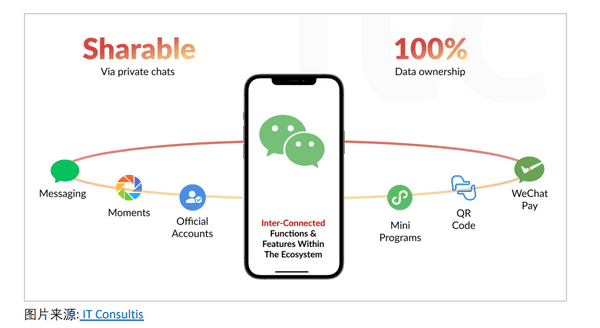
微信等社交平台不仅通过微信小程序,还通过微信公众号、微信工作群、微信朋友圈和其他基于消息的平台(如 QQ)成功地帮助品牌建立私域流量。 最重要的是,这些渠道的内容可以直接分享到私人聊天中。 通过利用支持直接数据捕获和追踪、用户路径映射、客户细分和潜在客户培育的营销自动化,品牌可以开发社交 CRM 程序,帮助建立品牌认知度、激发口碑效应、产生潜在客户并提升忠诚度。 数字化转型网www.szhzxw.cn
随着中国媒体价格水涨船高,品牌一直在投资第一方数据,以强化其私域流量策略。为此,为私域流量管理提供数据解决方案的本土营销技术初创公司数量也在飙升。 这些初创公司连接到BATB 平台,并提供复杂的功能来实现整个消费者链路的自动化和个性化。
与西方大型科技平台通常提供报告和洞察的访问权限不同,BATB 平台在数据共享方面非常谨慎。中国竞争激烈的数字环境催生了保护主义,导致营销人员看不到效果,很难实现报告自动化。数字化转型网www.szhzxw.cn
另一方面,与西方相比,数据孤岛内的自动化和数据驱动的可能性更为复杂。 中国的品牌可以像其他市场一样树立品牌商务的标杆。 随着元宇宙的兴起,我们预计数据驱动的自动化将在虚拟世界的个性化中发挥关键作用,并创造更强大的品牌体验。
也许市场营销自动化的最大转变将来自数据孤岛的废除。中国针对科技公司的反垄断调查已经取得突破。 2021 年 9 月,中国信息技术监管机构要求科技巨头在最后期限内开放对其数字平台上所有外部链接的访问权限。 在越来越严格的审查下,阿里巴巴和腾讯等巨头表示他们将接受开放平台的概念。 随着生态系统的自由化,在全球最先进的媒体和技术市场之一,营销人员能真正全面了解营销对业务效果的影响指日可待。数字化转型网www.szhzxw.cn
翻译:
China is arguably the world’s leading market when it comes to digital lifestyles. A person can survive simply by carrying a smartphone and using super apps like wechat to manage every aspect of their life. Whether consumers are shopping for food, paying for electricity, booking a car, managing their finances, or finding the best restaurant, they can do it digitally, and most of the experiences are very personal.
Baidu, Alibaba, Tencent and ByteDance, collectively known as BATB, are by far China’s most powerful tech giants, and they dominate much of the country’s digital landscape. Since its inception, however, the Chinese Internet has been “data silos,” separate from each other, with each platform occupying a territory that tries to lock in users and shut out competitors.
Given the dominance of these four platforms, brands in China rely heavily on them to reach their target audiences. Most marketing investments are made through BATB (Baidu, Alibaba, Tencent, ByteDance). However, the “data silos” that exist between platforms have led to restrictions on cross-platform AD tracking and even the most basic reporting, creating challenges for marketers to automate it.数字化转型网www.szhzxw.cn
In today’s data-intensive digital environment, marketing campaigns should be more efficient.
Digital marketers should be able to quickly plan campaigns across multiple channels and media formats. Ideally, digital marketers can automate every process of a marketing campaign, but the reality is quite different.数字化转型网www.szhzxw.cn
In China’s digital environment, the emergence of “data silos” is the result of most platforms developing solutions that span the entire consumer path. Whether within a single digital platform or across multiple platforms that belong to the same ecosystem. For Alibaba, the integration of its Taobao platform and its digital payment solution Alipay allows users to explore, socialize and shop within the same ecosystem without having to go outside of the app. Alibaba also owns Youku, a video streaming service for brand marketing that can add touchpoints in the same ecosystem. This connectivity enables marketers to develop end-to-end solutions to enrich the brand experience and enhance business performance.
The ecosystem’s ability to help brands attract new customers also comes with a wealth of valuable consumer data. According to a survey by KPMG, 90% of Chinese consumers are willing to share their user data if it leads to a better experience and personalized service. This is well above the global average of 76 per cent. While cross-platform AD tracking is a challenge, each ecosystem now has its own data management platform. Enabling brands to leverage the collected data for sophisticated targeting, profiling, and reporting.
For example, Alibaba tracks users in its ecosystem through its proprietary, real-user-based unified consumer identity system, enabling brands to understand, target, and optimize consumers across the Cognitive-Interests-buy-loyalty (AIPL) link. Brands not only tailor product recommendations to individual users. But also personalize the stores shoppers visit based on their browsing and buying habits. The growing popularity of small programs has led to innovative ways for brands to deliver effective experiences.
First launched by Tencent in 2017, mini programs are small programs that exist in native apps such as wechat.
Small programs can be accessed on demand to perform various functions, such as ordering food, hailing a car, buying tickets, and so on. Because BATB allows custom applets to be developed within its platform, brands can design applets including online stores, loyalty programs or content experiences while using platform data.
In these large data silos, the flexibility to leverage platform data for personalized consumer reach allows brands to focus on building impactive consumer experiences that enhance their end-to-end performance. The use of first-party consumer data in BATB is often referred to as private domain traffic, where communications with consumers are pooled into a database. This enables brands to have complete control over their user data at little or no cost, helping brands establish a direct connection with their consumers, thereby increasing customer retention.数字化转型网www.szhzxw.cn
Social platforms such as wechat have successfully helped brands build private domain traffic not only through wechat mini programs. But also through wechat public accounts, wechat work groups, wechat Moments and other message-based platforms such as QQ. Best of all, content from these channels can be shared directly into private chats. By leveraging marketing automation that supports direct data capture and tracking, user path mapping, customer segmentation. And lead cultivation, brands can develop social CRM programs that help build brand recognition, drive word-of-mouth, generate leads, and drive loyalty.
As media prices rise in China, brands have been investing in first-party data to strengthen their private traffic strategies.
To this end, the number of local marketing technology startups providing data solutions for private domain traffic management is also soaring. These startups connect to the BATB platform and provide sophisticated capabilities to automate and personalize the entire consumer link.数字化转型网www.szhzxw.cn
Unlike big Western tech platforms, which typically provide access to reports and insights. The BATB platform is very careful when it comes to data sharing. China’s competitive digital environment has fostered protectionism, making it difficult for marketers to see results and automate reporting.数字化转型网www.szhzxw.cn
On the other hand, automation and data-driven possibilities within data silos are more complex than in the West. Brands in China can set the benchmark for brand commerce just as they do in other markets. With the rise of the meta-universe. We expect data-driven automation to play a key role in personalizing virtual worlds and creating stronger brand experiences.数字化转型网www.szhzxw.cn
Perhaps the biggest shift in marketing automation will come from the abolition of data silos. A breakthrough has been made in China’s antitrust investigations of technology companies. In September 2021, China’s information technology regulator gave tech giants a deadline to open up access to all external links on their digital platforms. Under increasing scrutiny, giants such as Alibaba and Tencent have said they will embrace the concept of open platforms. With the liberalization of the ecosystem, in one of the most advanced media and technology markets in the world. It is only a matter of time before marketers can truly understand the full impact of marketing on business results.数字化转型网www.szhzxw.cn
本文由数字化转型网(www.szhzxw.cn)转载而成,来源于Campaign Asia-Pacific;编辑/翻译:数字化转型网宁檬树。

免责声明: 本网站(http://www.szhzxw.cn/)内容主要来自原创、合作媒体供稿和第三方投稿,凡在本网站出现的信息,均仅供参考。本网站将尽力确保所提供信息的准确性及可靠性,但不保证有关资料的准确性及可靠性,读者在使用前请进一步核实,并对任何自主决定的行为负责。本网站对有关资料所引致的错误、不确或遗漏,概不负任何法律责任。
本网站刊载的所有内容(包括但不仅限文字、图片、LOGO、音频、视频、软件、程序等) 版权归原作者所有。任何单位或个人认为本网站中的内容可能涉嫌侵犯其知识产权或存在不实内容时,请及时通知本站,予以删除。