近日,中国互联网上流传着一张外国漫画:“数字化转型的驱动力是什么”,选项共三个,选项A为CEO,选项B为CIO;选项C为新冠病毒,漫画中给出的答案为C。

这张令人略感尴尬的漫画背后,折射出中外企业的一种共识:人类恐怕短期难以彻底消灭新冠病毒,疫情的肆掠与流窜对各国实体经济的破坏终将会由点及面辐射开来。所谓环球同此凉热,每一个企业都将面临或大或小的生存危机,云计算、物联网、人工智能等各种新型数字化技术成为保障企业业务可持续性的核心手段,数字化转型的紧迫程度从而也被显著提升。
但数字化转型本身是一个严肃和充满挑战的话题,对于今天的企业高管而言,最迫切的诉求是如何正确地实施数字化转型。数字化转型网www.szhzxw.cn
8月7日~8日,中国信息化百人会2020年度峰会在深圳华为坂田基地举行,“人类命运共同体下的技术创新与产业生态建设”成为本次峰会的核心议题。
其中,华为云副总裁、华为云首席数字化转型官苏立清发表了主题为“释放数据生产力,助力政企智能升级”的演讲。这份演讲充满了真知灼见,因为它是基于华为自身数字化转型,以及华为云助力各行各业政企数字化转型的经验总结。
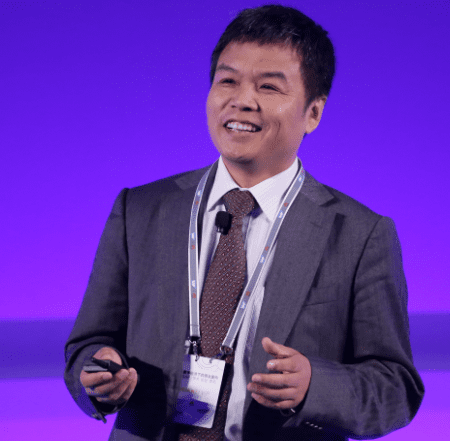
苏立清表示,是否创造新价值是衡量数字化转型的金标准,成功的数字化转型能从体验创新、效率提升和模式创新三方面产生来为企业带来新的价值。
相比曾经孤岛林立的IT系统,今天企业数字化转型一大重要目标就是让数据流动起来,华为认为,未来企业一定是IT数据和OT数据深度融合,而最理想的前景则是实现人与人之间、人与机器之间、机器与机器之间、产业与产业之间的智能互联与协同。数字化转型网www.szhzxw.cn
一、转型之道
提起数字化转型,一些科技公司可能首先就会强调我的产品有多厉害技术有多牛,企业用户也看得眼花缭乱,但华为认为,凡事追求道与术结合,企业数字化转型首先要树立正确的认知,先把握正确的“道”,才能更好地选择合适的“术”。

“企业数字化转型要在意识、组织、文化、方法和模式五大方面进行全方位转型。”苏立清说。
第一“转”是“转意识”。有些企业存在一种观念,认为数字化转型就是信息技术部门的事情,但技术一定要帮助业务来实现价值,无论是效率提升,还是产品以及商业模式创新,归根结底都是要产生业务价值,因此业务部门也要动起来,只有技术和业务进行深度的融合与协同,才能推动数字化转型落地。
“这个转意识,我们叫双轮驱动,业务和技术共同驱动。我本人是信息技术部门出身,但是我非常愿意跟业务一起合作,共同去探索数字化转型。”苏立清说。数字化转型网www.szhzxw.cn
第二“转”是“转组织”。过去企业实施数字化项目时,往往是业务部门提出需求给IT部门,后者开发IT系统来满足业务的诉求。然而,随着企业业务变化越来越快,这种模式日益迟钝落伍,那就意味业务和IT要形成一个联合团队,换言之,“业务技术双轮驱动”并非是意识上双轮驱动,还要落实在组织架构和工作流程上。
在华为,数字化转型项目经理往往由业务部门承担,IT负责技术方面的支撑,如此形成一个“你中有我、我中有你”密切协同团队,IT既对业务有深刻的理解,业务对IT也有相当的理解。
第三个方面:转文化。数字化转型实际上会导致企业IT架构和业务架构都会发生深刻变化。
例如,微服务是IT人员开发软件的一种架构和组织方法,微服务化也已经成为一个关键趋势,因为它能够更好地解构业务,而想要转向微服务化时,平台文化就变得非常重要。
“过去一个需求产生了一类软件包来帮助业务实现模式,在未来(该模式)可能不够了,要有新的平台型的架构来实现业务快速响应,这就意味着大家要构建平台和使用平台,这就是平台文化,也就是说“人人为我,我为人人”,一起构建平台,做一个生态和土地来不断地成长,形成一个不断迭代的新型架构,来满足企业数字化转型的需要。”苏立清解释说。数字化转型网www.szhzxw.cn
第四转指的是“转方法”。数字化转型离不开对业务的解读,而解读业务,苏立清指出用数字化技术解读业务的三个核心维度:
第一维度是业务对象数字化,要尽可能地把各个场景的业务对象解构出来,实现数字化,因为只有这样IT才能发挥作用;
第二个维度是业务流程线上化。过去软件包其实也是帮助固化业务流程,但是其功能和对业务的响应往往不够,新的架构下,须把业务流程尽可能从线下转到线上,IT就可以发挥作用;
第三个维度是业务规则结构化。虽然有一部分规则已经通过IT系统沉淀下来,但实际上仍有大量的规则还沉淀在业务人员的脑子里,如何将这些规则进行结构化,再进行数字化,然后来进行IT处理,这是非常重要的。
“业务对象数字化、业务流程线上化、业务规则结构化,就可以实现业务的自动化,真正实现业务的高速运转,这一点其实需要业务和IT一起深度合作才能完成。”苏立清总结说。数字化转型网www.szhzxw.cn
第五点是转模式。包括华为在内的很多企业过去建设了大量的IT系统,但这些系统往往架构老旧,而面向未来的IT系统,苏立清认为那一定是以云为基础,以数据为驱动,微服务化的一个新型架构。
如果企业一味保护过去的投资,那未来可能会落后,但如果说要将存量系统全部推倒,显然也不现实。因此,华为提出,采用Bi-Model双模IT是企业进行数字化转型可行的选择。
也就是说,既对过去的存量系统进行使用,通过数据把它联接起来,在新建系统中,采用以云为基础,以数据驱动的微服务化的新型架构。如此一来,既拥抱未来也能适应过去,属于一种“立而不破”的IT架构。
二、华为经验
业界关于数字化转型的经验林林总总,但华为作为一家销售收入超过千亿美金,包括运营商、企业、消费者和云四大业务,拥有19万多名员工,运营遍及全球170多个国家和地区的全球性企业,华为数字化转型中所遇到的复杂业务场景使得转型经验更具有普适性。数字化转型网www.szhzxw.cn
数字化转型实际上也曾困扰华为——庞大的体量和高度复杂的业务让一切看上去千头万绪,华为首先明确了转型目标,即数字化转型要更好地支撑华为业务,并且支撑业务的服务对象更高效地运转。
对准这一目标,华为认为可以从两个抓手切入,第一个抓手就是确认服务对象。这一任务看似容易,但苏立清坦承当时华为也陷入了一个误区,即虽然明白建设IT系统是为了服务客户,客户究竟是谁,其实大家的理解不一致。后来确立了公司的五个对象,即客户、消费者、合作伙伴、供应商和员工。
“我们要让这五类对象的体验提升,享受到类互联网化体验和效率的提升。我认为在帮助企业数字化转型的时候,一定不能忽略的就是要识别出服务的对象。”苏立清强调。
第二个抓手就是业务本身。华为业务包括研发、营销、供应、交付、服务等,其目标就要构建面向未来的、大平台下的、精兵作战的一个架构,使得业务能更加高效的运作。基于这一目标,苏立清进一步介绍了华为如何实现数字化转型战略——第一要建立一个大平台;第二要让其业务单元更高效地运作;第三要服务好其客户。数字化转型网www.szhzxw.cn
建平台,华为构建了一个名为HIS(华为IT服务)的大平台,其核心价值就是能做到高效构建应用,从而帮助业务提升效率。
华为HIS平台以云为基础,是一种数据驱动的新型架构。具体是通过ROMA把原来存量的ERP、MES软件包联接在一起,变成一个统一的服务,然后在新型架构上用微服务来构建面向未来业务场景的应用,例如,华为已经实现了200多个场景,超过600多个服务,都是微服务化的作业场景。这样就实现灵活响应,面向新业务的快速高效的运作。在这之上,再通过WeLink来建立以人为中心的高效体验平台。
苏立清特别谈到了十分重要的一点,即大幅革新其IT架构的同时如何保障业务连续性。
华为的做法是将其33个核心关键系统全部做了双活改造,在架构演进的时候,IT系统业务连续性不但没有降低,而且在逐步提高。因为无论怎么做数字化转型,都必须连续地支撑公司的业务,也就是说,要在稳定基础上寻找创新点。数字化转型网www.szhzxw.cn
HIS平台的目的是支撑业务,华为HIS支撑了四类业务,分别是数字化办公、数字化作业、数字化交易,以及数字化运营,实际上,我们也可以从对业务的支持来窥见华为HIS的先进性。
2017年华为成立一个工作组,对华为园区进行数字化改造,第一步就是打通了园区各大系统,如楼宇自控系统、各种门禁系统、消防系统、电梯系统等。连通各个系统之后,又通过精准识别人群流向,帮员工进行智能化的工位安排。要知道,华为员工经常出差,未改造前经常出现园区办公楼“忙闲不均”的状态。
又例如,华为通过HIS平台优化了数字化作业。华为在全球设有六大供应中心,有很强大的计划体系来支撑其全球的供应。但仅靠计划来支撑全球运作也会面临问题。例如,某一个货物在某一个海关需要保税仓,保税仓很贵,计划如果做多了是浪费,做少了,货物来了没地方存放。
因此,华为实施了端到端数字化改造,即在供应商、原材料仓、工厂、区域,以及国家仓等各个“点”上,对业务进行数字化改造。在这个基础上,对一些规则和业务流程实施微服务化改造,之后再把一些规则通过规则引擎和机器学习等技术,实现自动化作业。数字化转型网www.szhzxw.cn
目前华为供应体系中80%的确定性作业可自动化完成,整体物流提升了40%。又因为把业务流程都搬到线上,管理决策也可以线上完成,目前华为50%的供应决策通过系统自动就能实现。
数字化转型必然“烧钱”,但成功的转型必然实现降本增效。例如,在数字化改造之前,整个供应链支出占华为销售收入的4.3%,改造后降低到3%,不仅每年节省了十几亿美金,还带来了效率的显著提升。
在面向最终客户上,华为进行了真正以客户为中心的系统改造,而不是以系统为中心。例如,过去华为员工为完成一个作业要登录很多系统,现在通过WeLink平台,可以一站式接入,进行各种业务活动,这是真正一站式的,以人为中心的作业方式,大幅度地提升了人的体验和效率。数字化转型网www.szhzxw.cn
三、共赴产业协同2.0时代
基于华为自身的转型经验,以及强大的云计算、AI与5G等ICT能力,华为云正在帮助千行百业实现数字化转型。

例如,经常打“飞的”的职场精英们第一厌恶飞机晚点,第二厌恶乘坐摆渡车。西北空管局在华为云的帮助下完成西北空管局“强智慧”数据中心的规划与设计,通过构筑数据标准,规划统一数据湖和统一应用开发平台,优化空中交通管理和实现空管信息交换共享,实现智慧空管,减少飞机延误。
深圳宝安国际机场则基于华为云EI,实现了智能机位分配,从而机场廊桥机位周转率提升了1架次/天,乘坐摆渡车减少了500万人次/年,极大提升了机场运营效率和旅客出行体验。数字化转型网www.szhzxw.cn
又例如,煤炭生产关系到国计民生。为了让煤炭生产更加安全智能,华为云还联合合作伙伴打造云边端协同的煤矿智能运营平台,将AI分析算法从云端下发到矿点,实现矿山安全态势实时感知,实时风险预警,识别准确率超过98%;并且通过集中监管各矿点的IT基础设施,实现信息共享协同,降低煤炭生产运维成本65%。
面对未来,华为表示不仅关注具体企业自身的数字化转型诉求,还将联合合作伙伴与企业,共同构建万物互联的产业协同2.0。数字化转型网www.szhzxw.cn
所谓产业协同2.0是指通过云+AI+5G,实现人与人之间、人与机器之间、机器与机器之间、产业与产业之间的智能互联与协同。
其中,通过信息协同,联接应用和数据,打通企业系统边界;通过生产和信息的协同,联接IT与OT,打通物理与数字世界边界;通过产业协同,联接企业和上下游生态伙伴,打通产业的价值边界。
未来已来,5G、AI、云计算、IoT、大数据、区块链等新技术为数字未来带来无限可能,华为愿与来自各行各业的企业携手,共同拥抱数字未来。
翻译:
Recently, A foreign cartoon circulated on the Chinese Internet: “What is the driving force of digital transformation?”, there are three options, option A is the CEO, option B is the CIO; Choice C is the novel coronavirus, and the answer given in the cartoon is C.数字化转型网www.szhzxw.cn
Behind this slightly embarrassing cartoon, it reflects a consensus of Chinese and foreign enterprises: it is difficult for mankind to completely eliminate the new coronavirus in the short term, and the damage of the epidemic to the real economy will eventually radiate from the point and surface. The so-called global cool heat, every enterprise will face a large or small crisis of survival, cloud computing, Internet of things, artificial intelligence and other new digital technologies have become the core means to ensure the sustainability of enterprise business, the urgency of digital transformation has been significantly improved.
But digital transformation itself is a serious and challenging topic, and for today’s business executives, the most pressing appeal is how to get it right.
From August 7 to 8, the 2020 Annual Summit of China Informatization 100 was held at Huawei Sakata Base in Shenzhen. “Technological innovation and industrial ecological construction under the Community of Human Destiny” became the core topic of the summit.数字化转型网www.szhzxw.cn
Among them, Su Liqing, vice president of Huawei Cloud and chief digital transformation officer of Huawei Cloud, delivered a speech with the theme of “Releasing data productivity and helping government and enterprise intelligent upgrading”.
This speech is full of insights, because it is based on Huawei’s own digital transformation, as well as Huawei Cloud’s experience in helping the digital transformation of government and enterprises in various industries.
Su Liqing, Vice President of Huawei Cloud and Chief Digital Transformation Officer of Huawei Cloud
Su Liqing said that whether to create new value is the gold standard to measure digital transformation, and successful digital transformation can bring new value to enterprises from three aspects: experience innovation, efficiency improvement and model innovation.
Compared with IT systems that were once isolated islands, an important goal of today’s enterprise digital transformation is to make data flow, Huawei believes that the future enterprise must be the deep integration of IT data and OT data, and the ideal prospect is to achieve intelligent interconnection and collaboration between people, between people and machines, between machines and machines, and between industries.数字化转型网www.szhzxw.cn
First, the way of transformation
When it comes to digital transformation, some technology companies may first emphasize how powerful my products are and how powerful the technology is, and enterprise users are also dazzled, but Huawei believes that the pursuit of the combination of Tao and technique in everything, and enterprise digital transformation must first establish a correct cognition, grasp the correct “Tao” first, in order to better choose the right “technique”.
“Enterprise digital transformation requires comprehensive transformation in five aspects: consciousness, organization, culture, method and model.” Su Liqing said.
The first “turn” is “turn consciousness”.
Some enterprises have a concept that digital transformation is the matter of the information technology department, but technology must help the business to realize value, whether it is efficiency improvement, or product and business model innovation, in the final analysis, it is to generate business value, so the business department must also move, only technology and business in-depth integration and collaboration. To promote the implementation of digital transformation.
“This turn of consciousness, we call two-wheel drive, business and technology drive together. I’m from an IT background, but I really want to work with the business to explore digital transformation.” Su Liqing said.数字化转型网www.szhzxw.cn
The second “transformation” is “transformation of tissue”.
In the past, when enterprises implemented digital projects, the business department often proposed requirements to the IT department, and the latter developed IT systems to meet the needs of the business. However, as business changes faster and faster, this model becomes increasingly sluggish and outdated, which means that business and IT need to form a joint team, in other words, “business technology two-wheel drive” is not a two-wheel drive in consciousness, but also in organizational structure and workflow.
In Huawei, the digital transformation project manager is usually undertaken by the business department, and IT is responsible for technical support, so as to form a “you have me, I have you” close collaboration team, IT has a deep understanding of the business, and the business has a considerable understanding of IT.
The third aspect: cultural change.
Digital transformation actually leads to profound changes in both enterprise IT architecture and business architecture.数字化转型网www.szhzxw.cn
For example, microservices are an architectural and organizational way for IT staff to develop software, and microservice has become a key trend because it can better deconstruct the business, and platform culture becomes very important when you want to move to microservices.
“In the past, a need has produced a class of software packages to help the business implement the model, in the future (the model) may not be enough, there must be a new platform-based architecture to achieve rapid business response, which means that everyone must build the platform and use the platform, which is the platform culture, that is,” everyone for me, I for everyone “, build the platform together. To make an ecosystem and land to continue to grow, to form a constantly iterative new architecture to meet the needs of the digital transformation of enterprises.” Su Liqing explained.
The fourth turn refers to the “turn method”.
Digital transformation cannot be separated from the interpretation of business, and to interpret business, Su Liqing pointed out three core dimensions of digital technology to interpret business:
The first dimension is the digitization of business objects, which should be deconstructed as much as possible to achieve digitalization, because only in this way can IT play its role.
The second dimension is online business processes. In the past, software packages helped solidify business processes, but their functions and responses to business were often insufficient. Under the new architecture, business processes must be transferred from offline to online as much as possible, and IT can play a role.
The third dimension is business rule structuring. Although some rules have been deposited through the IT system, in fact, there are still a large number of rules are still deposited in the brain of business personnel, how to structure these rules, and then digitized, and then IT processing, which is very important.
“Digitization of business objects, online business processes, and structured business rules can achieve business automation and truly realize high-speed business operation, which actually requires deep cooperation between business and IT.” Su Liqing concluded.数字化转型网www.szhzxw.cn
The fifth is to turn the pattern.
Many companies, including Huawei, have built a large number of IT systems in the past, but these systems often have an old architecture, and the future-oriented IT system, Su Liqing believes that it must be a new architecture based on cloud, driven by data, and micro-services.
If companies blindly protect past investments, they may fall behind in the future, but it is obviously unrealistic to say that the stock system should be completely dismantled. Therefore, Huawei proposes that adopting Bi-Model dual-mode IT is a feasible choice for enterprises to carry out digital transformation.
That is to say, both the use of the past stock system, through the data to connect it, in the new system, the use of cloud-based, data-driven microservice of the new architecture. In this way, both embrace the future and adapt to the past, belonging to a “standing and not breaking” IT architecture.
Second, Huawei experience
The industry has extensive experience in digital transformation, but Huawei, as a global enterprise with sales revenue of more than 100 billion US dollars, including the four major businesses of operators, enterprises, consumers and cloud, has more than 190,000 employees, and operates in more than 170 countries and regions around the world, the complex business scenarios encountered in Huawei’s digital transformation make the transformation experience more universal.数字化转型网www.szhzxw.cn
In fact, digital transformation has also troubled Huawei – the huge volume and highly complex business make everything seem complicated, Huawei first made clear the transformation goal, that is, digital transformation to better support Huawei’s business, and support business service objects more efficient operation.
Aiming at this goal, Huawei believes that it can cut from two grasp.
The first grasp is to confirm the service object. This task seems easy, but Su Liqing admitted that at that time Huawei also fell into a misunderstanding, that is, although IT is understood that the construction of IT systems is to serve customers, who is the customer, in fact, everyone’s understanding is inconsistent. Later, five objects of the company were established, namely customers, consumers, partners, suppliers and employees.
“We want to improve the experience of these five categories of objects and enjoy the Internet-like experience and efficiency improvement.” “I think when you’re helping businesses transform digitally, it’s important to identify who to serve.” Su Liqing stressed.数字化转型网www.szhzxw.cn
The second lever is the business itself. Huawei’s business includes research and development, marketing, supply, delivery, service, etc. Its goal is to build a future-oriented, large-scale platform, elite combat architecture, so that business can operate more efficiently. Based on this goal, Su Liqing further introduced how Huawei achieves its digital transformation strategy – first, build a large platform; The second is to make its business units run more efficiently; The third is to serve its customers well.
To build the platform, Huawei has built a large platform named HIS (Huawei IT Services), whose core value is to build applications efficiently, so as to help businesses improve efficiency.
Huawei HIS platform is a cloud-based, data-driven new architecture. Specifically, ROMA connects the original stock of ERP and MES software packages together into a unified service, and then uses microservices on the new architecture to build applications for future business scenarios. For example, Huawei has realized more than 200 scenarios and more than 600 services, all of which are microservice operation scenarios. This enables flexible response and fast and efficient operation for new business. On top of that, WeLink is used to build an efficient human-centered experience platform.
In particular, Su talked about the importance of ensuring business continuity while significantly revamping its IT architecture.
Huawei’s approach is to do active-active transformation of all its 33 core key systems. When the architecture is evolving, the business continuity of the IT system is not reduced, but gradually improved. Because no matter how to do digital transformation, it must continuously support the company’s business, that is, to find innovation on a stable basis.
The purpose of HIS platform is to support business. Huawei HIS supports four types of business, namely digital office, digital operation, digital transaction, and digital operation. In fact, we can also glimpse the advanced nature of Huawei HIS from the support for business.
In 2017, Huawei set up a working group to digitally transform the Huawei campus. And the first step was to open up major systems in the park. Such as building automation systems, various access control systems, fire protection systems, and elevator systems. After connecting various systems, it helps employees make intelligent workstation arrangements by accurately identifying the flow of people. You should know that Huawei employees often travel. And the office building in the park is often “busy and idle” before the renovation.数字化转型网www.szhzxw.cn
For another example, Huawei has optimized digital operations through HIS platform.
Huawei has six supply centers in the world and a strong planning system to support its global supply. But planning alone to support global operations can be problematic. For example, a certain goods in a customs need bonded warehouse, bonded warehouse is very expensive. If the plan to do more is a waste, do less, the goods have no place to store.
Therefore, Huawei has implemented end-to-end digital transformation, that is. The digital transformation of the business at various “points” such as suppliers, raw material warehouses, factories, regions, and country warehouses. On this basis, some rules and business processes are transformed into microservices. And then some rules are automated through rules engine and machine learning technology.
At present, 80% of deterministic operations in Huawei’s supply system can be automated. And the overall logistics has increased by 40%. And because the business process is moved online, management decisions can also be completed online. And 50% of Huawei’s supply decisions can be automatically realized through the system.
Digital transformation will inevitably “burn money”, but a successful transformation will inevitably achieve cost reduction and efficiency. For example, before the digital transformation, the entire supply chain expenditure accounted for 4.3% of Huawei’s sales revenue. And after the transformation, it was reduced to 3%, not only saving more than one billion dollars a year. But also bringing significant efficiency improvements.数字化转型网www.szhzxw.cn
In terms of facing the end customer, Huawei has carried out a system transformation that is truly customer-centric. Rather than system-centric. For example, in the past, Huawei employees had to log in to many systems to complete a job. Now, through the WeLink platform, they can have one-stop access and carry out various business activities. This is a truly one-stop and human-centered operation mode, which greatly improves people’s experience and efficiency.
Third, go to the era of industrial synergy 2.0
Based on Huawei’s own transformation experience. As well as strong ICT capabilities such as cloud computing, AI and 5G. Huawei Cloud is helping thousands of industries achieve digital transformation.
For example, the professional elite who often “fly” hate the plane delay first, and the second hate the shuttle bus. With the help of Huawei Cloud, the Northwest Air Traffic Management Bureau completed the planning and design of the “strong wisdom” data center of the Northwest Air Traffic Management Bureau. Through the construction of data standards, the planning of unified data lake and unified application development platform. The optimization of air traffic management and the realization of air traffic management information exchange and sharing. The realization of intelligent air traffic management and the reduction of aircraft delays.
Shenzhen Bao ‘an International Airport, based on Huawei Cloud EI, has realized intelligent slot allocation, thus increasing the slot turnover rate of the airport corridor bridge by 1 flight per day and reducing the number of passengers by 5 million per year, which greatly improves the airport operation efficiency and passenger travel experience.数字化转型网www.szhzxw.cn
For example, coal production is related to the national economy and people’s livelihood. In order to make coal production safer and more intelligent. Huawei Cloud also collaborates with partners to build a cloud-end collaborative coal mine intelligent operation platform. And delivers AI analysis algorithms from the cloud to the mine site to achieve real-time mine safety situation perception and real-time risk early warning, with an identification accuracy of more than 98%. And through centralized supervision of the IT infrastructure of each mine, to achieve information sharing and coordination, reduce the cost of coal production operation and maintenance by 65%.
Facing the future, Huawei said that it will not only pay attention to the digital transformation demands of specific enterprises, but also cooperate with partners and enterprises to jointly build industrial collaboration 2.0 of the Internet of everything.
The so-called industrial collaboration 2.0 refers to the realization of intelligent interconnection and collaboration between people. Between people and machines, between machines, and between industries through cloud +AI+5G.
Among them, through information collaboration, connecting applications and data, open up the boundaries of enterprise systems. Through the collaboration of production and information, connecting IT and OT, opening up the boundary between the physical and digital worlds. Through industrial collaboration, connect enterprises and upstream and downstream ecological partners, and open up the value boundary of the industry.数字化转型网www.szhzxw.cn
The future is here, and new technologies such as 5G, AI, cloud computing, IoT, big data and blockchain have brought unlimited possibilities to the digital future. Huawei is willing to work with enterprises from all walks of life to embrace the digital future together.
本文由数字化转型网(www.szhzxw.cn)转载而成,来源于IT创事记,作者:祁萌;编辑/翻译:数字化转型网宁檬树。

免责声明: 本网站(http://www.szhzxw.cn/)内容主要来自原创、合作媒体供稿和第三方投稿,凡在本网站出现的信息,均仅供参考。本网站将尽力确保所提供信息的准确性及可靠性,但不保证有关资料的准确性及可靠性,读者在使用前请进一步核实,并对任何自主决定的行为负责。本网站对有关资料所引致的错误、不确或遗漏,概不负任何法律责任。
本网站刊载的所有内容(包括但不仅限文字、图片、LOGO、音频、视频、软件、程序等) 版权归原作者所有。任何单位或个人认为本网站中的内容可能涉嫌侵犯其知识产权或存在不实内容时,请及时通知本站,予以删除。