
今年工博会上,美云智数数字运营总经理魏晓刚向《新工业网》记者抛出了这样一个问题:当前很多企业为数字化转型投入大量资金,采取了很多改造措施,升级了很多系统,但转型效果却不尽人意?让人倍感困惑,到底问题出在哪?

关于这个问题,麦肯锡曾经发布的一份报告显示,中国企业数字化转型成功率仅为20%。虽然数字化成功或失败不能从一个维度考量。但在笔者看来,企业数字化转型是一个过程,是场景从简单到复杂,应用从局部到整体的持续优化过程,那么,如何提高数字化转型的成功率呢?
数字化转型失败原因分析
对于导致数字化转型失败的原因,可梳理归纳为以下几种情况:一是技术路线错误,技术人员做出来的东西得不到业务人员的认可,技术与业务不融合致使数字化转型陷入困境;二是高层、中层和基层对数字化转型路线认知不一,各部门利益不统一、上下态度不统一、各层人员能力不统一等。还有一些原因是因缺少数字化人才,无法形成数字化人才闭环,以及缺乏完整的数字化转型体系,没有明确的转型指引等。由此可见,企业作为一个整体,如果没能在各个方面达到平衡形成整体的一致性,必然会阻碍数字化转型的成功。
事实上,通过对近些年企业转型失败案例的归纳分析,还发现企业数字化转型存在的一个普遍误区。即仍有许多企业按照传统信息化思路推进数字化转型。他们认为,数字化转型就是不断地部署新系统,补全企业在各个业务节点的数字化能力,以此为基础推动业务间系统集成与统一。然而对如何再进一步深化数字化应用,打造以数据驱动的业务体系,实现管理模式、业务模式和商业模式的创新变革,就显得比较迷茫。
至此,虽然企业完成业务流程化和流程数字化,实现了人治到流程治理的转变,也打通业务关键节点,实现了数字化沉淀,但却缺少了最后两个关键阶段,即数据可视化和业务智能化,让数据经过模型化、知识化之后反哺业务流程,促动业务智能化,才是数字化转型的目标所在和价值核心。所以尽管很多企业似乎完善了业务链的数字化部署,实现了不同业务系统间贯通集成,但却无法发挥出数字化应有的效力,给企业带来了困惑,转型失败大多源于此。这样的例子不少。魏晓刚就举例说,以前很多企业实施ERP系统就是为了将销售、采购、生产和财务等业务过程管理起来,但只为得到经营结果,却不重视过程。
当企业要求改善经营成本时,往往因无法获取有价值的过程数据而找不到优化改善点,大量业务数据只是静静地躺在系统中而未能得到任何利用,技术和商业的脱节造成业务和数据两张皮。如果是这样一种结果,那么企业数字化转型就失去意义。必须认清数字化转型的目标是基于对大量运营数据的处理和分析,对企业运作逻辑或管理经验进行数学建模、优化,反过来指导企业的日常运行。技术只是手段,创新商业才是目标。技术和商业如同两个轮子,必须有机结合,紧密配合,才能出现效果。在重构商业模式的过程中也一定要抱以为最终消费者提供更好的产品与服务为出发点,这才是数字化转型的初心。
数字化转型三大核心要素
本质来讲,数字化转型的终极目标是利用新一代数字技术构建一个全感知、全联接、全场景、全智能的数字世界,实现数字世界对物理世界的精准映射和虚实互动,优化再造物理世界的业务,对传统管理模式、业务模式、商业模式进行创新和重塑。这是一个需要长期探索的过程,当下企业能做的就是不断夯实数字化发展基础,将数字化转型的效果充分发挥出来。在内部实现提质、降本和增效,在外部增强产品销售能力和客户服务能力,以用户需求为中心,以数据驱动业务变革。这个过程中如何构建高效的数字化运营体系,就成为数字化转型落地的关键。
魏晓刚指出,数字化运营是数字化的高阶阶段。当前企业的数字化转型实际上只是在解决系统连接和数据统一的问题,更深层次的智能化分析工作则较少涉及,必须依赖数字化运营来完成,做到“看见、洞见、创见”。
“看见”,就是让企业经营过程数据化、可量化、可视化;“洞见”,就是在看见企业经营情况后,通过对数据的深入分析,可以做很多市场化和行业性预测;“创见”,就是通过对大量场景化、全生命周期、产品关联性等数据进行分析后,结合一些营销手段、流量变现、渠道优化等方式实现新业务及新产品的创新。在这个过程中“数据、连接和算法”三大要素缺一不可,必须形成合力。
数据,是支撑企业做出决策的核心,是构建数字化转型的基石。通过数据驱动业务发展,企业可以更好地了解市场、顾客需求和竞争对手动态,进而制定更加精准、有效、合理的业务战略决策,提高企业盈利能力和市场竞争力。企业必须全面、准确、及时地获取业务数据,以数据驱动业务,以数据指导决策,向数据要价值。
连接,就是把零零散散的数据单点、数据孤岛连接起来,改变过去的业务割裂和组织割裂。数据的系统性连接有三个维度:一是纵向打通组织层级,二是横向拉通职能条线,三是深度连接业务管理。魏晓刚也指出,数字化转型不是一个点、一条线或一个面的事,它应该是“纵向到底、横向到边,全域升级”的事情。因此,连接是数字化全域卓越运营的实现基础。
算法,是为解决某个问题而制定的一系列业务规则,用于引导计算机分析海量数据,判断和分析结果,进而做出行动决策。在美云智数的数字运营体系中,有基于算法构建的模型层,包含面向行业、领域和基础场景的大小模型,数据通过这些模型加工、解析后,就能反哺业务流程,促动业务的智能化,赋能管理决策或促动业务变革。
做好数字化运营的“道法术
”数字化运营可以帮助企业管理者们快速构建从战略到执行的全景视图,利用算法和模型等技术手段,即时洞察经营过程中的不确定性,适时应对变化,从而帮助企业解决经营过程中长期存在的高库存、高成本、长交期、低效率等痛点问题。而构建数字化运营体系,必须对企业运营过程进行数字化深度再造。由于营涉及的部门多,需要高频度的业务互动,除了需要企业各部门、各层级人员形成统一的数据思维外,完整的链路和组织设计也必不可少。我们认为做好数字化运营需从“道、法、术”三个层面发力。
“道”就是意识。如果大家都不喜欢通过数据来做业务,认识不到数字化运营给企业经营管理创造的价值,那就失去了根基。因此,必须从上至下统一数字化运营的意识,让大家体会到数字化运营带来的价值。在业务端,数字化运营在于监管内部“产品研发、产品升级、线下营销”等数据分析,线上与线下拉通后内外相交强化闭环理;在用户营销端,通过安装、售后、电商等渠道与用户信息进行整合,实现不同地区和不同群体的精准营销;在产品设计端,通过智能产品实现大数据设备连接,洞察用户使用行为,主动预知产品故障,为提升用户服务水平,改善产品质量。
“法”就是方法。掌握好的数字化运营方法,而不是进行简单的数据分析或依靠经验。美云智数数字运营方案让企业根据各个业务场景服务设计出一个可量化、可拆解的业务KPI来指导业务方配合整个运营活动的进行。从最初设定 KPI到最终完成运营活动后实际的达成结果,无论是否达标,都需要做一次完整的复盘,从而吸取教训、优化业务。在每一个指标背后都暗藏业务流程、业务逻辑的量化,从指标窥探出问题的根源,是数据驱动决策的本质。
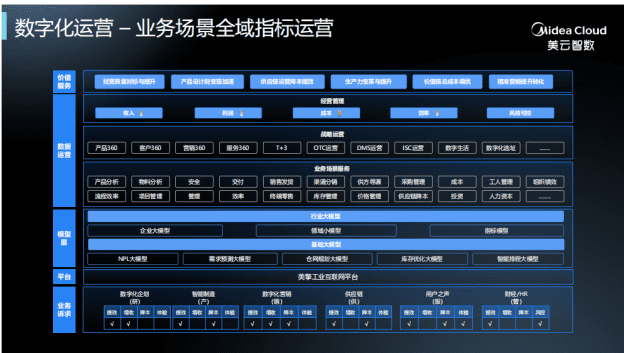
“术”,就是工具。一款好的平台工具能让大家运营起来得心应手。美云智数全域卓越数字化运营解决方案是一款贯穿企业数智化全价值链的数字化运营工具,将企业的研发、生产、营销、供应链、服务等业务系统中的数据统一汇集、整理、归档,能基于不同系统的业务诉求,通过诸如指标模型、算法模型等加工、解析后,为数据运营提供支撑,帮助企业实现提质增效降本,赋能管理决策及促动业务变革。
正如魏晓刚所说,“数字化运营是企业战略到落地,过程到结果管理一致性的关键能力,通过全价值链全过程数据指标透视、运算分析自动化、AIGC等技术不断渗透到运营管理,企业处理巨量动态全系数据的能力将逐渐提高,是企业推进数字化转型,实现可持续高质量发展的新质生产力。”
翻译:
At this year’s Expo, Wei Xiaogang, general manager of intelligent digital operations of the United States Cloud, threw such a question to the reporter of the New Industrial Network: At present, many enterprises have invested a lot of money in digital transformation, taken a lot of transformation measures, and upgraded a lot of systems, but the transformation effect is unsatisfactory? It’s confusing. What’s the problem?
Wei Xiaogang, general manager of intelligent digital operation of US Cloud
On this issue. McKinsey once released a report showing that the success rate of digital transformation of Chinese enterprises is only 20%. Although digital success or failure cannot be measured in one dimension. But in the author’s opinion, enterprise digital transformation is a process, is the scene from simple to complex. Application from local to overall continuous optimization process, then. How to improve the success rate of digital transformation?
Analysis of failure causes of digital transformation
The reasons for the failure of digital transformation can be summarized as follows. First, the technical route is wrong, the things made by technical personnel are not recognized by business personnel. And the non-integration of technology and business leads to the difficulty of digital transformation. Second, the perception of the digital transformation route at the top, middle and grassroots levels is different. The interests of various departments are not unified. The attitude is not unified, and the ability of personnel at all levels is not unified.
There are also some reasons for the lack of digital talents, unable to form a closed loop of digital talents, and the lack of a complete digital transformation system, there is no clear transformation guidance. It can be seen that if the enterprise as a whole fails to achieve balance in all aspects to form an overall consistency, it will inevitably hinder the success of digital transformation.
In fact, through the induction and analysis of the failure cases of enterprise transformation in recent years. A common misunderstanding of enterprise digital transformation is also found. That is, there are still many enterprises in accordance with the traditional information ideas to promote digital transformation. They believe that digital transformation is the continuous deployment of new systems. Complete the digital capabilities of the enterprise in each business node.
And promote inter-business system integration and unity on this basis.
However, how to further deepen the digital application, create a data-driven business system, and achieve innovative changes in management models, business models and business models is relatively confused.
At this point, although the enterprise has completed the business process and process digitization, realized the transformation from human governance to process governance, opened up the key nodes of the business, and realized the digital precipitation, it lacks the last two key stages, namely data visualization and business intelligence, so that the data can feed back the business process and promote business intelligence after modeling and knowledge. Is the goal of digital transformation and the core value.
Therefore, although many enterprises seem to improve the digital deployment of the business chain and realize the integration of different business systems, they can not play the effectiveness of digitalization, which brings confusion to enterprises, and most transformation failures stem from this. There are many examples. For example, Wei Xiaogang said that in the past, many enterprises implemented ERP systems in order to manage business processes such as sales, procurement, production and finance, but only to get business results, but did not pay attention to the process.
When enterprises require to improve operating costs, they often cannot find optimization and improvement points because they cannot obtain valuable process data.
And a large number of business data just lies quietly in the system and fails to get any use. Resulting in the disconnection between technology and business. If this is the case, then enterprise digital transformation is meaningless. It must be recognized that the goal of digital transformation is to conduct mathematical modeling and optimization of enterprise operation logic or management experience based on the processing and analysis of large amounts of operational data, and in turn guide the daily operation of enterprises.
Technology is only the means, innovative business is the goal. Technology and business, like two wheels, must be organically combined and closely coordinated to produce results. In the process of restructuring the business model. We must also hold to provide better products and services for the end consumer as the starting point, which is the original heart of digital transformation.
Three core elements of digital transformation
In essence, the ultimate goal of digital transformation is to use a new generation of digital technology to build a full perception, full connection, full scene, full intelligence of the digital world, to achieve the accurate mapping of the digital world to the physical world and the interaction between virtual and real, to optimize the business of the physical world, and to innovate and reshape the traditional management model, business model, and business model.
This is a process that needs long-term exploration, and what enterprises can do at present is to continuously consolidate the foundation of digital development and give full play to the effect of digital transformation. Internally improve quality, reduce cost and increase efficiency, externally enhance product sales capabilities and customer service capabilities, take user needs as the center, and drive business change with data. In this process, how to build an efficient digital operation system has become the key to the implementation of digital transformation.
Wei Xiaogang pointed out that digital operation is a high-level stage of digitalization. At present, the digital transformation of enterprises is actually only solving the problem of system connection and data unification, and the deeper intelligent analysis work is less involved, and must rely on digital operations to complete. So as to achieve “seeing, insight, and creativity”.
“Seeing” means making the business process data, quantifiable and visual.
“Insight” means that after seeing the operation of the enterprise, through in-depth analysis of the data. You can make a lot of market and industry predictions. “Originality” is to realize the innovation of new business and new product through the analysis of a large number of data such as scenario, full life cycle and product correlation, combined with some marketing methods, traffic realization, channel optimization and other ways. In this process, the three elements of “data, connection and algorithm” are indispensable and must form a joint force.
Data is the core that supports enterprises to make decisions and is the cornerstone of building digital transformation. Through data-driven business development, enterprises can better understand the market, customer needs and competitor dynamics, and then make more accurate, effective and reasonable business strategic decisions to improve corporate profitability and market competitiveness. Enterprises must obtain business data comprehensively, accurately and timely, drive business with data, guide decision with data, and seek value from data.
Connection is to connect scattered data single points and data islands to change the past business fragmentation and organizational fragmentation.
The systematic connection of data has three dimensions: one is to vertically open up the organizational level, the other is to horizontally pull through the functional line, and the third is to deeply connect the business management. Wei Xiaogang also pointed out that digital transformation is not a point, a line or a facet, it should be “vertical to the end, horizontal to the edge, the whole domain upgrade”. Connectivity is therefore the foundation for digital global operational excellence.
Algorithms are a series of business rules developed to solve a problem, which are used to guide computers to analyze massive data, judge and analyze the results, and then make action decisions. In the digital operation system, there is a model layer built based on algorithms, including the size models for industries, fields and basic scenarios. After processing and analyzing the data through these models, it can feed back the business process. Promote the intelligence of the business, empower management decisions or promote business changes.
Do a good job of digital operation “Tao magic.
Digital operation can help enterprise managers quickly build a panoramic view from strategy to execution, use algorithms and models and other technical means, instant insight into the uncertainty of the business process, timely response to changes, so as to help enterprises to solve the long-term existence of high inventory, high cost, long delivery, low efficiency and other pain points in the business process. To build a digital operation system, the enterprise operation process must be deeply rebuilt digitally. Due to the large number of departments involved, high frequency business interaction is required, in addition to the need for all departments and personnel at all levels of the enterprise to form a unified data thinking, complete link and organizational design is also essential. We believe that to do a good job in digital operation, we need to make efforts from the three levels of “Tao, Fa and technique”.
Tao is consciousness. If everyone does not like to do business through data and does not realize the value created by digital operations for enterprise management, it will lose its foundation. Therefore, it is necessary to unify the consciousness of digital operations from top to bottom, so that everyone can appreciate the value brought by digital operations. On the business side, digital operation lies in monitoring internal data analysis such as “product research and development, product upgrading, and offline marketing”.
And strengthening the closed-loop management after the internal and external intersection between online and offline.
In the user marketing side, through the installation, after-sales, e-commerce and other channels to integrate with user information, to achieve different regions and different groups of precision marketing; In the product design side, through intelligent products to achieve big data device connection, insight into user behavior, take the initiative to predict product failures, in order to improve user service level, improve product quality.
“Law” is the method. Master a good digital approach to operations, rather than simply analyzing data or relying on experience. The digital operation program allows enterprises to design a quantifiable . And detachable business KPI according to each business scenario service to guide the business side to cooperate with the entire operation activities.
From the initial setting of KPIs to the actual results achieved after the final completion of operational activities, no matter whether the target is reached or not, a complete review is needed to learn lessons and optimize the business. Behind each indicator is hidden the quantification of business process and business logic, and it is the essence of data-driven decision-making to peek out the root cause of problems from indicators.
“Art” is a tool. A good platform tool can make everyone operate easily.
The global excellence digital operation solution is a digital operation tool that runs through the whole value chain of enterprise digital intelligence. It collects, collates and archives the data in the enterprise’s R & D, production. Marketing, supply chain, service and other business systems. Based on the business demands of different systems. It can be processed and analyzed through such as indicator model and algorithm model. Provide support for data operations, help enterprises achieve quality, efficiency and cost reduction, empower management decisions and drive business change.
As Wei Xiaogang said, “Digital operation is the key ability of enterprise strategy to land, process to result management consistency, through the whole value chain data index perspective, operational analysis automation, AIGC and other technologies continue to penetrate into operation management, enterprises will gradually improve the ability to deal with huge dynamic full coefficient data, is the enterprise to promote digital transformation, New quality productivity for sustainable and high-quality development.”
本文由数字化转型网(www.szhzxw.cn)转载而成,来源于新工业网;编辑/翻译:数字化转型网小汤圆。

免责声明: 本网站(http://www.szhzxw.cn/)内容主要来自原创、合作媒体供稿和第三方投稿,凡在本网站出现的信息,均仅供参考。本网站将尽力确保所提供信息的准确性及可靠性,但不保证有关资料的准确性及可靠性,读者在使用前请进一步核实,并对任何自主决定的行为负责。本网站对有关资料所引致的错误、不确或遗漏,概不负任何法律责任。
本网站刊载的所有内容(包括但不仅限文字、图片、LOGO、音频、视频、软件、程序等) 版权归原作者所有。任何单位或个人认为本网站中的内容可能涉嫌侵犯其知识产权或存在不实内容时,请及时通知本站,予以删除。