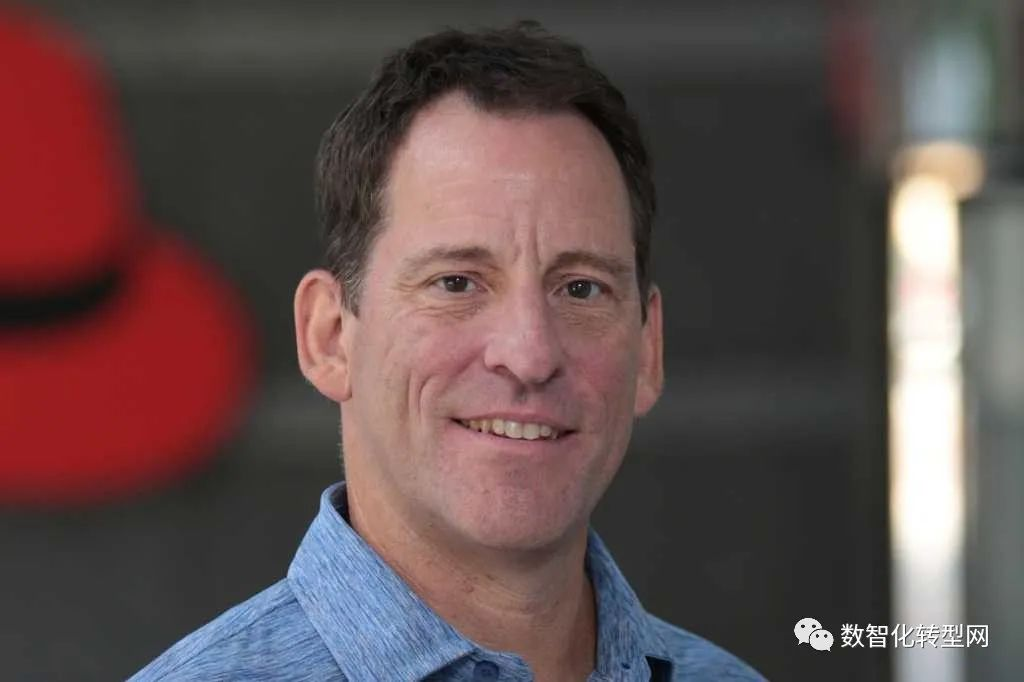
随着产品越来越以软件为基础,首席信息官的角色将越来越多地与几十年来一直在销售软件的首席信息官保持一致,例如开源解决方案提供商红帽的首席信息官吉姆·巴勒莫(Jim Palermo)。
无论您是销售汽车、糖果、咨询还是建筑,软件都正在成为您业务的中心。从产品开发到售后支持,您的产品和服务几乎都依赖于软件和数据。所以恭喜你!你已经成为(或将成为)本质上是一家软件公司的首席信息官。
多年来,我一直在写关于软件公司首席信息官的生活有何不同的文章——更具体地说,是他们必须比现在其他行业的首席信息官更清楚地区分 IT 和产品工程。
2014 年,我就这个话题采访了时任 Adobe 首席信息官的 Gerri Martin-Flickinger。“传统上,我们的产品工程师负责产品中的任何功能,”她说。“当客户进入 Adobe 的 Creative Cloud 时,屏幕上的所有内容都是由 Adobe 产品工程团队开发的。但是,当他们输入信用卡信息购买产品时,似乎电子商务功能已嵌入到产品中。但事实并非如此。它实际上是由 IT 运行的 Web 服务交付的。我们将 IT 提供的服务直接融入到产品中。 数字化转型网www.szhzxw.cn
Martin-Flickinger在加入Adobe之前,曾担任McAfee和VeriSign的首席信息官,后来成为星巴克的首席技术官多年。显然,星巴克的领导团队有远见地聘请了一家软件公司的首席信息官。
近十年过去了,软件工程和 IT 之间的界限更加模糊,所有 CIO 都有更大的机会从软件 CIO 的剧本中汲取经验。
Jim Palermo 自 2022 年以来一直担任开源解决方案提供商 Red Hat 的首席信息官,在此之前他在该公司工作了 14 年。如今,就像每个首席信息官一样,巴勒莫正在领导一场重大变革。“我们知道我们的客户工程团队希望在一个地方开发应用程序,并将其部署到任何地方,无论是本地还是公共云,”他说。“因此,我们认识到我们需要支持两种商业模式:传统的基于订阅的模式和新兴的基于消费的模式。就后者而言,在超大规模平台中运营我们的软件即服务的能力将增加我们的市场份额。
IT 团队在这种业务模式转型中的作用非常重要。首先,Palermo说,是“在公共云中的市场中实例化我们的产品,以便人们可以轻松消费它们”,同时“捕获客户如何使用我们产品的遥测数据,以便我们可以为我们的销售和产品团队带来更多机会。我们在将超大规模提供商的遥测技术带回我们的营销、销售和客户支持团队方面的作用是一个重大变化。这对我们来说是一个新角色。
通过基于订阅的模式,客户可以下载软件并在其数据中心的基础设施上运行它。这可能会造成 Palermo 所说的“气隙”,因为一旦产品进入客户数据中心,红帽产品和营销团队就会失去对客户使用情况和体验的大量可见性。 数字化转型网www.szhzxw.cn
另一方面,基于消费的模型提供了对新的和有价值的数据的访问。“假设一位软件工程师决定启动一个 OpenShift 集群,但随后几周都没有接触它,”Palermo 说。“我们可以从超大规模提供商那里获得遥测数据,从而提高采用率。”
一、零客户
IT 组织的第二个主要推动力是实现所有这些后端流程的现代化,以支持订阅和新兴的消费模式。“随着从基于计费的模式演变为基于收入的模式,我们正在改变我们的大多数后端系统,包括 ERP、CRM 和薪酬系统,以适应,”Palermo 说。“即服务模式改变了我们所有的后台价值流。”
推动新业务模式的流程变革,并将产品使用市场数据带回产品和营销团队,对于任何CIO来说都必须很熟悉,无论是否在软件公司。 数字化转型网www.szhzxw.cn
那么,成为软件首席信息官有什么独特之处呢?其他首席信息官可以从他们的经验中学到什么?首先,我们可以谈谈 IT 作为零客户的角色。“我被要求做很多客户简报,并讲述’红帽对红帽’的故事,”Palermo 说。“客户会说,’我已经和销售和营销团队谈过了。我明白了。但是,在 IT 领域,您如何使用您的产品来实现业务转型呢?他们如何帮助您实现应用程序套件的现代化,以适应这种新模式?
红帽的 IT 团队会寻找用户界面故障和性能问题,产品团队有机会在将软件投放市场之前解决这些问题。来自 IT 的反馈不仅对工程团队有帮助,对产品团队也有帮助。“我们帮助产品业务部门根据我们所看到的需求来发展产品,”巴勒莫说。
红帽作为零客户的 IT 角色如何应用于其他公司的 IT 领导?“任何首席信息官都需要评估供应商的产品,”巴勒莫说。“我在产品开发中的角色使我能够深入了解软件产品如何随着时间的推移而发展,并为我提供了一组不同的问题来评估供应商的产品。”
在评估供应商产品时,Palermo 和他的团队专注于可扩展性,以及发布和版本管理的基本原则:供应商如何使用客户审查委员会,以及他们如何使用遥测来改进产品。
除了对产品评估有不同的看法外,软件首席信息官在招聘全栈工程师方面也有丰富的经验。“因为我们生活在容器化应用程序组合的前景中,所以我们需要对基础设施、软件开发和发布管理有一定了解的人员,”他说。“这些人对我们来说物有所值,因为将堆栈的每一层划分为一个单独的组织或职能部门变得越来越困难。现在技术堆栈有如此多的异花授粉。 数字化转型网www.szhzxw.cn
巴勒莫从经验中知道,市场上并不充斥着全栈工程师,所以他和他的领导团队寻找的是潜力,而不是经验。“我们非常支持引进具有技术天赋和好奇心的人,”他说。“我们让他们踏上三到五年的旅程,让他们接触到技能发展机会。我们很少在街上聘请全栈工程师。
二、选择合适的合作伙伴
软件公司的首席信息官也为供应商合作伙伴关系带来了不同的思维方式。从长远来看,所有首席信息官都必须押注哪些技术投资将被证明是有价值的。Palermo 首席信息官投资决策的质量就在红帽的产品套件中。因此,供应商合作伙伴关系与非软件公司不同。与供应商在 CRM、ERP 和 HCM 方面的合作至关重要,但它们比软件 CIO 的赌注更具战术性。 数字化转型网www.szhzxw.cn
在红帽,供应商合作伙伴关系与其说是使用另一家公司的软件来运营业务,不如说是战略性的联合方法进入市场。“如果我们与另一家软件公司合作,将 OpenShift 与他们在市场上已有的即服务产品相结合,我们必须确保他们的价值主张与我们的价值主张一致,”Palermo 说。“我们的对话更多的是关于互相帮助增加市场份额,而不是我们如何使用他们的产品。进入市场的对话比以前重要得多。
这些“让我们一起进入市场”的对话越来越成为各行各业首席信息官的领域,他们的商业模式正在转向软件解决方案。那么,从软件首席信息官那里学到了什么?“例如,在选择ERP软件包时,我们曾经像IT领导者一样思考,”他说。“但是,当我们谈论将供应商的产品嵌入我们的产品中时,我们像软件CEO一样思考。

英文原文:
We’re all becoming software CIOs — a role Red Hat CIO Jim Palermo knows well
As products become more based in software, CIO roles will increasingly align with CIOs who’ve been selling software for decades, like Jim Palermo, CIO of open source solution provider Red Hat.
Whether you sell cars, candy, consulting, or construction, software is moving to the center of your business. Your products and services rely on software and data for nearly everything from product development to aftermarket support. So congratulations! You’ve become (or will become) what is, essentially, a software company CIO. 数字化转型网www.szhzxw.cn
I’ve been writing about how life is different for software company CIOs for years — more specifically, on how they must make clearer distinctions between IT and product engineering than it is now for CIOs in other industries.
In 2014, I interviewed Gerri Martin-Flickinger, then CIO of Adobe, on this topic. “Traditionally, our product engineers have been responsible for any functionality that goes into the product,” she said. “When customers enter Adobe’s Creative Cloud, everything on their screen was developed by the Adobe product engineering team. But when they enter their credit card information to buy the product, it looks like the e-commerce functionality is embedded in the product. But it’s not. It’s actually being delivered by a web service that’s run by IT. We put IT offered services right into the product.”
Martin-Flickinger, who, before Adobe, was CIO of McAfee and VeriSign, became CTO of Starbucks for many years. Clearly, the leadership team at Starbucks had the foresight to hire a software company CIO.
So fast forward nearly a decade, and here we are with even blurrier lines between software engineering and IT, and with an even greater opportunity for all CIOs to take a page from the software CIO’s playbook. 数字化转型网www.szhzxw.cn
Enter Jim Palermo, who’s been CIO of open source solution provider Red Hat since 2022, and with the company for 14 years before that. These days, like every CIO it seems, Palermo is leading a major transformation. “We know our customer engineering teams want to develop applications in one place and deploy them anywhere, whether on-prem or a public cloud,” he says. “So we recognize we need to support two business models: the traditional subscription-based model and an emerging consumption-based model. In terms of the latter, the ability to operate our software as a service within the hyperscaler platforms will increase our market share.”
The IT team’s role in this business model transformation is significant. First, says Palermo, is “instantiating our products in the marketplaces within the public clouds so people can easily consume them” along with “capturing the telemetry of how customers use our products so we can drive further opportunities for our sales and product teams. Our role in bringing telemetry from the hyperscalers back to our marketing, sales, and customer support teams is a big change. This is a new role for us.”
With the subscription-based model, customers download the software and run it on infrastructure in their data centers. This can create what Palermo refers to as an “air gap,” in that once the product is in the customer data center, the Red Hat product and marketing teams lose a lot of visibility into customer usage and experience. 数字化转型网www.szhzxw.cn
The consumption-based model, on the other hand, gives access to new and valuable data. “Let’s say a software engineer decides to spin up an OpenShift cluster, but then doesn’t touch it for weeks,” says Palermo. “We can get that telemetry from the hyperscalers so we can increase adoption.”
1. Customer zero
The second major push for the IT organization is modernizing all those back-end processes to support both the subscription and the emerging consumption model. “With the evolution from a billings-based to a revenue-based model, we’re changing most of our backend systems, including ERP, CRM, and compensation systems to accommodate,” says Palermo. “The as-a-service model changes all our back-office value streams.” 数字化转型网www.szhzxw.cn
Driving process change for a new business model and bringing product usage market data back to the product and marketing teams must sound familiar to any CIO, whether at a software company or not.
So, what’s unique about being a software CIO? What can other CIOs learn from their experience? First, we can talk about IT’s role as customer zero. “I get asked to do a lot of customer briefings and tell the ‘Red Hat on Red Hat’ story,” says Palermo. “Customers will say, ‘I’ve talked to the sales and marketing team. I get all that. But how are you, in IT, using your products to transform your business? How are they helping you modernize your application suite to acclimate to this new model?’”
Red Hat’s IT team looks for user interface glitches and performance issues, which the product teams have the chance to fix before they put the software in the market. The feedback from IT helps not only the engineering teams, but the product teams as well. “We help the product business units evolve the product, based on what we see as the demand,” says Palermo.
How does Red Hat’s IT role as customer zero apply to IT leadership in other companies? “Any CIO needs to evaluate a vendor’s product,” says Palermo. “My role in product development allows me some insight into how software products evolve over time, and gives me a different set of questions to evaluate a vendor’s product.”
When evaluating a vendor product, Palermo and his team focus on scalability, and fundamental principles for release and version management: how does the vendor use customer review boards, and how do they use telemetry to evolve the product.
In addition to having a different perspective on product evaluations, software CIOs have deep experience recruiting full-stack engineers. “Because we’re living in the promise of containerized application portfolios, we need people with some understanding of infrastructure, software development, and release management,” he says. “These people are worth their weight in gold to us because it’s getting harder to segment each layer of the stack out as a separate organization or function. There’s so much cross-pollination of the tech stack now.” 数字化转型网www.szhzxw.cn
Palermo knows from experience that the market is not brimming with full-stack engineers, so he and his leadership team look for potential, not experience. “We’re big proponents of bringing in people with technical aptitude and curiosity,” he says. “We put them on a three- to five-year journey to expose them to skill development opportunities. We rarely hire a full-stack engineer off the street.”
2. Selecting the right partners
Software company CIOs also bring a different mindset to vendor partnerships. All CIOs must make bets on which technology investments are going to prove valuable in the long term. The quality of Palermo’s CIOs investment decisions reside right in Red Hat’s product suite. As such, vendor partnerships take on a different flavor than in non-software companies. Partnerships with vendors for CRMs, ERP, and HCM are critical, but they’re one level more tactical than bets made by a software CIO.
At Red Hat, vendor partnerships are less about using another company’s software to run their businesses and more about strategic co-approaches to going to market. “If we work with another software company to leverage OpenShift with an as-a-service offering they already have in the market, we have to ensure their value proposition is in line with ours,” says Palermo. “Our conversations are more about helping each other increase market share than how we can use their products. The go-to-market conversation is much more important than it used to be.” 数字化转型网www.szhzxw.cn
These “let’s go to market together” conversations are increasingly the province of CIOs across industries, whose business models are shifting to software solutions. So, what’s the learning from a software CIO? “We used to think like IT leaders when selecting, for example, an ERP package,” he says. “But when we talk about embedding a vendor’s product in our offering, we think like software CEOs.”
本文由数字化转型网(www.szhzxw.cn)转载而成,来源于CIO.COM;编辑/翻译:数字化转型网宁檬树。
免责声明: 本网站(http://www.szhzxw.cn/)内容主要来自原创、合作媒体供稿和第三方投稿,凡在本网站出现的信息,均仅供参考。本网站将尽力确保所提供信息的准确性及可靠性,但不保证有关资料的准确性及可靠性,读者在使用前请进一步核实,并对任何自主决定的行为负责。本网站对有关资料所引致的错误、不确或遗漏,概不负任何法律责任。
本网站刊载的所有内容(包括但不仅限文字、图片、LOGO、音频、视频、软件、程序等) 版权归原作者所有。任何单位或个人认为本网站中的内容可能涉嫌侵犯其知识产权或存在不实内容时,请及时通知本站,予以删除。