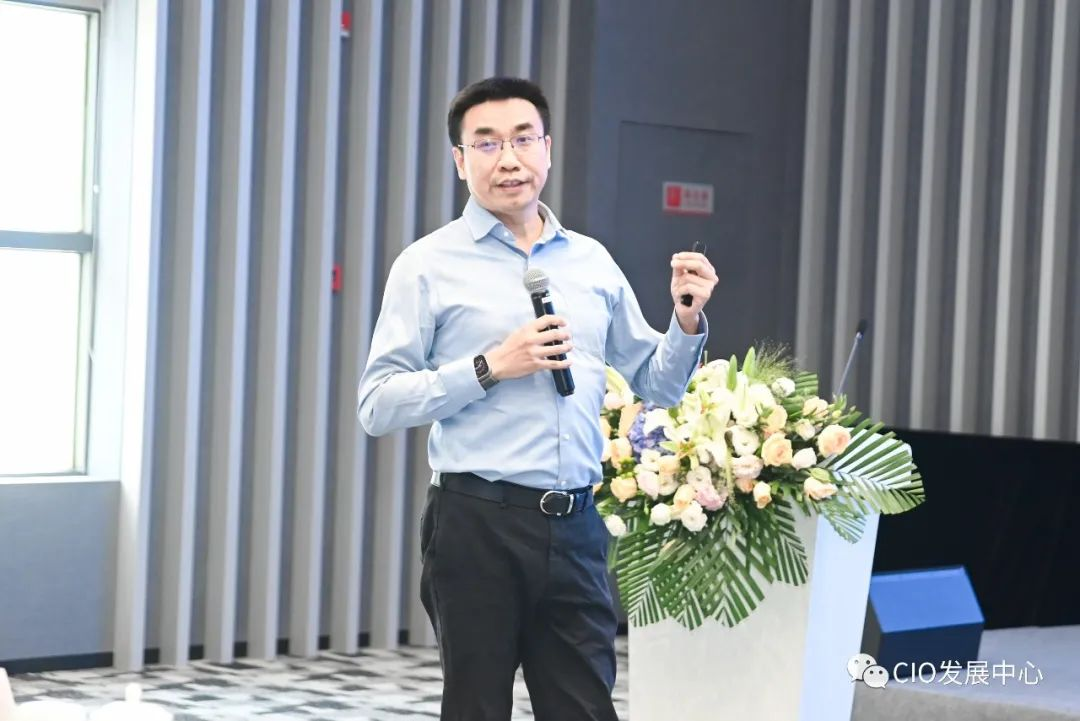
在本期“灯塔企业高层访谈实录”中,对三一集团董事、执行总裁兼总工程师易小刚先生进行了访谈,并走进了“最聪明”的长沙工厂。在制造业数智化转型的大背景下,双方围绕三一集团的“初心、匠心、恒心”展开了深度探讨。
访谈嘉宾:
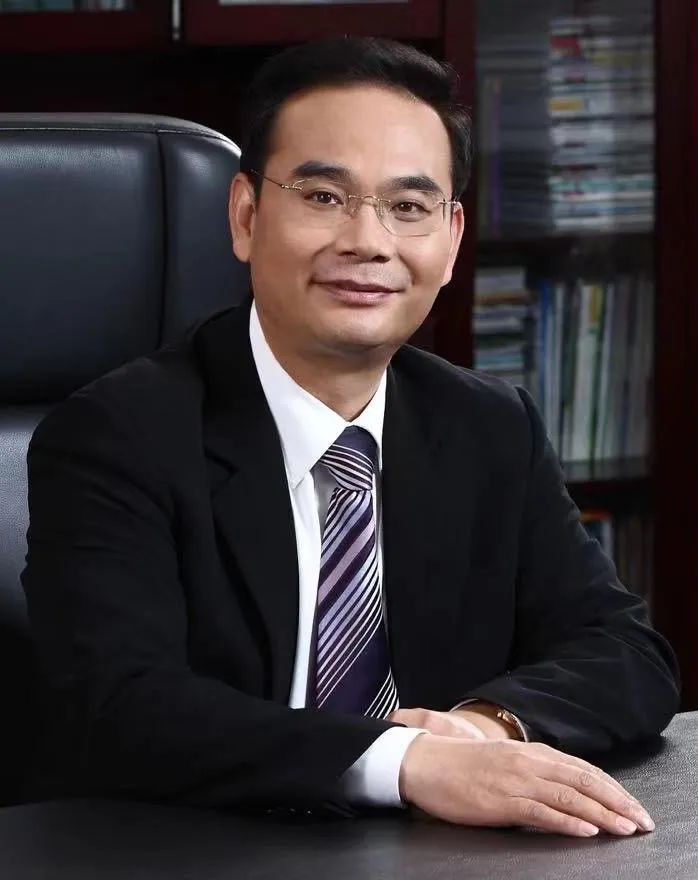
作为智能制造的领先企业,三一集团拥有46座数字化工厂,并正借助第四次工业革命技术,进一步擘画中国智慧工厂的蓝图。其中,三一集团有两座工厂入选由世界经济论坛牵头并联合麦肯锡共同成立的全球灯塔网络倡议,且是全球重工业唯二的两座灯塔工厂。于2022年10月最新入选的长沙18号工厂,与改造前相比,产能提升123%,人员效率提升98%,单位制造成本降低29%,转型成效卓著。
而作为三一集团智能制造的掌舵人,易小刚先生则是位坚定的持续创新者。从研发多款世界领先级的泵车,到打造长沙18号灯塔工厂,他创新创业的脚步从未停歇。为积极响应全球可持续发展以及国内“双碳”目标,他又带领团队迈进了新能源赛道。
持续创新何其艰,在工业革命4.0的关键时期,我们从他们的对话中看到了中国制造业在大变革中的智慧和勇气。以下为编辑后的访谈实录。 数字化转型网(www.szhzxw.cn)
一、初心:做智慧的钢铁裁缝
“钢铁裁缝背后不仅有柔性自动化,更有聪明的大脑,这些系统都是我们的自主知识产权”
Q1 :2016年我也曾访谈过您,能否请教从2016到2023年,长沙园区有哪些较大的变化?
易小刚:2016到2023年这段时间,是我们公司进行数字化转型和智能制造转型的关键阶段。在2016年之前,我们的主要精力集中在产品创新上。自2016年以来,国内整体形势和基本背景发生了变化,中国的工业基础已经达到了较高水平,但同时工程机械领域的同质化严重。因此在这个时期,我们必须思考如何进一步提升整个三一集团的核心竞争力。首先,我们董事长强调的是数智化,即数字化和智能化。
产品要智能化,意味着我们的整个管理系统要信息化,决策要智能化,最重要的是车间要智能化。2016年以前,我们以劳动密集型的手工作业为主,现在基本以信息化管理的机器人作业为主,人工作业为辅。比如在18号工厂,目前有300多位工人,但基本均从事脑力劳动,以操作机器程序为主。
Q2:作为智能制造的规划和落地总负责人,您打造18号灯塔工厂的初衷是什么?
易小刚:其实三一集团很早便想要发展智能工厂和智能制造,但当时还不知道如何实施。有一天,我们突然发现世界经济论坛有灯塔工厂这一标准,为我们指明了方向。提升18号灯塔工厂主要基于两大历史背景。首先,我国的工业基础得到了大幅度提升,包括信息化手段、计算机手段和机器人技术等,周边工业技术也得到了大幅度提升。这样,灯塔工厂的建设才有可能实现。
第二大历史背景是中国劳动力的知识结构发生了很大变化。这些年来,劳动力人口减少,但劳动力人口的知识层次不断提高,为智能制造奠定了良好基础。在这两大历史背景下,这是千载难逢的机遇。
Q3:在这个过程中,有哪些艰难和高光时刻?
易小刚:我们属于重型装备制造业。它有几个特点,首先是每个零件都特别重,动辄几吨重。其次,重型装备制造业是多品种、小批量生产的行业。我们体量最大的品种只有几万台,通常是几千台、几百台。因此,在重型装备制造业,又是多品种、小批量的行业,实现无人化智能制造的难度相当高。
按我们董事长的说法,我们的整个制造业就像“钢铁裁缝”。“钢铁裁缝”就是将从钢厂拉过来的钢板,切割成一块一块的小料,然后焊接到一起,再经过精密加工后,形成一个个巨型机器,解决问题,并进行复杂作业。钢铁裁缝背后不仅有柔性自动化,更有聪明的大脑。它的“灵魂”还是我们的MOM系统和IoT物联网。如果车间没有IoT、MOM和WMS,所有的机器就无法运行。这些系统都是我们的自主知识产权,由我们自己开发。 数字化转型网(www.szhzxw.cn)
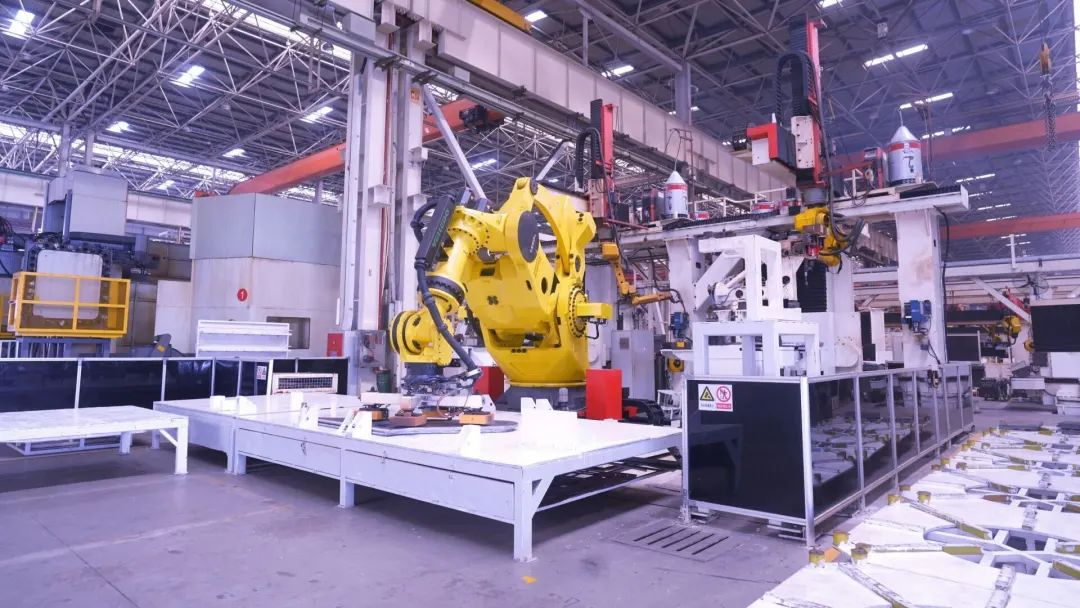
这其中包含许多细微之处,我们称之为“魔鬼在细节中”。比如,你可能觉得视觉识别很简单,但在实际工程应用中会遇到许多实际问题。视觉识别受环境光、像素精度、零件尺寸的影响很大。如果零件尺寸很大,那么精度就会下降。而我们做焊接时,所有边缘位置的精度要在0.1毫米以内。如果没有达到0.1毫米内,焊接完成后,整个部件的尺寸精度就无法达到要求。我们的焊接机械手定位非常准确,当一个接触点靠近时会产生电弧信号,系统检测到信号后,机械手会记录自己的空间位置,并进行自动矫正。
二、匠心:做有数智技能的匠人
“未来的‘工人’将成为‘工艺工程师’和‘高级技术工人’,他们不会失业”
Q1:我听说您在项目期间都吃住在三一,攻坚许久。能否讲述一下背后的人的故事?
易小刚:技术问题并非整个灯塔工厂推行过程中最大的难题。最大的问题来自我们工人的习惯,他们习惯于手工操作。例如,零部件的机加工可完全自动化,无需人工干预。但有的工人不习惯,担心零部件会报废,所以他总是干一会儿,就要打开设备门看一下。实际上,这样反而打乱了整个机器的全自动化作业节奏。
所以这涉及到理念的改变。现在如果您去18号工厂,会发现工人不再习惯于关注某个零件,而是习惯于观察电子屏幕,了解异常和变化。如果出现报警,便处理异常。原来一个工人只能负责一台设备,现在一个工人可以负责10台,甚至20台。工人的工作环境好了,劳动强度低了,工资收入也高了。这对于企业和工人来说,是一种双赢。 数字化转型网(www.szhzxw.cn)
Q2:未来三一集团要实现“三个三”的目标,即3千产业工人、3万工程师和3千亿的年销售额。从您的角度来看,这三个目标中,哪个难度较大?应如何实现?
易小刚:我认为难度最大的还是产业工人。有人曾问过我一个敏感问题,当只有3000产业工人时,是否会有很多人失业。实际上,未来的“工人”将成为“工艺工程师”和“高级技术工人”。他们在办公室工作,负责计算机控制、优化参数和调度等。因此,员工总体数量不会减少,员工不会失业。我们现在有将近2千亿销售额,员工近5万名。我认为当达到了3千亿时,我们仍然需要这些员工,让他们去做更多创新的事情。
我们需要“升级”现有产业工人,而我们“三一工学院”的一大部分工作就是进行这方面的培训。在“三一工学院”,我们可以看到许多模拟智能制造工厂的机器人。因此,培训工人并升级他们的技术是最重要的一项任务。另一方面,当现场设备智能化程度提高时,保证设备的正常运作、故障预防以及维护保养是很大的挑战。因此,我们对维护保养和维修人员的培训也非常重视。企业正在不断完善过程中发展,每个人也在不断完善自己。 数字化转型网(www.szhzxw.cn)
Q3:智能制造确实可以提高效率,但在产线上还有一部分相当难做的工作,例如装配线的自动化。我们应该如何提升一线的自动化率?
易小刚:目前,我们在重型装备制造业和灯塔工厂智能制造方面遇到的最大挑战是装配环节。因此,在智能制造和智能装配方面,我们能够做的事情是尽量减少装配工人的体力劳动。举个小例子,目前我们对每个工位都有提示性的作业指导。工人在装配时,我们的信息化系统会对一些作业和工艺,通过语音等方法进行提示。我们有一个闭环检测系统,当工人安装完成后,系统会检测各项工序及装配任务的完成情况。当然,要完全实现无人化,目前仍有难度。主要瓶颈是没有巨型机械手,但我相信未来可以实现。
三、恒心:做持续创新的乐行者
“我的快乐其实来源于技术成果、发明专利和新产品,这种发自内心的快乐一直是我所追求的目标”
Q1:您曾说您最不喜欢的两句话是,“别人是这么做的”和“别人并没有这样做”。三一的创新一直反馈在企业DNA中。在智能制造领域,您如何诠释这两句话?
易小刚:“因为别人这么做,所以我也这么做”以及“因为别人还没这么做,所以我也还没这么做”。我之所以反对这两句话,是因为它特别影响一个企业的创新文化。我们要学习他人,但要在学习的基础上去创新,不能模仿。如果仅仅模仿,那么企业就会停滞不前,无法实现超越。
为了创新,我们提出“打破恐惧、大胆创新”。为什么要打破恐惧?有时候创新并不复杂,它是一种思维和灵感的突然涌现。为什么要鼓励大胆创新?创新有风险,有时会失败,带来损失,但一旦成功,则会带来巨大收益。因此,我们鼓励研发人员要大胆创新。 数字化转型网(www.szhzxw.cn)
如果员工在某些事情上做错了,可能会受到处罚。但如果员工在创新方面失败,给公司造成了损失,公司绝对不会处罚。此前我们进行高强度材料创新时,前前后后花了将近两年时间,从原材料的热处理、硼元素和碳元素的配比调节到热处理装备,失败了很多次。正是这种鼓励创新,三一集团这些年在技术创新、产品创新以及智能制造和信息化方面取得了一系列成就。
Q2:您为了三一奋斗了一辈子,仍然在创新道路上不断前进,现在又全身心投入新能源行业,您没想过稍微休息一下吗?
易小刚:我的快乐其实来源于在技术上取得成果、获得发明专利并推出新产品,这种发自内心的快乐一直是我所追求的目标。我们在装备制造领域有优势。开发电池装备生产线是我们的强项。我们会努力使电池生产装备更先进、自动化程度更高、质量更好,这也是我所追求的目标。
另外,由于我们对自己的工程机械和工程车辆非常了解,在这方面推动电动化是我们的优势,也是我个人的目标。工程机械的电动化仍有一段路要走,我们也值得努力。但我相信,用不到3~5年,工程机械的电动化一定会崭露头角。 数字化转型网(www.szhzxw.cn)
Q3:能否用一句话寄语给那些在智能制造过程中艰辛奋斗的制造人?
易小刚:智能制造技术已经成熟,每个制造业的同行都应该追求智能制造的未来。
Q:您也一直在持续创新创业,尽管一路艰难,但正因为这份艰难,最后才有所收获。就像当你攀登到顶峰,回头一看,过去都值得。

翻译:
Interview with Yi Xiaogang, CEO of Sany Group: Made in China, the traveler is boundless and the creator is fearless
In this issue of “Lighthouse Enterprise senior Executives Interview Record”, Mr. Yi Xiaogang, director, executive president and chief engineer of Sany Group, was interviewed and entered the “smartest” Changsha factory. Under the background of the digital intelligent transformation of the manufacturing industry, the two sides launched an in-depth discussion on the “original intention, ingenuity and perseverance” of Sany Group. 数字化转型网(www.szhzxw.cn)
Interview guest:
Yi Xiaogang, Director, Executive President and Chief Engineer of Sany Group
As a leader in smart manufacturing, Sany Group has 46 digital factories and is further drawing the blueprint for China’s smart factory with the help of Fourth Industrial Revolution technologies. Among them, Sany Group has two factories selected in the Global Lighthouse Network Initiative led by the World Economic Forum and jointly established by McKinsey, and is the only two lighthouse factories in the world’s heavy industry. In October 2022, the newly selected Changsha No. 18 factory, compared with the pre-transformation, increased production capacity by 123%, personnel efficiency by 98%, unit manufacturing cost by 29%, and remarkable transformation results.
As the leader of Sany Intelligent Manufacturing, Mr. Yi Xiaogang is a committed innovator. From developing a number of world-leading pump trucks to building Changsha No. 18 Lighthouse factory, his footsteps in innovation and entrepreneurship have never stopped. In order to actively respond to the global sustainable development and the domestic “double carbon” goal, he led the team into the new energy track.
In the critical period of Industrial Revolution 4.0, we have seen from their dialogue the wisdom and courage of China’s manufacturing industry in the great change. The following is an edited transcript of the interview. 数字化转型网(www.szhzxw.cn)
First, the original intention: to be a wise steel tailor
“Behind the steel tailor is not only flexible automation, but also a smart brain, and these systems are our independent intellectual property rights.”
Q1: I also interviewed you in 2016. Could you tell me the major changes in Changsha Park from 2016 to 2023?
Yi Xiaogang: The period from 2016 to 2023 is a key stage for our company’s digital transformation and intelligent manufacturing transformation. Prior to 2016, our main focus was on product innovation. Since 2016, the overall domestic situation and basic background has changed, China’s industrial base has reached a high level, but at the same time, the field of construction machinery is seriously homogenized. Therefore, in this period, we must think about how to further enhance the core competitiveness of the whole Sany Group. First of all, our chairman emphasized the number of intelligent, that is, digital and intelligent. 数字化转型网(www.szhzxw.cn)
The product should be intelligent, which means that our entire management system should be informationized, decision-making should be intelligent, and the most important thing is that the workshop should be intelligent. Before 2016, we were mainly labor-intensive manual work, and now we are basically based on robot work of information management, supplemented by manual work. For example, in Factory No. 18, there are currently more than 300 workers, but they are basically engaged in mental work, mainly operating machine procedures.
Q2: As the general director of intelligent manufacturing planning and implementation, what is your original intention to build No. 18 Lighthouse factory?
Yi Xiaogang: In fact, Sany Group has long wanted to develop smart factories and smart manufacturing, but at that time, it did not know how to implement it. One day, we suddenly found that the World Economic Forum had the lighthouse factory standard, which pointed us in the direction. Upgrading No. 18 Lighthouse Factory is mainly based on two historical backgrounds. First of all, China’s industrial base has been greatly improved, including information means, computer means and robot technology, and the surrounding industrial technology has also been greatly improved. In this way, the construction of the lighthouse factory was possible. 数字化转型网(www.szhzxw.cn)
The second historical background is that the knowledge structure of the Chinese labor force has changed a lot. Over the years, the labor force population has decreased, but the knowledge level of the labor force population has continuously improved, laying a good foundation for intelligent manufacturing. In these two historical contexts, this is a once-in-a-lifetime opportunity.
Q3: What were some tough and highlight moments along the way?
Yi Xiaogang: We belong to the heavy equipment manufacturing industry. It has several characteristics, the first is that each part is particularly heavy, often several tons of weight. Secondly, the heavy equipment manufacturing industry is a multi-variety, small-batch production industry. Our largest variety is only tens of thousands of units, usually thousands of units, hundreds of units. Therefore, in the heavy equipment manufacturing industry, it is also a multi-variety, small-batch industry, the difficulty of realizing unmanned intelligent manufacturing is quite high. 数字化转型网(www.szhzxw.cn)
In the words of our chairman, our whole manufacturing industry is like a “steel tailor”. “Steel tailor” is the steel plate pulled from the steel mill, cut into a piece of small material, and then welded together, and then after precision processing, the formation of a giant machine, solve problems, and carry out complex operations. Steel tailor behind not only flexible automation, more intelligent brain. Its “soul” is also our MOM system and IoT Internet of Things. If there is no IoT, MOM and WMS on the shop floor, all the machines will not work. These systems are our own intellectual property rights and are developed by us.
There are so many nuances involved that we call “the devil is in the details.” For example, you may think that visual recognition is simple, but there are many practical problems in practical engineering applications. Visual recognition is greatly affected by ambient light, pixel accuracy, and part size. If the part size is large, then the accuracy will decrease. When we do welding, the accuracy of all edge positions should be within 0.1 mm. If it is not within 0.1 mm, after the welding is completed, the dimensional accuracy of the entire part cannot meet the requirements. Our welding robot positioning is very accurate, when a contact point is close to the arc signal, the system detects the signal, the robot will record its spatial position, and automatically correct.
Sany Changsha No. 18 plant positioning accurate group pair welding workstation. Figure/Provided by respondents
Ingenuity: Be a craftsman with intellectual skills
“The ‘workers’ of the future will be’ process engineers’ and ‘highly skilled workers’ who will not lose their jobs.” 数字化转型网(www.szhzxw.cn)
Q1: I heard that you lived and ate in Sany for a long time during the project. Can you tell us the story of the people behind it?
Yi Xiaogang: Technical problems are not the biggest problem in the implementation of the lighthouse factory. The biggest problem comes from the habits of our workers, who are used to manual operations. For example, the machining of parts can be fully automated without human intervention. But some workers are not used to it and worry that the parts will be scrapped, so he always works for a while and has to open the door of the equipment to have a look. In fact, this disrupts the fully automated pace of the entire machine.
So it involves a change in philosophy. Now if you go to factory 18, you will find that the workers are no longer used to looking at a part, but are used to looking at the electronic screen to understand anomalies and changes. If an alarm occurs, handle the exception. Where once a worker was responsible for only one piece of equipment, now a worker can be responsible for 10, or even 20. The working environment of workers is better, the labor intensity is lower, and the wage income is higher. This is a win-win situation for both companies and workers. 数字化转型网(www.szhzxw.cn)
Q2: In the future, Sany Group will achieve the goal of “three threes”, that is, 3,000 industrial workers, 30,000 engineers and 300 billion annual sales. From your perspective, which of these three goals is more difficult? How should this be achieved?
Yi Xiaogang: I think the most difficult ones are industrial workers. I was once asked the sensitive question of whether there would be many unemployed people when there were only 3,000 industrial workers. In fact, the “workers” of the future will be “process engineers” and “advanced skilled workers.” They work in offices and are responsible for computer control, optimizing parameters, scheduling, etc. Therefore, the overall number of employees will not be reduced, and employees will not lose their jobs. We now have nearly $200 billion in sales and nearly 50,000 employees. I think when we get to 300 billion, we still need these people to do more innovative things.
We need to “upgrade” existing industrial workers, and a large part of our work at Trinity Technology is to train them in this area. In the “Trinity Institute of Technology”, we can see many robots that simulate intelligent manufacturing factories. Therefore, training workers and upgrading their skills is a most important task. On the other hand, when the level of intelligence of the field equipment is increased, it is a great challenge to ensure the normal operation of the equipment, fault prevention and maintenance. Therefore, we also attach great importance to the training of maintenance and repair personnel. Enterprises are developing in the process of continuous improvement, and everyone is also constantly improving themselves. 数字化转型网(www.szhzxw.cn)
Q3: Smart manufacturing can indeed improve efficiency, but there is also a part of the production line that is quite difficult to do, such as the automation of the assembly line. How can we increase the automation rate in the field?
Yi Xiaogang: At present, the biggest challenge we face in heavy equipment manufacturing and intelligent manufacturing in lighthouse factories is the assembly link. Therefore, in terms of intelligent manufacturing and intelligent assembly, what we can do is to minimize the physical labor of assembly workers. As a small example, we currently have a prompt job guide for each station. When workers are assembling, our information system will prompt some operations and processes through voice and other methods. We have a closed-loop inspection system that checks the completion of various processes and assembly tasks when the workers have completed the installation. Of course, it is still difficult to fully achieve unmanned. The main bottleneck is that there are no giant robotic hands, but I believe it will be possible in the future.
Perseverance: to be a continuous innovator of music
“My happiness actually comes from technological achievements, invention patents and new products, and this kind of happiness from the heart has always been my goal.”
Q1: You have said that your two least favorite statements are, “Others do it this way” and “others don’t do it this way.” Sany’s innovation has always been reflected in the corporate DNA. In the field of intelligent manufacturing, how do you interpret these two sentences?
Yi Xiaogang: “Because others do it, so I do it” and “Because others haven’t done it, so I haven’t done it yet.” The reason why I object to these two sentences is that they particularly affect a company’s innovation culture. We should learn from others, but we should innovate on the basis of learning, not imitate. If only imitation, then the business will stagnate, unable to achieve transcendence.
In order to innovate, we propose to “break fear and innovate boldly”. Why break fear? Sometimes innovation is not complicated, it is a sudden burst of thought and inspiration. Why encourage bold innovation? Innovation is risky and sometimes fails, bringing losses, but when it succeeds, it brings huge gains. Therefore, we encourage our R&D staff to be bold and innovative.
If an employee does something wrong, there may be penalties. But if employees fail to innovate and cause losses to the company, the company will never penalize them. When we innovated high-strength materials before, we spent nearly two years, from the heat treatment of raw materials, the ratio of boron and carbon elements to the heat treatment equipment, and failed many times. It is this encouragement of innovation that Sany Group has made a series of achievements in technological innovation, product innovation, intelligent manufacturing and information technology in recent years.
Q2: You have fought for SANY all your life, still moving forward on the road of innovation, and now you are fully engaged in the new energy industry. Have you ever thought of taking a break?
Yi Xiaogang: My happiness actually comes from achieving technical results, obtaining invention patents and launching new products. This kind of happiness from the heart has always been my goal. We have an advantage in the field of equipment manufacturing. The development of battery equipment production lines is our strength. We will strive to make the battery production equipment more advanced, more automated, better quality, this is also the goal I pursue.
In addition, because we know our construction machinery and construction vehicles very well, it is our advantage and my personal goal to promote electrification in this area. The electrification of construction machinery still has some way to go, and we are also worth our efforts. However, I believe that in less than 3 to 5 years, the electrification of construction machinery will certainly emerge.
Q3: Can you send a message to those manufacturers who struggle in the process of intelligent manufacturing?
Yi Xiaogang: Intelligent manufacturing technology has matured, and every manufacturing peer should pursue the future of intelligent manufacturing.
Q: You have also continued to innovate and start your own business, although it has been difficult along the way, but because of this difficult, you finally have a harvest. It’s like when you climb to the top and look back, the past was worth it. 数字化转型网 (www.szhzxw.cn)
本文由数字化转型网(www.szhzxw.cn)转载而成,来源于麦肯锡北京数字化能力发展中心;编辑/翻译:数字化转型网宁檬树。
免责声明: 本网站(http://www.szhzxw.cn/)内容主要来自原创、合作媒体供稿和第三方投稿,凡在本网站出现的信息,均仅供参考。本网站将尽力确保所提供信息的准确性及可靠性,但不保证有关资料的准确性及可靠性,读者在使用前请进一步核实,并对任何自主决定的行为负责。本网站对有关资料所引致的错误、不确或遗漏,概不负任何法律责任。
本网站刊载的所有内容(包括但不仅限文字、图片、LOGO、音频、视频、软件、程序等) 版权归原作者所有。任何单位或个人认为本网站中的内容可能涉嫌侵犯其知识产权或存在不实内容时,请及时通知本站,予以删除。