
一、引言
随着市场供需模式的改变,需求在互联网时代逐渐变得碎片化和脆弱化。如何利用数字化技术与传统工业协同,提高交付的敏捷性和可靠性,变成了企业竞争力提升的必然选择。然而,在产品大规模定制化需求时代,企业如何对人力资源、机器和产能资源、物料供应、工艺进行高效调度、防呆纠偏,一直是一个难题。过去,企业以ERP手动计划排程,在生产工单管理上做生产计划建议,欠缺对资源调度的全链动态管理。在只依靠ERP下,很多企业都出现了工单齐套讯息不清晰,人工追欠料,过度依赖人员素质,计划和物流、信息流传递的效率低、延时和不准确的状况。以至于无法满足客户交付需求的风险、资源浪费的风险和潜在呆滞库存的风险日渐提高,直接影响了企业的竞争力。
围绕实现数智化营运的战略目标,企业在现有ERP的基础上连接APS(高阶生产计划与排产系统),以助于缩短订单生产周期、提高工作效率、降低库存成本,这已然成为行业内的一个趋势。在德国提出工业4.0概念之后,国内APS的发展可谓百花齐放,但大多数对APS的研究仍处于起步阶段。虽然APS的愿景十分美好,但历年APS实施案例成功验收的比例不高。目前行业整体成功率仍低于30%,真正在财务上能为客户带来合理收益的案例比例,可能不高于20%。
本文基于国内某一知名企业有效实施APS的应用实践,为其他工业企业在数字化转型中,如何成功规划实施APS,提供一套科学合理的规划方法,为企业实现智能制造提供有益的模板。
二、APS基本原理
APS是在工业生产中广泛使用的自动生产计划排程系统。它的目的在于帮助企业串联销售需求和工单安排,提高生产和运营的效率,提升资源利用和协助降本。APS系统包括需求计划、生产排程、资源分配和监督调整四部分: 数字化转型网(www.szhzxw.cn)
一是根据市场需求和预测,制定产品的需求计划,以确定生产的产品种类、数量和交货日期。
二是在生产排程建模中,需要根据需求计划,按约束条件进行生产排程,以确定每个产品生产的开始时间和结束时间,并确保生产和交货时间的准确性。
三是根据排程进行4M1E资源分配,包括人力资源、机器和产能资源、物料供应、工艺等,以确保资源的充分利用和效益最大化。
四是监控和调整。根据实际情况,进行生产排程的动态监控和修正,及时处理生产中的问题,保证生产进度和产品质量的达成。
总体而言,APS是基于需求计划和资源分配,通过优化生产排程来提高生产效率和产品质量,从而实现企业的整体经济效益。
三、APS规划实施
APS的规划实施在很多企业看来只是一个资讯软件项目。正是因为这种误解,导致项目的实施条件不足,而引起实施成功验收的比率偏低。工厂交付以主生产计划为中心,而APS正是整个计划体系的核心灵魂和指挥系统。由于APS与其他职能板块牵扯互动甚多,所以APS的规划实施其实是一个由上至下的供应链体系和流程规划改善过程,也是先精益后自动化的过程。实施APS与实施ERP有点类似,其关键瓶颈在于企业文化与流程改革的冲突,而非软件本身。 数字化转型网(www.szhzxw.cn)
(一)供应链智能制造体系规划
以本文企业为例,整个企业从上至下第一步,是规划企业整体的智能制造蓝图。包括产品全生命周期的管理、产品全面质量管理、供需全链的协同管理以及其他连接项目。(见图1)
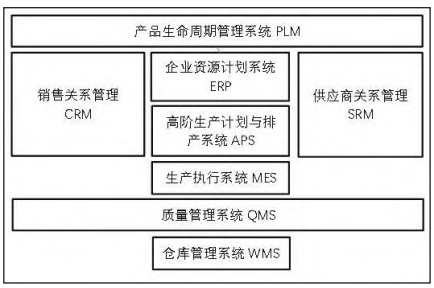
在全链协同下,第二步是规划供应链智能制造体系。在实施APS前需要做顶层规划,即前方连结CRM和 ERP,后方连结SRM。利用智能制造技术和信息技术,实现供应链中各个环节的协同、智能、高效运作,动态择取现场数据以保证持续纠偏。在供应链体系外和其他智能制造系统数据互通、互动,高效协作,管理企业资源。
本文企业体系规划的目标十分清晰,主要关注于提高供应链系统的准确性、敏捷性以及高效和低成本。在相关体系和流程建设中,本文企业至少用了一年时间来做规划和各业务流程的梳理,把基础框架定好以承接APS不同环节中的需求和特点。
(二)APS业务流程规划
在顶层的企业智能制造蓝图和全链体系规划完成后,如前文所提倡的先精益后自动化的概念,本文企业针对公司内部情况,梳理了 APS的业务流程。下面让我们以该企业的工厂A为例,来梳理其实施APS的业务流程: 数字化转型网(www.szhzxw.cn)
1.APS底层数据的采集和整理。在前期,因历史原因收集相关底层数据相当困难。数据缺口较大,工艺数据比较粗犷,而且各组数据之间还缺乏连结性,例如,产品和产线没有关联,个别产品在设备上的产能数据缺失;人力资源和产线没有关联,人力资源数据缺失并和实际排产的能力数据差异较大。
在APS系统搭建过程中,需要收集和整理与生产计划和排产相关的底层数据,包括需求数据(销售订单号、销售订单数量、要求交付日期)、订单与工单的关联数据、产品数据(包括规格、产品标准化)、制造工程数据(包括标准工时、工艺路线)、设备数据(包括最大产能、设备状态)、产品与产线的关联数据、人力资源数据等。
2.业务流程梳理。APS底层数据搭建整理后,就需要对计划部门的实际业务流程,即从销售订单录入开始,到物料需求计划、生产能力计划和生产执行反馈的所有业务过程,做相关的流程梳理。并且对比APS系统建议的标准流程和实际操作流程的差异,厘定APS相关业务流程及其对应的约束条件。
实际在梳理业务流程时,往往会出现管理层的期望和执行者的期望相违背的情况。管理层期望用人少、智能化,并且约束条件更多;而执行层面则期望APS简单易用,灵活性更高;也会有部分操作人员希望不改变,继续保持人工排产的现状。本文企业的工厂A在APS业务流程的梳理中,就花了很长时间用于处理期望的冲突和平衡相关的要求。 数字化转型网(www.szhzxw.cn)
案例企业的APS简易业务流程,如图2所示。它主要包括五个方面:
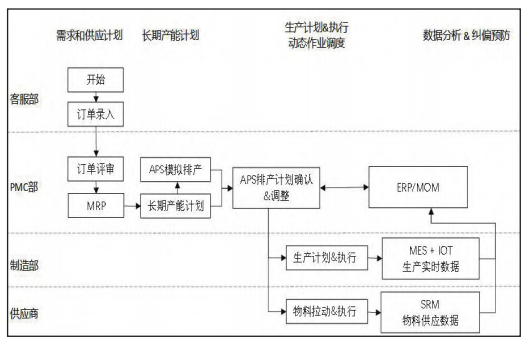
一是需求和供应计划:根据客户需求、订单和市场趋势,制定相关主生产计划,包括接受订单、确认订单、订单排期等。
二是长期产能计划:包括物料计划和生产能力计划。根据主生产计划和产品物料清单(Bill of Materials),可以关联触发形成ERP中的物料计划(包括原材料采购、库存管理、物料配送等)。然后,再根据主生产计划和设备能力,可以制定包括人力资源调度、设备调度、维护保养、设备改造等在内的生产能力计划。 数字化转型网(www.szhzxw.cn)
三是生产计划和执行:根据主生产计划、物料计划和生产能力计划,执行生产。包括生产任务分配、生产进度跟踪、生产过程控制等。
四是动态作业调度:根据生产执行情况,设备状态和现场异常升级管理,进行生产作业调度,包括设备调度、作业分配、作业优化等。
五是生产报告分析:对生产过程中的数据进行分析,制定决策方案,包括生产计划的调整以及纠偏预防、持续改善。
(三)规划APS软件的功能板块
下面以本文案例企业的工厂A上线为例,来谈谈APS软件的功能架构和内容规划。该工厂的APS共分为七大板块:
一是资源管理板块,这里的资源管理包含生产组织管理、线体工序配置、人员信息管理、考勤班次管理、工厂工作日历、设备管理、模具管理、设备排班设置、排班明细表等等,以确保生产相关资源数据和参数设定可以在APS内得到有效管理。 数字化转型网(www.szhzxw.cn)
二是排程建模板块,它包括产品档案管理、平台产品配置、产品专线配置等。通过产品的工艺路线设置、标准产能定额、模具关联配置、产能缺失分析、排产前置期及到货提前期设置、安全库存设置(如需要)、齐套算法配置、预警规则设置等,可以确保相关排产数据设置有效。通过不同参数和不同业务约束条件,可以服务排产引擎完成模拟排产,协助排产决策。
三是算法应用管理板块,算法应用主要按遗传基因算法模型和启发式算法模型,基于约束理论的有限产能算法和多个约束规则,进行计划序列运算,以确保排产能按多约束规则有序匹配。
四是计划管理板块,它为相关不同计划和需求,提供约束条件的数据来源。
五是生产排程板块,主要负责相关动态排产的执行和配套资讯的分析。
六是物料拉动管理,以全链连结拉动进料,当然这里会牵涉采购策略和相关交易规则,需要另外处理。七是分析&预警管理,它连接流程中的纠偏预防,形成PDCA的闭环管理。
(四)APS项目实施计划
上述步骤完成后,就轮到了规划的实施和执行。以案例企业的一条离散型产品生产线为例:
一是确定项目实施的目标和范围:需要明确APS实施的目标产线、型号和范围,选择需要的APS板块和功能,明确对应功能板块的连接接口。 数字化转型网(www.szhzxw.cn)
二是收集和整理数据:从业务流程规划已整理的数据中,收集与生产计划与排程相关的实时数据,作数据库接口连接。
三是APS系统后台设计:根据业务流程,进行系统后台设计,包括定义数据模型、参数修正、约束条件修正、确定算法和模拟模型等。
四是APS系统的安装与调试:根据设计方案,安装软件,配置和调整系统参数,设置权限等。
五是数据测试验证和调整:系统安装调试完成后,需要对数据进行验证,以确保数据的准确性和完整性,并进行用户测试(UAT)和系统压力测试,输出OPL调整并优化。
六是培训和推广:给用户做APS系统培训,并制作相关APS使用手册,使用户尽快熟悉系统的操作及使用方法。同时进行APS推广活动,提高APS的使用率和应用效果。
七是监控和维护:定期监控系统的运行状态,及时处理系统异常,进行系统维护和升级,保障系统的稳定运行。 数字化转型网(www.szhzxw.cn)
四、APS上线的成功要件
1.APS 的土壤。智能制造体系、企业文化规划及数据成熟度,是APS成功的关键基础。智能制造体系是APS的核心,它包括IoT、各智能制造板块、大数据分析、MoM(制造运营管理系统)决策平台等。先进的智能制造体系中,各板块边界和连接清晰。同时,APS系统需要对大量的生产数据进行分析,以便发现潜在问题,提高生产效率和质量。通过运用数据挖掘、机器学习等技术,APS可以实现生产过程的智能优化。
2.APS 的种子。APS的选型和建模。包括相关软件、模型选择与现实业务流程的匹配,是APS成功发展的关键。成功的APS需要整合各种生产设备、信息系统和管理系统,以实现端到端的自动化控制。这就要求在APS的选型、系统建模阶段,考虑各个部分的互操作性,以便在实施过程中能够充分发挥各个组件的优势。并且随着技术的不断发展和市场需求的变化,APS需要持续改进以保持竞争力。这包括编码技术研发、管理方法改进、人才培养等多个方面。特别是在业务流程匹配上,由于市场需求和生产条件的不断变化,成功的APS需要具备灵活的生产调度能力,以实现快速响应和生产优化。这包括实时监控生产过程、动态调整生产计划、优化资源配置等。
3.APS的养分。既懂现场执行又懂业务流程和系统设置逻辑的人才,以及管理层对内部阻力的支持,是成功的催化剂。尽管自动化技术在APS中发挥着重要作用,但人仍然是不可或缺的一环。成功的APS需要实现人机协同,即使得人类能够与自动化系统高效地协作,共同完成生产任务。同样管理层的支持不可或缺,包括在资源上以及在流程上的支持。 数字化转型网(www.szhzxw.cn)
五、结语
本文对APS 在工业企业的实施规划和成功要件进行了实例验证,对相关关键步骤建立了清晰明了的指引,并对实例风险进行了深入探讨。并根据应用验证得出相关结论,提出APS实施的成功要件,期望能够引导我国企业提高行业APS导入成功率。

翻译:
Planning and implementation of APS in industrial enterprises and its success requirements
1. Introduction
With the change of market supply and demand model, demand has gradually become fragmented and fragile in the Internet era. How to use digital technology to cooperate with traditional industries to improve the agility and reliability of delivery has become an inevitable choice for enterprises to enhance their competitiveness. However, in the era of mass customization demand for products, how to efficiently dispatch human resources, machinery and capacity resources, material supply, and processes, and prevent stupidness and correction has always been a problem. In the past, enterprises manually planned schedules with ERP and made production planning suggestions on production work order management, lacking full chain dynamic management of resource scheduling. In only relying on ERP, many companies have a set of work order information is not clear, manual recovery of insufficient materials, over-reliance on the quality of personnel, planning and logistics, information flow transmission of low efficiency, delay and inaccurate conditions. As a result, the risk of failing to meet customer delivery needs, the risk of wasting resources and the risk of potentially sluggish inventory are increasing, which directly affects the competitiveness of enterprises. 数字化转型网(www.szhzxw.cn)
Around the strategic goal of realizing digital intelligent operation, enterprises connect APS (advanced production planning and scheduling system) on the basis of existing ERP to help shorten the order production cycle, improve work efficiency, and reduce inventory costs, which has become a trend in the industry. After the concept of Industry 4.0 was proposed in Germany, the development of domestic APS can be described as blooming, but most of the research on APS is still in its infancy. Although the vision of APS is very good, the proportion of successful acceptance of APS implementation cases over the years is not high. At present, the overall success rate of the industry is still less than 30%, and the proportion of cases that can really bring reasonable benefits to customers financially may not be higher than 20%.
Based on the application practice of effective implementation of APS in a well-known domestic enterprise, this paper provides a set of scientific and reasonable planning methods for other industrial enterprises to successfully plan and implement APS in the digital transformation, and provides a beneficial template for enterprises to realize intelligent manufacturing.
2. Basic Principles of APS
APS is an automatic production scheduling system widely used in industrial production. Its purpose is to help enterprises connect sales demand and work order arrangement, improve the efficiency of production and operations, improve resource utilization and help reduce costs. APS system includes four parts: demand planning, production scheduling, resource allocation and supervision and adjustment.
First, according to market demand and forecast, develop a product demand plan to determine the type, quantity and delivery date of the product to be produced.
Second, in production scheduling modeling, it is necessary to schedule production according to demand planning and constraint conditions to determine the start time and end time of each product production, and to ensure the accuracy of production and delivery time.
The third is to allocate 4M1E resources according to the schedule, including human resources, machinery and capacity resources, material supply, technology, etc., to ensure the full utilization of resources and maximize benefits. 数字化转型网(www.szhzxw.cn)
Fourth, monitoring and adjustment. According to the actual situation, the dynamic monitoring and correction of production schedule, timely processing of production problems, to ensure the production schedule and product quality.
In general, APS is based on demand planning and resource allocation to improve production efficiency and product quality by optimizing production scheduling, so as to achieve the overall economic benefits of enterprises.
3. APS planning and implementation
The planning and implementation of APS is seen by many enterprises as just an information software project. It is precisely because of this misunderstanding that the implementation conditions of the project are insufficient and the successful acceptance rate of the implementation is low. Factory delivery is centered on the master production plan, and APS is the core soul and command system of the entire planning system. Because APS has a lot of interaction with other functional sectors, the planning and implementation of APS is actually a top-down process of supply chain system and process planning improvement, and it is also a process of lean first and then automation. Implementing APS is similar to implementing ERP in that the key bottleneck is the conflict between corporate culture and process reform, rather than the software itself.
(1) supply chain intelligent manufacturing system planning
Taking this enterprise as an example, the entire enterprise from the top to the first step is to plan the intelligent manufacturing blueprint of the enterprise as a whole. Including product life cycle management, product total quality management, supply and demand chain coordination management and other connected projects. (See Figure 1) 数字化转型网(www.szhzxw.cn)
FIG. 1 Simple blueprint for intelligent manufacturing
Under the whole chain collaboration, the second step is to plan the intelligent manufacturing system of the supply chain. Before implementing APS, it is necessary to make top-level planning, that is, to connect CRM and ERP in the front, and SRM in the rear. Intelligent manufacturing technology and information technology are used to achieve collaborative, intelligent and efficient operation of all links in the supply chain, and dynamic on-site data is selected to ensure continuous correction. Data exchange and interaction with other intelligent manufacturing systems outside the supply chain system, efficient collaboration, and management of enterprise resources.
The objectives of enterprise system planning in this paper are very clear, mainly focusing on improving the accuracy, agility, efficiency and low cost of supply chain system. In the construction of relevant systems and processes, the enterprise in this paper spent at least one year to make planning and sorting out various business processes, and set the basic framework to undertake the needs and characteristics of different APS links.
(2) APS business process planning
After the top-level enterprise intelligent manufacturing blueprint and the whole chain system planning are completed, as the concept of lean before automation advocated above, the enterprise in this paper combs the business process of APS according to the internal situation of the company. Let’s take the factory A of the enterprise as an example to sort out its business process of implementing APS:
- Collection and arrangement of APS underlying data. In the early stage, it was difficult to collect the underlying data for historical reasons. The data gap is large, the process data is relatively rough, and there is a lack of connection between the groups of data, for example, the product and the production line are not associated, and the capacity data of individual products on the equipment is missing; There is no correlation between human resources and production lines, and the human resources data is missing and differs greatly from the actual capacity data of production scheduling.
In the APS system construction process, it is necessary to collect and sort out the underlying data related to production planning and scheduling. Including demand data (sales order number, sales order quantity, required delivery date), order and work order associated data, product data (including specifications, product standardization), manufacturing engineering data (including standard working hours, process route), equipment data (including maximum capacity, equipment status), product and production line associated data, human resources data, etc. 数字化转型网(www.szhzxw.cn)
- Business process review. After building and sorting out the underlying APS data, it is necessary to sort out the actual business processes of the planning department, that is, all business processes from sales order entry to material requirement planning, production capacity planning and production execution feedback. And compared the differences between the recommended standard process and the actual operation process, the APS-related business process and its corresponding constraints were determined.
In fact, when the business process is sorted out, the expectation of the management and the expectation of the executive often go against the situation. Management expects fewer people, intelligence, and more constraints; At the execution level, APS is expected to be easy to use and more flexible. There will also be some operators who hope not to change and continue to maintain the status quo of manual scheduling. In this paper, Factory A of the enterprise spent a long time in sorting out the APS business process to deal with the conflict of expectations and balance related requirements.
The simple APS business process of the case enterprise is shown in Figure 2. It mainly includes five aspects: 数字化转型网(www.szhzxw.cn)
Figure 2 Simple APS business process
First, demand and supply planning: according to customer needs, orders and market trends, develop relevant master production plans, including order acceptance, order confirmation, order scheduling, etc.
The second is long-term capacity planning: including material planning and production capacity planning. According to the master production plan and the product Bill of Materials (Bill of Materials), the material plan (including raw material purchase, inventory management, material distribution, etc.) in ERP can be linked and triggered. Then, according to the main production plan and equipment capacity, the production capacity plan including human resource scheduling, equipment scheduling, maintenance, and equipment transformation can be developed.
Third, production planning and execution: execute production according to master production plan, material plan and production capacity plan. Including production task allocation, production schedule tracking, production process control, etc. 数字化转型网(www.szhzxw.cn)
The fourth is dynamic job scheduling: according to the production execution, equipment status and on-site abnormal upgrade management, production job scheduling, including equipment scheduling, job allocation, job optimization, etc.
Fifth, production report analysis: analyze the data in the production process, make decision-making plans, including the adjustment of production plans, correction and prevention, and continuous improvement.
(3) Plan the functional blocks of APS software
The following takes the factory A line of this case enterprise as an example to talk about the functional architecture and content planning of APS software. The plant’s APS is divided into seven sections:
The first is the resource management section, where the resource management includes production organization management, line process configuration, personnel information management, attendance management, factory work calendar, equipment management, mold management, equipment scheduling, scheduling schedules, etc., to ensure that production-related resource data and parameter Settings can be effectively managed in APS. 数字化转型网(www.szhzxw.cn)
The second is scheduling modeling plate, which includes product file management, platform product configuration, product dedicated line configuration and so on. Through the product process route setting, standard capacity quota, mold association configuration, capacity loss analysis, pre-production setting period and arrival advance time setting, safety inventory setting (if necessary), complete algorithm configuration, early warning rules setting, etc., we can ensure the effective setting of relevant production scheduling data. Through different parameters and different business constraints, the scheduling engine can be used to simulate scheduling and assist scheduling decisions.
The third is the section of algorithm application management. The algorithm application is mainly based on genetic algorithm model and heuristic algorithm model, limited capacity algorithm based on constraint theory and multiple constraint rules to carry out planned sequence operation to ensure orderly matching of discharge capacity according to multi-constraint rules.
The fourth is the program management section, which provides data sources for constraints related to different plans and needs. 数字化转型网(www.szhzxw.cn)
The fifth is the production scheduling section, which is mainly responsible for the execution of relevant dynamic production scheduling and the analysis of supporting information.
The sixth is the material pull management, to pull the feed with the whole chain link, of course, here will involve the procurement strategy and related trading rules, need to be dealt with separately. The seventh is analysis and early warning management, which connects the correction and prevention in the process to form the closed-loop management of PDCA.
(4) APS project implementation plan
Once the above steps have been completed, it is time to implement and execute the plan. Take a discrete product production line of the case enterprise as an example:
First, determine the objectives and scope of project implementation: it is necessary to clarify the target production line, model and scope of APS implementation, select the required APS plate and function, and clarify the connection interface corresponding to the functional plate.
The second is to collect and collate data: collect real-time data related to production planning and scheduling from the data already collated by business process planning, and make database interface connection. 数字化转型网(www.szhzxw.cn)
The third is APS system background design: according to the business process, the system background design, including the definition of data model, parameter correction, constraint condition correction, algorithm determination and simulation model.
The fourth is the installation and debugging of APS system: according to the design scheme, install software, configure and adjust system parameters, set permissions, etc.
Data test verification and adjustment: After the installation and debugging of the system is completed, the data needs to be verified to ensure the accuracy and integrity of the data, and user test (UAT) and system pressure test are carried out to output OPL adjustment and optimization.
The sixth is training and promotion: to do APS system training for users, and make relevant APS user manuals, so that users can familiarize themselves with the operation and use of the system as soon as possible. At the same time, APS promotion activities are carried out to improve the utilization rate and application effect of APS.
Seven is monitoring and maintenance: regularly monitor the operating status of the system, timely deal with system anomalies, system maintenance and upgrade, to ensure the stable operation of the system.
4. APS online success requirements
1.APS soil. Intelligent manufacturing systems, corporate culture planning and data maturity are the key foundations for APS success. Intelligent manufacturing system is the core of APS, which includes IoT, intelligent manufacturing sectors, big data analysis, MoM (Manufacturing Operations Management System) decision platform. In the advanced intelligent manufacturing system, the plate boundaries and connections are clear. At the same time, APS systems need to analyze a large amount of production data in order to find potential problems and improve production efficiency and quality. Through the use of data mining, machine learning and other technologies, APS can achieve intelligent optimization of production processes. 数字化转型网(www.szhzxw.cn)
2.APS seeds. APS selection and modeling. Including the matching of relevant software, model selection and real business processes, is the key to the successful development of APS. Successful APS requires the integration of various production equipment, information systems and management systems to achieve end-to-end automated control. This requires that the interoperability of each part should be considered in the selection and system modeling stage of APS, so that the advantages of each component can be fully utilized in the implementation process. And as technology continues to evolve and market demands change, APS needs continuous improvement to remain competitive. This includes coding technology research and development, management methods improvement, personnel training and other aspects. Especially in business process matching, due to the constantly changing market demand and production conditions, successful APS requires flexible production scheduling capabilities to achieve rapid response and production optimization. This includes real-time monitoring of production processes, dynamic adjustment of production plans, and optimization of resource allocation.
3. Nutrients of APS. Talent that understands both field execution and the logic of business processes and system setup, as well as management support for internal resistance, are catalysts for success. Although automation technology plays an important role in APS, people are still an integral part. Successful APS requires human-machine collaboration, even if humans can collaborate efficiently with automated systems to complete production tasks together. Also, management support is indispensable, both in terms of resources and processes. 数字化转型网(www.szhzxw.cn)
5. Conclusion
This paper verifies the implementation planning and success requirements of APS in industrial enterprises, establishes clear guidelines for relevant key steps, and discusses the case risks in depth. Based on the application verification, relevant conclusions are drawn, and the successful conditions of APS implementation are proposed, hoping to guide Chinese enterprises to improve the success rate of APS introduction.
本文由数字化转型网(www.szhzxw.cn)转载而成,来源于新工业网;编辑/翻译:数字化转型网宁檬树。
免责声明: 本网站(http://www.szhzxw.cn/)内容主要来自原创、合作媒体供稿和第三方投稿,凡在本网站出现的信息,均仅供参考。本网站将尽力确保所提供信息的准确性及可靠性,但不保证有关资料的准确性及可靠性,读者在使用前请进一步核实,并对任何自主决定的行为负责。本网站对有关资料所引致的错误、不确或遗漏,概不负任何法律责任。
本网站刊载的所有内容(包括但不仅限文字、图片、LOGO、音频、视频、软件、程序等) 版权归原作者所有。任何单位或个人认为本网站中的内容可能涉嫌侵犯其知识产权或存在不实内容时,请及时通知本站,予以删除。