一、概述
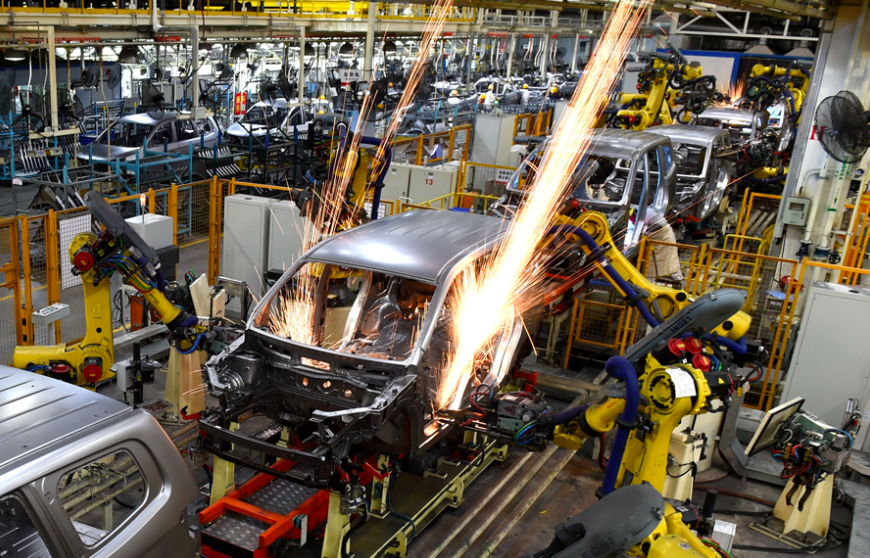
随着企业对各类创新技术的采用以及对不同资质人才的聘用,在新型工业化的推动下数字化工厂正悄然引领制造业的转型,并推动着制造业的中心迈向高度定制化的产品和系统。领先的制造型企业正采用一系列的先进技术实现生产乃至整条供应链的数字化,这些技术包括大数据分析解决方案、端至端的实时规划和互联、自控系统、数字孪生等。凭借这些技术,效率得以提升,企业能够批量生产高度定制化的产品。然而,想要完全发挥出数字化的潜力,企业仍需要与主要供应商和大客户实时互联。
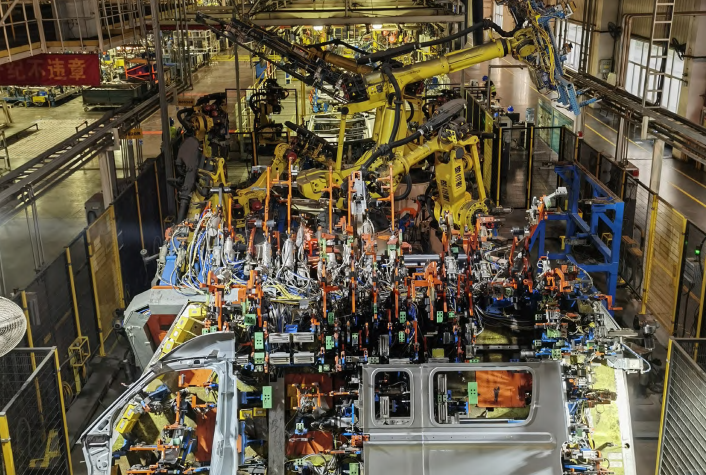
作为在电子商务和电子支付领域内全球公认的数字化领先者,中国在制造业领域内对数字化的应用却仍处于起步阶段。中国制造为产业变革注入了强心针,突显了战略紧迫性,但只有在企业大胆拥抱数字化的情况下才能取得实质性的进展,并产生深远影响。 数字化转型网(www.szhzxw.cn)
二、数字化工厂的定义
数字化工厂正在闪现迷人的色彩,制造业正在被其光芒所吸引。然而辉光之中,很多企业也被各种相互矛盾和相互纠缠的概念所混淆,大家都渴望自己拥有一个洞开一切的神器。而数字化工厂,的确是一道有着清晰轨迹的光路,它让人们充分理解智能工厂和工业 4.0 之间的关系。
数字化工厂的定义虽然国内外对数字化工厂的研究越来越多,但是对于数字化工厂的定义却没有统一的定论。就目前而言,存在两种数字化工厂的定义,一种是广义的,一种是狭义的。
广义数字化工厂以生产产品或提供服务的制造企业为核心企业,以及相关联的成员,包括核心制造企业、供应商、软件系统服务商合作伙伴、协作厂商、客户、分销商、银行等,包括生产与经营过程中所有信息数字化的动态联盟。
狭义数字化工厂以制造资源(resource)、生产操作 (operation) 和产品 (product) 为核心,以产品生命周期数据为基础,应用仿真技术、虚拟现实技术、实验验证技术等,是产品在生产工位、生产单元、生产线以及整个工厂中的所有真实活动虚拟化,并对加工和装配过程进行仿真、试验、分析、优化的一种集成组织方式。 数字化转型网(www.szhzxw.cn)
实际上,这也符合工厂企业的实际认知。数字化工厂将产品信息数字化、过程信息数字化和资源物料信息数字化,并使这三种数字化流进行有效结合,是真实工厂的制造过程 ( 包括设计、性能分析、工艺规划、加工制造、质量检测、生产过程管理和控制 ),在计算机上的一种映射。
三、数字化工厂与“工业 4.0”的关系
关于“工业 4.0”的说法简单地说,有两个维度,技术维度就是物联网和服务在制造业的应用,而商业维度就是用户驱动。其两大主题也是读者耳熟能详,一是“智能工厂”,重点研究智能化生产系统及过程,以及网络化分布式生产设施的实现;二是“智能生产”,主要涉及整个企业的生产物流管理、人机交互以及 3D 技术在工业生产过程中的应用等。数字化工厂和工业 4.0 之间隔着一个智能工厂的距离。数字化本身其实就是智能的一部分,是一个入口;而智能工厂是在数字化工厂的基础上附加了物联网技术和各种智能系统等新兴技术于一体,提高生产过程可控性、减少生产线人工干预。
数字化工厂是智能工厂的落脚点,而智能工厂又是工业 4.0 的基础和落脚点。只有实现了数字化工厂,才有可能实现工业 4.0。
四、数字化工厂建设路径
数字化工厂是在信息集成的基础上,对研发、制造、管理等各个环节进行全面的过程集成,构建数字化工厂是一项艰巨并且复杂的系统工程。而任何复杂系统工程的实施都离不了系统建模、系统仿真、系统分析和优化,同样数字化工厂也不能例外。要全面了解数字化工厂,建立数字化工厂的模型和参考架构,然后需要有一套完整的方法论、工具和流程对数字化工厂的各个阶段进行建模、规划、分析和优化。
数据是数字化工厂的根本所在,需要打造数据分析和系统整合方面的能力。通过传感器,未来的数字化工厂能够产生海量的数据。随着数据整合和内存方面的技术能力不断完善,数字化工厂与供应链生态体系的实时整合成为了可能。通过机械设备产生的数据传输到系统,甚至是供应商和客户,企业能够在整条供应链中实现关键供需数据的实时交互。在未来,数字化工厂将能够在客户需求不足的生产期间规划各类维护和停工检修安排,实现利润率的最优化。实现工厂和整个企业生态体系内部的全面互联,以及对信息的智能化使用,将成为企业保持竞争力不可或缺的选项。基于以上挑战以及数字化供应网络转型的必要性,亟须采取的举措包括: 数字化转型网(www.szhzxw.cn)
(1)大处着眼:企业要想充分挖掘数字化供应网络的价值,就应当打破传统线性思维,考虑若生产网络内各参与方能够即刻获取数据和信息,这可以创造什么价值。
(2)小处着手:面对资源有限、投资竞争激烈的商业环境,企业可确定并优先开展个别价值验证项目,检测数字化转型策略,并展示数字化供应网络可切实产生的投资回报率。
(3)迅速推广:一旦证实数字化供应网络计划的实施能够创造高投资回报率,企业就当着手在整个组织层面广泛实施这一计划。此外,企业还应创造性地应对寻找、培训和保留高技能人才等主要挑战,调整企业内部文化,以更具战略性的途径创造价值并满足顾客需求,进而获取市场竞争优势。
五、通向数字化工厂的蓝图
领先的工业企业已经在数字化工厂的建设和发展方面迈出了坚实的步伐,在提升生产效率的同时,能够迅速可靠地生产出更多定制化、高质量的产品服务于市场。对于许多没有打算建设数字化工厂的企业而言,缺乏一套数字化的愿景和企业文化是让他们裹足不前的最大阻碍。在我们看来,这正是数字化工厂先行者们不可获取的一大要素。数字化愿景不仅只是考虑各项技术,而且还定义了这些技术如何在整个产品生命周期和企业生态圈中相互配合。阻碍企业制定数字化工厂计划的其他因素还包括机会不定、经济效益不明、投资代价不菲。 数字化转型网(www.szhzxw.cn)
1. 绘制数字化工厂战略
制定一套连贯的战略绝对是重中之重。数字化工厂涉及不同技术的采用,许多技术很容易临时仓促上马。对于各项技术如何匹配整体战略和运营目标,如何与其他现有技术配合,企业需要有明确的想法,数字化愿景也应该涵盖整个组织,让数字化工厂应该发挥 1+1>2的作用。
制定数字化工厂战略前,企业需要认识到自身目前的成熟度,确保人才和技术得到同等的重视,聚焦能够带来价值最大化的项目。最后,需要组建起一支由高层、中层以及车间工人组成的支持者队伍,共同推进战略的落地。
2. 设立试点项目
数字化的经济效益有时并不容易量化,而且在初始阶段,团队只能提供非常有限的技术概念和演示,因此可能导致难以争取到资金和利益相关方的认可。由于数字化工厂可能会给整个劳动力带来深远的变革,所以需要让工人加入到试点工作中。
解决这些问题的手段就是试点。通过试点,企业能发现最适合自身的方式,将速赢的成效展现给整个组织并获得他们的认可,进而争取到资金用于大规模的推广。在一两处生产基地纵向整合,从数字化工程设计到以实时数据为支撑的生产规划,是一种可行的试点方案。在主要的生产设备上安装传感器和执行装置,或者使用数据分析来探索预测性维护方案,也能取得初步的成效。还可以在特定的工厂中实现特定产品线的数字化,将其作为不断学习和优化的契机。当然,企业还可以考虑与初创企业、高校或行业组织等外部的数字化领先者合作,加快数字化创新的步伐。 数字化转型网(www.szhzxw.cn)
3. 确定所需的能力
生产环节中什么最重要?更完善、自动化程度更高的物流?为工人提供及时、定制化的信息?传感器集成网络?我们认为,从能力的角度出发考虑这个问题能带来更大的价值。数字化工厂的目标并不是实施最酷炫的新装置,而是达成提升效率、改善质量或增强业务本身等特定的目标。
根据试点中汲取的经验,从组织、人才、流程和技术四个战略的维度,结合企业的生产战略和整体业务目标,详细勾勒出数字化工厂所聚焦的能力以及工厂体系的架构。
4. 成为数据分析和互联方面的领先者
流程及质量改善、资源管理、预防性维护,在数字化工厂里,这些解决方案几乎总是与互联息息相关。传感器协助收集数据,在信息层进行分析,然后传回联网的物流设施和生产设备上实时调整生产。每家企业都需要熟练掌握能生成和传输数据的互联工具与系统,以及用于改善效率和质量的分析工具。
5. 推动工厂向数字化转型
通向数字化工厂之路是一条转型之路。如同其他转型一样,管理变革及其对员工的影响,是成功的关键。难以发现合格的人才、缺乏数字化的企业文化、部分员工不愿拥抱数字化变革,这些都是常见的挑战。
这些问题的解决之道在于及早与员工携手合作,对培训和继续教育开展投资,而这些投入会因为数字化工厂所带来的效率提升而被抵消。
数字化环境的培育必须要有领导层的全力支持。高层必须将数字化工厂战略视为工作的重点,摒弃保守主义的姿态加快项目的审批流程,从而让数字化团队加快推进转型进程。同时,还需要设计简练的汇报渠道,确保数字化团队侧重于各类增值活动而不是疲于应付各类行政要求。
6. 将数字化工厂与企业的数字生态圈结合
在推动数字化工厂的过程中,许多企业都将精力集中在各个工厂内部的纵向整合。在工厂内部实现 MES 和 ERP 系统的连接,确实能实现显著的改善。但作为数字化生态体系中的一部分,数字化工厂应该发挥更大的作用。 数字化转型网(www.szhzxw.cn)
当企业横向地将整条供应链上的供应商和客户信息与数字化工厂进行整合时,将能带来更大的效率提升。试想一下:
你可以利用实时的短期客户需求调整规划和生产情况,灵活地根据客户的要求做出调整,以最小的成本换取最大的客户满意度。这种利用跟踪技术实现的纵向和横向整合战略不仅能让企业优化规划流程和生产执行,还能深化企业与具有战略意义的供应商和客户之间的纽带。然而,这些工作只是一个起步。如果企业能在产品中整合数字化功能,就有可能打造出一系列的服务,将抽象的数据转化成具体的价值。生产流程本身也能通过多种途径将收集起来的数据转化为收入。
在数字化工厂的深远影响下,企业能够拓展甚至是彻底改变目前的业务模式,不再只是注重生产环节,还能有机会在利润丰厚的售后市场中扩大份额,提升利润率,并进军全新的业务领域。
六、总结
工业 4.0 使数字世界和现实世界的界限日益模糊,这一变革趋势最明显的表现在于数字化供应网络得到日益广泛的应用。数字化供应网络能够综合来自不同渠道和地区的数据与信息,为产品实际生产和分销提供助力。传统的价值链逐渐演变为矩阵式的价值网络。基于这一网络,企业能够与生态体系内的任何相关方开展数据和信息的传送与接收,从而有效应对多变的市场环境,并发掘新的价值。
数字化供应网络采用互联互通的矩阵结构,具有较高的灵活度。这种结构摒弃了传统的局限于生产系统内原材料和成品端之间的线性传播途径,能够最大化地提高信息传播效率,以应对客户和市场需求的变化,从而促进企业未来的健康发展。 数字化转型网(www.szhzxw.cn)
最后,由于数字化工厂的转型需要多部门协调,往往需要顶层决策者对数字化有着较强的决心和较深的认识,能够指导整个企业制定数字化战略,带领企业顺利度过转型,打造出成功的数字化工厂。

翻译:
Explore the digital factory under the new industrialization
I. Overview
With the adoption of various innovative technologies and the hiring of talents with different qualifications, the digital factory, driven by the new industrialization, is quietly leading the transformation of the manufacturing industry and pushing the center of the manufacturing industry towards highly customized products and systems. Leading manufacturing companies are digitizing production and their entire supply chain with a range of advanced technologies, including big data analytics solutions, end-to-end real-time planning and connectivity, automation systems, digital twins, and more. With these technologies, efficiency is improved and companies are able to mass-produce highly customized products. However, to realize the full potential of digitalization, businesses still need to be connected in real time to key suppliers and customers.
As a globally recognized digital leader in e-commerce and electronic payments, China’s adoption of digitalization in the manufacturing sector is still in its infancy. Made in China has injected a strong shot into industrial change and highlighted the strategic urgency, but only if enterprises boldly embrace digitalization can substantial progress be made and have a far-reaching impact.
Second, the definition of digital factory
The digital factory is flashing charming colors, and the manufacturing industry is being attracted by its light. However, in the glow, many companies are also confused by a variety of contradictory and entangled concepts, and everyone is eager to have a magic tool that opens everything. The digital factory is indeed a light path with a clear track, which allows people to fully understand the relationship between smart factories and Industry 4.0. 数字化转型网(www.szhzxw.cn)
Although there are more and more researches on digital factory at home and abroad, there is no unified conclusion on the definition of digital factory. For now, there are two definitions of the digital factory, one broad and one narrow.
The generalized digital factory takes the manufacturing enterprises that produce products or provide services as the core enterprises, and the associated members, including the core manufacturing enterprises, suppliers, software system service providers partners, collaborative manufacturers, customers, distributors, banks, etc., including the dynamic alliance of all information digitization in the production and operation process.
The narrow digital factory takes manufacturing resources, production operation and product as the core, based on product life cycle data, and applies simulation technology, virtual reality technology, experimental verification technology, etc. It is an integrated organization that virtualizes all real activities of the product in the production station, production unit, production line, and the entire plant, and simulates, tests, analyzes, and optimizes the processing and assembly process.
In fact, this is also in line with the actual cognition of factory enterprises. The digital factory digitizes product information, process information and resource material information, and effectively combines these three digital streams, which is a mapping of the manufacturing process of the real factory (including design, performance analysis, process planning, processing and manufacturing, quality testing, production process management and control) on the computer. 数字化转型网(www.szhzxw.cn)
Third, the relationship between digital factory and “Industry 4.0”
The statement about “Industry 4.0” simply says that there are two dimensions, the technical dimension is the application of the Internet of Things and services in the manufacturing industry, and the business dimension is user-driven. Its two main themes are also familiar to readers, one is the “smart factory”, which focuses on intelligent production systems and processes, and the realization of networked distributed production facilities; The second is “intelligent production”, which mainly involves the production logistics management of the entire enterprise, human-computer interaction and the application of 3D technology in the industrial production process. There is a smart factory between the digital factory and Industry 4.0. Digitization itself is a part of intelligence, an entry point; The smart factory is based on the addition of the digital factory Internet of things technology and a variety of intelligent systems and other emerging technologies in one, improve the controllability of the production process, reduce the manual intervention of the production line.
The digital factory is the foothold of the smart factory, and the smart factory is the basis and foothold of Industry 4.0. Only with the realization of the digital factory will Industry 4.0 be possible.
Fourth, digital factory construction path
Digital factory is a comprehensive process integration of research and development, manufacturing, management and other links on the basis of information integration. Building digital factory is a difficult and complex system engineering. The implementation of any complex system engineering is inseparable from system modeling, system simulation, system analysis and optimization, and the digital factory is no exception. To fully understand the digital factory, build the model and reference architecture of the digital factory, and then need a complete set of methodologies, tools, and processes to model, plan, analyze, and optimize the various stages of the digital factory.
Data is the foundation of the digital factory, which requires building capabilities in data analysis and system integration. With sensors, the digital factory of the future will be able to generate huge amounts of data. As technological capabilities in data integration and memory continue to improve, real-time integration of the digital factory with the supply chain ecosystem becomes possible. Through the transmission of data generated by machinery to systems, and even suppliers and customers, companies are able to achieve real-time interaction of critical supply and demand data throughout the supply chain. In the future, digital factories will be able to plan various maintenance and downtime arrangements during production periods when customer demand is low, optimising profit margins. Full connectivity within the factory and the entire enterprise ecosystem, as well as intelligent use of information, will become an indispensable option for businesses to remain competitive. Given these challenges and the need to transform digital supply networks, urgent initiatives include:
(1) Big Picture: To fully exploit the value of digital supply networks, companies need to think beyond traditional linear thinking and consider what value can be created if all participants in the production network have immediate access to data and information. 数字化转型网(www.szhzxw.cn)
(2) Start small: In a business environment with limited resources and fierce competition for investment, companies can identify and prioritize individual value validation projects, test digital transformation strategies, and demonstrate the ROI that digital supply networks can realistically generate.
(3) Rapid roll-out: Once it has been demonstrated that the implementation of a digital supply network initiative can generate a high ROI, the enterprise should begin to implement the initiative widely across the organization. In addition, companies should creatively address key challenges such as finding, training and retaining highly skilled talent, and adjust their internal culture to create value and meet customer needs in a more strategic way to gain a competitive advantage in the market.
A blueprint for the digital factory
Leading industrial companies have taken solid steps in the construction and development of digital factories, which can quickly and reliably produce more customized, high-quality products to serve the market while improving production efficiency. For many companies that do not intend to build a digital factory, the lack of a digital vision and corporate culture is the biggest obstacle holding them back. In our view, this is a major element that is not available to the pioneers of the digital factory. A digital vision not only considers technologies, but also defines how they fit together throughout the product lifecycle and the enterprise ecosystem. Other factors holding companies back from making plans for digital factories include uncertain opportunities, uncertain economic benefits, and high investment costs.
- Map the digital factory strategy
Developing a coherent strategy is absolutely Paramount. Digital factories involve the adoption of different technologies, many of which can easily be rushed on AD hoc. Companies need to have a clear idea of how each technology fits into their overall strategic and operational goals and other existing technologies, and the digital vision should encompass the entire organization, so that the digital factory should play a 1+1>2 role.
Before developing a digital factory strategy, companies need to recognize their current maturity, ensure that talent and technology are equally valued, and focus on projects that deliver maximum value. Finally, it is necessary to build a team of supporters composed of senior, middle and shop floor workers to promote the implementation of the strategy. 数字化转型网(www.szhzxw.cn)
- Set up pilot projects
The economic benefits of digitization are sometimes not easy to quantify, and in the initial phase, teams can only provide very limited technical concepts and demonstrations, which can lead to difficulties in securing funding and stakeholder buy-in. Because digital factories are likely to bring profound changes to the entire workforce, workers need to be involved in pilot efforts.
The way to solve these problems is to experiment. Through the pilot, companies can find the best way for them to show the results of quick wins to the entire organization and gain their recognition, and then win funds for large-scale promotion. Vertical integration at one or two production sites, from digital engineering design to production planning supported by real-time data, is a viable pilot solution. Installing sensors and actuators on major production equipment, or using data analytics to explore predictive maintenance options, can also yield early results. It is also possible to digitize specific product lines in specific factories as an opportunity for continuous learning and optimization. Of course, companies can also consider partnering with external digital leaders such as start-ups, universities or industry organizations to accelerate the pace of digital innovation.
- Identify the competencies required
What is most important in the production process? Better, more automated logistics? Provide timely, customized information to workers? Sensor integrated network? We believe there is greater value in thinking about this from a capability perspective. The goal of the digital factory is not to implement the coolest new device, but to achieve specific goals such as increasing efficiency, improving quality, or enhancing the business itself.
Based on the experience gained from the pilot, from the four strategic dimensions of organization, talent, process and technology, combined with the production strategy and overall business objectives of the enterprise, the capabilities focused by the digital factory and the structure of the factory system are outlined in detail. 数字化转型网(www.szhzxw.cn)
- Be a leader in data analytics and connectivity
Process and quality improvement, resource management, preventive maintenance – in a digital chemical plant, these solutions are almost always connected. Sensors help collect data, analyze it at the information layer, and then transmit it back to networked logistics facilities and production equipment to adjust production in real time. Every business needs to be proficient in the connected tools and systems that generate and transmit data, as well as analytical tools to improve efficiency and quality.
- Drive the digital transformation of factories
The road to the digital factory is a transformational one. As with any transformation, managing change and its impact on employees is key to success. Difficulty finding qualified talent, lack of a digital culture, and reluctance of some employees to embrace digital change are common challenges.
The solution to these problems lies in working with employees early on and investing in training and continuing education, which can be offset by the efficiency gains made by the digital factory.
Fostering a digital environment requires full leadership support. Top management must make the digital factory strategy a priority, move away from conservatism and speed up the project approval process so that the digital team can accelerate the transformation process. At the same time, it is necessary to design concise reporting channels to ensure that the digital team focuses on value-added activities rather than dealing with administrative requirements. 数字化转型网(www.szhzxw.cn)
- Integrate the digital factory with the enterprise’s digital ecosystem
In their push for digital factories, many companies are focusing on vertical integration within individual factories. Connecting MES and ERP systems within the plant can indeed lead to significant improvements. But as part of the digital ecosystem, the digital factory should play a bigger role.
When companies horizontally integrate supplier and customer information along the entire supply chain with digital factories, greater efficiency gains can be achieved. Just imagine:
You can use real-time short-term customer needs to adjust the planning and production situation, flexibility to make adjustments according to customer requirements, with minimum cost in exchange for maximum customer satisfaction. This vertical and horizontal integration strategy using tracking technology not only allows companies to optimize planning processes and production execution, but also deepens ties with strategically important suppliers and customers. However, these efforts are just a start. If companies can integrate digital capabilities into their products, they have the potential to create a range of services that transform abstract data into concrete value. The production process itself can turn the collected data into revenue in a variety of ways.
With the far-reaching impact of the digital factory, companies can expand and even revolutionize their current business models, moving away from just focusing on production, and have the opportunity to gain share in the lucrative aftermarket, improve margins, and enter entirely new business areas.
Vi. Summary
Industry 4.0 is blurring the boundaries between the digital world and the physical world, and the most obvious manifestation of this transformative trend is the growing use of digital supply networks. The digital supply network integrates data and information from different channels and regions to facilitate the actual production and distribution of products. The traditional value chain has gradually evolved into a matrix value network. Based on this network, companies can transfer and receive data and information with any relevant party in the ecosystem, so that they can effectively cope with the changing market environment and discover new value. 数字化转型网(www.szhzxw.cn)
The digital supply network adopts the interworking matrix structure and has high flexibility. This structure abandons the traditional linear transmission path between raw materials and finished products in the production system, and can maximize the efficiency of information transmission to respond to changes in customer and market demand, thus promoting the healthy development of enterprises in the future.
Finally, because the transformation of the digital factory requires multi-departmental coordination, top-level decision makers often need to have a strong determination and a deeper understanding of digitalization, and can guide the entire enterprise to develop a digital strategy, lead the enterprise to successfully go through the transformation, and create a successful digital factory.
本文由数字化转型网(www.szhzxw.cn)转载而成,来源于新工业网;编辑/翻译:数字化转型网宁檬树。
免责声明: 本网站(http://www.szhzxw.cn/)内容主要来自原创、合作媒体供稿和第三方投稿,凡在本网站出现的信息,均仅供参考。本网站将尽力确保所提供信息的准确性及可靠性,但不保证有关资料的准确性及可靠性,读者在使用前请进一步核实,并对任何自主决定的行为负责。本网站对有关资料所引致的错误、不确或遗漏,概不负任何法律责任。
本网站刊载的所有内容(包括但不仅限文字、图片、LOGO、音频、视频、软件、程序等) 版权归原作者所有。任何单位或个人认为本网站中的内容可能涉嫌侵犯其知识产权或存在不实内容时,请及时通知本站,予以删除。