
随着国家智能制造政策的陆续出台,公司致力于端到端核心价值链各业务环节的能力提升和相互协作。通过”精益化推进、自动化导入、数字化应用”三者相融合,不断改善全价值链,积极推进数智化建设。以用户为中心,通过重构工作方式、业务流程和业务模式,利用数据驱动业务改善,打通研发、生产、销售和服务全价值链,实现业务透明可见、管理高效,从而实现高效率、高品质、低成本、快速交付和绿色环保的全价值链卓越运营,构建核心竞争力。 数字化转型网(www.szhzxw.cn)
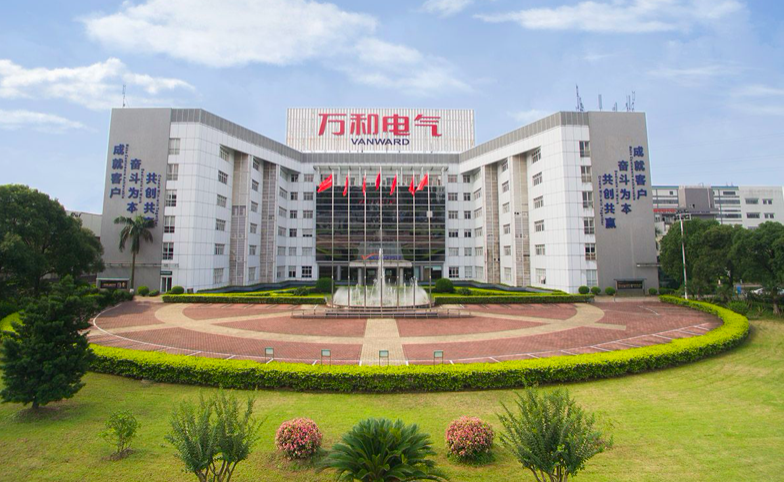
与”中国制造 2025”的愿景相一致,本研究强调现代化制造流程的重要性和智能制造实践的推广。其中,制造执行系统(MES)的实施是重要组成部分。MES在制造企业的数字化转型中发挥着关键作用,提供生产过程、资源分配和质量控制的实时可见性,实现高效管理和决策。通过将 MES 与物联网(IoT)设备和数据分析等其他数字技术相结合,企业能够在运营中实现增强的灵活性、生产力和质量。
一、精益营运体系 VBS
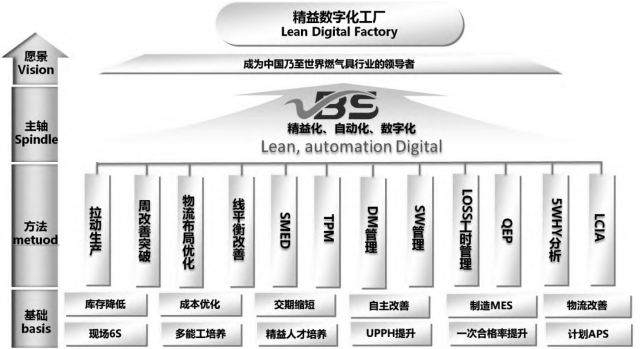
VBS 是以“建一套精益体系,育一批精益人才,创一批精益样板”为愿景,借鉴业界最佳精益管理实践,建立与整合精益管理推进组织和方法,实现“一个万和,一个体系,一个标准”的企业精益运营体系。VBS 包括拉动生产、效率管理、TPM 开展、现场 6S 管理、LCIA及自动化、数字化、改善周推进、精益人才培养等方面,打造“品质稳定、成本最优、柔性交付”的数字化工厂,实现卓越稳定的日常管理,驱动业绩增长,夯实公司作为中国乃至世界燃气具行业领导者地位。
二、智能工厂建设
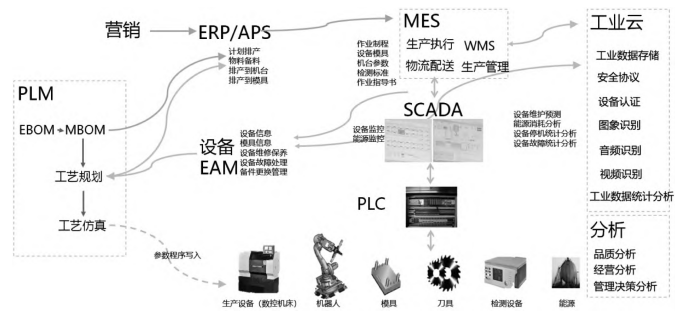
数字化智能化工厂建设内容围绕 MES 系统实现对整个车间的生产监控和管理,实现人、机、料、法、环、测等重要生产要素联网。同时能与企业 ERP、WMS、WMS、PLM 等系统的互联互通,打通管理、生产、仓储等关键环节。通过对车间生产流程监测,控制系统反馈的信息,实现可视化信息管理。以可视化经营驾驶舱看板的形式展现生产计划执行的节拍、工艺调整、指挥调度、物流产成品等信息,以辅助人员在线实时地监控、参与、调整生产计划。并在整个生产过程中通过 MES 质量管理模块实现质量数据采集、质量监控、质量追溯和质量改进等,整体提升企业的竞争力。
1. 智能生产建设运行情况
智能工厂从制造端切入以 MES 项目为核心,通过PLC、CC-Link等先进技术对车间生产过程进行实时监测,将生产制造过程信息透明化,同时通过 MES 与 PLM、ERP、WMS、EAM 等业务系统高度集成,建设一条完整的生产数据链,实现生产过程可视化、生产操控可算化、生产订单个性化、生产数据资产化,如图 2 所示。
2. 拉动式生产
以客户订单拉动生产,根据各零件标准工时、设备需求、生产周期等数据,MES 系统直接将总装生产所需零部件分解到机台,生成钣金车间生产工单,形成计划拉动;钣金车间设备根据实时生产数量、总装线体根据成品下线数量,进行物料冲减,当物料达最低预警值时,PDA 或看板及时提醒相关人员进行物料配送,形成物料拉动,如图 3 所示。
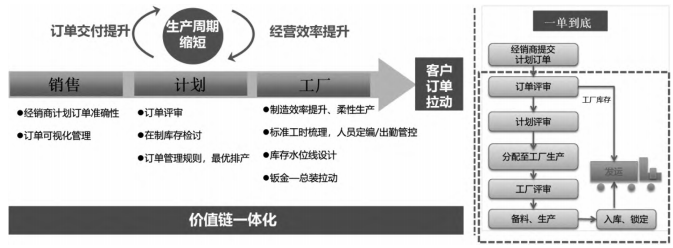
从产线匹配(型谱 + 产线对应关系)→计划梳理→库存规则→看板设计→目视化管理五个维度进行开展,降低库存,减少仓储使用面积,缩短交付周期。 数字化转型网(www.szhzxw.cn)
3. 制造执行系统(MES)建设
制造执行系统(MES)解决万和在生产制造过程信息不透明、流程效率低、统计分析滞后等业务痛点,万和 MES 系统建设范围涵盖了燃气热水器工厂整个制造环节,实施的业务范围包括,产销计划衔接、生产工单管理、工单物料管理、采购订单物料及生产过程关键质量控制点、生产设备和模具、能耗管理等核心业务场景。
通过 MES 系统的实施将业务在线化、过程无纸化以及管理的可视化,体现在:生产计划管理,把计划排到生产产线和机器设备,提高计划编制效率,将计划从粗放式管理向细化到工序的详细计划转变;生产工单管理,将生产工单排到产线和机器设备,通过生产关键岗位的数据采集,实时反馈工单的执行情况;产品质量管理,通过生产过程关键质量控制点以及 AI 视觉检测,改善质量控制点,提升产品质量;设备及模具管理,提升设备利用率和模具寿命,提高现场异常情况的响应和处理能力。
业务在线、无纸化、可视化管理的信息化系统,覆盖整个工厂制造现场,在智能生产过程中起着绝对核心作用,主要通过计划管理、生产管理、物料管理、质量管理、模具管理和设备管理等对生产各个环节进行管控。
分别体现在:生产计划管理,将工单计划排到产线和机器设备,通过生产关键岗位的数据采集,实时反馈工单的执行情况;在产品质量把控上通过智能检测装备及 AI视觉检测的手段对产品品质情况进行控制,提升产品一次下线合格率;在生产设备的管控上会采集设备运行安全参数、工艺参数及生产效率相关等参数对设备情况进行掌握,缩短在制品周转和等待时间,提高设备利用率和车间生产能力,提高现场异常情况的响应和处理能力,缩短计划编制周期,以及计划人员的人力成本,提高计划准确性,从计划的粗放式管理向细化到工序的详细计划转变,提高生产统计的准确性和及时性,降低库存水平和在制品数量,不断改善质量控制过程,提高产品质量。
1)生产计划管理
将工单计划排到产线和机器设备,通过生产关键岗位的数据采集,实时反馈工单的执行情况。通过系统实现无纸化报工,生产进度一目了然,同步记录生产过程中计划单产品经历的工序、数量、操作人员信息,实时展示计划单已生产工序、数量,防止遗漏,并可通过设置筛选条件对计划单进行查询,同时支持移动端随时随地查看生产进度。
2)工艺管理
在系统当中完成工厂、线体、工位信息的配置后,即可实现工艺路线的增加、删除、修改、查询、工艺路线图配置,设定产品型号、工艺路线编号、该机型下绑定的工位等信息,还可以通过工艺路线编号进行信息查询。 数字化转型网(www.szhzxw.cn)
3)生产执行管理
围绕产品工艺流程,对生产过程进行实时监控,实现半成品 / 部件的生产下线的批次管理,同时对物料的进出库实现批次的 FIFO& 货架快速定位索引管理。
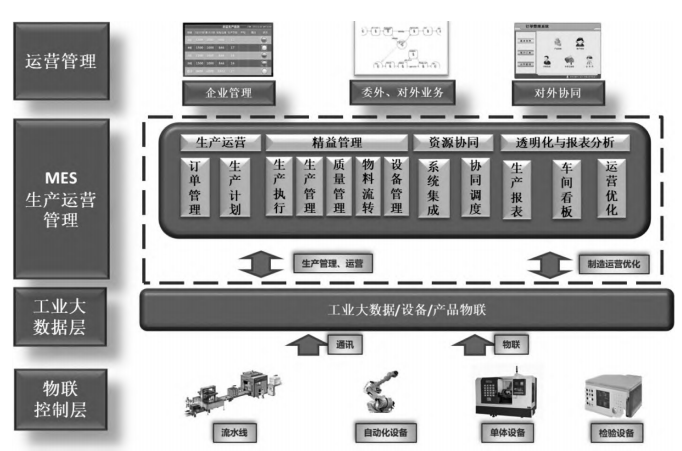
4)产品质量管理
建立完善更加完善质量追溯数据链,对总装车间发现问题的零部件 / 原材料快速进行前工序 / 配件公司的库存批次追溯 & 封存,减少整机批量质量事故的发生。通过检测设备接口和 AI 视觉工具,实时将检测结果反馈给生产过程,让产品质量数据在线可视,同时为每个产品建立唯一条码,不论抽检和全检,都可进行每道工序和产品质检,严控产品质量,减少退货、索赔风险,并且追踪产品问题根源,及时改进。
5)生产设备管理
MES 系统将生产工单等指令传给设备,同时通过PLC 采集生产设备运行、生产工艺参数以及设备能耗,提高设备利用率和节能减排;针对特殊设备或核心设备通过人脸识别进行上岗管理,降低车间安全风险,提高现场异常情况的响应和处理能力。
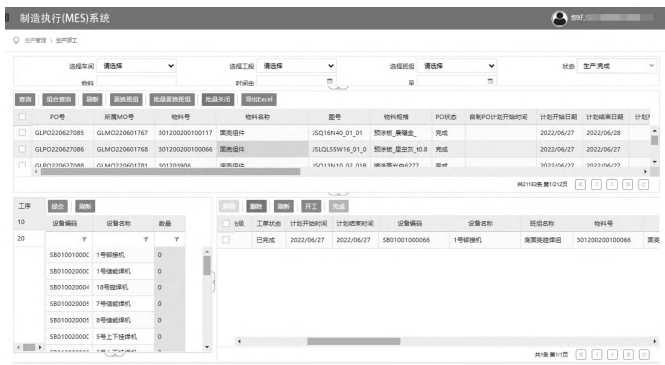
6)能源管理
通过装置 DCS 与系统的同步方式,实现分钟级能源数据自动采集,对系统中的各种能源资源进行实时监测,包括电、水、燃料、气等,然后根据监测到的数据,进行分析、计算和判断,以便进行相应的调度和控制。 数字化转型网(www.szhzxw.cn)
4. 智能装备应用情况
1)智能生产装备应用
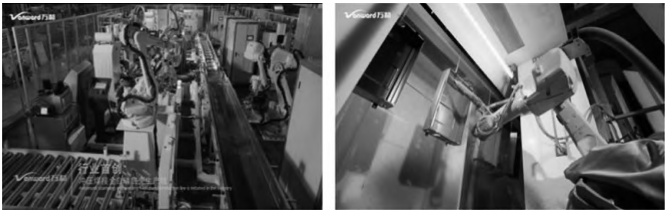
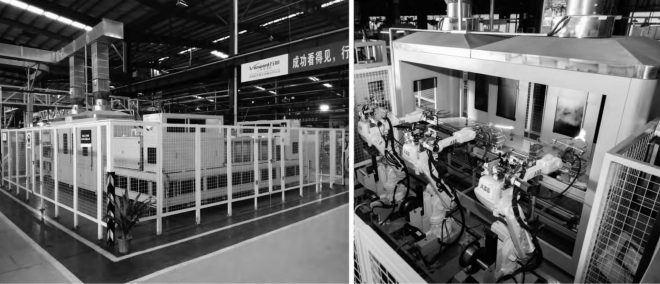
公司近年对钣金车间、两器车间、喷涂车间、总装车间进行自动 化、智能化改造,引入多台六轴 ABB 机器人及全自动化生产线使各车间自动化、智能化水平大升,明显提高企业制造能力,如图 6、7 所示。
2)智能检测与监控装备应用
通过 MES 系统与燃气采暖热水炉自动检测系统、可燃气体探测报警系统、智能气体测漏仪、智能检测台等设备的集成,提升工厂安全防护管理;通过对生产过程及检测设备集成,对产品工艺路线核心节点进行实时采集、分析,加强在关键工序防错控制,实现质量信息的可追溯,提升品牌质量。
3)智能物流装备应用
通过购置板换卷料自动焊接生产线、数控滚轮送料机、传输悬挂线等设备,通过系统集成与控制,各产线和工位按照生产计划的订单任务,进行物料自动运输、配送。
4)设备联网与集中管理
在现场层,增加工业机器人、智能设备、生产、物流过程底层数据实时采集,通过 SCADA 系统构建设备互联、实时高效的数据采集体系。在控制层、操作层,在保障数据源唯一性的同时,将关联信息与数据从单个设备覆盖到整个生产现场,工艺路线、工艺参数、工序BOM、E-SOP 等产品数据、设备数据、业务流程数据等汇入企业资源数据库。按业务需求,通过对应的管理系统集成到企业层的工业互联网平台,运用大数据的分析开展品质管理、物流管理、计划管理、设备管理、效率管理及能源管理,为企业管理层提供决策依据和建议。 数字化转型网(www.szhzxw.cn)
5. 移动 5G 应用情况
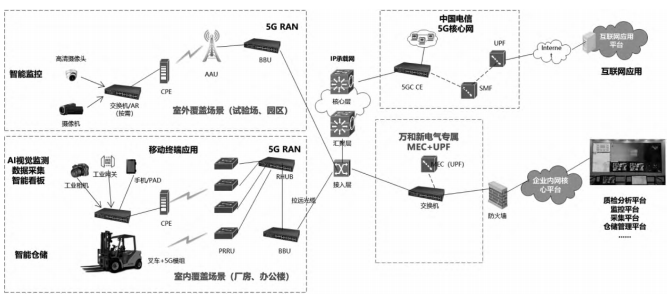
利用多年厨卫电器及生活热水生产经验,植入先进的制造“基因”,打造基于 5G 技术的智能云平台,落实解决用户“痛点”。公司与电信、华为签署了合作协议,共创 5G 应用基地,并基于 5G 通信技术在制造企业的应用场景落地。
1)5G+AI 检验动作识别
总装线工人检验的内容多、可变性强,过程很难全程监控。现在通过工业相机采集检验员动作,利用 5G网络同步上传到平台,AI 算法实时检测检验动作符合性并回传(分析),与 MES 系统联动,判定结果通过三色灯提醒员工(预警),MES 记录作业违规次数并控制停线,通过 PDCA 进行闭环管理(管控)。
2)5G+ 视觉质量检测和人脸识别
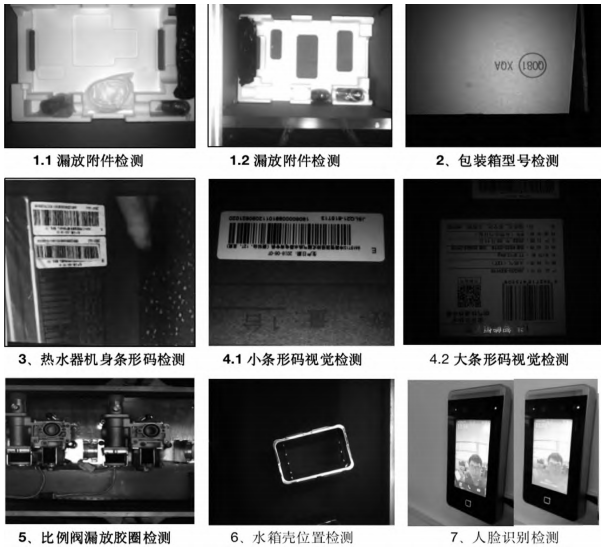
热水器包装漏放附件检测:通过视觉检测泡沫、弯管、直管、说明书、防倒风等附件是否齐全。
包装箱型号检测:通过视觉功能检测纸箱编码是否与产品编码相符,有效杜绝包装用错纸箱问题。
热水器机身条形码检测:热水器自动装箱前,对产品条形码进行检测,凡是条形码与本批产品不符、无条形码、扫描不到条形码,都进行停机报警提示。
大小条形码视觉检测:视觉识别的内容与设置样板不符、未贴无标、贴斜角度大于 3 度、标贴打印不清晰,少字等不良现象进行检测。
比例阀漏放胶圈检测:比例阀漏放胶圈报警停机。水箱壳位置检测:水箱壳在输送线上进行位置检测,用于机器人在线抓取。 数字化转型网(www.szhzxw.cn)
人脸识别检测:水箱壳机器人生产线受权人员人脸误别成功后方可启动,如图 9 所示。
三、结束语
未来,将继续围绕智能化、数字化发展趋势,进一步加快企业数字化转型,加深对数字化、智能化技术的运用。用管理变革的方法,业务主导,IT 使能“一张皮”运作,基于端到端流程架构,横向打通公司六大业务领域流程,构建端到端全价值链业务数字化;纵向通过数据运营,建立以数据说话的经营变革管理体系,让数据真正产生价值,从能“看”到能“管”,并基于数据的精细化管理,提升科学决策分析能力。借助数字化手段来推动管理创新,实现公司卓越运营,构建未来的新型竞争优势。

翻译:
Guangdong Wanhe gas water heater smart factory construction practice
With the successive introduction of the national intelligent manufacturing policy, the company is committed to improving the ability and mutual collaboration of all business links of the end-to-end core value chain. Through the integration of “lean promotion, automation introduction and digital application”, the whole value chain is constantly improved and the construction of digital intelligence is actively promoted. Customer-centric, by reconstructing work methods, business processes and business models, using data to drive business improvement, opening up the whole value chain of R&D, production, sales and service, achieving business transparency and visibility, efficient management, so as to achieve high efficiency, high quality, low cost, fast delivery and green and environmentally friendly operation excellence of the whole value chain, and build core competitiveness.
In line with the vision of “Made in China 2025”, this study emphasizes the importance of modern manufacturing processes and the promotion of smart manufacturing practices. Among them, the implementation of manufacturing execution system (MES) is an important part. MES plays a key role in the digital transformation of manufacturing companies, providing real-time visibility into production processes, resource allocation and quality control for efficient management and decision making. By combining MES with other digital technologies such as Internet of Things (IoT) devices and data analytics, businesses are able to achieve enhanced flexibility, productivity and quality in their operations.
Lean Operation system VBS
VBS is based on the vision of “building a set of lean system, cultivating a group of lean talents, and creating a group of lean models”, drawing on the best lean management practices in the industry, establishing and integrating lean management promotion organizations and methods, and realizing the enterprise lean operation system of “one world peace, one system, one standard”. VBS includes driving production, efficiency management, TPM development, on-site 6S management, LCIA and automation, digitalization, improvement week promotion, lean talent training, etc., to create a digital factory with “stable quality, optimal cost and flexible delivery”, achieve excellent and stable daily management, and drive performance growth. Tamping company as China and even the world’s gas industry leader position.
Figure 1 Lean operation system VBS
Smart factory construction
The content of digital intelligent factory construction focuses on the MES system to realize the production monitoring and management of the entire workshop, and to realize the networking of important production factors such as people, machines, materials, methods, rings, and measurements. At the same time, it can interconnect with enterprise ERP, WMS, WMS, PLM and other systems, and open up key links such as management, production and warehousing. Through the workshop production process monitoring, control system feedback information, to achieve visual information management. Display the rhythm, process adjustment, command scheduling, logistics finished products and other information of production plan execution in the form of visual management cockpit Kanban to assist personnel to monitor, participate in and adjust production plans online and in real time. And in the entire production process through the MES quality management module to achieve quality data collection, quality monitoring, quality traceability and quality improvement, the overall enhance the competitiveness of the enterprise. 数字化转型网(www.szhzxw.cn)
1. Operation of intelligent production construction
Smart factory from the manufacturing end to the MES project as the core, through the PLC, CC-Link and other advanced technologies to real-time monitoring of workshop production process, manufacturing process information transparency, and through MES and PLM, ERP, WMS, EAM and other business systems highly integrated, to build a complete production data link. Visualization of production process, computability of production control, individuation of production order and capitalization of production data are realized, as shown in Figure 2.
Figure 2. The whole value chain of smart factory
2. Pull production
To pull the production by customer orders, according to the standard working hours, equipment requirements, production cycle and other data of each part, the MES system will directly decompose the parts required for assembly production into the machine, generate the sheet metal workshop production order, and form the planned pull; Sheet metal workshop equipment according to the real-time production quantity, the final assembly line body according to the number of finished products off the line, the material is reduced, when the material reaches the lowest warning value, PDA or Kanban timely remind the relevant personnel to carry out material distribution, forming the material pull, as shown in Figure 3. 数字化转型网(www.szhzxw.cn)
Figure 3 Pull production
It is carried out from five dimensions of production line matching (type spectrum + production line corresponding relationship) → planning combing → inventory rules → Kanban design → visual management to reduce inventory, reduce storage area and shorten delivery cycle.
3. Manufacturing Execution System (MES) construction
Manufacturing execution system (MES) solves the business pain points of Wanhe in the production and manufacturing process information opacity, low process efficiency, lagging statistical analysis, etc. The construction scope of MES system covers the entire manufacturing process of gas water heater factory, and the business scope of implementation includes: Core business scenarios such as production and marketing plan connection, production work order management, work order material management, purchase order materials and key quality control points in the production process, production equipment and molds, and energy consumption management.
Through the implementation of MES system, the business is online, the process is paperless and the management is visualized, which is reflected in: production plan management, scheduling the plan to the production line and machinery and equipment, improving the efficiency of planning, and transforming the plan from extensive management to detailed planning of the process; Production work order management, arrange the production work order to the production line and machine equipment, and feedback the execution of the work order in real time through the data collection of key production positions; Product quality management, through the production process of key quality control points and AI visual inspection, improve quality control points, improve product quality; Equipment and mold management, improve equipment utilization and mold life, improve the response and processing ability of abnormal situations on site. 数字化转型网(www.szhzxw.cn)
Business online, paperless, visual management of the information system, covering the entire factory manufacturing site, plays an absolute core role in the intelligent production process, mainly through planning management, production management, material management, quality management, mold management and equipment management to control all aspects of production.
It is reflected in the following aspects: production plan management, scheduling work order plan to production line and machine equipment, real-time feedback on the implementation of work order through data collection of key production positions; In the product quality control through intelligent detection equipment and AI visual inspection means to control the product quality, improve the product offline pass rate; In the control of production equipment, it will collect equipment operation safety parameters, process parameters and production efficiency related parameters to master the equipment situation, shorten the turnover and waiting time of products in process, improve the equipment utilization rate and workshop production capacity, improve the response and processing ability of abnormal situations on site, shorten the planning cycle, as well as the labor cost of planners, and improve the plan accuracy. From the extensive management of the plan to the detailed planning of the process, improve the accuracy and timeliness of production statistics, reduce the inventory level and the number of products in process, constantly improve the quality control process, and improve product quality.
1) Production planning management
Send the work order plan to the production line and machine equipment, and feed back the execution status of the work order in real time through the data collection of key production positions. Through the system to achieve paperless reporting, production progress at a glance, synchronously record the production process, quantity and operator information experienced by the plan sheet product in the production process, real-time display of the production process and quantity of the plan sheet, to prevent omissions, and can set screening conditions to query the plan sheet, and support mobile terminal anytime and anywhere to view the production progress.
2) Process management
After completing the configuration of the factory, line body and station information in the system, you can realize the addition, deletion, modification, query of the process route, configuration of the process roadmap, setting the product model, process route number, the bound station and other information under the model, and you can also query information through the process route number.
3) Production execution management
Around the product process, the production process is monitored in real time to achieve batch management of semi-finished products/parts production line, and at the same time to achieve batch FIFO and shelf rapid positioning index management of materials in and out of the warehouse.
Figure 4 MES architecture diagram
4) Product quality management
Establish and improve the quality traceability data chain, and quickly trace and seal the inventory batches of the spare parts/raw materials found in the final assembly workshop, so as to reduce the occurrence of batch quality accidents of the whole machine. Through the inspection equipment interface and AI vision tools, the test results are feed-back to the production process in real time, making the product quality data visible online, and establishing a unique barcode for each product, regardless of sampling and full inspection, each process and product quality inspection can be carried out, strict control of product quality, reduce the risk of returns and claims, and track the root cause of product problems, and timely improvement. 数字化转型网(www.szhzxw.cn)
5) Production equipment management
MES system will be the production work order and other instructions to the equipment, at the same time through the PLC collection of production equipment operation, production process parameters and equipment energy consumption, improve equipment utilization and energy saving and emission reduction; For special equipment or core equipment through face recognition management, reduce workshop safety risks, improve the response and processing ability of on-site abnormal situations.
Figure 5 MES system
6) Energy management
Through the synchronization of the device DCS and the system, the automatic collection of minute-level energy data is realized, the real-time monitoring of various energy resources in the system, including electricity, water, fuel, gas, etc., and then according to the monitored data, analysis, calculation and judgment are carried out in order to carry out corresponding scheduling and control.
4. Application of intelligent equipment
1) Application of intelligent production equipment
In recent years, the company has carried out automatic and intelligent transformation of sheet metal workshop, two-piece workshop, spraying workshop and final assembly workshop, and introduced several six-axis ABB robots and fully automated production lines to greatly improve the automation and intelligent level of each workshop, and significantly improve the manufacturing capacity of the enterprise, as shown in Figure 6 and 7. 数字化转型网(www.szhzxw.cn)
Figure 6 Automatic production of water heater bottom shell
Figure 7 Automated production of heat exchangers
2) Application of intelligent detection and monitoring equipment
Through the integration of MES system with gas heating hot water furnace automatic detection system, combustible gas detection and alarm system, intelligent gas leak detector, intelligent detection table and other equipment, improve the factory safety protection management; Through the integration of the production process and testing equipment, the core nodes of the product process route are collected and analyzed in real time, and error prevention control is strengthened in key processes, so as to achieve traceability of quality information and improve brand quality.
3) Intelligent logistics equipment application
Through the purchase of automatic welding production line, CNC roller feeder, transmission suspension line and other equipment, through system integration and control, each production line and station in accordance with the production plan of the order tasks, automatic transportation and distribution of materials.
4) Equipment networking and centralized management
In the field layer, add real-time data acquisition of industrial robots, intelligent equipment, production and logistics processes, and build a real-time and efficient data acquisition system with equipment interconnection through SCADA system. At the control layer and operation layer, while ensuring the uniqueness of data sources, the associated information and data cover the entire production site from a single device, and the product data such as process route, process parameters, process BOM, E-SOP, equipment data, and business process data are imported into the enterprise resource database. According to business needs, the corresponding management system is integrated into the industrial Internet platform at the enterprise level, and the quality management, logistics management, planning management, equipment management, efficiency management and energy management are carried out by using big data analysis, so as to provide decision-making basis and suggestions for enterprise management. 数字化转型网(www.szhzxw.cn)
5. Mobile 5G applications
Using many years of experience in the production of kitchen appliances and domestic hot water, it implants advanced manufacturing “genes” to create an intelligent cloud platform based on 5G technology to solve users’ “pain points”. The company has signed cooperation agreements with China Telecom and Huawei to create 5G application bases and land application scenarios based on 5G communication technology in manufacturing enterprises.
FIG. 8 5G innovative applications
1) 5G+AI inspection action recognition
Final assembly line workers inspect many contents, strong variability, the process is difficult to monitor the whole process. At present, the actions of inspectors are collected by industrial cameras and uploaded to the platform synchronously using 5G network. AI algorithms detect and verify the compliance of actions in real time and send back (analysis). In conjunction with MES system, the judgment results are reminded by three-color lights (early warning), MES records the number of violations of operations and controls the shutdown. Closed loop management (control) through PDCA.
2) 5G+ visual quality detection and face recognition
Water heater packaging leakage accessories detection: through visual detection of foam, bending pipe, straight pipe, manual, anti-backwind and other accessories are complete.
Packing box type detection: Through the visual function to detect whether the carton code is consistent with the product code, effectively eliminate the problem of packaging with wrong cartons.
Water heater body bar code detection: Before the water heater automatic packing, the product bar code is tested, all the bar code does not match this batch of products, no bar code, scan the bar code, are stopped alarm warning.
Size bar code visual detection: the content of visual identification is inconsistent with the set template, no labeling, the Angle of labeling is greater than 3 degrees, the label printing is not clear, and the bad phenomena such as few words are detected.
Proportional valve leakage ring detection: proportional valve leakage ring alarm stop. Tank shell position detection: The tank shell position detection is carried out on the conveyor line for the robot to grasp online. 数字化转型网(www.szhzxw.cn)
Face recognition detection: The authorized personnel of the tank shell robot production line can start only after the face error is successful, as shown in Figure 9.
FIG. 9 5G quality inspection application
Concluding remarks
In the future, we will continue to focus on the development trend of intelligence and digitalization, further accelerate the digital transformation of enterprises, and deepen the application of digital and intelligent technologies. With the method of management change, business-led, IT enables “one skin” operation, based on the end-to-end process architecture, horizontal through the company’s six business areas of the process, the construction of end-to-end full value chain business digitization; Longitudinally through data operation, the establishment of a data-based business change management system, so that the data can truly produce value, from the “see” to the “management”, and based on the fine management of data, improve the scientific decision-making and analysis ability. Drive management innovation with digital means to achieve operational excellence and build new competitive advantages for the future.
本文由数字化转型网(www.szhzxw.cn)转载而成,来源于《日用电器》2023年12月;编辑/翻译:数字化转型网宁檬树。
免责声明: 本网站(http://www.szhzxw.cn/)内容主要来自原创、合作媒体供稿和第三方投稿,凡在本网站出现的信息,均仅供参考。本网站将尽力确保所提供信息的准确性及可靠性,但不保证有关资料的准确性及可靠性,读者在使用前请进一步核实,并对任何自主决定的行为负责。本网站对有关资料所引致的错误、不确或遗漏,概不负任何法律责任。
本网站刊载的所有内容(包括但不仅限文字、图片、LOGO、音频、视频、软件、程序等) 版权归原作者所有。任何单位或个人认为本网站中的内容可能涉嫌侵犯其知识产权或存在不实内容时,请及时通知本站,予以删除。