玻璃纤维行业是一个重要的工业领域,其产品广泛应用于建筑、汽车、航空航天、电子、环保等诸多领域。随着行业的快速发展,其生产和管理方式也在不断变革,工业互联网的出现为玻璃纤维行业提供了革命性的发展途径。玻璃纤维行业工业互联网的发展是一个复杂而多维的过程,涉及数字化转型、智能化生产、供应链协同、创新驱动、环保和可持续发展等多个方面和层次。我国于 2021 年 1 月出台《工业互联网创新发展行动计划(2021—2023 年)》,旨在推动企业积极引入新技术、新模式。大量企业聚焦工业互联网平台应用加强内部管理和外部合作,不断提高自身的竞争力和可持续发展能力。

一、玻璃纤维行业工业互联网平台发展需求
(一)市场发展需求
玻璃纤维是一种无机非金属新材料,是国家重点扶持的 10 大领域之一。玻璃纤维具有强度高、化学稳定性好、电绝缘性好、耐高温等特点,在新能源产业(风力叶片、太阳能支架)、高端装备制造业(飞机、雷达罩、汽车、高速列车、游艇)、环保产业(石油管道、海水淡化系统环保处置设施和装备)、基础设施产业(桥梁、码头、高速公路设施输水管道、墙体、屋面瓦)、健康产业(医疗设施、医用材料、体育器械、体育设施)、电子电气产业(输配电设备、集成电路板)、消费品及休闲产业(游艇、家电、家具、门窗、卫浴设施、手机壳)有着非常广泛的应用。
目前,玻璃纤维的应用越来越广泛,市场需求不断扩大,行业应用进一步提升,促使其用量、质量、个性化要求越来越高。近年来,国内外玻纤市场及客户的结构性需求变化呈现越来越快的趋势,玻璃纤维大池窑连续化生产、产品种类繁多、工艺复杂的特点,对产业链跨企业合作的柔性制造能力提出了新的需求。同时,玻璃纤维行业本身由于其生产模式特点,对玻纤生产工艺流程的要求较高,大量中小企业由于技术储备、智能化创新能力弱、设备运转分散、“系统孤岛”林立等问题,造成生产效率难以提升、数据无法有效支撑生产运营和决策,也反映了对先进工业协同生产模式的需求。工业互联网平台可以通过数字化连接生产各链条,提高生产效率和产品质量,降低制造成本以应对市场需求。
(二)行业智能化转型升级的需求
首先,玻璃纤维整体生产方式相对较为粗放、产品同质化严重、行业盈利能力不均,制约了我国复合材料的发展,造成复合材料的应用能力与国际先进水平有较大差距。其次,玻璃纤维的生产特点是大池窑连续化生产、产品种类繁多、工艺复杂,且近年来市场及客户的结构性需求变化越来越快,使企业生产计划与客户、市场之间缺乏灵活、高效的信息沟通的机制,因此柔性制造能力有待提升。再次,随着玻璃纤维生产全球化程度的提高,促使其发展既需要大量的制造、装备、研发技术人员给予快速、及时的响应和技术支持,又需要对核心装备、控制、研发机密的保密和掌控,为此传统意义上的现场服务和支持将难以满足实际需求。工业互联网平台以安全互联的技术架构开展企业互联,建立客户需求与企业制造之间的数据桥梁,建立包含需求、研发、生产、质检的高效服务体系。
(三)生产工艺特点的需求
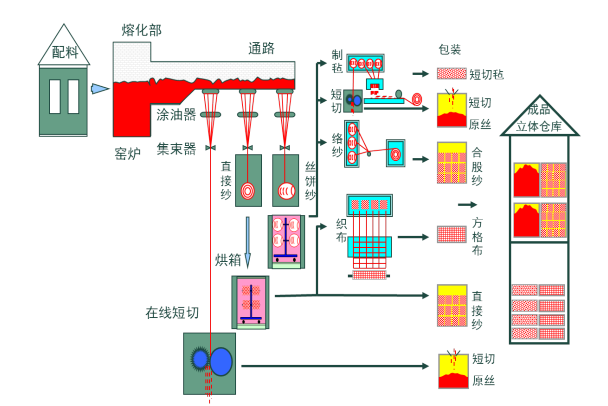
玻璃纤维的拉丝成型过程是将天然的矿物粉料在大型池窑中燃烧形成玻璃液体,从而使玻璃熔体中的玻璃液通过漏嘴挤到冷却介质中(空气)中,与此同时被拉伸成纤维,然后卷曲在拉丝机的绕丝筒上(图 1)。因此,玻璃纤维在整个拉丝成型过程中受到一次变量、派生变量和终极变量的影响,一次变量主要受天然原料化学组成及分子结构、作业环境流变性能和其他物理性能等,过程中多变量的叠加作用,导致了生产全流程中提升工艺标准精度非常复杂。工业互联网平台在链接各环节的基础上拥有大量数据基础,可以利用这些数据建立工业模型,以模型匹配即时数据开展基于自主优化、自主决策等人工智能方面的能力探索,优化工艺执行过程。 数字化转型网(www.szhzxw.cn)
二、基于需求的玻璃纤维行业工业互联网平台的建设内容
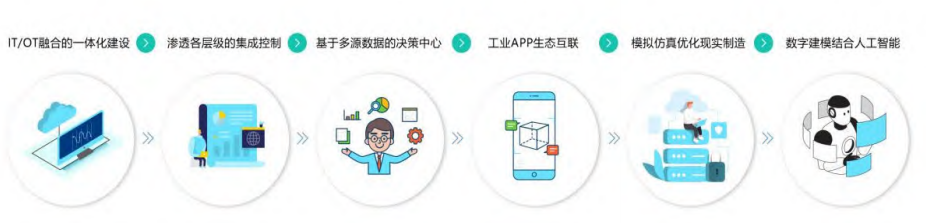
对玻璃纤维行业市场发展、智能转型、工艺特点的需求分析反映出行业在先进工业协同生产模式、智能化柔性生产、多变量产品工艺研发等方面的需求。由此我们提出可以采用工业互联网平台探索全新的生产运营模式,汇聚上下游产业的多源异构数据来满足玻璃纤维行业的发展需要。例如,整合风电、半导体等玻纤产业链的优势下游行业,建立以新产品、新标准为目标的工艺、原料及化工配方机理模型的联合研发,以智能互联提升玻璃纤维质量从而满足上下游产业需求。以下将玻纤行业工业互联网平台建设依次分为 6 个步骤进行介绍(图2)。
(一)IT/OT 融合的一体化建设
从制造业本身属性出发,玻纤行业工业互联网平台建设高度依赖于生产与经营的数字化程度。业务与数据作为工业互联网平台的基础,需要建立集生产计划、过程协同、设备控制、资源优化、质量控制、决策支持智能一体化平台。从信息化与工业化融合出发,企业需要部署 ERP 实现资源管理,部署 MES 实现生产执行,部署 SCADA 实现生产数据采集,部署 DCS 工控自动化、部署 LIMS 实现全链路质量管理,部署PLM 实现研发过程控制。此时,工业互联网平台建设才能开始,即建立玻纤自适应排产、生产过程智能控制、质量全流程追溯、能耗动态管理、资源智能调度、AI 决策分析等多场景应用。
(二)渗透各层级的集成控制
信息化与工业化的实现过程伴随着数据的产生,而玻纤行业工业互联网平台的价值实现绝大部分也以数据为起点。平台实施过程中结合ERP、BPM 等信息化系统产生的数据与 DCS、SCADA 等工业控制系统产生的数据,以数据驱动流程,流程优化业务,配合无人 AGV、机械臂、自动配料机、拉丝机等终端设备,将原本割裂的单元控制转变为(人、机、系统)互联、感知、适配的大型统一控制系统,从而达到数据的开发利用基础。 数字化转型网(www.szhzxw.cn)
(三)基于多源数据的决策中心
工业互联网平台通过系统集成控制,汇聚了大量的经营和生产数据,这些数据除了运用于流程端到端驱动外,还可以利用大数据分析展现其综合优势。此时,应建立多源异构数据的处理架构,按照不同数据的维度和节拍开展清洗梳理,最终形成开箱即用的数据中台。依赖数据中台规范的数据对象格式与关联方法,即可发展以多维度数据支撑的专家决策平台,而企业的核心装备、工艺、经营、管理专家可
以在工业互联网平台中以统一的数据图表开展决策。多地多工厂的大型企业可以构建全球统一的运行控制中心,由稀缺的行业专家共同协调和管控生产经营,分享和优化创新场景和效益绩效,不断优化专业能力和资源配置。
(四)工业 APP 生态互联
达到第四要素时,企业工业互联网平台的内部建设已经卓有成效,此时需要转变方向,以串联外部需求为新的起点。企业可以投入资源成立开发团队或引入具备定制化能力的服务商,专门开展玻纤行业与上下游关联业务的APP 建设,形成公共可用的行业 APP 组件库。对接的行业如玻纤下游的风电、上游的矿石粉料等,以 APP 作为业务切入点,可以避免直接集成各企业系统出现的资源投入扩大问题。APP以其功能驱动流程和数据,可以分为公共类和业务类。公共类是指在不同企业具备泛用性的APP,例如进销存、流程审批、海关单证、税企银企直连等;业务类是指按需进行点对点开发的 APP,例如 PDA 上开发质量库存 APP,下游企业可以扫码玻纤产品读取生产全流程质量数据,同时进行入库操作。正是以这些 APP 为抓手,工业互联网平台才能逐步完成上下游协同生态的总体构建。
(五)模拟仿真优化现实制造
完成前四要素后,玻纤行业工业互联网平台从内部和外部获得的数据已经可以实现高比例的价值再造。此时,可以探索创新技术的应用,获得优势竞争力。例如,通过数字建模将工厂、生产线、设备等实体转化为数字模型,建立模拟仿真平台,开展设计与工艺的虚拟执行,根据客户需求快速提供解决方案,加速现实研发与生产节奏,创造一个具备高度进化机制的制造环境。
(六)数字建模结合人工智能
工业互联网平台通过设备、工段、产线、工厂逐级实现数字孪生后,企业已经开始从数字驱动转向模型驱动,而 openAI 的引入正好提供了虚拟模型输入、决策、输出的模式优化。企业可以通过对各虚拟模型建立人工智能指令集,覆盖从产品设计到生产质检的全生命周期。
以 AI 算力取代人工判断缩短产品研发周期,降低研发投入,提升产品质量,保障生产运行,最终激活一种面向未来变革的全新生产模式。 数字化转型网(www.szhzxw.cn)
三、玻璃纤维行业工业互联网平台技术架构
玻纤行业工业互联网平台建设内容,从生产经营、数据采集、专家共享、工业互联、数字建模、模拟仿真、人工智能,展现了平台发展的主要过程阶段,而以此指导平台建设,还需要与行业适配的技术方案。本文提供一种玻纤行业工业互联网平台的技术架构参考,该架构以多层分级搭配行业自研技术实现了完整的联动控制体系。
(一)工业互联网平台多层分级架构
工业互联网平台构架(图 3)分为数据采集层、数据传输层、技术平台层、用户操作层。
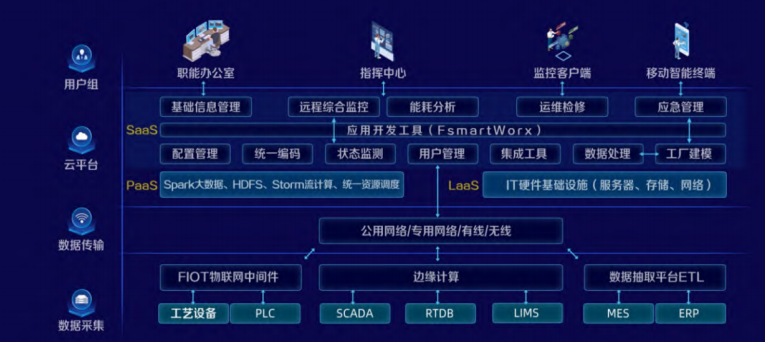
(1)数据采集层以采集玻纤行业本身工业数据为主,核心是窑炉、拉丝两道工序,可运用 PLC、SCADA、RTDB 等技术进行实时数据采集。窑炉监测温度、压力、氧气、天然气、喷口等属性,拉丝监测通路玻璃液、漏板温度、涂油线速等属性,以获得生产各部分、组件、设备、系统的多源异构数据。
(2)数据传输层是工业互联网平台数据传递的主要渠道。此时,一方面需要建立工控网与办公网完全隔离;另一方面需要通过物理专线、VPN、加密数据等手段汇聚多企业的数据。该层以上游采购供应数据、下游成品数据为主要口径,串联质量监测、生产工艺、物资需求等数据,建立工业互联网层面的数据传输总线。
(3)平台技术层是利用云平台、专业技术软件等开展数据汇总后的处理利用层级,可以将 Spark、HDFS、ES 等技术作为主要软件技术手段,对数据传输层汇聚的上下游企业数据进行清洗利用,例如可以利用下游客户的采购需求,直接生成销售计划,进而转化成生产计划和物资采购需求;可以利用出库产品二维码直接串联玻纤生产工艺、质量监测信息数据,免除下游客户的入厂检验成本;可以发散多种多样的工业互联网应用场景。
(4)数据的展示层是引入数据中台作为有效数据展示的数据开发利用层面。该层以可视化形式,根据平台技术层已经梳理的上下游数据,结合智能调度、数字看板、自动阈值指令等开展预测性维护、工艺调优、新产品研发等数据价值再造。 数字化转型网(www.szhzxw.cn)
(二)工业互联网平台协同系统架构
行业自研技术需要从各企业自身的特点出发,探索建立基于软件层面的主动式数据解决方案。
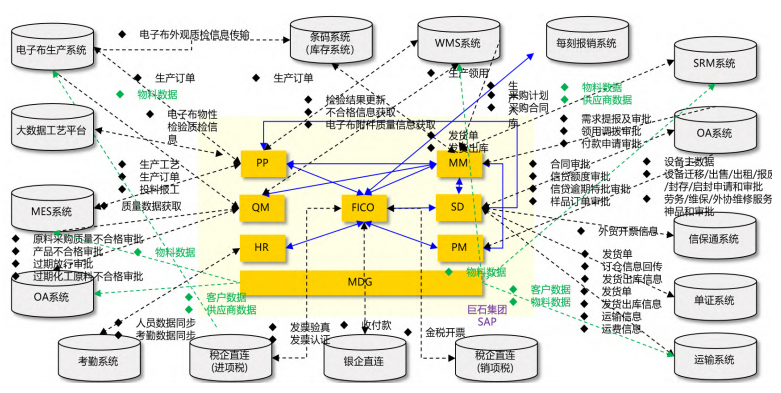
玻纤行业工业互联网平台的实施过程,主要以各信息系统代表各业务板块作为数字化能力的实体,此时必然包含多个以服务商为代表的乙方合作对象(图 4)。传统工业互联网只论述过程和结果,对此种现象和解决方法缺少论述。现实情况中多系统环境下必然由于数据串联和功能需求造成各信息系统业务修改,此时需求端的业务系统将会以网状结构扩散影响,系统集成度越高影响面就越广泛。因工业互联网需求造成的系统联动修改,必然涉及多个乙方实施商,而由于各系统建成时间不同和多流程联动情况,就会出现多向业务、时间阻滞、流程嵌套上的多重困难。
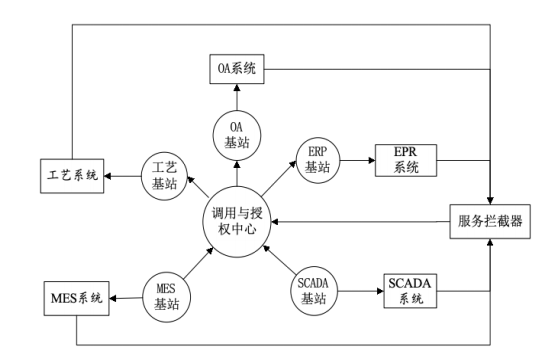
此处提出一种多个管理系统的协同系统以及协同架构方案(图 5),在数据采集层建立一个中间件,与多个系统建立连接,通过拦截器监听系统日志,并在监听到预定变化的情况下,以日志作为源头推送预定消息。在数据传输层建立统一消息控制中心,由控制中心进行调控,将消息发送至其他应用系统或利用其数据库开发的基站系统,调用目标系统功能。基于以上的逻辑链,当发生业务需求时,无须对多个管理系统的源程序进行更改,只要配置对应日志拦截,即可实现对多系统应用层功能的调用。解决工业互联网环境下集成的系统包含了大量非开源系统,以及因集成复杂而出现的多向业务、时间阻滞和流程嵌套问题。如此,在工业互联网整体架构下,所有调整都解耦成面向应用的单例功能,可降低多系统协同环境的修改成本和复杂度。
四、玻璃纤维企业工业互联网平台建设实例
下面以某玻纤行业龙头企业的工业互联网实践为例。该企业从顶层规划确定供应链生态圈打造的发展需求,结合当地的风电产业链企业集群现状,分别通过“内生集成、自主优化和产业互联”3 种能力打造玻纤工业互联网平台。通过“内生集成”串联企业内部信息系统,利用工业互联网平台的“数据采集层”采集生产各部分、组件、设备、系统的多源异构数据,从数据层面建立集成模式。“内生集成”能力建设旨在全线贯通内部生产制造与企业经营的数据链,并横向复制、扩展、覆盖所有生产基地与经营实体,实现产品全生命周期、经营管控全领域的数字化转型,进而在企业内部实现效率、质量、成本、效益的优势打造,探索企业全要素信息集成环境下数据价值的实现途径。 数字化转型网(www.szhzxw.cn)
通过“自主优化”建立工业 APP 开发体系,利用多个管理系统的协同系统以及协同架构解决各企业信息系统快速集成和独立建设的需求。“自主优化”能力建设是结合玻纤产业实际特点,从上游供应商和下游客户的关联流程入手,结合信息技术自研开发能力,打造基于上下游需求的玻纤能力场景;建立解决上下游实际需求的快速反应能力,为供应链伙伴提供共性难题的解决方案。
通过“产业互联”建立上下游产品研发、工艺迭代、质量改进的联合体系,利用工业互联网平台的“数据采集层”和“平台技术层”,将获得的数据进行开发利用,嵌入上下游企业流程,实现业务功能的创新提升。“产业互联”能力建设是在后续环节上采取跨企业的供需前置、灵活营销价格管理、产品协同研发、质量检测共享等模式,结合为上下游企业定制化二开、改造和建立 APP 等手段,建立基于采购、销售、生产、质量、成本优化的“产业互联”服务体系,为上下游企业提供研发创新、成果转化、协同制造、检测检验、快捷金融、专家咨询、行业分析、技术标准、资源需求、信息服务等服务。
目前,该玻纤企业的工业互联网平台运营建立了工业 APP 38 个,服务上下游企业 1980 家,在各自应用的场景开展数据整合,向上延伸至矿石磨粉、化工、能源、包材等加工产业,向下辐射到风电、热塑(TP)、电子(IT)、汽车、建筑、轨道交通等领域,贯通产业链上下游各环节,推动玻璃纤维产业及其上下游协同发展;实现研发效率、订单量、库存周转率、资金回款效率、生产效率、生产成本等指标的不同程度的提升。此外,利用该互联网平台,推动了玻璃纤维产业链中小企业上云,助力了行业中小企业数字化转型,利用产业集群优势实现区域“资源共享,产能共享”,科学合理地解决行业“原料价格波动大、能源成本高”的问题。同时,其供应链流程互通模式有效带动了区域协同制造的能力,也以所在地风电产业集群为核心,辐射了周边协同配套能力,实现产业链关联企业的整体的智能化和绿色化提升,最终推动产业质量变革、效率变革、动力变革,为制造强省、强国建设提供引领和示范。
五、结论
工业互联网是加快新一代信息技术与制造业深度融合的主要途径,它在结合智能制造的同时,在产业链与供应链上下游扩展研发设计、生产制造、经营管理、销售服务等能力。工业互联网平台纵向打通决策、业务和生产,横向联通企业、工厂、工段、设备,以数据流为线索,开展协同生产、协同研发,缩短产品研制周期;建立生产过程控制、生产管理的跨企业业务互通,极大提升了产能控制、生产效率、能源利用,有效降低运营成本、不良品率;并在此过程中形成一批发明专利及企业、行业的相关标准。
综上所述,本文从行业需求、建设内容、技术架构、企业案例四项内容开展论述,提供了一种玻璃纤维行业发展工业互联网的有效借鉴,可以引导同类企业开展协同创新、成果转化、协同制造、检测检验、专家智库、数字贸易、行业数据、人才服务等能力建设,共同强化玻璃纤维行业优势。

翻译:
Glass fiber industry industrial Internet platform construction and practice exploration — Megalithic Group
Glass fiber industry is an important industrial field, its products are widely used in construction, automotive, aerospace, electronics, environmental protection and many other fields. With the rapid development of the industry, its production and management methods are also constantly changing, and the emergence of the industrial Internet provides a revolutionary development way for the glass fiber industry. The development of the industrial Internet in the glass fiber industry is a complex and multi-dimensional process, involving multiple aspects and levels such as digital transformation, intelligent production, supply chain collaboration, innovation-driven, environmental protection and sustainable development. In January 2021, China issued the Industrial Internet Innovation and Development Action Plan (2021-2023), which aims to promote enterprises to actively introduce new technologies and new models. A large number of enterprises focus on the application of industrial Internet platforms to strengthen internal management and external cooperation, and constantly improve their competitiveness and sustainable development capabilities.
First, the glass fiber industry industrial Internet platform development needs
(1) Market development needs
Glass fiber is a new inorganic non-metallic material, which is one of the 10 major fields supported by the state. Glass fiber has the characteristics of high strength, good chemical stability, good electrical insulation, high temperature resistance, etc. In the new energy industry (wind blades, solar brackets), high-end equipment manufacturing industry (aircraft, radoms, automobiles, high-speed trains, yachts), environmental protection industry (oil pipelines, seawater desalination system environmental treatment facilities and equipment), infrastructure industry (Bridges, docks, highway facilities water pipelines, walls, roof tiles), health industry (medical facilities, medical materials, etc.) Sports equipment, sports facilities), electronic and electrical industry (power transmission and distribution equipment, integrated circuit boards), consumer goods and leisure industry (yachts, home appliances, furniture, doors and Windows, bathroom facilities, mobile phone cases) have a very wide range of applications.
At present, the application of glass fiber is more and more extensive, the market demand continues to expand, and the industry application is further improved, prompting its dosage, quality, and personalized requirements are becoming higher and higher. In recent years, the structural demand of glass fiber markets and customers at home and abroad has been changing faster and faster. The characteristics of continuous production of glass fiber kilns, wide variety of products and complex processes have put forward new demands for the flexible manufacturing capability of cross-enterprise cooperation in the industrial chain. At the same time, the glass fiber industry itself due to the characteristics of its production mode, the glass fiber production process requirements are higher, a large number of small and medium-sized enterprises due to technical reserves, weak intelligent innovation ability, scattered equipment operation, “system islands” and other problems, resulting in difficult to improve production efficiency, data can not effectively support production operations and decision-making. It also reflects the demand for advanced industrial collaborative production models. The industrial Internet platform can digitally connect production chains, improve production efficiency and product quality, and reduce manufacturing costs to meet market demand. 数字化转型网(www.szhzxw.cn)
(2) The demand for intelligent transformation and upgrading of the industry
First of all, the overall production mode of glass fiber is relatively extensive, product homogenization is serious, and industry profitability is uneven, which restricts the development of composite materials in China, resulting in a large gap between the application capacity of composite materials and the international advanced level. Secondly, the production of glass fiber is characterized by the continuous production of large pond kiln, a wide variety of products, complex processes, and in recent years, the structural demand of the market and customers is changing faster and faster, so that the lack of flexible and efficient information communication mechanism between the enterprise production plan and the customer and the market, so the flexible manufacturing capacity needs to be improved. Third, with the improvement of the globalization of glass fiber production, to promote its development requires a large number of manufacturing, equipment, research and development technicians to give rapid and timely response and technical support, but also the need for core equipment, control, research and development secrets of the confidentiality and control, so the traditional sense of on-site service and support will be difficult to meet the actual needs. The industrial Internet platform carries out enterprise interconnection with a secure and interconnected technical framework, establishes a data bridge between customer demand and enterprise manufacturing, and establishes an efficient service system including demand, research and development, production and quality inspection.
(3) The needs of production process characteristics
The glass fiber wire drawing molding process is to burn natural mineral powder in a large pool kiln to form a glass liquid, so that the glass liquid in the glass melt is squeezed into the cooling medium (air) through the leakage nozzle, and at the same time is stretched into a fiber, and then curled on the wire winding cylinder of the wire drawing machine (Figure 1). Therefore, the glass fiber is affected by primary variables, derived variables and ultimate variables in the entire process of wire drawing molding, primary variables are mainly affected by the chemical composition of natural raw materials and molecular structure, operating environment rheology and other physical properties, etc., the superposition of multiple variables in the process, resulting in the production of the whole process to improve the accuracy of the process standard is very complicated. The industrial Internet platform has a large amount of data on the basis of linking various links, which can be used to establish industrial models, and carry out artificial intelligence capabilities exploration based on autonomous optimization and autonomous decision-making based on model matching real-time data to optimize the process execution process.
Figure 1 Glass fiber production flow diagram
Second, the construction content of the industrial Internet platform of the glass fiber industry based on demand
The demand analysis of the market development, intelligent transformation and process characteristics of the glass fiber industry reflects the needs of the industry in advanced industrial collaborative production mode, intelligent flexible production, and multi-variable product process research and development. Therefore, we propose that we can use the industrial Internet platform to explore a new production and operation model and gather multi-source heterogeneous data from upstream and downstream industries to meet the development needs of the glass fiber industry. For example, the integration of wind power, semiconductor and other glass fiber industry chain advantages of downstream industries, the establishment of new products, new standards as the goal of the process, raw materials and chemical formula mechanism model joint research and development, with intelligent interconnection to improve the quality of glass fiber to meet the needs of upstream and downstream industries. The construction of the glass fiber industry industrial Internet platform is divided into six steps in turn (Figure 2).
Figure 2 Industrial Internet platform construction content of glass fiber industry
(1) Integrated construction of IT/OT integration
Starting from the attributes of the manufacturing industry itself, the construction of the industrial Internet platform in the glass fiber industry is highly dependent on the digitization degree of production and management. As the basis of the industrial Internet platform, business and data need to establish an intelligent integrated platform integrating production planning, process collaboration, equipment control, resource optimization, quality control and decision support. Starting from the integration of informatization and industrialization, enterprises need to deploy ERP to achieve resource management, deploy MES to achieve production execution, deploy SCADA to achieve production data collection, deploy DCS industrial control automation, deploy LIMS to achieve full-link quality management, and deploy PLM to achieve research and development process control. At this time, the construction of the industrial Internet platform can begin, that is, the establishment of multi-scenario applications such as glass fiber adaptive scheduling, intelligent control of the production process, quality whole process traceability, dynamic management of energy consumption, intelligent resource scheduling, and AI decision analysis.
(2) Penetration of all levels of integrated control
The realization process of informatization and industrialization is accompanied by the generation of data, and most of the value realization of the industrial Internet platform in the glass fiber industry is also based on data. In the implementation process of the platform, data generated by ERP, BPM and other information systems are combined with data generated by DCS, SCADA and other industrial control systems to drive the process and optimize the business process, and cooperate with unmanned AGV, robotic arm, automatic batching machine, drawing machine and other terminal equipment. The original split unit control will be transformed into (human, machine, system) interconnection, perception, adaptation of large-scale unified control system, so as to achieve the basis of data development and utilization.
(3) Decision center based on multi-source data
The industrial Internet platform gathers a large amount of operation and production data through system integration control, which can be used to show its comprehensive advantages through big data analysis in addition to end-to-end process drive. At this time, a multi-source heterogeneous data processing architecture should be established, cleaning and combing according to different data dimensions and rhythms, and finally forming a data center out of the box. Relying on the standardized data object format and association method of the data center, the expert decision-making platform supported by multidimensional data can be developed, and the core equipment, process, operation and management experts of the enterprise can be developed
To make decisions with a unified data chart in the industrial Internet platform. Large enterprises with multiple locations and multiple factories can build a global unified operation control center, where scarce industry experts jointly coordinate and control production and operation, share and optimize innovation scenarios and efficiency performance, and constantly optimize professional capabilities and resource allocation. 数字化转型网(www.szhzxw.cn)
(4) Industrial APP ecological interconnection
When the fourth element is reached, the internal construction of the enterprise’s industrial Internet platform has been effective, and at this time, the direction needs to be changed to connect external demand as a new starting point. Enterprises can invest resources to set up a development team or introduce service providers with customized capabilities to specifically carry out the APP construction of the glass fiber industry and upstream and downstream related businesses, and form a publicly available industry APP component library. Docking industries such as glass fiber downstream wind power, upstream ore powder, etc., with APP as a business entry point, can avoid the problem of resource investment expansion that appears in the direct integration of various enterprise systems. Apps drive processes and data with their functions and can be divided into public classes and business classes. The public category refers to apps that are widely used in different enterprises, such as purchase, sales and inventory, process approval, customs documents, direct connection between tax enterprises and banks, etc. The business class refers to the on-demand point-to-point development of the APP, such as the development of quality inventory APP on the PDA, downstream enterprises can scan the glass fiber products to read the quality data of the whole production process, and carry out warehousing operations at the same time. It is with these apps as the starting point that the industrial Internet platform can gradually complete the overall construction of the upstream and downstream collaborative ecology.
(5) Simulation and optimization of realistic manufacturing
After the completion of the first four elements, the glass fiber industry industrial Internet platform from the internal and external data has been able to achieve a high proportion of value reengineering. At this time, we can explore the application of innovative technologies and gain advantages and competitiveness. For example, through digital modeling, factories, production lines, equipment and other entities are transformed into digital models, analog simulation platforms are established, virtual execution of design and process is carried out, solutions are quickly provided according to customer needs, and the pace of realistic research and development and production is accelerated, creating a manufacturing environment with highly evolved mechanisms.
(6) Digital modeling combined with artificial intelligence
After the industrial Internet platform realizes digital twins step by step through equipment, workshops, production lines, and factories, enterprises have begun to shift from digital drive to model drive, and the introduction of openAI just provides the mode optimization of virtual model input, decision-making, and output. Enterprises can establish artificial intelligence instruction sets for each virtual model, covering the whole life cycle from product design to production quality inspection.
Replacing artificial judgment with AI computing power shorens product development cycle, reduces R&D investment, improves product quality, ensures production operation, and finally activates a new production mode for future changes. 数字化转型网(www.szhzxw.cn)
Third, the glass fiber industry industrial Internet platform technology architecture
Glass fiber industry industrial Internet platform construction content, from production and operation, data collection, expert sharing, industrial interconnection, digital modeling, simulation, artificial intelligence, show the main process stage of platform development, and to guide the platform construction, but also need to adapt to the industry technical solutions. This paper provides a technical framework reference for the industrial Internet platform of glass fiber industry, which realizes a complete linkage control system with multi-layer hierarchical and industry-developed technology.
(1) Industrial Internet platform multi-level hierarchical architecture
The industrial Internet platform architecture (Figure 3) is divided into data acquisition layer, data transmission layer, technology platform layer, and user operation layer.
(1) The data acquisition layer is mainly to collect the industrial data of the glass fiber industry itself, and the core is the two processes of kiln and wire drawing, which can use PLC, SCADA, RTDB and other technologies for real-time data acquisition. The kiln monitors the properties of temperature, pressure, oxygen, natural gas, nozzle, etc., and the wire drawing monitors the properties of the channel glass liquid, the leakage plate temperature, the oil line speed, etc., in order to obtain the multi-source heterogeneous data of the production parts, components, equipment, and systems.
(2) The data transmission layer is the main channel for data transmission of the industrial Internet platform. At this time, on the one hand, it is necessary to establish complete isolation between the industrial control network and the office network; On the other hand, the data of multiple enterprises needs to be aggregated through physical private lines, VPNS, encrypted data and other means. This layer takes upstream procurement and supply data and downstream finished product data as the main caliber, connects quality monitoring, production process, material demand and other data, and establishes the data transmission bus at the industrial Internet level.
(3) The platform technology layer is a level of processing and utilization after data summary using cloud platform and professional technical software. Spark, HDFS, ES and other technologies can be used as the main software technology means to clean and utilize the upstream and downstream enterprise data gathered by the data transmission layer. For example, sales plans can be directly generated by using the procurement needs of downstream customers. This is then translated into production plans and material procurement requirements; The two-dimensional code of the outgoing product can be used to directly connect the glass fiber production process and quality monitoring information data, eliminating the cost of incoming inspection for downstream customers; It can spread a variety of industrial Internet application scenarios. 数字化转型网(www.szhzxw.cn)
(4) The data display layer is the data development and utilization level introduced into the data center as an effective data display. In the form of visualization, the layer carries out data value reengineering such as predictive maintenance, process optimization and new product research and development according to the upstream and downstream data already sorted out by the platform technology layer, combined with intelligent scheduling, digital Kanshu and automatic threshold commands.
(2) Industrial Internet platform collaborative system architecture
Industry self-research technology needs to explore and establish an active data solution based on software based on the characteristics of each enterprise.
Figure 4 Typical integration in the glass fiber industry
The implementation process of the industrial Internet platform of the glass fiber industry mainly takes each information system representing each business segment as an entity with digital capability, and there are bound to be several cooperation objects of Party B represented by service providers (Figure 4). The traditional industrial Internet only discusses the process and results, and there is a lack of discussion about this phenomenon and solutions. In reality, in a multi-system environment, data series and functional requirements will inevitably cause the business modification of each information system. In this case, the business system on the demand side will spread the influence in a network structure, and the higher the system integration, the wider the impact. The system linkage modification caused by the industrial Internet needs will inevitably involve multiple Party B implementers, and due to the different completion time of each system and the multi-process linkage situation, there will be multiple difficulties in multi-direction business, time block, and process nesting.
Figure 5 Collaborative system and collaborative architecture of multiple management systems
A collaborative system and collaborative architecture scheme of multiple management systems are proposed here (Figure 5). A middleware is established in the data acquisition layer to establish connections with multiple systems, monitor system logs through interceptors, and push scheduled messages with logs as the source when the scheduled changes are monitored. A unified message control center is established in the data transmission layer, which is regulated by the control center and sends the message to other application systems or base station system developed by its database to invoke the function of the target system. Based on the above logic chain, when business needs occur, it is not necessary to change the source programs of multiple management systems, as long as the corresponding log interception is configured, the application layer functions of multiple systems can be invoked. The integrated system in the industrial Internet environment includes a large number of non-open source systems, and the problems of multi-direction business, time block and process nesting due to the complexity of integration. In this way, under the overall architecture of the industrial Internet, all adjustments are decoupled into application-oriented singleton functions, which can reduce the cost and complexity of modification in a multi-system collaborative environment.
Four, glass fiber enterprise industrial Internet platform construction examples
The following takes the industrial Internet practice of a leading enterprise in the glass fiber industry as an example. The company determines the development needs of the supply chain ecosystem from the top-level planning, combined with the current situation of the local wind power industry chain enterprise cluster, and builds the glass fiber industrial Internet platform through three capabilities of “endogenous integration, independent optimization and industrial interconnection”. Through the “endogenous integration” series of enterprise internal information system, the “data acquisition layer” of the industrial Internet platform is used to collect the multi-source heterogeneous data of various parts, components, equipment and systems of production, and the integration model is established from the data level. “Endogenous integration” capacity building aims to fully penetrate the data chain of internal manufacturing and enterprise operation, and horizontally copy, expand and cover all production bases and operating entities, so as to realize the digital transformation of the whole product life cycle and the whole field of operation control, and then realize the advantages of efficiency, quality, cost and efficiency within the enterprise. Explore the way to realize the data value in the enterprise total factor information integration environment.
The industrial APP development system is established through “independent optimization”, and the collaborative system and collaborative architecture of multiple management systems are used to solve the needs of rapid integration and independent construction of enterprise information systems. “Independent optimization” capacity construction is based on the actual characteristics of the glass fiber industry, starting from the associated process of upstream suppliers and downstream customers, combined with the self-research and development ability of information technology, to create a glass fiber capability scene based on upstream and downstream needs; Establish the ability to quickly respond to the actual needs of upstream and downstream, and provide solutions to common problems for supply chain partners. 数字化转型网(www.szhzxw.cn)
Through “industrial interconnection”, a joint system of upstream and downstream product research and development, process iteration and quality improvement is established, and the “data acquisition layer” and “platform technology layer” of the industrial Internet platform are used to develop and utilize the obtained data and embed it into the upstream and downstream enterprise processes to realize the innovation and improvement of business functions. “Industrial interconnection” capacity building is to adopt cross-enterprise supply and demand prepositioning, flexible marketing price management, product collaborative research and development, quality testing sharing and other modes in the follow-up links, combined with means such as customized second development, transformation and establishment of apps for upstream and downstream enterprises, to establish an “industrial interconnection” service system based on procurement, sales, production, quality and cost optimization. For upstream and downstream enterprises to provide R & D innovation, results transformation, collaborative manufacturing, testing and inspection, fast finance, expert consultation, industry analysis, technical standards, resource requirements, information services and other services.
At present, the industrial Internet platform of the glass fiber enterprise has established 38 industrial apps, serving 1980 upstream and downstream enterprises, and carrying out data integration in their respective application scenarios, extending upward to the processing industries such as ore grinding, chemical, energy and packaging materials. Downward radiation to wind power, thermoplastic (TP), electronics (IT), automotive, construction, rail transit and other fields, through the industrial chain upstream and downstream links, to promote the glass fiber industry and its upstream and downstream coordinated development; To achieve different degrees of improvement in research and development efficiency, order volume, inventory turnover, capital recovery efficiency, production efficiency, production cost and other indicators. In addition, the use of the Internet platform has promoted the cloud of small and medium-sized enterprises in the glass fiber industry chain, helped the digital transformation of small and medium-sized enterprises in the industry, used the advantages of industrial clusters to achieve regional “resource sharing, capacity sharing”, and scientifically and reasonably solved the problems of “raw material price fluctuations and high energy costs” in the industry. At the same time, its supply chain process interworking mode effectively drives the ability of regional collaborative manufacturing, and also takes the local wind power industrial cluster as the core, radiating the surrounding collaborative supporting ability, achieving the overall intelligent and green improvement of the industry chain related enterprises, and ultimately promoting the industrial quality change, efficiency change, and power change, providing guidance and demonstration for the construction of a strong manufacturing province and a powerful country. 数字化转型网(www.szhzxw.cn)
Fifth. conclusion
The industrial Internet is the main way to accelerate the deep integration of the new generation of information technology and manufacturing industry, which combines intelligent manufacturing at the same time, in the industrial chain and supply chain upstream and downstream expansion of R & D design, production, management, sales and service capabilities. The industrial Internet platform connects decision-making, business and production vertically, connects enterprises, factories, sections and equipment horizontally, and carries out collaborative production and collaborative research and development with data flow as a clue to shorten the product development cycle. Establish cross-enterprise business interoperability of production process control and production management, greatly improve capacity control, production efficiency, energy utilization, and effectively reduce operating costs and defective product rates; In this process, a number of invention patents and relevant standards for enterprises and industries have been formed.
To sum up, this paper discusses the four contents of industry demand, construction content, technical framework and enterprise cases, providing an effective reference for the development of industrial Internet in the glass fiber industry, which can guide similar enterprises to carry out capacity building such as collaborative innovation, achievement transformation, collaborative manufacturing, testing and inspection, expert think tanks, digital trade, industry data and talent services. Jointly strengthen the advantages of glass fiber industry. 数字化转型网(www.szhzxw.cn)
本文由数字化转型网(www.szhzxw.cn)转载而成,来源于《新型工业化》2024 年第 2 期;编辑/翻译:数字化转型网宁檬树。
免责声明: 本网站(http://www.szhzxw.cn/)内容主要来自原创、合作媒体供稿和第三方投稿,凡在本网站出现的信息,均仅供参考。本网站将尽力确保所提供信息的准确性及可靠性,但不保证有关资料的准确性及可靠性,读者在使用前请进一步核实,并对任何自主决定的行为负责。本网站对有关资料所引致的错误、不确或遗漏,概不负任何法律责任。
本网站刊载的所有内容(包括但不仅限文字、图片、LOGO、音频、视频、软件、程序等) 版权归原作者所有。任何单位或个人认为本网站中的内容可能涉嫌侵犯其知识产权或存在不实内容时,请及时通知本站,予以删除。