这八项新兴技术有望在新的一年及以后重塑行业并推动创新。

今天的技术正在加速发展——以越来越快的速度缩小“现在”和“未来”之间的差距。
摩尔定律宣称,计算速度每 24 个月翻一番,这是几十年来毋庸置疑的现实。人工智能已经将这一时间跨度缩短到不到四个月,在未来10年内,生成式人工智能的增长速度可能比摩尔定律快1亿倍以上。
这还不是全部:在不到 10 年的时间里,量子计算申请的专利数量从不到 300 项增长到 6,000 多项。虚拟现实正变得越来越无缝和逼真。所有这些创新都比我们在移动设备、社交媒体甚至互联网本身上看到的更快、更紧迫。 数字化转型网(www.szhzxw.cn)
在普华永道最新发布的研究中,我们确定了正在改变商业和文化的八项基本技术。了解这些和其他新兴技术可以做什么,以及何时将它们集成到您的业务中,对于日常运营和长期战略来说可能都至关重要。
每个行业和公司,无论大小,如果希望竞争和发展,都应该考虑至少实施其中一些技术。为了帮助企业评估战略投资的方向,我们将八项基本技术分为三类:扩展必不可少、评估必不可少和实验必不可少。
一、扩展的必要条件
如今,这些技术正在大规模运行,许多公司已准备好进一步扩大其使用范围。
人工智能
生成式人工智能占据头条新闻是有充分理由的——它是如此强大且易于使用。事实上,58%的企业正计划优先考虑对人工智能的投资,而不是任何技术,强调人工智能从技术高管的把关工具转变为现在掌握在大众手中。
传统的人工智能也在进步。机器学习和其他类型的 AI 在组织中负责任地使用,以提供更高的生产力并增强决策能力。人工智能在创造价值和解决挑战方面的潜力不断增长,无论是作为一项独立技术,还是作为我们名单上其他基本技术的推动者。
物联网 (IoT)
物联网仍然是我们日常生活中不可或缺的现实,其应用范围从个人可穿戴设备到预测性维护和资产管理等企业级功能。随着公司认识到物联网如何实现数据驱动的洞察力,采用率将会增加。
二、评估必不可少
这些技术在适用的用例中正在增长,但对大多数公司来说还不是优先事项。鉴于不断的进步,现在是企业重新评估其战略的时候了。 数字化转型网(www.szhzxw.cn)
区块链
区块链可以提供透明、经济高效和安全的方式来存储、监控和传输信息和资产,从而实现新的数字商业模式。越来越多的采用、互操作性的进步和监管的明确性使区块链成为企业创新和信任的关键推动力。
虚拟现实 (VR)
VR 是提升技能和员工协作的强大工具,可改变员工和客户体验以及公司的日常运营。人工智能与眼部和面部追踪的整合有望进一步模糊数字世界和物理世界之间的界限。
增强现实 (AR)
与创建身临其境的虚拟世界的 VR 不同,AR 建立在与现实世界交互的基础上并创造了与现实世界互动的新方式。AR 通常有助于解决问题并增强维护、设计可视化和客户参与方面的流程。
先进机器人技术
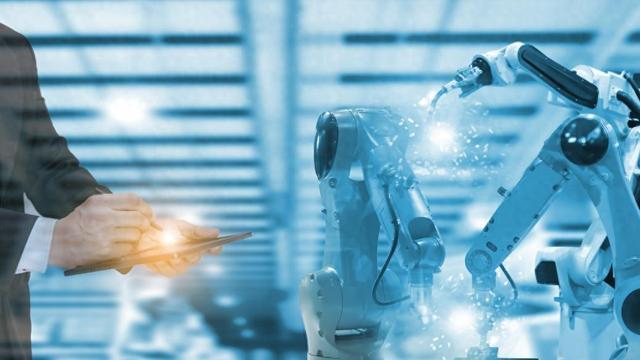
先进的机器人技术将人工智能集成到机器人中,以便它们能够对现实世界的情况进行交互和响应。这些机器人可以提高生产力和劳动力安全性,适应动态环境,并做出实时决策。
三、实验必备
这些技术非常有前途,并且正在迅速发展。重要的是要考虑您的业务或行业会受到怎样的影响。
量子计算
这项技术很快可以使计算机和基于计算机的应用程序(如人工智能)执行更复杂的操作,比经典计算解决方案更快地解决以前“无法解决”的问题。量子计算的处理能力有可能彻底改变供应链运营、金融投资组合管理和网络安全。 数字化转型网(www.szhzxw.cn)
神经形态计算
神经形态计算使用电子电路来模拟人脑,从而提高数据处理和功耗的效率,从而实现更好的可持续性和更大的成本节约。神经接口的相关领域将人机交互提升到一个新的水平,弥合了我们的思想和机器之间的差距,以改善人们的生活(例如使用假肢或机器人肢体)。
四、公司下一步应该做什么
这八项技术不仅本身是必不可少的,而且正在融合。
物联网可以与人工智能和区块链相结合,以实现更具弹性的供应链运营;人工智能和量子计算可以帮助改善商务旅客的路线;神经形态计算和先进的机器人技术可以自动化复杂的工业流程。通过融合这些解决方案,公司可以实现现代化,并为其未来的发展树立一个强有力的先例。
当我们展望这些新兴技术的影响时,负责任地部署技术对于与利益相关者建立信任至关重要。公司应制定正确的治理、标准和问责制,以保护其业务和客户。领导者应该开始提高员工的技能,以使用新兴技术。
无论您的企业是准备扩大对新兴技术的采用,还是准备进行评估,或者只是想进行实验,忽视这个独特的颠覆性和变革性的创新时代都不是一种选择。拥抱一个由人类主导和技术驱动的未来——了解它、规划它并采取行动——对所有人来说都是必不可少的。

翻译:
8 Essential Technologies for Business Success in 2024
These eight emerging technologies are poised to reshape industries and drive innovation in the new year and beyond.
Technology today is accelerating — closing the gap between what’s “now” and what’s “next” at an ever-increasing rate.
Moore’s Law declared that computing speed would double every 24 months, an unquestioned reality that held for decades. AI has reduced that timespan to less than four months, and over the next 10 years generative AI could grow by more than 100,000,000x faster than Moore’s Law.
That’s not all: the number of patents filed for quantum computing has grown from less than 300 to more than 6,000 in less than 10 years. Virtual reality is becoming more seamless and lifelike. And all this innovation is happening faster and with greater urgency than we saw with mobile devices, social media, or even the Internet itself. 数字化转型网(www.szhzxw.cn)
In PwC’s newly released research, we’ve identified the essential eight technologies that are transforming business and culture. Understanding what these and other emerging technologies can do — and when to integrate them into your business — will likely be fundamental for both everyday operations and long-term strategy.
Every industry and company, from small to large, should consider implementation of at least some of these technologies if they hope to compete and grow. To help businesses assess where to direct strategic investments, we’ve organized the essential eight technologies into three categories: essential to expand, essential to evaluate, and essential to experiment.
1. Essential to Expand
These technologies are operating at scale today, and many companies are ready to expand their use even further.
Artificial Intelligence
Generative AI grabs the headlines for good reason — it’s so powerful and easy to use. In fact, 58% of businesses are planning to prioritize investment in AI, more than any technology, emphasizing its shift from being gatekept tools for tech executives to now in the hands of the masses.
Conventional AI is advancing, too. Machine learning and other types of AI are used responsibly across organizations to deliver greater productivity and enhance decision-making. AI’s potential to deliver value and solve challenges keeps growing, both as a stand-alone technology and as an enabler of other essential technologies on our list. 数字化转型网(www.szhzxw.cn)
Internet of Things (IoT)
IoT remains an integral reality of our everyday lives, with applications ranging from individual wearables to enterprise-level functions like predictive maintenance and asset management. Adoption will increase as companies recognize how IoT enables data-driven insights.
2. Essential to Evaluate
These technologies are growing in applicable use cases but are not a priority at most companies — yet. It’s time for businesses to reevaluate their strategies given ongoing advancements.
Blockchain
Blockchain can provide transparent, cost-effective, and secure ways to store, monitor and transfer information and assets — enabling new digital business models. Growing adoption, interoperability advancements, and regulatory clarity are positioning blockchain to become a critical enabler of enterprise innovation and trust. 数字化转型网(www.szhzxw.cn)
Virtual Reality (VR)
VR is a powerful tool for upskilling and workforce collaboration, transforming employee and customer experiences as well as companies’ daily operations. The integration of AI and of eye and facial tracking is poised to further blur the line between digital and physical worlds.
Augmented Reality (AR)
Unlike VR, which creates immersive virtual worlds, AR builds upon and creates new ways to interact with the real world. AR often helps solve problems and enhance processes in maintenance, design visualization and customer engagement.
Advanced Robotics
Advanced robotics integrates artificial intelligence into robots so they can interact and respond to real-world situations. These robots can increase productivity and workforce safety, adapt to dynamic environments, and make real-time decisions.
3. Essential to Experiment
These technologies are highly promising and rapidly advancing. It is important to consider how your business or industry could be impacted. 数字化转型网(www.szhzxw.cn)
Quantum Computing
This technology could soon enable computers and computer-based applications (such as AI) to perform far more complex operations, solving previously “unsolvable” problems faster than classical computing solutions. Quantum computing’s processing capability has the potential to revolutionize supply chain operations, financial portfolio management, and cybersecurity.
Neuromorphic Computing
Neuromorphic computing uses electronic circuits to emulate the human brain, creating efficiencies in both data processing and power consumption for better sustainability and greater cost savings. The related field of neural interfaces takes human-machine interaction to a new level, bridging the gap between our minds and machines to improve people’s lives (such as with prosthetics or robotic limbs.)
4. What Companies Should Do Next
These eight technologies are not only essential on their own, but they are also converging.
IoT can blend with AI and blockchain for more resilient supply chain operations; AI and quantum computing can help improve routes for business travelers; and neuromorphic computing and advanced robotics can automate complex industrial processes. By converging these solutions, companies can modernize and set a powerful precedent for their future development.
As we look ahead at these emerging technologies’ impact, the responsible deployment of technology will be crucial in building trust with stakeholders. Companies should put the right governance, standards, and accountability in place to safeguard their businesses and customers. Leaders should begin upskilling workforces to use emerging technologies.
Whether your business is ready to expand its adoption of emerging technologies, is preparing to evaluate, or just looking to experiment, ignoring this uniquely disruptive and transformative era of innovation is not an option. Embracing a human-led and tech-powered future — learning about it, planning for it, and acting on it — will be essential for all.
本文由数字化转型网(www.szhzxw.cn)转载而成,来源于INFORMATIONWEEK.COM;编辑/翻译:数字化转型网宁檬树。
免责声明: 本网站(http://www.szhzxw.cn/)内容主要来自原创、合作媒体供稿和第三方投稿,凡在本网站出现的信息,均仅供参考。本网站将尽力确保所提供信息的准确性及可靠性,但不保证有关资料的准确性及可靠性,读者在使用前请进一步核实,并对任何自主决定的行为负责。本网站对有关资料所引致的错误、不确或遗漏,概不负任何法律责任。
本网站刊载的所有内容(包括但不仅限文字、图片、LOGO、音频、视频、软件、程序等) 版权归原作者所有。任何单位或个人认为本网站中的内容可能涉嫌侵犯其知识产权或存在不实内容时,请及时通知本站,予以删除。