随着全球可持续发展和“双碳”目标推进,资本市场对ESG(环境、社会和治理)概念的关注度日益提升。但另一面,ESG却变相成为资本市场掌握企业的“遥控器”。数字化转型网www.szhzxw.cn
今年1月,由于未能满足自主制订的严格气候评分标准,全球指数提供商富时罗素(FTSE Russell)宣布将34家公司从其可持续投资指数FTSE4Good All-World基准中剔除。34家包括美国券商Charles Schwab、卢森堡媒体集团RTL Group、印度电网公司、中国国航以及中远海运能源运输等互联网与科技、运输相关企业。
这是该伦敦证券交易所集团全资子公司第一次采取这样的措施。富时罗素政策主管大卫·索尔(David Sol)对此表示,由于2021年富时罗素推出更严格的气候变化标准,列入观察名单的208家公司都在努力提高环境保护评分标准的转型之路。但很遗憾的是有些公司没有达到相关标准,因此被剔除。
与此同时,晨星公司旗下可持续发展评级机构Sustainalytics于1月初宣布,已经将腾讯、微博和百度三大互联网企业的ESG评级下调至“不符合联合国原则”类别,原因则令人“匪夷所思”——与互联网管理、俄乌战事等因素有关。数字化转型网www.szhzxw.cn
近年来,当中国企业开启国际化或在海外上市,由于受到各利益相关方的压力,开始将ESG列为重要的企业治理提升指标,并逐步改善企业可持续发展行为,致使ESG在资本市场影响力逐步扩大。但海外和国内的ESG标准不统一、供应链风险等非财务风险日益凸显,导致ESG概念背后乱象频出,逐渐变成了一场“资本运作的怪圈游戏”。
近日接受钛媒体APP采访时,Omdia中国首席顾问王珅表示:“企业ESG表面上看似只是一个附加的效果,带来光环效应。ESG让任意企业都能达到很好的社会影响,能提升企业估值。但对于企业自身来说,除了社会形象提升之外,ESG真正目的在于节能减碳后降低成本、提高业务产出等,这才是企业做ESG重要原因。对于部分企业仅仅宣传式地进行ESG行为,不能真正提升企业价值。”
王珅强调,真正能触动企业核心成本运营问题的ESG,才是最关键的。
一、真ESG还是宣传噱头?
ESG是“环境保护”(Environment)、“社会责任”(Social)、“公司治理”(Governance)三个英文单词首字母的缩写,由2004年联合国全球契约首次提出,被视为评估企业经营的重要指标,也是企业获得客户与投资人信任的基础。数字化转型网www.szhzxw.cn
与传统财务指标不同,ESG投资在传统方法基础上进一步度量了企业E、S、G的非财务指标,从而让企业在谋求商业利益的同时兼顾社会责任,同样也使投资者多维度、全方位评估企业,该公司基本面和估值因此得到提振。反之,企业估值逻辑会要重构。数字化转型网www.szhzxw.cn
据资产管理集团贝莱德的一份数据报告显示,预计到2030年,ESG领域的投资将增长到1万亿美元。
截至目前,阿里巴巴、腾讯、茅台、小鹏汽车、B站、比亚迪等头部公司均已对外发布了ESG报告。不过,这些报告内容差异性较大,有的针对E、S、G三大领域展开论述,有的关注社会协作、抗疫保供,也有的将较多笔墨用于“秀肌肉”。
事实上,除了很多企业喊出“致力于到2030年实现气候中和”这种宣传式ESG之外,近两年,上市企业想要体现ESG的核心原因在于,ESG相关政策法规及交易所监管日益趋严,让企业不得不投入大量社会责任性资金,硬性加大环境保护、社会责任和公司治理性变革力度,对资本市场披露企业ESG方面贡献。
截至目前,美国、中国、法国、南非等国家和地区的证监机构都发布了ESG相关披露说明:
- 美国证监会2008年规定上市公司必须披露环境信息,2013年美国环保局规定部分高温室气体排放上市公司必须披露其排放信息;
- 法国交易所2012年起要求500人以上的上市公司、或交易额1亿欧元以上的公司必须披露环境及社会方面信息;
- 南非交易所自2002年起要求所有上市公司必须对可持续发展表现进行一般性披露、合规或解释;
- 中国上海交易所及深圳交易所均发布了关于上市公司披露ESG及CSR信息的指引及征求意见。港交所则于2012年发布上市规则附录《环境、社会及管治报告指引》,并分阶段提升强制披露要求。
- 2018年9月,中国证监会发布修订后的《上市公司治理准则》,增加了上市企业在环境保护与社会责任方面的披露内容,鼓励企业积极承担社会责任;2021年6月,证监会发布了修订后的上市公司年报半年报格式准则,并公开征求意见,本次修订新增环境和社会责任章节,鼓励披露碳减排的措施与成效。
但是,ESG概念背后有一个问题在于,全世界的ESG评级标准各不相同,导致企业排名各有差异。而且,一些ESG评级排名甚至直接排除中国企业,但评级机构自身却赚的盆满钵满,9个月内收入同比增长36%。
“当前的ESG评估方法存在根本性缺陷。为了实现迫切需要的变革,ESG需要不断发展以衡量现实世界的影响。但当前ESG报告并未有相关信息,”特斯拉在2021年影响力报告中表示,“相反,它(当前ESG评估)侧重于衡量风险/回报的美元价值。”数字化转型网www.szhzxw.cn
事实上,中国企业的ESG报告多表现在扶贫济困和救急(例如疫情期间的驰援)等方面,但海外企业却一直在深耕长远的环境问题。也可能正因为此,国际ESG机构的榜单上对中国公司的评级都依然非常不尽如人意。
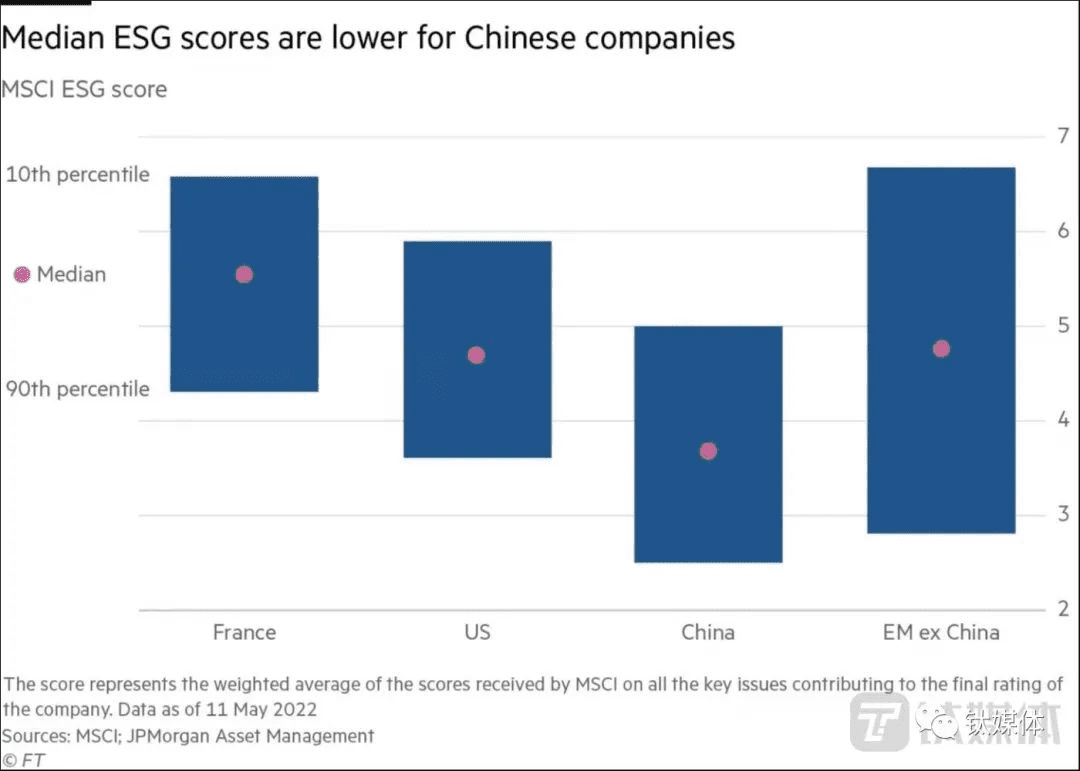
英国《金融时报》曾引述摩根大通做过的一项调查发现,中国公司在ESG评分体系分数中值较低。
以调味品牌海天味业为例。海天味业在国际指数机构MSCI(明晟指数)评级中一直处于整个评级体系倒数第二的B级。MSCI认为,海天在食品安全与质量、营养与健康机遇、用水压力和原材料采购等四个方面,在MSCI ACWI(全球标准指数)83家食品公司中处于落后地位。
MSCI曾于2020年4月公布的一份ESG报告指出,2019年,最低ESG评级的中国公司达到总数的56%以上,获得最高ESG评级的企业主要是消费品和信息技术巨头,包括阿里、苹果、谷歌母公司Alphabet等。
这意味着,绝大多数中国企业并不符合MSCI ESG评级标准。数字化转型网www.szhzxw.cn
随着腾讯被下调ESG评级,投资人有计划减持其股份。据金融时报报道,尽管微信成为了中国人日常生活不可或缺的一部分,腾讯公司承担了很多企业社会责任,但随着Sustainalytics下调评级,令一些关注ESG的投资者感到震惊。美国基金机构WisdomTree Asset Management的Liqian Ren就直言,他们将减少投资这类ESG评级不达标(腾讯)企业。
“随着更多的投资者利用ESG数据及工具以协助他们做出投资决策,ESG标准对于投资或运营于中国的国内或国际机构日益重要。”MSCI亚太区指数产品主管Douglas Walls表示。
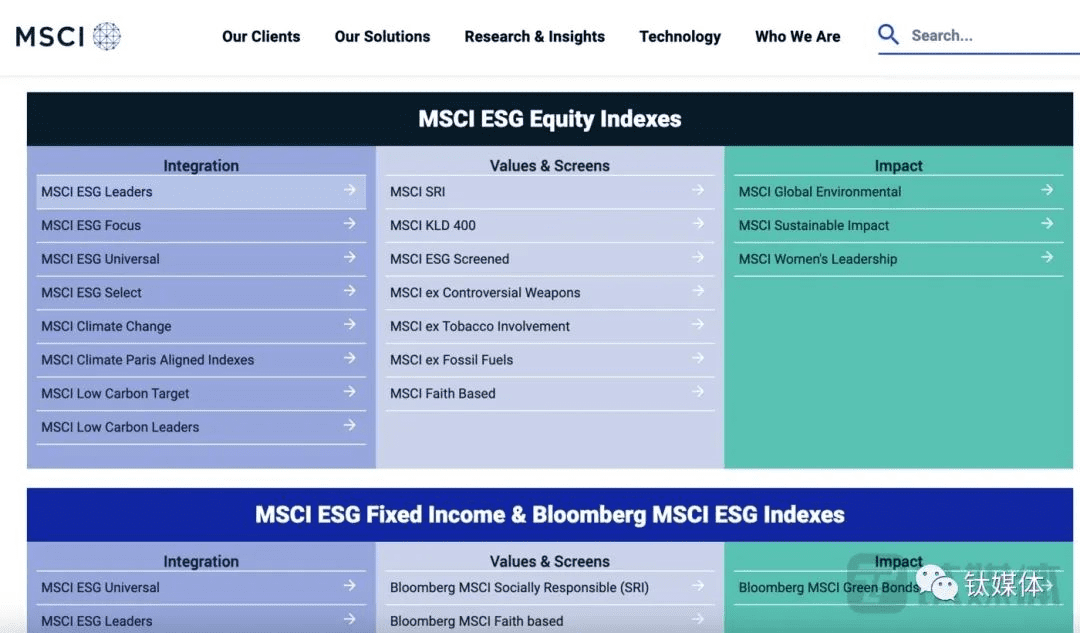
钛媒体APP梳理发现,评级机构对于ESG榜单也是乱象频出。比如,MSCI做了高达27个ESG相关指数,可以用“菜市场”来形容,甚至还有所谓“MSCI ESG信仰为基础”等,评级标准较为简单,甚至有的没有任何客观说明。因此,这些评级排行的作用是否能够真正体现企业ESG带来的社会可持续性发展,这需要打一个问号。
但从自身而言,ESG评级低与很多中国公司对碳中和并没有明确规划有一定关联。
例如,茅台对ESG的表述为“初步构想公司碳中和规划,制定思路,开展减碳行动路径,即将开展碳盘查工作”;B站在减碳方面“计划逐步建立全面的碳排放监控及管理体系,通过监控办公及数据中心的碳排放,不断完善低碳减排措施”;京东对于“全面的温室气体排放盘查”处于筹备中,集团层面的减排目标状态尚在“筹备中”。
但毫无疑问的是,ESG概念的旺盛需求,直接让ESG评级机构赚的盆满钵满。晨星旗下ESG评级机构Sustainalytics报告称,2022年前9个月,该公司服务收入为7680万美元,同比增长36%。
而包括ESG在内的多个服务业务,MSCI指数公司2021年收入达20.44亿,比上一年增长20.54%;净利润达7.26亿,同比20.63%。
再看A股。数字化转型网www.szhzxw.cn
尽管近两年中国加大推动ESG基金的发展,但ESG投资从来不是A股头部企业关注的重点,资本的逐利性注定了短期营收比长期的企业治理更为重要。无论是中国石化、中国石油、中国建筑,还是中国平安、中国中铁、中国铁建等A股头部企业,他们股价波动与ESG关联度较低。
根据南京工业大学经济与管理学院张长江团队在《环境经济研究》期刊上发布的研究成果,其认为改善ESG表现对国有上市公司提高财务绩效的影响不显著,但却有利于非国有公司提高其财务绩效。主要原因是中国资本市场以散户为主体,整体的投资风格偏向短期收益。
此外,西方和中国的ESG投资和发展差距较为明显。抛开环境治理和影响不谈,欧美市场投资人热衷的人权利益关注标准和多元化企业文化提升,包括提升少数族裔权益、削减外貌歧视等方面,这些都难以进入国内企业ESG报告的认知范畴。
因此,随着近年ESG法规政策及交易所上市规则出台、资本市场关注提升等因素,促使中国企业不得不建立ESG体系,并践行ESG管理。但还要警惕:ESG不是一场“资本运作的另类游戏”,评级机构对企业歧视性标准、宣传达不到的减碳口号、互联网企业增加无意义的ESG投资等“漂绿”行为,并不能让企业自身得到可持续性发展,而且也很难得到大众认同。
“部分企业的报告更像是自说自话,并没有科学的评价系统,只是简单地找一个中介公司,把企业在社会责任等方面的‘亮点’拿出来加工一下,更像是宣传的噱头。”北京一位金融人士接受采访时表示。
首都经济贸易大学中国ESG研究院执行院长柳学信则认为,除了一些龙头企业,很多企业在编写ESG报告时,在市场上找一家中介机构,把过去企业在社会责任、环保、劳工方面的闪光点总结一下形成报告,这样的报告形式大于内容。
很显然,在经历了一场令人兴奋的繁荣之后,当前流行的ESG概念出现了一些“变形”。
二、不管争议与否企业仍要加大减碳措施
目前,关于ESG概念的争议颇多。
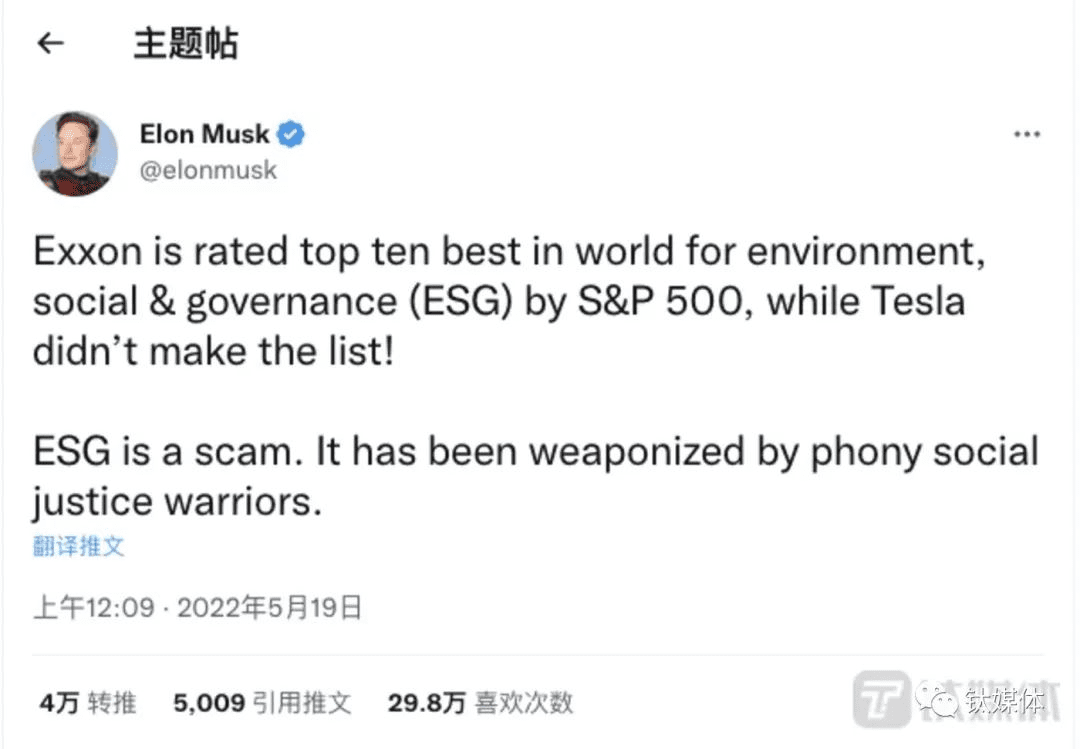
其中,在特斯拉被踢出标普ESG指数后,特斯拉CEO、前世界首富埃隆·马斯克发推文怒斥称,ESG就是骗局,它被那些伪装成社会正义斗士的家伙当成枪使。
2022年6月,美国证券交易委员会(SEC)宣布调查高盛的ESG投资基金业务,主要针对的是高盛集团的公募基金,SEC称要出台新规,打击投资产品中被夸大的ESG数据。此外,美国最大的公共退休基金CalPERS前负责人Anne Simpson也表达对ESG概念的反对支持意见。
但不管争议与否,一个发展事实是:伴随气候变化,以及各国推出碳达峰碳中和目标,经济结构调整和绿色技术进步是推动节能减排和绿色增长,实现中国经济低碳转型的必然选择。而碳排放绩效改善则是实现经济发展与节能减排双赢这一低碳经济发展宗旨的关键途径与核心体现。尤其ICT(信息及通信技术)领域企业,应该要考虑减少碳排放,从而有效推动中国经济实现高质量发展。
王珅对钛媒体APP表示,ICT是一个技术密集行业,需要促进企业绿色减碳技术用于电力制造、交通、农业等领域,从而将下游需求和能耗匹配平衡,减少不必要的能源浪费。“目前ICT行业可能每年产生13亿吨等效二氧化碳排放,但它给下游产业带来的减碳潜力为121亿吨等效二氧化碳,即ICT行业每产生1吨碳,就可能会为下游带来9吨的减碳潜力,因此需要自身减碳来提升了产业下游的数字化。长远来看减碳对于ICT行业具有非常重要的作用。”
2022年夏天,全球异常的高温现象给人类敲响了警钟。Omdia数据显示,截至2021年第一季度,全球有44个国家承诺净零排放目标,约占全球二氧化碳量和GDP的70%左右。
王珅认为,目前ICT企业减碳有三个途径:一是提升绿电占比,采购绿电或者搞小绿电,提升上游设施规模,利好分布式光伏、储能,以及IGBT、MOSFET等半导体器件市场;二是提高设备能效,包括提升服务器与数据中心领域的计算、存储、网络、芯片等产品的能效比;三是增强智能化的能源管理。
对于美国商务部的半导体出口新规对中国算力发展影响,王珅对钛媒体APP表示,国外这些限制影响在中短期内有限,稍低规格的国产服务器芯片可以满足国内数据中心的大部分需求,在一些应用中也可以牺牲一部分能耗和时间为代价,通过多数量优势抵消质量上的劣势等方案以解决算力有无的问题。
此外,以芯片制造行业为例,麦肯锡(McKinsey)的一份报告中提到了减碳具体措施,包括优化气体化学处理,以降低温室气体的使用量,安装气体减排系统;减少冷却器泄漏,至少70%的传热流体(HTF)需要更换为低全球变暖潜值方案;需要用清洁燃料替代目前的燃料供应等。
目前,中国正在加大对企业ESG工作披露的重视力度。数字化转型网www.szhzxw.cn
2022年4月,中国证监会发文,要求上市公司在与投资者沟通内容中增加ESG信息。5月,国资委印发《提高央企控股上市公司质量工作方案》,其中提到将推动央企控股上市公司完善ESG工作机制,在资本市场发挥带头示范作用,要求央企上市公司到2023年全部要披露ESG报告。此外,中国对于上市公司ESG信息披露的要求逐渐严格,从“倡导自愿披露”转变为“部分企业强制披露”。
中国证监会上市部主任李明在2022可持续发展高峰论坛上表示,加强ESG信息披露是推动提高上市公司质量的客观要求,也有助于ESG表现较好的企业得到投资者特别是机构投资者等长期资金的认可和青睐,获得资本市场支持。
中国上市公司协会、中证指数有限公司日前发布的《中国上市公司ESG发展白皮书》显示,2009年到2021年,披露ESG相关报告的A股上市公司从371家增至1112家。
实际上,中国亟待构建接轨国际、符合国情的ESG发展体系,尤其企业应该把握ESG趋势,从内外部视角出发规避ESG风险,关注外部ESG政策、法规与上市规则等。其中,减少碳排放、推进碳中和是目前中国企业应该做的一项重要任务。
“实现碳中和是一个长期目标,但近两年疫情、国际冲突等问题,让短期利益和长期目标发生抵触,有些变化是很正常的。不过从长期来看,企业需要减碳的趋势非常明显,背后需要靠企业自觉或是其他动机。如果减碳市场化,就能真正激发整个社会减碳的驱动力。”王珅对钛媒体APP表示。
2023年1月19日,国务院新闻办公室发布《新时代的中国绿色发展》白皮书,阐述新时代中国绿色发展的核心理念,以及总结十年来中国绿色发展的举措与成效等。国家发展改革委副主任赵辰昕在发布会上透露,2012年以来,中国以年均3%的能源消费增速支撑了年均6.6%的经济增长,单位GDP能耗下降26.4%,是全球能耗强度降低最快的国家之一。
工信部副部长辛国斌表示,下一步,工信部将认真贯彻中央决策部署,着力从健全完善绿色制造和服务体系、构建绿色低碳升级改造政策体系、强化绿色低碳标准的引领、建立数字赋能绿色制造的引导机制、深化绿色制造的国际交流合作机制五个方面深入推行绿色制造,从而推动中国制造业高质量发展,构建现代化产业体系,实现可持续发展,促进人与自然和谐共生。数

字化转型网www.szhzxw.cn
翻译:
As global sustainable development and “two-carbon” goals advance, the capital market is paying increasing attention to the concept of ESGs (environmental, social and governance). On the other hand, ESGs have become a remote control for the capital market to control companies.
In January, FTSE Russell, the global index provider, announced it was dropping 34 companies from its benchmark FTSE4Good All-World sustainable investment index after failing to meet its own stringent climate scoring criteria. The 34 include Internet, technology and transport-related companies such as US brokerage Charles Schwab, Luxembourg-based media Group RTL Group, India’s Power Grid Corporation, Air China and Cosco Shipping Energy Transportation.
It is the first time the wholly owned subsidiary of the London Stock Exchange Group has taken such a step. David Sol, head of policy at FTSE Russell, said the 208 companies on the watch list were all working to improve their environmental ratings as a result of the introduction of tougher climate change criteria by the FTSE Russell in 2021. Unfortunately, some companies did not meet the relevant criteria and were therefore excluded.数字化转型网www.szhzxw.cn
Meanwhile, Sustainalytics, the sustainability rating agency owned by Morningstar, announced in early January that it had downgraded the ESG ratings of three Internet companies — Tencent, Weibo and Baidu — to “non-UN principles” for “unfathomable” reasons related to Internet governance and the Russia-Ukraine war.
In recent years, when Chinese enterprises start internationalization or go public overseas, due to the pressure from various stakeholders
In recent years, when Chinese enterprises start internationalization or go public overseas, due to the pressure from various stakeholders, they begin to list ESG as an important indicator of corporate governance improvement and gradually improve their sustainable development behavior, resulting in the gradual expansion of ESG’s influence in the capital market. However, the inconsistency between overseas and domestic ESG standards and the increasingly prominent non-financial risks such as supply chain risks have led to frequent chaos behind the concept of ESG, which has gradually become a “capital operation cycle game”.
In a recent interview with Titania Media APP, Wang Shen, chief consultant of Omdia China, said, “On the surface, corporate ESGs seem to be just an additional effect, bringing about a halo effect. Esgs enable any enterprise to achieve a good social impact and can increase the valuation of the enterprise. But for enterprises themselves, in addition to improving their social image, the real purpose of ESG is to reduce costs and improve business output after energy conservation and carbon reduction, which is an important reason for enterprises to do ESG. For some companies, just promoting ESG behavior cannot really enhance the value of the enterprise.”数字化转型网www.szhzxw.cn
Wang Shen stressed that ESG, which can really touch the core cost operation problem of enterprises, is the most critical.
Real ESG or publicity Stunt?数字化转型网www.szhzxw.cn
ESG is an acronym of “Environment”, “Social responsibility” and “corporate Governance”. It was first proposed by the UN Global Compact in 2004 and is regarded as an important indicator to evaluate business operations. It is also the foundation for enterprises to gain the trust of customers and investors.
Different from traditional financial indicators, ESG investment further measures non-financial indicators of enterprises E, S and G on the basis of traditional methods. So that enterprises can take social responsibility into account while seeking commercial interests. And investors can also evaluate enterprises in a multi-dimensional and all-round way. Thus boosting the fundamentals and valuation of the company. On the contrary, the enterprise valuation logic will be restructured.
Investment in ESGs is expected to grow to $1 trillion by 2030. According to a report on the data from asset management group BlackRock.
So far, Alibaba, Tencent, Moutai, Xiaopeng Automobile, B Station, BYD and other leading companies have released ESG reports. However, the content of these reports varies greatly. Some of them focus on E, S and G, some focus on social cooperation, fighting the epidemic and ensuring supplies. And some devote more time to “flexing their muscles”.
In fact, in addition to the propaganda that many companies are committed to climate neutrality by 2030. The core reason listed companies want to incorporate ESGs in the past two years is that the increasingly stringent policies. Regulations and exchange supervision related to ESGs have forced companies to invest a large amount of socially responsible funds. Strengthen environmental protection, social responsibility and corporate governance reform, and disclose corporate ESG contribution to the capital market.
Up to now, securities regulatory agencies in the United States, China, France, South Africa and other countries and regions have issued relevant disclosure notes on ESG:
1, In 2008, the US Securities and Exchange Commission stipulated that listed companies must disclose environmental information. In 2013, the US Environmental Protection Agency stipulated that some listed companies with high greenhouse gas emissions must disclose their emissions information.
2, Since 2012, the French Bourse has required listed companies with more than 500 employees or trading volumes of more than 100 million euros to disclose environmental and social information.
3, Since 2002, the South African Exchange has required all listed companies to provide general disclosure, compliance or explanation of sustainable development performance;
4, China’s Shanghai Stock Exchange and Shenzhen Stock Exchange have both issued guidelines and solicited opinions on listed companies’ disclosure of ESG and CSR information. In 2012, HKEx published an appendix to its listing rules. Guidelines on Environmental, Social and Governance Reporting, and increased mandatory disclosure requirements in phases.
5, In September 2018, the China Securities Regulatory Commission issued the revised Code of Governance for Listed Companies. Which increased the disclosure content of listed companies in terms of environmental protection and social responsibility. And encouraged enterprises to actively undertake social responsibilities. In June 2021, China Securities Regulatory Commission (CSRC) issued the revised semi-annual report format guidelines for listed companies and invited public comments. The revised chapter on environmental and social responsibility was added to encourage the disclosure of measures and effects of carbon emission reduction.
However, one of the problems behind the concept of ESGs is that there are different standards for rating ESGs around the world
However, one of the problems behind the concept of ESGs is that there are different standards for rating ESGs around the world, leading to different rankings. And while some ESG rankings even exclude Chinese companies outright. The agencies themselves are raking in cash, with revenues up 36 per cent in nine months from a year earlier.
“The current approach to ESG assessment is fundamentally flawed. To bring about much-needed change, ESGs need to evolve to measure real-world impact. But the current ESG report does not have that information, “Tesla said in its 2021 Impact report.” Instead, it [the current ESG assessment] focuses on measuring the dollar value of risk/reward.”
In fact, Chinese companies’ ESG reports mainly focus on poverty alleviation and emergency relief (such as rushing to the aid during the epidemic). But overseas companies have been focusing on long-term environmental issues. It may also be the reason why the international ESG rankings still give Chinese companies very poor ratings.
A survey by jpmorgan cited by the Financial Times found that Chinese companies had low median scores in the ESG scoring system.
Take Hatian Weiye, a seasoning brand, for example. Haiten Weiye has been rated B, the second-lowest rating in the MSCI rating system. MSCI rated Haitian as a laggard among 83 food companies in the MSCI ACWI (Global Standards Index) in four categories:. Food safety and quality, nutrition and health opportunities, water stress and raw material sourcing.
According to an ESG report published by MSCI in April 2020, in 2019. Chinese companies with the lowest ESG rating accounted for more than 56% of the total. While companies with the highest ESG rating were mainly consumer goods and information technology giants. Including Alibaba, Apple and Alphabet, the parent company of Google.数字化转型网www.szhzxw.cn
This means that the vast majority of Chinese companies do not meet the MSCI ESG rating criteria.
Following Tencent’s downgrade of its ESG rating, investors are planning to reduce their stakes in the company. While wechat has become an integral part of Chinese People’s Daily life and Tencent has taken on a lot of corporate social responsibility. The downgrade by Sustainalytics shocked some EsG-focused investors, according to the Financial Times. Liqian Ren of WisdomTree Asset Management, an American fund. Says they will cut back on investing in such companies that do not meet their ESG ratings.
“As more investors use ESG data and tools to assist them in making investment decisions. ESG standards are becoming increasingly important for domestic and international institutions investing or operating in China.” Douglas Walls, MSCI’s head of index products for Asia Pacific.
Titanium Media APP found that rating agencies for the ESG list is also frequently confused.
For example, MSCI has made up to 27 ESG-related indexes. Which can be described as “wet market”, and even the so-called “MSCI ESG faith-based”. The rating criteria are relatively simple, and some even do not have any objective explanation. Therefore, it is questionable whether the effect of these ratings truly reflects the social sustainability of corporate ESGs.
But in itself, the low ESG rating has something to do with the fact that many Chinese companies do not have clear plans for carbon neutrality.
For example, Moutai’s expression of ESG is “to preliminarily formulate the company’s carbon neutral plan, formulate ideas, carry out carbon reduction action path, and carry out carbon inventory”. In terms of carbon reduction, Station B “plans to gradually establish a comprehensive carbon emission monitoring and management system. And continuously improve low-carbon emission reduction measures by monitoring the carbon emissions of offices and data centers”. Jd is in preparation for the “comprehensive inventory of greenhouse gas emissions”. And the group level emission reduction target is still in “preparation”.
But there is no doubt that the ESG rating agencies are making a lot of money as a direct result of the high demand for ESG concepts. Sustainalytics, Morningstar’s ESG rating agency, reported service revenue of $76.8 million for the first nine months of 2022, up 36 percent from the same period last year.
In terms of service businesses, including ESG, the revenue of MSCI index companies reached 2.044 billion yuan in 2021. An increase of 20.54% over the previous year. Net profit reached 726 million yuan, 20.63 percent year-on-year.
Let’s look at A-shares.
Although China has promoted the development of ESG funds in the past two years. ESG investment has never been the focus of A-share leading companies. The profit-driven capital is destined to make short-term revenue more important than long-term corporate governance. Whether it is Sinopec, petrochina, China State Construction, or China Ping An, China Railway. China Railway Construction and other A-share leading enterprises, their stock price fluctuations have A low correlation with ESG.
According to the research results published in the journal Environmental Economics Research by Zhang Changjiang and his team from the School of Economics and Management of Nanjing University of Technology. They believe that improving ESG performance has no significant impact on the financial performance of state-owned listed companies. But can help non-state-owned companies to improve their financial performance. The main reason is that China’s capital market is dominated by retail investors. And the overall investment style is biased towards short-term gains.
Moreover, the gap in ESG investment and development between the West and China is obvious. Apart from environmental governance and impact. The human rights interest standards and the improvement of diversified corporate culture that investors in European and American markets are keen on, including the promotion of minority rights and the reduction of appearance discrimination, are difficult to enter the cognitive scope of domestic enterprises’ ESG reports.
Therefore, with the introduction of ESG regulations
Therefore, with the introduction of ESG regulations, policies and listing rules of exchanges in recent years. The increasing attention of capital market and other factors, Chinese enterprises have to establish ESG system and practice ESG management. However, we should also be vigilant: ESG is not an “alternative game of capital operation”. “Greenwashing” behaviors such as discriminatory standards against enterprises by rating agencies. Unmet carbon reduction slogans, and meaningless ESG investment by Internet companies cannot help enterprises to achieve sustainable development. And it is difficult for them to win public approval.
“Some companies’ reports are more like talking on their own, without a scientific evaluation system. They are just looking for an intermediary company to process the ‘highlights’ of the enterprise in social responsibility and other aspects, more like a publicity stunt.” Beijing a financial person said in an interview.
Liu Xuexin, executive director of the China ESG Research Institute at the Capital University of Economics and Business, believes that, except for some leading enterprises, many enterprises will find an intermediary in the market when compiling ESG reports. And summarize the bright spots of enterprises in social responsibility, environmental protection and labor in the past. Such reports are more in form than in content.
Clearly, after a heady boom, the current popular concept of ESGs has “morphed” a bit.
Regardless of the controversy or not, enterprises still need to increase carbon reduction measures
Currently, there is a lot of controversy about the concept of ESG.数字化转型网www.szhzxw.cn
After Tesla was kicked out of the S&P ESG index, Elon Musk, Tesla’s CEO and former richest man in the world. Tweeted that ESG was a scam, used as a gun by people posing as social justice fighters.
In June 2022, the United States Securities and Exchange Commission (SEC) announced an investigation into Goldman Sachs ‘ESG investment fund business, mainly targeting Goldman Sachs Group’s public offering funds. The SEC said that it would introduce new rules to crack down on the inflated ESG data in investment products. In addition, Anne Simpson, a former head of CalPERS, America’s largest public pension fund, has voiced opposition to the concept.
However, controversial or not, a development fact is that with climate change and the implementation of the goal of carbon neutrality, economic restructuring and green technology progress are the inevitable choices to promote energy conservation, emission reduction, green growth and low-carbon transformation of China’s economy. The improvement of carbon emission performance is the key approach and the core embodiment of the goal of low-carbon economic development, which is to achieve a win-win situation between economic development and energy conservation and emission reduction. ICT (Information and communication technology) companies, in particular, should consider reducing carbon emissions in order to effectively promote high-quality economic development in China.
ICT is a technology-intensive industry, Wang Shen told Ti Media APP
ICT is a technology-intensive industry, Wang Shen told Ti Media APP. Adding that it is necessary to promote the use of green carbon reduction technologies by enterprises in power manufacturing, transportation, agriculture and other fields. So as to match and balance downstream demand and energy consumption and reduce unnecessary energy waste. “At present, the ICT industry may produce 1.3 billion tons of equivalent carbon dioxide emissions annually. But the carbon reduction potential it brings to the downstream industry is 12.1 billion tons of equivalent carbon dioxide. That is, every 1 ton of carbon generated by the ICT industry may bring 9 tons of carbon reduction potential to the downstream. Therefore, the ICT industry needs to reduce its own carbon to improve the digitalization of the downstream industry. Long term carbon reduction is very important for the ICT industry.”
In the summer of 2022, unusually high temperatures around the world sounded the alarm. As of the first quarter of 2021, 44 countries have committed to net-zero emissions, representing about 70% of global CO2 and GDP, according to Omdia.
Wang Shen believed that there are three ways for ICT enterprises to reduce carbon: first, increase the proportion of green electricity, purchase green electricity or develop small green electricity, improve the scale of upstream facilities, and benefit distributed photovoltaic, energy storage, as well as semiconductor device market such as IGBT and MOSFET; Second, improve the energy efficiency of equipment, including improving the energy efficiency ratio of computing, storage, network, chips and other products in the field of servers and data centers; Third, we will strengthen intelligent energy management.
Regarding the impact of the US Department of Commerce’s new semiconductor export regulations on China’s computing power development
Regarding the impact of the US Department of Commerce’s new semiconductor export regulations on China’s computing power development, Wang Shen told Ti Media APP that the impact of these foreign restrictions will be limited in the short to medium term. The domestic server chips with slightly lower specifications can meet most of the demands of domestic data centers. And some energy consumption and time can also be sacrificed in some applications. In order to solve the problem of the availability of computing power, the quantity advantage offsets the quality disadvantage.
In addition, in the chip manufacturing industry. For example, a McKinsey report cited specific measures to reduce carbon emissions, including optimizing gas chemical treatment to reduce greenhouse gas use and installing gas reduction systems; To reduce cooler leakage, at least 70% of heat transfer fluids (HTFS) need to be replaced with low global warming potential solutions; Current fuel supplies need to be replaced with cleaner fuels, etc.
At present, China is increasing the emphasis on corporate ESG work disclosure.
In April 2022, China Securities Regulatory Commission issued a document requiring listed companies to add ESG information to their communications with investors. In May, the State-owned Assets Supervision and Administration Commission issued the Work Plan for Improving the Quality of Listed Companies held by Central Enterprises, which mentioned that listed companies held by central enterprises will be promoted to improve the ESG working mechanism, play a leading and exemplary role in the capital market, and require all listed companies of central enterprises to disclose ESG reports by 2023. In addition, China’s requirements for ESG information disclosure of listed companies are gradually stricter, from “advocating voluntary disclosure” to “mandatory disclosure of some enterprises”.
Li Ming, director of the Listing Department of China Securities Regulatory Commission, said at the 2022 Sustainable Development Summit Forum that strengthening ESG information disclosure is an objective requirement to promote the improvement of the quality of listed companies, and also helps enterprises with good ESG performance to be recognized and favored by investors, especially institutional investors and other long-term funds, and obtain support from the capital market.
From 2009 to 2021, the number of A-share listed companies that disclosed ESG-related reports increased from 371 to 1,112, according to A White paper on ESG Development of China’s Listed Companies released by the China Association of Listed Companies and China Securities Index Co LTD.
In fact, China urgently needs to build an ESG development system that is in line with international standards and national conditions.
In particular, enterprises should grasp the ESG trend, avoid ESG risks from an internal and external perspective, and pay attention to external ESG policies, regulations and listing rules. Among them, reducing carbon emissions and promoting carbon neutrality is an important task that Chinese enterprises should do at present.
“Achieving carbon neutrality is a long-term goal, but in the past two years, the pandemic and international conflicts have made short-term interests and long-term goals collide, and some changes are quite normal. However, in the long run, the trend of enterprises needing to reduce carbon is very clear, behind which needs to rely on corporate self-awareness or other motivations. If carbon reduction is marketized, it can really stimulate the driving force for carbon reduction in the whole society.” Wang Shen told the Titanium Media APP.
On January 19, 2023, The State Council Information Office issued a white paper titled “China’s Green Development in the New Era”
On January 19, 2023, The State Council Information Office issued a white paper titled “China’s Green Development in the New Era”, which expounds the core concepts of China’s green development in the new era and summarizes the measures and achievements of China’s green development in the past decade. Zhao Chenxin, deputy director of the National Development and Reform Commission, revealed at the press conference that since 2012, China’s annual energy consumption growth rate of 3% has supported the annual economic growth rate of 6.6%. Energy consumption per unit of GDP has dropped by 26.4%, one of the fastest reduction in energy intensity in the world.
Xin Guobin, Vice Minister of the Ministry of Industry and Information Technology, said that in the next step, the Ministry of Industry and Information Technology will earnestly implement the decisions and arrangements of the central government, and focus on promoting green manufacturing from five aspects: perfecting the green manufacturing and service system, building the policy system of green and low-carbon upgrading, strengthening the guidance of green and low-carbon standards, establishing the guidance mechanism of digital enabling green manufacturing, and deepening the international exchange and cooperation mechanism of green manufacturing. So as to promote the high-quality development of China’s manufacturing industry, build a modern industrial system, achieve sustainable development, and promote the harmonious coexistence between man and nature.数字化转型网www.szhzxw.cn
本文由数字化转型网(www.szhzxw.cn)转载而成,来源:钛媒体;编辑/翻译:数字化转型网宁檬树。
免责声明: 本网站(http://www.szhzxw.cn/)内容主要来自原创、合作媒体供稿和第三方投稿,凡在本网站出现的信息,均仅供参考。本网站将尽力确保所提供信息的准确性及可靠性,但不保证有关资料的准确性及可靠性,读者在使用前请进一步核实,并对任何自主决定的行为负责。本网站对有关资料所引致的错误、不确或遗漏,概不负任何法律责任。
本网站刊载的所有内容(包括但不仅限文字、图片、LOGO、音频、视频、软件、程序等) 版权归原作者所有。任何单位或个人认为本网站中的内容可能涉嫌侵犯其知识产权或存在不实内容时,请及时通知本站,予以删除。