1月29日报道,就在最近,英国《金融时报》发布了万余字深度报道,通过采访9位苹果前高管和工程师在内的25位供应链专家,深度挖掘了苹果建立供应链帝国背后大量鲜有曝光的细节故事,并尝试为苹果当下迫在眉睫的供应链深度“危机”找到解法。数字化转型网www.szhzxw.cn
这两年,京东方、舜宇光学、兆易创新等多家大陆企业打入苹果供应链核心零部件腹地,另一边,苹果末端产品制造业务频频向东南亚、印度转移。果链变动背后的明争互搏暗潮汹涌,始终是全球科技产业中最吸睛、又最残酷的博弈之一。数字化转型网www.szhzxw.cn
英国《金融时报》文章通过大量细节和详实数据,复盘了苹果如何花费二十年、数十亿美元打造一套前所未有的复杂供应链生态,同时作者认为,今天的苹果正面临一场“清算(rekoning)”。
以美国现在国内的政治环境和倾向来看,苹果面临着来自投资者和美国政界人士的巨大压力,他们要求苹果与中国“脱钩”,并加速实施供应链多元化策略。这种略显“割裂”的状态,仿佛让苹果走到了一个危险的十字路口。
苹果工程师如何把中国供应商CEO问的哑口无言只为找到“一行代码”的问题?苹果如何买尽全世界一万多台最先进的CNC机床只为实现MacBook Pro的一体式机身?苹果如何在带给“果链”企业声誉和财富的同时,还能将控制权牢牢握在手里?郭台铭又是如何通过自己的关键判断赢得库克的尊重的?
此外,印度和越南难以取代中国制造业地位的根本原因是什么?苹果的技术创新为什么逐渐放缓?苹果对供应商的掌控力因何下降?苹果供应链危机的深层次症结到底在哪里?
这一切,我们都能在本文中找到详细答案。
需要注意的是,文章对于多数问题,给出了从美国人视角出发得到的结论和观点,部分会与我们常见的理解有所不同,但这种视角和思考方式,或许能给国内科技企业出海带来一些新的启发。
英国《金融时报》文章分为上下两部分,第一部分着重挖掘苹果如何巩固其在中国的业务,进而打造出历史上最成功的消费电子产品。第二部分则重点分析苹果是否能够走出当下的困境。
以下是英国《金融时报》深度报道的全文完整编译(部分内容进行了不改变原意的编辑):
上半部: 因供应链而起,因供应链而“困”,苹果命运与中国深连在一起
苹果花了二十多年和数十亿美元打造了一个复杂度前所未有的供应链帝国,而今天,一次“清算”即将到来。
2007年是诺基亚的鼎盛时期,当时其在全球范围内拥有9亿用户,市场份额一度超过了40%,当年的《福布斯》杂志还专门刊登了一篇关于诺基亚的封面故事,并问道:“有谁能够追上手机之王?”
但历史精彩之处就在于,就在同一年,苹果公司创始人史蒂夫·乔布斯(Steve Jobs)发布了初代iPhone。
如今,十六年过去了,iPhone已经坐拥全球12亿用户,而苹果将昔日芬兰手机巨头诺基亚挑落马下的故事已经广为人知。当时有报道认为,诺基亚领导层缺乏对于软件重要性的深刻理解,进而难以跟上乔布斯和天才设计师乔尼·艾夫(Jony Ive)的脚步。
但其实在初代iPhone成功的背后,不只有多点触控和全屏功能(full-screen features)。早在iPhone上市之前,苹果在硬件和生产方面的能力就已经超过了诺基亚,苹果是通过大举押注中国制造业来实现这一优势的。
供应链研究员Kevin O’Marah很清楚地记得,2007年年中,苹果公司突然一跃成为全球供应链最佳企业年度排名前25名中的第二名。
他回忆称,当时每个人都很震惊,因为此前苹果供应链的名声一直很糟糕,取得这样的排名简直不可思议。
此次供应链排名的调整,实则成为了苹果业务发生深刻变革的前兆。在接下来的7年中,苹果一直在全球供应链最佳企业排名中高居榜首。这段时间里,苹果成为了全球最有价值的公司,但同时也把自己置于了地缘政治紧张局势的中心。
研究员O’Marah开始清楚地认识到,苹果的“外包”,并不是像人们想象中的那样,完全地将生产“外包”给中国。相反,苹果正在建立一个极其复杂、深入且高成本的供应和生产体系,以至于苹果自己的命运已经与中国紧密联系在一起,而这种紧密联系又是难以解除的。
过去的十五年中,苹果一直在向中国派遣其顶尖的产品设计师和制造设计工程师,这些工程师每次都要在苹果供应商的工厂里待上好几个月。
这些苹果员工的作用至关重要,他们会协同设计新的生产流程,监督生产过程的细节完善,直到生产跑通跑顺、正常运转,同时还要密切关注供应商的生产是否合规。
除了大量人力资源投入,苹果还斥资数十亿美元,为供应商购买定制设备,并开发一些独家专业技术。苹果的竞争对手们甚至都不了解这些技术,更不用说追赶了。
苹果的供应链体系深刻影响着苹果和中国。研究员O’Marah认为,苹果中国供应链体系所拥有的技术能力,并不是中国本土内生的,而是苹果进入中国市场、建立技术竞争力的产物。
2011年蒂姆·库克(Tim Cook)正式接替乔布斯出任苹果CEO,而库克正是苹果供应链体系背后的核心操盘手。他将苹果产品的生产从美国转移到了中国,在中国构建起极为高效的供应链体系,并为苹果的崛起奠定了基础。
但凡事都有两面性,中国也成为了苹果最大的“软肋”,苹果对中国供应链的依赖程度是极深的。对于风险规避型的苹果来说,过于集中的供应链必然不是一件好事。数字化转型网www.szhzxw.cn
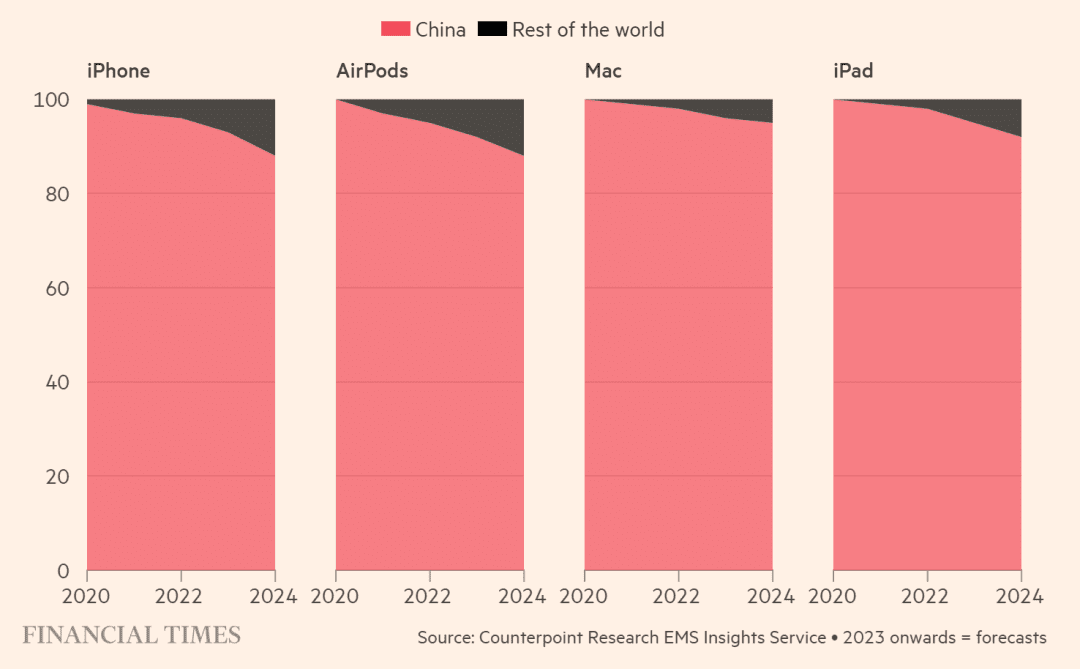
目前苹果超过95%的iPhone、AirPods、Mac和iPad都是在中国制造的,苹果去年大约有740亿美元的营收来自中国市场,占总营收约五分之一。与之相比,老对手三星已经大幅削减了在中国的制造业务。
最近几年,虽然中美关系呈现出一些紧张态势,但苹果仍然继续在中国进行投资,并巩固了与中国的关系。
但就美国现在国内的政治环境和倾向来看,苹果以及其操盘手库克面临着来自投资者和美国政界人士的巨大压力,他们要求苹果与中国“脱钩”,并加速实施供应链多元化策略,众所周知,现在印度和越南已经承接了一部分苹果产品的生产。
对于苹果现在面临的这种供应链挑战,英国《金融时报》采访了25位供应链专家,其中包括9位苹果前高管和工程师。但最终他们没能得出答案,这些专家普遍认为,苹果目前几乎没有可行的出路,短期来看也不会有。
采访中一位苹果前资深员工认为,库克是造成供应链当下“糟糕”现状的主要负责人,他提到这不仅是向最高层追责,也是向供应链领导人追责,而“供应链大师”库克正是苹果供应链的领导者。
一、不差钱!三年豪掷73亿美元买设备全世界的CNC机床都不够苹果用
回溯到苹果供应链发展的早期阶段,苹果并不是第一家在中国进行离岸生产的美国电脑公司。1998年库克来到苹果开始负责电脑生产业务时,惠普和康柏等公司已经在中国站稳了脚跟。
但苹果的做法显然更为独特,苹果没有采用现成的零部件,而是做定制化。苹果会亲自设计这些零部件的制造过程,并以前所未有的规模和灵活性将这些定制化零部件组装成极其复杂的系统。
在2007年的供应链排名中,宝洁、丰田和沃尔玛的同行意见得分(peer ranking score)至少都是苹果的两倍,但来到库存周转率(inventory turns)这个指标上,苹果就成了一枝独秀。
库克曾将库存形容为“fundamentally evil”,直译过来就是根本性的邪恶。库克会把电子产品比作几天内就会变质的乳制品。
当然,库克并不是光动嘴皮子,苹果的库存周转率的确做到了诺基亚的2.5倍,是可口可乐的12倍。
苹果在生产过程中投入巨资,围绕其在制造领域的创新建造技术护城河,而苹果的竞争对手还在忙着给供应商规格说明书,然后说:“给我造这个。”
研究员O’Marah说,苹果给供应商购买设备的投资比全世界任何一个公司都多。实际上,苹果只是把自己买来的设备放在了别人的工厂里而已。数字化转型网www.szhzxw.cn
随着早年iPhone产量的增长,苹果在中国的“长期资产(主要用于生产制造的设备)”价值已经从2009年的3.7亿美元飙升至2012年的73亿美元。当时,这一数字已经超过了苹果所有建筑资产和零售店价值的总和。
如此大规模的资金设备投入,让苹果能够实现别人完全无法想象的先进生产技术。比如2008年,苹果发布了铝合金机身一体成型的MacBook Pro,这项工艺可以说是当时高端制造业的一次重要突破。
苹果设计师艾夫曾评价称,这项工艺实现了“行业闻所未闻的精度”。
这项工艺通过CNC机床实现,设计师通过这种机床,可以方便地用3D图像文件创建结构复杂的零部件。其实当时这种机器已经存在了几十年,只不过每台价值超过50万美元,并且通常只用于少量制造产品原型。
三位前苹果制造工程师称,为了实现乔布斯所说的这种“制造笔记本电脑的全新方式”,苹果买了一万多台CNC机床。
后来没过多久,苹果也开始在iPhone和iPad上采用同样的技术。两位知情人士透露,当时苹果与全球最大的专业数控系统生产厂家日本Fanuc签订了一项协议,根据协议,苹果将在未来数年内购买Fanuc生产的所有CNC机床。
随后,苹果还在全球范围内继续搜罗其他厂家的先进CNC机床。一位知情人士称,当时全球范围内也没有足够的CNC机床来满足苹果的生产需求,“2009年,我们的业务开始指数级增长,第一年我们每天造1万个零部件、第二年每天造10万个,然后是50万个、100万个……本质上来说,钱从来不是问题。”
二、苹果工程师细抠“每一行代码”库克也是个“细节狂魔”
接下来,英国《金融时报》主要探讨了苹果在供应商选择方面的一些原则和做法。
在寻找供应商方面,苹果遵循着严格的流程。
五位了解苹果在华政策的人士透露,一位来自加州的苹果工程师,与中国零部件供应商CEO见面,然后向CEO提出各种技术性问题,直到他们答不上来,这种情况是很常见的。
然后,这位苹果工程师会被带到下一位经理那里,进行新一轮的“问答”,最后苹果工程师会深入到与问题答案距离最近的员工那里,可能这位员工写的某一行代码,正是苹果工程师要看的东西。
在几个小时的询问、协商后,苹果工程师会让供应商承诺大规模生产苹果所需的定制零部件,从而有效地掌握供应商的技术研发路线图。
一位前苹果运营总监称,苹果一贯采用这种“第一原则(first principles)”向下追溯,以便全面了解成本、设计和量产等各个环节可能出现的任何问题。
这位知情人士称,苹果工程师会一直刨根问底,因为当问的问题足够多时,就会发现问题的症结到底在哪里,进而解决问题。从来没有什么细节是苹果不感兴趣的。
另一位前苹果高管称,这种做法直接源于库克,即使对每台设备中成本不到一美分的铆钉,库克也绝不会放过。
“当你与他(库克)讨论时,他会从第30页第7段中找到某个点并询问更多细节,令人印象深刻的是,他总能从整体看到细节,然后又从细节处看回整体。”
这些技术让苹果能够推动供应商去超越他们现有的能力,并且随着苹果的成长,这种影响力会变得越来越大:制造一个零部件并用于数以亿计的产品中,这种机会绝对不容错过。
三位前苹果老员工称,他们曾对自己在谈判中所拥有的巨大话语权感到震惊。供应链企业员工会被聊到脸色发青,最终告诉苹果工程师他们做不到苹果的要求。“但当两个人都说‘不’时,总有一个人要屈服,而这个人永远不会是苹果。”
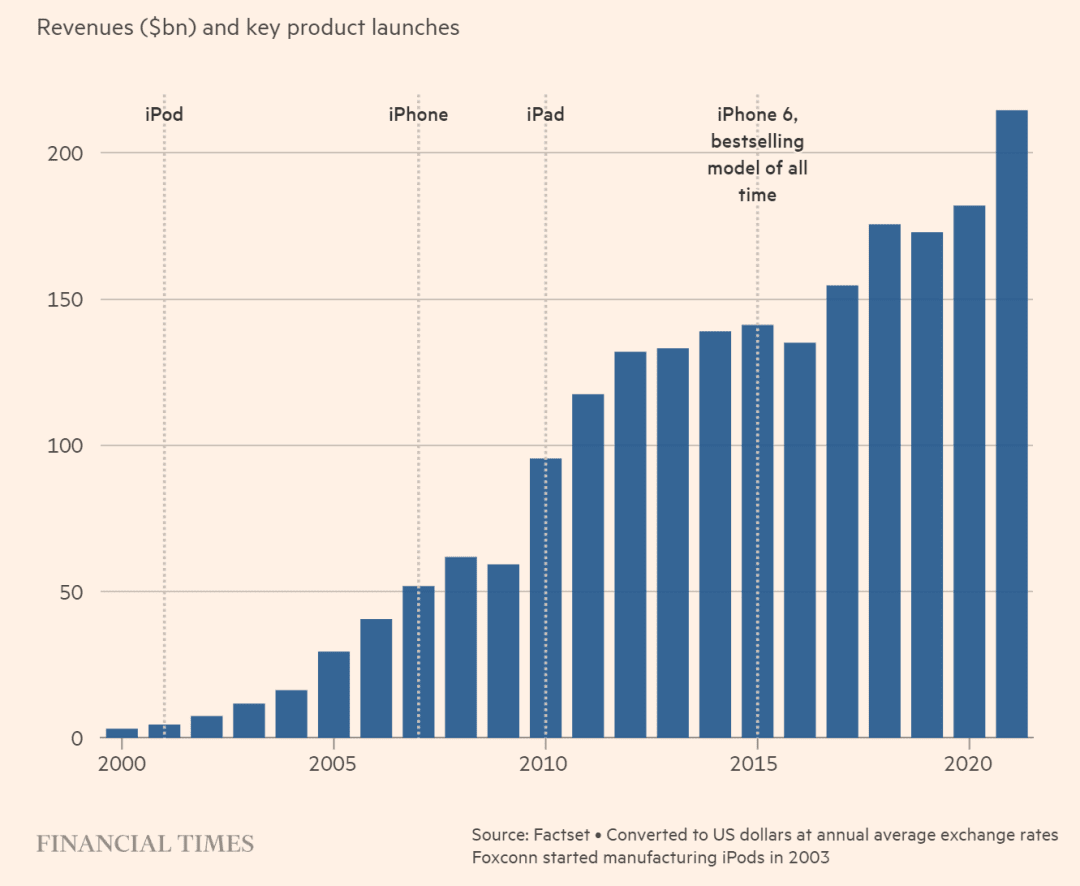
当然,与苹果的密切关系可能会给供应商带来巨大利益。2000年,中国台湾代工企业富士康开始组装糖果色iMac,当年富士康营收约为30亿美元,不到其对手伟创力(Flextronics)的一半。但十年过后,2010年,富士康营收达到了980亿美元,超过其五大竞争对手营收之和。数字化转型网www.szhzxw.cn
三、郭台铭重金押宝iPhone 4富士康的工人为何“不可替代”?
在中国鼓励创造就业、鼓励企业出海赢得订单、发展专业化技能的大背景下,苹果公司的生产创造力被进一步放大了。
中国各地方政府提供了一系列优惠政策,包括税收减免,以及为移民提供住宅公寓。中国的物流仓库、高速公路、机场等基础设施建设也十分完善。
富士康前高管Alan Yeung称,创始人郭台铭和库克会面后,富士康取得了2010年发布的iPhone 4和初代iPad这两款产品的订单。郭台铭在与库克会面中认为,库克低估了市场需求。
郭台铭非常自信,他承诺要建立两个新的厂区,一个在郑州(后来的“iPhone城”),另一个在成都(后来被称为“iPad城”)。
郭台铭说,富士康会承担这些投资,他们将会和政府合作建立这两个厂区,当苹果的产量达到足够规模时,富士康就会启用这些新厂区。
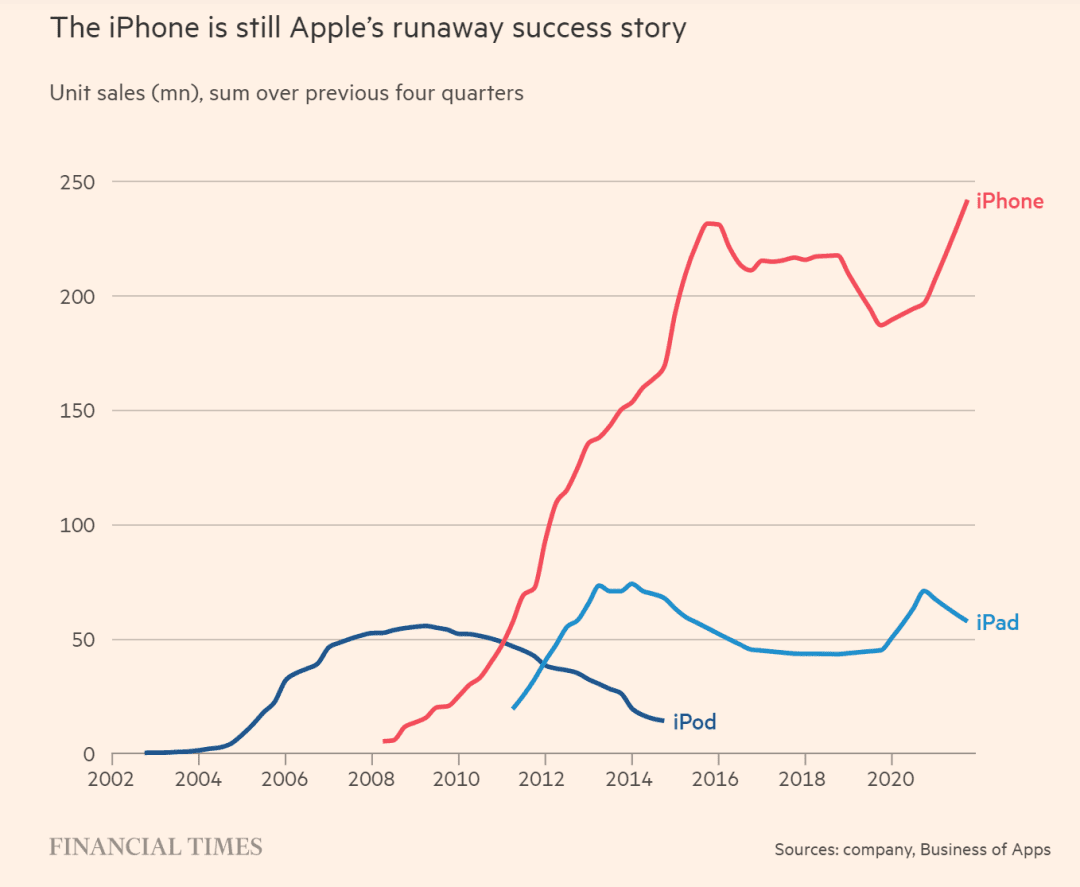
后来的事实证明,郭台铭的判断是对的。从2009年到2011年,苹果iPhone的出货量几乎翻了两番,达到了9300万部,第一代iPad在开售前9个月的出货量也达到了1500万部。
截至2010年10月,仅在深圳的富士康工厂中就有多达50万名工人在辛勤劳作。当时也有不少劳工矛盾的消息传出,“富士康员工跳楼事件”一度成为社会上舆论关注的焦点,苹果也在当时成为国际社会谴责的对象。
尽管如此,前往富士康报到的工人依然络绎不绝,不过由于工作比较乏味,留住工人是个问题。沃顿商学院运营学教授Ken Moon称,当时中国合同制造商的员工流动率超过300%,相当于一年内多次更换整个工厂的员工。
根据苹果自己的估计,自2008年起,苹果已经培训了至少2360万名工人,人数超过了中国台湾本土总人口。
富士康提供的劳动力资源,除了成本廉价(利润率低于3%),还具有规模大、住得近、灵活性强的特点。富士康可以在需要的时候快速提高产量,也可以在不需要的时候快速削减产量,而这些成本则不会转嫁给苹果。
此外,中国还可以提供具备一定技能组合的劳动力资源。在解释苹果为什么不能在美国大规模生产时,库克曾说道,就算把美国所有工具和模具制造商都邀请到他正在演讲的礼堂中,礼堂也装不满。但如果他在中国做这事,可能会需要几座城市来安置这些制造商。数字化转型网www.szhzxw.cn
四、“东”进“西”退中国制造业生态独一无二
苹果与中国政府的关系给双方都带来了好处。
三位曾与苹果及其竞争对手合作过的人士透露,其他智能手机制造商面临着很大压力,他们必须要跟上苹果的步伐,但又缺乏一套统一的战术。因此他们开始向中国供应商寻求帮助,提供知识产权以换取更快速的反应,从而缩小与苹果之间的差距。
苹果的一系列供应链体系构建行为,帮助中国供应商获得了更多订单,也帮助供应商提升了对尖端制造业的理解。与此同时,西方的电子制造业却萎缩了。
彭博行业研究(Bloomberg Intelligence)数据显示,中国智能手机产量占全球智能手机制造总量的70%,而中国制造的技术复杂度甚至让很多受访专家都难以理解。科技咨询公司D/D Advisors创始人Jay Goldberg曾说道:“中国拥有一个高度发达的制造业生态系统。”
中国在制造领域的主导地位在一定程度上是可以量化的,2021年接受审计并通过ISO 9001质量管理体系认证的中国企业数量超过了42万家,约占全球总数的42%,印度这一数字为3.65万,美国则为2.55万。
这种数量级上的优势重塑了全球经济,并提升了中国的全球影响力。苹果借助这种力量主导了科技行业。
但现在,一次“清算(reckoning)”迫在眉睫。
Goldberg认为,对于苹果来说,放弃这个供应链系统是十分困难的。这不是说在其他地方建厂这么简单的事情,因为即使你在中国之外的地方建立的工厂,这家工厂的分包商和供应商依然来自中国大陆。
举个很简单的例子,如果富士康需要安装声波焊接机(一种能将不同金属或塑料通过超声波能量进行融合的设备),他可以很容易地召集任意数量的公司并雇佣劳动力来做这件事。
“中国有各类工作的分包商,有各类细分专业领域公司,全世界没有第二个地方有这样的条件。”Goldberg说道。
在他看来,中国提供的不仅仅是劳动力,而是一个经过多年建设的完整生态系统。这个系统具体的细枝末节很难描述清楚,但苹果和他在中国的合作伙伴们都对此了如指掌。
《误解中国(Getting China Wrong)》一书的作者Aaron Friedberg认为,20年前,美国政府鼓励企业与中国接触,库克当时做的并没错,但近10年来,在中美关系日益紧张的情况下,库克依然加倍下注中国。
HG不论如何,在不少受访者看来,苹果当下都是“无路可逃(no way out)”的。
下半部:层层重压逼迫苹果另谋他处但中国似乎仍是唯一解
去年12月,苹果公司CEO库克在美国国会私下会见了资深议员Bill Clark,他们讨论的重要议题之一,就是苹果公司与中国的关系。
2022年11月前后,新冠疫情带来的防控压力,对富士康郑州工厂的生产经营产生了一定影响,部分工人选择放弃富士康的工作并返乡。
当时一些工人的境况受到了外媒的“高度关注”,库克在美国国内受到了一定的舆论压力,一些记者向库克抛出了极为尖锐的问题,库克均予以回避。美媒《华尔街日报》的一篇文章标题将这次的国会山会面描述为“库克与中国相关的糟糕一天(Tim Cook’s Bad Day on China)”。
除了工人方面的影响,在历来销量火爆的假日季期间,iPhone出货量约为7800万部,缺口约为600万部,这与富士康郑州工厂生产受到影响有关。
但相比疫情这种短期风险,更令美国人无法忽视的点是,美国最有价值的品牌,正受制于中国。
目前苹果在美国两党内部都受到了高调批评,共和党议员Josh Hawley指责苹果过度依赖中国。
苹果正面临政治、战略和投资者方面的压力,他们要求苹果减少对于中国制造的依赖。在特朗普政府期间,这种压力表现为关税方面的威胁,而拜登政府通过切断中国企业获取美国先进半导体技术的渠道,来表明自己的立场。
但现在问题就在于,苹果和中国的关系短期看来仍然是牢不可破的。苹果在中国的供应链体系异常复杂且庞大,厂区规模甚至堪比很多西方的城市。中国供应链每年为苹果产出价值3160亿美元的各类苹果产品,没人知道要如何彻底改变这种局面。
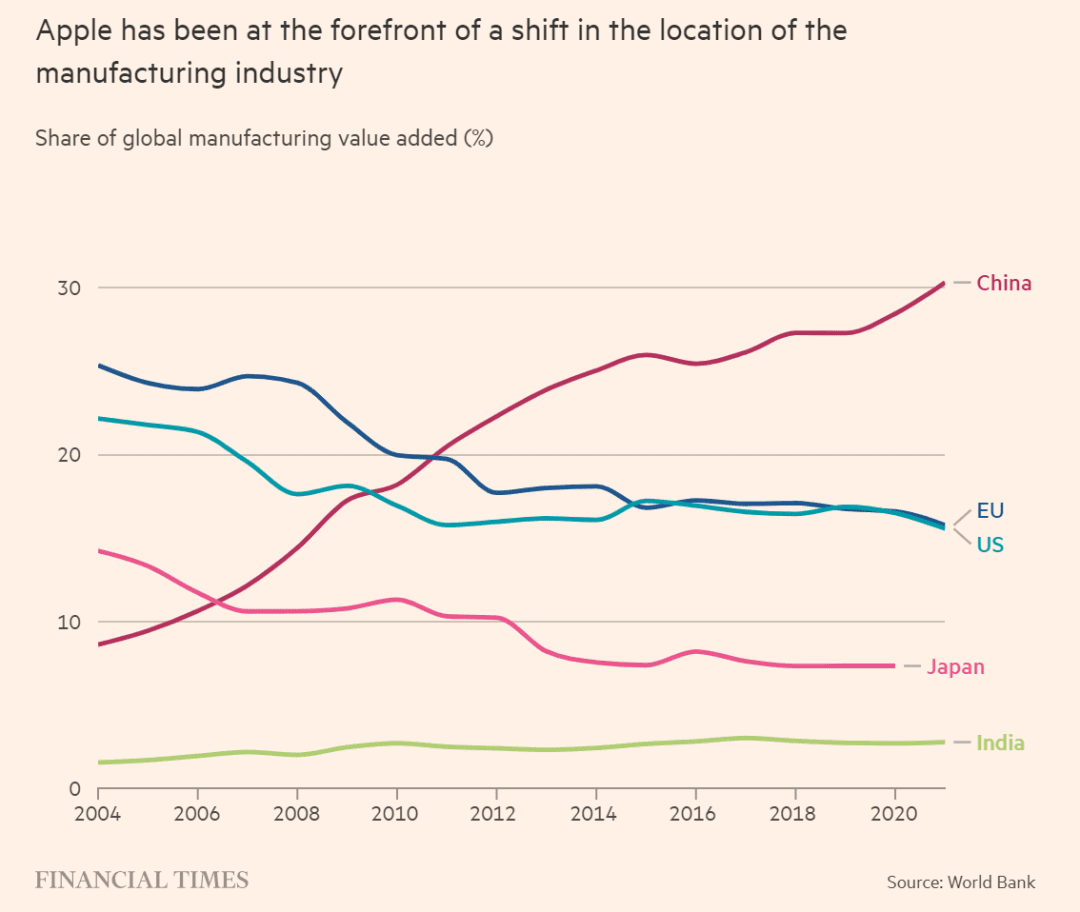
前科技行业分析师Brian Blair曾说道:“除非你亲眼看到,否则你根本无法理解富士康的工厂有多大。”Blair曾多次参观苹果在中国的工厂,他说:“跟美国人讲富士康工厂有多大,就像对一个村民描述纽约市有多大。”数字化转型网www.szhzxw.cn
二十多年来,苹果在中国建立的供应链体系是其在全球成功的基础,库克则是背后一手操盘的“运营大师”,库克一直以注重细节而闻名,这些细节的成功也让苹果的“端到端管理”令整个科技界艳羡不已。
但是,苹果每年依赖中国实现产品更新,如今正成为其最大的软肋。
一位前苹果工程师称,其实从2014年开始,苹果就一直在将部分业务转移到中国以外的地方,但进展缓慢。苹果需要找到实现生产自动化的方法,以克服劳动力成本不断上升的问题。
他认为,未来20年,中国仍将主导劳动力市场和科技产业的生产制造。
一、三年吃到四分之一iPhone订单?印度能否成苹果第二落脚点
今天没有任何一家大型科技公司在中国的业务收入能与苹果相提并论。Meta和谷歌的大部分业务营收依赖于数字广告,亚马逊在中国市场几乎没有实际业务,而微软在中国市场的硬件收入大约占总营收的6%。
即使是手机销量超过苹果的韩国巨头三星,其业务受中国市场的影响也要小得多。在华为、小米、OPPO、vivo等本土手机品牌快速发展的时间里,三星手机在中国市场的份额从2013年的20%暴跌至1%以下,三星于2019年关闭了在中国的手机工厂。
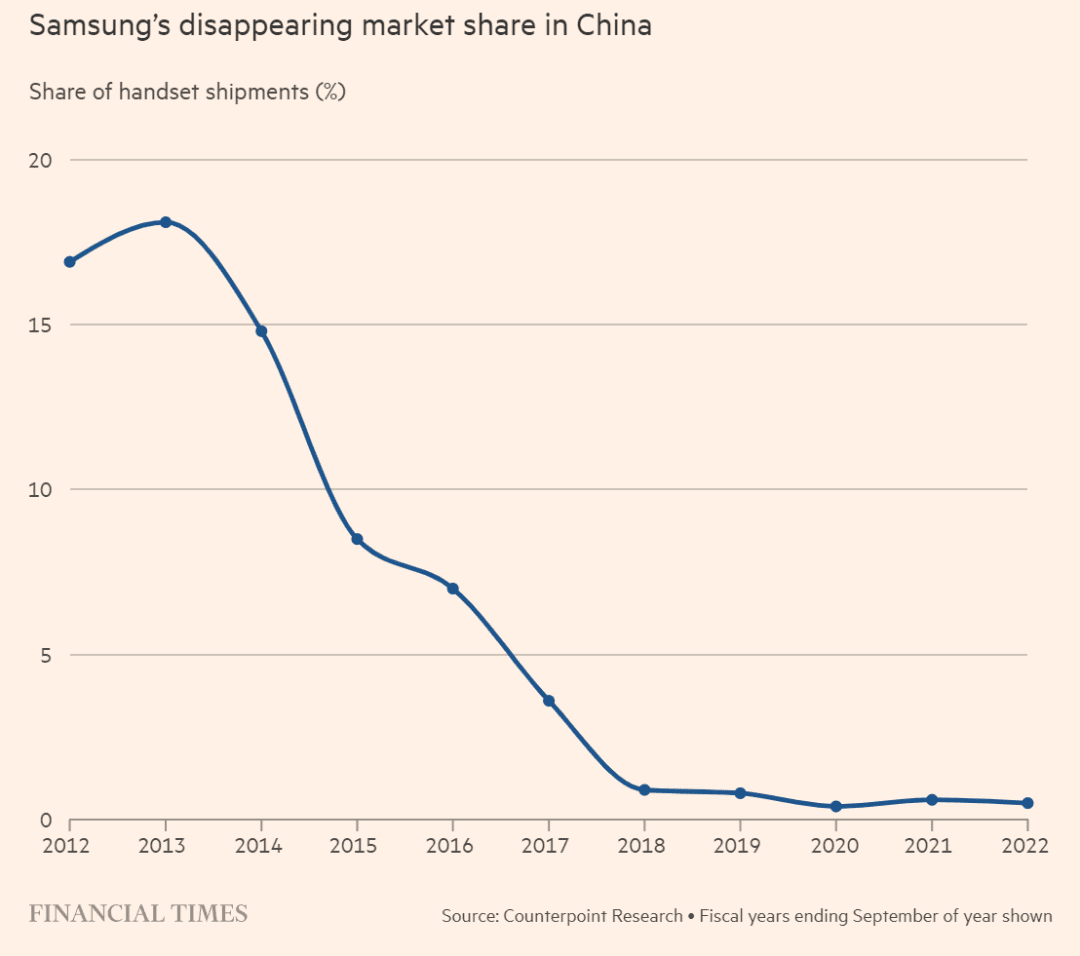
市场研究机构Counterpoint Research数据显示,三星目前有超过3/4的手机都是在阿根廷、越南等6个国家生产制造的,有不到1/4的手机制造外包给了中国的厂商。
相比之下,苹果几乎所有的硬件产品都是在中国制造的。苹果会对全球供应链中150万名工人每周的工作进行监督,这些工人绝大多数都在中国,但苹果在中国的直接雇员只有1.4万人。
最有可能成为中国竞争对手的国家是印度,印度的总人口数量预计将在今年超过中国。
印度是一个以英语为第二官方语言的国家,同时与中国相比,印度面临的地缘政治风险较小。随着印度中产阶级的不断壮大,印度可能在未来几十年内成为一个巨大的增量市场。
不过根据Counterpoint Research数据,印度目前在iPhone生产中的产量占比只有5%左右。
得益于三星、中国智能手机品牌,以及富士康、和硕等苹果供应商在印度的建厂,2022年印度已经占据了全球智能手机产量的16%,约为2亿部,这一数字在2014年仅有2%。
自2017年以来,苹果一直在印度生产低端iPhone,从去年秋季的iPhone 14系列起,印度才开始生产高端旗舰iPhone。摩根大通预计,到2025年,印度可能会占到iPhone总产量的1/4,远超目前5%的水平。
CyberMedia Research行业情报组负责人Prabhu Ram认为,长期来看,印度希望建立完整的苹果供应链体系。
他指出,最近几个月,印度第一大财团塔塔(Tata)正计划在印度的泰米尔纳德邦(Tamil Nadu)的iPhone工厂增加数万名新员工,扩大iPhone代工业务,并以此为契机吸引更多iPhone供应商入驻当地。
Ram说道:“这不仅关系到库克能够在任期内留下什么,也关系到印度总理纳伦德拉·莫迪(Narendra Modi)能够留下什么。”
二、印度越南为什么总是“扶不起来”?中国制造难逢对手
虽然印度在iPhone代工业务上不断取得进展,但一些供应链专家认为,印度iPhone“制造业”的增长数字有些夸大其词,并非事实。数字化转型网www.szhzxw.cn
苹果供应商在印度建立的大多数业务被称为FATP——最终组装、测试和包装(Final Assembly,Test and Pack),这是一个劳动力密集型业务,使用从中国大陆空运过来的零部件进行组装生产。
彭博行业研究分析师Steven Tseng提到和硕和富士康会将工厂搬到印度,但是他们的供应商却不会,因为印度缺乏完整的供应链体系,这些供应商需要的所有东西几乎都要从中国进口。
尽管去年印度生产了2亿部手机,但这些手机跟苹果iPhone产品的质量要求完全不在同一水平线上。这2亿部手机中,最热销的型号售价通常都在250美元以内,而iPhone的平均售价接近1000美元。
也正因为更高的质量要求,生产iPhone需要更为复杂的自动化设备和更高的劳动强度。
一位前微软高管说:“这就像在汽车领域,把起亚(Kia)、索兰托(Sorento)和法拉利(Ferrari)进行比较。”iPhone是一种在技术上更为先进、在制作工艺上更为精巧的产品。
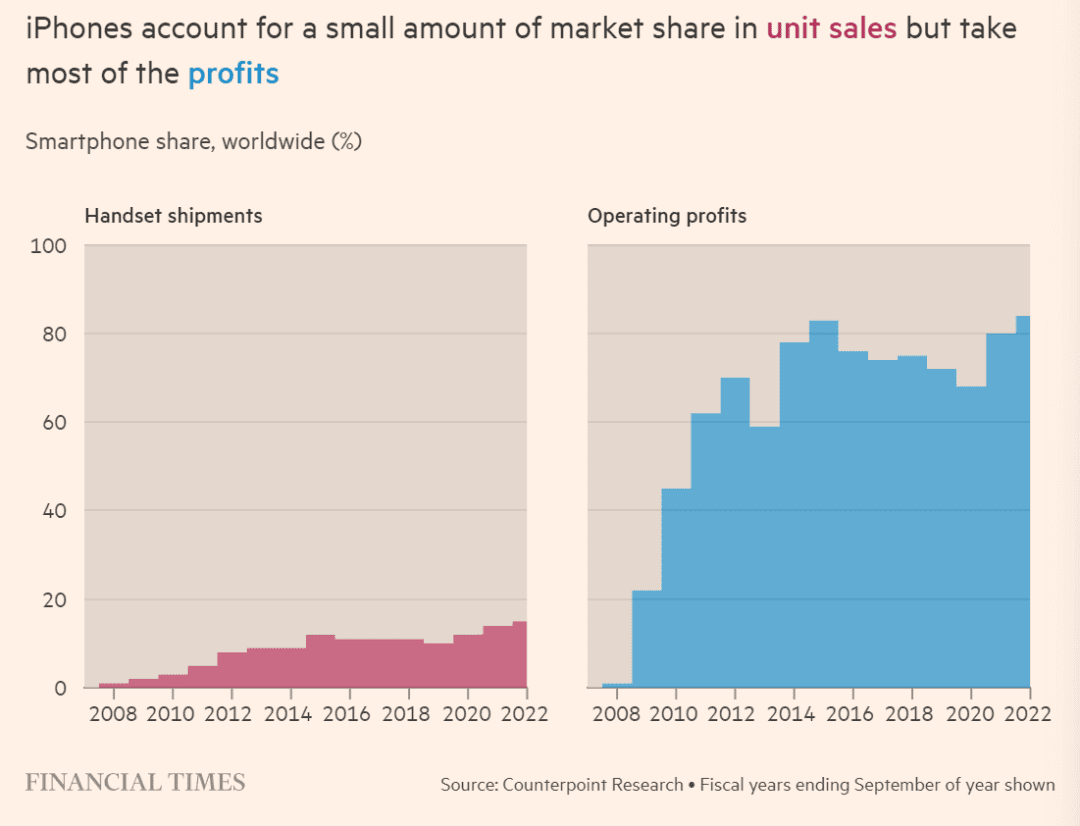
专家们担心印度缺乏与中国相同的具有各种技能组合的充足劳动力资源、基础设施条件以及政府的大力支持,而这些因素正是中国对苹果产生巨大吸引力的根本。
印度的基础设施建设显然没有中国完善,交通、公共设施、通讯方面都可能存在一系列问题,而印度的劳动力质量能否做到与中国相当,仍然要画上一个很大的问号。
越南看起来也是一个有一定吸引力的选项,今天越南工人的平均工资还不到中国工人的一半,摩根大通预计,2025年越南将占到AirPods产量的大部分、iPad和Apple Watch产量的20%,以及MacBook产量的5%。
不过苹果之外的其他公司此前在越南进行产品生产制造,走得步履蹒跚,并不顺利。2013年,微软收购诺基亚手机业务后,诺基亚关闭了他们在中国的手机工厂,并将生产整合到越南,以期削减成本、提高效率。
但很快,微软就遇到了有组织犯罪、运力不足、异常天气变化导致贸易港口关闭等问题。
这位前微软高管称,想让越南的业务按照中国的方式来运行,通常会遇到难以置信的挑战,很多基础设施要么非常新,甚至还没得到检验,要么就是根本没有基础设施。
他认为,越南距离打造极具竞争力的技术制造业,还有很漫长的路要走。
他提到微软在零部件采购方面遇到了很大挑战,因为他们所有的二级、三级供应商仍然全都在中国,他们必须将大量的半成品从中国运往越南进行最终组装。
专家指出,即使越南能够提高运营质量,这个国家本身还是太小了,完全无法满足苹果当前的业务规模所带来的需求。
据估算,中国工人数量甚至比越南的人口还多,根据中国国家统计局数据,2021年,中国农民工数量为2.93亿,而越南总人口仅有1亿。
《为iPhone而死(Dying for an iPhone)》一书作者Jenny Chan提到在中国大家对组装苹果产品的工作是有兴趣的,很多村民和学生都会坐大巴去工厂打工。
她认为这是非常重要的,因为组装iPad或者iPhone是非常枯燥的、重复性的工作,每一个人都是一台巨大机器中的一个小齿轮,这种工作不是谁都愿意做的。
三、中国大陆果链迅速崛起,失去“控制权”或导致苹果创新放缓
尽管苹果正在努力让供应链变得多样化,但它与中国的关系仍在变得越来越紧密。
多年来,苹果一直在与中国大陆企业建立更加紧密的联系,以换取更自由的运营特许权。
据The Information报道,2016年库克曾与中国签下一项为期5年的协议,承诺支出超过2750亿美元帮助推动中国经济发展和劳动力就业。
此后,苹果向立讯精密、歌尔股份、闻泰科技等中国大陆代工厂商提供了利润丰厚的订单,这一定程度上削减了富士康、纬创、和硕这些中国台湾代工厂商的订单。
摩根大通预测,到2025年,中国大陆企业在iPhone制造业中所占份额将从2022年的7%提升至24%。
立讯精密是最主要的受益者之一,自2017年赢得AirPods订单以来,立讯精密的营收已经从2016年的不到20亿美元飙升至310亿美元,翻了近16倍。立讯精密目前还拿到了Apple Watch和iPhone的订单。
2017年,库克曾在立讯精密的一条产线上参观,当时他被问到苹果是否会将供应链转移到印度和东南亚,库克说:“我们不会那样做,生产我们的产品需要深厚的工程技能、灵活的供应链管理和极高的质量标准,我们不会为了降低成本而转移生产。”
然而,苹果正面临失去对供应商生产流程创新的部分控制权的风险。其中一个原因是,苹果不再像以前那样拥有那么多的供应商设备了,拥有大量供应商设备曾一度让苹果拥有对供应商前所未有的控制权。
苹果在中国的“长期资产”价值在2018年达到了133亿美元的峰值,但在随后几年里,这一数字几乎砍半,如今已经降低至73亿美元。曾在中国工作过一段时间的苹果工程师称,在2015年iPhone销量达到巅峰后,苹果乐于更多地依赖供应商的设备来节省成本。
除了设备掌控力的下降,这几年新冠疫情也给苹果的新品研发造成了不小的困扰。分析师Blair提到苹果在供应链技术上取得优势,很大一部分要依赖总部的顶尖人才到中国供应商的工厂中去进行协同配合。在疫情之前,这种往来是家常便饭,以至于苹果每天都要预定50个从旧金山到上海的商务舱座位。
但从2020年以来,苹果一直无法向中国派遣大批工程师。
两位前苹果制造工程师提到苹果的中国工程师们确实加快了脚步并证明了自己。其中一位工程师说道:“苹果为中国制造业提供了首屈一指的培训基地,同时苹果也会提高这些中国工程师的工资,所以尽管竞争对手频频想要挖走他们,苹果仍然保住了团队的大部分成员。”
然而,两位熟悉苹果运营情况的人士称,放弃控制权可能会导致创新放缓,甚至是知识产权的泄露。其中一位知情人士说道:“苹果总部的人现在任由中国员工发挥主导作用,中国员工已经完全控制了产品的生产。”
苹果在最近提交给美国证券交易委员会(SEC)的年报中也提示了这种风险,称“对于员工旅行的限制已经对供应链产生了不利影响,并导致新产品生产推迟。”
四、绕了一大圈,苹果最后还得回到中国
一些专家认为,中国开发的专业技术是难以取代的,苹果别无选择,只能保留他们在中国的大部分制造业务,并承担经济和政治成本。
当然,这些并非板上钉钉的事。从中期来看,随着疫情在中国的发展进入新的阶段、中国经济的快速恢复,全球供应链的压力会有所缓解。虽然中美关系仍旧处于紧张状态,但对于两大经济体完全“脱钩”、走上相互竞争的道路,各方仍存在不同看法。
供应链风险管理分析公司Resilinc的CEO Bindiya Vakil认为,中美完全脱钩几乎是不可能的,或者说至少近几十年都不太可能发生。
她认为,尽管很多公司都像苹果一样,试图在中国以外实现供应链多元化,但它们通常都采用的是“中国+1(China+1)”战略,而非全面退出中国,因为其它地方根本就没有相同规模和质量的供应链体系。
她说:“如今几乎每个零部件都能在中国找到一条供应链,要么这些零部件直接就是在中国制造的,要么这个零部件的一些组成部分是由中国制造的。”
“甚至向上追溯到金属冶炼环节,大部分冶炼厂都位于中国。各种经过提纯、加工的金属、矿物质和衍生品进入全球各地的产品中,而这些原材料的唯一来源就是中国。”Vakil补充说道。
彭博行业研究硬件分析师Woo-Jin Ho预计,到2030年,苹果只会将10%的iPhone生产转移到中国以外,如果苹果行动更积极的话,这一比例最多可能会达到20%。
Woo-Jin Ho说道:“看看中国的智能手机制造中心,我真的想不到哪里可以复制它们。”
富士康劳工研究院Chan预测,随着媒体关注度的下降,苹果后续将悄悄增加在华投资。“从受过中等教育、技术熟练的工人,到提供前沿知识专长的、真正高水平的工程师和博士,中国的优势太多了。苹果想要找到与中国规模相当的人力资源和基础设施,太难了。”她说道。

数字化转型网www.szhzxw.cn
翻译:
Recently, the Financial Times published an in-depth report with more than 10,000 words. It interviewed 25 supply chain experts, including 9 former Apple executives and engineers, to dig into the untold details behind Apple’s building of the supply chain empire and try to find a solution to the looming deep “crisis” in Apple’s supply chain.
Over the past two years, BOE, Sainty Optical, Zhaoyi Innovation and other mainland enterprises have entered the core parts hinterland of Apple supply chain. On the other hand, Apple’s end-product manufacturing business has been transferred to Southeast Asia and India frequently. The competition behind the changes in the fruit chain is always one of the most eye-catching and brutal games in the global technology industry.
With plenty of detail and data, the FT article recounts how Apple has spent two decades and billions of dollars building an ecosystem of unprecedented complexity in its supply chain, while arguing that the company today faces a “rekoning”.
Given the current domestic political environment and tendencies in the US, Apple is under intense pressure from investors and US politicians to “decouple” from China and accelerate its strategy of diversifying its supply chain. This slightly fragmented state has left Apple at a dangerous crossroads.
How does an Apple engineer keep a Chinese supplier CEO speechless just to find a “line of code” question?
How did Apple buy 10,000 of the most advanced CNC machines in the world just to make the MacBook Pro all-in-one? How can Apple bring reputation and wealth to the “fruit chain” while still keeping control? And how did Gou earn Cook’s respect through his critical judgment?
Moreover, what are the fundamental reasons why India and Vietnam are struggling to replace China in manufacturing? Why is Apple’s technology innovation slowing down? Why has Apple lost control of its suppliers? What are the underlying causes of Apple’s supply chain crisis?
All of these, we can find detailed answers in this article.
It should be noted that for most of the issues, the article gives conclusions and views from the perspective of Americans, some of which may be different from our common understanding. However, this perspective and way of thinking may bring some new inspirations for domestic technology enterprises to go overseas.
In the first of two parts, the FT explores how Apple consolidated its presence in China to create the most successful consumer electronics product in history. The second part focuses on whether Apple can get out of its current predicament.数字化转型网www.szhzxw.cn
Here is the full FT in-depth report, compiled in full (some content has been edited unchanged) :
The first half: Because of the supply chain, because of the supply chain “trapped”, Apple’s fate is deeply linked to China
Apple has spent more than two decades and billions of dollars building a supply chain empire of unprecedented complexity. Today, a reckoning is coming.
At its peak in 2007, when Nokia had 900 million users worldwide and a market share of more than 40 percent, Forbes magazine ran a cover story on Nokia that year, asking, “Who can catch the king of mobile phones?”
But what’s fascinating about history is that this was the same year Apple founder Steve Jobs unveiled the original iPhone.
Now, 16 years later, the iPhone has 1.2 billion users worldwide, and the story of how Apple unseated the former Finnish mobile phone giant Nokia is well known. It was reported at the time that Nokia’s leadership lacked a deep understanding of the importance of software to keep up with Mr. Jobs and Jony Ive, the talented designer.
But it wasn’t just multitouch and full-screen features that were behind the original iPhone’s success. Apple surpassed Nokia in hardware and production even before the iPhone hit the market, an advantage it achieved by betting heavily on Chinese manufacturing.
Supply chain researcher Kevin O ‘Marah well remembers that in mid-2007, Apple suddenly vaulted to No. 2 on the annual top 25 list of the best companies in global supply chains.
‘Everyone was shocked,’ he recalls, ‘because Apple’s supply chain had such a bad reputation. It was incredible to get this ranking.’
The change in the supply chain rankings is actually a precursor to profound changes in Apple’s business. For the next seven years, Apple topped the list of the best companies in the global supply chain. During that time, Apple has become the world’s most valuable company, but it has also placed itself at the center of geopolitical tensions.
Researcher O ‘Marah began to see clearly that Apple’s “outsourcing” was not the complete “outsourcing” of production to China that people thought it was. Instead, Apple is building a supply and production system so complex, deep and costly that its own fortunes have become inextricably tied to China.
For the past 15 years, Apple has been sending its top product designers and manufacturing design engineers to China, where they spend months at a time in the factories of Apple suppliers.
These Apple employees play a crucial role in designing new manufacturing processes, monitoring the details until production is up and running, and keeping an eye on compliance with suppliers.
In addition to investing heavily in human resources, Apple has spent billions of dollars buying custom equipment for suppliers and developing some exclusive expertise. Apple’s competitors don’t even understand these technologies, let alone catch up.
Apple’s supply chain system profoundly affects Apple and China. Researcher O ‘Marah believes that the technological capability of Apple’s supply chain system in China is not endogenous to China, but the product of Apple’s entry into the Chinese market and the establishment of technological competitiveness.
He was succeeded as CEO in 2011 by Tim Cook, the man at the heart of Apple’s supply chain. He moved production of Apple products from the United States to China, where he built a highly efficient supply chain and laid the foundation for Apple’s rise.
However, every coin has two sides. China has also become Apple’s biggest “weakness”, and Apple’s dependence on the Chinese supply chain is extremely deep. For risk-averse Apple, an overly centralised supply chain is not necessarily a good thing.
More than 95% of Apple’s iphones, AirPods, Macs and ipads are now made in China, and the country accounted for about $74 billion of Apple’s revenue last year, or about one-fifth of its total. In contrast, Samsung, its old rival, has slashed its manufacturing operations in China.
Global production capacity distribution of Apple’s iPhone, AirPods, Mac and iPad in 2020-2024 (Forecast). Source: The Financial Times
Apple has continued to invest in China and solidify its relationship with the country in recent years, despite some tensions between the two countries.
But given the current political environment and tendencies in the U.S., Apple and its operator, Tim Cook, are under intense pressure from investors and U.S. politicians to “decouple” from China and accelerate diversification of its supply chain, which is already made in India and Vietnam.
The Financial Times spoke to 25 supply chain experts, including nine former Apple executives and engineers, about the kind of supply chain challenge Apple now faces. But in the end, they failed to come up with an answer, and the consensus among these experts is that Apple has few viable options right now and won’t have any in the near term.
In an interview, a former Apple veteran identified Cook as the main person responsible for the current “terrible” state of the supply chain, noting that it is not just the top level that is responsible, but also the leaders of the supply chain, which is led by the “supply chain guru” Cook.
1. Not bad money! There’s not enough CNC machines in the world for Apple to spend $7.3 billion in three years on equipment
Going back to the early days of its supply chain, Apple is not the first American computer company to manufacture offshore in China. By the time Mr. Cook arrived at Apple in 1998 to run its computer-making business, companies like Hewlett-Packard and Compaq were already well established in China.
But Apple’s approach is decidedly more unique in that it does not use off-the-shelf components, but customizes them. Apple designs the manufacturing of these components itself and assembles these customized components into extremely complex systems with unprecedented scale and flexibility.
In the 2007 supply chain ranking, Procter & Gamble, Toyota and Wal-Mart all had at least twice the peer ranking score of Apple, but when it comes to inventory turns, Apple is the standout.
Cook has described inventory as a ‘fundamentally evil’ fundamentally evil. Cook would compare electronics to dairy products that go bad in a matter of days.
Of course, Cook is not a mere talker. Apple’s inventory turnover rate is 2.5 times that of Nokia and 12 times that of Coca-Cola.
Apple invests heavily in its manufacturing process, building a technical moat around its innovations in manufacturing, while Apple’s competitors are still busy giving their suppliers specifications and saying, “Build me this.”
O ‘Marah, the researcher, says Apple spends more on equipment to its suppliers than any other company in the world. In reality, Apple is simply buying its own devices and putting them in someone else’s factory.
As iPhone production grew in the early years, the value of Apple’s “long-term assets” in China, which are mainly used to manufacture devices, soared from $370 million in 2009 to $7.3 billion in 2012. At the time, that was more than the value of all of Apple’s construction assets and retail stores combined.
With such a large investment of capital and equipment, Apple has been able to achieve advanced production technologies that no one else could imagine. In 2008, for example, Apple released the MacBook Pro with an all-in-one aluminum body, a process that was a major breakthrough in high-end manufacturing at the time.数字化转型网www.szhzxw.cn
Mr. Ive, the Apple designer, once described the process as achieving “precision unheard of in the industry.”
The process is done using CNC machines, which allow designers to easily create complex parts using 3D image files. The machines had been around for decades, but they cost more than half a million dollars each and were usually used to make only a handful of prototypes.
According to three former Apple manufacturing engineers, Apple bought more than 10, 000 CNC machines to implement what Mr. Jobs called “a whole new way of making laptops.”
It wasn’t long before Apple began using the same technology for its iPhone and iPad. At the time, Apple signed a deal with Japan’s Fanuc, the world’s largest maker of specialist CNC systems, under which it would buy all of Fanuc’s CNC machines over the next few years, according to two people familiar with the deal.
Subsequently, Apple continued to search for advanced CNC machines from other manufacturers around the world. There were also not enough CNC machines in the world to meet Apple’s production needs, says a person familiar with the matter. “In 2009, our business started to grow exponentially. The first year we made 10,000 parts a day, the next year we made 100,000, then 500,000, then a million… Money is never an issue, per se.”
2. Apple Engineers Pore over “Every line of Code”
Next, the FT explores some of Apple’s principles and practices when it comes to supplier selection.
Apple follows a strict process when it comes to finding suppliers.
It is common for an Apple engineer from California to meet with the CEO of a Chinese component supplier and then ask him technical questions until he can’t answer them, according to five people familiar with Apple’s China policy.
The Apple engineer would then be taken to the next manager for a new round of “questions and answers,” in which the Apple engineer would drill down to the employee closest to the answer to the question, perhaps writing a line of code that the Apple engineer wanted to see.
After hours of questioning and negotiation, Apple engineers would get suppliers to commit to mass producing the customized parts Apple needed, effectively mastering their technology roadmap.
According to one former chief operating officer, Apple has always used this “first principles” approach to go backwards to understand everything that might go wrong, from cost to design to volume production.
‘Apple engineers keep asking questions because when they ask enough questions, they can figure out what the problem is and fix it,’ this person said. There is never a detail that Apple isn’t interested in.
Another former Apple executive said the practice came directly from Cook, who would never let go of rivets that cost less than a penny per device.
“When you had a discussion with him [Cook], he would find a point in paragraph 7 on page 30 and ask for more detail, and it was impressive how he always saw the detail from the whole and then from the detail back to the whole.”
These technologies allow Apple to push suppliers beyond their current capabilities, and that influence will grow as Apple grows: the opportunity to make a component that goes into hundreds of millions of products is too good to pass up.
Three former Apple veterans say they were shocked by how much leverage they had in negotiations. Supply chain employees would be talked to until they turned blue, eventually telling Apple engineers they couldn’t do what Apple wanted. “But when both say ‘no,’ someone has to cave, and it’s never going to be Apple.”
Of course, a close relationship with Apple could bring huge benefits to suppliers. When Foxconn, the Taiwanese contract manufacturer, started assembling candy-colored imAcs in 2000, its revenue that year was about $3 billion, less than half that of rival Flextronics. But a decade later, in 2010, Foxconn had revenues of $98bn, more than its five biggest rivals combined.
Foxconn’s revenue from 2000 to 2021 and Apple’s new product release node. Source:
3. Terry Gou is betting big on the iPhone 4. Why Foxconn Workers Are ‘irreplaceable’
Apple’s creativity has been amplified by China’s efforts to create jobs and encourage companies to go overseas to win orders and develop specialized skills.
Local governments in China have offered a range of preferential policies, including tax breaks and residential apartments for migrants. China’s logistics warehouses, highways, airports and other infrastructure construction is also very perfect.
Alan Yeung, a former Foxconn executive, said that after a meeting between founder Terry Gou and Cook, Foxconn secured orders for two products, the iPhone 4 and the original iPad, which were released in 2010. In his meeting with Cook, Gou argued that Cook had underestimated demand.
Gou was so confident that he promised to build two new factories, one in Zhengzhou (later “iPhone City”) and another in Chengdu (later “iPad City”).
Gou said Foxconn will cover the investment, that it will work with the government to build the two plants, and that Foxconn will open the new plants when Apple’s production reaches sufficient scale.
Mr Gou’s judgment has since been proved right. Apple’s iPhone shipments nearly quadrupled from 2009 to 2011, to 93 million, and the first iPad shipped 15 million units in its first nine months on sale.
Sales statistics of Apple iPhone, iPad and iPod over the years. Source: The Financial Times
As of October 2010, as many as 500,000 workers were toiling away at Foxconn’s Shenzhen plant alone. At that time, there was also a lot of news about labor conflicts. “Foxconn workers jumping off the building” once became the focus of public opinion, and Apple also became the target of international condemnation.
Still, workers continue to report to Foxconn, though retention is a problem given the tedium of the work. At the time, staff turnover at contract manufacturers in China was more than 300 per cent. The equivalent of replacing an entire factory staff several times a year. According to Ken Moon, an operations professor at Wharton.
Apple has trained at least 23.6 million workers since 2008. More than the entire population of Taiwan, according to its own estimates.
As well as being cheap (profit margins below 3 per cent), Foxconn offers Labour that is large, close-quarters and flexible. Foxconn can ramp up production quickly when it needs to and cut it quickly when it doesn’t, and those costs won’t be passed on to Apple.
In addition, China can provide a labor pool with a certain skill set. Explaining why Apple couldn’t mass produce in the US, Mr Cook once said that the auditorium where he was speaking wouldn’t be able to accommodate every tool and mould maker in the US. But if he did it in China, it would probably take several cities to house the manufacturers.
4. “East” advances and “west” retreats. China’s manufacturing ecosystem is unique
Apple’s relationship with the Chinese government has been mutually beneficial.
Three people who have worked with Apple and its rivals say other smartphone makers are under pressure to keep up but lack a unified approach. So they turned to Chinese suppliers to help them close the gap by providing intellectual property in exchange for faster response time.
Apple’s construction of a series of supply chain systems has helped Chinese suppliers obtain more orders and improve their understanding of cutting-edge manufacturing. Meanwhile, electronics manufacturing in the West has shrunk.
China accounts for 70 per cent of the world’s smartphone manufacturing, according to Bloomberg Intelligence. And the technological sophistication of Chinese manufacturing is difficult even for many experts surveyed to understand. “China has a highly developed manufacturing ecosystem,” said Jay Goldberg, founder of technology consultancy D/D Advisors.
China’s dominance in manufacturing is to some extent quantifiable, with the number of Chinese companies audited and certified to ISO 9001 quality management system in 2021 exceeding 420,000, accounting for about 42 per cent of the global total, compared with 36,500 in India and 25,500 in the US.
This order of magnitude has reshaped the global economy and boosted China’s global influence. Apple rode that power to dominate the tech industry.
But now a “reckoning” is imminent.
Goldberg said it would be difficult for Apple to abandon the supply chain system. It’s not as simple as building a factory somewhere else. Because even if you build a factory outside of China. The subcontractors and suppliers for that factory are still from mainland China.
As a simple example. If Foxconn needed to install sonic welders (devices that fuse different metals or plastics with ultrasonic energy). He could easily call on any number of companies and hire labor to do it.
“There is no other place in the world where you have subcontractors for all kinds of work, companies that specialize in all kinds of niche areas.” “Goldberg said.
In his view, China offers more than just labor, but an entire ecosystem built over many years. The details of the system are hard to describe, but Apple and its partners in China know all about it.
Aaron Friedberg, author of Getting China Wrong, says Cook did the right thing 20 years ago when the U.S. government encouraged companies to engage with China. But he has doubled down on China over the past decade amid growing tensions between the two countries. In any case, many respondents see Apple as having “no way out” right now.
The second half: Pressure on Apple to look elsewhere but China still seems to be the only solution
Last December, Apple CEO Tim Cook met privately with senior Congressman Bill Clark on Capitol Hill. One of the key topics they discussed was Apple’s relationship with China.
Around November 2022, the COVID-19 prevention and control pressure had a certain impact on the production and operation of Foxconn’s Zhengzhou plant, and some workers chose to give up their jobs at Foxconn and return home.
At that time, the situation of some workers was “highly concerned” by foreign media, and Cook came under certain pressure of public opinion in the United States. Some journalists threw extremely sharp questions to Cook, but Cook avoided them all. A headline in the Wall Street Journal described the Capitol Hill meeting as “Tim Cook’s Bad Day on China.”
In addition to the impact on workers, about 78m iphones were shipped during the traditionally strong holiday quarter, a shortfall of about 6m related to production disruptions at Foxconn’s Zhengzhou plant.
But more compelling than the short-term risk of a pandemic is the fact that America’s most valuable brand is at the mercy of China.
Apple has come under high profile criticism from both sides of the aisle, with Republican Congressman Josh Hawley accusing the company of relying too much on China.
Apple is under political, strategic and investor pressure to reduce its reliance on Chinese manufacturing. Under the Trump administration, that pressure has taken the form of threats of tariffs, while the Biden administration has made its case by cutting off Chinese companies’ access to advanced American semiconductor technology.
The problem is that Apple’s relationship with China remains unbreakable in the short term. Apple’s supply chain in China is so complex and sprawling that its factories rival those of many Western cities. The Chinese supply chain pumps out $316 billion worth of Apple products each year, and no one knows how to radically change that. Share of global manufacturing value added. Source: The Financial Times
Brian Blair, a former technology analyst, once said, “You don’t understand how big Foxconn’s factories are until you see them.” “Telling an American how big Foxconn is is like telling a villager how big New York City is,” said Blair, who has visited Apple’s factories in China several times.
For more than two decades, Apple has built a supply chain in China that has been the foundation of its global success, and Cook has been the operational guru behind it. Cook is known for the attention to detail that has made Apple’s end-to-end management the envy of the tech world.
But Apple’s reliance on China for annual product updates is turning out to be its biggest weakness.
Apple has actually been moving some of its operations out of China since 2014, but progress has been slow, according to a former Apple engineer. Apple needs to find ways to automate production to overcome rising Labour costs.
He believes China will continue to dominate the labor market and manufacturing in the technology industry for the next 20 years.SDE数字化转型网www.szhzxw.cn
1. A quarter of iPhone orders in one or three years? Can India become Apple’s second port of call
No major tech company today generates as much revenue in China as Apple. Meta and Google rely on digital advertising for most of their business revenue, while Amazon has little physical presence in China, where Microsoft’s hardware revenue accounts for about 6% of total revenue.
Even Samsung, the South Korean giant that sells more phones than Apple, has seen its business much less affected by the Chinese market. Samsung closed its mobile phone factory in China in 2019, as its share of the Chinese market plummeted from 20 percent in 2013 to less than 1 percent during a period of rapid growth for local mobile phone brands such as Huawei, Xiaomi, OPPO and vivo.
The changing trend of Samsung’s shipment share in China’s mobile phone market from 2012 to 2022. Source: The Financial Times
More than three-quarters of Samsung’s phones are manufactured in six countries, including Argentina and Vietnam, and less than a quarter are outsourced to Chinese manufacturers, according to Counterpoint Research.
By contrast, almost all of Apple’s hardware is made in China. Apple monitors the weekly work of 1.5 million workers in its global supply chain, the vast majority of whom are in China, where it directly employs just 14,000 people.
The most likely competitor is India, whose total population is expected to overtake China’s this year.
India is a country where English is the second official language and faces less geopolitical risk than China. With its growing middle class, India is likely to become a huge incremental market in the coming decades.
But India currently accounts for only about 5% of iPhone production, according to Counterpoint Research.
Thanks to Samsung, Chinese smartphone brands and Apple suppliers such as Foxconn and Pegatron setting up factories in India, the country accounted for 16 percent of global smartphone production in 2022, or about 200 million units, up from just 2 percent in 2014.
Apple has been making low-end iphones in India since 2017, and has only been making high-end flagship iphones since last fall’s iPhone 14 series. Jpmorgan predicts India could account for a quarter of iPhone production by 2025, up from 5% today.
Prabhu Ram, head of CyberMedia Research’s industry intelligence group, believes that in the long term, India wants to establish a complete supply chain for Apple.
He points out that in recent months, Tata, India’s largest conglomerate, is planning to expand its iPhone manufacturing operations in Tamil Nadu by adding tens of thousands of new employees to its iPhone factory, as part of an effort to attract more iPhone suppliers to the region.
“It’s not just about what Cook’s legacy will be, it’s also about what Prime Minister Narendra Modi’s legacy will be,” Ram said.
2. Why does India and Vietnam always “not help up”? There is no match for what China makes
While India is making progress in the iPhone contract business, some supply chain experts believe the growth figures for iPhone “manufacturing” in India are exaggerated rather than real.
Most of the operations Apple suppliers have set up in India are known as FATP — Final Assembly, Test and Pack — a labor-intensive operation that uses components flown in from mainland China for assembly production.
Bloomberg industry Research analyst Steven Tseng noted that Pegatron and Foxconn will move their factories to India, but not their suppliers, who import almost everything they need from China because India lacks a complete supply chain.
Although India produced 200 million mobile phones last year, they are nowhere near the same quality requirements as Apple’s iPhone. The best-selling models of those 200 million phones typically cost less than $250, while the average iPhone sells for nearly $1,000.
Because of the higher quality requirements, the production of the iPhone requires more sophisticated automation equipment and higher labor intensity.
“It’s like comparing a Kia, a Sorento, and a Ferrari in cars,” says a former Microsoft executive. The iPhone is a more technologically advanced and technologically sophisticated product.
Apple’s share of global smartphone shipments (left) and operating profit (right) from 2008 to 2022. Source: The Financial Times
Experts worry that India lacks the same pool of skilled workers, infrastructure and government support as China — factors that have made China a big draw for Apple.
Obviously, India’s infrastructure construction is not as complete as China’s. There may be a series of problems in transportation, public facilities and communication. However, it is still a big question mark whether India’s labor quality can match China’s.
Vietnam also looks like an attractive option. Today, the average Vietnamese worker earns less than half of what his Chinese counterpart earns, and J.P. Morgan expects Vietnam to account for the majority of AirPods production, 20% of ipads and Apple Watches, and 5% of MacBooks in 2025.
But companies other than Apple have struggled to make their products in Vietnam. After Microsoft acquired Nokia’s handset business in 2013, Nokia closed its handset factories in China and consolidated production in Vietnam in an effort to cut costs and improve efficiency.
But Microsoft soon ran into problems with organized crime, a shortage of shipping capacity, and unusual weather changes that closed trading ports.
‘Trying to make Vietnam work the way China does is often incredibly challenging,’ said the former Microsoft executive. ‘A lot of the infrastructure is either very new, not even tested, or there is no infrastructure at all.’
He believes Vietnam is still a long way from creating a highly competitive technology manufacturing sector.
He noted that Microsoft is having a big challenge sourcing components because all of its secondary and tertiary suppliers are still in China and they have to ship a lot of semi-finished products from China to Vietnam for final assembly.
Experts point out that even if Vietnam can improve its operations, the country itself is too small to meet the demands of Apple’s current scale of operations.
By some estimates, the number of Chinese workers is even larger than the population of Vietnam, with 293 million migrant workers in China in 2021, compared with Vietnam’s total population of 100 million, according to China’s National Bureau of Statistics.
Jenny Chan, author of ‘Dying for an iPhone,’ notes that there is an interest in assembling Apple products in China, where many villagers and students bus to the factories.
That’s important, she says, because assembling an iPad or iPhone is boring, repetitive work, where each person is a cog in a huge machine, and not everyone wants to do it.
3. The rapid rise of the Chinese mainland fruit chain, the loss of “control” or lead to the slowdown of Apple innovation
Despite Apple’s efforts to diversify its supply chain, its ties to China are growing closer.
For years, Apple has been forging closer ties with mainland Chinese companies in exchange for freer operating concessions.
According to The Information, Cook signed a five-year deal with China in 2016, committing to spend more than $275 billion to help boost China’s economy and workforce.
Since then, Apple has offered lucrative contracts to Chinese contract manufacturers such as Lishun Precision, Goerl and Wentai Technologies, which has helped cut into orders for Taiwanese contract manufacturers such as Foxconn, Wistron and Pegatron.
Jpmorgan forecasts that mainland Chinese companies will increase their share of iPhone manufacturing from 7 per cent in 2022 to 24 per cent by 2025.
One of the biggest beneficiaries has been Ritzen Precision, whose revenue has soared nearly 16-fold from less than $2 billion in 2016 to $31 billion since winning AirPods orders in 2017. Lishun has also secured orders for the Apple Watch and iPhone.
During a tour of one of Ritxom’s production lines in 2017, Mr. Cook was asked if Apple would shift its supply chain to India and Southeast Asia. “We’re not going to do that,” Mr. Cook said. “It takes deep engineering skills, agile supply chain management and extremely high quality standards to make our products. And we’re not going to shift production to lower costs.”
However, Apple is at risk of losing some control over innovation in its suppliers’ production processes. One reason is that Apple no longer owns as many vendor devices as it once did, which gave it unprecedented control over suppliers.
The value of Apple’s “long-term assets” in China peaked at $13.3bn in 2018. But that figure has almost halved in subsequent years and is now down to $7.3bn. After iPhone sales peaked in 2015, Apple was happy to rely more on suppliers’ devices to save costs. According to Apple engineers who worked in China for some time.
In addition to the loss of device control. The coronavirus pandemic has also caused a lot of trouble for Apple’s new product development in recent years. Analyst Blair noted that Apple has gained an edge in supply chain technology and relies heavily on top talent from its headquarters to coordinate with suppliers’ factories in China. Before the pandemic. Such trips were so routine that Apple was booking 50 business-class seats a day from San Francisco to Shanghai.数字化转型网www.szhzxw.cn
But Apple hasn’t been able to send large numbers of engineers to China since 2020.
Two former Apple manufacturing engineers noted that Apple’s Chinese engineers have really stepped up and proven themselves. “Apple provides a top training base for Chinese manufacturing. And it also raises the salaries of these Chinese engineers, so it still keeps most of its team members despite frequent attempts by competitors to poach them,” said one of the engineers.
However, two people familiar with Apple’s operations said giving up control could lead to a slowdown in innovation and even a leak of intellectual property. “The people at headquarters are now letting the Chinese take the lead,” one of the people said. “The Chinese have taken complete control of the product.”
Apple’s most recent annual report filed with the Securities and Exchange Commission also noted this risk. Saying that “restrictions on employee travel have adversely affected the supply chain and caused delays in the production of new products.”
4. Come full circle, Apple will have to go back to China
Some experts believe that the expertise developed in China is hard to replace and that Apple has no choice but to keep most of their manufacturing operations in China and bear the economic and political costs.
Of course, none of this is a done deal. In the medium term, as the outbreak enters a new phase in China and the country’s economy recovers rapidly. The pressure on the global supply chain will ease. While relations between China and the United States remain strained. There are still differing views on whether the two major economies will fully “decouple” and embark on a path of competition.
According to Bindiya Vakil, CEO of Resilinc, a supply-chain risk management analysis firm, a complete decoupling of the U.S. and China is highly unlikely, or at least unlikely for decades to come.
She argues that while many companies, like Apple, have tried to diversify their supply chains outside China. They have generally adopted a “China+1” strategy rather than pulling out of the country altogether because supply chains of the same size and quality simply do not exist elsewhere.
“Almost every component today can find a supply chain in China. Either that component is made directly in China or some component of that component is made in China,” she says.
“Even going back up to metal smelting, most of the smelters are in China. Refined, processed metals, minerals and derivatives find their way into products all over the world. And the only source of these raw materials is China.” Vakil added.
Woo-Jin Ho, a hardware analyst at Bloomberg Industry Research, expects Apple to shift only 10 per cent of iPhone production out of China by 2030, and as much as 20 per cent if Apple acts more aggressively.
“Looking at the smartphone manufacturing centres in China, I can’t really think of where to replicate them,” says Mr Ho.
Chan, Foxconn’s labor research institute, predicts that Apple will quietly increase its investment in China in the future as media attention wanes. “China has so much going for it, from second-educated, skilled workers to really high-level engineers and PHDS who offer cutting-edge expertise. “It’s very difficult for Apple to find people and infrastructure on the same scale as China.” ‘she said.
本文由数字化转型网(www.szhzxw.cn)转载而成,来源:智东西(ID:zhidxcom);编辑/翻译:数字化转型网宁檬树。
免责声明: 本网站(https://www.szhzxw.cn/)内容主要来自原创、合作媒体供稿和第三方投稿,凡在本网站出现的信息,均仅供参考。本网站将尽力确保所提供信息的准确性及可靠性,但不保证有关资料的准确性及可靠性,读者在使用前请进一步核实,并对任何自主决定的行为负责。本网站对有关资料所引致的错误、不确或遗漏,概不负任何法律责任。
本网站刊载的所有内容(包括但不仅限文字、图片、LOGO、音频、视频、软件、程序等) 版权归原作者所有。任何单位或个人认为本网站中的内容可能涉嫌侵犯其知识产权或存在不实内容时,请及时通知本站,予以删除。