制造业是一个国家经济发展的基石,也是增强国家竞争力的基础。然而,在云计算、大数据、物联网等一系列新兴技术的推动下,传统制造业已然无法满足市场的需求,转型成为了企业寻求重生的唯一捷径。
一、多维度规划,助力企业数字化落地
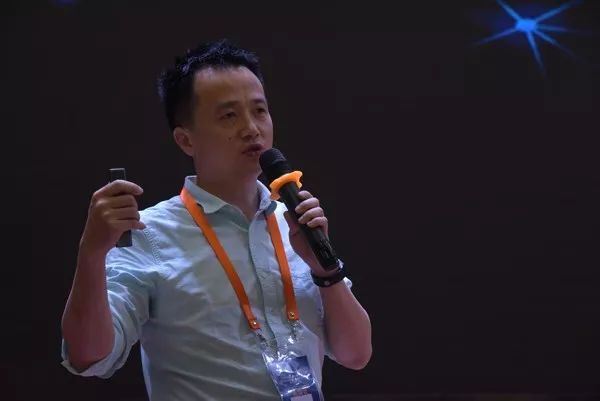
荣盛控股集团CIO邓铭川表示,一个传统制造型企业在对信息化建设进行规划的同时,不能局限于具体某一点,而是需要立足三个维度进行辩证思考。
第一个维度是产业链上下游的协调平台,实现从供应商到多级客户的完整供应链价值协同一体化。
第二个维度则是纵深经营的集团管控,从控股集团本部到下属所有子公司的价值协同。在传统生产制造过程中,从底层的设备产线仪表、生产单元、PCS到sCANA系统,一直到实时数据库、人财物产供销方面的经营管理系统和决策分析数据模型,都被称为集团管控与工厂管控的构架模型。
第三个维度是时间维度,投资建厂从设计院开始,到投产运营生产过程管理的周期。
三大维度,奠定了企业数字化的基础,保障传统制造企业在信息化建设中越行越远……
二、多企业联盟,整合智能化和柔性化的企业构架
企业转型中,我们看到的都是表象,而实际本质是什么?如今,我国大多数企业还停留在生产一体化的阶段。然而,光生产一体化就是一个非常复杂的过程,它要求企业数字化工厂要达到六方面的“一体”,包括装置设备一体化、网络物联一体化、信息系统一体化、数据关联一体化、管理流程一体化和平台共享一体化。多个生产一体化的工厂和企业结合起来,形成数字化,这便是多企业的联盟,从而实现工厂和企业的模块化,最终完成整个智能化和柔性化的企业构架。
世界上没有一家公司的信息化系统仅靠一家厂商或者一个平台产品实现的,术业有专攻,这又涉及管理一体化、集中调度等相互协同性。总之,实现生产一体化这个过程并不是一蹴而就的,“做”永远比“说”要难得多。而实际进度中,我们要实现这个目标,难度在哪里呢?荣盛控股邓铭川回答是建厂之初。在建厂体系化的过程中,无论是投资新建工厂还是旧厂数字化改造,都会在施工建设期到生产运营期中存有大量的数据标准定义成本。如果我们大多数企业的数字化改造,不能认清现象与本质问题,数字化转型道路就会极其艰难。
三、转型道阻且长,机遇行则将至
数字化建设的重要基点从企业建设时期开始,打造现代化实物工厂的同时需要构建数字化虚拟工厂。按照大数法则来讲,数字化工厂的投资金额比例和实物工厂的投资金额占比大约是1%~1.5%。在这样的一个构架之下,我们所依赖的传统制造业想要转型,必然存在五大战略原则:
1. 以“客户至上”为纲。留住数字时代消费者的关键,在于以建立长期信任的方式管理好用户的专有数据。
2. 战略性调整组织构架。互联网为新兴企业赋予了迅速进行低成本扩张的能力,一举甩掉老旧体系和“通常做法”的包袱。
3. 运营方式转型。在电子商务和大数据高速发展的背景下,企业必须制定灵活的多渠道运营模式。互联网开创的透明定价压缩了利润空间,精益化变得极为关键。
4. 高技能数字化人才。与大数据和高级分析相关的高度专业化人才梯队,促使企业人力资本问题日渐突出。尤其在人才招聘、培养和企业文化方面。
5. 开放的合作伙伴策略。产业链中的主要活动并不必然要全部留在公司内部,关注产业链上下游供应商与消费者的各个环节如何融合到新的平台上,成为新商业生态圈的价值。
四、三大阻碍
所有的战略都需要回归到几个本质方面,由于沟通漏斗效应,信息折扣的过程会波及客户对象、人才对象和战略组织以及战略合作伙伴等问题上。如今,很多公司都无法顺利完成变革,主要有三大因素在阻碍转型进程:
第一, 战略管理上的观念相对落后。认知不足,且顾虑太多。
第二, 转型过程投入能力不足。基础太薄弱,无法在其层面上建立高楼大厦。
第三, 企业外部环境的影响和阻碍。创新过程中涉及不符合国情的战略规划,出现包括政府等在内的外部环境干扰。
最后,荣盛控股邓铭川总结到,传统企业的核心职能部门权重决定了转型方向和影响力,目前核心职能部门分为技术型、应用型、合作伙伴型和业务推动型四大类型。而传统制造业向数字化企业的转型过程中,最主要的原动力就是依靠业务推动型来进行变革,这对拥抱智能化、数字化的企业影响非常巨大。智能化企业的建设和运营需要在企业领导人的战略思想、年轻化和活力化的人才队伍建设、创新转型投入等方面的侧重引导。而这些因素都恰恰是管理意识上的,一切技术上能解决的问题都不是问题,能用资金解决的问题更不是问题,但意识形态上的问题却很难得到解决,这需要一代企业人坚持不懈的努力和推进。
翻译:
Manufacturing industry is the cornerstone of a country’s economic development and the basis for enhancing national competitiveness. However, driven by a series of emerging technologies such as cloud computing, big data and the Internet of Things. The traditional manufacturing industry has been unable to meet the needs of the market. And transformation has become the only shortcut for enterprises to seek rebirth.
At the 2018 CIOC National CIO Conference held by enterprise network D1Net, Deng Mingchuan, CIO of Risesun Holdings Group, brought to you the practical experience of the digital transformation of Risesun Holdings Group in recent years, and also shared his profound understanding of digitalization.
Multi-dimensional planning to help enterprises digital landing
Deng Mingchuan, CIO of Risesun Holding Group, said that a traditional manufacturing enterprise in the information construction planning at the same time, can not be limited to a specific point, but need to base on three dimensions for dialectical thinking.
The first dimension is the coordination platform of the upstream and downstream of the industrial chain to realize the complete synergistic integration of supply chain value from suppliers to multi-level customers.
The second dimension is the in-depth management and control of the group, from the holding group headquarters to the value coordination of all subsidiaries. In the traditional manufacturing process, from the bottom equipment production line instrument, production unit, PCS to sCANA system, to the real-time database, human property production, supply and marketing operation management system and decision analysis data model, are all known as the architectural model of group control and factory control.
The third dimension is the time dimension. It is the period from the design institute to the production process management.
Three dimensions, laid the foundation of enterprise digitization, to ensure that traditional manufacturing enterprises in the information construction further and further……
Multi-enterprise alliance, integration of intelligent and flexible enterprise architecture
In the enterprise transformation, what we see is the appearance, but what is the actual essence? Nowadays, most enterprises of our country still stay in the stage of production integration. However, the integration of optical production is a very complex process. It requires the enterprise digital factory to achieve six aspects of “integration”, including device integration, network integration, information system integration, data association integration, management process integration and platform sharing integration. Multiple factories and enterprises with integrated production are combined to form digitalization, which is the alliance of multi-enterprises, so as to realize the modularization of factories and enterprises, and finally complete the entire intelligent and flexible enterprise architecture.
There is no company in the world whose information system is realized only by one manufacturer or one platform product, with specialized skills, which involves mutual cooperation such as management integration and centralized scheduling. In a word, the process of production integration is not achieved overnight, “doing” is always more difficult than “saying”. And in the actual schedule, where is the difficulty in achieving this goal? Rongsheng Holding Deng Mingchuan answer is the beginning of the plant. In the process of plant systematization, whether investing in new factories or digital transformation of old factories, there will be a large number of data standards defining costs from the construction period to the production and operation period. If most of our enterprises do not recognize the phenomenon and the essence of the digital transformation, the road of digital transformation will be extremely difficult.
Transition road resistance and long, the opportunity will come
The important basis of digital construction starts from the period of enterprise construction. While building modern physical factory, digital virtual factory needs to be built. The proportion of investment in digital factories and physical factories is about 1 to 1.5 percent. Under such a framework, if the traditional manufacturing industry we rely on wants to transform, there must be five strategic principles:
- Put customers first. The key to retaining consumers in the digital age is managing their proprietary data in a way that builds long-term trust.
- Make strategic changes to the organizational structure. The Internet has given start-ups the ability to expand quickly and cheaply, shrugging off the baggage of old systems and “business as usual”.
- Transformation of operation mode. In the context of the rapid development of e-commerce and big data, enterprises must develop flexible multi-channel operation mode. The transparent pricing created by the Internet has squeezed profit margins, making lean crucial.
- Highly skilled digital talents. The highly specialized talent echelons related to big data and advanced analysis make the human capital problem of enterprises become more and more prominent. This is especially true when it comes to talent recruitment, training and corporate culture.
- Open partner strategy. All the major activities in the industrial chain are not necessarily kept within the company. It is important to focus on how all links of upstream and downstream suppliers and consumers of the industrial chain are integrated into the new platform, which becomes the value of the new business ecosystem.
Three major obstacles
All strategies need to return to several essential aspects. Due to the communication funnel effect, the process of information discount will affect the customer target, talent target, strategic organization and strategic partners and other issues. Today, many companies fail to make the transition smoothly, and there are three main factors that hinder the transition process:
First, the concept of strategic management is relatively backward. Not knowing enough and thinking too much.
Second, the ability to invest in the transformation process is insufficient. The foundation is too weak to build tall buildings on its level.
Thirdly, the influence and hindrance of the enterprise’s external environment. The process of innovation involves strategic planning that is not in line with national conditions and external environment interference including government.
Finally, Deng Mingchuan of Risessun Holdings concluded that the weight of core functional departments of traditional enterprises determines the direction and influence of transformation. At present, core functional departments are divided into four types: technology type, application type, partner type and business driving type. In the process of transformation from traditional manufacturing industry to digital enterprise, the most important driving force is to rely on business-driven transformation. It has a huge impact on enterprises embracing intelligence and digitalization.
The construction and operation of intelligent enterprises need to focus on the strategic thinking of enterprise leaders, the construction of young and dynamic talent team, innovation and transformation investment and other aspects. All the problems that can be solved by technology are not problems. And those that can be solved by funds are not problems. However, ideological problems are difficult to be solved, which requires the unremitting efforts and promotion of a generation of entrepreneurs.
本文由数字化转型网(www.szhzxw.cn)转载而成,来源:企业网D1Net;编辑/翻译:数字化转型网八九四。

免责声明: 本网站(http://www.szhzxw.cn/)内容主要来自原创、合作媒体供稿和第三方投稿,凡在本网站出现的信息,均仅供参考。本网站将尽力确保所提供信息的准确性及可靠性,但不保证有关资料的准确性及可靠性,读者在使用前请进一步核实,并对任何自主决定的行为负责。本网站对有关资料所引致的错误、不确或遗漏,概不负任何法律责任。
本网站刊载的所有内容(包括但不仅限文字、图片、LOGO、音频、视频、软件、程序等) 版权归原作者所有。任何单位或个人认为本网站中的内容可能涉嫌侵犯其知识产权或存在不实内容时,请及时通知本站,予以删除。