一、数据治理的框架和核心内容
不同的利益相关者群体对数据治理的关注点不一样,因此各自的视图也不一样。其中管理者视图可以概括为“五域模型”,分别是“管控域”、“过程域”、“治理域”、“技术域”、“价值域”。
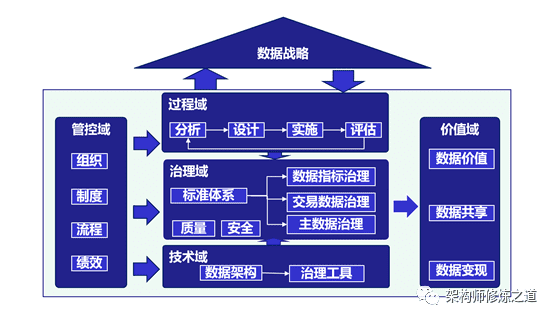
管控域:在数据治理战略指导下制订企业数据治理组织,明确组织的责、权、利,岗位编制及技能要求。
治理域:是数据治理的主体,明确数据治理的对象和目标。数字化转型网www.szhzxw.cn
技术域:数据治理的支撑手段,指的工具平台。
过程域:是数据治理的方法论。
价值域:通过对数据资产的管控挖掘数据资产的价值,并通过数据的流动、共享、交易变现数据资产。
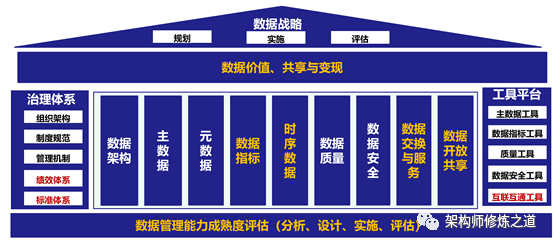
数据治理体系,包括数据战略、数据治理管控体系(数据治理组织、制度、流程、管控机制、绩效体系及标准体系)、数据架构、主数据、元数据、指标数据、时序数据、数据质量、数据安全、数据集成与交换、数据开放和共享、数据资产管理能力成熟度评估以及数据价值、数据共享、数据变现等多方面。
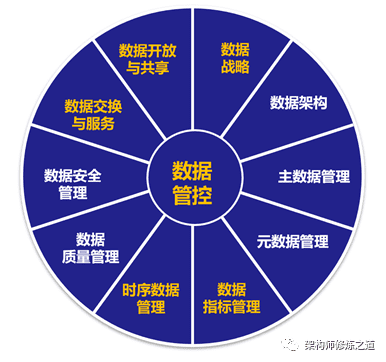
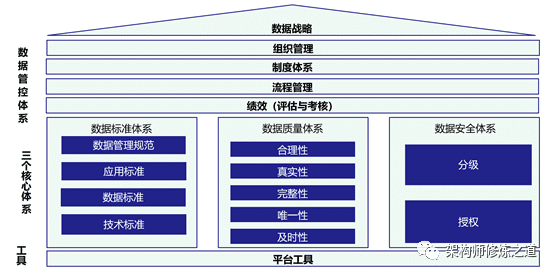
接下来从数据战略、数据管控(组织管理、制度体系、流程管理及绩效)、三个核心体系(数据标准体系、数据质量体系、数据安全体系)和工具等分别进行介绍。数字化转型网www.szhzxw.cn
1、数据战略
数据战略是整个数据治理体系的首要任务,关注整个组织数据战略的规划,愿景和落地实施,为组织数据管理、应用工作的开展提供战略保障,应由数据治理组织中的决策层制定,需要指明数据治理的方向,包括数据治理的方针、政策等。
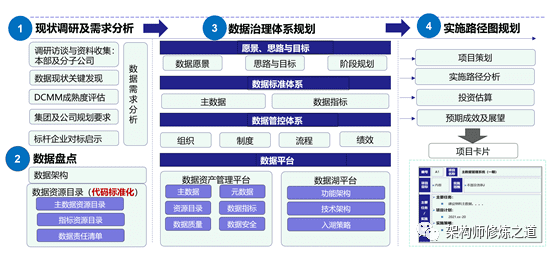
正确的顶层设计是企业家对未来形势的正确判断,对机会和战略,治理与架构,资本和模式,供应链和数字化,品牌和营销,产品和客户等整体一盘棋的布局。如果说商战就是没有硝烟的战争,那么顶层设计则是整体战的部署。数字化转型网www.szhzxw.cn
2、组织管理
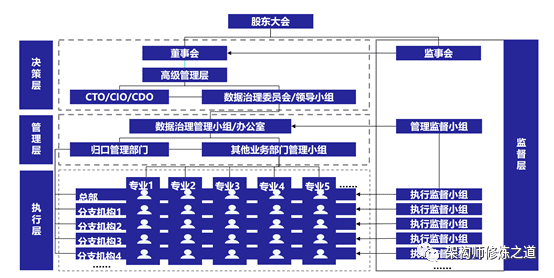
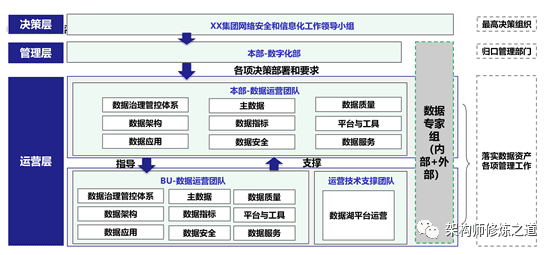
组织保障是数据治理成功的关键。组织建设一般包括组织架构设计、部门职责、人员编制、岗位职责及能力要求、绩效管理等内容。数据治理是一项需要企业通力协作的工作,而有效的组织架构是企业数据治理能够成功的有力保障。为达到数据战略目标,非常有必要建立体系化的组织架构,明确职责分工。
3、制度体系
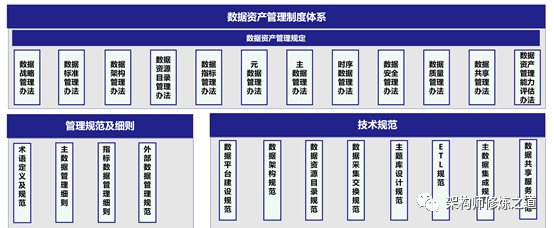
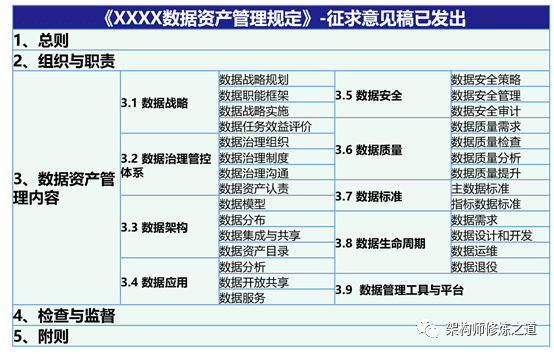
保障组织架构正常运转和数据治理各项工作的有序实施,需要建立一套涵盖不同管理粒度、不同适用对象,异覆盖数据治理过程的管理制度体系,从“法理”层面保障数据治理工作有据、可行、可控。
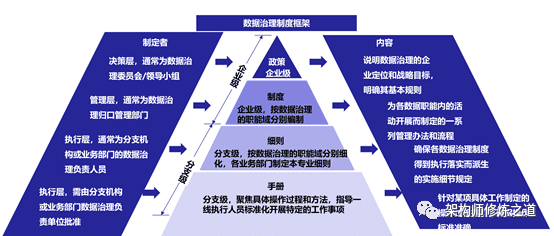
企业的数据治理制度通常根据企业的IT制度的总体框架和指导原则制定,往往包含数据质量管理、数据标准管理、数据安全管理等制度,以及元数据管理、主数据管理、数据指标管理等办法及若干指导手册。
4、流程管理
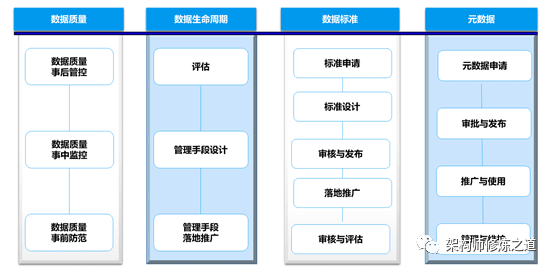
制定数据治理的流程框架也是数据治理的重要工作。
数据治理流程包括从数据的生产、存储、处理、使用、共享、销毁全生命周期过程中所遵循的活动步骤,以及元数据管理、主数据管理、数据指标管理等流程。数字化转型网www.szhzxw.cn
5、绩效管理
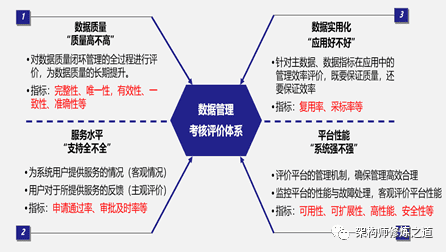
数据治理考核是保障数据治理制度落实的根本,通过系统的方法、原理来评定和测量企业员工在一段时间内数据治理相关的工作行为和工作效果,进一步激发员工的积极性和创造性,提供员工的数据治理责任心和基本素质。
6、标准体系
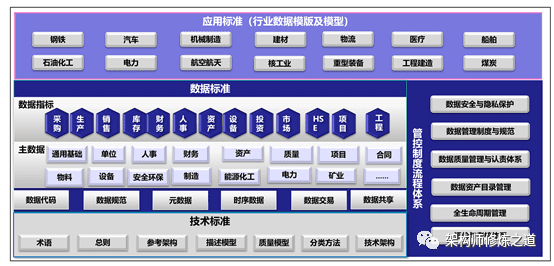
数据标准是实现数据标准化、规范化的前提,是保证数据质量的必要条件。
数据标准一般分为元数据标准、主数据标准、数据指标标准、数据分类标准、数据编码标准、数据集成标准等内容。数字化转型网www.szhzxw.cn
7、质量体系
数据质量管理是对数据的分析、监控、评估和改进的过程。包括规划和实施质量管理技术,以测量、评估和提高数据在组织内的适用性,提高数据对业务和管理的满足度。重点关注数据质量需求、数据质量检查、数据质量分析和数据质量提升的实现能力。数字化转型网www.szhzxw.cn
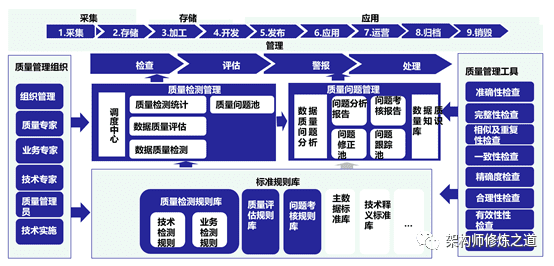
数据质量管理贯穿数据生命周期的全过程,除了明确数据质量管理的策略,还要善于使用数据质量管理的手段及工具,覆盖数据质量需求、数据探查、数据诊断、质量评估、质量提升等方面。
8、安全体系
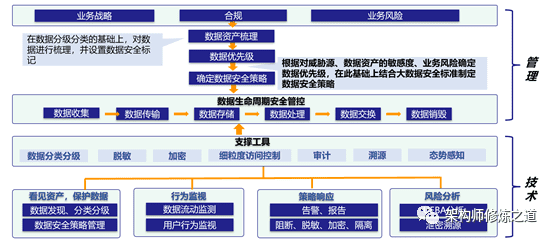
数据安全管理是为了确保数据隐私和机密性得到维护,数据不被破坏。数据安全体系框架通过3个维度构建而成,包括政策法规、技术层面和安全组织人员。数据安全治理体系框架在符合政策法规及标准规范的同时,需要在技术上实现对数据的实时监管,并配合经过规范培训的安全组织人员,构成了数据安全治理整体架构的建设。
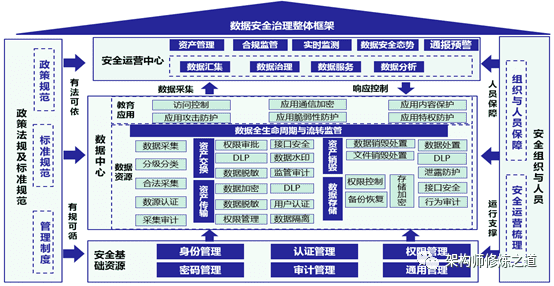
数据安全治理能力建设是一个覆盖数据全部生命周期和使用场景的数据安全体系,需要从决策到技术,从制度到工具,从组织架构到安全技术通盘考虑。数字化转型网www.szhzxw.cn
9、平台工具
搭建一体化数据平台,满足前台应用准确性、快速性和多样性的数据需求,缩短研发周期、降低技术成本,将数据中心逐步由成本中心向资产中心转变,提升数据价值,实现五个打通:
(1)横向打通:破除部门壁垒,横向跨专业间的分析挖掘融通;
(2)纵向打通:内部多层级数据打通,形成统一资源目录。上下级数据共享交换;
(3)内外打通:消除内外数据的鸿沟,实现内外部数据的关联分析;
(4)管理打通:建立企业标准,实现统一管理统计口径;数字化转型网www.szhzxw.cn
(5)服务打通:数据中台统一对外提供数据服务和应用构建,与业务系统和数据应用充分协同。
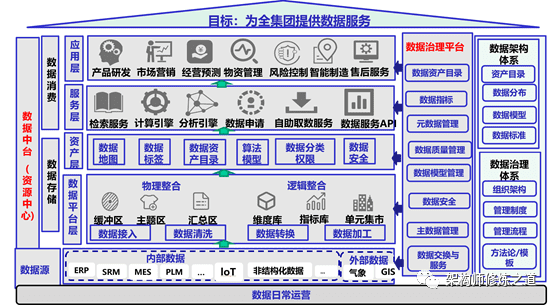
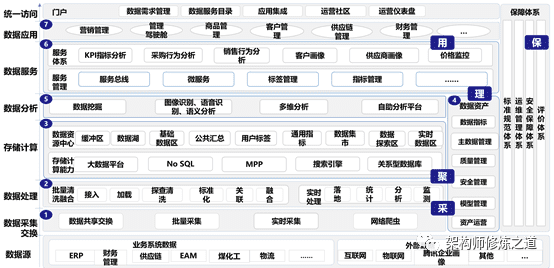
面向数据全生命周期,提供的一站式数据规划、集成、开发、治理、服务、应用等产品。
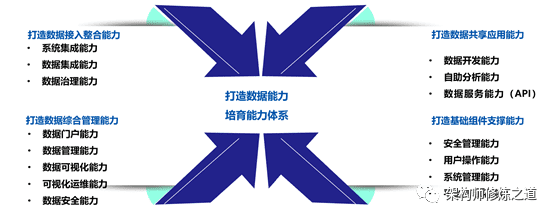
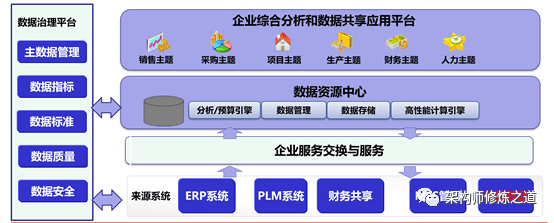
从数据接入整合能力、数据共享应用能力、数据综合管理能力、基础组件支撑能力四方面,全面建设数据能力,培育能力体系,以多类型大数据量的汇聚为基础,以统一模型为标准,为前端应用提供灵活的统一数据服务。
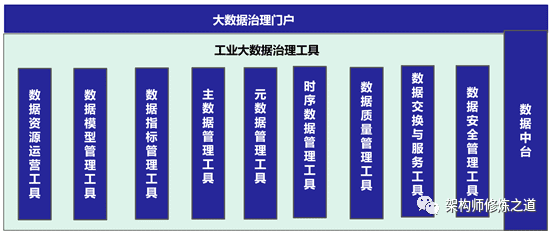
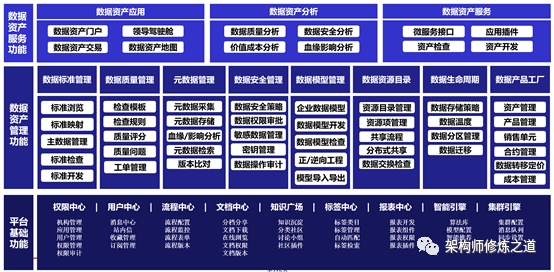
数据治理需要多种数据治理工具软件的支撑,包括以主数据为核心的套装软件、以数据资产目录为核心的数据资源管理工具、以元数据和数据模型为核心的数据中台,此外还有时序数据、数据交换等。
数据治理管理工具包括数据架构工具、元数据管理工具、数据指标管理工具、主数据管理工具、时序数据管理工具、数据交换与服务工具、质量管理工具和安全管理工具等。数字化转型网www.szhzxw.cn
主数据服务业务视图包括8个业务域、32个业务子域及相关业务活动,主数据管理工具是主数据全生命周期管理的平台,也是主数据标准、运维体系落地的重要保障。
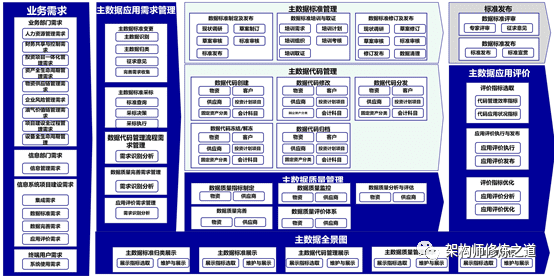
主数据治理平台是企业数据规划、数据标准落地的载体,实现数据治理统一标准、统一规则的支撑。
二、人工智能是大数据治理核心方向
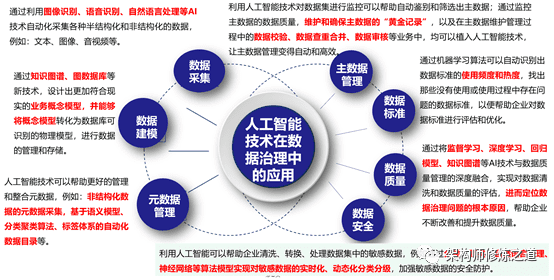
“无治理、不分析”,没有高质量的数据,就不会有可信的AI。数据治理是人工智能基础,为人工智能提供高质量的数据输入。有了人工智能加持,数据治理将变得更加高效和智能。
人工智能技术在数据采集、数据建模、元数据管理、主数据管理、数据标准、数据质量及数据安全等领域有着深入的应用。数字化转型网www.szhzxw.cn
三、结束语
数据治理的发展是伴随着不同行业对数据资源资产化、数据确权与合规、数据价值创造与共享、隐私保护的认识、研究和实践的一个演进过程,是一项繁杂、长期的工作,需要工匠精神、锲而不舍。
翻译:
First, framework and core content of data governance
Different stakeholder groups have different concerns about data governance and therefore different views. The manager view can be summarized as “five domain model”, which are “management and control domain”, “process domain”, “governance domain”, “technology domain” and “value domain”.
Figure 1. Manager Perspective – five-domain model of data governance
Management and control domain: Under the guidance of data governance strategy, formulate the enterprise data governance organization, clarify the organization’s responsibilities, rights, interests, post establishment and skill requirements.
Governance domain: It is the main body of data governance and defines the object and goal of data governance.数字化转型网www.szhzxw.cn
Technical domain: The supporting means of data governance, refers to the tool platform.
Process area: is the methodology for data governance.
Value domain: Mining the value of data assets through the control of data assets, and realizing data assets through the flow, sharing and trading of data.
Figure 2. Technical Perspective: Enterprise Big Data governance practice guidance framework
Data governance system, It includes data strategy, data governance and control system (data governance organization, system, process, management and control mechanism, performance system and standard system), data architecture, master data, metadata, indicator data, time series data, data quality, data security, data integration and exchange, data openness and sharing, data asset management capability maturity assessment, data value, data sharing, and data According to the realization of many aspects.
Figure 3. Data governance wheel diagram数字化转型网www.szhzxw.cn
Next, data strategy, data control (organization management, system system, process management and performance), three core systems (data standard system, data quality system, data security system) and tools are introduced respectively.
Figure 4. Enterprise data control and three core systems
1. Data strategy
Data strategy is the primary task of the entire data governance system, focusing on the planning, vision and implementation of the entire organization’s data strategy, and providing strategic guarantee for the organization’s data management and application work. It should be formulated by the decision-making level of the data governance organization, and it is necessary to specify the direction of data governance, including the guidelines and policies of data governance.数字化转型网www.szhzxw.cn
Figure 5. Data governance top-level planning design methodology
The right top-level design is the entrepreneur’s correct judgment of the future situation, the overall layout of the opportunity and strategy, governance and architecture, capital and model, supply chain and digitalization, brand and marketing, product and customer. If commercial war is a war without smoke, then the top-level design is the deployment of the overall war.
2. Organization and management
Organizational assurance is key to the success of data governance. Organizational construction generally includes organizational structure design, department responsibilities, staffing, job responsibilities and ability requirements, performance management and other contents. Data governance is a collaborative task, and an effective organizational structure is a strong guarantee for the success of enterprise data governance. In order to achieve the goal of data strategy, it is very necessary to establish a systematic organizational structure and clear division of responsibilities.数字化转型网www.szhzxw.cn
Figure 6. Sample data governance organizational structure setup for a group
Figure 7. Example of data governance organizational structure setting of a central enterprise
3. Institutional system
To ensure the normal operation of the organizational structure and the orderly implementation of the work of data governance, it is necessary to establish a set of management systems covering different management granularity, different applicable objects, and different coverage of the data governance process, so as to ensure that the data governance work is grounded, feasible, and controllable from the “jurisprudential” level.数字化转型网www.szhzxw.cn
Figure 8. Data governance institutional framework
An enterprise’s data governance system is usually formulated according to the overall framework and guiding principles of the enterprise’s IT system, often including data quality management, data standard management, data security management and other systems, as well as metadata management, master data management, data indicator management and several guidance manuals.
Figure 9. Data governance institutional framework system
Figure 10. Data asset management regulation list数字化转型网www.szhzxw.cn
4. Process management
The process framework of data governance is also an important work of data governance.
The data governance process includes the active steps followed from the production, storage, processing, use, sharing, and destruction of data throughout its life cycle, as well as the processes of metadata management, master data management, and data indicator management.
Figure 11. Data governance process framework
5. Performance management
Data governance assessment is fundamental to ensure the implementation of the data governance system. It evaluates and measures the work behavior and work effect related to data governance of enterprise employees in a period of time through systematic methods and principles, further stimulates the enthusiasm and creativity of employees, and provides employees with the responsibility and basic quality of data governance.数字化转型网www.szhzxw.cn
Figure 12. Data governance performance system
6. Standard system
Data standard is the prerequisite to realize data standardization and standardization, and is the necessary condition to ensure data quality.
Data standards are generally divided into metadata standards, master data standards, data index standards, data classification standards, data coding standards, data integration standards and other content.数字化转型网www.szhzxw.cn
Figure 13. Data standardization system
7. Quality system
Data quality management is the process of analyzing, monitoring, evaluating and improving data. This includes planning and implementing quality management techniques to measure, evaluate, and improve the applicability of data within the organization and improve the satisfaction of data for business and management. Focus on data quality requirements, data quality inspection, data quality analysis, and data quality improvement capabilities.
Figure 14. Data quality framework
Data quality management runs through the whole process of the data life cycle. In addition to clarifying the strategy of data quality management, we should also be good at using the means and tools of data quality management, covering data quality requirements, data exploration, data diagnosis, quality assessment, quality improvement and other aspects.数字化转型网www.szhzxw.cn
8. Security system
Data security management is to ensure that data privacy and confidentiality are maintained and that data is not compromised. The data security architecture framework is constructed through three dimensions, including policies and regulations, technical level and security organization personnel. While complying with policies, regulations and standards, the framework of data security governance system needs to realize real-time supervision of data technically, and cooperate with security organization personnel who have been trained in norms, constituting the construction of the overall framework of data security governance.
Figure 15. Data security governance system
Data security governance capacity building is a data security system that covers the entire life cycle and use scenarios of data, and requires comprehensive consideration from decision-making to technology, from system to tool, from organizational structure to security technology.
Figure 16. Data Data life cycle数字化转型网www.szhzxw.cn
9. Platform tools
Build an integrated data platform to meet the data needs of the accuracy, speediness and diversity of the foreground application, shorten the research and development cycle, reduce the technical cost, gradually transform the data center from a cost center to an asset center, improve the data value, and achieve five connections:
(1) Horizontal opening up: break down departmental barriers, horizontal cross-professional analysis and mining integration;
(2) Vertical connection: internal multi-level data is connected to form a unified resource directory. Data sharing and exchange between upper and lower levels;数字化转型网www.szhzxw.cn
(3) Internal and external connection: eliminate the gap between internal and external data, and realize the correlation analysis of internal and external data;
(4) Management open: establish enterprise standards to achieve unified management statistics;
(5) Service opening: the data center provides unified external data services and application construction, and fully collaborates with the business system and data application.数字化转型网www.szhzxw.cn
Figure 17. Overall framework of data platform with two systems, two platforms and one service
For the whole life cycle of data, provide one-stop data planning, integration, development, governance, service, application and other products.
Figure 18. Data platform capability framework
From the four aspects of data access and integration ability, data sharing and application ability, data comprehensive management ability, and basic component support ability, comprehensively build data capability, cultivate capability system, and provide flexible unified data services for front-end applications based on the convergence of multiple types of large data volumes and the unified model as the standard.
Figure 19. Four supporting capabilities of data platform
Data governance requires the support of a variety of data governance tools and software, including master data as the core of the package software, data asset catalog as the core of the data resource management tools, metadata and data model as the core of the data center, in addition to time series data, data exchange and so on.数字化转型网www.szhzxw.cn
Data governance management tools include data architecture tools, metadata management tools, data indicators management tools, master data management tools, time series data management tools, data exchange and service tools, quality management tools and security management tools.
Figure 20. Data governance tool set
Figure 21. Data governance tools with metadata governance as the core
The master data service business view includes 8 business domains, 32 business sub-domains and related business activities. The master data management tool is a platform for master data lifecycle management and an important guarantee for the implementation of master data standards and operation and maintenance systems.数字化转型网www.szhzxw.cn
Figure 22. Data governance tools with master data governance as the core
The master data governance platform is the carrier of enterprise data planning and data standards implementation, and supports unified standards and rules of data governance.
Figure 23. Master Data Management tool – Logical architecture
Second, artificial intelligence is the core direction of big data governance
“No governance, no analysis,” without high-quality data, there will be no trusted AI. Data governance is the foundation of AI and provides high-quality data input for AI. With the blessing of AI, data governance will become more efficient and intelligent.数字化转型网www.szhzxw.cn
Artificial intelligence technology has deep applications in the fields of data acquisition, data modeling, metadata management, master data management, data standards, data quality and data security.
Figure 24. Application of artificial intelligence technology in data governance
Third, concluding remarks
The development of data governance is accompanied by different industries on data resource assets, data ownership and compliance, data value creation and sharing,
本文由数字化转型网(www.szhzxw.cn)转载而成,来源于数字化转型战略指南;编辑/翻译:数字化转型网宁檬树。

免责声明: 本网站(http://www.szhzxw.cn/)内容主要来自原创、合作媒体供稿和第三方投稿,凡在本网站出现的信息,均仅供参考。本网站将尽力确保所提供信息的准确性及可靠性,但不保证有关资料的准确性及可靠性,读者在使用前请进一步核实,并对任何自主决定的行为负责。本网站对有关资料所引致的错误、不确或遗漏,概不负任何法律责任。
本网站刊载的所有内容(包括但不仅限文字、图片、LOGO、音频、视频、软件、程序等) 版权归原作者所有。任何单位或个人认为本网站中的内容可能涉嫌侵犯其知识产权或存在不实内容时,请及时通知本站,予以删除。