在新的互联网环境下,数字化将成为驱动零售变革的重要要素。
如何实现用户的数字化?如何实现产品的数字化?如何实现营销与交易的数字化?如何实现各个环节之间的数字化打通?如何借助各种智能手段获取价值数据?
本次分享特邀小米之家高级数据工程师宋运奎先生为大家解答以上问题。
尊敬的鲍老师,亲爱的各位老板,各位专家,各位零售的前辈,大家晚上好。我是来自于小米之家系统数据部的宋运奎,下面我分四部分来给大家交流,探讨一下小米之家在数据化转型的一些工作。主要就是围绕着人:用户的数字数字化,货:商品的数字化,还有门店运营的数字化,第四部分是小米之家现在借助于AI做的一些创新探索。
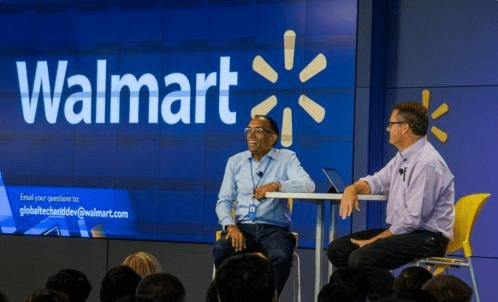
上面一段话是沃尔玛的创始人对于零售的信息化以及数据化的一个理念,从这个理念上我们也能够看出来,零售。至于信息,至于数据的一个重要的一个程度。
小米公司雷总,在去年年底,对我们销服部召开大会的时候,对我们说的是要向有数据的友商或者是我们的部门进行学习。
接下来我就站在战术实施落地的角度来具体讲一下小米之家是如何做的,以及现在做到什么程度了。
首先就是用户这一块。大家应该都了解,我们传统的零售,我们主要是有pos的交易数据,但是对于用户这一块我们是没有记录用户信息的。
一般情况下,我们是通过会员手段或途径来记录一部分用户的一些个人的信息。所以我想说的是进行用户数据化,它的一个前提是我们必须首先要有一个账号的体系,就是把用户的信息能够记录到我们的系统当中。
比如小米之家,我们现在在线下购物的时候,会在pos里边记录用户的电话号码,第一是为了方便我们进行售后的服务。第二个的话通过电话号码,也可以基于我们小米的一个大数据,比如说我们有我们的MIUI的数据,通过手机号我们可以关联到它的一些设备,可以刻画出用户的这些特征属性。
目前在小米之家的pos系统里边,我们唯一能够记录下来人的主要就是通过手机号,我们通过手机号就可以关联到它的一个米聊号,关联它的设备ID,然后就会刻画出用户的一部分用户画像。现在越来越发现很多的线下的零售商家,他们在做系统的时候逐步的都会考虑到这一块,因为大家也都已经知道未来的零售应该是一个以用户为中心。
以用户为中心,我们首要的一个动作需要把用户,通过一个ID或者通过一个账户把用户给记录下来。
这一步是我们进行用户的画像,然后未来的精准营销,还有包括用户更个性化服务,然后为顾客的生命价值全期管理奠定基础。
我们看到现在很多的商家一般通用手机号,这是一个唯一的账号体系。另外也有一些商家开始用绑定他的微信号,甚至之前微博比较火的时候,绑定他的微博的账号,这样的话其实可以通过他的一些微信的账号或者是微博的账号,甚至我们如果数据想打通,想拿的更全的话,可以拿到他的一些社交的数据。现在有一些更先进的理念或更先进的技术,通过AI人脸识别,这个人进到我们门店,人脸作为一个唯一的ID,然后就把这个用户给记录下来了。
我认为可能通过人脸我们可以分析,购买了我的用户,我们可以把它当成是我们的一个会员,甚至可以当成是我们的一个消费顾客。基于有了用户的数据,有了用户的画像以后,我们紧接着就可以做一些更有针对化的或者精准化的个性化的一些服务。基于地理围栏,用户的地理位置,判断这个用户已经进入我们门店的周边,并且之前曾经在我的小米之家,或者是在我的门店购买过东西,可以触发进行一个营销的动作。
我们看过数据,我们基于地理围栏,基于用户历史的购买行为,再对它进行一个精准的营销,或者说push的一个宣传,我们的点击率大概能比传统的能够高出来7到9个点。
我想强调的是,我们首先需要打通用户的账号体系,这个账号体系可以是手机号,可以是他的微信的公众号,甚至可以是它的一个人脸的ID,但是这是一个基础的工作,必须要做的,这是未来我们做用户的营销或者是用户的价值管理的一个基础的动作。
我们对货的数字化。首先现在小米之家,可以拿到一些商品体验的数据,顾客到我的门店以后,他对我某一款手机或者是某款电视它的体验时长,所在停留的一个区域,基于这个数据,我们可以跟我们的销售数据、库存数据进行联动分析,然后我就能知道,比如说我某款产品它体验的次数特别多,而他销售的却不高,是不是我们的哪块出现问题了,是不是我们的价格体系或者是其他的因素,影响到我的销售了。
也可以跟我的库存数据进行关联起来,比如说我的体验挺高的,然后消费比较低,那是不是我的库存不足,是不是我应该需要补货,是不是需要有其他的问题,我可以进行分析挖掘。
另外一个就是我们基于商品的区域,因地制宜,分析我们某一些区域哪些商品比较好卖的,哪些区域它的商品是适不适合来卖的。
我们会针对于我们的每款产品,有一些日报、月报、周报的一些动作,可以针对于每个产品,看他用户的这种关注度,喜爱程度,体验的次数,用户对某些规格某些颜色,和多重角度多重维度来关注这个货的售卖情况,还有它的体验情况,动态的库存的一个情况。
其实在货这一块还有一些比较基础的,我们会在我们的BI系统里边,每天或者是每周或者是每个月跑出我们的畅滞销品,分区域的畅滞销品,我们的店长,我们的城市经理或者是我们的区域经理,可以每天看到我的Top30销售的商品是什么,每周我的滞销品是什么,每月我的库存比如说也是累积大于多少的商品有哪些,还有我的商品缺货的程度,在各个门店的覆盖的程度。
货这块基本上我想表达的是,第一个就是我们基础的畅滞销品的一些分析,另外一个就是我们库存的关注程度,还有一个就是我们可以附加上其他的体验的用户的关注程度。
我们对场的一些数字化—-门店运营数字化这块是我们花功夫花得最多的,做的也最全的。我们专门做了一个我们的BI的系统。这是一个移动端的,主要是方便我们店长或者是区经他们能够随时随地,关注我们的门店运营情况。这个系统现在的使用情况使用率特别高,基本上我们新任的店长,我们的新任的城市经理,他们上岗以后的第一件事都是要求开这个系统,这个系统它最主要的能够实时的,我们的数据延迟最多也就是五分钟,能够实时地看到我每个时刻的客流的情况,销售的情况,转化率,连带率,客单价,甚至顾客的一个满意程度,顾客对员工的一个评价。
这个系统可能会结合我们其他的一些系统,比如说我们的门店的巡店的系统,还有我们门店的风控防损的系统,结合起来进行使用。
我现在看到的一个趋势是,因为我们零售人,包括我们的店长,他是基本上不可能时时刻刻就是站在电脑旁边,所以我们做数据系统的人,要逐渐的实现移动化,逐渐的向手机、平板大屏幕上迁移。
做这个系统的思路,首先我们需要分一下,有哪些人要用这个系统,就是说分角色,比如说我们有boss,我们的区域经理,我们的店长,还有我们不同的总部管理人员,比如说有销售运营的,有门店运营的,甚至还有我库管,我们需要针对于这些不同的角色,进行分模块分主题划分。
我的老板他应该是看到一个全局的,他应该是概览的,应该是进来以后首页的一个仪表盘,他应该能看到核心的,比如说我的销售达成,我核心的KPI指标,比如说小米的这边可能就是手机的销量,你的销售额。
库管他进来的可能主要就是面向库存这个主题,同时他会需要看到销售的一个主题,可能还需要看到个别的其他的一些相关的,他需要看到是的周转率,需要看日均销。
建设系统的时候,我们可以采取先聚焦核心人员核心功能,再小步迭代,快速的做每一块的功能。
简单总结一下场的数据化,首先我们需要快速的进行实施,首先要分清我们的系统角色人员,然后每个角色对应对的功能有哪些,进行核心角色核心功能快速的开发,尽量做到移动化。
第四部分小米之家现在通过AI技术来进行用户到店的一个全流程的数据化追踪。传统的零售,我们的交易数据都是落在我们的pos系统里边的,一些主数据可能是在我们的erp或者是我们的PMS或者其他的一个系统里边的,用户进店的一些中间过程的数据,我们传统是捕抓不到的。
比如说张三这个人进了我们的门店以后,他在我的某款手机旁边,拿起了哪一部手机,体验了多长时间,又放下了,然后紧接着他又去比如说去我的电视的一个区域,或者是在我箱包的区域,然后他关注我的90分旅行箱,然后看了半天以后然后询问了一下店员以后,结果也没有购买。我们传统只有他购买了以后,我们才知道张三这个人他购买了我这个箱子。
我们现在就是他为购买全流程,整个全流程我们可以通过我们的AI来捕抓到,来分析张三这个人,他在手机这个区域可能停留的时间也就是两秒也就是三秒,但是它在我的箱包的区域却停留了可能30秒,然后又询问了一下店员,那我们就可以进行分析,然后张三他这个人为什么没有购买我的旅行箱。然后我们全流程,当这个用户是首次进店的时候,我们可能就是说直接会把这个人进行入到我们的相当于一个用户的一个数据库里边,当他第二次再来的时候,我们基本上就可以判断可能相当于是第二次来的顾客,他要是比如说第三次第四次又来了,我们就可以把用户标记成熟客。这就是说在他进店这个阶段,我们就可以对对特定的或者是指定的顾客进行来标记。
比如说我们现在小米之家要做的就是一个防黄牛的一个机制,因为小米有很多的爆品,然后有时候有黄牛就过来刷我们的产品。那么我们就可以制定一个策略,比如说同一天进入我们门店的多少次的人,然后甚至就是说同一天,然后到过我们同一个城市,然后几家门店,并且又有购买行为的,然后并且又是买了我们指定的一个产品的这些人,然后我们就可以抓到这些人,抓到这个人,我们就会把这个人的特征放到我们的一个黄牛的特征库里边。然后等这个人在进店的时候,我们就能发现他可能是一个疑似的黄牛,然后我们就会把这个特征告诉我们的导购或者是告诉我们的收银员,我们的收银员就可以采取一些对应的话术。
其实在这个阶段我们可能做的可能就是我说的它可能是一个你可以指定任意特征的人群,比如说是我的会员也可以在这里进行会员的一些识别,然后就像我说的我的熟客也可以在这边进行熟客的识别,我们甚至可以辅助防损,我们可以跟商场甚至公安部进行合作,我们就把那些疑似于小偷的人我们都可以标记成我们的黑名单,然后放到我们的黑名单的库,然后等这些人进来的时候,我们通过AI的判断,就能知道这个人可能是一个小偷。
第二个环节我们就是相当于体验选购的环节,在传统的行业里面什么,我们一般都是看它的热力图,现在AI这个可能就是说能更精细化一些,能做到更我各个区域,各个时间有多少人我可以进行对比,这样也可以帮助我们进行调整陈列。
在结算收银这块,我们可以加上我们一些互动的内容,我们可以在我们的收银台,加上一些比如说我们小米的平板,然后用户结算的时候,我们可以推一些就是说类似于线上商城的那种类似于加价购,你比如说你加一元或者是加多少钱可以,我可以送彩虹电池,我或者是说我可以送其他的一些东西,就能够增加一些跟用户互动的一些环节。
现在我们尝试前端通过我们的AI然后后端通过我们的BI,然后我们的AI与BI进行结合,就是说我前端判断出来你这个人是一个什么样的人,可能在我们这儿有过什么样的一个消费行为,消费行为可能是我BI后端在算,然后我再进行一些个性化的一些服务。
我们现在AI这一块已经在我们的几个样板店跑通我们的流程了,已经在做一些测试了。其实我们还可以借助AI来做一些更可能更有小米科技感的一些事,我们现在正在立的一个项目是就是说我前端会通过AI来识别不同的人或者不同时段的客流,然后我通过我们的其他的语音识别,我们的音箱或者是我们后端的BI,会基于与不同的人,进行不同的迎宾不同的服务。
可能所有这些东西可能站在我们老板的一个角度,他肯定要考虑这个成本的。我们目前的话有一部分是我们跟合作厂商一块在做,另外一部分可能就是说我们自己研的自研的一些东西,我们可能会借助于小米本身的一些产品,比如说我们的自有的摄像头,然后加上我们自有的一些算法,加上我们自己的一些音箱,这样的话我们的成本就会降下。我们也可以做一些商业化的一些大量铺开的东西。
现在我们新零售都讲用户,都讲服务,我最后想要说的这块也是小米之家也是一个特别注重体验,注重服务的一个线下场景业态。我们这个相当于你顾客在店里边购买完产品以后,我们马上会生成一个满意度的调查的问卷,用户可以针对于此次的一个购买,进行评价,评价会实时地反馈到我们的BI系统里边,我们的店长马上就会看到我们这一单成交的时候,用户对我这个小伙伴的一个满意的情况怎么样,我们就可以进行有针对性的改善,或者是有针对性的考核。
翻译:
In the new Internet environment, digitalization will become an important factor driving retail revolution.
How to digitize users? How to digitize products? How to digitize marketing and trading? How to realize the digital opening between each link? How to obtain value data with various intelligent means?
This sharing invited Mr. Song Yunkui, senior data engineer of Mi Home, to answer the above questions.
Song Yunkui, Home of Millet:
Dear Mr. Bao, dear bosses, experts and retail seniors, good evening. I’m Song Yunkui from the Data Department of Mi Home System.
Next, I will give you four parts to communicate and discuss some work of Xiaomi Home in data transformation. It mainly focuses on the digital digitalization of people: users, goods: the digitalization of goods, and the digitalization of store operation. The fourth part is some innovative explorations made by Mi Home with the help of AI.
The above paragraph is a concept of the founder of Wal-Mart for the informatization and data of retail. From this concept, we can also see that retail. As for information, as for data an important degree.
Mr. Lei, manager of Xiaomi Company, at the end of last year, when he held a conference for our marketing service department, he said to us that we should learn from friends with data or from our department.
Next, I will stand in the perspective of tactical implementation to specifically talk about how Xiaomi Home is done, and now what extent.
The first is the user. As you all know, in our traditional retail business, we mainly have pos transaction data, but we do not record user information.
Under normal circumstances, we are through member means or ways to record some of the user’s personal information. Therefore, I would like to say that the premise of user datalization is that we must first have an account system, which is to record user information into our system.
For example, in Xiaomi Home, when we shop offline, we will record the phone number of the user in the pos. Firstly, it is to facilitate our after-sales service. Second, through the phone number, it can also be based on a big data of our Xiaomi. For example, we have the data of our MIUI. Through the phone number, we can be associated with some of its devices, which can depict these characteristics of users.
At present, in the pos system of Mi Home, the only way we can record people is through the mobile phone number, which can be associated with a Mi chat number and its device ID, and then a part of the user portrait will be painted. Now more and more offline retail businesses are found, they will gradually take this into account when doing the system, because everyone has already known that the future of retail should be a user-centered.
User-centric, one of our first actions is to record the user, either by an ID or by an account.
This step is for us to carry out the user portrait, and then the future precision marketing.
This step is for us to carry out the user portrait, and then the future precision marketing, including more personalized service for users, and then lay the foundation for the customer’s life value management.
We see a lot of businesses now general mobile phone number, this is a unique account system. In addition, there are also some businesses began to bind his micro signal, even before the micro blog than more popular, bind his micro blog account, so that in fact, you can pass some of his wechat account or micro blog account, or even if we want to get through the data, want to get more complete, you can get some of his social data. Now there are some more advanced ideas or more advanced technologies, through AI face recognition, this person comes into our store, the face is a unique ID, and then the user is recorded.
I think maybe through face analysis, we can buy my users, we can treat it as one of our members, or even as one of our customers. Based on the user’s data, with the user’s portrait, we can then do some more targeted or precise personalized services. Based on geo-fencing and the geographical location of the user, it can be judged that the user has entered the vicinity of our store and has purchased something in my Mi Home or my store before, which can trigger a marketing action.
We’ve looked at the data, and if we do a precise marketing, or a push, based on geofencing, based on historical purchase behavior, we can probably get 7 to 9 clicks higher than the traditional ones.
I want to emphasize that we first need to get through the user’s account system.
I want to emphasize that we first need to get through the user’s account system, which can be a mobile phone number, can be his wechat public account, or even a face ID of it, but this is a basic work, must be done, it is a basic action for us to do user marketing or user value management in the future.
We digitize our goods. First of all, I can get some product experience data in Mi Home. When a customer comes to my store, he can experience the duration of a certain mobile phone or a certain TV and the area where he stays. Based on this data, we can conduct linkage analysis with our sales data and inventory data, and then I can know. For example, I have experienced a certain product for many times, but his sales volume is not high. Is there something wrong with us? Is it our price system or other factors that affect my sales?
It can also be associated with my inventory data. For example, my experience is quite high and my consumption is relatively low. I can analyze and excavate whether my inventory is insufficient, whether I should restock, or whether there are other problems.
The other is that we based on the commodity area, according to local conditions, analyze which products in some of our regions are relatively easy to sell, which areas are suitable to sell its products.
For each product, we have some daily, monthly and weekly actions.
For each product, we can see the users’ attention, love degree and experience times. Users pay attention to the sale of this product from certain specifications, certain colors, multiple angles and multiple dimensions, as well as its experience, and a situation of dynamic inventory.
In fact, in terms of goods, there are some basic ones. We will run out our stagnant goods by region every day, every week or every month in our BI system. Our store manager, our city manager or our regional manager can see what my Top30 selling goods are every day and what my stagnant goods are every week. For example, what are the goods accumulated in my inventory each month, the extent to which my goods are out of stock, and the extent to which they are covered in each store?
Basically, what I want to express is that the first one is some analysis of our basic stagnant products, the other one is the concern degree of our inventory, and the other one is the concern degree of users that we can attach other experiences.
The digitalization of some of our —- store operations is what we spend the most time on and what we do is the most complete.
We made a special system for our BI. This is a mobile terminal, which is mainly for the convenience of our store managers or district managers who can follow the operation of our stores anytime and anywhere. Basically, the first thing that our new store manager and city manager ask for is to open this system. The most important thing about this system is that it can be real-time. Our data delay is at most five minutes, and we can see the customer flow and sales situation at every moment in real time. Conversion rate, solidarity rate, customer price, even a customer satisfaction level, a customer evaluation of an employee.
This system may be used in combination with our other systems, such as our store patrol system and our store risk control and loss prevention system.
One trend I see now is that because we retail people, including our store manager, he is almost impossible to stand next to the computer all the time, so we do data system people, gradually realize the mobile, gradually move to the mobile phone, tablet screen.
First of all, we need to divide who will use this system, that is to say, we have different roles
First of all, we need to divide who will use this system, that is to say, we have different roles, for example, we have the boss, our regional manager, our store manager, and our different headquarters management personnel, for example, we have sales operation, store operation, and even our warehouse manager. We need to target these different roles. It is divided into modules and themes.
My boss should see the whole picture, he should be an overview, he should be a dashboard on the home page after coming in, he should be able to see the core, such as my sales achievement, my core KPI indicators, such as Xiaomi may be the sales of mobile phones, your sales.
The warehouse manager may come in mainly for the theme of inventory. At the same time, he will need to see a theme of sales, and may also need to see some other related items. He needs to see the turnover rate and daily sales.
When building the system, we can first focus on the core functions of the core personnel. And then iterate in small steps to quickly do the functions of each piece.
To summarize the data of the end, first of all, we need to quickly implement, first of all, we need to distinguish our system role personnel, and then each role to cope with what functions, rapid development of core role core functions, as far as possible mobile.
The fourth part Mi Home now uses AI technology to conduct data tracking of a whole process of users’ arrival at the store.
In traditional retail, our transaction data are all in our pos system, some master data may be in our erp, PMS or other systems. And some data in the middle process of users entering the store, which is beyond our traditional capture.
For example, when Zhang SAN enters our store, he picks up a mobile phone next to one of my mobile phones, experiences it for a long time, and then puts it down. Then he goes to an area of my TV, or in the area of my luggage. Then he pays attention to my 90 minutes suitcase. And after looking at it for a long time, he asks the clerk, And they didn’t buy it. Our tradition is that only after he buys, we will know that this person Zhang SAN bought my case.
In the whole process, we can catch and analyze Zhang SAN through our AI. He may stay in the area of the mobile phone for two seconds or three seconds. But he may stay in the area of my luggage for 30 seconds, and then we ask the shop assistant, so that we can analyze. Then Zhang three why he didn’t buy my suitcase.
And then we go through the process, when the user comes in the store for the first time, we might say we’re going to put that person directly into our database that is equivalent to a user, and when he comes in the second time, we can basically tell that he’s probably equivalent to the second time, and if he comes in the third time, or the fourth time, We can mark the user as a mature customer. This means that we can tag specific or designated customers at the time they enter the store.
For example, what we need to do now is a mechanism to prevent scalpers, because millet has a lot of explosive products, and sometimes scalpers come to brush our products.
So we can have a strategy, let’s say how many people come into our store on the same day. And then even that same day, and then in the same city, and then in a few stores, and then they buy. And then they buy one of our specific products, and then we can catch these people. And then we can catch this person, We’ll put that person’s signature on one of our scalpers. And then when the person comes into the store, we can find out that he might be a suspected scalper. And we can tell our sales assistant or tell our cashier, and our cashier can do something about it.
In fact, what we might do at this stage might be what I said it might be a group of people that you can specify with any characteristics. For example my members can also do some membership identification here. And then as I said my regular customers can also do the identification of regular customers here. We can even assist in loss prevention, we can cooperate with shopping malls and even the public Security Department. We can mark all the suspected thieves into our blacklist and put them in our blacklist library. Then when these people come in, we can know that this person may be a thief through the judgment of AI.
In traditional industries, we usually look at its heat map.
In traditional industries, we usually look at its heat map. Now AI may be more refined and can compare the number of people in different areas and at different times,. Which can also help us adjust the display.
We can add some interactive content to the cashier. We can add some tablets of Xiaomi to the cashier. Then, when users settle accounts, we can push some products similar to those in online shopping malls,. Which are similar to the purchase at a higher price. I mean, I can send something else, and I can add some interaction with the user.
Now we try the front-end through our AI, and then the back-end through our BI, and then the combination of our AI and BI, that is to say. I judge what kind of person you are and what kind of consumption behavior you may have had here. The consumption behavior may be calculated by my BI back-end, and then I conduct some personalized services.
Now we have run through our process of AI in several sample stores and are doing some tests.
In fact, we can also use AI to do some things that are more likely to have a sense of Xiaomi technology. One of the projects we are working on now is that our front end will use AI to recognize different people or customer flows at different time periods. And then we will use our other voice recognition, our speaker or our back-end BI, based on different people. Different welcome services for different guests.
Maybe all of these things may be from the point of view of our boss, who must consider the cost. Part of what we are saying now is that we are working with our partner manufacturers. And the other part may be something that we have developed by ourselves. We may use some products of Xiaomi itself, such as our own cameras. And then add some algorithms of our own and some speakers of our own, so that our cost will be reduced. We can also do something commercial with a lot of spread out.
Now our new retail is all about users and services. The last thing I want to say is that Mi Home is also an offline scene business format that pays special attention to experience and service. This is equivalent to your customer purchasing products in the store. We will immediately generate a satisfaction survey questionnaire, users can evaluate a purchase. The evaluation will be real-time feedback into our BI system, our store manager will see our transaction immediately. If the user is satisfied with my friend, we can make targeted improvement or make targeted assessment.
本文由数字化转型网(www.szhzxw.cn)转载而成,来源:鲍跃忠新零售工作室;编辑/翻译:数字化转型网宁檬树。
免责声明: 本网站(http://www.szhzxw.cn/)内容主要来自原创、合作媒体供稿和第三方投稿,凡在本网站出现的信息,均仅供参考。本网站将尽力确保所提供信息的准确性及可靠性,但不保证有关资料的准确性及可靠性,读者在使用前请进一步核实,并对任何自主决定的行为负责。本网站对有关资料所引致的错误、不确或遗漏,概不负任何法律责任。
本网站刊载的所有内容(包括但不仅限文字、图片、LOGO、音频、视频、软件、程序等) 版权归原作者所有。任何单位或个人认为本网站中的内容可能涉嫌侵犯其知识产权或存在不实内容时,请及时通知本站,予以删除。