医疗健康作为关系国计民生的重要产业,数字化技术将会带来颠覆式创新,重塑整个医疗健康产业生态。在医疗健康这个大概念中,医药是构建医疗健康生态的支柱,中国医药市场的规模从2012年的9555亿元增长到2020年的21500亿元,年均复合增长率达到10.7%。医药行业必须顺势而为,契合数字化发展大势,主动求新突变,更好地为推动医疗健康产业向前发展贡献力量。
从目前医药市场发展看,医药产业数字化已经展现出了初步成效,并开始进入下一个阶段。为了更好地剖析中国医药行业数字化创新现状,探析未来创新模式,蛋壳研究院通过大量的行业专家访谈和企业调研,结合市场数据,在借鉴相关研究方法和理论的基础上,深度解析医药行业的数字化发展现状,推出《医疗数字化创新季刊–医药数字化转型落地五大场景》,以期为医药数字化创新的参与者提供参考和借鉴。
一、医疗健康行业数字化转型进入落地阶段
2019年我国数字经济规模进一步提升。根据中国通信院发布的《中国数字经济发展白皮书 (2020年)》,2019年我国数字经济规模达到35.8万亿元,占GDP比重为36.2%,较上一年的31.3万亿元规模和34.8%的GDP占比又有了明显提升。中国的数字经济已经化为了一股浪潮,席卷了每一个置身其中的行业。
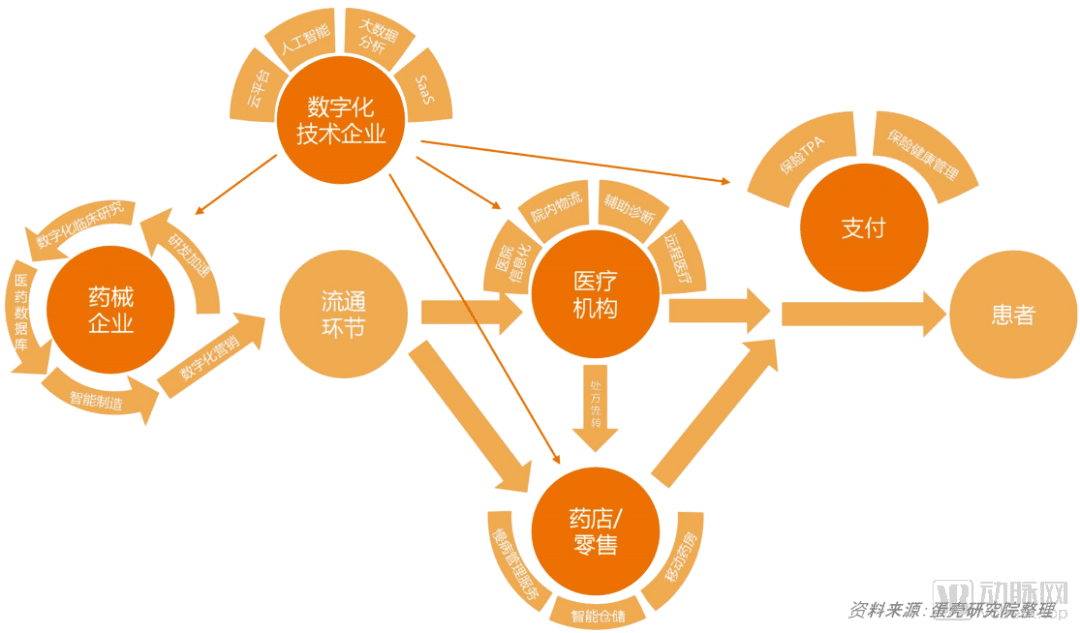
每一次世界的技术浪潮,从未落下过医疗健康行业。医疗健康行业的数字化转型在近几年也愈演愈烈。数字化技术企业正在帮助医疗健康行业的各个主要角色,实现全面的数字化转型。我们可以从肺癌诊疗为例,感受医疗健康行业的整体数字化发展变革。
(一)真实世界研究正在帮助药企提高肺癌药物的有效率
提高药品的有效率是医药企业持续关注的重点之一。可瑞达、泰圣奇等药物虽然已经是当前肺癌治疗中的特效药,但其有效率仍然十分有限,并且价格昂贵,很多患者难以负担。在以往的研发手段下,提高药品的有效率只能通过调整药物结构实现,低效且复杂。以数字化技术为基础的真实世界研究,可以从大数据中挖掘有价值的生物标注物,帮助药品进一步锁定有效目标人群,从而提高药品治疗的有效率。
(二)人工智能影像提高了肺癌诊断的精准度
医疗机构的肺癌诊断中,影像科医生发挥着至关重要的作用。经验丰富的影像科医生可以通过CT、MRI等影像学检查,精准判别患者的肺小结节,在早期筛查肺癌。但是人工阅片费时费力,影像科医生也持续短缺。如今人工智能影像识别技术已经能实现高准确率的影像判读,帮助医疗机构填补影像科医生的缺口。
(三)互联网医疗成为患者的新就诊渠道
在疫情期间,肺癌患者不再去医院就诊购药,互联网医疗+医药电商的组合成为了肺癌患者诊疗购药的新渠道。国内的互联网医疗产业在此期间也得到了极大的发展,实现了从合法合规一直到支付环节上的一系列突破。
(四)数字化技术辅助保险产品设计
肺小结节人群往往是无法购买肺癌相关的保险的。在保险TPA企业的帮助下,保险企业可以更好的管理自己的风险,设计出针对肺小结节人群的保险类型,为更广泛的人群提供保障。人工智能辅助诊断产品获批医疗器械注册证、互联网医疗实现医保支付、数字化技术助力的创新商业险产品开始进入市场,一系列的变化都昭示着医疗健康行业的数字化进程已经从概念验证阶段走向了落地阶段。
二、医药数字化转型下沉至五大场景
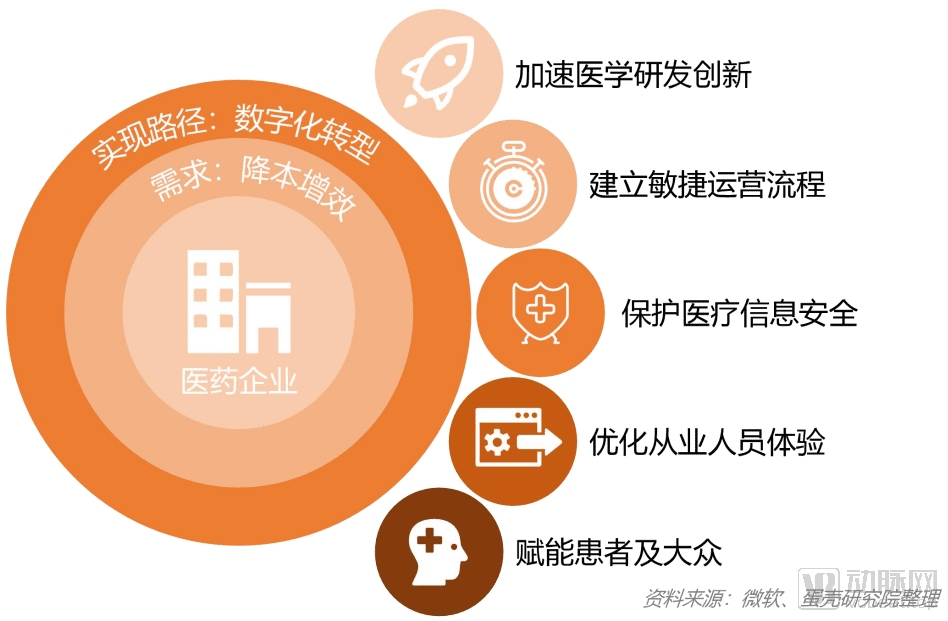
在医疗健康行业的各个产业角色中,医药行业作为诊疗解决方案的提供方,其数字化转型正在从初级阶段向更加深入的方向行进。
近几年受整体政策环境影响,国内的医药产业的数字化转型围绕着降本增效展开。因此,当深入到落地环节,数字化技术与医药产业之间的深入融合,将围绕着五大落地场景,实现更加高效的企业运营。
(一)数字化技术助力药品研发全流程
对于肺癌这一类发病率和死亡率都持高不下的病种而言,临床上仍然迫切的需要优质的解决方案应对患者的不同情况。虽然近几年在肺癌治疗方案上已经实现了接连的突破,比如国产的三代EGFR-TKI靶向药上市、多款PD-1/PD-L1单抗获批肺癌适应症,但是仍然无法覆盖全部的肺癌患者。
数字化技术可以帮助医药企业实现产品的全生命周期管理,从底层的数据支持,到最终的上市后药物研究,都可以看到数字化技术的身影。
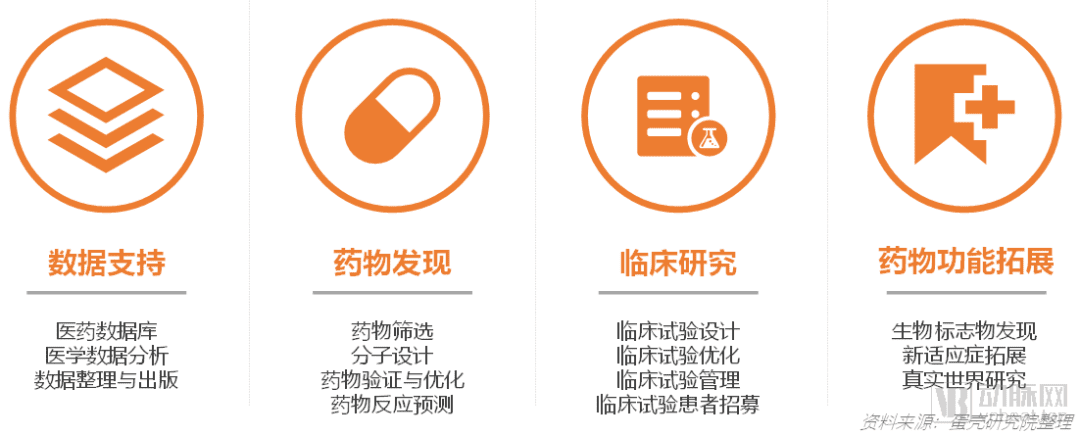
医药研发行业存在着大量非结构化的数据分散于各个公开渠道中,不仅包括药品数据、临床研究数据、真实世界数据等具体切入到诊疗环节中的数据,还包括审批数据、保险数据、基因数据等更多维度。这些散落于各处的数据,经过数据支持企业的收集、整理、加工,变成结构化的数据库,以保证人工智能技术可以正确的读取和分析,并最终产生结论。
人工智能新药研发企业将公开发表的研究成果整理成可被机器学习的知识图谱。在知识图谱的基础之上,利用人工智能技术,从大量已发表的科研成果中筛选有价值的药物分子,并进行进一步的验证、优化和预测。一方面,提高医药企业寻找高价值药物的效率,另一方面,提高药物研发后续流程中的成功率。既要增效,也能降本。
数字化的临床研究管理模式帮助原本以人力为主的临床研究,实现更高效的管理和分析。临床研究电子数据采集系统(EDC)、药物警戒系统(PV)、电子患者报告结局(ePRO)、随机性与试验供应管理系统(RTSM)等针对不同环节的组件与临床研究管理系统(CTMS)相互联通,实现从数据到人员的全面打通。
医院数字化程度的提升带来了大量的临床数据。这些临床数据在经过整理和结构化后可以被用于为药物研发阶段提供真实世界证据,用于药品上市或已上市药品的适应症拓展,或是开发药物的生物标志物以精准化目标人群。
2019年,瑞士药企诺华公司与微软签署了一项协议,研究人员将结合微软在人工智能领域的优势和诺华在生命科学领域的专长,加速新药的研发。这份为期5年的协议将在诺华设立一个“人工智能创新实验室”,并在诺华位于瑞士和都柏林的办公室,以及位于英国剑桥的微软研究实验室,创建联合工作中心。这一计划的目的是为诺华的员工赋予研发下一代药物所需的人工智能和云计算能力。诺华计划将微软的人工智能工具应用于整个药物研发过程,包括研究、临床试验、生产、运营和财务。两家公司最初将重点放在黄斑变性的个性化治疗、应用人工智能技术开发急性淋巴细胞白血病的基因和细胞疗法,以及利用神经网络识别可能用于治疗疾病的分子三个方面。
在数字化技术切入医药行业的过程中,数字化技术企业与医药企业各自有自己的短板。医药企业对疾病机理和临床痛点理解深刻,但对数字化产品的开发能力相对不足;而数字化企业则精于数字化技术的应用,但是缺乏医疗领域的专业知识。
因此在现阶段的发展中有很多创新企业依托于数字化技术企业的数字化平台,为医药企业提供具有较强专业性的医药研发服务。但是随着医药行业数字化转型的不断深入,行业会逐渐行进至整合期。创新企业将会被整合进入巨头企业中,从解决方案的提供方,变成药企的专业业务部门。
(二)数据上云关注医疗信息安全
医疗行业的数据安全一直以来都是医疗健康行业的敏感话题,对于安全性的担忧也一定程度上影响到了整个医疗健康产业的数字化进程。但是随着云技术手段的成熟和数据安全级别的持续提升,数据上云已经成为了未来医药产业发展中的必然趋势。
云计算技术的逐步完善为企业带来了沟通效率和生产力上的突破,并且在敏捷运营、成本优化、企业合规、运营收益等多个方面体现出了自己的优势。但是另一方面,公有云服务也带来了另一问题,安全隐患。
云安全包括了很多复杂的问题,既包括保障数据不会被非法入侵,也包括保障数据、硬件和软件的完整性,以及用户与云平台之间的顺畅沟通。
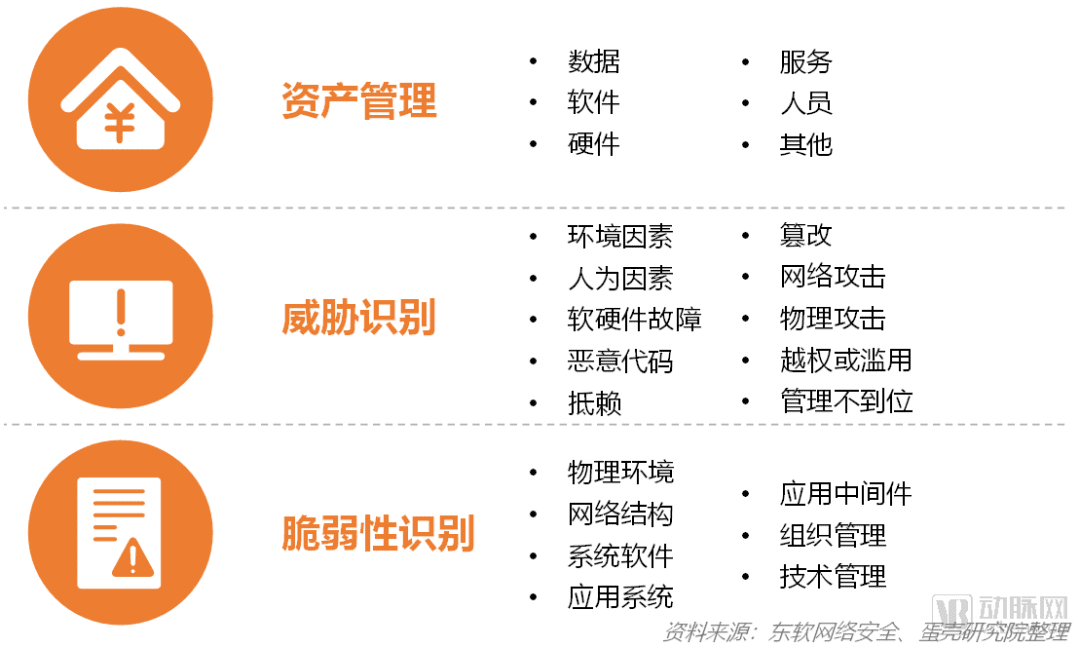
保障基础设施和通信的完整性是云平台的基础。云平台作为云服务的提供方,其提供的基础环境应当按照《GBT22239-2019 信息安全技术 网络安全等级保护基本要求》通用要求进行建设,包括设施、硬件、资源抽象控制层等,并且按照云扩展要求部分对云平台进行安全建设。
网络加密问题、硬件和端点问题都可能导致数据被非法入侵。没有加密和强密码保护的云平台可能更容易受到外部的攻击,造成数据泄露;或者如果云平台搭建时使用了有重大安全漏洞的设备,也可能会导致数据被盗取。
因此在医药企业选择云平台时,有必要优先选择行业龙头企业提供的相关云服务,以防止安全性问题。国内外顶尖的数字化技术企业都有云平台方面的布局,并且大多在安全性上提供了全面的保障。
以微软的Microsoft Azure为例。Azure 是一个公有云服务平台,支持极为广泛的操作系统、编程语言、框架、工具、数据库和设备选择。Azure 提供了广泛的可配置安全选项以及对这些选项进行控制的功能,方便用户自定义安全措施来满足组织部署的独特要求,并且以高可用性、安全且灵活的网络,为跨国药企、跨境医疗等提供更具安全性的全球化网络支持。
英国药企巨头GSK(葛兰素史克)在工作中使用了定制化个性化的安全报告解决方案– “ZAPAPP”。解决方案中使用了Microsoft Azure、Dynamics 365 和Power Platform等微软数字化产品的安全解决方案。Power Platform 解决方案允许他们简化和数字化流程。
PowerApps Canvas应用程序用于捕获安全风险相关的数据和上下文,包括照片。Microsoft Flow用于流程化的发送电子邮件通知。数据存储在Azure SQL表中,并使用Power BI报告进行可视化。在Ware工厂率先部署了这款应用后,GSK实现了安全隐患的全面快速排查,工作效率也得到了显著提升。因此这款应用很快获得了公司高层的支持,推广到更多的业务部门中。
(三)数字化患者管理提高患者依从性
药品的最终用户是患者。虽然患者的用药需要经过医生的诊断和处方,但是药企自身也需要对患者负责。尤其近几年在药企巨头内部越来越推崇“以患者为中心”的运营模式。阿斯利康曾在《BMJ Journals》上发表过一篇研究性的文章,该文章在对上千位患者进行了问卷调研后,将“以患者为中心”重新定义为“在患者的开放和持续参与中始终将患者放在第一位,从而在尊重和同情的前提下为患者及其家人提供最佳体验和结果”。
在“以患者为中心”的新理念下,只是把药卖给患者显然是不行的,药企还要持续关注患者的诊疗流程、疗效、不良反应、依从性等“售后”问题。在传统的运营模式下,药企主要通过医生与患者之间产生联系。而随着互联网医疗产业的兴起,通过数字化的渠道,药企可以实现与患者之间的近距离接触,更加精准的了解患者在实际药品使用过程中的需求和结果。
虽然相关法规明令药品广告在大众媒体上对处方药进行宣传,但是,以患者为中心,为患者提供有价值的服务和患者教育却并不违规。因此虽然无法直接面向消费者宣传处方药,药企依旧可以通过患者管理的方式与患者之间产生紧密的联系。
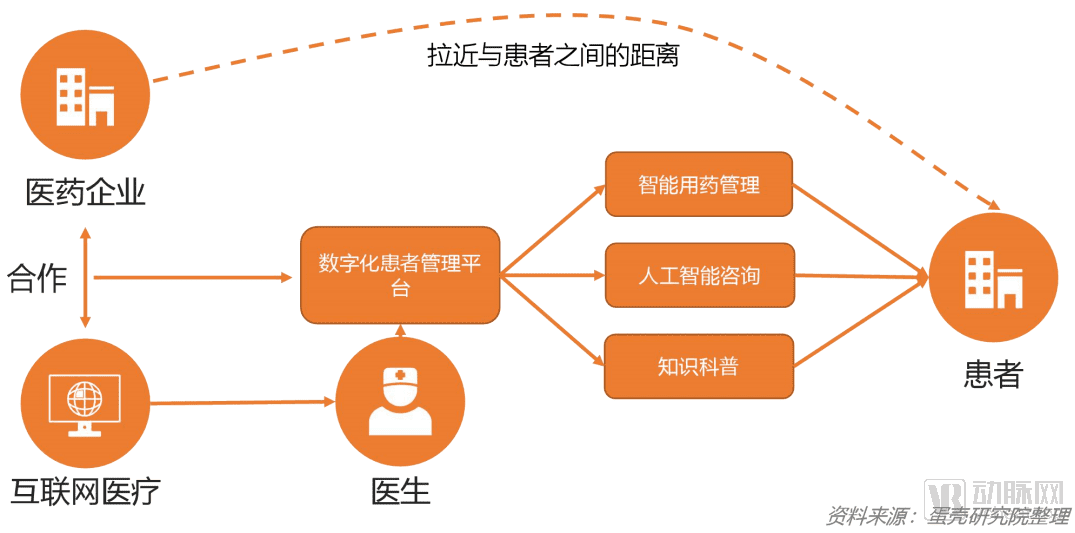
因此在过去几年中,医药企业与互联网医疗企业(包括互联网医院、医药电商等)之间频繁合作,搭建数字化的患者管理平台。尤其在慢病管理方面,慢病患者可以在平台上对自己的病情进行长期管理,同时还可以寻医问诊和了解疾病相关的知识。而药企和医生则可以了解患者的用药品种、用药剂量、复购频次、指标变化等,并对患者的慢病管理情况进行有针对性地指导和建议。
数字化技术有效提升患者依从性。患者依从性管理是药企赋能患者中的关键环节。在传统诊疗模式下患者与医生之间的沟通交流不频繁,自我管理的过程中很容易出现依从性问题。而在互联网管理模式中,虽然患者可以实现与医生之间高频度的病况交流,但是医务人员普遍工作繁忙,可能无法对每个患者进行详细的问询沟通和解答,长此以往可能会造成患者脱失。
更加深入的数字化手段可能可以解决医疗资源的不足。比如基于人工智能的问答机器人,就可以为患者群体中的共性问题进行解答,对患者的病情进行初步的分析,并在患者有必要就诊时及时提醒患者与医生沟通,并将相关内容直接与医生同步。
比如微软推出的Microsoft Healthcare Bot服务使医疗保健组织能够大规模构建和部署基于AI的合规对话式医疗保健体验。该服务将内置的医疗智能与自然语言功能,与可扩展性工具和合规性结构相结合,使医疗健康产品的提供者(例如医院,医药企业,医疗器械企业,远程医疗等)可以让用户访问高安全性的相关医疗服务和信息。Microsoft Healthcare Bot可以实现人工智能驱动下的对话式医疗保健体验,赋予医疗保健组织构建和扩展智能保健助手的能力,并且保障整体流程中的安全性和合规性。
“模块化云服务搭建敏捷运营体系”、“数字化工具提升员工工作体验”等场景详见报告全文。
三、数字化时代医药行业的未来走向
(一)医药企业与数字化原生企业融合加速
数字化原生企业是指:掌握数字经济的特征并把它们融入业务运营和企业文化核心的企业。数字化原生企业依托于数字化技术平台,将数字化技术的界限不断向企业深层次渗透,使其具有能够实现高速的业务扩展和创新,在赋能员工同时赋能用户。
在医药企业围绕着研发、临床研究、生产管理、营销推广的综合体系完成了初步的数字化转型过程之后,药企对于数字化生产力的需求会进一步提升,从使用通用型的产品向定制化需求演进。为医药企业提供定制化服务的数字化原生企业,可能会通过并购交易活动,从数字化技术服务的提供者,转变为药企内部的职能部门,实现二者之间的互相融合。
(二)云平台将成行业主流
与本地部署的on-premise 产品相比,云平台提供的PaaS(平台即服务)、SaaS(软件即服务)等服务类型更试合数字化转型的未来发展趋势。将办公场景假设在云平台上,医药企业不再需要规划自己的线下数据中心或网络中心,也不需要将过多的精力耗费在与自己主营业务无关的数字化团队管理上。他们只需要向云端发出指令,就可以实现全方位的办公需求。
在医药领域,云平台可以为医药企业从内部流程优化、外部拓展和医疗技术支持三个层面来提供服务。云平台降低了企业对于数字化产品的使用门槛,也降低了企业的试错成本。云平台的部署对企业的物理资源投入要求较低;订阅式的购买方式更进一步降低了企业在搭建阶段的成本投入;并且使用者可以通过web端随时远程访问应用,不受工作地点限制。
(三)AI+大数据转化数字化成果
大数据挖掘与人工智能技术相辅相成,互相影响。人工智能技术可以从经过结构化的大数据中挖掘出新的洞见,为企业发展提供新的思路方向。
实现了初步数字化的医药企业已经开始积累自己的运营数据。这些运营数据都成为了医药企业数字化资产的一部分,为医药企业下一步的发展奠定基础。当数据积累量达到一定的阈值,医药企业将有能力从这些数据中挖掘出更多有价值的信息,实现运营数据积累-挖掘数据内涵-调整企业运营策略的内部闭环,使企业实现指数级的增长。
翻译:
As an important industry related to the national economy and people’s livelihood. The digital technology will bring subversive innovation and reshape the entire medical and health industry ecology. In the big concept of medical and health, medicine is the pillar of constructing medical and health ecology. The scale of China’s pharmaceutical market has increased from 955.5 billion yuan in 2012 to 2.150 billion yuan in 2020. Which with an annual compound growth rate of 10.7%. The pharmaceutical industry must follow the trend, conform to the general trend of digital development. It actively seek new mutations, and better contribute to the development of the medical and health industry.
From the point of view of the current development of the pharmaceutical market. The digitalization of the pharmaceutical industry has shown initial results and started to enter the next stage. In order to better analyze the current situation of digital innovation in China’s pharmaceutical industry and explore the future innovation mode, Eggshell Research Institute, through a large number of industry expert interviews and enterprise research. It combined with market data, on the basis of referring to relevant research methods and theories, in-depth analysis of the current situation of digital development in the pharmaceutical industry. “Medical Digital Innovation Quarterly – Five Scenarios for Medical Digital Transformation” was launched. In order to provide reference for participants in medical digital innovation.
The digital transformation of the medical and health industry has entered the stage of implementation
In 2019, the scale of China’s digital economy further increased. According to the “White Paper on China’s Digital Economy Development (2020)” released by the China Academy of Communications. The scale of China’s digital economy reached 35.8 trillion yuan in 2019, accounting for 36.2% of GDP. A significant increase from 31.3 trillion yuan and 34.8% of GDP in the previous year. China’s digital economy has become a tidal wave that has swept through every industry in it.
Every time the world’s technology wave, never left behind the health care industry. The digital transformation of the healthcare industry has also intensified in recent years. Digital technology companies are helping every key player in the healthcare industry achieve a comprehensive digital transformation. We can take the diagnosis and treatment of lung cancer as an example to experience the overall digital development and transformation of the medical and health industry.
Real-world research is helping companies improve the effectiveness of their lung cancer drugs
Improving the efficiency of drugs is one of the key points that pharmaceutical enterprises continue to pay attention to. Although the drugs such as Coreda and Tesengchi have been the effective drugs in the treatment of lung cancer. Their effectiveness is still very limited, and the price is expensive, many patients can not afford it. Under the previous research and development methods, improving the efficiency of drugs can only be achieved by adjusting the structure of drugs. Which is inefficient and complicated. Real world research based on digital technology can mine valuable biotaggers from big data to help drugs further target effective populations. Thus improving the effectiveness of drug treatment.
Ai imaging has improved the accuracy of lung cancer diagnosis
Imaging doctors play an important role in the diagnosis of lung cancer in medical institutions. Experienced radiologists can accurately identify patients’ pulmonary nodules through CT, MRI and other imaging examinations to screen lung cancer at an early stage. But manual screening takes time and effort, and there is a persistent shortage of imaging doctors. Nowadays, artificial intelligence image recognition technology has been able to realize image interpretation with high accuracy. It helping medical institutions fill the gap of imaging doctors.
Internet medical treatment has become a new channel for patients to see a doctor
During the epidemic period, lung cancer patients no longer go to hospitals to buy medicine. And the combination of Internet medical and medical e-commerce has become a new channel for lung cancer patients to diagnose and purchase medicine. The domestic Internet medical industry has also achieved great development during this period. It achieving a series of breakthroughs from legal compliance to payment.
Digital technology AIDS insurance product design
People with small lung nodules are often unable to purchase lung cancer related insurance. With the help of insurance TPA enterprises. Insurance enterprises can better manage their own risks, design insurance types for small pulmonary nodules. And provide protection for a wider range of people. Ai-assisted diagnostic products have been approved for registration of medical devices, Internet medical treatment has realized medical insurance payment. And innovative commercial insurance products aided by digital technology have begun to enter the market. A series of changes all indicate that the digital process of the medical and health industry has moved from the proof-of-concept stage to the landing stage.
The digital transformation of medicine sinks into five scenarios
Among the various industrial roles in the medical and health industry, the pharmaceutical industry, as a provider of diagnosis and treatment solutions, is undergoing its digital transformation from the primary stage to a more in-depth direction.
In recent years, influenced by the overall policy environment, the digital transformation of the domestic pharmaceutical industry revolves around cost reduction and efficiency improvement. Therefore, when it comes to the landing link, the deep integration between digital technology and the pharmaceutical industry will be centered around the five landing scenes to achieve more efficient business operation.
Digital technology facilitates the whole process of drug research and development
For lung cancer, a disease with high morbidity and mortality, there is still an urgent clinical need for high-quality solutions to meet the different conditions of patients. Although breakthroughs have been made in the treatment of lung cancer in recent years, for example, the third generation of domestic EGFR-TKI targeting drugs have been launched, and a number of PD-1/PD-L1 monoababs have been approved for lung cancer indications, it still cannot cover all lung cancer patients.
Digital technology can help pharmaceutical enterprises realize the whole life cycle management of products, from the underlying data support to the final post-market drug research, digital technology can be seen.
There is a large amount of unstructured data scattered in various public channels in the pharmaceutical research and development industry. Including not only drug data, clinical research data, real world data and other data specifically related to diagnosis and treatment, but also approval data, insurance data, genetic data and other dimensions. These scattered data are collected, sorted and processed by data support enterprises into structured databases. So as to ensure that artificial intelligence technology can correctly read and analyze, and finally produce conclusions.
Ai drug developers organize published research results into knowledge maps that can be learned by machines.
Ai drug developers organize published research results into knowledge maps that can be learned by machines. On the basis of knowledge graph, we use artificial intelligence technology to select valuable drug molecules from a large number of published scientific research results, and carry out further verification, optimization and prediction. On the one hand, it can improve the efficiency of pharmaceutical enterprises in finding high-value drugs, and on the other hand, improve the success rate in the follow-up process of drug research and development. It is necessary to increase efficiency and reduce cost.
Digital clinical research management mode helps clinical research, which is mainly human, to achieve more efficient management and analysis. The clinical research electronic Data acquisition system (EDC), pharmacovigilance system (PV), electronic Patient Reporting Outcome system (ePRO), randomness and trial supply management system (RTSM) and other components of different links are connected with the clinical research management system (CTMS) to achieve a comprehensive connection from data to personnel.
The increasing digitalization of hospitals has brought about a large amount of clinical data.
The increasing digitalization of hospitals has brought about a large amount of clinical data. These clinical data, when organized and structured, can be used to provide real-world evidence for the drug development phase, for the expansion of indications for drugs on or already on the market, or for the development of biomarkers for drugs to target precisely the population.
In 2019, Swiss pharmaceutical company Novartis signed a deal with Microsoft that will allow researchers to combine Microsoft’s strength in artificial intelligence with Novartis’s expertise in life sciences to accelerate the development of new drugs.
The five-year deal will set up an “AI innovation lab” at Novartis and create joint working centres at Novartis’ offices in Switzerland and Dublin. As well as Microsoft’s research lab in Cambridge, UK. The aim is to give Novartis’s staff the artificial intelligence and cloud computing power they need to develop the next generation of drugs. Novartis plans to use Microsoft’s AI tools across the entire drug development process, including research, clinical trials, manufacturing, operations and finance. The companies will initially focus on three areas: personalised treatments for macular degeneration. The application of artificial intelligence technology to develop genetic and cellular therapies for acute lymphoblastic leukemia, and the use of neural networks to identify molecules that might be used to treat the disease.
Digital technology enterprises and pharmaceutical enterprises have their own shortcomings.
In the process of digital technology into the pharmaceutical industry, digital technology enterprises and pharmaceutical enterprises have their own shortcomings. Pharmaceutical enterprises have a deep understanding of disease mechanism and clinical pain points, but the development ability of digital products is relatively insufficient. Digital companies, on the other hand, are skilled in the application of digital technology, but lack expertise in the medical field.
Therefore, at the present stage of development, there are many innovative enterprises relying on the digital platform of digital technology enterprises to provide pharmaceutical enterprises with strong professional medical research and development services. However, with the continuous deepening of the digital transformation of the pharmaceutical industry, the industry will gradually move to a period of consolidation. Innovative companies will be integrated into the giants, from solution providers to specialized business units of pharmaceutical companies.
The data cloud focuses on medical information security
Data security in the medical industry has always been a sensitive topic in the medical and health industry, and concerns about security have also affected the digital process of the entire medical and health industry to a certain extent. However, with the maturity of cloud technology and the continuous improvement of data security level, the data cloud has become an inevitable trend in the development of the future pharmaceutical industry.
The gradual improvement of cloud computing technology has brought a breakthrough in communication efficiency and productivity for enterprises, and has shown its advantages in agile operation, cost optimization, enterprise compliance, operation income and other aspects. But on the other hand, public cloud services also bring another problem, security risks.
Cloud security covers many complex issues
Cloud security covers many complex issues, including protecting data from illegal intrusion, protecting data, hardware and software integrity, and smooth communication between users and cloud platforms.
Ensuring the integrity of infrastructure and communications is fundamental to cloud platforms. As a cloud service provider, the basic environment provided by the cloud platform shall be constructed in accordance with the general requirements of GBT22239-2019 Basic Requirements for Network Security Level Protection of Information Security Technology, including facilities, hardware, resource abstraction control layer, etc., and the security construction of the cloud platform shall be carried out in accordance with the cloud expansion requirements.
Network encryption issues, hardware and endpoint issues can all lead to data being hacked.
Network encryption issues, hardware and endpoint issues can all lead to data being hacked. Cloud platforms without encryption and strong password protection may be more vulnerable to external attacks, resulting in data leakage; Or if the cloud platform is built using devices with major security vulnerabilities, data may be stolen.
Therefore, when medical enterprises choose cloud platforms, it is necessary to preferentially select related cloud services provided by industry leading enterprises to prevent security problems. Top digital technology enterprises at home and abroad have cloud platform layout, and most of them provide comprehensive security protection.
Take Microsoft Azure, for example. Azure is a public cloud services platform that supports an extremely wide selection of operating systems, programming languages, frameworks, tools, databases, and devices. Azure provides a wide range of configurable security options and the ability to control these options, enabling users to customize security measures to meet the unique requirements of organizational deployment. In addition, Azure provides more secure global network support for multinational pharmaceutical companies and cross-border medical services with a highly available, secure and flexible network.
British pharmaceutical giant GlaxoSmithKline uses ZAPAPP, a customised, personalised safety reporting solution. Security solutions from Microsoft digital products such as Microsoft Azure, Dynamics 365 and Power Platform are used in the solution. The Power Platform solution allows them to streamline and digitize their processes.
The PowerApps Canvas application is used to capture data and context related to security risks, including photos. Microsoft Flow is used to process email notifications. Data is stored in Azure SQL tables and visualized using Power BI reports. After the application was first deployed in the Ware factory, GSK was able to quickly and comprehensively detect potential security risks and significantly improve work efficiency. So the app quickly gained high-level support and spread to more business units.
Digital patient management improves patient compliance
The end user of the drug is the patient. Although patients need to be diagnosed and prescribed by doctors, pharmaceutical companies themselves also need to be responsible for patients. Especially in recent years, the “patient-centered” operation model is increasingly advocated within the pharmaceutical giants. Astrazeneca published a study in BMJ Journals that redefined “patient-centered” as “always putting the patient first in the patient’s openness and ongoing engagement to provide the best experience and outcomes for patients and their families with respect and compassion.”
Under the new concept of “patient-centered”, it is obviously not possible to just sell drugs to patients, and pharmaceutical companies should continue to pay attention to the “after-sales” problems such as the diagnosis and treatment process, efficacy, adverse reactions and compliance of patients. In the traditional business model, pharmaceutical companies are mainly connected through doctors and patients. With the rise of the Internet medical industry, pharmaceutical companies can achieve close contact with patients through digital channels, and more accurately understand the needs and results of patients in the actual process of drug use.
It is not against the law to provide patient-centered,
Although the regulations require drug advertisements to promote prescription drugs in the mass media, it is not against the law to provide patient-centered, valuable services and patient education. Therefore, although they cannot directly promote prescription drugs to consumers, pharmaceutical companies can still have a close relationship with patients through the way of patient management.
Therefore, in the past few years, medical enterprises and Internet medical enterprises (including Internet hospitals, medical e-commerce, etc.) have frequently cooperated to build a digital patient management platform. Especially in terms of chronic disease management, patients with chronic diseases can carry out long-term management of their diseases on the platform. And at the same time, they can seek medical advice and learn about diseases. However, pharmaceutical companies and doctors can learn about patients’ drug varieties, dosage, repurchase frequency, index changes, etc., and provide targeted guidance and suggestions for patients’ chronic disease management.
Digital technology effectively improves patient compliance.
Digital technology effectively improves patient compliance. Patient compliance management is a key step in empowering patients for pharmaceutical companies. In the traditional diagnosis and treatment mode, the communication between patients and doctors is not frequent. And the problem of compliance is easy to occur in the process of self-management. However, in the Internet management mode. Although patients can achieve a high frequency of disease communication with doctors, medical staff are generally busy and may not be able to carry out detailed inquiries. Which communication and answers for each patient, which may cause the loss of patients in the long run.
Deeper digitisation may solve the shortage of medical resources. For example, the question-and-answer robot based on artificial intelligence can answer the common questions in the patient group, conduct a preliminary analysis of the patient’s condition. And remind the patient to communicate with the doctor in time when it is necessary for the patient to see a doctor. And the relevant content will be directly synchronized with the doctor.
For example, Microsoft’s Microsoft Healthcare Bot service enables healthcare organizations to build and deploy AI-based compliant conversational healthcare experiences at scale. The service combines built-in healthcare intelligence and natural language capabilities with extensibility tools and a compliance structure, enabling healthcare product providers. Such as hospitals, pharmaceutical companies, medical device companies, telemedicine, etc. Which to give users access to high security related healthcare services and information. The Microsoft Healthcare Bot enables a conversational healthcare experience powered by artificial intelligence. Empowers healthcare organizations to build and extend intelligent healthcare assistants, and ensures security and compliance throughout the process.
“Modular cloud services build Agile operation system”. “digital tools improve employee work experience” and other scenarios are detailed in the full text of the report.
The future trend of medicine industry in digital age
Accelerated integration of pharmaceutical enterprises and digital native enterprises
Digital native enterprise refers to the enterprise that grasps the characteristics of digital economy and integrates them into the core of business operation and corporate culture. Relying on the digital technology platform. Digital native enterprises continue to deeply penetrate the boundaries of digital technology to enable them to achieve high-speed business expansion and innovation. It enabling employees and users at the same time.
After pharmaceutical enterprises have completed the initial digital transformation process centering on the integrated system of R&D. clinical research, production management and marketing promotion, pharmaceutical enterprises’ demand for digital productivity will be further improved. It evolving from the use of general-purpose products to customized demands. Digital native enterprises that provide customized services for pharmaceutical enterprises may change from digital technical service providers to internal functional departments of pharmaceutical enterprises through mergers and acquisitions activities, so as to realize mutual integration between the two.
Cloud platform will become the mainstream of the industry
The types of services offered by the cloud platform. Such as PaaS (platform as a service) and SaaS (software as a service). They are more attuned to the future of digital transformation than the on-premise products that are deployed on the premises. If the office scene is assumed on the cloud platform, pharmaceutical enterprises no longer need to plan their own offline data centers or network centers. Nor do they need to spend too much energy on the digital team management that has nothing to do with their main business. All they need to do is send orders to the cloud and they can do everything they need.
In the pharmaceutical field, cloud platform can provide medical enterprises with services from three aspects. Internal process optimization, external expansion and medical technical support. The cloud platform reduces the threshold for enterprises to use digital products. And also reduces the cost of trial and error. Cloud platform deployment has low requirements on enterprise physical resource investment. The subscription purchase mode further reduces the cost input of the enterprise in the construction stage. And the user can access the application remotely through the web terminal at any time. It not subject to the restrictions of the work place.
AI+ Big data to transform digital achievements
Big data mining and artificial intelligence technology complement and influence each other. Artificial intelligence technology can dig out new insights from structured big data and provide new directions for enterprise development.
Pharmaceutical companies that have achieved initial digitization have begun to accumulate their own operational data. These operational data have become a part of the digital assets of pharmaceutical enterprises. laying the foundation for the next step of the development of pharmaceutical enterprises.
When the amount of data accumulation reaches a certain threshold, pharmaceutical enterprises will be able to mine more valuable information from the data. And realize the internal closed-loop of operation data accumulation – data mining – adjustment of enterprise operation strategy. So that enterprises can achieve exponential growth.
These are excerpts from the report. Read the full report.
本文由数字化转型网(www.szhzxw.cn)转载而成,来源于网络;编辑/翻译:数字化转型网默然。

免责声明: 本网站(http://www.szhzxw.cn/)内容主要来自原创、合作媒体供稿和第三方投稿,凡在本网站出现的信息,均仅供参考。本网站将尽力确保所提供信息的准确性及可靠性,但不保证有关资料的准确性及可靠性,读者在使用前请进一步核实,并对任何自主决定的行为负责。本网站对有关资料所引致的错误、不确或遗漏,概不负任何法律责任。
本网站刊载的所有内容(包括但不仅限文字、图片、LOGO、音频、视频、软件、程序等) 版权归原作者所有。任何单位或个人认为本网站中的内容可能涉嫌侵犯其知识产权或存在不实内容时,请及时通知本站,予以删除。