在企业架构建设过程中,业务架构通常以流程梳理为重点,实现企业端到端流程贯通,并以此为基础整合管理体系,建立流程管理机制,形成一流的流程管理体系和标准文件体系,解决体系要求和业务操作两张皮的现象。 数字化转型网www.szhzxw.cn
随着企业的不断发展,业务流程管理如今已经在越来越多的企业中体现出管理价值。然而,众所周知,企业所涉及的业务流程少则几千个,多达上万个,如何才能高效有序地管理这些流程,是实现其价值的关键所在。
一、业务管理存在的的主要问题
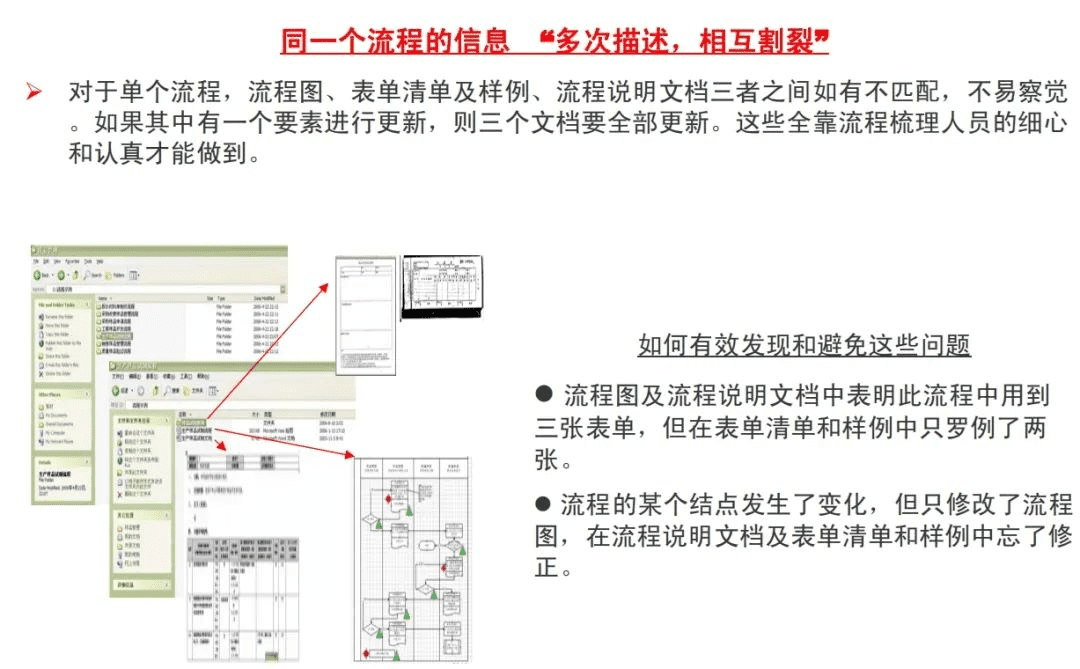
1、管理体系“孤岛”现象严重。对同一活动的管理要求分散在各种自成一体和管理体系文档中,造成管理体系“各自为政”局面。不同的管理体系,因为管理对象的不同,一般由不同的归口管理部门负责不同体系的运行工作,造成企业体系要求同管理流程两张皮现象。
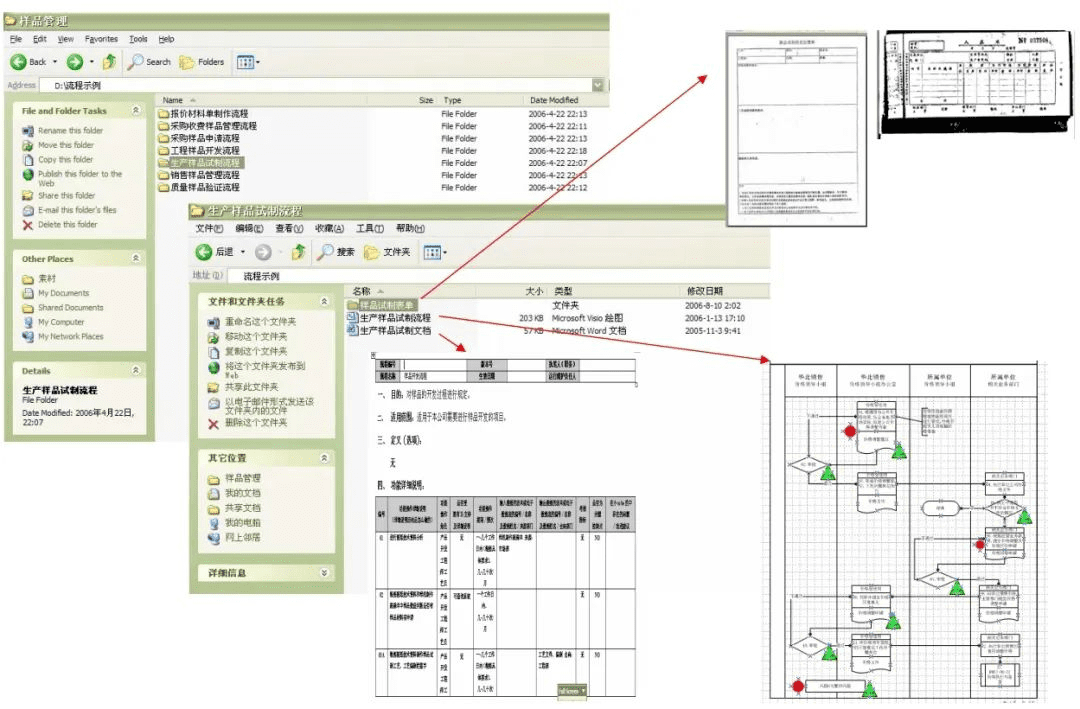
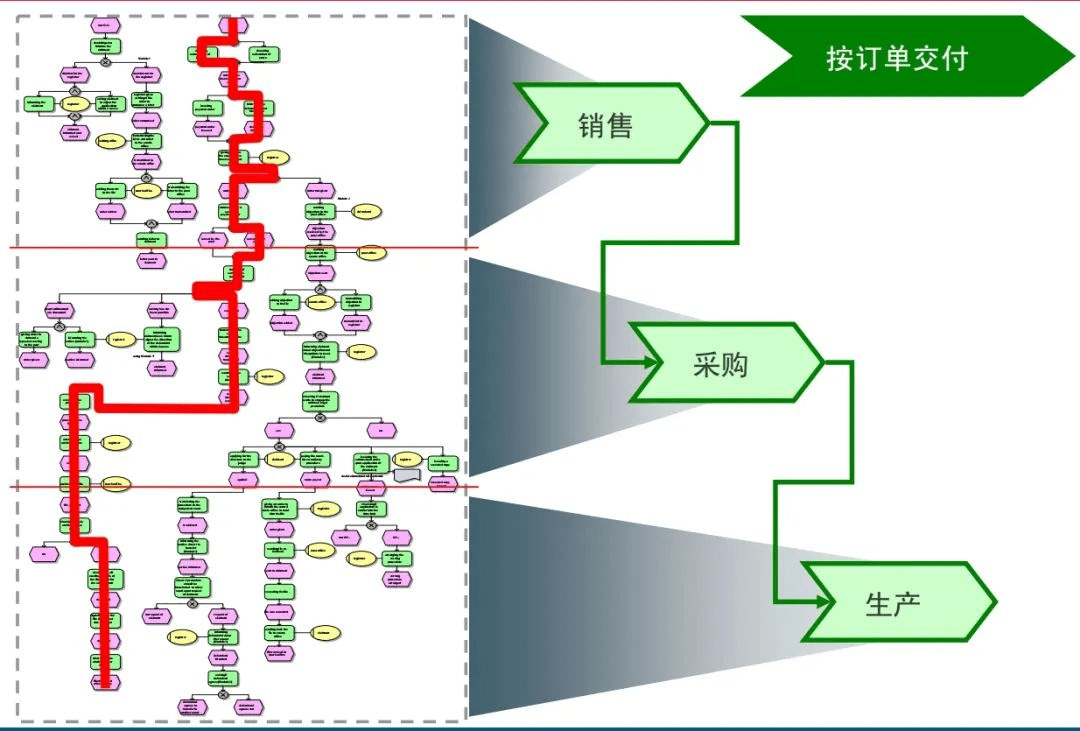
2、管理要素无法标准化和精细化管理。业务流程与管理要素无法匹配,流程更没有精细化到岗位,造成这些流程图就成了空设。 数字化转型网www.szhzxw.cn
3、理不清“流程”和“流程”之间的关系。跨部门运转的流程 “扯皮”现象严重,流程没有找到流程“主人”的问题。
二、Aris流程管理建模方法
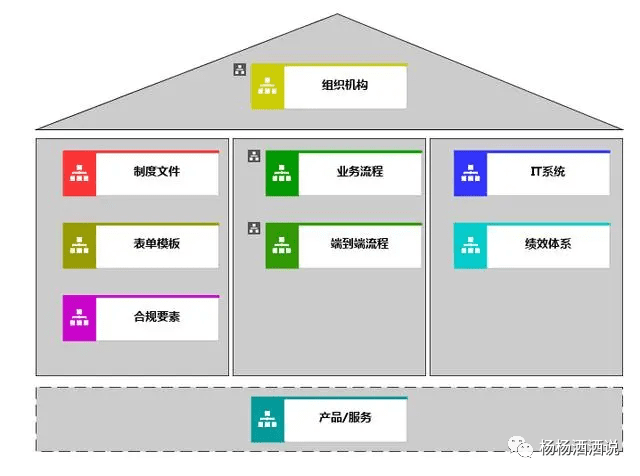
ARIS建模不仅是一套建模工具,其内含了自身的流程建模方法论,尤其是经典的房式结构被大家广泛熟知。ARIS建模方法是面向过程的模型结构,可以帮助企业完成各阶段的建模工作。它集成了众多卓越的理念和方法,广泛应用于国际和国内各行业流程与管理体系应用。ARIS体系结构模型描述了企业的组织视图、数据视图、流程视图、功能视图和战略及服务视图,然后由这5个视图组成一个形状如“房子”的房式结构:这五个视图既相互独立,又相互关联,形成一个闭环系统。 数字化转型网www.szhzxw.cn
ARIS是Architecture of Integrated Information System(集成信息系统架构)的首字母缩写,是一套涵盖流程战略、流程设计、流程实施和流程监控的集成信息架构的流程管理平台,最大的特点是“集成”,通过流程视角把企业的组织视图、数据视图、流程视图、功能视图和战略及服务视图等功能集成在一起,组成一个形状如“房子”的房式结构,让人们更清晰、全面地获取相关组织管理活动的信息,用这一软件系统进行流程描述的过程也称为流程建模。由于传统制度和流程描述文件存在的割裂、无序、重复、分散等问题,流程建模用一套逻辑把众多信息集成在一起,支持了公司生产经营中各类管理体系的需求。
专业的业务流程管理的第一步包括流程的设计、分析和优化。设计包括记录现有流程的实际状态。将使用流程的员工所掌握的相关知识收集与整合起来,不仅可以提高流程的透明度,而且可以对流程做更深入的分析。结构化的和流程—组织形式的模型可以反映企业运营的复杂性,并将其简化为可管理的术语。流程分析阶段提供业务流程实际效率的重要信息。ARIS可以十分有效地确定流程的优势与缺陷。将人力与物力资源的利用率结合动态变化的等待时间一起记录,可反映造成企业成本过高的瓶颈,使成本中心、资源利用率、介质和系统停机等因素对流程速度的影响一目了然。
如同“最佳实践”模式一样,即相对于预想的最佳时间和成本体现流程的变量差异。基于分析和模拟的综合评估与报告,可为企业优化关键业务流程提供绩效指标和相关信息。这种基于分析和实施目标流程基础进行的流程优化,有助于企业迅速、经济地做出调整,不会对质量产生任何负面影响。由于企业员工能够借此掌握业务流程中资源利用率及相关的改进状况,因而提高了进行业务流程设计的投资回报度。
ARIS设计平台为企业完成上述任务提供了必要的工具。更重要的是,企业现在可以针对质量和客户关心的其他方面,演示业务流程的改进效果。只有在业务流程达到同样高水平的情况下,企业IT系统才能给予有效支持。换句话说,企业的重点必须放在准备实施的业务流程上,然后再去关注实施过程。IT 本身并不是目的,其为企业提供的价值在于通过时间和成本优化企业的流程,因为大部分流程改进都离不开 IT 的支持。业务流程设计可以使经过优化的业务流程“切实可行”,供员工在 IT系统中落实实施。
IBM、埃森哲、德勤等行业顶级咨询公司,也都将ARIS作为企业架构流程建模咨询方法论,作为为企业提供流程建模的分析的标准化应用。也是有志从事流程管理工作和企业架构咨询工作从业者必须掌握的核心方法论和工具。

数字化转型网www.szhzxw.cn
英文翻译:
In the process of enterprise architecture construction, the business architecture usually focuses on the process sorting to realize the end-to-end process of the enterprise, and on this basis, the management system is integrated, the process management mechanism is established, the first-class process management system and standard document system are formed, and the phenomenon of system requirements and business operations are solved.
With the continuous development of enterprises, business process management has now reflected the management value in more and more enterprises. However, as we all know, enterprises involve as few as thousands of business processes, as many as tens of thousands of business processes, how to efficiently and orderly management of these processes, is the key to realize their value.
First, the main problems of business management
1, the management system “island” phenomenon is serious. The management requirements for the same activity are scattered in various self-contained. And management system documents, resulting in a “separate management system” situation. Different management systems, because of the different management objects, are generally responsible for the operation of different systems by different centralized management departments, resulting in two aspects of enterprise system requirements and management processes. 数字化转型网www.szhzxw.cn
2, management elements can not be standardized and refined management. Business processes and management elements do not match, and the process is not refined to the position. Resulting in these flow charts are empty.
The relationship between “process” and “process” is unclear. The phenomenon of “wrangling” in the process of cross-department operation is serious. And the process does not find the “master” of the process.
Aris process management modeling method
ARIS modeling is not only a set of modeling tools, it contains its own process modeling methodology, especially the classic room structure is widely known. ARIS modeling method is a process-oriented model structure, which can help enterprises complete the modeling work in each stage. It integrates a number of outstanding concepts and methods, widely used in international and domestic industry process. And management system applications. ARIS architecture model describes the organizational view, data view, process view, function view and strategy and service view of the enterprise, and then composed of these five views to form a house structure like “house” : these five views are independent of each other, but also related to each other, forming a closed-loop system.
ARIS, the acronym of Architecture of Integrated Information System, is a set of integrated information architecture process management platform covering process strategy, process design, process implementation and process monitoring. The biggest feature is “integration”. Through the process perspective, the enterprise’s organizational view, data view, process view, function view, strategy and service view and other functions are integrated together to form a “house” shape structure, so that people can more clearly and comprehensively obtain the information of related organization and management activities. The process description process with this software system is also called process modeling. Due to the fragmentation, disorder, repetition and dispersion of traditional system and process description documents, process modeling integrates a lot of information with a set of logic to support the needs of various management systems in the company’s production and operation.
The first step in professional business process management involves process design, analysis.
And optimization. Design involves documenting the actual state of existing processes. The collection and integration of relevant knowledge held by the employees using the process not only improves the transparency of the process, but also enables more in-depth analysis of the process. Structured and process-organization-form models can reflect the complexity of business operations and reduce it to manageable terms.
The process analysis phase provides important information about the actual efficiency of the business process. ARIS can be very effective in determining the strengths and weaknesses of a process. Recording the utilization of human and material resources in conjunction with dynamically changing wait times can reflect the bottlenecks that cause excessive costs in the enterprise. And make it clear how factors such as cost centers, resource utilization, media and system downtime affect process speed. 数字化转型网www.szhzxw.cn
As with the “best practice” pattern, that is to say, the process variable is different relative to the expected best time and cost. Comprehensive assessment and reporting based on analysis and simulation can provide performance indicators and relevant information for enterprises to optimize key business processes.
This process optimization, based on the analysis and implementation of targeted process foundations, helps organizations to adjust quickly .
And cost-effectively without any negative impact on quality. Because enterprise employees can grasp the resource utilization rate and related improvement status in the business process, the return on investment of business process design is improved.
The ARIS design platform provides enterprises with the necessary tools to accomplish these tasks. More importantly. Companies can now demonstrate improvements in business processes for quality and other aspects of customer concern. Enterprise IT systems can only support business processes effectively if they reach the same high level. In other words, the focus of the enterprise must be on the business process to be implemented. 数字化转型网www.szhzxw.cn
And then focus on the implementation process. IT is not an end in itself, but the value IT provides to the enterprise is to optimize the enterprise’s processes through time and cost, because most process improvements cannot be achieved without IT support. Business process design makes optimized business processes “actionable” for employees to implement in IT systems.
Industry leading consulting firms such as IBM, Accenture, and Deloitte have also adopted ARIS as an enterprise architecture process modeling consulting methodology, as a standardized application of process modeling analysis for enterprises. It is also the core methodology and tool that practitioners aspiring to engage in process management work and enterprise architecture consulting work must master.
本文由数字化转型网(www.szhzxw.cn)转载而成,来源于 数字化转型战略指南;编辑/翻译:数字化转型网小汤圆。

免责声明: 本网站(http://www.szhzxw.cn/)内容主要来自原创、合作媒体供稿和第三方投稿,凡在本网站出现的信息,均仅供参考。本网站将尽力确保所提供信息的准确性及可靠性,但不保证有关资料的准确性及可靠性,读者在使用前请进一步核实,并对任何自主决定的行为负责。本网站对有关资料所引致的错误、不确或遗漏,概不负任何法律责任。
本网站刊载的所有内容(包括但不仅限文字、图片、LOGO、音频、视频、软件、程序等) 版权归原作者所有。任何单位或个人认为本网站中的内容可能涉嫌侵犯其知识产权或存在不实内容时,请及时通知本站,予以删除。