一、ERP和MES之间的“区别”
ERP和MES系统在企业管理中都扮演着重要的角色,但它们的功能和职责各有不同。
既然今天要聊ERP和MES的区别,那肯定要给大家讲明白了才行。
所以,这里首先得从工厂的业务模式说起。
作为一个工厂,存在的目的只有两个,生产产品,然后卖出去。所以在工业企业中,通常会分为两个大的部门,一个是生产部门,一个是业务部门,前者通过MES(制造执行系统)管理,后者通过ERP(管理信息系统)来管理。
这两个系统啥区别呢?
ERP更倾向于财务信息的管理,而MES更倾向于生产过程的控制,简单的说,ERP主要告诉你客户需要生产多少个瓶子,哪天下单,哪天要货,而MES主要负责监控和管理生产这些瓶子的每一个步骤和工序如何实现。 数字化转型网(www.szhzxw.cn)
在中国工厂的很多车间里,各个生产设备之间、生产设备和控制器之间,都已经基本实现了连通。再牛逼一点的公司里,整个工厂已经通过制造执行系统(MES)连通起来,而业务部门全部通过ERP连通起来了。
但大家发现问题没有?
ERP和MES其实并没有连起来!
所以当ERP给MES下达生产计划指令后,MES在生产过程中发生了与计划偏差的事项(比如设备坏了,原料不合格等等),MES会根据车间的实际情况进行调整。但是ERP是不知道的!所以它会继续按照原本的计划执行订单,时间久了,财务系统和工厂的实际情况就会出现非常大的偏差。
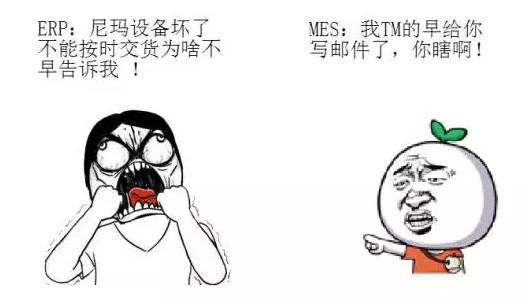
至于为啥没连起来,两个原因,首先是ERP和MES的开发公司通常是两拨人,搞财务的和搞生产的合作,不但互相不懂对方的职业术语,鸡同鸭讲,而且互相看不上对方。另外,业务部门和生产部门在公司里通常是分开运营,各自的领导有各自喜欢的供应商(原因你懂的)。
当然,人民群众的智慧是无穷的,他们是断然不会干等着两个系统的偏差越来越大的,既然系统不给力,咱人工上,咱们工人有力量。所以工厂车间通常会定期把MES的调整项做成一个表,交给业务部门,然后由业务部门手动在ERP中调整过来。 数字化转型网(www.szhzxw.cn)
ERP和MES的问题只是工厂内系统断层的一个问题缩影,事实上工厂里还有非常多的其他系统,设计、制造、采购、办公等等,这些系统都是一个个的信息孤岛,互相都不知道对方在干啥,干到哪一步了。其中一个部分出了特殊情况,其他部分都不知道,只有等到问题出现了,才能退回来,所有系统再一个个改。
这里插一句,当初老罗的锤子手机之所以难产,就是因为在设计的时候,生产人员并没有实时了解情况,所以实际生产时发现原本的牛逼设计会导致良品率很低,只能退回去重新设计。这样每一个产品都要改来改去,所以一个工业品从设计到上线量产,往往要用一两年的时间。
当然,这种事也不是第一天存在的,以前因为在工业时代,产品的生命周期很长,就好比西门子一个型号的变频器可以卖三十年,这样一两年的研发上线时间也就显得不那么长了,其余的问题,靠着人工沟通,虽然有错,倒也都相安无事。
然而,可怕的狼终于还是来了。
这两只狼,一只叫产能过剩,一只叫互联网。
全球性的产能过剩,导致企业的竞争越来越激烈,以往一款产品卖三十年的做法已经不行了,你跑不快,有的是快的。老罗的锤子手机仅仅晚上线了几个月,就从一款万众期待的爆款,成为了臭大街的过时货,产品的生命周期大大缩短了。
互联网时代的到来,撼动了工业时代的一大基础,信息不对称。工业时代里,因为生产厂家无法低成本的了解每一个客户的需求,所以往往采用一刀切的方法,就是把需求做多的性能组合到一起,成为一款产品。 数字化转型网(www.szhzxw.cn)
比如你想要一双适合你的脚的鞋子,鞋厂是无法知道你的脚多大的,所以只能测量很多人的脚之后,把最集中的尺码分成40号,41号,42号等等,但是如果你的脚偏肥或偏瘦,对不起,概不伺候。
互联网改变了这个局面,人与人,人与厂商,可以低成本的实现连接,从而让每个人的个性需求被放大,人们越来越喜欢个性化的东西。但是个性化的东西需求量没有那么大,这就需要工业企业能够实现小批量的快速生产。
这两只狼,逼迫着传统工业必须做一件事,一件工业社会最不爱做的事,就是快速、小批量、定制化的生产。
所以说到这里,ERP和MES的区别我们可以将它归结为以下几点:
1、功能焦点
ERP主要侧重于整合企业内部各种业务流程和数据,包括财务、人力资源、供应链管理等,旨在提高企业整体运营效率。
MES则更专注于实际生产过程的监控和控制,管理生产线上的任务执行、设备状态、产品质量等,以提高生产效率和可追溯性。
2、范围和深度ERP涵盖企业范围内的所有业务流程和功能,具有广泛的应用范围,但可能在生产现场的实时监控和控制方面有所欠缺。
MES专注于生产现场,针对实际的生产执行过程提供更详细和深入的监控和管理,但较少涉及企业其他方面的管理。
3、使用对象ERP通常由企业高层管理层和跨部门团队使用,用于决策制定、资源规划和综合管理。
MES更多地由现场生产人员、生产主管和设备操作员使用,用于实际生产流程中的监督、控制和反馈。
4、时间维度ERP倾向于长期规划和预测,以满足企业整体的战略目标和市场需求。
MES通常是以实时或近期的时间为基础,以满足生产现场的需要。它需要根据实际情况对生产任务进行动态调整,以应对突发情况和优化生产效率。
5、数据类型和用途ERP处理和整合各种类型的企业数据,包括财务、人力资源、供应链等,用于决策支持和综合分析。
MES处理与生产相关的实时数据,包括设备状态、生产进度、质量指标等,用于生产现场的操作控制和优化。 数字化转型网(www.szhzxw.cn)
6、目标维度
ERP主要关注企业的财务管理、供应链管理和人力资源管理等方面,旨在提升企业的整体效率和效益。
而MES则专注于生产过程的控制和优化,注重对生产现场的实时监控和调整,以确保生产质量和交货期。
总言之,ERP和MES在企业管理中扮演着不同的角色,ERP更注重全局的资源管理,而MES则更注重生产现场的实时监控和管理。而在工业4.0的背景下,实现ERP与MES的集成和协同,将有助于企业实现快速、小批量、定制化的生产模式,提升企业的整体竞争力和适应能力。
二、ERP和MES之间的“联系”
上面讲了那么多,这里就且先各用一句话介绍一下吧。
- ERP:综合性软件系统,用于整合管理企业内各项业务流程和数据。
- MES:负责监控和管理实际生产过程的系统,确保生产计划的执行和生产效率。
再来看这个例子,假设我们在讨论一家生产汽车零部件的工厂。
ERP (Enterprise Resource Planning,企业资源计划):可以想象成是这家工厂的大脑和中枢系统。ERP是一个综合性的软件系统,用于管理和整合企业内的各种核心业务流程和数据。在这家工厂中,ERP系统会管理从采购原材料到生产调度、库存管理、销售订单、财务和人力资源等方方面面的运营。
MES (Manufacturing Execution System,制造执行系统):MES则是工厂的操作控制系统。在汽车零部件工厂中,它连接着生产线上的各种机器设备和传感器,负责监测生产进度、收集生产数据、协调生产流程,并与ERP系统交互,确保生产计划的执行。

这二者之间的联系在于它们共同构成了一个完整的企业管理和运营体系。ERP作为整体的管理平台,而MES则是负责实际生产执行和监控的系统。二者协同工作,确保企业能够高效运营、生产优质产品并管理其资源。 数字化转型网(www.szhzxw.cn)
三、ERP和MES的“功能介绍”
1、ERP系统
ERP即为企业资源计划管理,是针对物资资源管理(物流)、人力资源管理(人流)、财务资源管理(财流)、信息资源管理(信息流)、生产计划等集成一体化的企业管理软件。
拿我之前公司所使用的ERP系统举例,其主要功能分为6个模块,客户可以根据自己的需要自由选择想要使用的功能,并在此基础上进行二次搭建,相较于传统ERP更加灵活高效,非常适合中小型企业使用。
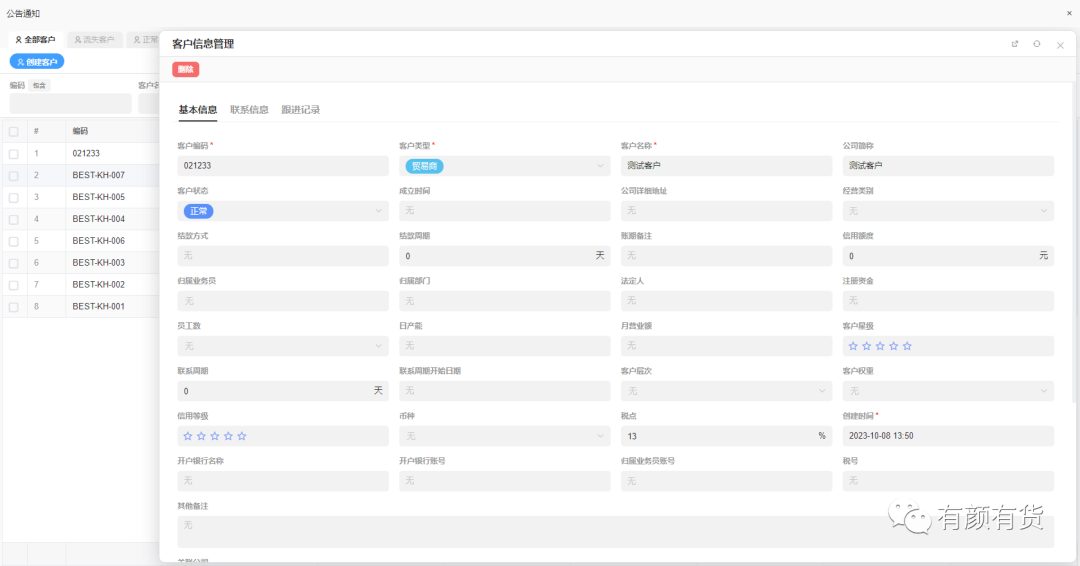
(1)客户管理
企业的财务管理人员可通过ERP系统中的决策支持智能系统,全面了解和掌握企业的经营状况,准确的分析和制定企业的发展方向,有效的控制和降低企业的运作成本;
企业的中层管理者可以通过ERP系统安排好相应的采购计划、生产计划、销售计划和资金计划;
企业的基层管理者可以通过ERP系统操作下达日常的工作指令。
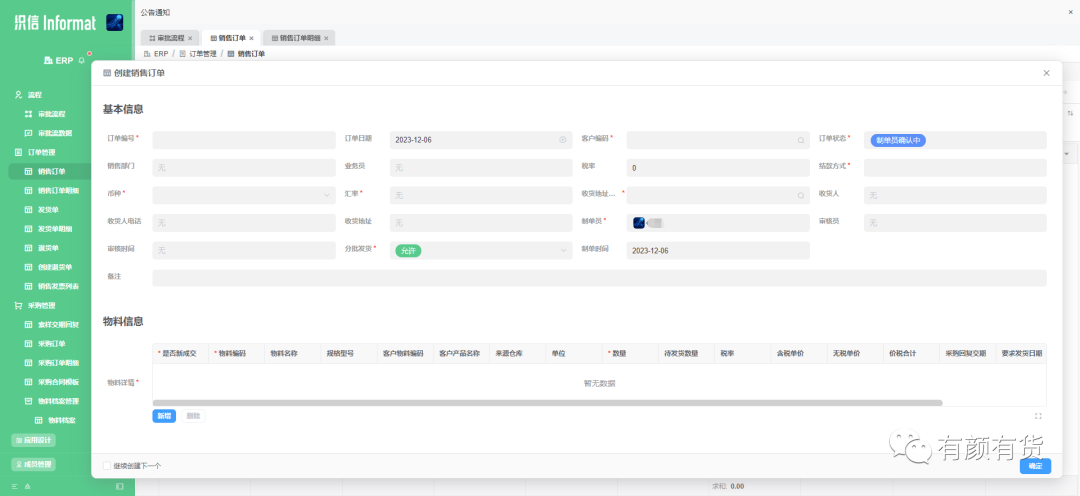
(2)销售管理
ERP系统的销售管理是从产品的销售计划开始,对其销售产品、销售地区、销售客户各种信息的管理和统计; 数字化转型网(www.szhzxw.cn)
可对销售数量、单价、金额、利润、绩效、客户服务做出全面的分析。
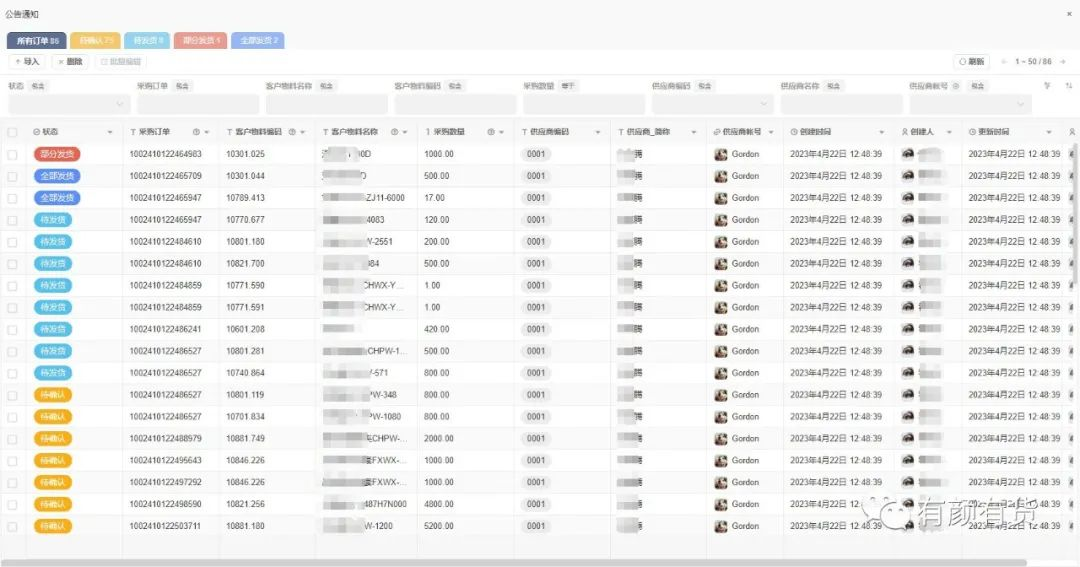
(3)采购管理
ERP系统的采购管理可以为企业确定合理的订货量、优秀的供应商和保持最佳的安全储备;
能够随时提供订购和验收的信息,跟踪和催促外购或委托加工的物料,保证货物及时到达;
还可以建立供应商的档案,能够帮助企业动态掌握项目采购成本和利润的管控,减少可控的损失。
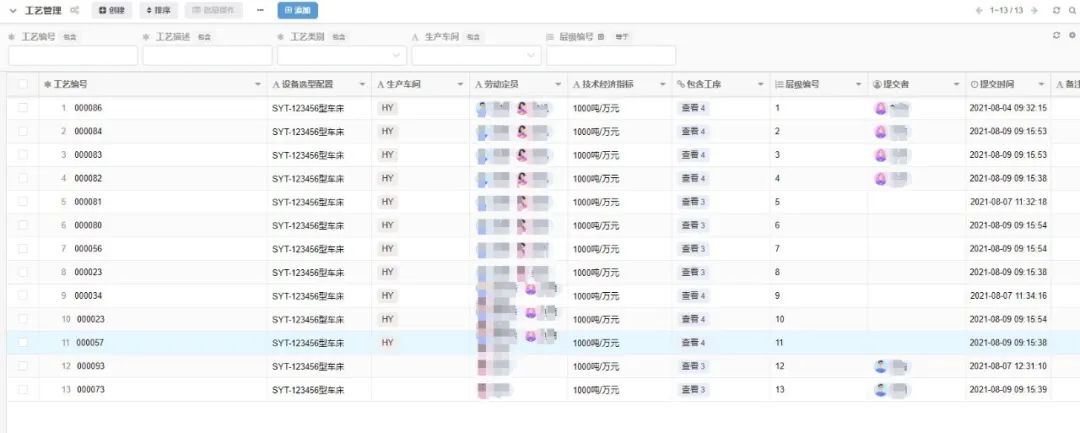
(4)技术管理
技术管理模块包含工艺管理、主料/辅料管理、工艺管理等部分;
车间管理者可以通过系统进行计划的生产、质检、完成度等工作,负责人情况、完成情况在线记录;
管理层随时查看计划进度,一旦产品质量出现异常,输入单号便可查询完整档案。
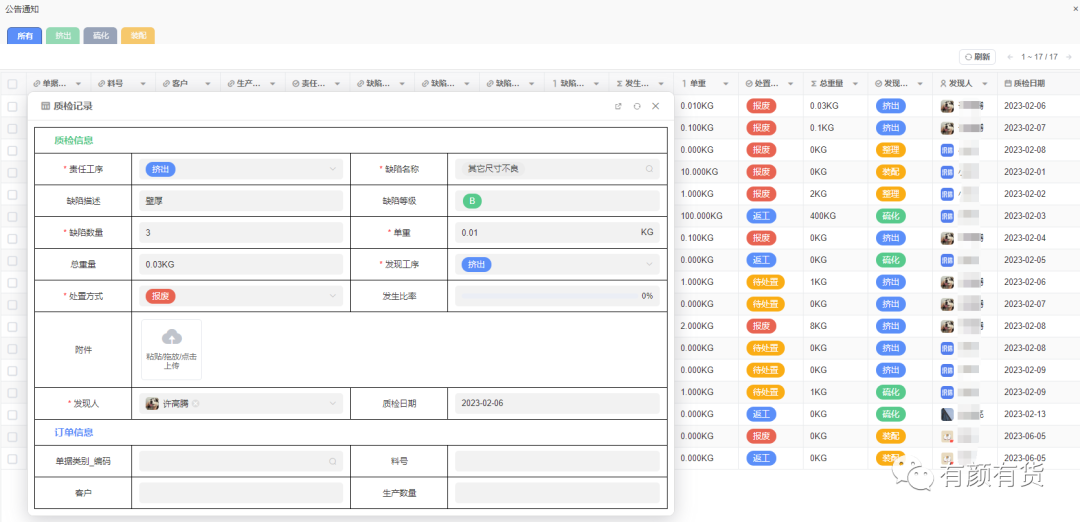
(5)生产管理
企业确定它的一个总生产计划,再经过系统层层细分后,下达到各部门去执行;
将企业的整个生产过程有机的结合在一起,使得企业能够有效的降低库存,提高效率;
同时各个原本分散的生产流程的自动连接,不会出现生产脱节,耽误生产交货时间。
(6)库存控制
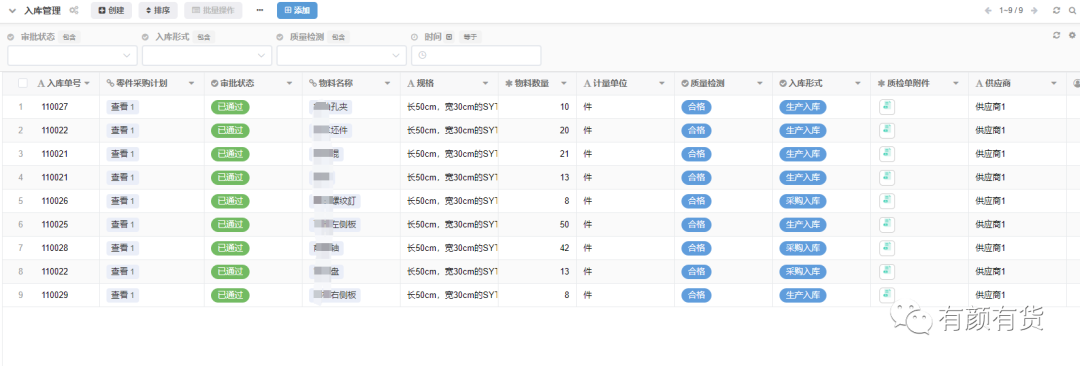
ERP系统的库存控制会结合其他模块的数据对企业的库存进行合理的控制;
在保证生产所需的物资供应充足的同时避免企业的库存积压;
功能模块通常可以根据组织的需求进行定制和配置,以满足不同的业务需求,从而提高组织的效率和运营管理水平。 数字化转型网(www.szhzxw.cn)
2、MES系统
生产管理系统(MES英文全称 Manufacturing Execution System)开发是针对制造型企业的生产运营与生产管理而服务的。生产管理系统主要包括生产计划管理、成本管理、物料需求计划、采购管理、库存管理、质量管理等核心管理系统,进行生产管理系统建设能够提高各组织部分管理的准确性和及时性。
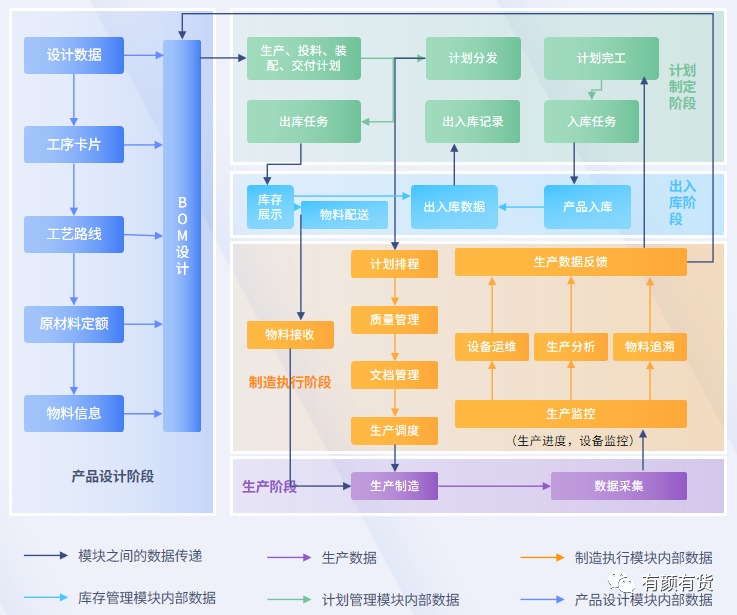
生产管理是一个复杂的过程,需要仔细的计划和执行,基本步骤如下:
- 规划生产流程:生产管理包括时间表、预算和生产过程所需的材料等;
- 组织生产流程:生产管理包括构建组织结构、分配角色和职责以及建立跟踪和监控生产流程的系统;
- 制定有效的沟通策略:生产管理包括评估员工的绩效、调整流程和程序以提高效率、为团队设定目标等;
- 指导生产过程:生产管理包括提供反馈和指导、设定明确的目标和期望以及创建鼓励协作和创新的环境。
我之前公司使用的低代码平台提供完善的MES管理系统模块,具备生产计划管理、成本管理、物料需求计划、采购管理、库存管理、质量管理等核心管理系统,能够满足企业大部分的生产管理需求,基本可以解决大多数的信息化痛点: 数字化转型网(www.szhzxw.cn)
- 一线扫码填报数据,全员参与信息化,全面替代纸质单据、excel流转;
- 数据责任直达一线,数据准确可靠,成本核算有业务依据,清晰准确;
- 车间管理、上游管理、质量管理全面规范化,计划、质量可追查、可溯源;
- 安全、精益,真正实现全员参与,流程清晰可见,制度不再”停留纸面“。
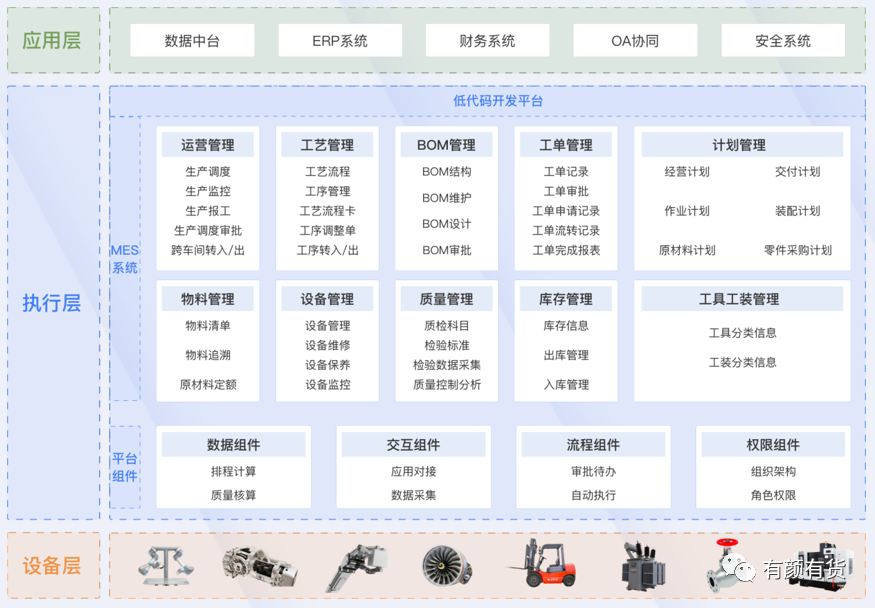
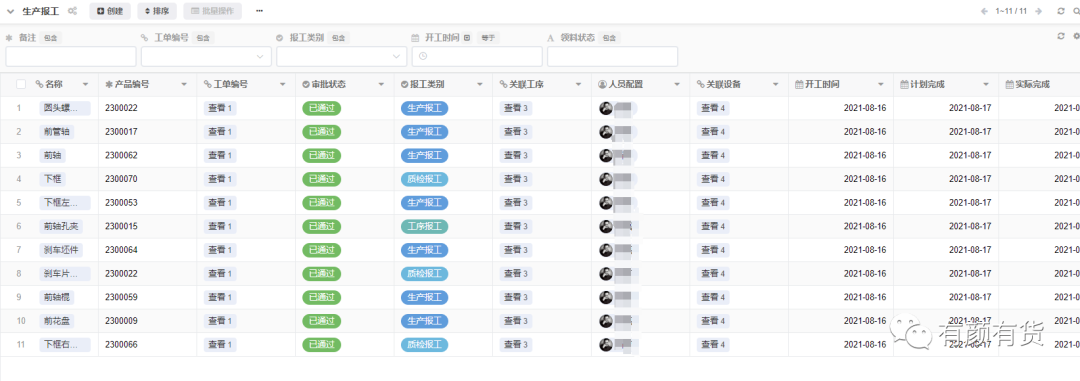
以该MES系统为例,下面给大家说明规范化、流程化的生产管理是如何实现的:(1)生产报工&跟踪生产统计、生产跟踪、生产计划、生产工单、质检工单,实现对产品制造过程中的全线跟踪
- 无纸化报工,节省中间时间
- 实时产量数据,通过看板了解情况
- 自动计件工资,快速查看薪资
- 生产跟踪查询,条条记录条条清
- 数据化展示,多项信息实时知
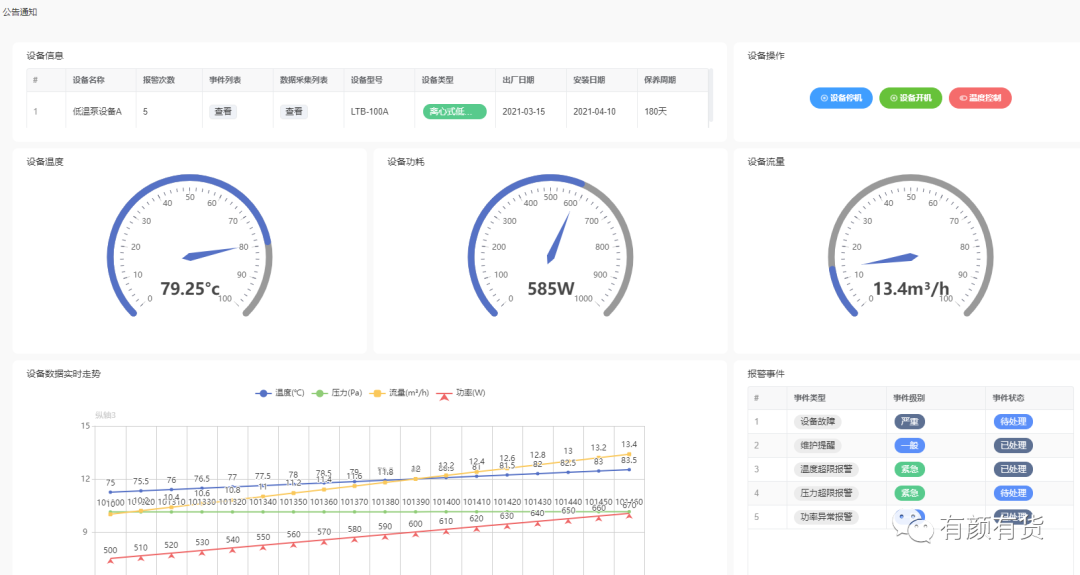
(2)设备管理手机扫描设备二维码,即可解决设备档案管理、巡检、报修、保养、分析预警等问题
- 无纸化巡检,已检待检清晰呈现 数字化转型网(www.szhzxw.cn)
- 日历化保养,消息及时提醒
- 实时通知报修,加快维修流程
- 出入库记录,追踪备件领用记录
- 数据化展示,实时查看设备状态
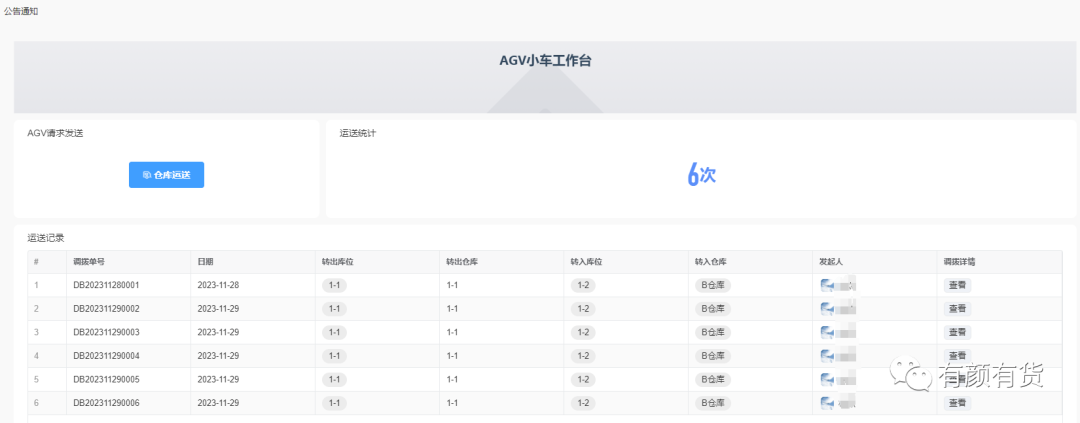
(3)仓库管理解决采购、销售、入库等管理难题,快速实现进销存个性化管理。
- 出入库管理,扫码轻松填写信息
- 库位管理,货品与位置一一对应
- 库存预警,及时获取盈缺信息
- 数据可视化,管理员快速掌握细节
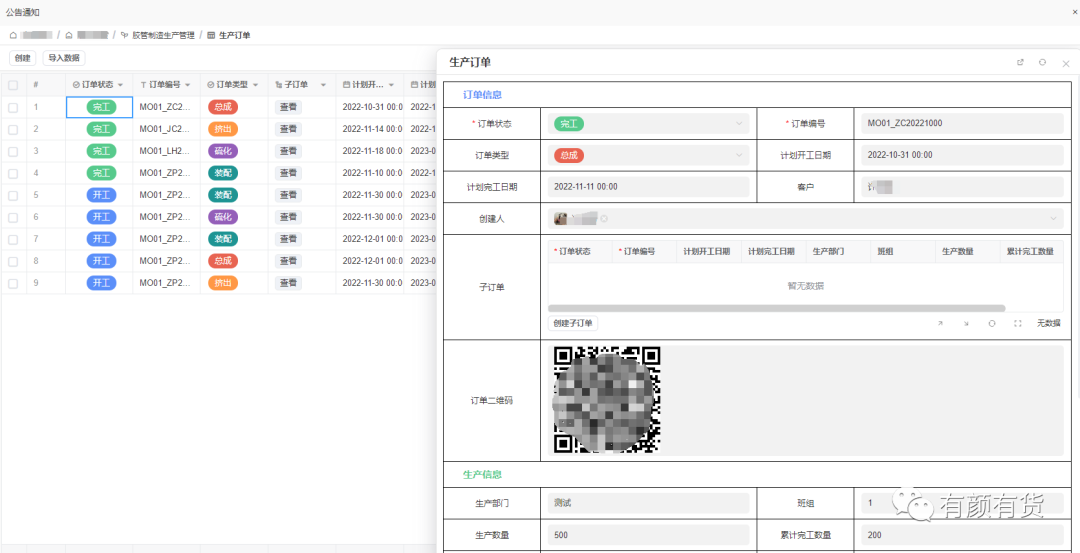
(4)可扩展的能力比如:任意设置生产流转卡的其他形式
- 产品单:适合设备、装备制造,一个产品一份二维码,计划下发至产品,扫产品码报工。
- 编程单:适合数控机床单件生产,如模具厂。一线员工把编程单打印出来后吸附在设备上,完成加工任务就扫编程单二维码报工。
- 容器单:如托盘、器具、挂架等。适合一次生产任务整包物料配齐生产,整包物料的单据称为容器单,贴在同期外壳或物料外包装。扫容器单二维码报工。
再比如:轻松实现车间大屏
这款生产管理系统数据来源清晰可控,大屏仪表盘自由组建。 数字化转型网(www.szhzxw.cn)
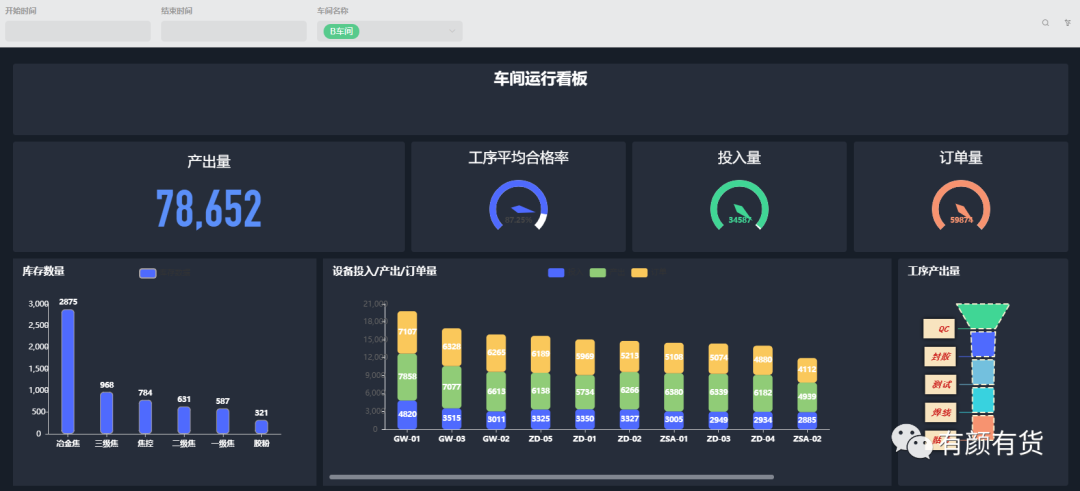
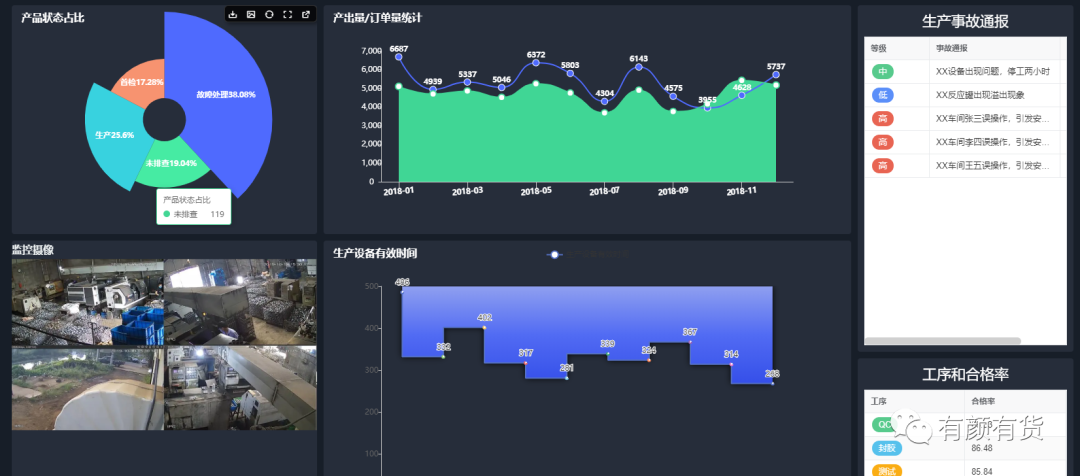
系统利用了强大的数据处理引擎和可视化功能,如同加工厂一般,实现对庞杂数据的分类有序处理和可视化呈现,不仅解放了人力,同时也提高了企业处理业务变化的能力,提升了生产效率。

翻译:
The difference and connection between ERP and MES, this down-to-earth article finally explained!
First, the “difference” between ERP and MES
Both ERP and MES systems play an important role in enterprise management, but their functions and responsibilities are different.
Since today to talk about the difference between ERP and MES, it must be explained to everyone.
So, here we start with the business model of the factory.
As a factory, there are only two purposes, to produce products, and then sell them. Therefore, in industrial enterprises, it is usually divided into two large departments, one is the production department, one is the business department, the former is managed by MES (manufacturing execution system), the latter is managed by ERP (management information system).
What’s the difference between these two systems?
ERP is more inclined to the management of financial information, while MES is more inclined to the control of the production process. Simply put, ERP mainly tells you how many bottles the customer needs to produce, which day to order, which day to order goods, and MES is mainly responsible for monitoring and managing each step and process of producing these bottles.
In many workshops of Chinese factories, various production equipment, production equipment and controllers have been basically connected. In more sophisticated companies, entire factories are already connected through manufacturing execution systems (MES) and business units are all connected through ERP. 数字化转型网(www.szhzxw.cn)
But do you see the problem?
ERP and MES are not actually connected!
Therefore, after ERP gives MES the production plan instruction, MES will adjust the deviation from the plan in the production process (such as broken equipment, unqualified raw materials, etc.) according to the actual situation of the workshop. But ERP doesn’t know that! Therefore, it will continue to execute the order according to the original plan. For a long time, there will be a very big deviation between the financial system and the actual situation of the factory.
As for why it is not connected, two reasons, the first is that ERP and MES development companies are usually two groups of people, engaged in financial and production cooperation, not only do not understand each other’s professional terms, chicken and duck speak, and look up to each other. In addition, the business and production departments usually operate separately within the company, with their respective leaders having their own preferred suppliers (for reasons you can see).
Of course, the wisdom of the people is infinite, and they will definitely not wait for the deviation between the two systems to get bigger and bigger. Therefore, the factory workshop usually makes a table of MES adjustment items regularly and gives it to the business department, and then the business department manually adjusts it in the ERP. 数字化转型网(www.szhzxw.cn)
The problem of ERP and MES is only a microcosm of the system fault in the factory, in fact, there are many other systems in the factory, design, manufacturing, procurement, office, etc., these systems are information islands, each other do not know what the other is doing, to what step. One part has a special situation, the other parts do not know, only until the problem occurs, can be returned, and all the systems are changed one by one.
Here, the reason why Lao Luo’s hammer mobile phone was difficult to produce is because at the time of design, the production staff did not know the situation in real time, so the actual production found that the original design would lead to a very low yield, and can only be returned to redesign. In this way, every product has to be changed, so it often takes one or two years for an industrial product to go from design to mass production.
Of course, this thing is not the first day of existence, before because in the industrial era, the product life cycle is very long, just like Siemens a model of inverter can be sold for 30 years, so that one or two years of research and development online time is not so long, the rest of the problems, relying on artificial communication, although there are mistakes, but also all peacefully.
At last, however, the terrible Wolf came.
These two wolves, one is called overcapacity, the other is called the Internet.
Global overcapacity has led to more and more fierce competition among enterprises, and the practice of selling a product for 30 years in the past is no longer possible, you can’t run fast, and some are fast. Lao Luo’s hammer mobile phone has only been online for a few months at night, and has become an outdated product on the smelly street from a highly anticipated explosion, and the life cycle of the product has been greatly shortened. 数字化转型网(www.szhzxw.cn)
The arrival of the Internet era has shaken a major foundation of the industrial age, information asymmetry. In the industrial era, because manufacturers can not understand the needs of each customer at a low cost, they often use a one-size-fits-all approach, which is to combine the performance of the demand to do more to become a product.
For example, if you want a pair of shoes that suit your feet, the shoe factory can’t know how big your feet are, so it can only measure a lot of people’s feet, and divide the most concentrated sizes into No. 40, No. 41, No. 42, etc., but if your feet are fat or thin, sorry, no service.
The Internet has changed this situation, people and people, people and manufacturers, can achieve low-cost connection, so that everyone’s personality needs are amplified, people are more and more like personalized things. But the demand for personalized things is not so large, which requires industrial enterprises to be able to achieve small batch rapid production.
These two wolves, forcing the traditional industry must do one thing, one thing industrial society does not love to do, is fast, small batch, customized production.
So speaking of this, the difference between ERP and MES we can boil it down to the following:
- Functional focus
ERP mainly focuses on integrating various business processes and data within enterprises, including finance, human resources, supply chain management, etc., aiming to improve the overall operational efficiency of enterprises.
MES is more focused on the monitoring and control of the actual production process, managing the task execution on the production line, equipment status, product quality, etc., to improve production efficiency and traceability.
- Scope and depth
ERP covers all enterprise-wide business processes and functions and has a wide range of applications, but may be lacking in real-time monitoring and control on the production site.
MES focuses on the production site and provides more detailed and in-depth monitoring and management for the actual production execution process, but less involves the management of other aspects of the enterprise.
- Use objects
ERP is typically used by top management and cross-functional teams for decision making, resource planning, and general management.
MES is used more by field production personnel, production supervisors and equipment operators for supervision, control and feedback in the actual production process.
- Time dimension
ERP tends to focus on long-term planning and forecasting to meet the overall strategic goals and market needs of the enterprise. 数字化转型网(www.szhzxw.cn)
MES is usually based on real-time or recent time to meet the needs of the production site. It needs to dynamically adjust production tasks according to the actual situation to cope with emergencies and optimize production efficiency.
- Data type and purpose
ERP processes and integrates various types of enterprise data, including financial, human resources, supply chain, etc., for decision support and comprehensive analysis.
MES processes real-time data related to production, including equipment status, production schedule, quality indicators, etc., for operational control and optimization of the production site.
- Objective dimension
ERP mainly focuses on the financial management, supply chain management and human resource management of enterprises, aiming to improve the overall efficiency and efficiency of enterprises.
MES focuses on the control and optimization of the production process, focusing on real-time monitoring and adjustment of the production site to ensure production quality and delivery time.
In a word, ERP and MES play different roles in enterprise management, ERP pays more attention to the global resource management, while MES pays more attention to the real-time monitoring and management of the production site. In the context of industry 4.0, the integration and collaboration of ERP and MES will help enterprises achieve fast, small batch and customized production mode, and enhance the overall competitiveness and adaptability of enterprises.
Second, the “link” between ERP and MES
So much has been said above, and here are the first sentences to introduce it.
ERP: A comprehensive software system for integrating and managing business processes and data within an enterprise. 数字化转型网(www.szhzxw.cn)
MES: The system responsible for monitoring and managing the actual production process to ensure the execution of production plans and production efficiency.
Again, let’s say we’re talking about a factory that makes auto parts.
ERP (Enterprise Resource Planning) : Think of it as the brain and central system of this factory. ERP is a comprehensive software system used to manage and integrate various core business processes and data within an enterprise. In this factory, the ERP system manages everything from purchasing raw materials to production scheduling, inventory management, sales orders, finance and human resources.
MES (Manufacturing Execution System) : MES is the operation control system of the factory. In auto parts factories, it connects various machines and sensors on the production line to monitor production progress, collect production data, coordinate production processes, and interact with the ERP system to ensure the execution of production plans.
The connection between the two is that together they constitute a complete enterprise management and operation system. ERP is the overall management platform, while MES is the system responsible for the actual production execution and monitoring. The two work together to ensure that companies can operate efficiently, produce quality products and manage their resources.
Third, “Function Introduction” of ERP and MES
1. ERP system
ERP is enterprise resource planning management, is for material resource management (logistics), human resource management (people flow), financial resource management (financial flow), information resource management (information flow), production planning and other integrated enterprise management software. 数字化转型网(www.szhzxw.cn)
Taking the ERP system used by my previous company as an example, its main functions are divided into 6 modules, and customers can freely choose the functions they want to use according to their needs, and then build the second time on this basis. Compared with traditional ERP, it is more flexible and efficient, and very suitable for small and medium-sized enterprises.
(1) Customer management
Through the intelligent decision support system in the ERP system, the financial management personnel of the enterprise can fully understand and master the operating conditions of the enterprise, accurately analyze and formulate the development direction of the enterprise, and effectively control and reduce the operating costs of the enterprise.
The middle managers of the enterprise can arrange the corresponding purchasing plan, production plan, sales plan and capital plan through the ERP system;
Grass-roots managers of enterprises can issue daily work instructions through ERP system operation.
(2) Sales management
The sales management of ERP system starts from the sales plan of the product, the management and statistics of the various information of the product, the region and the customer.
Can make a comprehensive analysis of sales volume, unit price, amount, profit, performance, customer service. 数字化转型网(www.szhzxw.cn)
(3) Procurement management
ERP system procurement management can determine reasonable order quantity, excellent suppliers and maintain the best security reserve for enterprises;
Be able to provide ordering and acceptance information at any time, track and urge the purchased or commissioned processing materials, to ensure the timely arrival of goods;
It can also establish the supplier’s file, which can help enterprises dynamically grasp the control of project procurement costs and profits, and reduce controllable losses.
(4) Technical management
The technical management module includes process management, main material/auxiliary material management, process management and so on. 数字化转型网(www.szhzxw.cn)
Workshop managers can carry out planned production, quality inspection, completion and other work through the system, and record the person in charge and completion online;
Management at any time to check the progress of the plan, once the product quality is abnormal, enter the order number can query the complete file.
(5) Production management
The enterprise determines its a total production plan, and then through the system layer by layer subdivision, down to the departments to implement;
The whole production process of the enterprise is organically combined together, so that the enterprise can effectively reduce inventory and improve efficiency;
At the same time, the automatic connection of each originally dispersed production process will not cause production disconnection and delay production and delivery time.
(6) Inventory control
The inventory control of ERP system will combine the data of other modules to reasonably control the inventory of the enterprise; 数字化转型网(www.szhzxw.cn)
To ensure sufficient supply of materials needed for production while avoiding overstocking of enterprises;
Functional modules can often be customized and configured according to the needs of the organization to meet different business needs, thereby improving the efficiency and operational management level of the organization.
2. MES system
Production management System (MES English full name Manufacturing Execution System) development is for manufacturing enterprises production operation and production management and service. Production management system mainly includes production planning management, cost management, material requirement planning, procurement management, inventory management, quality management and other core management systems. The construction of production management system can improve the accuracy and timeliness of the management of various organizations.
Production management is a complex process that requires careful planning and execution, with the basic steps as follows: 数字化转型网(www.szhzxw.cn)
Planning the production process: production management includes schedule, budget and materials required for the production process;
Organization of production processes: Production management includes building organizational structures, assigning roles and responsibilities, and establishing systems to track and monitor production processes;
Develop effective communication strategies: Production management includes evaluating employee performance, adjusting processes and procedures to improve efficiency, and setting goals for the team.
Directing the production process: Production management involves providing feedback and guidance, setting clear goals and expectations, and creating an environment that encourages collaboration and innovation.
The low-code platform used by my previous company provides a complete MES management system module with core management systems such as production planning management, cost management, material requirement planning, procurement management, inventory management and quality management, which can meet most of the production management needs of enterprises and basically solve most of the information pain points:
The first-line scan code to fill in the data, all employees participate in the informationization, and comprehensively replace paper documents and excel flow;
Data responsibility directly to the front line, accurate and reliable data, cost accounting with business basis, clear and accurate;
Workshop management, upstream management, quality management is fully standardized, and the plan and quality can be traced and traceable.
Safe, lean, truly achieve full participation, the process is clearly visible, the system is no longer “stay on paper”. 数字化转型网(www.szhzxw.cn)
picture
Taking the MES system as an example, the following explains how standardized and process-based production management is achieved:
(1) Production reporting & tracking
Production statistics, production tracking, production planning, production work order, quality inspection work order, to achieve the full line tracking of the product manufacturing process
Paperless newspaper worker, save intermediate time
Real-time yield data, via Kanban
Automatic piece rate, quick view of salary
Production tracking query, all records all clear
Data display, a number of information real-time knowledge
(2) Equipment management
By scanning the two-dimensional code of the device, you can solve the problems of equipment file management, inspection, repair, maintenance, analysis and early warning
Paperless inspection, has been inspected to be inspected clearly
Calendar maintenance, timely reminder of information
Real-time notification repair, speed up the maintenance process
Incoming and outgoing records, tracking spare parts requisition records
Data display, real-time view of equipment status
(3) Warehouse management 数字化转型网(www.szhzxw.cn)
Solve the procurement, sales, warehousing and other management problems, quickly achieve personalized purchase, sales and inventory management.
In and out of storage management, scan code easily fill in information
Warehouse location management, goods and location one-to-one correspondence
Inventory warning, timely access to surplus and shortage information
Data visualization, administrators quickly grasp the details
(4) Scalability
For example: arbitrarily set other forms of production flow card
Product list: suitable for equipment, equipment manufacturing, a product a two-dimensional code, plan to issue to the product, scan the product code newspaper worker.
Programming sheet: suitable for single piece production of CNC machine tools, such as mold factories. Front-line employees print out the programming sheet and adsorb it on the equipment, and scan the programming single two-dimensional code to report work after completing the processing task.
Container list: such as pallets, utensils, racks, etc. It is suitable for a production task to complete the production of the whole package of materials, and the documents of the whole package of materials are called the container sheet, which is affixed to the shell or the outer packaging of the materials at the same time. Scan container single QR code to report work.
Another example: easily achieve workshop large screen
The data source of this production management system is clear and controllable, and the large-screen dashboard is freely assembled. 数字化转型网(www.szhzxw.cn)
The system uses a powerful data processing engine and visualization function, just like a processing plant, to achieve the classification and orderly processing of complex data and visual presentation, not only liberates manpower, but also improves the ability of enterprises to deal with business changes, and improves production efficiency.
本文由数字化转型网(www.szhzxw.cn)转载而成,来源于有颜有货;编辑/翻译:数字化转型网宁檬树。
免责声明: 本网站(http://www.szhzxw.cn/)内容主要来自原创、合作媒体供稿和第三方投稿,凡在本网站出现的信息,均仅供参考。本网站将尽力确保所提供信息的准确性及可靠性,但不保证有关资料的准确性及可靠性,读者在使用前请进一步核实,并对任何自主决定的行为负责。本网站对有关资料所引致的错误、不确或遗漏,概不负任何法律责任。
本网站刊载的所有内容(包括但不仅限文字、图片、LOGO、音频、视频、软件、程序等) 版权归原作者所有。任何单位或个人认为本网站中的内容可能涉嫌侵犯其知识产权或存在不实内容时,请及时通知本站,予以删除。