一、引言
当前,以ChatGPT为代表的预训练大模型展现出自主学习、跨模态理解、推理抽象思维和人类社会理解等特征优势,正引发新一轮人工智能范式革命,成为推动科技跨越发展、产业优化升级、生产力整体跃升的重要驱动力。随着以大模型为代表的生成式AI技术可用性增强及工业信息化水平提升,通用AI的工业落地时间间隔逐步缩短,大模型为工业软件领域自主创新提供了有效路径。
二、我国工业软件发展现状
工业软件是工业知识的计算机代码化表达,是工业知识、经验、技能长期沉淀积累并数学化、工程化、代码化的结果。工业软件作用于工业产品的研发设计、生产制造、经营管理和运维服务等全生命周期,具有细分种类多、功能差异大、行业壁垒高和用户粘性强等特点。我国工业软件门类相对齐全,市场发展迅速。据工信部统计数据显示,2021年,我国工业软件市场规模达2414亿元,同比增长24.8%,未来五年内将持续以两位数幅度增长,市场规模有望于2026年突破4300亿元,具有较强的发展潜力。但总体上看,国产工业软件市场占有率较低,与国外的差距较大,主要存在市场规模小、产品受制于人、产业安全受国外威胁,以及关键技术和工业知识缺失等四大短板。 数字化转型网(www.szhzxw.cn)
云计算、大数据、人工智能等新一代信息技术正在重塑工业软件形态。与传统的工业软件相比,基于新一代信息技术的工业软件采用工业互联网平台体系架构,依托工业基础软件的支持,以数据要素为驱动,通过低代码工具和应用开发平台实现应用软件的定制化开发,以云化和服务化的方式部署。基于新一代信息技术的工业软件在工业知识软件化基础上,增加了对工业大数据的处理和智能化分析能力,使解决复杂工业系统建模、控制与优化的难题成为可能,是工业互联网时代的新型生产工具。
三、大模型在工业领域的应用情况
1. 大模型赋能生产制造全生命周期
随着大模型技术的跃迁式发展,生成式AI同工业领域加速融合,为工业软件创新发展提供了重要实现路径。基于大模型的自动识别、模型优化和推理决策三大核心能力,可实现对研发设计、生产制造、经营管理和运维服务等工业制造全生命周期的赋能。大模型赋能各类工业软件如图1所示。
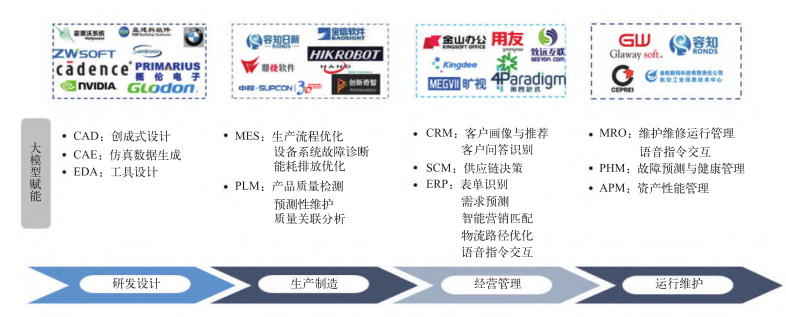
在研发设计方面,基于云计算和大数据技术,大模型能够自动生成或优化设计方案,提高EDA、CAD、CAE等软件设计效率和精度。例如,Cadence公司推出了Allegro X AI technology新一代系统芯片设计技术,利用生成式AI简化系统设计流程,将PCB设计周转时间缩短至原来的十分之一;大模型赋能创成式设计,可实现3D CAD的自主优化设计,提升Siemens Solid Edge、PTC Creo等主流CAD的设计效率。
在生产制造方面,利用自然语言处理和计算机视觉等算法,大模型实现与人类的自然交互和协作,提高生产效率和质量。比如,西门子自动化生产SIMATIC IT软件引入ChatGPT,有效实现了操作者与系统自然语言的交互;西门子和微软正在合作开发可编程逻辑控制器(PLC)的代码生成工具,利用ChatGPT通过自然语言输入生成PLC代码。
在经营管理方面,通过迁移学习和模型微调,大模型能够快速掌握垂直领域知识,提高ERP、CRM、SCM等软件的管理效率和水平。例如,微软推出了GPT互动式AI能力商业产品Dynamics 365 Copilot和Microsoft 365 Copilot,大幅提升用户在经营管理类软件上的工作效率,未来将扩展至供应链管理、客户服务和市场营销等场景;国内企业第四范式上线企业级产品4Paradigm SageGPT,将大模型与垂直领域专业知识融合,具备企业级场景下的多模态及Copilot能力;旷世科技布局基于视觉大模型的供应链智能管理,探索基于“感知-决策-执行-反馈”的全链条仓储物流优化方案。
在运维服务方面,大模型可有效提升早期缺陷检测、预测性维护、产品质量分析和生产预测等能力,持续优化MRO、PHM等软件性能。美国明星创业公司Uptake将AI能力引入设备预测性维护,并取得良好运营效果;国内容知日新开展基于AI的工业设备状态监测与故障诊断研究,打造基于数据、算法和算力管理的PHM引擎,提升智能运维能力。 数字化转型网(www.szhzxw.cn)
2. 大模型的工业应用挑战
大模型在工业领域具有广阔的应用前景,国内外科技巨头及工业软件企业已开展相关研究布局,主要是调用大模型的基础能力,实现辅助操作环节应用。大模型赋能工业软件研发设计等核心环节主要面临技术、数据和产业三方面的挑战。
技术方面,当前国内在大模型领域的基础技术储备不足、通用大模型性能仍需提升、工业领域垂直大模型尚待构建。同时,大模型训练部署对算力、存储、数据等基础设施有较高需求,传统的工业软件主要运行在本地,计算和存储能力有限,更新迭代慢,使得生成式AI的研发设计、工业仿真、低代码开发等业务场景的落地受到阻碍。
数据方面,我国工业领域数据体量大、实时性高,存储成本大、价值密度低,数据源异构性强,数据孤岛现象严重,工业数据开放程度低,各种类型的设备和工序之间相互独立,数据流通缺少统一的标准。当前工业场景的数据量对于深度学习而言都还是小规模,需要对全行业的数据进行汇聚、对齐和训练,形成面向工业软件领域的大模型。
产业方面,大模型的工业应用仍在探索阶段。在供给侧,大模型需要高昂的资金和人才投入。我国工业软件企业综合优势不强,当前还停留在基础能力补短板阶段,缺乏复合型技术人才。在需求侧,当前大模型对知识原理的理解有限,尚未做到答案完全可控与准确,而工业领域对安全可靠性要求高,当前大模型缺乏可落地的应用场景。
四、基于大模型的工业软件技术创新路径
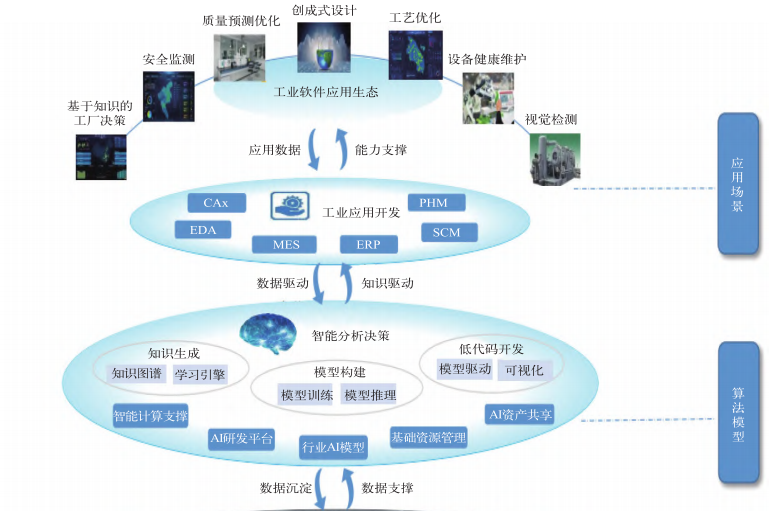
大模型在工业软件领域具有广阔的应用前景,国内外科技巨头及工业企业已开展相关研究布局,但目前应用尚浅,主要是调用大模型的通用能力提供基础服务。基于生成式AI的工业软件技术架构如图2所示。为提升大模型在工业机理方面的应用深度,推动生成式AI与工业软件融合发展,可考虑从如下几方面进行研究布局。 数字化转型网(www.szhzxw.cn)
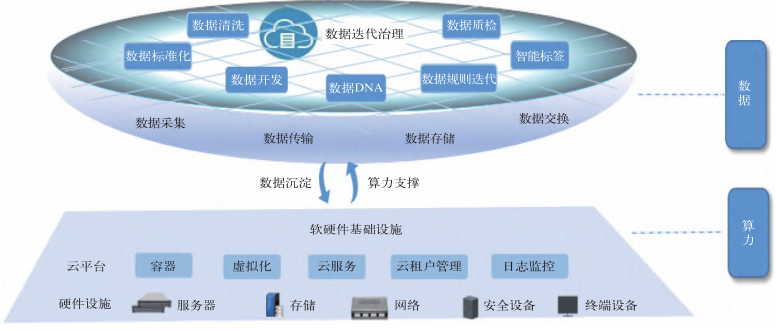
1)构建工业软件云。大模型的算力门槛非常高,传统的工业软件主要运行在本地,计算和存储能力有限,更新迭代慢,严重制约大模型的应用。工业软件云化部署后,可大幅提高基础服务的多样性,通过调用高性能计算、GPU算力、大数据服务等资源,满足大模型训练部署对算力、存储、数据等基础设施的需求,降低开发和应用成本,使得基于生成式AI的研发设计、工业仿真、低代码开发等业务场景能够真正落地。通过将散落分布的业务数据汇聚到云上,对大模型进行持续优化迭代,有效提升产品的差异化竞争力。
2)建设工业大脑。改变过去工业领域“碎片化”、“作坊式”、成本消耗大、效率低的AI模式,基于基础大模型底座,汇聚海量行业数据,通过模型微调、蒸馏等方式,形成面向各个领域的行业大、中、小模型,实现工业知识和专家经验的沉淀,构建具有深度认知能力的工业大脑。通过大小模型协同的方式,快速、高效地开发面向特定行业场景的各类工业软件/APP,提升工业软件的智能化水平。
3)构建“SaaS+低代码”的工业软件应用生态。工业SaaS把传统架构的工业软件分解成具有统一接口、灵活且可配置的应用,通过封装大量通用的行业Know-how知识经验或知识组件以及算法和原理模型组件,以低代码方式构建上层工业APP。大模型的代码生成能力的跨越式进步有望重塑工业PaaS低代码开发平台。未来随着生成式AI在代码生成能力方面的逐步成熟,可实现零代码研发设计和生产优化,大幅提升工业软件的应用创建能力、降低应用开发成本。
4)推动工业软件开发新生态。从技术趋势来看,设计、制造、仿真一体化趋势推动工业软件超融合发展。基于超融合平台,可以实现AI模型开发、训练、调优、运营等复杂过程的封装,提供低门槛、高效率的企业服务。 数字化转型网(www.szhzxw.cn)
从开发模式来看,多主体协作趋势推动工业软件走向开源与开放,大模型通过自动生成代码、提供开源工具等方式,助力工业软件开发。利用AI技术生成需求文档、功能规格说明书、代码、测试用例和测试脚本等,实现持续交付,推动软件工程3.0的发展,真正实现模型驱动开发、数据驱动开发和AI原生开发。
五、发展建议
为提升大模型的应用深度,推动生成式AI与工业软件的深度融合,建议抢先布局基于大模型的工业软件应用体系,突破工业软件核心关键技术,推动基于新一代信息技术的工业软件融合创新。
1)全面规划工业软件创新发展的顶层战略。制定重点行业国产工业软件创新行动计划,明确基于大模型的国产工业软件发展目标、重点任务和关键举措,培育基于生成式AI的工业软件等重点技术攻关项目。聚焦通用人工智能和工业软件融合创新,着力构建一个适用的技术体系架构、打造一套完整的技术标准体系、支持一批重点技术攻关项目、形成一批典型的融合应用模式,以及培育一批有成效的“AI+工业应用”平台,部署重点行业工业软件应用先试先行和试点示范工程。
2)超前布局基于大模型的工业软件技术体系。一方面,鼓励工业软件云化部署,支持企业开放高性能计算、GPU算力、大数据服务等资源,通过共享算力、数据的方式,降低开发和应用成本。通过将散落分布的业务数据汇聚到云上,对大模型进行持续优化迭代,形成完整高效的开源算法模型,有效提升产品的差异化竞争力。另一方面,构建工业软件领域的大模型评测标准体系,研究多模态多维度的基础模型评测基准及评测方法,开发基础模型评测工具集,建立公平高效的自适应评测机制,推动大模型在研发设计、生产制造、经营管理和运维服务等环节的深度融合应用。
3)逐步形成大模型赋能工业软件的数据应用机制。一是探索建立基于数据托管机制的大模型训练数据监管体系,确保工业数据来源可靠,在数据标准、数据质量、数据安全和隐私保护等方面依法合规,保障大模型输出结果的高质量并符合监管要求。二是建立工业软件数据交换共享机制,使得行业数据能够对白名单企业、机构、高校适当开放,在确保数据安全使用的同时,增强工业软件领域大模型研究实力。三是鼓励优先采用安全可信的软件、工具、计算和数据资源,通过改进算法等技术手段,确保训练数据的安全性、规范性与合法性。 数字化转型网(www.szhzxw.cn)
4)积极推动工业软件自主创新生态建设。一是依托北京市工业软件产业创新中心等载体,汇聚国内工业软件企业、大模型开发企业、高等院校和研究机构等力量,在技术创新、场景应用、产业发展等方面深化交流合作,推动基于大模型的工业软件开发应用。二是加强复合型人才培养,鼓励国内科研院所、高校和企业开展合作,建立“产、学、研、用”综合实践应用平台、人才实训基地等,培养一批高端型工业软件人才。三是聚焦重点行业工业软件替代需求清单和关键共性技术需求清单,开展供需对接,围绕石化、船舶、航空等重点行业,打通技术、场景和人才壁垒,打造一批基于大模型的工业软件示范应用,共同推动人工智能技术与产业的快速发展,助力工业经济高质量发展。
六、结束语
抢抓新一代信息技术,推动我国工业软件自主创新,是解决工业软件“卡脖子”问题的重要路径。生成式人工智能在提升工业软件研发设计、生产维护等效率方面取得一定的进展,但与工业机理的深度融合仍然存在难点。建议布局基于大模型的工业软件技术和应用体系,持续推进技术创新、场景应用、产业发展等,共同推动人工智能技术与产业的快速发展,为抢抓新一轮科技革命和产业变革机遇、实现工业经济高质量发展作出更大贡献。 数字化转型网(www.szhzxw.cn)

翻译:
Industrial software independent innovation of generative artificial intelligence
First, introduction
At present, the pre-trained large model represented by ChatGPT shows the characteristic advantages of autonomous learning, cross-modal understanding, reasoning abstract thinking and human social understanding, which is triggering a new round of artificial intelligence paradigm revolution and becoming an important driving force to promote the leapfrog development of science and technology, industrial optimization and upgrading, and the overall improvement of productivity. With the enhancement of the availability of generative AI technology represented by large models and the improvement of industrial informatization level, the industrial landing time interval of general AI is gradually shortened, and large models provide an effective path for independent innovation in the field of industrial software.
Second, China’s industrial software development status
Industrial software is the expression of industrial knowledge in computer code. It is the result of long-term accumulation of industrial knowledge, experience and skills, and the result of mathematics, engineering and code. Industrial software plays a role in the whole life cycle of R&D, design, manufacturing, management and operation and maintenance services of industrial products, which has the characteristics of multiple subdivisions, large functional differences, high industry barriers and strong user stickiness. China’s industrial software categories are relatively complete, and the market is developing rapidly. According to the statistics of the Ministry of Industry and Information Technology, in 2021, China’s industrial software market size reached 241.4 billion yuan, an increase of 24.8%, the next five years will continue to grow by double digits, the market size is expected to exceed 430 billion yuan in 2026, with strong development potential. However, in general, the domestic industrial software market share is low, and the gap with foreign countries is large, mainly because of the small market size, products are subject to people, industrial security is threatened by foreign threats, and the lack of key technologies and industrial knowledge. 数字化转型网(www.szhzxw.cn)
The new generation of information technologies such as cloud computing, big data and artificial intelligence are reshaping the form of industrial software. Compared with traditional industrial software, industrial software based on the new generation of information technology adopts the industrial Internet platform architecture, relies on the support of industrial basic software, is driven by data elements, and realizes the customized development of application software through low-code tools and application development platforms, and is deployed in a cloud and service-oriented way. The industrial software based on the new generation of information technology increases the processing and intelligent analysis ability of industrial big data on the basis of the software of industrial knowledge, making it possible to solve the problems of modeling, control and optimization of complex industrial systems, and is a new production tool in the industrial Internet era.
Third, the application of large models in the industrial field
1. Large models enable the whole life cycle of manufacturing
With the leapfrog development of large model technology, the integration of generative AI with the industrial field is accelerating, providing an important realization path for the innovation and development of industrial software. Based on the three core capabilities of large model automatic identification, model optimization and reasoning decision, it can enable the whole life cycle of industrial manufacturing, such as R&D design, production and manufacturing, operation and management, and operation and maintenance services. Large models enable various types of industrial software as shown in Figure 1. 数字化转型网(www.szhzxw.cn)
Figure 1. Large models enable various industrial software
In R & D design, based on cloud computing and big data technology, large models can automatically generate or optimize design schemes, improve the efficiency and accuracy of EDA, CAD, CAE and other software design. For example, Cadence launched Allegro X AI technology, a new generation of system chip design technology, which uses generative AI to simplify the system design process and shorten the PCB design turnaround time to one-tenth of the original; Large model enabling generative design can realize independent optimization design of 3D CAD, and improve the design efficiency of mainstream CAD such as Siemens Solid Edge and PTC Creo.
In terms of production and manufacturing, using algorithms such as natural language processing and computer vision, large models achieve natural interaction and collaboration with humans to improve production efficiency and quality. For example, SIMATIC IT software produced by Siemens Automation introduces ChatGPT, which effectively realizes the operator’s interaction with the natural language of the system. Siemens and Microsoft are collaborating on a code generation tool for programmable logic controllers (PLCS) that utilizes ChatGPT to generate PLC code from natural language input.
In terms of operation and management, through transfer learning and model fine-tuning, large models can quickly master vertical domain knowledge and improve the management efficiency and level of ERP, CRM, SCM and other software. For example, Microsoft launched Dynamics 365 Copilot and Microsoft 365 Copilot, GPT interactive AI commercial products, which significantly improve user productivity in operations management software, and will expand to supply chain management, customer service and marketing scenarios in the future. The fourth paradigm of domestic enterprises launched the enterprise-grade product 4Paradigm SageGPT, integrating large models with vertical expertise, with multi-modal and Copilot capabilities in enterprise-grade scenarios; Kuangshi Technology lays out intelligent supply chain management based on visual large model, and explores the whole chain warehousing logistics optimization scheme based on “perception – decision – execution – feedback”.
In terms of operation and maintenance services, the large model can effectively improve the capabilities of early defect detection, predictive maintenance, product quality analysis and production prediction, and continuously optimize the performance of MRO, PHM and other software. Uptake, an American star startup, introduces AI capabilities into predictive maintenance of equipment and achieves good operational results; China Rongzhi Rixin carries out AI-based research on industrial equipment condition monitoring and fault diagnosis, builds PHM engine based on data, algorithm and computing power management, and improves intelligent operation and maintenance capabilities.
2. Industrial application challenges of large models
Large model has a broad application prospect in the industrial field, and domestic and foreign technology giants and industrial software companies have carried out relevant research layout, mainly to invoke the basic ability of large model to realize the application of auxiliary operation. The core links of large model enabling industrial software R&D and design are mainly faced with three challenges: technology, data and industry.
In terms of technology, the current domestic basic technology reserves in the field of large models are insufficient, the performance of general large models still needs to be improved, and the vertical large models in the industrial field have yet to be built. At the same time, large model training deployment has a high demand for computing power, storage, data and other infrastructure, traditional industrial software mainly runs in the local, computing and storage capabilities are limited, update iteration is slow, making generative AI R & D design, industrial simulation, low code development and other business scenarios are hindered. 数字化转型网(www.szhzxw.cn)
In terms of data, China’s industrial data has large volume, high real-time performance, large storage cost, low value density, strong heterogeneity of data sources, serious data island phenomenon, low degree of industrial data openness, various types of equipment and processes are independent of each other, and there is a lack of unified standards for data circulation. At present, the amount of data in industrial scenarios is still small for deep learning, and the data of the whole industry needs to be aggregated, aligned and trained to form a large model for the industrial software field.
In terms of industry, the industrial application of large models is still in the exploration stage. On the supply side, large models require high capital and talent investment. The comprehensive advantages of industrial software enterprises in China are not strong, and they still stay in the stage of basic ability to make up for shortcomings, and lack of compound technical talents. On the demand side, the current large model has a limited understanding of the knowledge principle, and the answer has not been fully controllable and accurate, and the industrial field has high requirements for safety and reliability, and the current large model lacks application scenarios that can be landed.
Fourth, industrial software technology innovation path based on large model
Large model in the field of industrial software has broad application prospects, domestic and foreign technology giants and industrial enterprises have carried out related research layout, but the current application is still shallow, mainly to call the general ability of large model to provide basic services. The industrial software technology architecture based on generative AI is shown in Figure 2. In order to enhance the application depth of large models in industrial mechanisms and promote the integration of generative AI and industrial software, the research layout can be considered from the following aspects.
FIG. 2 Industrial software technology architecture based on generative AI
1) Build an industrial software cloud. The computing power threshold of large models is very high, and the traditional industrial software mainly runs in the local, the computing and storage capacity is limited, and the update iteration is slow, which seriously restricts the application of large models. After the cloud deployment of industrial software, the diversity of basic services can be greatly improved. By invoking resources such as high-performance computing, GPU computing power, and big data services, it can meet the needs of infrastructure such as computing power, storage, and data for large model training and deployment, and reduce development and application costs. So that based on generative AI R & D design, industrial simulation, low code development and other business scenarios can be truly landed. By aggregating scattered business data to the cloud, continuous optimization and iteration of large models are carried out to effectively improve the differentiation competitiveness of products.
2) Build an industrial brain. Change the past industrial field of “fragmentation”, “workshop”, large cost consumption, low efficiency AI model, based on the basic large model base, gather massive industry data, through model fine-tuning, distillation and other ways, the formation of industry large, medium and small models for various fields, to achieve the precipitation of industrial knowledge and expert experience, to build a deep cognitive ability of the industrial brain. Through the way of large and small model collaboration, we can quickly and efficiently develop various industrial software/apps for specific industry scenarios, and improve the intelligent level of industrial software.
3) Build an industrial software application ecology of “SaaS+ low code”. Industrial SaaS decomposes traditional industrial software into flexible and configurable applications with a unified interface, and builds upper-level industrial apps in a low-code way by encapsulating a large number of common industry Know-how knowledge and experience or knowledge components as well as algorithm and principle model components. The leap forward in code generation capabilities for large models is expected to reshape the industrial PaaS low-code development platform. In the future, with the gradual maturity of generative AI in code generation capabilities, zero-code R&D design and production optimization can be achieved, greatly improving the application creation ability of industrial software and reducing application development costs. 数字化转型网(www.szhzxw.cn)
4) Promote the new ecology of industrial software development. From the perspective of technology trends, the integration trend of design, manufacturing and simulation promotes the development of industrial software hyper-integration. Based on the hyper-converged platform, it can realize the encapsulation of complex processes such as AI model development, training, tuning, and operation, and provide low-threshold and high-efficiency enterprise services.
From the perspective of development mode, the trend of multi-agent collaboration promotes industrial software to be open source and open, and large models help industrial software development by automatically generating code and providing open source tools. Use AI technology to generate requirement documents, functional specifications, code, test cases and test scripts, etc., to achieve continuous delivery, promote the development of software engineering 3.0, and truly realize model-driven development, data-driven development and AI native development.
Fifth, development proposals
In order to improve the application depth of large models and promote the deep integration of generative AI and industrial software, it is suggested that the industrial software application system based on large models be laid out first, break through the core key technologies of industrial software, and promote the integration innovation of industrial software based on a new generation of information technology. 数字化转型网(www.szhzxw.cn)
1) Comprehensively plan the top-level strategy of industrial software innovation and development. Formulate an action plan for domestic industrial software innovation in key industries, clarify the development goals, key tasks and key measures of domestic industrial software based on large models, and cultivate key technical research projects such as industrial software based on generative AI. Focusing on the integration of general artificial intelligence and industrial software innovation, focusing on building an applicable technical system architecture, creating a complete set of technical standards system, supporting a number of key technical research projects, forming a number of typical integration application models, and cultivating a number of effective “AI+ industrial application” platforms, Deployment of industrial software applications in key industries and pilot demonstration projects.
2) Advanced layout of industrial software technology system based on large models. On the one hand, it encourages the cloud deployment of industrial software, supports enterprises to open resources such as high-performance computing, GPU computing power, and big data services, and reduces development and application costs by sharing computing power and data. By aggregating scattered business data to the cloud, the large model is continuously optimized and iterated to form a complete and efficient open source algorithm model, which effectively improves the differentiated competitiveness of products. On the other hand, build a large model evaluation standard system in the field of industrial software, study the multi-modal and multi-dimensional basic model evaluation benchmark and evaluation method, develop the basic model evaluation tool set, establish a fair and efficient adaptive evaluation mechanism, and promote the deep integration and application of large models in R & D design, manufacturing, management and operation and maintenance services. 数字化转型网(www.szhzxw.cn)
3) Gradually form the data application mechanism of large model enabling industrial software. First, explore the establishment of a large model training data supervision system based on data custody mechanism to ensure reliable industrial data sources, legal compliance in data standards, data quality, data security and privacy protection, and ensure the high quality of the output results of the large model and compliance with regulatory requirements. The second is to establish an industrial software data exchange and sharing mechanism, so that industry data can be appropriately open to whitelist enterprises, institutions, and universities, and enhance the research strength of large models in the field of industrial software while ensuring the safe use of data. The third is to encourage the priority use of safe and trusted software, tools, calculations and data resources, through improved algorithms and other technical means to ensure the security, standardization and legitimacy of training data.
4) Actively promote the construction of industrial software independent innovation ecology. First, relying on the Beijing Industrial Software Industry Innovation Center and other carriers, bring together the strength of domestic industrial software enterprises, large model development enterprises, universities and research institutions to deepen exchanges and cooperation in technological innovation, scene application, industrial development and other aspects, and promote the development and application of industrial software based on large models. The second is to strengthen the training of interdisciplinary talents, encourage domestic research institutes, universities and enterprises to cooperate, establish “production, learning, research and application” comprehensive practice application platform, talent training base, etc., to train a group of high-end industrial software talents. The third is to focus on the list of industrial software replacement needs in key industries and the list of key common technology needs, to carry out supply and demand docking, to open up technical, scenario and talent barriers around key industries such as petrochemical, shipping, aviation, and create a number of industrial software demonstration applications based on large models, to jointly promote the rapid development of artificial intelligence technology and industry, and help the high-quality development of industrial economy.
Sixth, concluding remarks
Grasping the new generation of information technology and promoting the independent innovation of China’s industrial software is an important way to solve the problem of “stuck neck” of industrial software. Generative artificial intelligence has made some progress in improving the efficiency of industrial software R&D, design, production and maintenance, but there are still difficulties in the deep integration with industrial mechanisms. It is suggested to lay out industrial software technology and application system based on large models, continue to promote technological innovation, scene application, industrial development, etc., jointly promote the rapid development of artificial intelligence technology and industry, and make greater contributions to seize the opportunities of a new round of scientific and technological revolution and industrial change, and achieve high-quality development of industrial economy. 数字化转型网(www.szhzxw.cn)
本文由数字化转型网(www.szhzxw.cn)转载而成,来源于新工业网;编辑/翻译:数字化转型网宁檬树。
免责声明: 本网站(http://www.szhzxw.cn/)内容主要来自原创、合作媒体供稿和第三方投稿,凡在本网站出现的信息,均仅供参考。本网站将尽力确保所提供信息的准确性及可靠性,但不保证有关资料的准确性及可靠性,读者在使用前请进一步核实,并对任何自主决定的行为负责。本网站对有关资料所引致的错误、不确或遗漏,概不负任何法律责任。
本网站刊载的所有内容(包括但不仅限文字、图片、LOGO、音频、视频、软件、程序等) 版权归原作者所有。任何单位或个人认为本网站中的内容可能涉嫌侵犯其知识产权或存在不实内容时,请及时通知本站,予以删除。