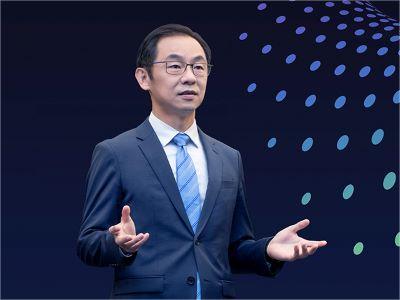
《人工智能:现代方法》(Artificial Intelligence: A Modern Approach)第四版中文版于近期问世,机器之心对作者 Stuart Russell 教授进行了专访。作为 AI 领域的经典,《人工智能:现代方法》几经再版,内容和结构反映出两位作者不断发展的理解。最新第四版是他们把近十年 AI 进展,尤其是深度学习所带来的影响纳入整体框架后给出的最新阐释,体现了两位大师对人工智能趋势和学科体系发展的洞见。
本次采访也依循「a modern approach」,希望从一种切合技术和时代发展的视角,展现 Russell 教授对技术动向、智能理论,以及流行 VS 经典的思考,为 AI 研究人员和从业者带来启发。
Russell 教授相信在接下来的十年,人们的关注点将从对端到端深度学习的倚重,重新回到由模块化的、基于数理逻辑的、语义明确定义的表示(representation)所构成的系统,而深度学习将在获取原始感知数据方面扮演至关重要的作用。需要强调的是,模块化的、语义明确定义的表示不一定是由手工设计或不灵活的,这样的表示完全可以从数据中学习。数字化转型网www.szhzxw.cn
至于如今大火的 ChatGPT,Russell 教授认为关键是要区分任务领域,弄清楚在什么情况下使用它:ChatGPT 可以是一种很好的工具,如果它能锚定在事实基础上,与规划系统相结合,将带来更大的价值。但问题是,我们目前不清楚 ChatGPT 的工作原理,也很可能无法弄清它们,这需要一些概念上的突破,而这样的突破很难预测。
他认为要构建真正智能的系统,我们应当更加关注数理逻辑和知识推理,因为我们需要将系统建立在我们了解的方法之上,这样才能确保 AI 不会失控。他不认为扩大规模是答案,也不看好用更多数据和更多算力就能解决问题,这种想法过于乐观,在智力上也不有趣。
如果罔顾深度学习数据效率低这一根本性的问题,「我担心我们在自欺欺人地认为我们正在走向真正的智能。我们所做的一切实际上是向根本不是真正智能模型的东西添加越来越多的像素。」
一、机器之心:在您看来,以 ChatGPT 为代表的大规模预训练语言模型(LLM)是否从本质上将人工智能提升到一个更高的水平?LLM 是否克服了深度学习系统的一些根本性问题,比如常识获取、知识推理?
Stuart Russell:我首先想到的回答是——我们不知道,因为没有人知道这些模型是如何工作的,包括创造它们的人。
ChatGPT 知道什么?它能推理吗?它在什么意义上理解了答案?我们不知道。
我在俄勒冈州立大学的一个朋友问模型「大象和猫哪个大?」模型回答「大象大」,但换种问法「大象和猫,哪个不比另一个大?」模型回答「大象和猫哪个都不比另一个大」。所以你说模型知道大象和猫哪个更大吗?它不知道,因为换种问法,它就得出自相矛盾的结论。
那么,模型知道什么呢?数字化转型网www.szhzxw.cn
我再举个例子,也是实际发生的事情。这些模型的训练数据中有大量的国际象棋棋谱,用统一的代码和符号表示,一局棋看起来是 e4 e5 Nf3 Nc6 Bb5……的序列。棋手知道这些符号的含义,知道这些序列所描绘的走子过程。但模型不知道,模型不知道有棋盘,也不知道走子,在模型看来这些符号就是符号。所以,当你和它下盲棋时,你说「我们来下国际象棋吧,g4」,它可能回复「e6」,当然这可能是一步好棋,但模型并没有对弈的概念,它只是从训练数据中找到相似的序列,并对这些序列进行适当的转换,然后生成下一步棋。在 80% 甚至 90% 的情况下,它会生成一步好棋,但其他时候它会走出很傻或者完全不符合规则的棋,因为它没有在棋盘上下棋的概念。
不只是下棋,我认为这实际上适用于所有现在大模型在做的事情:80% 的情况下它看起来像一个很聪明的人,但在余下 20% 的时间里它看起来像一个彻头彻尾的白痴。
看起来聪明是因为它有大量的数据,人类迄今为止写的书、文章……它几乎都读过,但尽管如此,在接受了如此之巨的有用信息后,它还是会吐出完全不知所谓的东西。所以,在这个意义上,我认为语言大模型很可能不是人工智能的一种进步。
ChatGPT 真正令人印象深刻的是它的泛化能力,它能够在其与用户进行的对话和此前读过的文本中找到相似之处并进行适当的转换,所以它的回答看起来很智能。但是,我们不知道模型是如何做到这一点的,我们也不知道这种泛化能力的边界在哪里,我们不知道这种泛化是如何在电路中实现的。
如果我们真的知道了,那确实可以说是人工智能的进步,因为我们能够把它作为一个基础,我们能够基于 ChatGPT 开发其他系统。但现阶段而言,一切都还是谜。我们所谓往前走的唯一方法是——模型不 work?好吧,我们再给它更多数据,把模型再做大一点。数字化转型网www.szhzxw.cn
我不认为扩大规模是答案。数据终有用完的一天,而现实世界总有新的情况发生。当我们编写国际象棋程序的时候,那些真正能把棋下好的程序,都能很好地应对从未见过的情况,原因只有一个,那就是这些程序了解国际象棋的规则,能够将棋子在棋盘上位置的演变——可以落子的点,对手接下来可能的走法,包括棋谱里从未有过的走法——进行可视化。
我们现在还远远无法在现实世界的一般情况中做到这一点。同时,我并不认为语言大模型让我们距离实现这一目标更近了。除了一点,那就是你或许可以说,语言大模型让我们能够使用存储在文本中的人类知识。
如果我们能把语言大模型锚定在已知的事实中,它们会更加有用。想想看有 5000 亿个事实的谷歌知识图谱,如果 ChatGPT 能锚定在这些事实中,与这些事实相关的问题都能给出正确的回答,那么 ChatGPT 会更加可靠。数字化转型网www.szhzxw.cn
如果我们能想办法把语言大模型耦合到能够正确进行推理和规划的推理引擎中,那你可以说我们突破了人工智能的一个瓶颈。我们现在有很多规划算法,但要让这些规划算法进行正确合理的规划,比如制造一辆汽车,给它们提供所需的知识,是很难做到的,因为需要了解的东西太多了,很难把它们全部写下来,并且保证全都是对的。但语言大模型读遍了所有关于汽车的书籍,也许它们可以帮助我们构建出必要的知识,或者干脆按需回答必要的问题,这样我们在做规划时,就能获取所有这些知识了。
相比于只把 ChatGPT 看成是帮你做某件事情的黑盒子,把语言大模型与规划算法相结合,让它们成为规划系统的知识输入,这将带来真正有价值的商业工具。据我所知,已经有人在朝着这个方向努力了,如果成功,那将会是一大进步。
机器之心:作为教师,您如何看待 ChatGPT——您会允许学生用 ChatGPT 生成论文吗?作为用户,您如何看 ChatGPT 催生的各种应用,尤其是商业应用?
Stuart Russell:几周前,当我在达沃斯世界经济论坛上与商界人士交流时,每个人都在问我关于语言大模型,以及如何在他们的公司中使用这些模型的问题。
我认为你可以这么想,那就是你会把一个 6 岁的孩子放在你公司里同样的岗位上吗?
虽然两者在能力上存在差异,但我认为是可以这样类比的。语言大模型、ChatGPT 不可信,它们没有常识,会一本正经地给出错误的信息。所以,如果你要在公司里使用 ChatGPT 或类似的模型,你必须非常地小心。如果你把公司里的某些岗位或职责看作是网络中的节点,语言在这些节点里输入和输出——当然,你完全可以这样看,很多工作就是如此,比如记者,教授们做的也是这样的事情。但是,这并不意味着你能用 ChatGPT 取代他们。数字化转型网www.szhzxw.cn
在教育方面我们必须非常谨慎。ChatGPT 的出现让很多人陷入恐慌。有人说,啊我们必须在学校里禁用 ChatGPT。另一部分人则说,禁用 ChatGPT 太荒谬了,他们翻出 19 世纪的一些讨论——当时有人说啊我们必须禁止机械计算器,因为如果学生开始使用机械计算器了,那他们永远都学不会正确做数学计算了。
这听起来是不是很有说服力?我们是不是好像没必要禁止 ChatGPT?但是,这个类比是完全错误的——机械计算器自动化的,恰恰是非常机械的过程。将 26 位的数字相乘是非常机械的,是一套指令,你只要按照步骤,一步一步一步一步一步一步来,就能够得到答案。遵循指令的知识价值是有限的,尤其是当人并不理解指令作用的时候。
但 ChatGPT 将要取代的并不是机械地遵循指令,而是回答问题的能力,阅读理解的能力,将想法整理成文的能力。如果你连这些都没有学会,就让 ChatGPT 代而为之,那你可能真的会长成废人。
现在有电子计算器了,但我们仍然教孩子们算术,我们会教他们算术的规则,努力让他们理解数字是什么,数字如何对应于物理世界中的事物,等等。只有当他们获得了这种理解,掌握了算术规则之后,我们才会给他们电子计算器,这样他们就不必按照机械的工序进行繁琐的操作。
在我们那个年代,当时还没有计算器,我们用的是打印出来的表格,里面有各种正弦余弦和对数函数的值,从来没有人说用了这些表就学不会数学了。数字化转型网www.szhzxw.cn
所以,我们必须弄清楚什么时候学生开始使用像 ChatGPT 这样的工具是合适的。回答你刚才的问题,如果你能找到写论文这个任务中无脑的部分——其实写论文的过程中有很多时候是无需动脑的,只是在机械地重复繁琐又无聊的工序——那么你大可使用 ChatGPT,我对此没有任何异议。
但是,写作并不全是枯燥无聊的工序,写作本质上是一种思考,也是人学会思考的一种方式。我们最不想要的是盲目使用 ChatGPT 的人,他们既不理解问题也不理解答案。
至于 ChatGPT 的其他应用,比如生成图片或者音乐,我想情况也类似,关键是分清楚任务领域。我认为艺术创作的过程可以大致分为两部分,首先是对你想要创作什么有一个概念,然后是根据你的构想把它实际创造出来的相对机械的过程。对某些人来说,后者非常具有挑战性,无论他们多么努力,也无法制作出好看的图片,所以我们才会有受过专门训练的艺术家,尤其是商业艺术家,他们的工作不涉及太多创意,更注重按需求制作图片的能力。我认为这是一个受到极大威胁的职业。
我在写书时就有这样的经历,《人工智能:现代方法》中有五六百幅插图,几乎都是我自己画的。制作一张好的插图或图示是一个缓慢而艰苦的过程,需要很多技巧和技能。如果有大模型或应用能生成跟我书里那些插图一样的图表或技术图示,我非常乐意使用它们。
二、机器之心:我们不清楚 ChatGPT 的原理,但通过工程实现,得到了在某些情况下好用的工具;ChatGPT 似乎也是将人纳入回路的一个很好的例子。从工程角度看,ChatGPT 是否是一种进步?
Stuart Russell:我不确定 ChatGPT 是否可以被称为工程,因为通常讲,我们认为「工程」是一门应用工程科学的学科,将物理学、化学、机械学、电子学等知识组合起来,以复杂而巧妙的方式制造出对人类有用的东西。同时,这些东西为什么会有用,我们是理解的,因为它们那些有用的性质是我们通过特定的方法实现的,并且可以复现。
但我们是如何开发 ChatGPT 的呢?纳入人类的反馈是有用的,但从结果看,ChatGPT 是我们是在大量数据集上做梯度下降得到的。这让我想起了上世纪 50 年代,当时有大量的精力被投入到遗传编程中,人们寄希望于通过模拟生物演化来实现智能的 Fortran 程序,结果一败涂地。
理论上讲,当你有足够多的 Fortran 程序并让它们产生足够多的突变,原则上是可能会产生比人类更聪明的 Fortran 程序的。只是这种原则上的可能并没有在实践中成真。数字化转型网www.szhzxw.cn
现在,你在足够大的电路和足够多的数据上做梯度下降,突然之间就能创造出真正的智能了?我觉得可能性不大,或许比进化 Fortran 程序多那么一点——但也说不好,或许 Fortran 程序才更有可能,因为有理由认为 Fortran 程序是一种比电路(circuits)表示能力更强的语言,而在 1958 年他们放弃 Fortran 程序那会儿,当时的计算能力比我们现在要低 15 或 16 个数量级。
机器之心:那不用「工程」这个词,您如何看 OpenAI 正在做的这件事?
Stuart Russell:OpenAI 正在做的,你可以称其为烹饪(Cookery),因为我们真的不知道这些模型的原理。就好比我做蛋糕的时候,我不知道它是怎么变成蛋糕的,人类做蛋糕已经有几千年历史了,在尝试了许多不同的原料和许多不同的方法,在各种原料和方法上做大量的梯度下降后,有一天发现了一个神奇的东西——蛋糕,这就是烹饪。现在我们对蛋糕的底层原理有了更多的了解,但仍不完美。通过烹饪,我们能得到的有限,这个过程也不具有大的知识价值。数字化转型网www.szhzxw.cn
要是因为 ChatGPT 的一些根本性问题,有一天你通过输入提示(prompt)或指示(instruct)怎么都得不到你想要的答案该怎么办?再去修改食谱?把 token 从 4000 提到 5000,再把网络层数翻一番?这不是科学,而且我认为这在智力上并不有趣。
尝试理解语言大模型的工作原理的研究当然是有价值的,因为 ChatGPT 正在进行大量惊人的泛化,只有弄清楚这是如何发生的,我们才可能真正开发有意义的智能系统。现在有很多人投身于此,这方面也有大量发表的论文。
但 ChatGPT 的内部机制是否能被理解,我认为很难说,它可能过于复杂,我们没有办法对里面发生的事情进行逆向工程。
一个有趣的类比是 3 万年前发生在人和狗之间的事情。我们不了解狗的大脑是如何工作的,你很难完全弄清楚一只狗在想什么,但我们学会了驯化它们,现在狗已经融入我们的生活,它们扮演着各种有价值的角色。我们发现狗擅长很多事情,包括看家护院、陪孩子玩耍,但我们并没有通过工程来实现这一点,我们通过育种、通过调整配方,对这些特性进行选择和改良。但你并不会期望你的狗帮你写文章,你知道它们做不到这一点,并且你也很可能并不希望你的狗能做到这一点。
ChatGPT 这整件事令人意外的地方在于,我认为这是 AI 系统第一次真正进入了公众的视野,这是一个很大的变化。OpenAI 自己有句话说得好,那就是尽管 ChatGPT 不是真正的智能,但它让人体尝到了真正的(人工)智能实现后,每个人都能用那种智能做各种他们想做的事情的滋味。
机器之心:另一个很多人关注的点是 LLM 所带来的中间任务的消失。您认为这些中间任务,比如语义分析、句法分析,从一种技术迭代的视角,现在还有多大价值,将来真的会消失吗?那些处在中间的 AI 研究人员和从业者,那些没有强大硬件资源,也没有强大领域知识的人,是否存在失去工作的危险?
Stuart Russell:这是一个好问题。事实是现在很难发表语义分析的论文,实际上,现在很难让 NLP 社区的人听进去任何事情,除非你讲语言大模型,或者用大模型刷新大基准。几乎所有的论文都是关于刷新大基准的,你很难发表一篇不是关于刷新大基准的文章,比如语言结构、语言理解,或者语义分析、句法分析,等等,于是评测大模型的大基准成了写论文的唯一选择,而这些大基准其实跟语言没有任何关系。
某种意义上说,如今的自然语言处理领域,我们不再研究语言,我认为这是非常不幸的。计算机视觉也是如此,在如今大部分的计算机视觉研究中,我们不再研究视觉,我们只研究数据、训练和预测的准确性。
至于接下来如何发展 AI,我认为应该关注那些我们理解的方法,关注知识和逻辑推理。原因有两方面,首先我们希望 AI 系统是可靠的,我们需要从数学上确保它们安全和可控,而这意味着我们必须理解我们所构建的系统。数字化转型网www.szhzxw.cn
其次,从数据效率的角度考虑,如果要实现通用智能,数据效率将是必须的,人脑以 20 瓦而不是 20 兆瓦的功率运行。电路不是一种很有表现力的语言,这些算法的数据效率比人类学习低好几个量级,你很难在电路里写下我们知道的关于这个世界的很多事情。在我们有了通用计算机和编程语言后,我们就不再使用电路,因为在程序中表达我们想要什么要简单得多,也好用得多,人工智能社区在很大程度上已经忘记了这一点,很多人都误入了歧途。
三、机器之心:《人工智能:现代方法》第四版有一个重要的更新,那就是不再假设 AI 系统或智能体拥有固定的目标。此前人工智能的目的被定义为「创建一些试图最大化期望效用的系统,其目标由人设定」,现在我们不再给 AI 系统设定目标,为什么会有这样的一种转变?
Stuart Russell:原因有几点。首先,随着人工智能走出实验室,走入现实世界,我们发现其实很难完全正确地定义我们的目标。例如,当你在路上开车时,你想快速到达目的地,但这并不意味着你应该以每小时 200 英里的速度行驶,而你如果告诉自动驾驶汽车安全第一,它可能永远停在车库里。在安全和快速到达目的地,以及对其他司机友好、不让乘客感到不舒服、遵守法律法规……等等各种目标之间需要权衡。路上总会有一些风险,会发生一些无法避免的意外,很难把你在驾驶时的目标全部写下来,而驾驶只是生活中一件很小、很简单的事情。所以,从实际操作的角度讲,给 AI 系统设定目标是不合理的。
其次则涉及到我在书中举的迈达斯王的例子(King Midas Problem)。迈达斯是希腊神话中的一位国王,他非常贪婪,求神赐予他点物成金的力量,神满足了他的愿望,他碰到的一切都变成了金子,他实现了他的目标,但后来他的水、他的食物也成了金子,他的家人被他碰了之后也成了金子,最后他在黄金围绕中悲惨地死去。这警示我们,当你为非常强大的系统定义目标时,你最好确保你所定义的目标是绝对正确的。但既然我们已经知道我们做不到这一点,那么随着 AI 系统越变越强大,它们不知道真正的目标是什么就越来越重要。
目标其实是一件非常复杂的事情。例如我说午饭想买个橙子,这可以是一个目标,对吧?在日常语境中,目标被视为某种可以被实现的东西,一旦实现了,事情就完结了。但在哲学与经济学定义的理性选择理论中,其实并不存在这样的目标,我们有的是对各种可能的未来的偏好或排序,每一种可能的未来都从现在一直延伸到时间的尽头,里面包含了宇宙中的所有。我想,这是对目标、对人类真正想要什么的一种更复杂、更深远的理解。数字化转型网www.szhzxw.cn
机器之心:这种转变对人工智能接下来的发展有怎样的影响?
Stuart Russell:自上世纪四五十年代人工智能伴随计算机科学诞生以来,研究人员需要对智能有一个概念,这样才能以此为基础进行研究。虽然早期的一些工作更多是模仿人类的认知,但最终胜出的是理性的概念:一台机器越能通过行动实现其预期目标,我们就认为它越智能。
在人工智能的标准模型中,我们致力于创造的就是这种类型的机器;人类定义目标,机器完成余下的部分。例如,对于确定性环境中的求解系统,我们给定成本函数和目标标准,让机器找到实现目标状态的代价最小的动作序列;对于随机环境中的强化学习系统,我们给定奖励函数和折扣因子,让机器学习最大化期望折扣奖励和的策略。在人工智能领域以外也能见到这种方法:控制学家最小化成本函数,运筹学家最大化奖励,统计学家最小化预期损失函数,经济学家最大化个人效用或群体的福祉。
但标准模型其实是错误的。正如刚才所说,我们几乎不可能完全正确地指定我们的目标,而当机器的目标与我们真正期望的目标不符时,我们可能会失去对机器的掌控,因为机器会先发制人,采取措施,不惜一切代价确保其实现既定目标。几乎所有的现有 AI 系统都在标准模型的框架中开发的,这就带来了很大的问题。数字化转型网www.szhzxw.cn
在《人工智能:现代方法(第 4 版)》中,我们提出人工智能需要新的模型,新的模型强调 AI 系统对目标的不确定性,这种不确定使机器会去学习人类的偏好,采取行动前征求人类的意见。在 AI 系统运行期间,必须有一些信息从人类流向机器,说明人类的真正偏好,而不是人类在最初设定目标后就无关紧要了。这需要让机器与固定的目标解耦,以及让机器与人类实现二元耦合。标准模型可以被视为一种极端的情况,也即在机器的作用范围内,可以完全正确地指定人类所期望的目标,例如下围棋或解谜。
我们也在书中提供了一些示例来说明新模型的工作原理,例如不确定偏好、关机问题(off-switch problem)、辅助博弈(assistance game),等等。但这些都只是开始,我们才刚刚开始研究。
机器之心:在人工智能这个快速发展的领域,如何紧跟技术趋势又不盲目追逐热点?AI 研究者和从业者应该将什么常记于心?
Stuart Russell:要构建真正智能的系统,我认为根本问题是能够用一种具有表示性的语言去表示宇宙中包含的各种不规则。智能和电路的本质区别就在于此,据我们所知,电路不能很好地表示那些不规则,这在实践中表现为数据效率的极端低下。
举一个简单的例子,我可以写下正弦函数的定义(用数学公式),或者我可以尝试用大量像素凭经验描述正弦函数。如果我只有 1000 万像素,我只能覆盖正弦函数的一部分,如果看我已经覆盖的区域,我似乎有一个很好的正弦函数模型。但实际上,我并没有真正理解正弦函数,我不知道函数的形状,也不知道它的数学性质。
我很担心我们在自欺欺人地认为我们正在走向真正的智能。我们所做的一切实际上是向根本不是真正智能模型的东西添加越来越多的像素。
我认为在构建 AI 系统时,我们需要关注那些具有基本表示能力的方法,其核心在于能够对所有的对象(object)进行声明。假设我要把围棋的规则写下来,那么这些规则必须适用于棋盘上的每一格,我可以说对于每个 x 每个 y 会怎样,我也可以用 C++ 或 Python 来写,我还可以用英语写,用一阶逻辑写。这些语言都能让我以非常简洁的方式写下规则,因为它们都具有表达这些规则的表示能力。但是,我无法在电路中做到这一点,基于电路的表示(包括深度学习系统)不能表示这一类的泛化。
罔顾这一事实而企图通过大数据实现智能,在我看来很荒谬,这就好比说不需要理解什么是一颗围棋的棋子,因为我们有几十亿的训练样本。你想想看人类智能做的事情,我们建造了 LIGO,检测到了来自宇宙另一端的引力波。我们是怎么做到的?基于知识和推理。在建造出 LIGO 之前,我们从哪里去搜集训练样本?很显然,前人了解到了一些事情,包括他们的感官体验,然后用英语和数学这样一些表示性的语言将其记录下来,我们从中学习,了解到宇宙运行的规律,并基于这些进行推理和工程和设计,等等,从而观测到了宇宙另一端的黑洞碰撞。数字化转型网www.szhzxw.cn
当然,基于大数据实现智能是可能的,很多事情都是可能的,进化出一个比人类更加智能的 Fortran 程序也是可能的。但我们花了两千多年理解知识和推理,也开发出了大量基于知识和推理的优秀的技术,并且基于这些技术开发出了成千上万的有用的应用。现在你对智能感兴趣,却不关心知识和推理,我对此无话可说。
《人工智能:现代方法(第 4 版)》图书简介
人工智能领域的「大百科全书」,时隔十年重磅更新,全球 1500 多所学校采用的经典教材。北京大学张志华教授团队全新翻译,吴军、黄铁军作序推荐,孙茂松、周志华、俞勇、邱锡鹏、刘知远、吴甘沙、王斌、肖睿等国内外 20 多位 AI 大咖审读推荐!
本书将现在已知的内容融合到统一的框架中,全方位探索人工智能领域,涵盖了从基础知识、模型方法、社会伦理到应用专题等各个层面,构建了人工智能学科的完整体系。第 4 版对第 3 版出版之后的十几年间基于大数据的深度学习方法进行了大篇幅的补充,特邀业界著名学者编写最新技术的相关章节,覆盖了机器学习、深度学习、迁移学习、多智能体系统、机器人学、自然语言处理、因果网络、概率编程、隐私、公平和安全人工智能等新领域或扩展领域。
本书既有广度,又能让读者通过每章的参考文献与历史注释查找资料,进行更有深度的学习和研究。本书还提供了习题、算法实现代码等在线资源。本书适合作为高等院校人工智能及相关专业本科生人工智能导论课程的教材,也适用于研究生课程。对于希望全面了解人工智能技术或者长期从事人工智能相关工作的读者,更是一本理想的大百科全书。相信它将激励全球新一代人工智能学习者和从业者在构建向善的人工智能的道路上前进。数字化转型网www.szhzxw.cn
翻译:
Artificial Intelligence: A Modern Approach, the fourth Chinese edition of which was recently published, was interviewed by Professor Stuart Russell. A classic in the field of AI, Artificial Intelligence: A Modern Approach has been republished several times, and its content and structure reflect the authors’ evolving understanding. The latest fourth edition is their latest interpretation of the recent decade of AI progress, especially the impact of deep learning, into the overall framework, reflecting the two masters’ insights into AI trends and the development of disciplinary systems.
This interview also follows “a modern approach”, aiming to present Russell’s thoughts on technology trends, intelligence theory, and popular VS classic ideas from a perspective that is relevant to technology and The Times, and will provide insights for AI researchers and practitioners.
Stuart Russell is professor (and former chair) of the Department of Computer Science and Director of the Center for Human-Compatible Artificial Intelligence at the University of California, Berkeley. He received the National Science Foundation Presidential Award for Outstanding Young People in Science in 1990 and the IJCAI Computing and Thought Award in 1995. He is an AAAI, ACM, and AAAS Fellow and has published over 300 papers on a wide range of topics in artificial intelligence. Photo credit: kavlicenter.berkeley.edu
Professor Russell believes that over the next decade, the focus will shift from end-to-end deep learning to systems consisting of modular, logics-based, semantically defined representations, and that deep learning will play a crucial role in capturing raw perceptual data. It is important to emphasize that modular, semantically well-defined representations are not necessarily designed by hand or inflexible; such representations can be learned entirely from the data.
As for ChatGPT, which is now on fire, Professor Russell thinks the key is to differentiate between task areas and figure out what situations to use it in: 数字化转型网www.szhzxw.cn
ChatGPT can be a great tool, and if it can be anchored in fact and integrated with planning systems. It will bring greater value. The problem is, we don’t yet know how ChatGPT works, and we probably won’t be able to figure them out. Which would require some conceptual breakthroughs that are hard to predict.
He believes that to build truly intelligent systems. We need to pay more attention to mathematical logic and intellectual reasoning. Because we need to base our systems on methods we know so that the AI doesn’t run amok. He doesn’t think that scaling up is the answer. Or that problems can be solved with more data and more computing power. Which is overly optimistic and intellectually uninteresting.
Ignoring the fundamental problem of the inefficiency of deep learning data. “I worry that we’re fooling ourselves into thinking we’re on our way to true intelligence. All we’re really doing is adding more and more pixels to something that isn’t really a model of intelligence at all.”
Heart of the Machine: In your opinion, does the large-scale pretraining language model (LLM) exemplified by ChatGPT essentially take AI to a higher level? Does LLM overcome some fundamental problems of deep learning system, such as general knowledge acquisition and knowledge reasoning?
Stuart Russell: The first answer that comes to mind is — we don’t know, because nobody knows how these models work, including the people who created them.
What does ChatGPT know? Can it reason? In what sense does it understand the answer? We don’t know.
A friend of mine at Oregon State University asked the model “Which is bigger, the elephant or the cat?” The model answered, “The elephant is big,” but was asked, “Which is bigger than the other, the elephant or the cat?” The model replied, “Neither an elephant nor a cat is bigger than the other.” So you’re saying the model knows which is bigger, an elephant or a cat? It doesn’t know, because if you ask it another way, it comes to a contradictory conclusion.
So, what does the model know?
Let me give you another example of what actually happened. The training data for these models has a large chess spectrum, represented by uniform codes and symbols. A game looks like e4, e5, Nf3, Nc6, Bb5… … The sequence of The players know what these symbols mean, and they know the sub-process that these sequences represent. But the model doesn’t know, the model doesn’t know there’s a checkerboard. The model doesn’t know there’s a checkerboard, the model thinks these symbols are symbols.
So, when you play a blind game with it, and you say, “Let’s play chess, g4,” it might reply, “e6.” Sure, it might be a good move, but the model doesn’t have a concept of playing chess. It just finds similar sequences from the training data, makes the appropriate transitions to those sequences, and then generates the next move. Eighty or even ninety percent of the time, it will make a good move. But other times it will make a stupid or completely irregular move. Because it has no concept of playing on the board.
Not just playing chess, but I think this actually applies to everything the big model does right now: 80% of the time it looks like a very smart person. But the other 20% of the time it looks like a complete idiot.
It looks smart because it has a lot of data, books, articles that humans have written so far… It has read almost all of them, but nonetheless, after taking in so much useful information. It still spits out what it knows nothing about. So, in that sense, I think the grand model of language is probably not an advance in artificial intelligence.数字化转型网www.szhzxw.cn
What’s really impressive about ChatGPT is its ability to generalize, to find similarities between the conversation it’s having with the user and the text it’s previously read and translate them appropriately
What’s really impressive about ChatGPT is its ability to generalize, to find similarities between the conversation it’s having with the user and the text it’s previously read and translate them appropriately. So its answers look smart. But, we don’t know how the model does this, we don’t know where the boundaries of this generalization capability are. We don’t know how this generalization is achieved in the circuit.
And if we do know that, that’s really an advance in artificial intelligence. Because we can use that as a foundation, and we can build other systems based on ChatGPT. But for now, everything remains a mystery. The only way we’re supposed to move forward is — the model doesn’t work? All right, let’s give it more data, let’s make the model a little bit bigger.
I don’t think scaling up is the answer. The data will eventually run out, and something new is always happening in the real world. When we write chess programs, the ones that are really good at playing chess. They’re really good at dealing with situations that we’ve never seen before. And that’s because they understand the rules of chess. They’re able to follow the evolution of the positions of the pieces on the board — where they can move, what the opponent is likely to do next. Including moves never seen in chess charts — visualizing them.
We are far from being able to do that in the real world in general.
We are far from being able to do that in the real world in general. At the same time, I don’t think the grand model of language gets us any closer to achieving that goal. Except that, you might say, the grand model of language allows us to use human knowledge stored in text.
Big models of language are much more useful if we can anchor them in known facts. If you think about the Google knowledge graph with 500 billion facts, ChatGPT would be much more reliable if it could be anchored to those facts. And the questions related to those facts would all give the right answers.
If we can figure out how to couple the big model of language into an inference engine that can reason and plan properly. Then you could say we’ve broken through a bottleneck in AI. We have a lot of planning algorithms now. But to get them to do the right planning, to build a car, to give them the knowledge they need, is very difficult. Because there’s so much to know, it’s very difficult to write it all down and make sure it’s all right. But big models of language have read all the books on cars, and maybe they can help us build the necessary knowledge. Or answer the necessary questions on demand, so that we can capture all this knowledge when we plan.
Rather than thinking of ChatGPT as a black box to do something for you, combining large language models with planning algorithms as knowledge inputs to planning systems can lead to really valuable business tools. As far as I know, there are already efforts in this direction. And if they succeed, it will be a great step forward.
Heart of the Machine: As a teacher, what do you think of ChatGPT – would you allow students to generate papers using ChatGPT? As a user, what do you think of the various applications that ChatGPT has spawned, especially business applications?
Stuart Russell: When I was talking to business people at the World Economic Forum in Davos a few weeks ago. Everyone was asking me about grand models of language and how they could use them in their companies.
I think the way to think about it is, would you put a 6-year-old kid in the same position in your company?
Although there is a difference in ability between the two, I think the analogy can be drawn. Big models of language, ChatGPT can’t be trusted. They have no common sense and they give wrong information with a straight face. So if you are going to use ChatGPT or similar models in your company, you have to be very careful. If you think of certain jobs or responsibilities in a company as nodes in a network where language is coming in and coming out — well, you can certainly think of it that way. And that’s what a lot of jobs are like, journalists, professors do. But that doesn’t mean you can replace them with ChatGPT.
We must be very careful in education. ChatGPT sent many into a panic. Some people say, ah, we have to ban ChatGPT in schools. Others said it was absurd to ban ChatGPT, harking back to discussions from the 19th century when someone said ah. We must ban mechanical calculators because students would never learn to do math correctly if they started using them.
Does that sound convincing? Is it like we don’t need to ban ChatGPT?
But the analogy is completely wrong — mechanical calculators automate very mechanical processes. Multiplying 26-digit numbers is very mechanical, it’s a set of instructions. You just follow the steps, step by step, step by step, and you get the answer. The intellectual value of following instructions is limited, especially if one does not understand what the instructions do.
But what ChatGPT will replace is not the ability to follow instructions mechanically. But the ability to answer questions, to read comprehension, to put ideas into writing. If you don’t learn that and let ChatGPT do it for you, you might actually grow up useless.
There are electronic calculators now, but we still teach children arithmetic. And we teach them the rules of arithmetic, and try to get them to understand what numbers are. How they correspond to things in the physical world, and so on. Only when they have gained this understanding and have mastered the rules of arithmetic do we give them electronic calculators so that they do not have to follow a mechanical process.
In my day, when we didn’t have calculators, we used printed tables with the values of all kinds of sines, cosines and logarithms. And no one ever said you couldn’t learn math with these tables.
So, we have to figure out when it’s appropriate for students to start using tools like ChatGPT.
To answer your question, if you can find the mindless part of the task of writing a paper — .And there are plenty of times when writing a paper is mindless, just mechanically repetitive and boring — .Then you can use ChatGPT, and I have no problem with that.
However, writing is not all boring process, writing is essentially a kind of thinking. But also a way for people to learn to think. The last thing we want is someone who blindly uses ChatGPT, who doesn’t understand either the question or the answer.数字化转型网www.szhzxw.cn
When it comes to ChatGPT’s other applications, like generating pictures or music, I think it’s a similar story. The key is to separate the task areas. I think the process of creating art can be roughly divided into two parts. First having an idea of what you want to create. And then the relatively mechanical process of actually creating it from your conception. For some people, the latter is very challenging, and no matter how hard they try. They can’t make good pictures, which is why we have artists who are trained. Especially commercial artists, to work less creatively and more on the ability to make pictures on demand. I think it’s a very threatened profession.
I had this experience when I wrote my book, Artificial Intelligence:. A Modern Approach, which has five or six hundred illustrations, almost all of which I drew myself. Making a good illustration or illustration is a slow and painstaking process that requires a lot of skill and skill. If there are large models or apps that generate diagrams or technical illustrations like the ones in my book. I’m more than happy to use them.
Heart of the Machine: We do not know the principle of ChatGPT, but through engineering implementation, we have obtained a useful tool in some cases; ChatGPT also seems to be a good example of bringing people into the loop. Is ChatGPT an improvement from an engineering point of view?
Stuart Russell: I’m not sure if ChatGPT can be called engineering, because generally speaking. We think of “engineering” as the discipline of applied engineering science, combining physics, chemistry, mechanics, electronics, etc. In a complex and ingenious way to make something useful to human beings. At the same time, we understand why these things are useful. Because they are useful properties that we have achieved in a particular way and can be repeated.
But how did we develop ChatGPT? Incorporating human feedback is useful. But ChatGPT turns out to be the result of gradient descent on a large data set. It reminds me of the 1950s, when a lot of effort was put into genetic programming. And Fortran programs that mimicked biological evolution to achieve intelligence failed miserably.
In theory, if you have enough Fortran programs and make enough mutations in them. It is in principle possible to produce Fortran programs that are smarter than humans. It’s just that what’s possible in principle hasn’t worked out in practice.
Now, you do gradient descent on enough big circuits and enough data. And all of a sudden you create real intelligence? I don’t think it’s likely, maybe a little more than evolving Fortran programs –. But I don’t know, maybe Fortran programs are more likely. Because Fortran programs are reasonably considered to be a more powerful language than circuits. When they gave up Fortran in 1958, computing power was 15 or 16 orders of magnitude lower than it is today.
Heart of the Machine: Without using the word engineering, what do you think of what OpenAI is doing?
Stuart Russell: What OpenAI is doing, you could call it Cookery, because we don’t really know how these models work. Just like when I make a cake, I don’t know how it becomes a cake. Human beings have been making cakes for thousands of years, after trying many different ingredients and many different methods. In various ingredients and methods to do a lot of gradient descent. One day found a magical thing – cake, this is cooking. Now we know more about the underlying principle of the cake, but it’s still not perfect. There is a limit to what we can get out of cooking. And the process is not of great intellectual value.
What if you were not getting the answers you wanted by typing prompt or instruct because of some fundamental issues with ChatGPT? And change the recipe? Increase tokens from 4000 to 5000 and double the number of network layers? It’s not science, and I don’t think it’s intellectually interesting.
Research that tries to understand how large models of language work is certainly valuable. Because ChatGPT is making a lot of amazing generalizations. And only by figuring out how this happens can we really develop meaningful intelligent systems. There are a lot of people working on it and a lot of published papers.数字化转型网www.szhzxw.cn
But whether the internal mechanics of ChatGPT can be understood, I think it’s hard to say, it’s probably too complex for us to reverse engineer what’s going on inside.
An interesting analogy is what happened between humans and dogs 30,000 years ago. We don’t understand how a dog’s brain works, and it’s hard to figure out exactly what a dog is thinking. But we learned to domesticate them, and now dogs are integrated into our lives and they play all kinds of valuable roles. We find that dogs are good at a lot of things, including guarding homes and playing with children. But we don’t do that through engineering. We do that through breeding, by tweaking formulas, to select and improve on those traits. But you don’t expect your dog to write for you, you know they can’t, and you probably don’t want your dog to be able to.
The surprising thing about ChatGPT is that I think this is the first time that AI systems have really come into the public eye, and that’s a big change. OpenAI itself has a good line, which is that while ChatGPT isn’t really intelligent, it gives the human body a taste of what real (artificial) intelligence would be like if everyone could do whatever they wanted with that intelligence.
Heart of the Machine: Another point of concern for many is the disappearance of intermediate tasks as a result of LLMS. How valuable do you think these intermediate tasks, such as semantic analysis and parsing, are now from a technical iterative perspective, and will they really disappear in the future? Are the AI researchers and practitioners in the middle, those who don’t have strong hardware resources and don’t have strong domain knowledge, in danger of losing their jobs?
Stuart Russell: That’s a good question. The truth is that it’s hard to publish a paper on semantic analysis, in fact, it’s hard to get the NLP community to listen to anything these days unless you talk about big models of language, or use big models to refresh big benchmarks. Almost all papers are about refreshing the big benchmarks, and it’s hard to publish a paper that isn’t about refreshing the big benchmarks, such as language structure, language understanding, or semantic analysis, parsing, etc., so the only way to write a paper is to review the big benchmarks of the big model, which have nothing to do with language.
In a sense, in natural language processing today, we don’t study language anymore, which I think is very unfortunate. The same is true for computer vision, and in most computer vision research today, we don’t study vision anymore, we just study data, training, and prediction accuracy.
In terms of how we develop AI next, I think we should focus on methods that we understand, on knowledge and logic.
In terms of how we develop AI next, I think we should focus on methods that we understand, on knowledge and logic. The reasons are twofold. First, we want AI systems to be reliable, we need to mathematically ensure that they are safe and controllable, and that means we have to understand the systems we’re building.
Second, from the point of view of data efficiency, which will be necessary if general intelligence is to be achieved, the human brain runs at 20 watts instead of 20 megawatts. Circuitry is not a very expressive language, the data efficiency of these algorithms is several orders of magnitude lower than human learning, and you can hardly write down much of what we know about the world in circuitry. After we had general-purpose computers and programming languages, we stopped using circuits because it was so much simpler and easier to express what we wanted in a program, and the AI community has largely forgotten that, and a lot of people have gone astray.
Heart of the Machine: The fourth edition of Artificial Intelligence: A Modern Approach includes an important update that no longer assumes that AI systems or agents have fixed goals. Previously, the purpose of AI was defined as “creating systems that try to maximize expected utility, with goals set by humans.” Now we no longer set goals for AI systems. Why is there such a shift?
Stuart Russell: There are several reasons. First, as AI moves out of the lab and into the real world, we’re finding it hard to define our goals exactly. For example, when you’re driving down the road and you want to get to your destination quickly, that doesn’t mean you should drive at 200 miles per hour, whereas if you tell a self-driving car that safety comes first, it might be parked in the garage forever.
In terms of getting to your destination safely and quickly, as well as being friendly to other drivers, not making passengers uncomfortable, obeying laws and regulations… And so forth. There are trade-offs. There are always risks on the road, accidents that can’t be avoided, and it’s hard to write down your goals when driving, which is one of the small, simple things in life. Therefore, from a practical point of view, it is not reasonable to set goals for AI systems.数字化转型网www.szhzxw.cn
The second Problem involves the King Midas Problem I presented in the book.
The second Problem involves the King Midas Problem I presented in the book. Midas was a king in Greek mythology who was very greedy and asked the god to give him the power to turn things into gold. The god granted his wish, and everything he touched turned into gold. He achieved his goal. This reminds us that when you define goals for very powerful systems, you better make sure that you define goals that are absolutely correct. But now that we know we can’t do that, as AI systems get more powerful, it becomes more and more important that they don’t know what their real goal is.
Goals are a very complicated thing. For example, if I say I want to buy an orange for lunch, that could be a goal, right? In an everyday context, a goal is seen as something that can be achieved, and once achieved, it’s over. But in rational choice theory, as defined by philosophy and economics, there is no such goal. What we have is a preference or ranking of possible futures, each of which stretches from the present to the end of time and includes everything in the universe. I think it’s a more sophisticated and profound understanding of purpose, of what human beings really want.
Heart of the Machine: How does this shift affect the next evolution of artificial intelligence?
Stuart Russell: Ever since artificial intelligence was born with computer science in the 1940s and 1950s, researchers have needed to have an idea of what intelligence is so that they can base their research on it. While some early work was more about mimicking human cognition, it was the concept of rationality that won out: the more a machine can achieve its intended goals through its actions, the more intelligent we perceive it to be.
In the standard model of artificial intelligence, it’s this type of machine that we’re trying to create; Humans define the goals and machines do the rest. For example, for the solution system in a deterministic environment, we give the cost function and the target criteria, let the machine find the action sequence with the minimum cost to achieve the target state; For a reinforcement learning system in a random environment, we give a reward function and a discount factor, and let the machine learn a strategy to maximize the expected discount reward sum. This approach is also found outside the field of artificial intelligence: controllers minimize cost functions, operations research maximizes rewards, statisticians minimize expected loss functions, and economists maximize individual utility or group well-being.
But the standard model is wrong.
But the standard model is wrong. As has just been said, it is almost impossible to specify our goals exactly correctly, and when the machine’s goals do not match what we really want, we may lose control of the machine because it will pre-empt and take measures to ensure that it achieves its stated goals at all costs. Almost all existing AI systems have been developed within the framework of the standard model, which is problematic.
In Artificial Intelligence: A Modern Approach (4th Edition), we argue that AI requires a new model that emphasizes the uncertainty of goals in AI systems, which enables machines to learn from human preferences and seek human advice before taking action. During the operation of the AI system, there must be some information flowing from the human to the machine that indicates the real preferences of the human, rather than the fact that the goal is irrelevant after the human set it in the first place. This requires decoupling machines from fixed goals and binary coupling machines from humans. The Standard model can be seen as an extreme case in which the desired human goal, such as playing go or solving puzzles, can be specified exactly correctly within the scope of the machine.
We also provide examples in the book to illustrate how the new model works, such as uncertain preferences, the off-switch problem, assistance Games, and so on. But these are just the beginning, and we’re just beginning to study them.数字化转型网www.szhzxw.cn
Heart of the Machine: In the fast-moving field of artificial intelligence, how do you keep up with technological trends without blindly chasing hot spots? What should AI researchers and practitioners keep in mind?
Stuart Russell: To build truly intelligent systems, I think the fundamental problem is to be able to represent the various irregularities contained in the universe in a representational language. This is the essential difference between intelligence and circuitry. As far as we know, circuitry does not represent those irregularities very well, which in practice represents extremely low data efficiency.
For a simple example, I could write down the definition of the sine function (using a mathematical formula), or I could try to describe the sine function empirically with a large number of pixels. If I only have 10 megapixels, I can only cover part of the sine function, and if I look at the area I’ve covered, I seem to have a pretty good sine function model. But actually, I don’t really understand the sine function, I don’t know the shape of the function, I don’t know the mathematical properties of the function.
I’m worried that we’re fooling ourselves into thinking that we’re on our way to true intelligence.
I’m worried that we’re fooling ourselves into thinking that we’re on our way to true intelligence. All we’re really doing is adding more and more pixels to something that’s not really an intelligent model at all.
I think when building AI systems, we need to focus on methods that have basic presentation capabilities, with the ability to declare all objects at its core. If I were to write down the rules of Go, then the rules would have to apply to every square on the board, and I could say what would happen to every x and every y, and I could write it in C++ or Python, and I could write it in English, and I could write it in first-order logic. Each of these languages allows me to write rules in a very concise way because they all have the expressive power to express those rules. However, I cannot do this in circuits, and circuit-based representations (including deep learning systems) cannot represent generalizations of this kind.
Trying to achieve intelligence through big data regardless of this fact strikes me as absurd.
It’s like saying you don’t need to understand what a chess piece is because we have billions of training samples. If you think about what human intelligence has done, we’ve built LIGO, detected gravitational waves from the other side of the universe. How did we do it? Based on knowledge and reasoning. Before we built LIGO, where were we going to collect training samples? Obviously, people knew something, including their sensory experience, and then they wrote it down in expressive languages like English and math, and we learned from that, learned how the universe works, and we reasoned and engineered and designed based on that, and so forth, and observed black holes colliding on the other side of the universe.数字化转型网www.szhzxw.cn
Of course, it is possible to achieve intelligence based on big data, many things are possible, and it is possible to evolve a Fortran program that is more intelligent than humans. But we’ve spent more than 2,000 years understanding knowledge and reasoning, and we’ve developed a lot of great techniques based on knowledge and reasoning, and we’ve developed thousands of useful applications based on those techniques. Now you are interested in intelligence, but not knowledge and reasoning, I have nothing to say about that.
Artificial Intelligence: A Modern Approach (4th Edition)
The “encyclopedia” of artificial intelligence has been updated after a decade. It is a classic textbook used by more than 1,500 schools around the world. A new translation by Professor Zhang Zhihua’s team from Peking University, preface and recommendation by Wu Jun and Huang Tiejun, read and recommended by Sun Maosong, Zhou Zhihua, Yu Yong, Qiu Xipeng, Liu Zhiyuan, Wu Gansha, Wang Bin, Xiao Rui and more than 20 other AI experts at home and abroad!
This book integrates the known content into a unified framework, and explores the field of artificial intelligence in an all-round way, covering all levels from basic knowledge, model methods, social ethics to application topics, and builds a complete system of artificial intelligence discipline. The fourth edition makes a substantial supplement to the deep learning methods based on big data in the past decade after the publication of the third edition. Famous scholars in the industry are specially invited to write chapters related to the latest technologies. It covers new or expanded fields such as machine learning, deep learning, transfer learning, multi-agent systems, robotics, natural language processing, causal networks, probabilistic programming, privacy, fair and secure AI.
The book offers both breadth and depth of study through the references and historical notes found in each chapter.
The book offers both breadth and depth of study through the references and historical notes found in each chapter. The book also provides exercises, algorithm implementation code and other online resources. This book can be used as an introduction to artificial intelligence for undergraduate students in universities and related majors, as well as for postgraduate courses. It is an ideal encyclopedia for readers who wish to have a comprehensive understanding of artificial intelligence technology or engage in AI related work for a long time. It is believed that it will inspire a new generation of artificial intelligence learners and practitioners around the world to move forward on the road of building a good artificial intelligence.数字化转型网www.szhzxw.cn
本文由数字化转型网(www.szhzxw.cn)转载而成,来源:机器之心;编辑/翻译:数字化转型网宁檬树。

免责声明: 本网站(http://www.szhzxw.cn/)内容主要来自原创、合作媒体供稿和第三方投稿,凡在本网站出现的信息,均仅供参考。本网站将尽力确保所提供信息的准确性及可靠性,但不保证有关资料的准确性及可靠性,读者在使用前请进一步核实,并对任何自主决定的行为负责。本网站对有关资料所引致的错误、不确或遗漏,概不负任何法律责任。
本网站刊载的所有内容(包括但不仅限文字、图片、LOGO、音频、视频、软件、程序等) 版权归原作者所有。任何单位或个人认为本网站中的内容可能涉嫌侵犯其知识产权或存在不实内容时,请及时通知本站,予以删除。