如果您没有看到双倍,您的组织可能错过了一项强大的新技术。以下是数字孪生仿真的助您一臂之力。
一目了然
- 数字孪生技术具有多种优势,可为企业带来更多价值。
- 成本可能会阻碍组织实现数字孪生技术的优势。 数字化转型网(www.szhzxw.cn)
- 虽然数字孪生技术令人印象深刻,但提供高质量的数据也很重要。
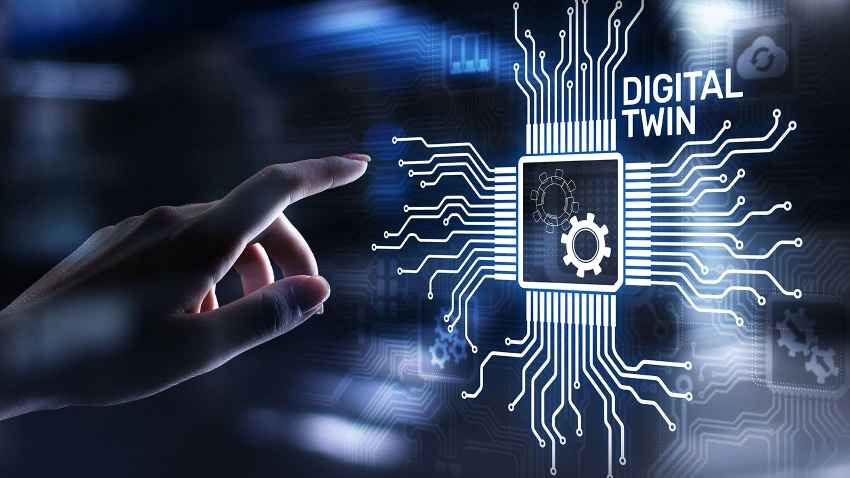
这是一个简单的概念,但潜力巨大。数字孪生是以数字版本呈现的物理对象、过程甚至人的数字表示。数字孪生可以帮助组织模拟真实情况和结果,从而做出更好的决策。
数字孪生使采用者能够创建其主题的完整数字足迹,从设计和开发到生命周期结束。德勤咨询公司智能制造负责人兼负责人Tim Gaus在接受电子邮件采访时表示,该技术不仅可以帮助组织了解设计的主题,还可以帮助组织了解构建它的系统以及产品将如何在现场使用。“随着数字孪生的创建,公司可能会在加快产品上市速度、改善运营、减少缺陷以及新兴新商业模式以增加收入方面实现重大价值。”
人工智能和分析提供商 SAS 物联网副总裁 Jason Mann 通过电子邮件解释道,数字孪生允许采用者试验并找到可以提高生产质量、减少排放、增强工人安全、改善维护、减轻洪水等的新方法。“然后,组织可以利用从数字孪生中获得的知识来做出更好、更快的决策,改善公民和客户体验,并优化运营。”
一、多重优势
Gaus 说,数字孪生可以通过更快地检测物理问题来帮助采用者更快地解决物理问题,高度准确地预测结果,设计和构建更好的产品,并最终帮助更好地为客户服务。“通过这种类型的智能架构设计,公司可以比以往任何时候都更快地迭代实现价值和收益。”
数字孪生使企业能够回答可能直接影响战略和运营决策的问题。Mann 解释说:“组织可以从回答有关资产性能的简单问题转变为了解这些资产(机器、装配线、供应链)在未来将如何运作,以及企业可以采取哪些措施来满足性能和正常运行时间目标。
制造商是最有可能从数字孪生技术中获得价值的企业。“制造商希望了解停机的原因,模拟场景以提高效率并减少浪费,”技术和业务解决方案提供商NTT的集团企业物联网产品和服务高级副总裁Devin Yaung在电子邮件采访中说。
单台机器的数字孪生允许即时查看维护问题和潜在故障。“互联物联网传感器和设备的增长使所有行业都能够深入了解资产,”Yaung说。“由于这种连接性的爆炸式增长,我们不仅在制造业,而且在公用事业、采矿、医院、港口、机场、物流/运输、农业和许多其他行业都看到了广泛的采用。”
二、基础知识
Gaus说,数字孪生技术有几种基本类型。其中包括组件孪生(单个零件的数字模型)、资产孪生(显示两个或多个零件如何协同工作的模型)、系统孪生(具有多个组件的系统模型,例如生产线)、流程孪生(整个设施的数字模型,例如智能工厂)和性能孪生(采用端到端孪生,然后允许仿真以提供对供应链未来绩效的洞察)。 数字化转型网(www.szhzxw.cn)
Yaung说,规划数字孪生部署的第一步是通过确定业务目标和需求来确定可能的投资回报率。他警告说,下一步是制定一个全面的战略,“否则你的企业可能会发现自己有一系列没有完全整合的单点解决方案。“该战略不仅必须包括技术路线图,还应该考虑新的运营模式和变革管理——组织将如何改变并根据新的见解采取行动。安全和隐私也必须是路线图的核心,Yaung补充道。
Mann 说,数字孪生战略必须经过精心规划,并具备所有必需的要素,然后才能上线。“其中包括一个强大、可扩展的数据架构,用于管理各种实时和企业数据;高级分析,可处理数据并发现优化任何异常的机会;一种使用分析来测试场景的方法;以及一种将分析结果有效地传递给组织内合适人员的方法。
组织在采用数字孪生技术时面临两个主要障碍。首先是前期成本。Gaus 说,虽然数字孪生技术可以随着时间的推移节省资金,但最初的采用通常是一个复杂且昂贵的过程,具体取决于您的组织当前使用的功能。“这就是为什么优先级很重要的原因——将数字孪生纳入能够带来最大价值的领域。”
三、谨慎行事
与任何数据驱动技术一样,数字孪生输出质量与所接收信息的准确性直接相关。“这在处理高保真传感器数据时尤为重要。”曼恩说。“高质量的物联网和流数据对于数字孪生的性能及其数据准确性至关重要,”他说。“能够对高速数据进行分析,可以提供做出更好、更快决策所需的准确性。”
“所有数字孪生数据都必须是可信的和可操作的,否则它就会变成很多噪音,”Yaung说。

翻译:
Boost Your Business With Digital Twin Technology
If you’re not seeing double, your organization may be missing out on a powerful new technology. Here’s how digital twin simulation can help.
At a Glance
- Digital twin technology has multiple benefits that drive more value for a business.
- Costs may be holding organizations back from realizing digital twin technology benefits.
- While digital twin technology is impressive, it’s important to feed in high-quality data.
It’s a simple concept with powerful potential. A digital twin is a digital representation of a physical object, process, or even person presented in a digital version. Digital twins can help an organization simulate real situations and outcomes, enabling better decision making.
Digital twins let adopters create a complete digital footprint of their subjects, from design and development through the end of their lifecycles. The technology helps organizations understand not only the subject as designed, but also the system that built it and how the product will used in the field, says Tim Gaus, smart manufacturing leader and principal at Deloitte Consulting in an email interview. “With the creation of a digital twin, companies may realize significant value in the areas of speed to market with a new product, improved operations, reduced defects, and emerging new business models to drive revenue.” 数字化转型网(www.szhzxw.cn)
A digital twin allows adopters to experiment and find new approaches that can improve production quality, reduce emissions, enhance worker safety, improve maintenance, mitigate flooding, and more, explains Jason Mann, vice president of Internet of Things at AI and analytics provider SAS, via email. “Organizations can then use the knowledge gained from the digital twin to make better, faster decisions, improve citizen and customer experiences, and optimize operations.”
1. Multiple Benefits
Digital twins can help adopters solve physical issues faster by detecting them sooner, predict outcomes with a high degree of accuracy, design and build better products, and, ultimately, help better serve customers, Gaus says. “With this type of smart architecture design, companies may realize value and benefits iteratively and faster than ever before.”
Digital twins allow businesses to answer questions that can directly impact strategic and operational decisions. “Organizations can move from answering simple questions about asset performance to understanding how these assets — machines, assembly lines, supply chains — will operate in the future, and what actions the business can take to meet performance and uptime goals,” Mann explains.
Manufacturers are the businesses most likely to gain value from digital twin technology. “Manufacturers look to understand the causes of downtime, model scenarios to improve efficiency, and reduce waste,” says Devin Yaung, senior vice president, group enterprise, IoT products and services, at technology and business solutions provider NTT, in an email interview.
Digital twins of individual machines permit instant views into maintenance issues and potential failures. “The growth of connected IoT sensors and devices has allowed all industries to gain insights into assets,” Yaung says. “Because of this explosion of connectivity, we are seeing large adoption not only in manufacturing but also in utilities, mining, hospitals, ports, airports, logistics/transportation, agriculture, and many other industries.” 数字化转型网(www.szhzxw.cn)
2. The Basics
There are several basic types of digital twin technology, Gaus says. These include component twins (digital models of a single part), asset twins (models showing how two or more parts work together), system twins (models of a system with multiple components, such as a production line), process twins (the digital model of an entire facility, such as a smart factory), and performance twins (taking an end-to-end twin and then allowing simulation to provide insight into a supply chain’s future performance).
The first step when planning a digital twin deployment is to determine the likely ROI by identifying business objectives and needs, Yaung says. The next step is creating a comprehensive strategy, “or else your business may find itself with a collection of point solutions that don’t fully integrate,” he warns. “The strategy must not only include the technology roadmap but should consider the new operating model and change management — how will the organization change and act upon the new insights.” Security and privacy must also be at the core of the roadmap, Yaung adds.
A digital twin strategy must be well-planned and have all of its required elements in place before it can go live, Mann says. “These include a robust, scalable data architecture that manages a diverse set of real-time and enterprise data; advanced analytics that process the data and uncover opportunities to optimize any anomalies; a way to use the analytics to test scenarios; and a method to efficiently transfer analytical findings to the right people within the organization.”
There are two main roadblocks organizations face when adopting digital twin technologies. The first is the upfront cost. While digital twin technology can save money over time, the initial adoption is often a complex and costly process depending on what capabilities your organization is currently working with, Gaus says. “This is why prioritization is important — incorporating digital twins into the areas that will lead to the most value.” 数字化转型网(www.szhzxw.cn)
3. Proceed with Caution
As with any data-driven technology, digital twin output quality is directly related to the accuracy of the information received. “This is especially important when dealing with high-fidelity sensor data.” Mann says. “Quality IoT and streaming data are essential to the performance of digital twins and their data veracity,” he states. “Having the ability to perform analytics on high-velocity data provides the accuracy needed to make better, faster decisions.”
“All digital twin data must be trusted and actionable or else it just becomes a lot of noise,” Yaung says.
本文由数字化转型网(www.szhzxw.cn)转载而成,来源于INFORMATIONWEEK.COM;编辑/翻译:数字化转型网宁檬树。
免责声明: 本网站(http://www.szhzxw.cn/)内容主要来自原创、合作媒体供稿和第三方投稿,凡在本网站出现的信息,均仅供参考。本网站将尽力确保所提供信息的准确性及可靠性,但不保证有关资料的准确性及可靠性,读者在使用前请进一步核实,并对任何自主决定的行为负责。本网站对有关资料所引致的错误、不确或遗漏,概不负任何法律责任。
本网站刊载的所有内容(包括但不仅限文字、图片、LOGO、音频、视频、软件、程序等) 版权归原作者所有。任何单位或个人认为本网站中的内容可能涉嫌侵犯其知识产权或存在不实内容时,请及时通知本站,予以删除。