
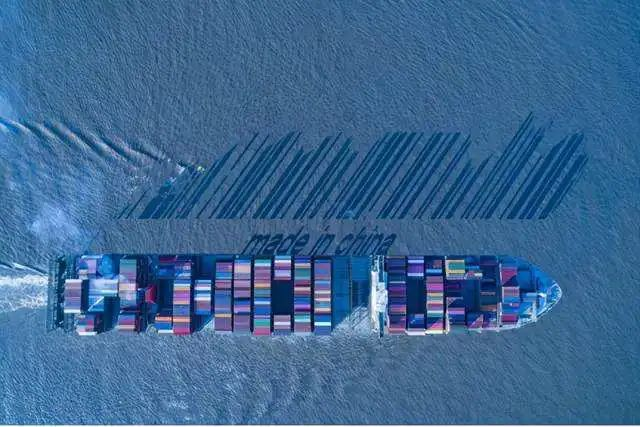
全球化时代,越来越多的中国企业将业务拓展至全球范围,出海也从“可选项”变为部分企业的“必选项”。从中国品牌自主研发的新能源汽车,到加码国际化布局的医疗器械,再到文化输出的短视频,越来越多的中国企业正加速出海步伐。
一、中国企业出海发展阶段
近年来,中国在众多领域实现了新一轮的技术突破,全产业链随着社会生产力的提升不断完善,随之而来的是日益增长的企业出海寻求更大市场机遇的强烈诉求以及更加多样化的出海方式。一部分出海企业正进一步加大研发力度和本地化产能投入,以过硬的产品和极致的性价比逐步融入当地市场;另一部分企业开始注重品牌效应,通过打造独特而具有辨识度的品牌形象,吸引海外消费者的认同,在用户价值认知层面构筑起企业自身的护城河。 数字化转型网(www.szhzxw.cn)
Google《中国全球化品牌2023》报告指出,现阶段中国品牌最重要的工作就是打造有意义的差异化,即品牌的“价值感”。中国企业出海已迈入全力升级产品力、品牌力的4.0阶段。
二、中国企业出海产业生态
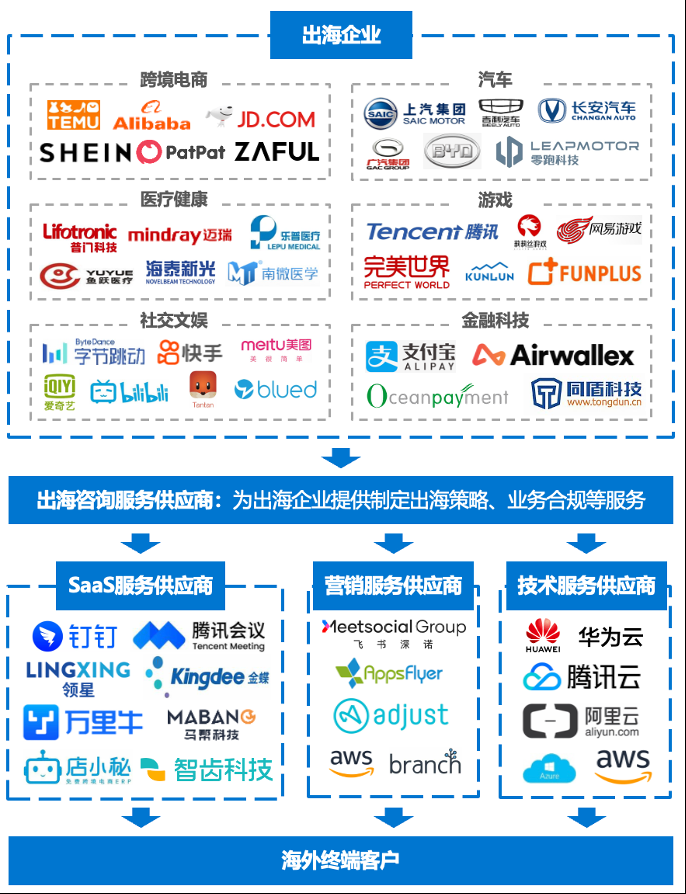
如今,中国企业出海已经形成了完善的产业生态,参与者不仅包括出海企业,还包括为出海企业提供数字化服务的供应商,如技术供应商、营销服务供应商及SaaS服务供应商等。
三、中国企业出海路径与模式
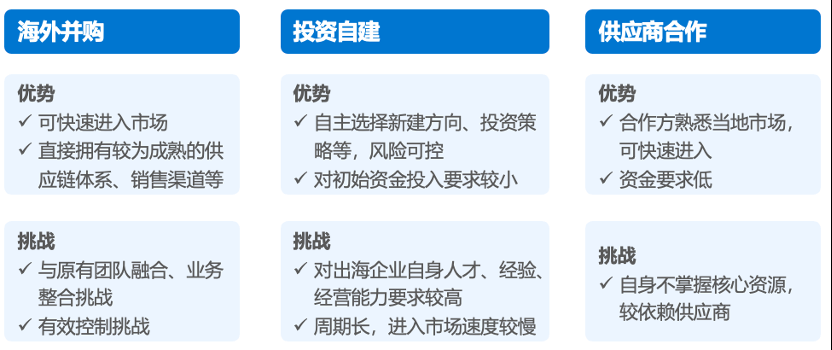
针对不同海外市场及各行业特点,中国企业的出海主要包括海外并购、投资自建和供应商合作三种路径。海外并购指通过收购海外已有公司或团队,获取其技术、业务、品牌等资源,快速进入海外市场;投资自建指直接在海外新设公司,从0开始拓展市场;供应商合作指与成熟的销售供应商合作,由供应商帮助企业拓展海外市场。 数字化转型网(www.szhzxw.cn)
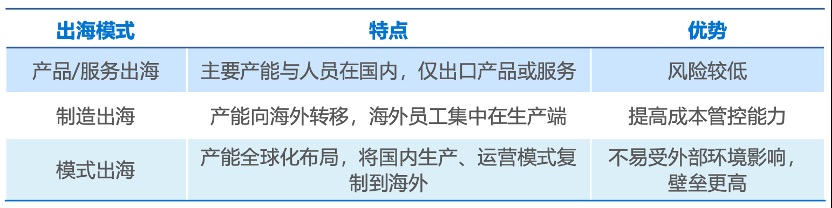
历经40余年发展,中国企业出海模式持续迭代,目前主要包括产品/服务出海、制造出海、和模式出海三类。
四、中国企业出海区域分布
出海目的地的选择对于企业至关重要,根据行业特点准确匹配目的地,并选择合适的方式切入市场是企业出海的第一步。 数字化转型网(www.szhzxw.cn)
出海目的地主要分为发达国家和新兴国家两种,发达国家包括北欧、西欧、日韩、澳洲等,法律、基础设施完善、产业发展较好、消费能力强、市场规模大。
新兴国家包括东南亚、中东、印度、俄罗斯、中南美等,产业基础较弱,政策与法规多变,但当地经济增长迅速,竞争相对较弱,发展机遇与空间较大。
百炼智能调研数据显示,北美、西欧、南美作为传统出海目的地,是企业选择最多的出海地区,分别有30.97%、27.65%、27.58%的企业在该地区布局,但已逐渐被东南亚、中东等新兴区域追赶,越来越多企业开始选择将新兴区域作为出海目的地。
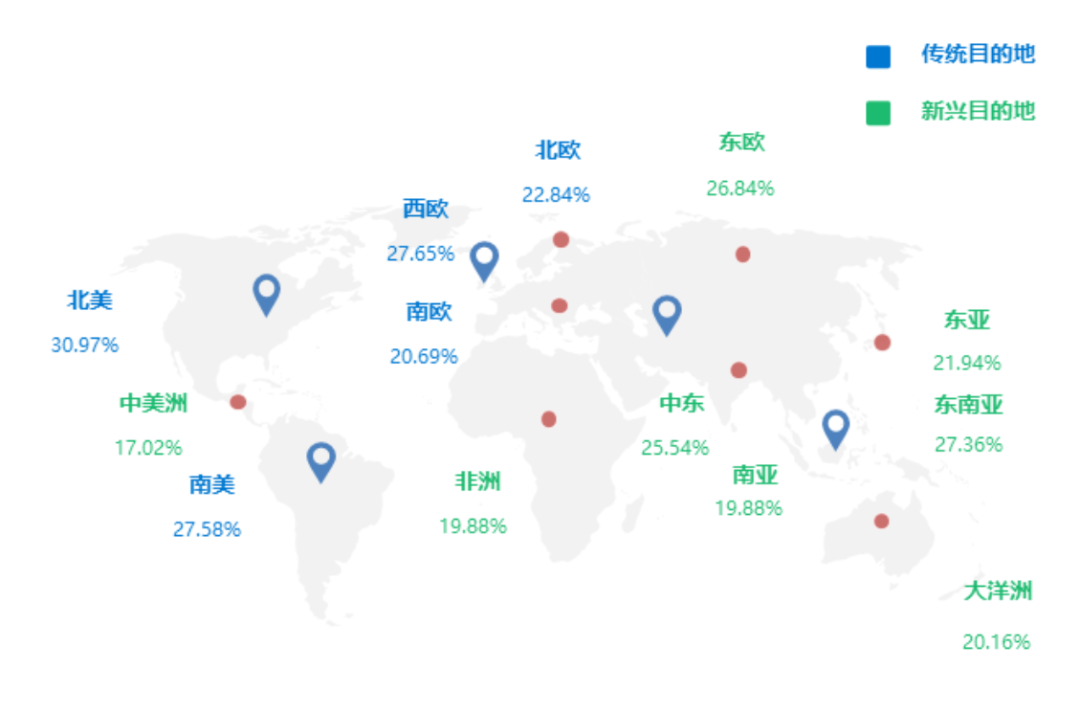
数据来源:百炼智能
五、中国企业出海行业分布
随着全球化浪潮翻涌向前,出海主力也从过去低附加值行业逐步拓展至文化娱乐、新消费、电子商务、信息技术、医疗健康、先进制造、汽车交通等更多元、附加值更高的行业。
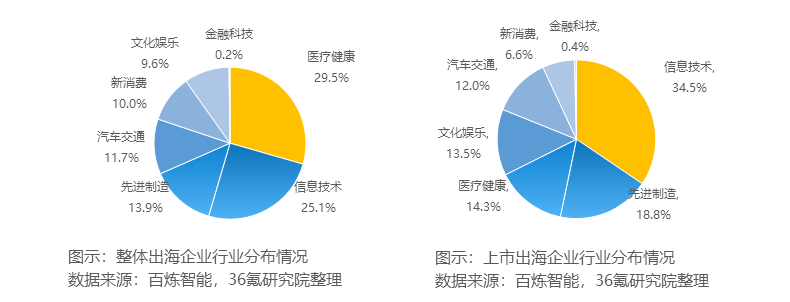
从行业分布上看,信息技术、先进制造、医疗健康三大行业的企业出海积极性最高。其中,医疗健康行业以29.45%的占比位居出海企业数量榜首。上市企业中,信息技术和先进制造海外布局能力更强,两者占比超过50%。 数字化转型网(www.szhzxw.cn)
六、中国企业出海总结
全球化浪潮下,越来越多中国企业开始拓展海外市场,出海行业、目的地、路径及商业模式愈加丰富。以电子商务行业为例,主要出海目的地为购买力强的欧美地区和有较大上涨空间的东南亚、拉美、中东地区,出海路径包括如阿里收购Lazada的海外并购模式和如拼多多推出电商平台Temu的自建模式。
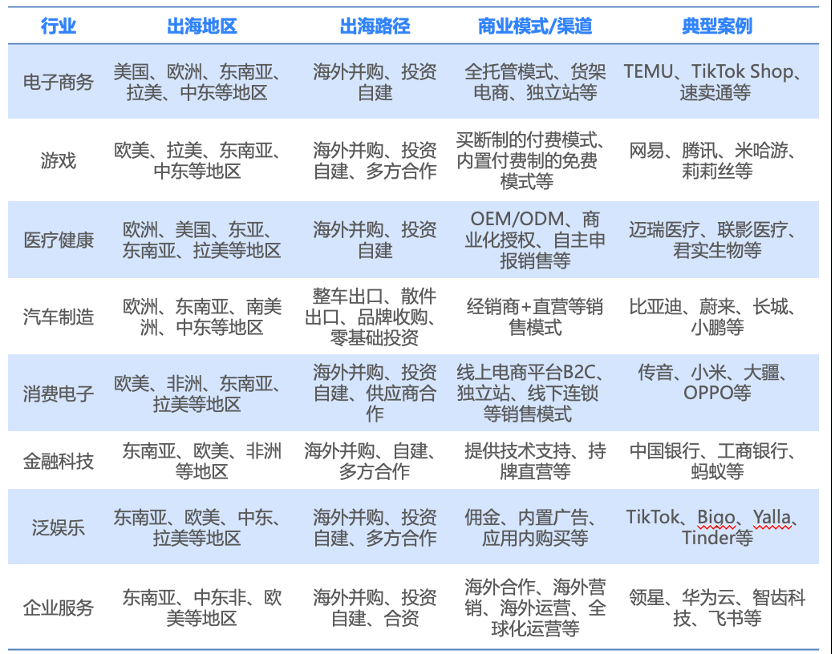
注:本表格由36氪研究院梳理,只列出部分细分行业及企业为代表,未覆盖全产业
营销渠道则主要分为B2B和B2C,其中B2C模式又分为第三方销售平台和自建独立站。货盘组织上,大部分第三方平台均推出全托管模式,帮助有产能但缺乏销售能力的中小型商家以及工厂类商家出海。
翻译:
Overview of Chinese Enterprises’ Overseas Development (2023-2024)
In the era of globalization, more and more Chinese enterprises have expanded their business to the global scope, and going to sea has changed from “optional” to “necessary” for some enterprises. From new energy vehicles independently developed by Chinese brands, to medical devices with increased international layout, to short videos of cultural output, more and more Chinese enterprises are accelerating the pace of going to sea.
First, the development stage of Chinese enterprises going overseas
In recent years, China has achieved a new round of technological breakthroughs in many fields, and the whole industrial chain has been continuously improved with the improvement of social productivity, followed by a growing number of enterprises to seek greater market opportunities and more diversified ways to go to sea. Some companies are further increasing research and development efforts and local production capacity investment, with excellent products and the ultimate cost-effective gradually into the local market; Another part of the enterprise began to pay attention to the brand effect, by creating a unique and recognizable brand image, attract the recognition of overseas consumers, and build their own moat at the level of user value cognition.
Google’s “China Global Brand 2023” report points out that the most important work for Chinese brands at this stage is to build meaningful differentiation, that is, the “sense of value” of the brand. Chinese enterprises have entered the 4.0 stage of upgrading product power and brand power.
Second, the industrial ecology of Chinese enterprises going overseas
Nowadays, Chinese enterprises going to sea have formed a complete industrial ecology, and the participants not only include overseas enterprises, but also include suppliers who provide digital services for overseas enterprises, such as technology suppliers, marketing service providers and SaaS service providers. 数字化转型网(www.szhzxw.cn)
Map of China’s Marine industry ecology
Third, the path and model of Chinese enterprises going overseas
According to the characteristics of different overseas markets and industries, Chinese enterprises’ going abroad mainly includes three ways: overseas mergers and acquisitions, investment and self-construction and supplier cooperation. Overseas M&A refers to the acquisition of existing overseas companies or teams to acquire their technology, business, brand and other resources to quickly enter overseas markets; Investment and self-establishment refers to the establishment of new companies directly overseas, starting from 0 to expand the market; Supplier cooperation refers to the cooperation with mature sales suppliers, who help enterprises to expand overseas markets.
Comparison of advantages and disadvantages of three sea routes
After more than 40 years of development, Chinese enterprises continue to iterate the model of going to sea, which mainly includes three categories: product/service going to sea, manufacturing going to sea, and model going to sea.
Comparison of three modes of sailing
Fourth, regional distribution of Chinese enterprises going overseas
The choice of destination is crucial for enterprises, according to the characteristics of the industry to accurately match the destination, and choose the right way to enter the market is the first step for enterprises to go to sea. 数字化转型网(www.szhzxw.cn)
The destinations are mainly divided into developed countries and emerging countries. Developed countries include Northern Europe, Western Europe, Japan and South Korea, Australia, etc., with perfect laws and infrastructure, good industrial development, strong consumption power, and large market scale.
Emerging countries include Southeast Asia, the Middle East, India, Russia, Central and South America, etc., the industrial base is weak, policies and regulations are changeable, but the local economy is growing rapidly, the competition is relatively weak, and the development opportunities and space are large.
Intelligent research data show that North America, Western Europe, South America, as a traditional destination, is the most selected by enterprises to go to sea, 30.97%, 27.65%, 27.58% of the enterprises in the region layout, but has gradually been Southeast Asia, the Middle East and other emerging regions to catch up, more and more enterprises began to choose the emerging region as a destination.
Geographical distribution of Chinese enterprises going overseas
Data source: Bailian Intelligence
Fifth, distribution of Chinese enterprises going overseas
As the tide of globalization surges forward, the main force of the sea has gradually expanded from the past low value-added industries to more diversified and higher value-added industries such as culture and entertainment, new consumption, e-commerce, information technology, medical health, advanced manufacturing, and automobile transportation.
From the perspective of industry distribution, companies in the three major industries of information technology, advanced manufacturing, and medical and health care have the highest enthusiasm for going to sea. Among them, the medical and health industry ranked first in the number of overseas enterprises with a proportion of 29.45%. Among listed companies, information technology and advanced manufacturing have stronger overseas layout capabilities, accounting for more than 50%.
Sixth, summary of Chinese enterprises going overseas
Under the tide of globalization, more and more Chinese enterprises have begun to expand overseas markets, and the overseas industries, destinations, routes and business models are becoming more and more abundant. Taking the e-commerce industry as an example, the main destinations are Europe and the United States with strong purchasing power and Southeast Asia, Latin America and the Middle East with large room for growth, and the path to the sea includes the overseas merger and acquisition model such as Ali’s acquisition of Lazada and the self-built model such as Pinduoduo’s launch of the e-commerce platform Temu. 数字化转型网(www.szhzxw.cn)
Summary of Chinese enterprises going to sea
Note: This table is organized by 36 KR Research Institute and only lists some sub-sectors and enterprises as representatives, not covering the whole industry
Marketing channels are mainly divided into B2B and B2C, of which the B2C model is divided into third-party sales platforms and self-built independent stations. On the pallet organization, most third-party platforms have launched a full custody model to help small and medium-sized merchants and factory merchants with production capacity but lack of sales capacity to go to sea.
本文由数字化转型网(www.szhzxw.cn)转载而成,来源于CHYIELD初禾源投资视野;编辑/翻译:数字化转型网宁檬树。

免责声明: 本网站(http://www.szhzxw.cn/)内容主要来自原创、合作媒体供稿和第三方投稿,凡在本网站出现的信息,均仅供参考。本网站将尽力确保所提供信息的准确性及可靠性,但不保证有关资料的准确性及可靠性,读者在使用前请进一步核实,并对任何自主决定的行为负责。本网站对有关资料所引致的错误、不确或遗漏,概不负任何法律责任。
本网站刊载的所有内容(包括但不仅限文字、图片、LOGO、音频、视频、软件、程序等) 版权归原作者所有。任何单位或个人认为本网站中的内容可能涉嫌侵犯其知识产权或存在不实内容时,请及时通知本站,予以删除。