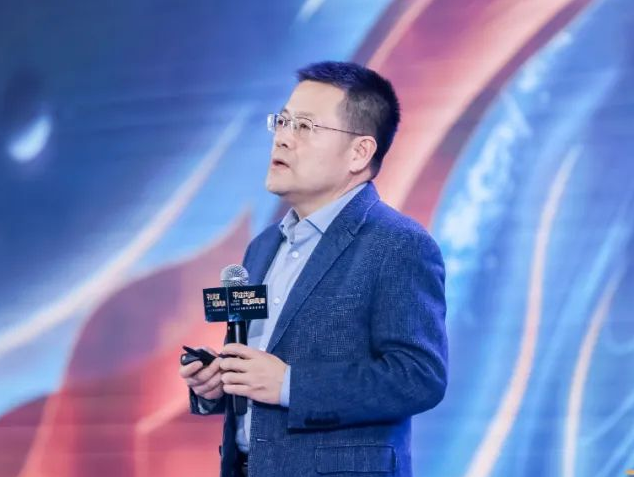
2024年4月13日,中国商业文明研究中心、秦朔朋友圈创始人秦朔发表了题为《出海新思考:从中国经济到中国人经济》的演讲。
秉持“记录中国此刻,推动商业文明”的信念,秦朔奔走海外,深入企业,亲眼见证的细节凝聚为深远的洞见,为无数在拼搏的出海中国人拨开迷雾。
以下是演讲全文,观点精妙,解读精准,与你分享。
各位企业、各位媒体朋友,大家下午好。
39年前,《南风窗》杂志创刊。在那时,南风窗就是观察中国改革开放的窗口,彼时的改革开放更多是将国外先进的技术、先进的理念和先进的方法引入中国。
从中国建筑总承包到中国制造,再到中国数字经济和与数字经济相关联的服务,几十年来,中国企业积累了丰富的出海经验。与此同时,中国的改革开放在走向全球化后,又进入了一个新的发展阶段。
发达经济体之间的大国博弈、全球新兴经济体对于供应链本地化、供应链在地化的迫切自主要求等等,都指向了今天的出海,不能再像以前一样采取产品倾销的模式走向全球。
这也意味着,当前中国企业若想走遍全球,要有几个大脑同时运转,要有更多的手、更多的脚去走不同的路。 数字化转型网(www.szhzxw.cn)
过去的40年已经证明了,我们行;未来几十年也将再次证明,我们行。
只是,这条道路一定会伴随着许多艰难险阻。
我本人是这个过程中的学习者和参与者。最近几年,我不断在全球各地奔走调研,今天就把我的一些心得体会分享给大家。
中国商业文明研究中心、秦朔朋友圈创始人秦朔
中国企业为什么一定要走出去?
首先,是我们的自然禀赋所决定的。
中国的耕地占全球的6%,淡水占7%,石油资源占1.5%。但由于我们是人口大国,人均资源占比非常低。
但中国什么最厉害?
像在座的企业家,手不停,脚不停,一直辛勤劳动,将很多资源整合到一起、创造产品的能力非常强,强到中国制造业增加值占全球约30%左右,货物贸易占全球12%以上。
如此巨大的产能必须走出去,人均资源的相对缺少也必须得引进来,这样一种“大进大出、两头在外”的经济体基本格局是既定的,所以我们必须得走出去。
中国企业走出去的底气是什么呢?
如刚才所说,是40余年练就的能力,这个能力全面展示在当前的产业光谱里。
当年提及中国企业出海,便自然联想到玩具、服装、家具等。但今天不一样,我们不断在向世界输出产业能力,像高铁、核电、工程机械、跨境电商与在地服务,以及以电动载人汽车、太阳能电池、锂电池为代表的“产业新三样”,和以网文、网剧、网游为代表的“文化新三样”,它们在全球都深受欢迎。
此前,中国的出口主要依托个别产业,现在,几乎所有产业都非常强。加之,我们是从一个相对不发达的水平上发展起来的,意味着我们可以将中国几十年凝练的经济增长模式迁移出去,知道如何在一张白纸上画出美好的图画。 数字化转型网(www.szhzxw.cn)
中国人走出去后,他所创造的国民财富会不断地增长。接下来,我们会迎来国民生产总值(GNP)增长的新时代。
值得注意的是,今天的出海较之以往有非常大的不同。
很多新兴经济体希望海外企业进来后,能够带动本地就业,带动本地供应链和本地价值生态的发展,而不是将本地的零售商、渠道商、品牌商,甚至是农产品给冲垮了。在当下,仅是过去那样简单的商品出口模式,是不可持续的。
有些人可能会问——出海当地不具备条件,也没有比较优势、成熟工人和配套设施,为什么还非要在当地做?干脆我们出口给你,行吗?不行。
在经历了几十年的全球化以后,国家的边界思维越来越强,每个国家都在提更加自主化、更加本地化、更加安全化、更加在地化等,包括中国在内也强调“进口替代”“全面自主可控”等。
去年,我去中东发现,江苏省与阿布扎比合作建立了中阿合作园区。但当地缺少配套设施,劳工用的也是外来劳动力,工程建设进程缓慢。
可阿布扎比的未来愿景是要发展成综合型经济形态,需要更多的产业支撑而非仅仅依靠石油,所以对于他们而言,慢不怕,但是一定要走上这条路。 数字化转型网(www.szhzxw.cn)
SHEIN为了推进本土化,也开始在巴西投资。如果只是靠中国供应链出口,物流运输压力和退货压力都很大,且当地也会考虑对本地服装零售业的冲击问题,因此SHEIN也已开始在巴西建设供应链,以本地供本地。预计到2026年底,SHEIN在巴西的大部分销售额会来自当地的制造商和销售商。
当出海不再是简单的产品出口时,企业要走出去就必须遵循全球已有通识,以及当地各样的法律要求。
举个例子,中国某建工集团在承揽一个澳大利亚项目时,因未提前了解澳大利亚要求赴澳工人必须通过雅思考试,电工、焊工等专业人员必须通过澳方相应考试,导致调遣不了中国工人,项目施工用了大量外籍工人,成本高昂。
工期延误时,该集团计划让员工加班赶工。但在澳大利亚,雇主不能随意要求工人加班,且实行工作9天、休息5天的模式,工人下班后即不再工作。因项目工期多次延误,损失巨大。
可能很多人会说:我想干活,我想挣钱,我凭什么不可以呢?对不起,这就是当地文化的要求。
你非常强大,你觉得你对当地有帮助,但是在本地政府看来,你是在以超低空飞行的价格将本地掏空,这种“成吉思汗式”(或称“蒙古西征式”)的模式是别人所不接受的。
与此同时,出海也正在遭遇全球非经济因素的影响。
比如,TikTok被关停在印尼电商业务;三家中国车企将成为欧盟反补贴调查对象;墨西哥政府两次修订《矿业法》,将锂列为战略性矿产;加拿大政府以国家安全为由,要求三家中资企业从加拿大关键矿产企业撤资等。 数字化转型网(www.szhzxw.cn)
不难发现,泛政治化现象是与本国国民情绪高度关联在一起的。当这种情绪不断发酵后,全球原有的几条主要供应链就被打破了,呈现出多链化分裂的状态。
面对此种情形,当前的中国企业采取了一些方法,或把不同的功能放在不同的经济体,或把法律意义上的公司实体放在中国以外的国家。其中有些方法可行,有些方法不可行,这个问题非常复杂。
怎么在不确定中寻找确定?我想宁德时代董事长曾毓群最近有一个观点非常重要,即分享与共赢。
中国的新能源车企当前可能会遇到以下情况:
有矿产的国家说,我这个矿可以卖给你,但不能白给你,我希望你把矿产之后的产业链建在这里。
有市场的国家,比如欧洲说,我这个市场可以给你,但你的电池要100%在我这里做。
中国说,我们自己有技术,应该是我从你那边的矿产公司买原矿,买回来我加工做成电池,完了以后卖给有市场的地方。
三者僵持不下,原本一条供应链就够了,现在却需要三条供应链,夹在中间的企业就比较麻烦。
怎么办?
曾毓群希望三个地方的政府、组织、客户,坐下来好好谈一下分享。比如“433”的办法:30%可以在有矿的地方做,30%可以在有市场的地方做,还有40%在有技术的地方做。
虽然全球供应链会因此呈现分割的状态,但可以由多个国家共同去发展同一个产业。生产无疑是更复杂,不过市场空间也变得更大了。 数字化转型网(www.szhzxw.cn)
再举一个例子,2012年,三峡集团投资收购了葡萄牙电力(下述简称葡电)21.35%的股权,中方是葡电的第一大股东,但并没有派人进入公司管理层。
中方一位高管做副董事长兼薪酬委员会主任,他先请美世咨询做了欧洲几家能源电力公司高管薪酬和激励机制的对比分析。该对比分析发现,葡电高管薪酬是中等偏下水平。于是他将CEO的工资提高了20%,剩下6个副总分成两档,并相应增加了考核指标的难度系数,增加了现金流指标。
当年的股东大会,本地小股东提出意见,中方高管回答表示,公司虽然注册在葡萄牙,但55%的营业收入和60%的利润来自葡萄牙以外,竞争对手不是本地的公司,而是全球实力更强的跨国企业;而且如果高管能够满格拿到薪酬包,股东得到的也更多。
除了股权购买协议,三峡集团还和葡电签订了战略合作框架协议。亚洲是中方的主导市场,欧洲、南美、巴西是葡电的主导市场,非洲是共同市场。合作10年,葡电市值增长了两倍。
刚才讲了那么多,很多朋友可能会觉得,这么辛苦、不容易,干嘛还要出去?
中国企业的现状,只能出去。这是我们的禀赋所决定的。同时,我们积累的本领也证明我们出去是可行的。 数字化转型网(www.szhzxw.cn)
最近一两年,我去很多地方看了很多中国企业的出海案例,不少跨国公司已经不仅仅是出海了,而是选择在当地成立公司,以当地公司的名义登陆当地资本市场。这也说明,全球再工业化、现代化的兴起,使得中国模式和中国能力有可能在全球开花,中国人有影响全世界的能力。
总结而言,从中国经济到中国人经济机遇挑战并存,机遇挑战并存,机遇大于挑战,但实现机遇的要求也在提高。
中国企业要想进入发达国家,需面临两道关口,一是投资审查,二是技术封锁。
进入新兴市场则要充分考虑货币不能自由兑换、汇率波动风险突出、法律和市场监管规则不健全、合规风险较大(如税收争议、腐败佣金、公司治理等)等问题。
当前制约中国能力全球化的障碍在于:别人让不让你去?培育新兴市场的成本如何?如何越过发达市场门槛?
中国能力的全球化,不等于中国的全球化能力。
种种可能碰到的问题,都在考验着中国人的智慧。
中国的企业走出去,既要有雄心壮志,又得把步子迈稳,先去学习、适应和了解,接着一步一步地走,并在这个过程中注重创造本地价值。 数字化转型网(www.szhzxw.cn)
将硬实力与软实力相结合,才会在穿越各种风浪后,迎来光明的明天。

翻译:
Qin Shuo’s big speech: New thinking of Chinese enterprises going to sea
On April 13, 2024, Qin Shuo, the founder of the China Business Civilization Research Center and the founder of Qin Shuo’s Circle of Friends, delivered a speech entitled “New Thinking on Going to Sea: From China’s Economy to Chinese People’s Economy”.
Adhering to the belief of “recording China at the moment and promoting commercial civilization”, Qin Shuo went overseas and went deep into enterprises, and the details witnessed by him condensed into far-reaching insights, clearing the fog for countless Chinese people struggling to go to sea.
The following is the full text of the speech, the point of view is exquisite, accurate interpretation, to share with you. 数字化转型网(www.szhzxw.cn)
Dear enterprises and friends from the media, good afternoon.
Thirty-nine years ago, South Window magazine was launched. At that time, the southern window was the window to observe China’s reform and opening up, which was more about introducing advanced foreign technologies, advanced ideas and advanced methods into China.
From China’s general construction contracting to China’s manufacturing, and then to China’s digital economy and services related to the digital economy, Chinese enterprises have accumulated rich experience in going to sea over the decades. At the same time, China’s reform and opening up has entered a new stage of development after going global.
The great power game between developed economies, the urgent independent requirements of global emerging economies for supply chain localization, supply chain localization, etc., all point to today’s sea, and can no longer take the model of product dumping to the world as before.
This also means that if Chinese enterprises want to travel around the world at present, they must have several brains working at the same time, and they must have more hands and more feet to walk different roads.
The last 40 years have proven that we can; The next few decades will prove once again that we can.
However, the road is bound to be accompanied by many difficulties.
I myself am a learner and a participant in this process. In recent years, I have been traveling around the world to research, and today I would like to share some of my experience with you.
China Commercial Civilization Research Center, Qin Shuo Circle of friends founder Qin Shuo
Why do Chinese companies have to go global?
First, it’s our natural endowments. 数字化转型网(www.szhzxw.cn)
China has 6% of the world’s arable land, 7% of its fresh water and 1.5% of its oil resources. But because we are a populous country, the per capita share of resources is very low.
But what is China best at?
Like the entrepreneurs present here, hands and feet, have been working hard, integrating many resources together, and the ability to create products is very strong, so strong that China’s manufacturing value added accounts for about 30% of the world, and trade in goods accounts for more than 12% of the world.
Such a huge capacity must go out, the relative lack of per capita resources must also be introduced, such a “big in big out, two sides out” of the basic pattern of the economy is established, so we must go out.
What is the strength of Chinese enterprises to go global?
As I just said, it is the ability that has been developed for more than 40 years, and this ability is fully displayed in the current industrial spectrum.
When Chinese companies went to sea, they naturally associated with toys, clothing, furniture and so on. But today is different, we are constantly exporting industrial capabilities to the world, such as high-speed rail, nuclear power, construction machinery, cross-border e-commerce and local services, as well as the “new three industries” represented by electric manned vehicles, solar cells and lithium batteries, and the “new three cultures” represented by online literature, online drama and online games, which are popular around the world. 数字化转型网(www.szhzxw.cn)
Previously, China’s exports were mainly based on a few industries. Now, almost all industries are very strong. In addition, we are developing from a relatively undeveloped level, which means that we can transfer China’s decades of condensed economic growth model and know how to draw a beautiful picture on a blank sheet of paper.
After the Chinese people go out, the national wealth he creates will continue to grow. Then we will usher in a new era of gross national product (GNP) growth.
It is worth noting that the sea today is very different from the past.
Many emerging economies hope that when overseas companies come in, they can promote local employment, promote the development of local supply chains and local value ecology, rather than flushing out local retailers, distributors, brand owners, and even agricultural products. In the present, the simple commodity export model of the past is not sustainable.
Some may ask – why do you have to do it locally when you don’t have the conditions, comparative advantages, mature workers and supporting facilities? Why don’t we just export it to you, okay? No way.
After decades of globalization, the border thinking of countries is getting stronger and stronger, and every country is proposing to be more autonomous, more localized, more secure, more localized, etc., including China, also emphasizes “import substitution” and “comprehensive, independent and controllable”. 数字化转型网(www.szhzxw.cn)
Last year, I went to the Middle East and found that Jiangsu Province and ABU Dhabi have jointly established a China-Arab cooperation park. But the lack of local facilities, the use of migrant labor, the construction process is slow.
But ABU Dhabi’s vision for the future is to develop an integrated economy that needs more industrial support than just oil, so for them, it is not afraid to slow down, but it must embark on this road.
SHEIN has also begun to invest in Brazil in order to promote localization. If you only rely on China’s supply chain export, logistics and transportation pressure and return pressure are very large, and the local will also consider the impact on the local clothing retail industry, so SHEIN has also begun to build a supply chain in Brazil to local supply. By the end of 2026, the majority of SHEIN’s sales in Brazil are expected to come from local manufacturers and sellers.
When going to sea is no longer a simple export of products, enterprises must follow the existing global knowledge and local legal requirements.
For example, when a Chinese construction group contracted an Australian project, it did not know in advance that Australian workers must pass the IELTS test, electricians, welders and other professionals must pass the corresponding Australian test, resulting in the deployment of Chinese workers, and the project construction used a large number of foreign workers, and the cost was high.
When there are delays, the group plans to ask staff to work overtime to catch up. However, in Australia, employers can not arbitrarily ask workers to work overtime, and the implementation of nine days of work, five days off the model, workers no longer work after work. Due to many delays in the project period, the loss is huge. 数字化转型网(www.szhzxw.cn)
Maybe many people will say: I want to work, I want to make money, why can’t I? I’m sorry, that’s what the culture demands.
You are very powerful and you think you are helpful to the local area, but in the eyes of the local government, you are hollowing out the local area at the price of flying very low, and this “Genghis Khan” (or “Mongolian Western Expedition”) model is not acceptable to others.
At the same time, the sea is also facing the impact of global non-economic factors.
For example, TikTok was shut down in Indonesia’s e-commerce business; Three Chinese carmakers to be targeted in EU anti-subsidy probe The Mexican government twice amended the Mining Law to list lithium as a strategic mineral; On the grounds of national security, the Canadian government asked three Chinese enterprises to divest from key Canadian mineral enterprises.
It is not difficult to find that the phenomenon of pan-politicization is highly related to the national mood. When this sentiment continues to ferment, the world’s original several major supply chains have been broken, showing a multi-chain split state. 数字化转型网(www.szhzxw.cn)
Faced with this situation, current Chinese companies have adopted a number of methods, either by placing different functions in different economies, or by placing legal corporate entities in countries outside China. Some of them work, some of them don’t, and it’s a very complex issue.
How to find certainty in uncertainty? I think Zeng Yuqun, chairman of Ningde Times, recently had a very important point of view, that is, sharing and win-win.
China’s new energy vehicle enterprises may encounter the following situations at present:
Countries with minerals say, I can sell you this mine, but I can’t give it to you for free, I hope you will build the industrial chain after the mine here.
Countries with markets, such as Europe, say, I can give you this market, but you have to make 100% of your batteries here. 数字化转型网(www.szhzxw.cn)
China said, we have our own technology, I should buy raw ore from your mining company, buy it back, I process it into batteries, and then sell it to a place where there is a market.
Three stalemate, the original supply chain is enough, but now need three supply chains, sandwiched in the middle of the enterprise is more troublesome.
What to do?
Mr Tsang hoped that the governments, organisations and customers of the three places would sit down and have a good talk and share. For example, the method of “433” : 30% can be done in places where there is a mine, 30% can be done in places where there is a market, and 40% can be done in places where there is technology. 数字化转型网(www.szhzxw.cn)
Although the global supply chain will be segmented, multiple countries can jointly develop the same industry. Production is undoubtedly more complex, but the market space has also become larger.
To give another example, in 2012, the Three Gorges Group invested in the acquisition of 21.35% of the shares of Portuguese electricity (hereinafter referred to as Portuguese electricity), the Chinese side is the largest shareholder of Portuguese electricity, but did not send anyone to the company’s management.
A Chinese executive, who is vice chairman and head of the compensation committee, first asked Mercer to do a comparative analysis of executive pay and incentives at several energy and power companies in Europe. The comparative analysis found that the executive compensation of GLP is lower than the average level. So he raised the CEO’s salary by 20%, divided the remaining six vice presidents into two levels, and correspondingly increased the difficulty coefficient of assessment indicators and increased the cash flow indicators.
At the shareholders’ meeting that year, local minority shareholders raised their opinions, and Chinese executives replied that although the company was registered in Portugal, 55% of its operating income and 60% of its profits came from outside Portugal, and its competitors were not local companies, but multinational companies with stronger global strength. And if executives get their full pay packages, shareholders get even more. 数字化转型网(www.szhzxw.cn)
In addition to the equity purchase agreement, the Three Gorges Group also signed a strategic cooperation framework agreement with Portugal Electric. Asia is the leading market for China, Europe, South America and Brazil are the leading markets for GLC, and Africa is the common market. After 10 years of cooperation, the market value of GLP has tripled.
After talking so much just now, many friends may feel that it is so hard and not easy, why still go out?
The status quo of Chinese enterprises can only go out. This is what our endowment dictates. At the same time, our accumulated skills also prove that we go out is feasible.
In the past year or two, I have visited many places to see many cases of Chinese companies going overseas. Many multinational companies have not only gone overseas, but have chosen to set up local companies and enter the local capital market in the name of local companies. This also shows that the rise of global re-industrialization and modernization has made it possible for the Chinese model and Chinese capabilities to blossom globally, and Chinese people have the ability to influence the world.
In summary, from the Chinese economy to the Chinese people’s economy, opportunities and challenges coexist, opportunities and challenges coexist, opportunities outweigh challenges, but the requirements for realizing opportunities are also increasing.
If Chinese companies want to enter developed countries, they need to face two barriers, one is investment review and the other is technology blockade.
When entering emerging markets, it is necessary to fully consider the problems such as currency cannot be freely convertible, the risk of exchange rate fluctuations is prominent, the laws and market regulation rules are not sound, and the compliance risk is large (such as tax disputes, corruption commissions, corporate governance, etc.). 数字化转型网(www.szhzxw.cn)
The current obstacle to China’s ability to globalize lies in: Will others let you go? What is the cost of cultivating emerging markets? How to cross the developed market threshold?
The globalization of China’s capabilities is not the same as China’s globalization capabilities.
All kinds of possible problems are testing the wisdom of the Chinese people.
To go global, Chinese enterprises must be both ambitious and steady, first to learn, adapt and understand, then step by step, and focus on creating local value in the process.
The combination of hard power and soft power will usher in a bright tomorrow after going through various storms. 数字化转型网(www.szhzxw.cn)
本文由数字化转型网(www.szhzxw.cn)转载而成,来源于盐财经;编辑/翻译:数字化转型网宁檬树。
免责声明: 本网站(http://www.szhzxw.cn/)内容主要来自原创、合作媒体供稿和第三方投稿,凡在本网站出现的信息,均仅供参考。本网站将尽力确保所提供信息的准确性及可靠性,但不保证有关资料的准确性及可靠性,读者在使用前请进一步核实,并对任何自主决定的行为负责。本网站对有关资料所引致的错误、不确或遗漏,概不负任何法律责任。
本网站刊载的所有内容(包括但不仅限文字、图片、LOGO、音频、视频、软件、程序等) 版权归原作者所有。任何单位或个人认为本网站中的内容可能涉嫌侵犯其知识产权或存在不实内容时,请及时通知本站,予以删除。