导言
我们需要一个以企业家中心的公司治理模型。一个有效的公司治理结构,一定要使得最具有企业家精神的人去掌控公司,并且有积极性去创新,去创造,而不是仅仅选一些不会腐败的人就可以。目前公司治理理论存在的缺陷,导致了我们把过多的精力、法律、政策放在怎么去约束企业家精神,使得公司变得越来越官僚化,而不是越来越充满活力。 数字化转型网(www.szhzxw.cn)
一、没有企业家的公司治理理论
自上世纪90年代开始,公司治理成为一个热门的词,在我们中国也是耳熟能详。国家证监会、银监会、保监会出台了大量的文件和政策,都在规范公司治理结构,特别是上市公司的治理结构。但在我看来,目前主流的公司治理理论和实践存在严重的问题,其中最大的问题是忽略了企业家精神。
主流的公司治理理论假定每一个人是同样的聪明和理性,公司治理面临的问题就是投资者与经理人之间的利益冲突问题,解决问题的办法就是按照经济学的委托——代理理论,设计最优的激励机制和约束机制,解决经理人的“道德风险”。按照这样的理论建立的所谓“完善的公司治理结构”,无论是法律上的还是行为规范上的,实际上是把商业公司变成一个准官僚机构,结果是严重抑制了企业家精神。一些优秀的公司,比如华为公司,之所以没有选择上市,是因为任正非知道,如果真上市了,按照上市公司的规则,他自己的作用难以发挥,华为不可能真正做好。“完善的公司治理”是约束职业经理人的,不是激发企业家精神的。
尽管人们现在谈论企业家精神很多,但在我看来,大部分人对企业家精神的理解非常肤浅。这也不奇怪,主流经济学里本来就没有企业家,有的只是“生产者”,这个生产者需要做的就是在需求、资源和技术给定的条件下,求解一个“约束条件下的利润最优化问题”,这个问题有唯一正确的答案,如同学生做作业一样。但任何对商业实践有所了解的人都知道,这样的生产者(“产商”)与真正的企业家相差甚远。
二、认知冲突比利益冲突更棘手
公司治理理论强调投资人或者股东与经营者之间的冲突,这个冲突究竟是什么?传统的假设是利益冲突,并且,只有利益冲突,因为所有理性人的认知是一样的。这个假设有偏颇,而且偏颇更大,因为股东、投资人与经营者或者企业家之间的冲突,更多可能是认知的冲突,而不是利益的冲突。
企业家之所以为企业家,是因为他能看到别人看不见的东西,他做的判断常常是一般人没有办法理解,没有办法认同的。企业家精神的本质就在于它是非常个性化的,每个企业家都具有与他人对未来不同的预测,在多数人看不到机会的地方,他看到了机会,而在多数人以为是机会的地方,他不以为然。这种预测能力和判断能力大部分人(包括股东)不具有,所以投资人和企业家之间的认知冲突就不可避免。

传统的公司治理理论有一个基本假设,就是股东总是对的,出问题了,错的一定是经营者。这个假设是不对的。股东并不总是对的,因为好多股东并不具有企业家精神,即使他们有企业家精神,因为不同的企业家对同样的问题可能有着非常不同的判断,至少他们的判断不可能与经营者完全相同,所以仍然会发生冲突。很多一起创业的兄弟们、伙伴最后分道扬镳,就是这个原因。
创办微软的比尔·盖茨和保罗·艾伦分手了,创办苹果的斯蒂芬·乔布斯和斯蒂芬·沃茨尼亚克分手了,创办万通的“六君子”分手了,希望集团的刘氏四兄弟分手了,新东方的俞敏洪、王强和徐小平分手了,如此等等,不胜枚举。为什么?主要不是利益问题,而是认知问题。我愿意做一个大胆的预测:大部分合伙人最后都会走向分立;并且,越是企业家精神强的合伙人越可能走向分立,因为他们谁也说服不了谁,最好的办法就是各干各的。容易妥协的人不大可能是杰出的企业家!
我要特别强调一下,如果一般说股东并不总是对的,小股东则大部分情况下是错的。公司治理当中如果赋予小股东特别大的否决权,我觉得是有一些危险的,不利于企业的发展,也不利于小股东自己。小股东本来就是搭便车的,希望利用他人的企业家精神赚点钱。 数字化转型网(www.szhzxw.cn)
如果在涉及所谓“利益冲突”的并购案中,大股东(一般是企业家自己)必须回避,小股东说了算,很难做出一个好的决策。现实中确实存在控股股东(企业家)侵害小股东利益的可能,这一点我不否认。但只有不理解企业家精神的人,才会把李嘉诚的巨额财富说成是剥削小股民的结果。
即使企业家与投资人之间的利益冲突,也不一定是传统的公司治理理论家们认为的“分配问题”。传统理论或者无视企业家的非利润动机,或者将其斥之为需要通过激励机制解决的“道德风险”问题,没有看到非利润动机的积极作用,因而扭曲了我们对利益冲突的理解,甚至误把认知冲突当作利益冲突。这是非常令人遗憾的!
纯粹的投资人只在意投资回报率,而不在乎企业家追求的其他目标,这必然导致一些冲突。由于假定“股东总是对的”,传统的公司治理理论和实践特别容易导向用经理人的“信托责任”否定企业家精神,结果反倒损害了投资者的利益。 数字化转型网(www.szhzxw.cn)
公司治理面临的最大挑战是企业家与投资人之间的认知冲突,而非利益冲突。一方面,企业家拿了投资人的钱,就得受投资人的约束,不能想干什么就干什么,否则没有人愿意把自己的钱交给企业家。另一方面,由于投资人通常不具有企业家的判断力,对企业家行为的过分约束会损害企业家精神的发挥,最终会损害投资人自己的利益。公司治理理论不能假定股东总是对的,企业家一定要服从投资人。
三、三个案例
1. 福特与道奇兄弟
公司法上一个里程碑案例是1911年道奇兄弟起诉福特公司。当时的福特公司由亨利·福特掌控,福特本人持有公司60%的股份,是大股东,道奇兄弟总共持有10%的股份,另外一些股份由分散的股东持有。公司账户上有一千多万美元待分配利润可以支付股息,但是福特没有支付。于是,道奇兄弟向法院提出起诉。亨利·福特辩护说,公司需要这些钱来扩大规模,他正在计划建第二个厂房装配线,不希望企业把增长的负担通过较高的价格转嫁给消费者。当时汽车市场确实不是很景气,但增加投资也不是没有理由的,因为一个公司的投资决策不是依现在的市场来制定,而是要看对未来市场的预期。
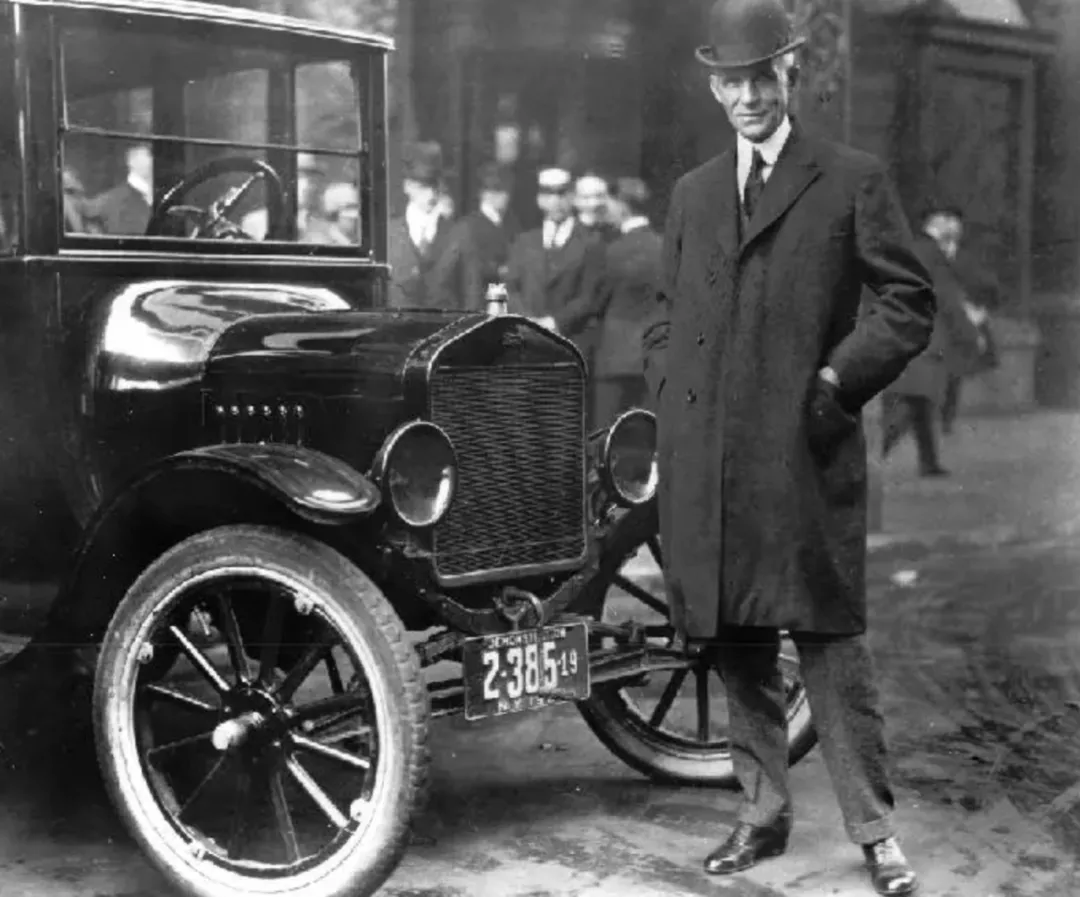
法院判决道奇兄弟胜诉,福特只好支付了这些股息。
如果我们承认企业家认知的独特性,法院的判决就可能是对福特企业家判断的否定,而不是对信托义务(fiduciary duty)的捍卫。福特从此不再信任小股东,认为他们成事不足败事有余,用现金买回了所有小股东的股份。事后看,法院的判决也可能损害了道奇兄弟的利益,让他们失去了分享福特汽车公司后来爆炸式增长的红利。人们经常要为自己的愚蠢付出代价!
2. 史蒂夫·乔布斯被赶出苹果公司
投资人的愚蠢让史蒂夫·乔布斯刻骨铭心。乔布斯和沃茨尼亚克1975年创办苹果电脑公司,1985年乔布斯被董事会赶走。赶走他的董事会成员包括苹果的第一个投资人迈克·马库拉和亚瑟·罗克,这二人对乔布斯曾经如同慈父,但最后的关头对乔布斯的认知产生了怀疑,站在了CEO斯卡利一边。12年后,当苹果公司面临破产的时候,董事会又不得不把乔布斯请回来。但汲取上次的教训,乔布斯的条件是回来可以,但要自己说了算,新的董事会成员必须由他挑选。 数字化转型网(www.szhzxw.cn)
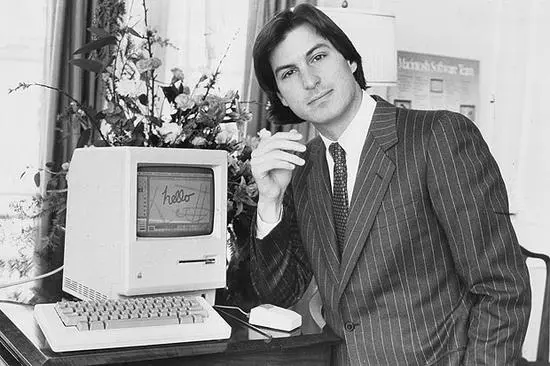
1997年1月,乔布斯作为一个非正式员工的“兼职顾问”入职苹果公司。1997年7月,董事会让CEO阿梅里奥下台,宣布乔布斯“做一个统领团队的顾问”。代理CEO安德森说他“会在乔布斯的指导下工作”。
很快,乔布斯就要求董事会全体辞职,只有董事长伍拉德一个人可以留下。董事会顺从了。在被要求辞职的人中,包括当初投资他后来又赶走他的迈克·马库拉。在伍拉德的帮助下,乔布斯很快就组建新的董事会。乔布斯曾邀请美国证券交易委员会前主席亚瑟·莱维特加入董事会,后者激动不已,并开始与乔布斯讨论自己在董事会的角色。但当乔布斯看到了莱维特曾发表的一篇有关公司治理的文章后,又打电话收回了自己的邀请。这篇文章的观点是:董事会应该承担强势而独立的角色。莱维特后来说:“我很受打击……很显然苹果的董事会不是为了独立于CEO而设计的。”是的,乔布斯不喜欢一个强大的董事会。他要自己说了算! 数字化转型网(www.szhzxw.cn)
3. 胡安·特里普的泛美航空公司
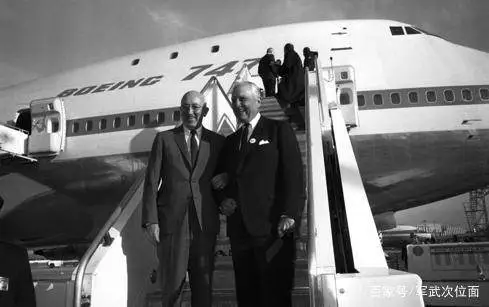
胡安·特里普是航空史上的一个标志性人物,对整个人类航空事业做了巨大的贡献。他1927年创办泛美航空公司,一直担任公司的CEO,公司的重大事情基本上他一人说了算,董事会全体成员都是应声虫。特里普的雄心是“征服天空”,击败当时称霸跨大西洋飞行的飞艇。他不断购买新飞机,开拓新航线(包括南美航线、跨太平洋和大西洋航线),结果把公司搞得负债累累,股东长期分不到红利。但他深信,他这样做从长远看是对的,股东们最终会获得丰厚的回报。但特里普雄心并不被公司大股东康内留斯·范德比尔特·惠特尼(Cornerlius Vanderbil “Sonny” Whitney)理解。
终于有一天,惠特尼反水了。惠特尼是特里普的耶鲁大学同学,一个花花公子,曾投资拍摄电影《乱世佳人》。1939年春天的一次例行董事会上,惠特尼搞了一场政变,几分钟内就把特里普的权力剥夺得一干二净,自己亲自执掌公司。但过了不到一年,惠特尼玩不下去了,董事会又让特里普重新控制公司,惠特尼对自己当初的行为感到后悔。自特里普重新掌权后,公司发展得很好。事实证明,特里普的战略是对的,股东们确实得到了丰厚的回报。 数字化转型网(www.szhzxw.cn)
四、集体决策与企业家精神的冲突
我这里必须谈一下董事会。董事会奉行的是基于票决制的“集体决策”。本质上,集体决策与企业家精神是相冲突的。好多情况下集体决策是非常愚蠢的,企业家决策绝对不会是集体智慧的结晶。个人决策的时候我们在想责任,集体决策的时候我们在想怎么逃避责任,这就导致了“群思陷阱”:一群非常理性的、非常聪明的人,经常会做出一些非常愚蠢的决策,甚至带来一些巨大的灾难。心理学家的研究还表明,一个组织越是强调和谐一致,越是强调不出现分歧,越可能陷入“群思陷阱”,也就是说做出错误的决策。
当然,我不是主张企业家不应该受到约束。你拿了人家的钱,当然不能想干啥就干啥。投资人如果没有发言权,也就失去了投资的意愿。你有远大理想,有自己独特的判断,但这种理想和判断也可能导致灾难。究竟什么是最好的公司治理,如何平衡资本家、投资人和企业家的关系,是公司治理永久的主题。
我要强调的是,传统的公司治理理论和实践把经理人和企业家搞混了,过分着重于怎么约束经理人。一个好的公司治理既不能让企业家为所欲为,也不能变成企业家的枷锁。好的公司治理应该使得企业家精神得到最大限度的发挥,最具企业家精神的人能够掌控企业。这样看来,一股一票、同股同权就可能不是一个好的规则,因为在同股同权、一股一票规则下,如果股权比较分散,最具有企业家精神的人没有办法拥有一个稳定持久的地位。所以公司治理理论和实践必须从关注经理人,转向关注企业家。

我们需要一个以企业家中心的公司治理模型。一个有效的公司治理结构,一定要使得最具有企业家精神的人去掌控公司,并且有积极性去创新,去创造,而不是仅仅选一些不会腐败的人就可以。目前公司治理理论存在的缺陷,导致了我们把过多的精力、法律、政策放在怎么去约束企业家精神,使得公司变得越来越官僚化,而不是越来越充满活力。按照现在的公司治理模型做下去,我想,未来我们公司的腐败可能会少一点,但同时也意味着公司的企业家精神会更少,这时候不可能有真正的经济持续发展。公司因创造价值而存在,不是为了不腐败而存在。企业家是价值创造的核心。
我们要始终记住,最好的公司治理是使得企业家精神得到最好的发挥,而不是仅仅防止小偷。

翻译:
Zhang Weiying: The most effective governance structure is to let the most entrepreneurial people control the company
Introduction
We need an entrepreneur-centered corporate governance model. An effective corporate governance structure must allow the most entrepreneurial people to control the company, and have the enthusiasm to innovate and create, rather than just select some people who will not be corrupt. The shortcomings of the current corporate governance theory have led us to put too much energy, laws and policies on how to restrain entrepreneurship, making companies more and more bureaucratized instead of more and more dynamic. 数字化转型网(www.szhzxw.cn)
First, there is no entrepreneur’s corporate governance theory
Since the 1990s, corporate governance has become a hot word, and we in China are familiar with it. The State Securities Regulatory Commission, the Banking Regulatory Commission and the Insurance Regulatory Commission have issued a large number of documents and policies to standardize the corporate governance structure, especially the governance structure of listed companies. But in my opinion, there are serious problems in the current mainstream theory and practice of corporate governance, the biggest of which is the neglect of entrepreneurship.
The mainstream theory of corporate governance assumes that everyone is equally intelligent and rational, and the problem facing corporate governance is the conflict of interest between investors and managers. The solution to the problem is to design the optimal incentive mechanism and constraint mechanism according to the principal-agent theory of economics, so as to solve the “moral hazard” of managers. The so-called “sound corporate governance structure” established in accordance with such theories, whether legal or behavioral, actually turns the business company into a quasi-bureaucracy, and the result is a serious suppression of entrepreneurship. Some excellent companies, such as Huawei, did not choose to go public because Ren Zhengfei knew that if they were really listed, according to the rules of listed companies, his own role would be difficult to play, and Huawei could not really do well. “Good corporate governance” is about disciplining professional managers, not inspiring entrepreneurship.
Although people talk a lot about entrepreneurship these days, it seems to me that most people have a very superficial understanding of entrepreneurship. Not surprisingly, there are no entrepreneurs in mainstream economics; there are only “producers,” who need to solve a “constrained profit optimization problem” given demand, resources, and technology, which has a single correct answer, just like a student doing homework. But anyone who knows anything about business practices knows that such producers (” producers “) are far from being true entrepreneurs. 数字化转型网(www.szhzxw.cn)
Second, conflict of perception is more difficult than conflict of interest
Corporate governance theory emphasizes the conflict between investors or shareholders and managers. What is this conflict? The traditional assumption is that there is a conflict of interest, and only a conflict of interest, because all reasonable people know the same. This assumption is biased, and more biased, because the conflict between shareholders, investors and managers or entrepreneurs is more likely to be a conflict of perceptions than a conflict of interests.
The reason why an entrepreneur is an entrepreneur is that he can see what others can’t see, and the judgment he makes is often no way for ordinary people to understand and agree with. The essence of entrepreneurship is that it is very personal, and each entrepreneur has a different forecast of the future than others, where most people do not see opportunity, he sees opportunity, and where most people think it is opportunity, he does not see it. Most people (including shareholders) do not have this ability to predict and judge, so the cognitive conflict between investors and entrepreneurs is inevitable.
The traditional theory of corporate governance has a basic assumption that shareholders are always right, and when something goes wrong, the operator must be at fault. This assumption is not true. The shareholders are not always right, because many of them are not entrepreneurial, and even if they are entrepreneurial, because different entrepreneurs may have very different judgments on the same issue, at least their judgments are not exactly the same as the managers, so there will still be conflicts. This is why many brothers and partners who start businesses together end up parting ways.
Bill Gates and Paul Allen, who founded Microsoft, broke up, Stephen Jobs and Stephen Waltniak, who founded Apple, the “Six gentlemen” who founded Wantong, the four brothers Liu of Hope Group, Yu Minhong, Wang Qiang and Xu Xiaoping of New Oriental, and so on. Why? It’s not primarily a matter of profit, it’s a matter of perception. I’m willing to make a bold prediction: most partners will eventually split up; And the more entrepreneurial the partners, the more likely they are to split up, because neither of them can convince the other, and the best thing to do is to go their own way. People who compromise easily are not likely to be great entrepreneurs!
I would like to emphasize that if shareholders are not always right, minority shareholders are mostly wrong. In corporate governance, if minority shareholders are given a particularly large veto power, I think there is some danger, which is not conducive to the development of enterprises and minority shareholders themselves. Minority shareholders are free riders, hoping to make some money by capitalizing on the entrepreneurial spirit of others. 数字化转型网(www.szhzxw.cn)
If a merger involving a so-called “conflict of interest” has to be avoided by the major shareholder (usually the entrepreneur himself), the minority shareholder is in charge, and it is difficult to make a good decision. In reality, there is a possibility that controlling shareholders (entrepreneurs) may infringe on the interests of minority shareholders, which I do not deny. But only someone who does not understand entrepreneurship could describe Mr Li’s vast wealth as the result of the exploitation of small shareholders.
Even the conflict of interest between entrepreneurs and investors is not necessarily the “distribution problem” that traditional corporate governance theorists consider. Traditional theories either ignore entrepreneurs’ non-profit motive, or dismiss it as a “moral hazard” problem that needs to be solved through incentive mechanism, and fail to see the positive role of non-profit motive, thus distorting our understanding of conflict of interest, and even mistreating cognitive conflict as conflict of interest. This is very regrettable!
Pure investors care only about the return on investment, and do not care about other goals pursued by the entrepreneur, which inevitably leads to some conflict. Because of the assumption that “shareholders are always right,” the traditional theory and practice of corporate governance is particularly easy to lead to the “fiduciary duty” of managers to deny entrepreneurship, and the result is to harm the interests of investors. 数字化转型网(www.szhzxw.cn)
The biggest challenge to corporate governance is the conflict of perceptions between entrepreneurs and investors, not conflicts of interest. On the one hand, entrepreneurs take the money of investors, they have to be constrained by investors, can not do what they want to do, otherwise no one is willing to give their money to entrepreneurs. On the other hand, because investors usually do not have the judgment of entrepreneurs, excessive restrictions on the behavior of entrepreneurs will damage the play of entrepreneurship, and ultimately harm the interests of investors themselves. Corporate governance theory cannot assume that shareholders are always right, and entrepreneurs must obey investors.
Third, three cases
1. Ford and Dodge Brothers
The last landmark case in corporate law was the Dodge Brothers v. Ford in 1911. At the time, Ford was controlled by Henry Ford, who owned 60% of the company and was the majority shareholder, with the Dodge brothers holding a combined 10% of the shares and a number of other shares held by separate shareholders. The company had more than $10 million in undistributed profits in its account that could have paid the dividend, but Ford did not. So the Dodge brothers filed suit in court. Henry Ford argued that the company needed the money to expand, that he was planning a second assembly line, and that he did not want the company to pass on the burden of growth to consumers through higher prices. It is true that the car market was not very prosperous at the time, but there is no reason for increasing investment, because a company’s investment decision is not based on the current market, but on the future market expectations. 数字化转型网(www.szhzxw.cn)
The court ruled in favor of the Dodge brothers, and Ford had to pay those dividends.
If we recognize the uniqueness of entrepreneurial perceptions, the court’s decision may be a repudiation of Ford’s entrepreneurial judgment, rather than a defense of fiduciary duty. Ford no longer trusted the minority shareholders, believing them to be more successful than unsuccessful, and bought back all the minority shareholders’ shares with cash. In hindsight, the court’s decision may also have hurt the Dodge brothers, depriving them of a share of the dividends of Ford Motor Company’s later explosive growth. People often have to pay for their stupidity! 数字化转型网(www.szhzxw.cn)
2. Steve Jobs was ousted from Apple
Steve Jobs was burned by the stupidity of his investors. Jobs and Wozniak founded Apple Computer in 1975, and Jobs was ousted by the board in 1985. The board members who ousted him included Apple’s first investors, Mike Markkula and Arthur Rock, who had been fatherly to Jobs, but at the last moment had doubts about Jobs and sided with CEO Sculley. Twelve years later, when Apple was facing bankruptcy, the board had to bring Jobs back. But learning from the last time, Jobs’s condition is that he can return, but to be in charge, he must choose the new board members.
Jobs joined Apple in January 1997 as a “part-time consultant” to non-regular employees. In July 1997, the board ousted CEO Amelio and declared Jobs “an advisor to the leadership team.” Acting CEO Anderson said he “will work under Steve Jobs’ guidance.”
Soon Jobs demanded the resignation of the entire board, with the exception of Chairman Woolard. The board complied. Among those asked to resign was Mike Markkula, who had invested in him and then pushed him out. With Woolard’s help, Jobs quickly assembled a new board of directors. Jobs invited Arthur Levitt, the former chairman of the Securities and Exchange Commission, to join the board. Levitt was thrilled and began discussing his role with Jobs. But when Jobs saw an article Levitt had published on corporate governance, he called back and rescinded his invitation. The point of the article is that boards should assume a strong and independent role. Levitt later said: “I was devastated… It is clear that Apple’s board is not designed to be independent of the CEO.” Yes, Jobs didn’t like a strong board. He wants to make his own decisions! 数字化转型网(www.szhzxw.cn)
3. Juan Tripp’s Pan Am
Juan Tripp is an iconic figure in the history of aviation and has made great contributions to the entire human aviation industry. He founded Pan Am in 1927 and has been the company’s CEO ever since, making almost all of the company’s major decisions on his own, with the entire board of directors being yes-men. Tripp’s ambition was to “conquer the skies” and defeat the airships that dominated transatlantic flight at the time. He kept buying new planes and opening up new routes (including South America, trans-Pacific and Atlantic routes), leaving the company deeply in debt and shareholders without a dividend for a long time. But he is convinced that he is doing the right thing in the long run and that shareholders will ultimately be well rewarded. But Trippschon was not understood by Cornerlius Vanderbil “Sonny” Whitney, the company’s majority owner. 数字化转型网(www.szhzxw.cn)
And then one day, Whitney flipped. Whitney was a Yale classmate of Tripp’s, a playboy who had financed the film Gone With the Wind. At a routine board meeting in the spring of 1939, Whitney staged a coup, stripping Tripp of his power in a matter of minutes and running the company herself. But less than a year later, Whitney was no longer able to play, and the board let Tripp regain control of the company, and Whitney regretted her actions. The company has done well since Tripp returned to the helm. Tripp’s strategy turned out to be right, and shareholders were indeed rewarded handsomely.
Fourth, the conflict between collective decision-making and entrepreneurship
I must talk about the board of directors here. The board of directors conducts “collective decision-making” based on a voting system. In essence, collective decision-making is at odds with entrepreneurship. In many cases, collective decision-making is very stupid, and entrepreneurial decisions are never the crystallization of collective wisdom. When we make individual decisions, we think about responsibility, and when we make collective decisions, we think about how to escape responsibility, which leads to the “group thinking trap” : a group of very rational and very smart people often make some very stupid decisions, and even bring some huge disasters. Research by psychologists has also shown that the more an organization emphasizes harmony and non-disagreement, the more likely it is to fall into the “groupthink trap,” that is, to make the wrong decision.
Of course, I am not arguing that entrepreneurs should not be constrained. You can’t just do whatever you want with someone else’s money. If investors don’t have a voice, they lose the will to invest. You have big dreams and your own unique judgments, but these ideals and judgments can also lead to disaster. What is the best corporate governance, how to balance the relationship between capitalists, investors and entrepreneurs, is the permanent theme of corporate governance.
I would like to emphasize that the traditional theory and practice of corporate governance confuse managers with entrepreneurs and focus too much on how to restrain managers. A good corporate governance can neither allow entrepreneurs to do whatever they want, nor can it become the shackles of entrepreneurs. Good corporate governance should allow entrepreneurship to be maximised and the most entrepreneurial person to take control of the business. In this view, one share, one vote, one share, one vote may not be a good rule, because under the one share, one share, one vote rule, if the ownership is more dispersed, the most entrepreneurial people will not be able to have a stable and lasting position. So the theory and practice of corporate governance must shift from focusing on managers to focusing on entrepreneurs. 数字化转型网(www.szhzxw.cn)
We need an entrepreneur-centered corporate governance model. An effective corporate governance structure must allow the most entrepreneurial people to control the company, and have the enthusiasm to innovate and create, rather than just select some people who will not be corrupt. The shortcomings of the current corporate governance theory have led us to put too much energy, laws and policies on how to restrain entrepreneurship, making companies more and more bureaucratized instead of more and more dynamic. According to the current corporate governance model, I think that in the future, our company may have less corruption, but it also means that the company will have less entrepreneurial spirit, and it is impossible to have real economic sustainable development. Companies exist to create value, not to be corruptible. Entrepreneurs are at the heart of value creation.
We must always remember that the best corporate governance is to make the best use of entrepreneurship, not just to prevent thieves.
本文由数字化转型网(www.szhzxw.cn)转载而成,来源于辛庄课堂;编辑/翻译:数字化转型网宁檬树。
免责声明: 本网站(http://www.szhzxw.cn/)内容主要来自原创、合作媒体供稿和第三方投稿,凡在本网站出现的信息,均仅供参考。本网站将尽力确保所提供信息的准确性及可靠性,但不保证有关资料的准确性及可靠性,读者在使用前请进一步核实,并对任何自主决定的行为负责。本网站对有关资料所引致的错误、不确或遗漏,概不负任何法律责任。
本网站刊载的所有内容(包括但不仅限文字、图片、LOGO、音频、视频、软件、程序等) 版权归原作者所有。任何单位或个人认为本网站中的内容可能涉嫌侵犯其知识产权或存在不实内容时,请及时通知本站,予以删除。