当下,数字化已来,而且正在流行。当企业选择了数字化转型,也就迈开了跟上时代的步伐。
国务院国资委更是在文件中明确提出,“要实行数字化转型一把手负责制,企业主要负责同志应高度重视、亲自研究、统筹部署,领导班子中明确专人分管,统筹规划、科技、信息化、流程等管控条线,优化体制机制、管控模式和组织方式,协调解决重大问题。” 数字化转型网(www.szhzxw.cn)
一、时代呼唤真正具有转型变革魄力的一把手
“数字化转型是一把手工程”,已在业界形成共识,但,在企业数字化转型建设的过程中,真正亲力亲为履行这一职责的一把手没几个,大部分情况下都是口头上的支持,殊不知在大部分的传统企业里都是“上有政策下有对策”的企业文化,阴奉阳违是常态,作壁上观也属正常,部门之间各扫门前雪也不足为奇,领导每天喊数字化转型,只是口号,没有具体举措,真正有转型魄力的寥寥无几。一般情况下可能也就是请个咨询公司做做方案,请个所谓的专家把把脉,输出一堆的关于数字化的PPT,各种高大上的规划,然后就没有然后了。这个时候最急迫的可能就是信息部门了,企业数字化转型的第一责任部门。
然而,急也无用,因为数字化转型的根本是“转”,而非数字化本身,成立信息部门并不是做数字化转型,高薪空降CIO也解决不了企业转型这个本质问题,大部分传统企业真正懂数字化、真正用数字技术推动企业变革转型的一把手凤毛麟角,数字化转型是战略问题,需要一把手的变革魄力与数字化转型的战略高度与定力以及强有力的推动力,不能仅仅停留在喊口号上。
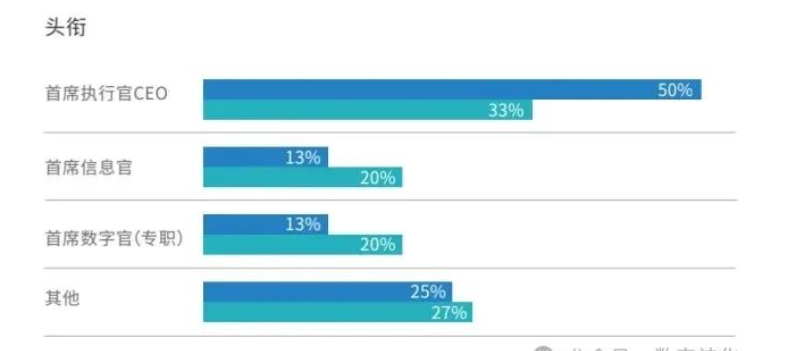
调研发现,“较为成功的数字化转型,约一半都是由CEO直接负责的。一把手的参与程度,很大程度上影响了数字化转型能否取得好的成效。”在数字化转型领先组企业中,50%由CEO直接推动。而对照组企业仅有33%由CEO推动。 数字化转型网(www.szhzxw.cn)
埃森哲咨询公司针对数字化转型做了一项研究,对400多家成功实现数字化转型的企业的企业家进行了跟踪式访谈,得出关于企业数字化转型的相关结论,其中最为核心的一点就是:数字化转型应作为“一把手工程”实施,某个部门或者某个范围内的“小打小闹”是不会成功的。

企业的一把手,有几个是真正的企业级?然而,数字化转型需要企业级的战略眼光与变革的魄力。企业家首先要认识到数字化转型的必然性,数字化转型将是企业发展史的新篇章,需要一把手亲自谱写。企业家是“船长”,员工是“水手”,数字化转型的过程是“船长”掌舵转向与“水手”齐心协力的过程,只有一把手率先改变,企业才能真正自上而下地推动数字化转型。
二、数字化转型是一场变革,企业家要先变革自己!
企业转型,最重要的是领导力,首先要改变一把手,只有领导者的脑袋变了,企业才能更好地转型和升级。——马云 数字化转型网(www.szhzxw.cn)
对于企业转型,首先要改变的是企业家自己。人与人最大的区别是认知,而认知升级的最大障碍是自以为是,所以自我否定是认知升级的唯一路径。
在数字化转型中,如果企业家置身事外,没人会相信企业转型的决心。企业一把手要认识到,转型归根结底是每一个人的转型,要落实到每一个人的思想和行为上。企业家要想推动变革,必须先变革自己,做到以身作则,用自己的行为来引领和影响身边的每一个管理人员。印度“圣雄”甘地曾说:“领导,就是以身作则来影响他人。”这也就是我们常说的“其身正,不令而行;其身不正,虽令不从”。张瑞敏用铁锤砸出了全厂员工的质量意识,王健林坚持要求员工做到的自己先做到。在数字化转型过程中,企业家不能只是嘴上重视,要对数字化转型给予资源支持、给予容错空间、给予目标要求,并对重大问题亲自过问等,用行动向整个公司表明转型是公司势在必行的。
在数字工业浪潮来临之时,企业家所担当的责任是其自身角色所赋予的,这也是企业家精神的完整诠释。数字时代更需要企业家精神的出现,它是组织的灵魂,是组织的组织者,是上下游市场的组织者,是社会资源的组织者。 数字化转型网(www.szhzxw.cn)
在数字化转型过程中,一把手至少扮演两个角色:一个是领导者,另外一个是赋能者。领导者指明方向,积极调配资源;赋能者为行动派,在具体部门、具体环节上推进转型。他们更像某种意义上的“永动机”“CPU”,使能于组织。这两个角色的叠加,就是企业家精神的完美诠释。
另外,如果没有一个理念相通、价值观相互认同的经营者队伍,一家企业要实现数字化转型,那是难以想象的。所以,一把手不仅自己要具有企业家精神,还要将“企业家精神”作为一个产品进行生成与交付,持续熏陶高管团队和各个环节的业务负责人,确保大家都具有强烈的敏感性。这就需要一把手一方面通过制度让以公司形态存在的企业拥有良好的数字化文化与数字化治理秩序,另一个方面通过数字化手段与市场建立扁平连接获得价值链的参与权乃至控制权。这都是一个有格局、有魄力、有战略眼光和战略定力的一把手的担当。 数字化转型网(www.szhzxw.cn)
三、数字化转型是系统性、全局性组织变革,必须一把手亲自引领
在做信息化的时候,我们也会经常听到“一把手”工程的说法。但在信息化中,一把手是支持作用。而数字化转型中,一把手仅仅提供支持是不够的。数字化的转型是一场深刻的、复杂的系统性变革,“三分靠技术、七分靠组织”,需要构建新的愿景、新的文化、新的组织架构、新的人才、新的制度,这些组织方面的变革只有一把手下定决心来推动,才有可能成功。因此,一把手要引领、要以身作则、甚至亲力亲为,亲自领导组织变革,才能克服巨大的组织惰性,让数字化真正落地。
只有一把手能够站在全局的视角,从更高的角度看待企业发展,引领组织变革,而任何一个业务部门负责人或IT部门都很难牵动全局性的变革,无法承担这一重任。这也是数字化和信息化的很大的不同之处。正如约翰·科特所言:“如果变革涉及整个公司,CEO就是关键;如果只是一个部门需要变革,该部门的负责人就是关键。” 数字化转型网(www.szhzxw.cn)
彼得·德鲁克也认为,企业家就是创新者,是勇于承担风险,有目的地寻找创新源泉,善于捕捉变化,并把变化作为可供开发利用的机会的人。CEO的工作就是推动变革。
四、数字化转型需要大手笔投入,必须要有一把手资源上的支持
数字化转型需要投入大量资金,IT系统的升级可能要花费数千万甚至亿级资金投入,但转型的周期长、见效慢,成效具有高度不确定性。这时候必须要靠一把手拍板决策,敢于牺牲短期利益,站在公司层面,调动一切资源,大胆的、持续的为数字化转型配置资源,包括资金、人才、设备等,只有一把手有这个决断力。 数字化转型网(www.szhzxw.cn)
五、数字化转型触及到多方利益,需要一把手强力推动
哈佛商学院教授约翰·科特在《领导变革》一书中,给变革下了定义:变革是指企业进行新技术应用、重大战略转移、流程重整、兼并收购、业务重组、企业为增强创新能力而进行的尝试及文化改变等活动。
在接受Harvey Nash/毕马威CIO调查的4500名首席信息官中,有43%的人认为阻碍数字化战略获得成功的最大阻力是抵制变革。抵制变革可能使变革停滞不前。一方面,数字化转型的效果不会立竿见影地爆发出来,在起步的时候甚至会带来效率的倒退;另一方面,变革要成功,一定会遇到打破组织惯性、改变利益格局以及个人权利转移等情况。当企业利用数字化技术实现某些业务体系内部的所有数据透明化时,很多管理者如同由暗处突然被推到阳光下,势必会有不安全感和不适感。在这两方面因素的影响下,组织内会出现各种反对声音,他们以不合作、不积极等非暴力的形式来对待数字化转型工作,在面对方向的坚持、决策的过程、思想的混乱以及人性的自私时,作为一把手的最高管理者必然会经历痛苦与煎熬,此时他们需要呼唤决心与毅力,坚持变革不动摇——这是对最高管理者最大的考验。
数字化转型的关键不在于数字化,而在于转型、变革。变革的本质是利益的重新分配,涉及到所有利益干系的责权利重大改变。任何的转型、变革都会给员工带来不适应性,会产生巨大的变革阻力。数字化转型也是如此。数字化转型是全面而系统的变革,从高层领导者到基层员工都涉及其中:数字化工具的应用需要改变员工固有的工作习惯;业务重构让不同部门之间产生利益冲突;数据集成需要各部门贡献数据、打通部门壁垒;高薪聘请数字化人才可能会威胁到老员工的地位……这些必然会触动多方的利益。如果没有企业一把手的强力推动、决策支持、通过机制创新平衡利益、协调矛盾,这些复杂的利益关系是难以协调的,而这往往会导致数字化转型的失败。 数字化转型网(www.szhzxw.cn)
六、一把手才能让企业避免陷入“烟囱式”陷阱
实际上,数字化转型是一个涵盖企业战略、管理、组织和运营等各个方面的全面向数字化转型升级的过程。在很多人看来,企业的数字化转型就是技术升级,然而,单一的“技术论”导致众多企业难以实现转型。
我们把企业陷入单一维度的转型叫作“烟囱式”转型,就是在转型的过程中缺乏系统性,只专注于某个方面。常出现的典型问题是,企业家让IT部门来全权负责,这时会出现的情况是,各个职能仅依据自身职能发展需要向IT部门提出个性化需求,此时从技术角度开发一个应用可能只是为了满足某一次提出的局部需求。在这样的封闭式架构下,企业的IT系统变成了一个个垂直的“烟囱”,难以互通共享,将越来越无法满足企业发展日益多样化的需求。 数字化转型网(www.szhzxw.cn)
企业不能陷入技术陷阱,认为技术升级就是数字化升级的全部。实际上,技术的本质是针对我们的需求来改变自然现象,以达到我们的目的。技术是推动企业发展的动力,但不是企业发展的目的,企业发展的目的唯有效率更优、创造更多更满意的客户。
此外,当全局效率低下的时候,某一环节的效率最大化是无法牵动全局的,反而会造成企业资源的浪费。比如,单个零件的生产效率通过数字化升级提升20倍,而其他生产环节只能提升5倍,那么此时该零件的高效率反而会导致库存增加等问题。为了避免此种情况,就需要企业家以整个企业的视角统筹全局,坚决反对没有全局效益的局部优化,确保协同共进。
所以说,企业数字化转型不是CTO工程,而是CEO工程,需要一把手统筹全局。由企业一把手领衔下的业务部门来主导,这样才能清楚如何通过全面系统的顶层设计数字化转型,来支撑企业发展。
七、一把手如何推动数字化转型?
既然企业的数字化转型是一把手工程,那么一把手需要什么样的领导力来推动转型成功?一把手需要具备哪些特质、能力呢? 数字化转型网(www.szhzxw.cn)
管理学大师德鲁克认为领导力是“提升个人愿景到更高的境界,提升个人绩效到更高的标准”。领导力是关于领导者如何把价值观化为行动,把愿景化为现实,把障碍化为创新,把分裂化为团结,把冒险化为收益,从而不断激励他人自愿地在组织中做出卓越成就。
对企业一把手来说,数字化领导力是数字化转型对领导者提出的新的要求,是带领组织成功实现数字化转型的能力,既包括传统的、基本的领导力,也新增了一些新的能力要素,包含数字化转型特有的领导力。在数字化转型中,一把手不仅需要有前瞻性思维、对数字化足够重视并主动学习,有决心有耐心有勇气,更要脚踏实地的去执行,引领企业树立数字化愿景,定战略、调组织、引人才、塑文化。
- 前瞻思维:数字技术敏锐性、战略洞察力;
- 主动学习:提高数字化认知,学习数字化技术;
- 坚定不移:保持坚定的战略决心和战略定力,承担重任和风险;
- 建立愿景:指明数字化转型方向,带动高管团队和全体员工全力投入;
- 推动变革:调架构、推动业务变革、陪育数字化人才、塑造数字化文化;
一把手是企业转型、变革的“船长”和“舵手”。数字化转型是整个企业的转型和变革,面临重重困难,需要改变认知,建立前瞻性思维,学习新的数字化知识,并要要极强的领导力,共启愿景,带动管理者和员工推动各项工作的具体落地。 数字化转型网(www.szhzxw.cn)
八、关键洞见
- 企业一把手是“船长”,员工是“水手”,数字化转型的过程是“船长”掌舵转向与“水手”齐心协力的过程。
- 数字化转型是一场变革,企业一把手要先变革自己,如果企业家置身事外,没人会相信企业转型的决心。
- 数字化转型应是自上而下的变革,是CEO工程,而不是CIO工程。
- 数字化转型是一个涵盖企业战略、管理、组织和运营等各个方面的全面向数字化转型升级的过程。
- 企业一把手才能让企业避免陷入“烟囱式”陷阱,确保数字化转型的全面系统性。
- 一把手要坚决反对没有全局效益的局部优化。
- 一把手要成为具备数字化转型顶层思维,拥有数字化领导力,运用系统的数字化理念和方法推动企业数字化转型成功的领导者。 数字化转型网(www.szhzxw.cn)
- 数字化转型触及到多方利益,需要一把手强力推动,并平衡各方利益。
- 一把手至少承担两个角色,一个是领导者角色,另一个是赋能者角色,是企业家精神的完美诠释。

翻译:
Digital transformation is a “leader project”
Now, digitization is here, and it’s catching on. When companies choose digital transformation, they are moving to keep up with The Times.
The State-owned Assets Supervision and Administration Commission of the State Council clearly put forward in the document, “to implement the digital transformation of the leader responsibility system, the main responsible comrades of the enterprise should attach great importance to, personally study, overall deployment, the leadership team is clear in charge, overall planning, science and technology, information, process and other control lines, optimize the system mechanism, management and control mode and organizational mode, coordinate to solve major problems.”
1. The Times call for a leader with real transformational change
“Digital transformation is a leader project”, has formed a consensus in the industry, but in the process of enterprise digital transformation construction, there are few leaders who really perform this responsibility by themselves, in most cases, verbal support, but they do not know that in most traditional enterprises are “policies under countermeasures” corporate culture, Yin Fengyang is the norm. It is normal to sit on the wall, and it is not surprising that the departments sweep the snow in front of the door, and the leaders shout digital transformation every day, only slogans, no specific measures, and few really have the courage to transform. Under normal circumstances, it may be to ask a consulting company to do a program, ask a so-called expert to take the pulse, output a bunch of digital PPT, a variety of tall planning, and then there is no then. At this time, the most urgent may be the information department, the first responsible department of enterprise digital transformation.
However, urgent also useless, because the fundamental digital transformation is “turn”, rather than digital itself, the establishment of information department is not to do digital transformation, high-salary parachuting CIO also can not solve the essential problem of enterprise transformation, most traditional enterprises really understand digital, really use digital technology to promote enterprise transformation of the leader is rare, digital transformation is a strategic issue. The leader’s drive for change, strategic height and concentration of digital transformation and strong driving force are needed, and they cannot just stay on slogans. 数字化转型网(www.szhzxw.cn)
The study found that “about half of the more successful digital transformations are the direct responsibility of the CEO.” “The level of involvement of the top executive has a big impact on whether digital transformation can work well.” Of the companies in the digital transformation leadership group, 50% are driven directly by the CEO. In contrast, only 33% of the control companies were driven by the CEO. 数字化转型网(www.szhzxw.cn)
Accenture Consulting company has done a study on digital transformation, conducted follow-up interviews with entrepreneurs of more than 400 enterprises that have successfully realized digital transformation, and reached relevant conclusions about enterprise digital transformation, the most core point is: Digital transformation should be implemented as a “leader project”, and “small” in one department or within a certain scope will not succeed.
The leader of the enterprise, how many are really enterprise-level? However, digital transformation requires enterprise-level strategic vision and the courage to change. Entrepreneurs must first realize the inevitability of digital transformation, which will be a new chapter in the history of enterprise development and needs to be written by the leader himself. The entrepreneur is the “captain”, the employee is the “sailor”, the process of digital transformation is the “captain” at the helm and the “sailor” to work together, only the first change, the enterprise can really promote the digital transformation from top to bottom. 数字化转型网(www.szhzxw.cn)
2. Digital transformation is a change, entrepreneurs must first change themselves!
Enterprise transformation, the most important is leadership, the first to change the leader, only the leader’s head has changed, the enterprise can better transform and upgrade. — Jack Ma
For enterprise transformation, the first thing to change is the entrepreneur himself. The biggest difference between people is cognition, and the biggest obstacle to cognitive upgrading is self-righteousness, so self-denial is the only way to cognitive upgrading. 数字化转型网(www.szhzxw.cn)
In digital transformation, if the entrepreneur is not involved, no one will believe the determination of the company to transform. The head of the enterprise should realize that the transformation is, in the final analysis, the transformation of everyone, and it should be implemented on everyone’s thinking and behavior. If entrepreneurs want to drive change, they must first change themselves, lead by example, and use their actions to lead and influence every manager around them. Mahatma Gandhi once said, “To lead is to influence others by example.” This is what we often say, “The body is right, not ordered; His body is not right, but he will not obey.” Zhang Ruimin smashed out the quality awareness of the whole factory staff with a hammer, Wang Jianlin insisted on asking employees to do their own first. In the process of digital transformation, entrepreneurs should not just pay attention to it, but give resource support to digital transformation, give fault-tolerant space, give target requirements, and personally ask about major issues, and use actions to show the entire company that transformation is imperative.
In the advent of the digital industry wave, the responsibility of entrepreneurs is given by their own role, which is the complete interpretation of entrepreneurship. The digital era needs the emergence of entrepreneurship, which is the soul of the organization, the organizer of the organization, the organizer of the upstream and downstream markets, and the organizer of social resources.
In the digital transformation process, the leader plays at least two roles: one is the leader and the other is the enabler. The leader indicates the direction and actively allocates resources; The enabler is a person of action, promoting transformation in specific sectors and specific links. They are more like a kind of “perpetual motion machine” “CPU” that enables the organization. The superposition of these two roles is the perfect interpretation of entrepreneurship. 数字化转型网(www.szhzxw.cn)
In addition, it is difficult to imagine that an enterprise can achieve digital transformation without a team of managers who share the same ideas and values. Therefore, the leader should not only have an entrepreneurial spirit himself, but also generate and deliver “entrepreneurship” as a product, and continue to influence the senior management team and business leaders in all aspects to ensure that everyone has a strong sensitivity. This requires the leader, on the one hand, to make the enterprise in the form of a company have a good digital culture and digital governance order through the system, and on the other hand, to establish a flat connection with the market through digital means to obtain the participation right and even the control right of the value chain. These are the responsibilities of a leader with a pattern, courage, strategic vision and strategic focus.
3. Digital transformation is a systemic, global organizational change that must be personally led by the leader
When doing information technology, we will often hear the “first leader” project. But in informatization, the leader is the support role. In digital transformation, it is not enough for the leader to provide support. Digital transformation is a profound and complex systemic change, “three points rely on technology, seven points rely on organization”, need to build a new vision, new culture, new organizational structure, new talent, new system, these organizational changes can only be successful if the leader is determined to promote. Therefore, the leader must lead, lead by example, or even personally lead the organizational change in order to overcome the huge organizational inertia and let the digitalization truly land.
Only a leader can stand in the global perspective, view enterprise development from a higher perspective, and lead organizational change, and any business department head or IT department is difficult to affect the overall change, unable to undertake this heavy responsibility. This is the big difference between digitization and informatization. As John Cote says, “If change is company-wide, the CEO is the key; If it’s just one department that needs change, the head of that department is the key.”
Peter Drucker also believes that entrepreneurs are innovators, who are brave to take risks, purposefully seek sources of innovation, and are good at capturing changes and using changes as opportunities for development. The CEO’s job is to drive change. 数字化转型网(www.szhzxw.cn)
4. Digital transformation requires a large investment, must have the support of a leader’s resources
Digital transformation requires a large amount of investment, IT system upgrades may cost tens of millions or even billions of capital investment, but the transformation cycle is long, slow, and the effectiveness is highly uncertain. At this time, we must rely on the leader to make decisions, dare to sacrifice short-term interests, stand at the company level, mobilize all resources, bold and continuous allocation of resources for digital transformation, including capital, talent, equipment, etc., only the leader has this decisiveness.
5. Digital transformation touches on the interests of multiple parties and requires a strong push by the leader
Harvard Business School professor John Kotter defines change in his book Leading Change: Change refers to the application of new technologies, major strategic shifts, process reengineering, mergers and acquisitions, business restructuring, attempts by enterprises to enhance innovation capabilities, and cultural changes. 数字化转型网(www.szhzxw.cn)
Forty-three percent of the 4,500 CIOs surveyed by Harvey Nash/ KPMG CIO believe the biggest obstacle to a successful digital strategy is resistance to change. Resistance to change can stall change. On the one hand, the effect of digital transformation will not break out immediately, and even bring efficiency regression at the beginning; On the other hand, if the reform is to succeed, it must encounter the situation of breaking organizational inertia, changing the pattern of interests and transferring individual rights. When enterprises use digital technology to achieve transparency of all data within certain business systems, many managers are suddenly pushed into the sun from the dark, which is bound to have a sense of insecurity and discomfort. Under the influence of these two factors, there will be various opposition voices in the organization. They treat the digital transformation work in non-violent forms such as non-cooperation and inactivity. When facing the persistence of the direction, the decision-making process, the confusion of thought and the selfishness of human nature, the top manager as the leader will inevitably experience pain and suffering, and at this time they need to call for determination and perseverance. Unwavering commitment to change – this is the biggest test of top management.
The key to digital transformation is not digitalization, but transformation and change. The essence of reform is the redistribution of interests, which involves a major change in the responsibilities and rights of all stakeholders. Any transformation and change will bring inadaptability to employees and will produce huge resistance to change. The same goes for digital transformation. Digital transformation is a comprehensive and systematic change, from the top leaders to the bottom employees: the application of digital tools requires the change of employees’ inherent work habits; Business restructuring leads to conflicts of interest between different departments; Data integration requires all departments to contribute data and break through departmental barriers. Hiring digital talent at high pay may threaten the status of older workers… These will inevitably affect the interests of many parties. If there is no strong promotion, decision support, balance of interests through mechanism innovation, and coordination of contradictions, these complex interest relationships are difficult to coordinate, and this often leads to the failure of digital transformation. 数字化转型网(www.szhzxw.cn)
6. The first leader can let the enterprise avoid falling into the “chimney” trap
In fact, digital transformation is a comprehensive process of digital transformation and upgrading covering all aspects of enterprise strategy, management, organization and operation. In the eyes of many people, the digital transformation of enterprises is the upgrading of technology, however, the single “technology theory” makes it difficult for many enterprises to achieve transformation.
We call the transformation of enterprises into a single dimension “chimney” transformation, that is, the lack of systematicness in the transformation process and only focus on a certain aspect. The typical problem that often occurs is that entrepreneurs let the IT department take full responsibility, and then the situation will appear is that each function only puts forward individual needs to the IT department according to its own functional development needs, and at this time, developing an application from a technical point of view may only be to meet the local needs of a certain time. Under such a closed architecture, the enterprise’s IT system has become a vertical “chimney”, which is difficult to communicate and share, and will be increasingly unable to meet the increasingly diversified needs of enterprise development. 数字化转型网(www.szhzxw.cn)
Enterprises cannot fall into the technology trap and think that technology upgrading is all about digital upgrading. In fact, the essence of technology is to change natural phenomena in response to our needs to achieve our purposes. Technology is the driving force to promote the development of enterprises, but not the purpose of enterprise development, the purpose of enterprise development is only better efficiency, to create more and more satisfied customers.
In addition, when the overall efficiency is low, the maximum efficiency of a certain link cannot affect the overall situation, but will cause the waste of enterprise resources. For example, the production efficiency of a single part is increased by 20 times through digital upgrading, while other production links can only be increased by 5 times, then the high efficiency of the part will lead to problems such as inventory increase. In order to avoid this situation, it is necessary for entrepreneurs to coordinate the overall situation from the perspective of the entire enterprise, resolutely oppose local optimization without global benefits, and ensure collaborative progress.
Therefore, enterprise digital transformation is not a CTO project, but a CEO project, which requires a leader to overall plan. It is led by the business department under the leadership of the enterprise leader, so that it can be clear how to support the development of the enterprise through the digital transformation of the top-level design of the comprehensive system.
7. How does a leader drive digital transformation?
Since the digital transformation of the enterprise is a leader project, what kind of leadership does the leader need to promote the success of the transformation? What qualities and abilities does a leader need? 数字化转型网(www.szhzxw.cn)
Management master Drucker believes that leadership is “elevating one’s vision to a higher level, elevating one’s performance to a higher standard.” Leadership is about how leaders turn values into action, vision into reality, barriers into innovation, divisions into unity, and risks into benefits, thereby constantly inspiring others to voluntarily excel in their organizations.
For the chief executive of an enterprise, digital leadership is the new requirements put forward by the leader of digital transformation, and the ability to lead the organization to successfully achieve digital transformation, including traditional and basic leadership, and some new ability elements have been added, including the leadership unique to digital transformation. In the digital transformation, the leader not only needs to have forward-looking thinking, pay enough attention to digitalization and take the initiative to learn, have determination, patience and courage, but also need to be down-to-earth to implement, lead the enterprise to establish digital vision, set strategy, adjust organization, attract talents, and shape culture. 数字化转型网(www.szhzxw.cn)
Forward-looking thinking: digital technology acumen, strategic insight;
Active learning: improve digital cognition and learn digital technology;
Unswervingly: maintain firm strategic determination and strategic focus, bear heavy responsibilities and risks;
Establish a vision: indicate the direction of digital transformation and drive the full commitment of the senior management team and all employees;
Promote change: adjust structure, promote business change, educate digital talents, and shape digital culture; 数字化转型网(www.szhzxw.cn)
The leader is the “captain” and “helmsman” of enterprise transformation and change. Digital transformation is the transformation and change of the entire enterprise, which is faced with numerous difficulties. It is necessary to change cognition, establish forward-looking thinking, learn new digital knowledge, and have strong leadership to jointly inspire vision and drive managers and employees to promote the specific implementation of various work.
8. Key Insights
The leader of the enterprise is the “captain”, the employee is the “sailor”, and the process of digital transformation is the process of the “captain” at the helm and the “sailor” to work together.
Digital transformation is a change, the business leader must change themselves first, if the entrepreneur is left out, no one will believe the determination of the business transformation.
Digital transformation should be a top-down change, a CEO project, not a CIO project.
Digital transformation is a comprehensive process of digital transformation and upgrading covering all aspects of enterprise strategy, management, organization and operation.
Only the leader can avoid falling into the “chimney” trap and ensure that the digital transformation is comprehensive and systematic.
The top leaders should firmly oppose local optimization without overall benefits.
The first leader should become a leader who has the top-level thinking of digital transformation, has digital leadership, and uses systematic digital concepts and methods to promote the success of enterprise digital transformation. 数字化转型网(www.szhzxw.cn)
本文由数字化转型网(www.szhzxw.cn)转载而成,来源于数字神化;编辑/翻译:数字化转型网宁檬树。
免责声明: 本网站(https://www.szhzxw.cn/)内容主要来自原创、合作媒体供稿和第三方投稿,凡在本网站出现的信息,均仅供参考。本网站将尽力确保所提供信息的准确性及可靠性,但不保证有关资料的准确性及可靠性,读者在使用前请进一步核实,并对任何自主决定的行为负责。本网站对有关资料所引致的错误、不确或遗漏,概不负任何法律责任。
本网站刊载的所有内容(包括但不仅限文字、图片、LOGO、音频、视频、软件、程序等) 版权归原作者所有。任何单位或个人认为本网站中的内容可能涉嫌侵犯其知识产权或存在不实内容时,请及时通知本站,予以删除。