这几天行业内最大的新闻就是华为官宣进军ERP,这背后透露出哪些信息,华为会成功么,这对ERP(SAP)顾问意味着什么。下文谈谈我的理解
一、官宣:华为由任正非首次正式官宣进军ERP市场
华为要进军ERP市场的消息在业内早已小范围传开,上周华为由任正非首次正式官宣进军ERP市场。
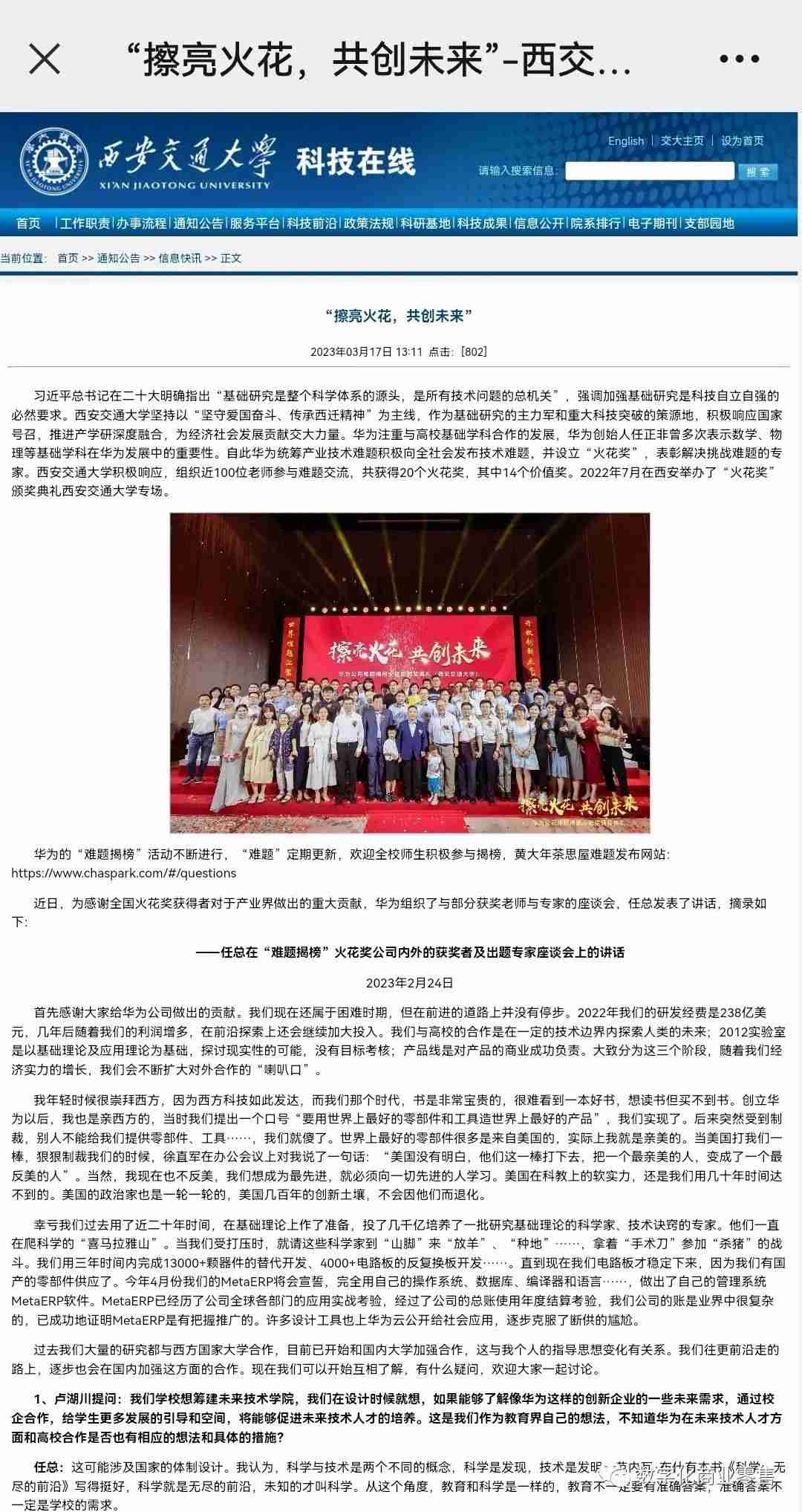
任正非在最近的座谈会中说道:
“今年4月份我们的MetaERP将会宣誓,完全用自己的操作系统、数据库、编译器和语言……,做出了自己的管理系统MetaERP软件。
MetaERP已经历了公司全球各部门的应用实战考验,经过了公司的总账使用年度结算考验,我们公司的账是业界中很复杂的,已成功地证明MetaERP是有把握推广的。”
作为行业内人士,一直期待有重量级玩家(如华为、阿里、腾讯)进军ERP市场,原来最期望的是阿里可以进军,因为特别喜欢阿里的称号是让天下没有难做的生意,做ERP是顺理成章的事情,没有等到阿里,但很高兴在上周听到华为官宣,重量级玩家才能带来不一样的玩法,才更有可能突破。
二、背景:华为从Oracle深度用户到被迫自研再到面向市场销售。
中国高端ERP市场主要是SAP的天下,但华为不是Sap的客户,反而是oracle ERP(EBS)的客户,20多年前就开始实施了,先后做了好多期,花费了巨资,是Oracle的深度用户,四五年前,由于制裁的原因,无奈之下选择了自研ERP等系统。这背后可能隐藏着一个关键信息,国内的原有的本土厂商,用友、金蝶不给力,没有办法满足到华为的需要。
在过去的几年,华为一直在ERP领域招兵买马,同时借助供应商的力量、资源(比如赛意),在自研ERP,但华为一直没有在官方宣布,去年下半年华为实际上已经开始在小范围的竞标某些央企客户的单子,比如中国核电ERP项目。
猜测此刻华为敢官宣,一方面是因为其自研的ERP在华为内部已经运行一段时间了,具备一定的成熟度,另外一方面估计拿到了重量级客户(比如中核或者其他大型央企)的合同,在4月份的发布会上,我猜测华为一定会宣布拿到了至少一个战略客户,估计应该不止一个战略客户。
三、野心不小的华为
任正非在座谈会中说到其管理系统MetaERP软件,完全用自己的操作系统、数据库、编译器和语言。
这里的数据库应该是指华为自己的高斯数据库、高斯数据库发布好多年了,也赢得了不少的客户,编译器和语言应该是指华为基于C语言的毕昇编译器和语言,去年刚刚发布。
华为的产品的命名很喜欢带点历史感,高斯是18世纪德国的大数学家,毕昇是我国的活字印刷术的发明者。
关于华为自己的操作系统、数据库、编译器和语言,究竟怎么样,本文不多评价,但看得出来,这背后有很大的棋,无论是操作系统,还是数据库,又或者编译器和语言,本身都是很有难度的事情,在这些领域,华为不仅选择了不使用国外厂商,而且也没有选择国内的厂商,全部选择了自研,这背后能看出华为的野心,当然也许是无奈,又或者二者兼有。华为有魄力在这些领域做尝试,无论成不成功都是好事。
四、为什么华为要进军ERP这个非常传统的行业?
在中国TO B市场很难做,更何况ERP是一个非常传统的行业,行业规模也不算大,很多人疑惑华为为什么要进军ERP市场。
华为不是一个初创企业,是成立30多年的超大型企业,华为决定要进军ERP这个非常传统的行业应该是慎重的,这背后要不说明这个行业本身很有很大的市场空间,要不说明有很大的撬动作用。
我认为这二方面的原因都有,具体如下:
一方面,华为比绝大部分的企业认识到ERP系统的重要性,ERP系统是一个管理系统,虽然现在AI、大数据的技术、概念、项目满天飞,但华为理解ERP为主的系统对企业来说非常重要的,行业里面的专家、波士顿咨询的陈果总,在很多文章中也说过,很多企业的ERP系统值得重做一遍,也就是虽然ERP系统很多上线了,但需要重构,真正发挥ERP系统的价值。
考虑到国产化替代和ERP系统重构,相信华为应该是认为ERP市场还是值得进军的,也对自己的竞争力有一定的信心。
另外一方面,ERP市场再重要,毕竟是小行业,国内的规模在百亿这个量级。达不到千亿规模,华为选择进军的另外一个原因应该是撬动作用。
ERP系统是数字化转型的底座,企业发展时间越长,越有必要成为一个流程型企业,通畅的流程让企业成为一个整体、发挥协同作用,而要成为流程型企业,就必须要走流程驱动的数字化转型,在这其中ERP系统是非常重要的一环,尤其对于传统企业来说。因此华为可以卖ERP的同时,同步卖各种数字化转型的服务,为客户带来整体价值。
同时ERP系统可以带动其他产品的销售和应用,如上文的操作系统、数据库,可以最大化的发挥产品的多组合的能力。客户看重的是ERP以及其背后的管理,但华为可以顺便卖操作系统、数据库等各类产品。
五、用友、金蝶可能成为最大的输家
华为放弃了Oracle,选择自研并推出市场,谁是最伤心、最紧张的厂商,谁是最大的输家?
最伤心、最紧张的厂商是Oracle么。Oracle应该不是很伤心,毕竟Oracle在中国经历了去IOE等众多事件,已经习惯了。
会是SAP么,SAP肯定会伤心失落,高端市场可能会有一个真正的对手,而且是非常政治正确、名声在外的对手,但SAP毕竟有着50多年的历史,有着非常强劲的产品线,同时在市场上有着非常好的口碑、生态,所以影响应该有,但不会很大,就算有影响,SAP还有全球市场。
最紧张的可能是国内的本土厂商,包括老牌的用友、金蝶,以及一些看到国产化机会的其他厂商,比如远光、博科等公司。
对国内厂商来说,短短几年,从机遇变成了危机,几年前用友、金蝶都面临这样的机遇,以华为为代表的高端客户找上门来,但没有抓住,今天华为成为了他们的对手,资本市场反应也很快,今天用友、金蝶直接跌停了。
资本市场的反应有可能过激,但反应也正常,要怪只能怪用友金蝶不争气,现在给自己造就了一个强大的对手。
六、华为取得成功的难度有多大
华为是否取得成功,首先取决于成功的定义。华为最早的目标应该是内部使用,为了支撑华为业务的连续性,现在其ERP已经在公司内部上线了,从这个角度已经是成功了。
今天华为官宣,显然华为是着眼于商业上的成功,也就是将自研的ERP作为产品卖给其他公司。那华为会取得产品、商业上的成功么?这有多大的难度。
自研ERP并不罕见,难度说大有很大,但也并没有那么大,国外有特斯拉汽车、国内也有一部分企业,比如中国的一汽集团采用自研ERP,用的也没啥问题。
但显然商业上的成功相比自己内部使用的ERP难度高了不止一个档次。
- 从投入上来看,单纯自研和对外出售所需要的资源、难度,面临的困难不是一个量级。
很多企业都自研各类软件,企业内部一个小的产品团队,可能就1个产品经理+2个BA+六七个开发测试。同样的产品,如果是对外出售的商业产品,规模可能乘以10。在<人月神话>这本书中对此做了详细的说明。
- 在软件行业来看,甲方转型,可参照的成功者极少。
目前整个ERP市场,乃至更大的企业管理领域(CRM、PLM、MES等各类企业管理软件),无论是全球、还是国内,无论是当今,还是历史上,厂商基本都是专业的厂商,从甲方转型的案例有,但是集中在二个领域,一个是PLM领域的达索,另外一个是MES行业的一些公司,但就算这二个领域,也只是部分(个别)厂商是从甲方发展的,而且其中有些业务还是依赖收购,其他ERP、CRM、SRM、WMS等领域在几百个厂商中几乎找不到一个值得一提的案例。
从国内的情况来看,平安集团几年前投入十个亿研发HR软件并对外销售,去年宣布失败了。关于平安的故事,详细参见:乐分享第一期 —-给大家分享最近IT领域的一些事
- 国内To B市场非常难做
到现在为止,公认的是在国内To B市场很难做,华为如何脱颖而出,挑战非常大。让我们拭目以待,看看国内的一流公司,能否做出好产品,又有市场规模,还能赚钱。
七、华为要取得成功的关键之处
今天的华为有着很高的号召力、品牌力,在先进管理、集团化、国际化方面有着很多的实践,同时兼具制造业和高科技,因此华为具备做好ERP的基础和独特优势,但要获得真正的成功,还取决于很多因素,如下是我觉得的一些关键之处:
1、取决于华为的长期的规划
华为最早自研ERP是被动之举,如今进军ERP等管理软件的背后的长远规划是什么,是IT部门想建立自己的山头,还是有着更长远的规划:
从目标的角度看,华为只是看到了国产化替代的机会,想分羹国产化替代的大市场,还是想长期耕耘,目标是成为中国的No 1,又或者目标是全球市场,对标、超越SAP,成为全球TO B领域的领军企业。
2、取决于华为有没有耐心
To B市场是一个慢工出细活的行业,如果过于看重市场的成功,急于求成,那我觉得市场上不缺这样一个华为,中国缺的是一个有雄心、长期投入的To B产品的公司。
3、充分吸取中国TO B市场的经验和教训,一流产品是根本
中国在很多领域有世界级的企业,为什么在TO B软件领域没有,原因有很多,比如中国To B市场非常难做,客户、大环境都很一般。更重要的是没有把握软件公司的关键。
从软件公司的角度看,做好产品应该是第一位的,有了Office,才有了微软。有了R3,才造就了SAP,Salesforce就是最好的CRM。一流的软件公司一定是有超一流的软件产品。
有一流的销售只能带来短期的收入。
4、做好产品最关键在于产品背后的业务架构以及产品自身的应用和数据架构。
做好产品(To B企业管理软件)的关键不在于数据库技术、微服务哪些所谓高精尖的技术么,这些因素当然也重要,但最关键于产品背后的业务架构以及产品自身的应用和数据架构。
5、决定不做什么跟决定做什么同样重要
好的产品是打磨出来的,它需要时间、需要投入,但非常重要的还有硬币的另外一面,不能一下子做太多产品。
听闻华为除了ERP,其他各类IT产品(SRM等)都在同步做,我觉得如果满足满足自己公司的需要,同步做不是问题,但必须是“相对”精心打磨后的产品,才能推出到市场。
6、高度重视架构性人才
乔布斯说过一句话,在一般的行业,如出租车,顶尖司机与普通司机之间开车速度的差距大概是30%。但在软件行业还有硬件行业,这种差距可能超过15倍甚至100倍。这种现象很罕见。这句话同样适用于To B软件行业。对于关键人才和岗位,尤其是架构性岗位,比如富有经验,同时理性又有创造力。
但很多企业更舍得把钱花在销售、售前人才上,因为好的销售可以马上带来上亿的单子。
7、如何充分利用现有的高端市场的生态
对于华为,现在谈生态本质还有点早,只有强者才有真正的生态,因为强者可以带来溢价,溢价才能吸引真正的合作伙伴,否则合作伙伴一年赚不了几个钱,只是赚个吆喝。那是虚假的生态。国内有着大量的SAP、Oracle的咨询公司和顾问,华为能否充分利用这一资源是未来长远发展的关键。
综上我觉得要要成功,挺难的,但华为具备基础,具备基因,如果华为在ERP为代表的管理软件领域,有着远大的雄心,要做世界最一流的产品,有长远的投入(耐心),收纳最优秀的人才,尤其是架构性的人才,确保走在正确的路线,然后徐徐图之,那么华为很大概率会取得成功的。
八、对ERP(SAP)顾问有着什么影响
目前看,国产片替代在中国是一个趋势,SAP行业在国内一定会受到影响,在过去的十几年内,SAP产品在国内的高端ERP市场几乎是没有对手,造成行业里面鱼龙混杂。未来挑战更大,但大浪淘沙,方显真心英雄。
建议大家一方面抬头看路,多关注各类情况,另外一方面,学习SAP的精髓,掌握核心竞争力。
翻译:
The biggest news in the industry these days is Huawei’s official announcement to enter ERP, what information is revealed behind it, will Huawei succeed, and what does it mean for ERP (SAP) consultants. Here is my understanding
Official announcement: Huawei entered the ERP market through the official announcement of Ren Zhengfei for the first time
The news that Huawei will enter the ERP market has been widely spread in the industry. Last week, Huawei announced its first official entry into the ERP market by Ren Zhengfei.
Ren Zhengfei said at a recent symposium:
“In April of this year we’re going to pledge that MetaERP will run entirely on its own operating system, database, compiler and language… And made their own management system MetaERP software.
MetaERP has passed the practical test of application in all departments of the company around the world, and passed the test of annual settlement of the company’s general ledger. Our company’s accounts are very complex in the industry, and it has successfully proved that MetaERP can be promoted with assurance.”
As an insider in the industry, I have been expecting some heavyweight players (such as Huawei, Alibaba, Tencent) to enter the ERP market, and the original expectation was that Ali could enter the market, because I particularly like the title of Ali is to make the world easy to do business, ERP is a natural thing, I didn’t wait for Ali, but I was very happy to hear Huawei’s official announcement last week. Heavyweight players can bring different gameplay, is more likely to break through.
Background: Huawei went from being a deep user of Oracle to being forced to self-develop and then to marketing.
The high-end ERP market in China is mainly dominated by SAP, but Huawei is not a customer of Sap. Instead, Huawei is a customer of oracle ERP(EBS), which started to be implemented more than 20 years ago. Huawei has spent a lot of money on several stages and is a deep user of Oracle. I have no choice but to choose the self-developed ERP system. There may be a key message behind this. The original domestic manufacturers, Yonyou and Kingdee, are not able to meet Huawei’s needs.
In the past few years, Huawei has been recruiting in the field of ERP, and at the same time, with the strength and resources of suppliers (such as Sayi), it is developing ERP by itself. However, Huawei has not made an official announcement. In the second half of last year, Huawei actually started to bid for the contracts of some central enterprises in a small range, such as China’s nuclear power ERP project.
On the one hand, the ERP developed by Huawei has been running for a period of time inside Huawei, which has a certain maturity. On the other hand, it is estimated that it has won contracts from heavyweight customers (such as the central core or other large central enterprises). At the press conference in April, I guess Huawei will definitely announce that it has won at least one strategic customer. Probably more than one strategic customer.
The ambitious Huawei
Ren spoke at the symposium about his management system, MetaERP software, which uses its own operating system, database, compiler and language.
The database here should refer to Huawei’s own Gauss database, which has been released for many years and has won many customers. The compiler and language should refer to Huawei’s Bisheng compiler and language based on C language, which was just released last year.
Huawei likes to name its products with a sense of history. Gauss was a great German mathematician in the 18th century, and Bi Sheng was the inventor of movable type printing in China.
As for Huawei’s operating system, database, compiler and language, this article will not comment on it, but it can be seen that there is a big game behind it. Whether it is the operating system, database, compiler and language, it is very difficult. In these fields, Huawei not only chooses not to use foreign manufacturers, What’s more, Huawei did not choose domestic manufacturers, but all chose self-research, which can be seen behind the ambition of Huawei, of course, may be helpless, or both. Whether it succeeds or not, it is good that Huawei has the gumption to try in these areas.
Why does Huawei want to enter ERP, a very traditional industry?
It is difficult TO do business in the B market in China. Moreover, ERP is a very traditional industry with a small scale. Many people wonder why Huawei wants to enter the ERP market.
Huawei is not a start-up, but a super-large enterprise established more than 30 years ago. Huawei’s decision to enter the very traditional ERP industry should be prudent, which either shows that the industry itself has a large market space or has a great leverage.
I think the reasons for both aspects are as follows:
On the one hand, Huawei is more aware of the importance of ERP system than most other enterprises. ERP system is a management system. Although AI and big data technologies, concepts and projects are flying everywhere, Huawei understands that ERP system is very important for enterprises. The ERP system of many enterprises is worth redoing. That is to say, although many ERP systems are online, they need to be reconstructed to give full play to the value of the ERP system.
Considering localization replacement and ERP system reconstruction, it is believed that Huawei believes that the ERP market is worth entering and has certain confidence in its competitiveness.
On the other hand, no matter how important ERP market is, it is a small industry after all, with a domestic scale of 10 billion. Less than 100 billion scale, Huawei chose to enter the other reason should be the leverage.
ERP system is the base of digital transformation, the longer the enterprise development time, the more necessary to become a process enterprise, smooth process let the enterprise become a whole, play a synergistic role, and to become a process enterprise, it must go through the process driven digital transformation, among which ERP system is a very important link, especially for traditional enterprises. Therefore, Huawei can simultaneously sell various digital transformation services while selling ERP, so as to bring overall value to customers.
At the same time, ERP system can drive the sales and application of other products, such as the operating system and database mentioned above, which can maximize the ability of multiple combinations of products. Customers value ERP and the management behind it, but Huawei can sell everything from operating systems to databases.
Yonyou and Kingdee may be the biggest losers
Huawei gave up Oracle, chose to self-develop and launch the market, who is the most sad, the most nervous manufacturer, who is the biggest loser?
The most sad and nervous vendor is Oracle. Oracle should not be very sad, after all, Oracle has experienced many events in China, such as IOE, has been used to.
Will it be SAP? SAP will definitely be upset. There may be a real competitor in the high-end market, and it is a politically correct competitor with a reputation. But after all, SAP has a history of more than 50 years, a very strong product line, and a very good reputation and ecosystem in the market. SAP also has a global market.
The most nervous are likely to be local players, including established players like Yonyou and Kingdee, as well as others that see opportunities for localization, such as Yuanguang and Brocade.
For domestic manufacturers, the opportunity has turned into a crisis in just a few years. Several years ago, Yonyou and Kingdee both faced such an opportunity. High-end customers represented by Huawei came to them, but they failed to seize it.
The reaction of the capital market may be excessive, but the reaction is normal, to blame only blame for the use of friends of the Kingdee is not vigorous, now to create a strong opponent.
How difficult it will be for Huawei to succeed
Whether Huawei succeeds or not depends on the definition of success. The earliest goal of Huawei should be internal use. In order to support the continuity of Huawei’s business, its ERP has been launched internally, which is a success from this point of view.
Today, Huawei officially announced that it is obviously focusing on commercial success, that is, selling its self-developed ERP products to other companies. Will Huawei achieve product and commercial success? How difficult it is.
Self-developed ERP is not rare, it is very difficult, but it is not that big. There are Tesla Motors abroad and some domestic enterprises, such as China’s FAW Group, adopt self-developed ERP, and there is no problem.
But it is clear that business success is more than a notch higher than the ERP used in-house.
In terms of investment, the resources and difficulty required for self-research and external sales are not of the same order of magnitude.
Many enterprises develop all kinds of software by themselves. A small product team within the enterprise may develop and test 1 product manager +2 BA+ 6 or 7. The same product, if it’s a commercial product that’s sold to the outside world, the scale might be multiplied by 10. This is explained in detail in the book The Myth of the Man-Month.
In the software industry, the transformation of Party A, can refer to the success of very few.
At present, in the whole ERP market, and even in the larger enterprise management field (CRM, PLM, MES and other enterprise management software), no matter in the world, or in China, whether in the present or in the history, the manufacturers are basically professional manufacturers. There are cases of transformation from Party A, but they are concentrated in two fields, one is Dassault in the PLM field. The other is some companies in the MES industry, but even in these two fields, only part (individual) of the manufacturers developed from Party A, and some of the businesses still rely on acquisition, other ERP, CRM, SRM, WMS and other fields in hundreds of manufacturers hardly find a case worth mentioning.
From the perspective of domestic situation, Ping An Group invested 1 billion yuan a few years ago to develop HR software and sell it to the outside world, but declared failure last year. For the story of Ping An, see: Happy Share the first issue —- to share some recent things in the field of IT
It is very difficult To do the domestic market To B
Up To now, it is generally accepted that it is difficult to do business in the domestic market To B, And how to stand out is a big challenge for Huawei. Let’s wait and see if the top domestic companies can make good products, have the market scale, and still make money.
The Key to Huawei’s success
Today, Huawei has a high appeal and brand power, and has a lot of practices in advanced management, collectivitization and internationalization, as well as manufacturing and high-tech. Therefore, Huawei has the foundation and unique advantages to do a good job in ERP. However, to achieve real success, it depends on many factors, and the following are some key points in my opinion:
It depends on Huawei’s long-term planning
IT was a passive move for Huawei to develop ERP at the very beginning. What is the long-term plan behind Huawei’s move into ERP and other management software? Is it that the IT department wants to build its own mountain or has a more long-term plan?
From the perspective of target, Huawei just sees the opportunity of localization replacement. It wants TO share the large market of localization replacement, or it wants to work hard for a long time. It aims to become the No. 1 in China. Or it aims to become the global market, surpassing SAP and becoming the global leader in the field of TO B.
It depends on Huawei’s patience
To B market is an industry where slow work leads To fine work. If you attach too much importance to market success and rush for success. Then I think there is no shortage of such a Huawei in the market. What China lacks is a company with ambition and long-term investment To B products.
Fully absorb the experience and lessons of China’s TO B market, first-class products are fundamental
China has world-class enterprises in many fields, but there are many reasons why it does not have world-class enterprises in the field of software TO B. For example, it is very difficult To do business in the to-B market in China, with ordinary customers and environment. More importantly, the key to the software company is not grasped.
From the perspective of software companies, making good products should be the first thing. With Office, there is Microsoft. R3 is what made SAP, and Salesforce is the best CRM. A top-notch software company must have top-notch software products.
Having top-notch sales only brings in short-term revenue.
The key to a good product lies in the business architecture behind the product and the application and data architecture of the product itself.
The key To a good product (To B enterprise management software) is not the so-called advanced technology of database technology, micro service, these factors are also important, but the most critical is the business architecture behind the product and the product’s own application and data architecture.
What you decide not to do is as important as what you decide to do
A good product is polished, it takes time, it takes investment, but it’s also very important to have the other side of the coin, you can’t do too many products at once.
I heard that Huawei is synchronizing all kinds of IT products (SRM, etc.) except ERP. I think it is not a problem if it can meet the needs of my company, but it must be a “relatively” carefully polished product before it can be launched into the market.
Attach great importance to structural talents
Steve Jobs once said that in a typical industry, such as taxis, the difference in speed between top drivers and average drivers is about 30 percent. But in the software industry and the hardware industry, the difference can be more than 15 times or even 100 times. This phenomenon is rare. The same can be said for software To B. For key talents and positions, especially structural positions, such as experienced, rational and creative.
But many companies are more willing to spend money on sales, pre-sales talent, because good sales can immediately bring in hundreds of millions of orders.
How to make full use of the existing high-end market ecology
For Huawei, it is still a little early to talk about the nature of ecology. Only the strong can have the real ecology, because the strong can bring premium price, and the premium can attract real partners. Otherwise, the partners will not earn a few dollars a year, just make a shout. That’s false ecology. There are a large number of consulting companies and consultants such as SAP and Oracle in China. Whether Huawei can make full use of this resource is the key to its long-term development in the future.
To sum up, I think it is quite difficult to succeed, but Huawei has the foundation and genes. If Huawei has great ambition in the field of management software represented by ERP, it wants to make the world’s first-class products, has long-term investment (patience), and recruit the best talents, especially the structural talents, to ensure the right path, and then slowly map it out. Then Huawei is highly likely to succeed.
What is the impact on ERP (SAP) consultants
At present, the substitution of domestic films is a trend in China, and the SAP industry will be affected in China. In the past decade, SAP products have almost no competitors in the high-end ERP market in China, resulting in a mixed industry. The challenges ahead will be greater, but a true hero can only be seen when the tide turns.
It is suggested that on the one hand, we should look up the road and pay more attention to various situations. On the other hand, we should learn the essence of SAP and master the core competitiveness.
本文由数字化转型网(www.szhzxw.cn)转载而成,来源:乐谈IT;编辑/翻译:数字化转型网宁檬树;审核:数字化转型网默然。

免责声明: 本网站(http://www.szhzxw.cn/)内容主要来自原创、合作媒体供稿和第三方投稿,凡在本网站出现的信息,均仅供参考。本网站将尽力确保所提供信息的准确性及可靠性,但不保证有关资料的准确性及可靠性,读者在使用前请进一步核实,并对任何自主决定的行为负责。本网站对有关资料所引致的错误、不确或遗漏,概不负任何法律责任。
本网站刊载的所有内容(包括但不仅限文字、图片、LOGO、音频、视频、软件、程序等) 版权归原作者所有。任何单位或个人认为本网站中的内容可能涉嫌侵犯其知识产权或存在不实内容时,请及时通知本站,予以删除。