制造业是立国之本、兴国之器、强国之基,产业的发展离不开制造企业的需求,随着数字业务时代的到来,数字业务与制造业的融合已成必然,并成为振兴实体经济的重要条件。
该文摘自《制造企业导入数字孪生技术——CIO的思考与准备》中“制造业需求”部分,报告从制造企业需求入手,探索数字技术对制造企业未来的重要影响。基于技术的特点与挑战,为实现制造企业导入数字孪生,探讨CIO如何做充足的思考与准备。
一、制造企业的3大数字化需求
机器的引入使得工人操作风险降至最低,“手艺活儿”进一步变得标准化,在满足用户对产品的大量需求的同时,品控也得到了保证,计算机的全面部署使得制造信息化逐步下沉,制造业的效率也随之迭代提升。当前,制造企业的3大数字化需求如下:
- 基本需求:“再精益”。自“精益制造” 1985年被MIT定义,精益思想迎来30多年的发展,成本与效益的结合愈发紧密。数字技术使得“再精益”能力上限得以进一步提升,精益已不再满足于简单的信息化,数据开始在制造企业中发挥重要作用,未来IOT、AI、云等技术将深度赋能精益生产。
- 数字需求:生产服务智能化。基于客户对产品、品质、交期、安全、价格的综合性苛刻需求,第三平台技术的导入将使企业迅速提升运营智能决策能力。不仅是再精益,供应链更高效、工厂再智能、服务再优化已成为数字业务背景下,制造大型集团技术高管的的主要聚焦点
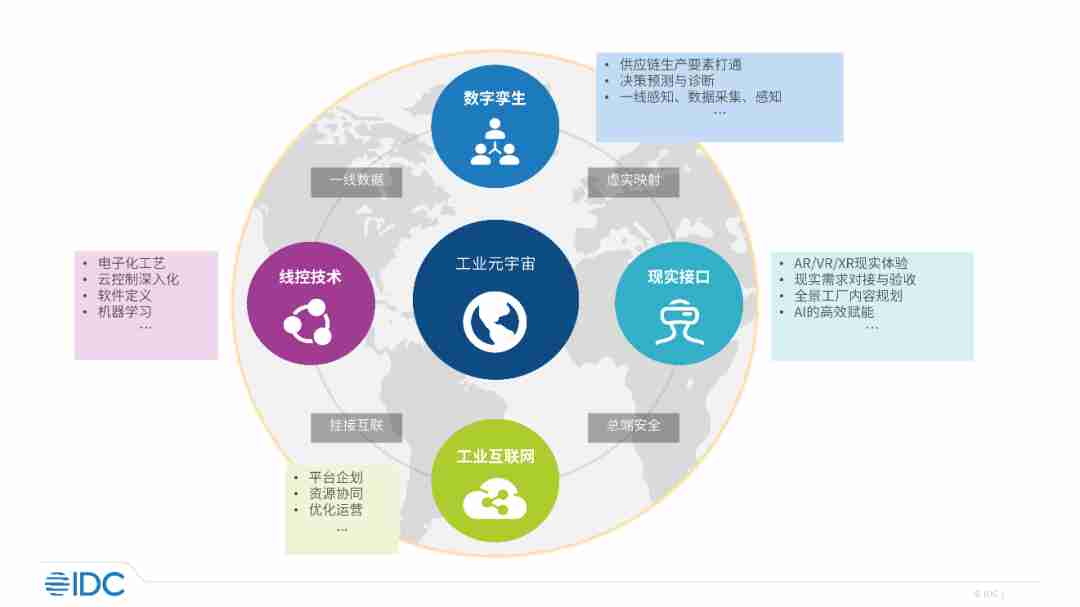
- 畅想需求:工业元宇宙。 工业元宇宙的虚实高效互动,将做到运营与决策的“知行合一”。元宇宙将移动设备、AR/VR、物联网(IoT)设备以及下一代网络、云资产等技术融合为一体(如上图),通过将工艺设计、客户体验、供应链互动等元素完全串联,高效赋能制造业。工业元宇宙无限扩展了制造企业的数字智能畅想空间。
二、最后
以上三大需求是制造企业数字业务时代下的主要需求。这些需求能实现到“什么程度”,技术在制造企业能扎“多深”,都取决于CIO的思考与准备。

IDC中国高级研究经理李鑫,有如下观点供CIO参考:
CIO在思考导入数字技术前,需要宏观思考与细节安排。关于思考,有以下3点建议:
- 明确定位:导入技术前,应做到“由外至内”评估数字业务战略与技术间的关系。制造企业成本控制较细,“雨露均沾”往往难达到预期效果,还会将CIO置于不利之地。
- 明晰应用:理解技术与制造企业的融合模式、对业务贡献、与其他技术及战略的协同效应等。这对于高层汇报也是必要的,使业务简单明了的了解应用,即可达到目的。
- 明了挑战:战略上藐视,战术上重视。导入前了解主要挑战,结合现实情况准备,可使导入更“丝滑”。数次导入问题会导致业务部门失去配合耐性,为IT工作早成障碍。
翻译:
The manufacturing industry is the foundation of the country, the tool of rejuvenation and the foundation of strengthening the country. The development of the industry cannot be separated from the demand of manufacturing enterprises. With the advent of the digital business era, the integration of digital business and manufacturing industry has become inevitable, and has become an important condition for the revitalization of the real economy.
This article is excerpted from the “Manufacturing Needs” section of “Manufacturing Enterprise Introduction of Digital Twin Technology — CIO Thinking and Preparation”. The report starts with the needs of manufacturing enterprises and explores the important impact of digital technology on the future of manufacturing enterprises. Based on the characteristics and challenges of technology, in order to realize the introduction of digital twinning in manufacturing enterprises, the CIO is discussed how to do sufficient thinking and preparation.
Three major digital needs of manufacturing enterprises
The introduction of machines reduces the operating risk of workers to a minimum, and the “handicraft work” is further standardized. While meeting the large demand of users for products, the quality control is also guaranteed. The comprehensive deployment of computers makes the manufacturing information gradually sink, and the efficiency of the manufacturing industry also improves iteratively. At present, the three major digital demands of manufacturing enterprises are as follows:
Basic need: “Re-lean”. Since the term “lean manufacturing” was defined by MIT in 1985, lean thinking has experienced more than 30 years of development, and the combination of cost and benefit has become increasingly close. Digital technology further increases the upper limit of “re-lean” ability. Lean is no longer satisfied with simple information, and data begins to play an important role in manufacturing enterprises. In the future, IOT, AI, cloud and other technologies will deeply enable lean production.
Digital demand: intelligent production service. Based on customers’ comprehensive and demanding demands for products, quality, delivery, safety and price, the introduction of the third platform technology will enable enterprises to rapidly improve the intelligent decision-making ability of operations. Not only lean, but also more efficient supply chain, more intelligent factory and more optimized service have become the main focus of technical executives of large manufacturing groups in the context of digital business
Imagination Demand: Industrial metaverse. The efficient interaction of virtuality and reality in the industrial metauniverse will achieve the “unity of knowledge and action” in operation and decision-making. Metaverse integrates mobile devices, AR/VR, Internet of Things (IoT) devices with technologies such as next-generation networks and cloud assets (pictured above), enabling efficient manufacturing by fully connecting elements such as process design, customer experience, and supply chain interaction. The industrial metauniverse extends the digital intelligence imagination space of manufacturing enterprises infinitely.
Finally
The above three requirements are the main requirements of manufacturing enterprises in the era of digital business. The “degree” to which these demands can be realized. And the “depth” of technology in manufacturing enterprises, all depend on the CIO’s thinking and preparation.
IDC China senior research Manager Li Xin, has the following views for CIO reference:
Cios need to think big and arrange details before thinking about importing digital technology. Here are three tips for thinking:
Clear positioning: The relationship between digital business strategy and technology should be evaluated “from the outside in” before introducing technology. Manufacturing enterprise cost control is finer, “rain and dew” is often difficult to achieve the desired effect, will also put CIO in a disadvantageous place.
Clear application: understand the integration mode of technology and manufacturing enterprise, contribution to business, synergies with other technologies and strategies, etc. This is also necessary for high-level reporting. So that the business is simple and clear to understand the application, can achieve the purpose.
Understand the challenge: strategic contempt, tactical attention. Knowing the main challenges before importing and preparing for the actual situation can make importing smoother. Importing problems for several times will cause the business department to lose patience and become an early obstacle to IT work.
本文由数字化转型网(www.szhzxw.cn)转载而成,来源:IDC咨询;编辑/翻译:数字化转型网宁檬树。

免责声明: 本网站(http://www.szhzxw.cn/)内容主要来自原创、合作媒体供稿和第三方投稿,凡在本网站出现的信息,均仅供参考。本网站将尽力确保所提供信息的准确性及可靠性,但不保证有关资料的准确性及可靠性,读者在使用前请进一步核实,并对任何自主决定的行为负责。本网站对有关资料所引致的错误、不确或遗漏,概不负任何法律责任。
本网站刊载的所有内容(包括但不仅限文字、图片、LOGO、音频、视频、软件、程序等) 版权归原作者所有。任何单位或个人认为本网站中的内容可能涉嫌侵犯其知识产权或存在不实内容时,请及时通知本站,予以删除。