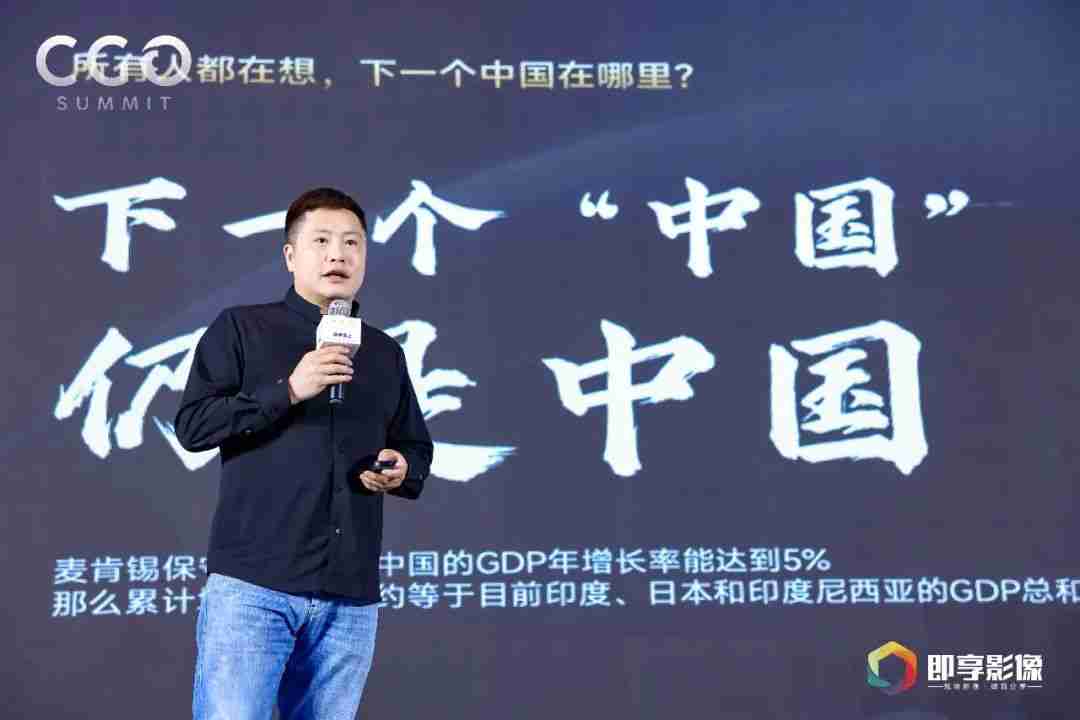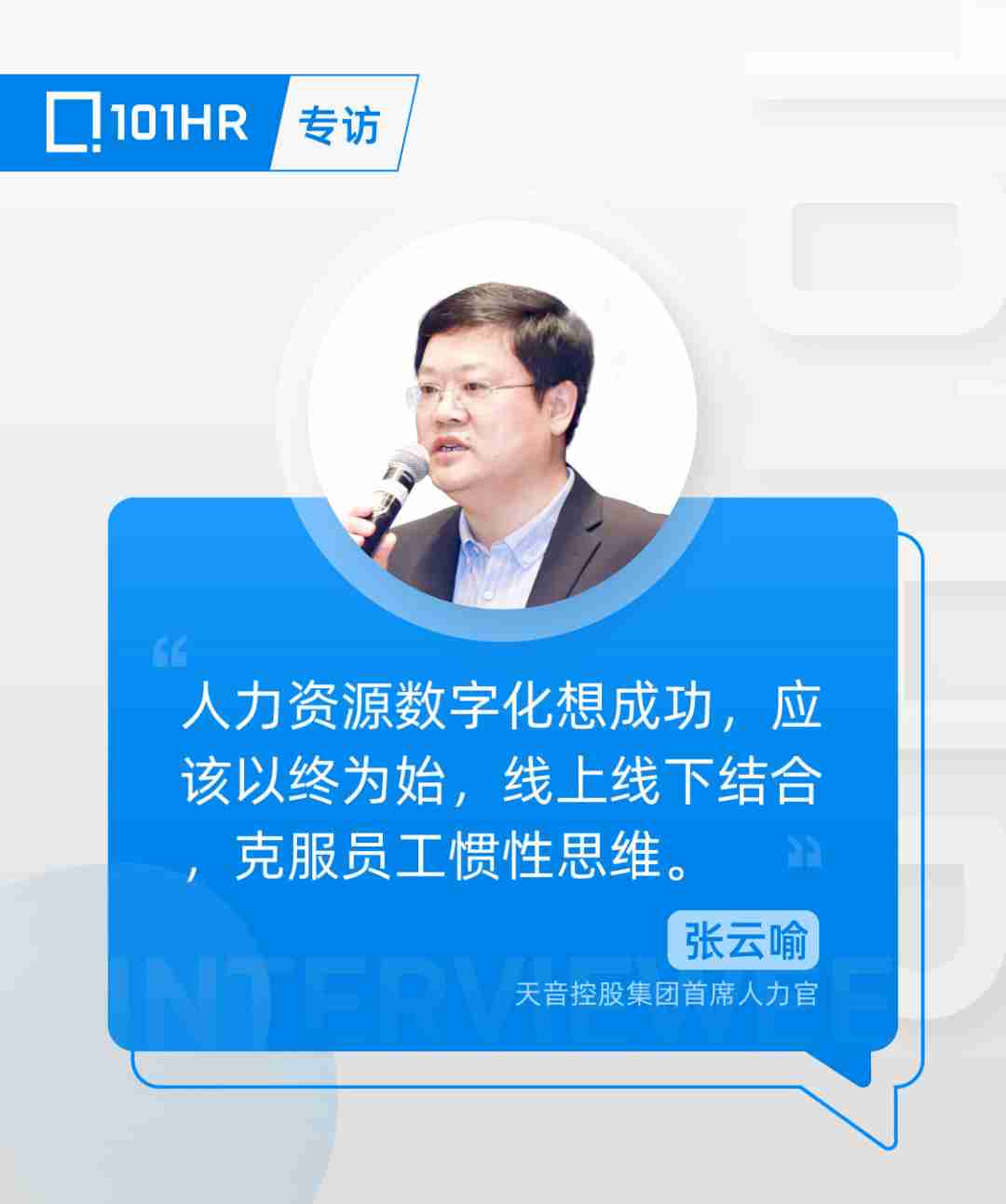
个人简介:
企业管理硕士, 现任职于国内知名A股上市天音控股集团首席人力官。
职业生涯一直致力于大型企业及跨国公司,担任高级管理职务,拥有丰富的管理实践经验。
央视新闻(CCTV-NEWS)频道《对话》(Dialogue)节目对话嘉宾,微软MSN人力资源栏目专职供稿人。
资深企业人力资源管理专家及培训师,在人力资源领域的人工智能(AI)应用有资深研究,拥有独立开发人工智能算法,掌握HR SaaS与人工智能结合应用技术。
近几年“人力资源数字化”这一概念频繁被提及,但是很多企业,尤其传统企业非常希望组织可以做数字化转型升级。甚至有企业对此产生焦虑,认为竞争对手在做了,如果我们不做就会落后。企业和HR该如何结合科技发展的助力、紧跟时代与趋势的变化,实现人力资源数字化转型?
为了解答这个问题,今天我们采访到了天音控股集团首席人力官张总,他拥有多年人力资源数字化管理经验,当企业还在犹豫是否要进行人力资源数字化转型的时候,他和他所带领的企业早已顺利走过这个阶段。
本期张总就以过来人的视角,从行业背景、企业、HR自身多个维度出发,剖析企业人力资源数字化成功之路的困境与解法。
一、人力资源数字化的2大背景:外部需求和自身优势
Q:人力资源数字化近年来频繁被提及,您觉得为什么数字化能这样风靡,甚至成为一种趋势?
A:我觉得人力资源数字化转型有一个很大的背景。
第一个方面,由于人力资源体系的需求,需要实现人力资源的数字化。
现在很多企业由于市场的需求,实施的是人力资源三支柱体系。三支柱体系我认为是一个非常规范的管理方式,这种方式的话更多的还是适合跨行业或者是跨地域,或者有比较明确的事业部的公司。
三支柱中的ssc非常强调通过IT技术的手段来实现,一个集团公司的成员公司之间信息的打通和穿透,我觉得这是实现人力资源数字化的一个核心动因。
这是在三支柱的情境下,企业需要实施人力资源数字化。而且这种三支柱的情景,是当前社会中一个很重要的现象。
第二个方面,由于数字化本身的优势,需要实现人力资源数字化。
有的企业有自己非常规范的管理方式,依然在用人力资源六大模块的方式在组织自己的人力资源部门。这种时候实施数字化,也是有积极意义的,这种积极意义就是数字化本身带来的优势。
第一,数字化能够有效地汇集信息。
第二,数字化可以提高工作效率,特别是跨地域、跨产业之间的这种协同
第三,数字化提供了数据的存储和可追溯的条件。
举个例子,假设我们公司今年的薪酬支出是两个亿,那么我们去年支出多少?前年支出多少?通过信息系统还能够形成一个很有效的数据的存储和信息的沉淀,这样的话便于我们以追溯以往,或者是预测未来。
这是我觉得数字化的2个必要性,总结来说就是两大场景,一个是由于体系的需求,一个是由于数字化本身的好处。
二、人力资源数字化成功的2大基石:长远的规划和有效的线下流程
Q:企业该怎么做,才能实现人力资源数字化转型的成功?
A:第一,清楚企业数字化的原因和目标。
不管是什么样的企业想做数字化,都要想清楚数字化的意义和目的所在。数字化只是一个大方向,这里面还有很多细分方向,侧重点不同,能达到的目标也不一样。一家企业要做数字化,需要长足的规划和远见。
有句话说得好,叫做以终为始,出发的时候最重要的不是跑得多快,或者有什么样的工具,而是你要到哪里去?如果真的想做数字化,就要清楚你想做数字化的原因。别人实施数字化不能成为你实施数字化的原因,因为大家各自有各自不同的竞争态势、位置、着力点。
比如有的企业,就想快速地提升管理能力,那数字化的目标就是想通过这种方式,把自己的管理能力提升到更高的层次。
还有的企业想往全面综合的大企业方向发展,那它最初的时候就得注重数据积累。因为这种企业到了一定阶段之后,就会回归自己的历史去复盘,哪些人为公司做了贡献,我们在管理过程中走了什么弯路。往前追溯的时候,如果没有这种数字化的工具,只能靠人拍脑袋,信息不见得是真的或者是准确的,这种情况下人力资源数字化的好处就凸显了。
我曾经在网上看到过刘强东的一个视频,那个视频讲的是刘强东还在中关村开店时期的片段,他对着自己十七个员工讲,我们今年的目标完成了,销售额已经突破了100万。我相信京东一开始的时候,也没有考虑到企业能走到今天,他可能就想把他的专柜做好。但他这个视频沉淀下来了,一种可能是他本身注意保存这种原件,另一种可能就是偶然留下了这么一段录像。
但不管怎么说,这种记录的本身是有意义的。当你想做一个让世人尊重的知名企业的时候,一开始就要注意留好自己的各种信息。
第二有效的线下体系和系统。
在线下体系不健全的情况下,很多企业希望直接通过数字化提升自己的管理和效能,这是很多企业的一个误区。数字化的大前提,是体系有效,流程和系统在线下能够有效运营,才能把它放到线上去。
线上和线下的运行模式,因为技术手段的不同,会有一些差异。但很多企业因为自己没有一个有效的线下系统,就直接讲线上,这肯定是会失败的。这就好像一个人还不会跑,就想飞。想飞起来,首先得有一个助跑的过程,越跑越快,越飞越高,跑是飞跨越不过去的一个阶段。
回到数字化这个话题,数字化一定是体系化的,如果企业本身没有对工作流程和线下管理形成体系,数字化就是空中楼阁。
这是一些初创企业,或者是没有数字化基础的企业想做数字化的必由之路。
三、人力资源数字化失灵的3大归因:基础薄弱和员工的惯性抗力
Q:有的公司实施数字化后,并不能带来期望的目标和结果,您认为是什么原因导致数字化失灵?
A:我认为可能会有这么几种原因:
第一个原因:没有准备好数字化的基础,就开始着手数字化。
企业还没有想清楚,希望通过数字化达到什么目标,解决什么问题;并且企业线下的流程和管理还没有形成体系,这两个数字化的基础条件我们之前已经阐述过了。
没有准备好基础条件的情况下进行数字化变革,企业会发现有无数字化没有什么差别,甚至还带来很多问题。由于数字化插入到工作中,带来了很多额外的工作。
第二个原因:员工没有转变心态,不愿意执行数字化。
实施数字化之前,虽然线下管理存在各种问题,比如流程效率低,操作不规范,但员工已经习惯了这种操作模式。员工有一种惯性思维,当数字化实施的时候员工会觉得是一种累赘,不愿意执行。
这种时候怎么办呢?
很多企业会借助比较强势的力量去改变这种习惯。
比如华为,刚开始数字化的时候,他们的组织结构已经非常庞大了,庞大体系就有一个庞大的惯性,很多员工不愿意调整工作流程和方式。华为出台了一个文件,对干部考核的一票否决制度,如果不能有效支持信息化和数字化,这个干部就直接拿掉。
这种方式快速实现了员工的转变,把员工从惯性的舒适区拉到一个愿意开展高度数字化的场景中,做好了场景搭建,华为才开始进一步的数字化。据我所知华为目前很多业务的运行方式,都是先立项,在线上把数字流程跑通之后,才真正地去做。
这种员工心态的转变,可以称之为改革的阵痛,大家必须容忍这种阵痛,才能为数字化转型提供一个良好的执行环境。
如果忍受不了这种阵痛,数字化就会变成形式。有的企业会有这样的情况,虽然也能勉强的执行数字化,但会演变成线上、线下两套系统,用excel表格算一遍,再到线上系统算一遍,两个数字一致再发工资。本身一套系统就能解决的问题,结果用两套系统,数字化并没有解决问题,倒成了一种累赘。
四、人力资源数字化的管理者:HR的不足与进阶之路
Q:数字化的推进,是多部门的协作,在这个过程中有哪些是HR自身应该特别注意的?
A:人力资源三支柱被称为coe、hrbp、ssc,这几个概念在社会上已经被提得够多了。
coe是指人力资源的智囊团,需要一些资深的人力资源从业者。hrdp是业务团队的直接服务人员。最大的难度恰恰是ssc,ssc又叫共享中心。
共享中心的重点在于用技术的手段解决问题,这往往是三支柱的核心所在。这部分之所以难的原因在于,人力资源由于先天不足,很难在这个板块借鉴或运用自己同领域的知识和经验。人力资源有一个先天不足来源于,从事人力资源的大部分人都是非技术人员。人力资源是一个文科行业,大部分人都是除了来自于本专业,还有中文、外语、经济或者是法律等专业出身,很少有IT、物理等理科专业的人来从事人力资源。数字化很多地方都需要用到理科思维,文科思维的人去做理科思维的事情,这就产生了难点。
技术人员是一个纯理性的思维,一个讲理性的人和一个讲感性的人在对话过程中,很多时候因为思维模式的不同,经常会产生鸡同鸭讲的情况。一方面HR需要认真去了解对方的逻辑思维,另一方面HR也需要把自己逻辑和思维灌注到对方的脑子中。这个彼此协调和沟通的过程很重要,直接影响数字化的推进。
所以很多企业在实施人力资源数字化的时候,一方面需要动员人力资源的全部力量,动员技术人员的力量,但另一方面还会引入一个第三方咨询公司。第三方公司的作用就是梳理企业的流程,并对接技术部门。相当于引入外部力量来解决人力资源不擅长的事情,这是很多公司在实施人力资源是数字化管理的时候的一个常规手段。
————
人力资源数字化依然没有背离以人为本的人力资源管理本质,但着重于关注那些重要的人力资源管理领域,愿意琢磨现象背后的原因,大胆假设,小心求证。
人力资源数字化转型,将是企业可持续增长的新动力,也是人力资源行业未来发展的新机遇。本次访谈将为想要走上人力资源数字化道路,但不知道如果去做的企业答疑解惑,也为HR了解自身、克服短板,提供了宝贵的建议。
翻译:
Personal Introduction:
Master of Business Administration, now working as the chief human resources officer of Tianyin Holding Group, A well-known domestic A-share listed company.
He has worked in senior management positions in large enterprises and multinational companies throughout his career and has rich practical experience in management.
She is a guest speaker of “Dialogue” program of CCTV NEWS channel and a full-time contributor of Microsoft MSN Human Resources program.
Senior enterprise human resource management expert and trainer, has senior research in artificial intelligence (AI) application in the field of human resources, has independent development of artificial intelligence algorithm, master HR SaaS combined with artificial intelligence application technology.
In recent years, the concept of “digitalization of human resources” has been frequently mentioned, but many enterprises, especially traditional enterprises, hope that organizations can do digital transformation and upgrading. Some companies are even anxious about this, thinking that our competitors are doing it, and if we don’t do it, we will fall behind. How should enterprises and HR combine the help of scientific and technological development, keep up with the changes of The Times and trends, and realize the digital transformation of human resources?
In order to answer this question, today we interviewed Mr. Zhang, chief human resources Officer of Tianyin Holding Group. He has many years of experience in human resources digital management. When the enterprise was still hesitant about whether to carry out human resources digital transformation, he and the enterprise he led had already gone through this stage smoothly.
In this issue, from the perspective of experience, from the industry background, enterprises and HR itself, Mr. Zhang analyzed the difficulties and solutions on the road to success of enterprise human resources digitalization.
Two backgrounds of digitalization of human resources: external demand and own advantages
Q: Digitalization of human resources has been mentioned frequently in recent years. Why do you think digitalization has become so popular and even a trend?
A: I think there is a big background to the digital transformation of human resources.
Firstly, due to the demand of human resource system, it is necessary to realize the digitalization of human resources.
Nowadays, many enterprises implement the three-pillar system of human resources due to the demand of the market. In my opinion, the three-pillar system is a very standardized management mode, which is more suitable for companies with cross-industry or cross-region, or with well-defined business divisions.
Among the three pillars, ssc lays great emphasis on the IT technology to realize the information connecting and penetrating among the member companies of a group company. In my opinion, this is a core motivation for realizing the digitalization of human resources.
This is in the context of three pillars, enterprises need to implement the digitalization of human resources. And this three-pillar scenario is a very important phenomenon in today’s society.
In the second aspect, due to the advantages of digitalization itself, it is necessary to realize the digitalization of human resources.
Some enterprises have their own very standardized management methods, and still use the six modules of human resources to organize their own human resources department. At such times, the implementation of digitalization also has positive meaning, and this positive meaning is the advantage of digitalization itself.
First, digitization can effectively aggregate information.
Second, digitization can improve work efficiency, especially such collaboration across regions and industries
Third, digitization provides the conditions for data storage and traceability.
For example, suppose our company’s compensation expenditure this year is 200 million yuan. How much did we spend last year? How much did you spend the year before last? Through the information system can also form a very effective data storage and information precipitation, so that we can trace back to the past, or predict the future.
These are the two necessities of digitalization in my opinion. In summary, there are two scenarios, one is due to the needs of the system, the other is due to the benefits of digitalization itself.
The two cornerstones of successful digitalization of human resources are long-term planning and effective offline processes
Q: What should enterprises do to achieve the success of digital transformation of human resources?
A: First, make clear the reasons and goals of enterprise digitization.
No matter what kind of enterprise wants to do digital, it needs to think clearly about the meaning and purpose of digital. Digitalization is just a general direction, and there are many subdivisions within it, with different emphases and different goals. It takes a lot of planning and foresight for an enterprise to go digital.
As the saying goes, start with the end. The most important thing when you start is not how fast you run or what kind of tools you have, but where you are going. If you really want to go digital, be clear about why you want to go digital. The fact that someone else digitizes cannot be the reason why you digitizes, because everyone has their own competitive situation, position, and focus.
For example, some enterprises want to improve their management ability quickly. The goal of digitalization is to promote their management ability to a higher level in this way.
Other enterprises want to develop into comprehensive enterprises, it should pay attention to data accumulation at the beginning.
Because when you get to a certain stage, you go back to your own history, who has contributed to the company, what kind of detours we have made in the management process. In retrospect, if there were no such digital tools, the information could only be patted on the head and not necessarily true or accurate. In this case, the benefits of digital human resources would be highlighted.
I once saw a video of Liu Qiangdong on the Internet. The video was about the period when Liu Qiangdong opened a store in Zhongguancun. He told his 17 employees that our target for this year has been fulfilled and the sales volume has exceeded 1 million. I believe that at the beginning, Jingdong did not consider that the company could come to what it is today, and it might want to do a good job in its shop. But his video was deposited, either because he took care to preserve the original, or because he left it by accident.
But in any case, the record itself is meaningful. When you want to become a well-known company that the world will respect, it is important to keep your information well in the beginning.
The second most effective offline system and system.
In the offline system is not sound, many enterprises hope to directly improve their management and efficiency through digital, which is a misunderstanding of many enterprises. The main premise of digitization is that the system is effective and the process and system can be effectively operated offline before it can be put online.
Online and offline operation mode, because of the different technological means, there will be some differences. But many enterprises because they do not have an effective offline system, directly online, this is bound to fail. It’s like wanting to fly when you can’t run. If you want to fly, you must first have a running process. The faster you run, the higher you fly. Running is a stage that you can’t cross.
Back to the topic of digitization, digitization must be systematic, if the enterprise itself does not have a system for work flow and offline management, digitization is a castle in the air.
This is the way some start-ups, or companies without a digital foundation, want to do digital.
The three main reasons of human resources digitalization failure: weak foundation and inertia resistance of employees
Q: Some companies fail to achieve the desired goals and results after implementing digitalization. What do you think is the cause of digitalization failure?
A: I think there could be several reasons:
The first reason is to start digitizing without preparing the foundation for digitizing.
Companies have yet to figure out what they hope to achieve and solve through digitisation; In addition, the offline process and management of enterprises have not yet formed a system. We have explained these two basic conditions of digitalization before.
When the foundation is not ready for digital change, enterprises will find that there is no difference with or without digital, and even a lot of problems. Because of the digital insertion into the work, there is a lot of extra work.
The second reason: employees have not changed their mindset to implement digital.
Before the implementation of digitalization, although there are various problems in offline management, such as low process efficiency and non-standard operation, employees have been used to this mode of operation. Employees have a kind of inertia thinking, when the implementation of digital employees will feel a cumbersome, reluctant to implement.
What to do at such times?
Many companies will use more powerful forces to change this habit.
For example, when Huawei first started digitization, its organizational structure was already very large, and the huge system had a huge inertia. Many employees were reluctant to adjust their work processes and methods. Huawei has introduced a document, a system of one-vote veto on cadre assessment, if it cannot effectively support informatization and digitalization, the cadre will be directly removed.
This approach quickly realizes the transformation of employees and pulls them from the comfort zone of inertia to a scene that is willing to carry out a high degree of digitalization. Only after setting up the scene can Huawei begin to further digitization. As far as I know, the current operation mode of many businesses in Huawei is to first establish projects and run the digital process online before really doing it.
This change in employee mentality can be called the labor pains of reform, which must be tolerated in order to provide a good execution environment for digital transformation.
If the pain is too much to bear, digital will become formal. Some enterprises will have such a situation, although they can reluctantly implement the digitalization, but it will evolve into two sets of online and offline systems, using excel forms to calculate again, and then to the online system to calculate again, the two numbers are consistent and then pay salaries. One system can solve the problem itself, as a result, with two systems, digital does not solve the problem, but becomes a white elephant.
Managers of Digital Human Resources: the deficiencies of HR and the way to progress
Q: The promotion of digitalization is a multi-department collaboration. What should HR pay special attention to in this process?
A: The three pillars of human resources are called coe, hrbp and ssc. These concepts have been mentioned enough in the society.
The coe is the human resources think tank, which needs some senior human resources practitioners. The hrdp is a direct service member of the business team. The biggest difficulty is precisely the ssc, also known as the shared center.
The focus of the shared center is on solving problems using technology, which is often the core of the three pillars.
The reason why this part is difficult is that due to the inherent shortage of human resources, it is difficult to learn from or apply their own knowledge and experience in the same field in this section. Human resources have an inherent deficiency from the fact that most people engaged in human resources are non-technical personnel. Human resources is a liberal arts industry, most of the people are from Chinese, foreign languages, economics or law majors in addition to their major, and few people from science majors such as IT and physics are engaged in human resources. Digitization requires the use of science thinking in many places. People with liberal arts thinking do things with science thinking, which creates difficulties.
Technical personnel is a pure rational thinking, a rational person and a perceptual person in the dialogue process. Often because of the difference in thinking mode, often produce the situation of chicken and duck. On the one hand, HR needs to seriously understand the logical thinking of the other side. And on the other hand, HR also needs to pour their own logic and thinking into the other side’s mind. This process of coordination and communication with each other is very important and directly affects the advancement of digitalization.
Therefore, when implementing the digitalization of human resources
Therefore, when implementing the digitalization of human resources. Many enterprises need to mobilize the full strength of human resources and technical personnel on the one hand. But also introduce a third-party consulting company on the other hand. The role of the third-party company is to organize the process of the enterprise and connect with the technical department. It is equivalent to introducing external forces to solve the problems that human resources are not good at. Which is a common means for many companies to implement the digital management of human resources.
The digitalization of human resources still does not deviate from the essence of human-oriented human resources management. But focuses on those important fields of human resources management, willing to ponder the reasons behind the phenomenon, make bold assumptions, and carefully verify.
The digital transformation of human resources will be a new driving force for the sustainable growth of enterprises and a new opportunity for the future development of human resources industry. This interview will provide valuable advice for enterprises that want to embark on the road of human resources digitalization. But do not know how to do it, and for HR to understand themselves and overcome their weaknesses.
本文由数字化转型网(www.szhzxw.cn)转载而成,来源:51社保网;编辑/翻译:数字化转型网宁檬树。

免责声明: 本网站(http://www.szhzxw.cn/)内容主要来自原创、合作媒体供稿和第三方投稿,凡在本网站出现的信息,均仅供参考。本网站将尽力确保所提供信息的准确性及可靠性,但不保证有关资料的准确性及可靠性,读者在使用前请进一步核实,并对任何自主决定的行为负责。本网站对有关资料所引致的错误、不确或遗漏,概不负任何法律责任。
本网站刊载的所有内容(包括但不仅限文字、图片、LOGO、音频、视频、软件、程序等) 版权归原作者所有。任何单位或个人认为本网站中的内容可能涉嫌侵犯其知识产权或存在不实内容时,请及时通知本站,予以删除。