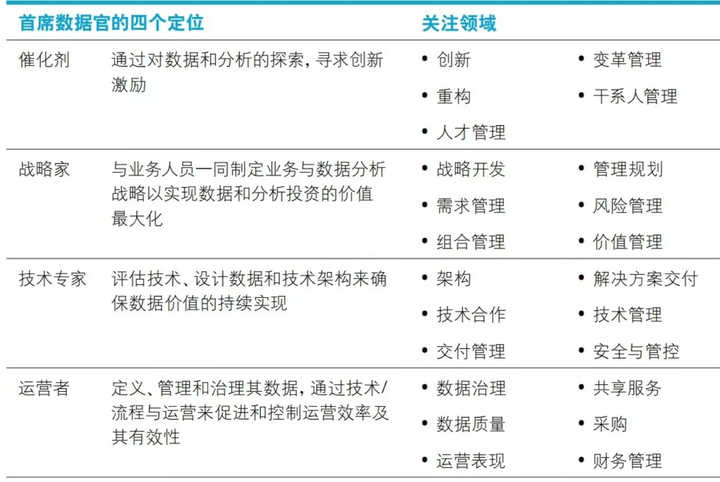
近年来,在数字经济蓬勃发展的推动下,越来越多的消费品企业乘着这股东风,开启了数字化转型的旅程。贝恩一项面向全球企业高管的调研显示,2018年,已经有50%的受访企业将数字化视为董事会最重要议题/最重要的议题之一,2019年第四季度,该比例稳步上升至57%。
2021年,在新冠疫情的催化下,数字化的重要性更胜从前:高达73%的受访企业将数字化提上了董事会最重要的议题(或议题之一)。但值得注意的是,尽管企业大力投入数字化转型,在提及转型成果及表现时,2021年,有76%的受访者表示,数字化变革项目的结果喜忧参半,20%的受访企业“未能达到期望结果的50%”,仅有4%的受访企业圆满完成或超越预期。
回顾过去的数字化转型浪潮,大多数企业虽然投入巨大,但往往未能达成满意的结果,是什么原因形成了这个现象?有哪些数字化“转型陷阱”应该避免?不同类型的消费品企业根据行业数字化程度和自身数字基础设施能力,可以采取哪些转型策略?
本文中,贝恩基于全球及中国多年以来数字化转型相关项目的咨询经验,结合针对中国的外资和本土企业调研,归纳出消费品企业在数字化过程中容易陷入的“八大陷阱”,并且创新性地提出12字数字化转型方针——业务导向,基建并行,组织赋能,希望能够为消费品企业未来的数字化转型之路提供指引,避免踩坑,通过数字化赋能业务增长。
一、“八大陷阱”:消费品企业应当避免踩这些坑
数字化转型有三大要素:业务应用,技术基建,组织人才,三者缺一不可。业务应用指的是数字化在业务场景中的应用,例如数字化营销,数字化产品创新等。技术基建是指为了实现数字化应用,企业需要搭建的IT解决方案及数据架构。组织人才包括了如何选择数字化转型的内外部牵头方及整个公司在数字化文化和能力建设上的投入。贝恩发现,企业通常会在数字化转型三要素的不同方面“踩坑”,因此,我们聚焦三要素,分别总结了相应的“陷阱”。
1、业务应用层面
陷阱一:初心未明
这类企业通常抱有“为了数字化而数字化”的盲目跟风心理,缺乏立足自身情况的明确的、可量化的业务目标,比如,一味追随行业龙头的数字化应用,或受到竞争对手开发了新的应用的威胁,从而产生焦虑,依葫芦画瓢,而不考虑自身实际情况。此外,这类企业一般本末倒置地认为,只要通过开展数字化项目就能突破增长瓶颈,而未认识到数字化是赋能业务转型的工具,想要实现增长,必须开展业务转型。
陷阱二:宏伟蓝图
这类企业通常先请外部机构设计一份大而全的数字化转型蓝图,力求面面俱到,未从业务需求出发,识别最能赋能业务增长的数字化转型举措。比如,蓝图设计中经常提到要上一方消费者数据中台(CDP系统),规划所有品牌全部链接数据中台,然而,对于渗透率大于70%的大众消费品品类来说,人群标签并不需要过于精准,三方DMP足以满足精准营销的需求,未从业务实际出发的宏伟蓝图会浪费企业资源。
陷阱三:万马奔腾
万马奔腾和宏伟蓝图相反。公司的各个部门急于看到数字化转型成效,而着急上马散点应用,如为旗下各品牌分别开设多个微信公众号和社群,覆盖品牌建设、私域卖货、会员管理等,然而这些散点应用缺乏顶层设计和规划,连通性和可扩展性低,未来底层数据也较难打通,无法有效构建业务闭环赋能公司业务增长,生意影响力有限。
2、技术基建层面
陷阱四:数据孤岛缺基建
过去二十年,中国经济腾飞,大多数民营企业顺势拓展业务,抓住机会做强做大。伴随业务规模持续扩大,很多企业的信息化基础则较为薄弱,ERP系统并不完善,还未实现业财一体化,同时也尚未培养起基于数据做决策的思维方式。此时若领导者仍然仅聚焦前端产生业务价值的数字化应用,继续忽视中台和后台基建,很容易形成数据孤岛,即难以打通各前端的应用数据,不利于业务增长。
陷阱五:大马拉小车
与多数民营企业相反,跨国公司一般配置了全球化部署的IT基础设施和要求,通常技术基础完善。在国内实施数字化转型时,尽管一些跨国公司也在前期投入巨资和人力布局IT基建升级,但是,技术基建与真实业务需求的关联度较低,基础设施的规模经常超过实际业务所需,导致资源浪费。
陷阱六:自建+输出
在中国,消费品和零售行业的数字化走在了世界前列,中国领先企业一般希望采取自建,而不是借助第三方平台的解决方案进行数字化转型。在这个背景下,一些领先企业甚至抱有通过自主研发很多行业应用,再向业内其他企业输出的雄心壮志,却最终面临投入巨大而无人买单的尴尬局面。企业战略和数字化目标不够清晰。
3、组织人才层面
陷阱七:牵头人+外部伙伴对业务理解不足
数字化转型的负责人和外部伙伴对转型的成败至关重要。在过去的数字化转型事件中,很多企业认为这是技术转型,因此指派技术负责人,比如CTO(首席技术官)来牵头。然而数字化转型实则是业务转型,CTO技术能力深厚,但对业务的日常参与度有限,不一定能深入洞察业务所需。此外,企业选择的外部合作伙伴也通常擅长技术解决方案,对于企业业务的理解不够深入,交付方案的业务针对性受局限。
陷阱八:组织文化不转型
贝恩了解到,很多公司认为,数字化转型只需要搭建业务应用和IT系统就成功了。事实上,数字化转型最难但是最重要的部分是业务运营模式和组织文化的转型。很多公司未能在公司层面建立数字化洞察和决策的模式转型并展开能力建设。比如,在数字化转型阶段,公司吸纳了很多外部人才,但是新老团队的融合出现问题,团队OKR或KPI设置不改变,最终导致数字化转型结果与预期目标相差甚远。
二、消费品企业数字化转型方针:业务导向,基建并行,组织赋能
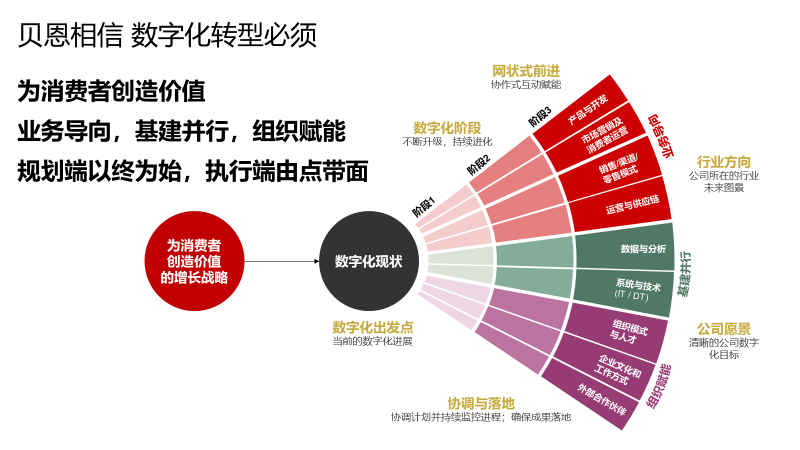
为了避免落入潜在的“八大陷阱”,贝恩认为,数字化转型应遵循12字方针 —— 业务导向,基建并行,组织赋能。“为消费者创造价值”的业务增长战略是企业数字化转型规划的起点,明确未来愿景和业务目标后,以当前的数字化现状为出发点,从业务、基建和组织三方面,网状式推进数字化转型举措的落地。规划端以终为始,执行端由点带面,以敏捷的方式不断迭代优化,确保数字化转型成功,赋能新一轮增长(图1)。
首先是业务导向。数字化转型最终目的是为消费者创造价值,清晰的战略指引是数字化转型的基石。企业首先应该秉承“以消费者为中心”的理念,结合现状往前和未来回溯的方法,明确公司愿景和未来5年的业务目标,在此过程中探讨数字化转型如何赋能业务目标的达成。此后,根据业务目标,甄别对业务增长最有价值的业务应用和转型举措,并对各项转型举措进行优先级排序,形成实施路径图。
以当前众多消费品公司向DTC转型为例,在明确了“DTC渠道占比超过50%”的业务目标后,往往可以识别出多项关键转型举措。例如,在营销端构建DTC业务矩阵,在产品开发端建立数字化创新体系,在渠道端实现端到端数据串联等等。在每项关键转型举措下,企业应根据业务需求梳理出数字化转型应用。在DTC业务矩阵下,可能的转型应用包括了各电商平台的旗舰店体系、微信私域体系、全渠道会员体系、实现精准营销的消费者数据中台体系等等。在每个应用下,企业都应根据业务实际所需,考虑是自建还是利用第三方系统,以避免时间和资源上的浪费。企业还应根据自身业务需求,识别出对业务增长确实有帮助的转型应用,而后对每项应用根据其业务回报、实施成本和能力进行优先排序,并制定出分阶段的实施计划。
在执行转型举措时,企业应由点带面,按举措优先级分阶段、逐个项目采用敏捷迭代的方式进行落地,确保跨品牌、跨部门间的业务应用达成预期,赋能业务增长。
通用磨坊中国业务已实现高度数字化。转型初始,贝恩与通用磨坊团队用未来回溯的方法甄别了可能对行业产生颠覆效应的数字化趋势,明确了未来5年的业务战略和目标。随后对企业的数字化现状进行评估,明确与目标的差距。从业务导向出发识别了多个数字化应用重点,包括数字化消费者互动、数字化渠道和数字化产品开发等等。通用磨坊根据实施优先级制定了中长期的实施规划,网状式前进,利用微型战役的敏捷工作方式,快速见效,并不断迭代完善。
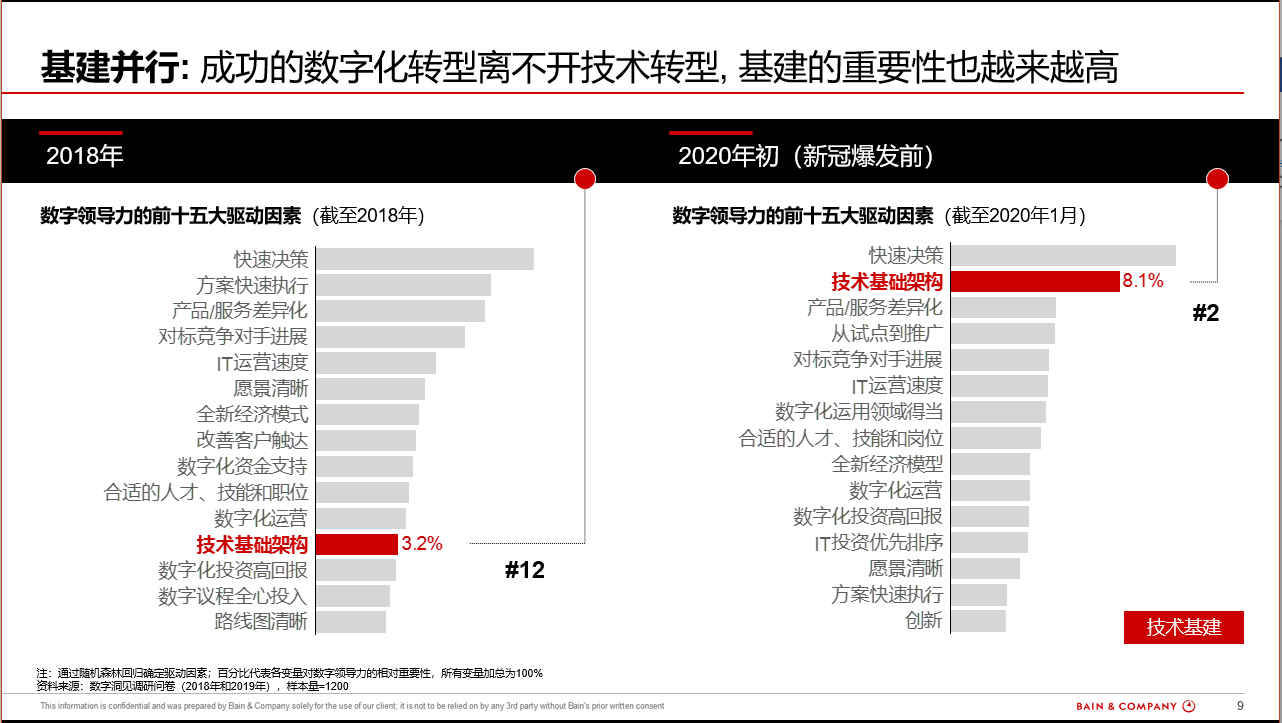
第二是基建并行。以业务导向甄别出有价值的数字化应用并完成优先级排序后,成功的转型离不开必要的技术基础架构,企业需要针对应用所需搭建技术解决方案,即基建并行。在贝恩全球研究的数字领导力的驱动因素排行中,相较于2018年,2020年“技术基础架构”已经跃升至第二位,仅次于“快速决策”,成为驱动企业开展数字化转型的关键动力(图2)。
值得一提的是,我们观察到,过去五年中,消费品公司在技术基建和数据架构的投入方向上发生了根本性变化——基建投资更聚焦在驱动核心业务增长的模块上。“以消费者为中心”的模块获得了更多的关注,投资占比从过去的5%上升到20%,而投入内容也从原先外包给广告公司进行消费者体验管理,变成企业直接面向消费者,全方位地改善消费者体验,放大数字化效能。企业在底层技术和数据上的投入也在增加,从数据在线转型到云技术、网络安全和人工智能技术。而原先在运营和企业内部管理上的投入,例如打造和维护ERP系统,在大幅缩减,升级成更小规模,更智能化的ERP核心。
想要筑牢数字化技术地基而取得竞争优势,企业要根据前台应用规划IT系统,做好跨品牌、跨部门打通,底层数据结构兼具适配灵活性和可扩展性。执行时,根据前台应用的实施进度网格化推进,按阶段部署IT基建,确保底层数据结构一致,并逐步在各应用之间串联打通。
第三是组织赋能。数字化转型的内部牵头人和外部合作伙伴是决定未来转型成效的关键决策之一。贝恩认为,以下12个字可以作为内外部牵头人的衡量标准,即“懂业务、跨平台、能变革、踩过坑”。数字化转型的目的是赋能业务增长,因此,对业务的理解程度应作为最重要的衡量指标。数字化转型是CEO一把手工程,我们从许多优秀跨国企业的转型经验中发现,CEO通常委派对业务负责的CGO(首席增长官)牵头,并和CDO(首席数字官)紧密协作共同负责,或由企业的CDO(首席数字官)牵头,但CDO拥有丰富的业务实操经验。对于外部的咨询服务商,他们会选择既擅长企业战略规划,又能协调资源协助落地的合作伙伴。
数字化转型离不开组织转型。在进行业务和基建层面规划时,还应同时做好运营模式和组织文化转型的规划。这些规划包括四个方面 – “以消费者为中心”的运营模式转型,“规模化敏捷”的工作方式,融合内外部数字化人才,以及打造数字化文化。
数字化为企业提供了前所未有的通过数据更好地服务消费者的机会。这就要求企业转变原来的仅服务经销商和门店就万事大吉的运营模式,致力于打造全新的能力,直接面向消费者洞察需求,满足所需,提升体验。
数字化转型的落地并非一蹴而就,也不是要经过长期实施和等待才能看到成果。贝恩建议,企业在部署时,应该用敏捷迭代的工作方式快速上线测试,并进行持续性优化。这种敏捷的工作方式可以通过试点,慢慢扩展到企业组织的各个方面,实现“规模化敏捷”。
贝恩观察到,很多企业在数字化转型规划阶段就会引进一些外部人才,尤其是较高职位的数字化转型实施人才,而在过程中又会引进更多不同职能和职位的数字化人才。新引进的外部人才常常会给原来的组织带来些许焦虑和震动。因此,企业需要重视新人才和原组织的融合,新能力的内化,并通过外部人才,不断培养和加强原有组织的数字化能力。
最后,数字化文化建设对于转型成效也至关重要。团队的KPI设置需要同步调整,与数字化转型的目标保持一致,例如销售团队不应仅重视销量的达成,而应监管确保零售商、分销商数据的顺畅回流。面向客户和消费者的团队,应该重视数据收集和分析,形成看板指导业务,并逐渐在整个组织中打造起“以数据为基础”进行决策的文化。
三、对标行业,锐意精进:贝恩给四类企业的转型策略
站在数字化转型的路口,眼光向外,消费品企业如何取势、明道,处变不惊? 眼光向内,如何优术、合众,提升软硬实力,致胜行业?
向外应衡量所处行业的数字化颠覆程度。对于消费品领域,自有零售门店或自有电商业务较高的行业数字化颠覆程度较高,如美妆、服装等。大部分业务仍然依赖经销商的行业数字化程度仍较低,如文具,包装食品等。
向内应衡量自身基础设施水平。大部分的国际公司拥有全球统一的IT系统,技术水平较高,但这些企业也需要结合中国市场情况,灵活进行IT系统的本地部署。一些本土优秀企业重视IT系统建设,也已达到较高基础设施水平,但也有一些着重投入业务增长,忽视IT建设的公司,尚未实现业财一体化,未建立完善的信息化系统,IT基础较为薄弱。
每家企业所处的行业数字化颠覆程度不同,自身的IT基础设施完善程度也不同。贝恩建议,企业应根据行业竞争和自身能力的特点,有针对性地采取转型策略以进行短期突破和长期制胜(图3)。
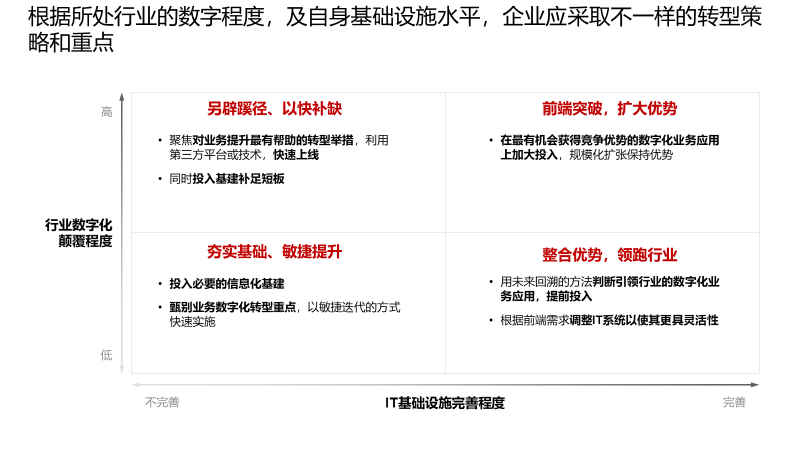
1. 行业数字化程度、自身基建水平均较低:夯实基础,敏捷提升
企业应趁着行业数字化水平都不高的窗口期,抓紧修炼内功,这类企业要投入必要的信息化基建,如小规模的ERP系统。而后甄别业务数字化转型重点,以敏捷迭代的方式快速部署实施,取得引领行业的优势。
2. 行业数字化程度低、自身基建水平高:整合优势,领跑行业
这类企业拥有一定的先发优势,为了持续领跑,应当用未来回溯的方法,判断引领行业的数字化业务应用并提前投入。此外,根据前端需求,升级IT系统,使其更具灵活性。
金佰利在线上客户获取和运营上不断突破,实现领跑。公司不断将越来越多的淘宝服务商和代运营机构的数字化能力内化,以提升营销能力和响应速度。此外,使用先进的数字化工具,比如天猫新品创新中心和筷子科技等进行调研和消费者智能洞察,实现数字化产品创新。
3. 行业数字化程度高、自身基建水平低:另辟蹊径,以快补缺
这类企业的数字化水平暂时落后于整体行业,为了缩小差距,一方面,聚焦对业务提升最有帮助的转型举措,利用第三方平台或技术,快速上线,例如借助电商平台DMP实现精准营销。另一方面,投入基建,补足短板,奋力追赶。
4. 行业数字化程度高、自身基建水平高:前端突破,扩大优势
这类企业应当在最有机会获得竞争优势的数字化业务应用上加大投入,规模化扩张,从而保持优势。
在数字化程度极高的美妆零售行业,头部品牌丝芙兰仍能找到机会快速突破:熟练借助其强大的导购网络及成熟的会员系统,打造领先行业的私域体系,灵活联动私域与线下门店,为小程序“引流”、培养“好感”,树立“忠诚”,在2020年“企业微信”消费者人数已超过480万,品牌小程序GMV增长率超过150%。
翻译:
In recent years, driven by the vigorous development of the digital economy, more and more consumer goods companies have taken advantage of this east wind and started the journey of digital transformation. According to a Bain survey of global executives, in 2018, 50% of the companies surveyed identified digital as one of the most important issues/issues in the boardroom, and in the fourth quarter of 2019, this proportion has steadily increased to 57%.
In 2021, as a result of the COVID-19 pandemic, digital is even more important than before: 73% of companies surveyed rank digital as the most important topic (or one of the topics) for their boards. However, it is worth noting that despite the strong investment in digital transformation, when it comes to transformation results and performance, in 2021, 76% of respondents said that the results of digital transformation projects were mixed, 20% of respondents “failed to achieve 50% of the desired results,” and only 4% of respondents successfully completed or exceeded expectations.
Looking back at the past wave of digital transformation, most companies have invested heavily, but often failed to achieve satisfactory results.
What is the reason for this phenomenon? What are some digital “transformation pitfalls” to avoid? What transformation strategies can different types of consumer goods companies adopt based on the degree of digitization of their industry and their own digital infrastructure capabilities?
In this paper, based on the consulting experience of global and Chinese digital transformation projects for many years, combined with the research of foreign and local enterprises in China, Bain summarizes the “eight pitfalls” that consumer goods enterprises are prone to fall into during the digital process, and innovatively puts forward the 12-word digital transformation policy — business orientation, parallel infrastructure, organizational empowerment, and digital transformation. It is hoped that it can provide guidance for the future digital transformation of consumer goods enterprises, avoid stepping on the pit, and empower business growth through digitalization.
The “eight pitfalls” : consumer goods companies should avoid stepping on these pits
Digital transformation has three elements: business application, technology infrastructure, organizational talent, all three are indispensable. Business application refers to the application of digitalization in business scenarios, such as digital marketing, digital product innovation, etc. Technology infrastructure refers to the IT solutions and data architecture that enterprises need to build in order to achieve digital applications. Organizational talent includes how internal and external leaders for digital transformation are selected and how the entire company invests in digital culture and capacity building. Bain found that companies often “stumble” on different aspects of the three elements of digital transformation, so we focused on the three elements and summarized the corresponding “pitfalls”.
Service application level
Trap 1: You don’t know where you started
Such enterprises usually have a “digital for digital and digital” blindly follow the trend psychology, lack a clear, quantifiable business goal based on their own situation, such as blindly following the digital application of the industry leader, or the threat of competitors to develop new applications, resulting in anxiety, and do not consider their own actual situation. In addition, these companies generally put the cart before the horse and believe that they can break through growth bottlenecks simply by launching digital projects, instead of recognizing that digital is a tool to enable business transformation, which is necessary to achieve growth.
Trap 2: The Big picture
Such companies usually ask an external agency to design a large and comprehensive digital transformation blueprint, and strive to cover all aspects, without starting from the business needs to identify the digital transformation initiatives that can best enable business growth. For example, it is often mentioned in the blueprint design to the consumer data center (CDP system), planning all brands to link to the data center, however, for the mass consumer goods category with a penetration rate of more than 70%, the crowd label does not need to be too accurate, and the three-party DMP is enough to meet the needs of precision marketing. A grand vision that is not based on the reality of the business will waste corporate resources.
Trap 3: Ten thousand horses galloping
Ten thousand horses running is the opposite of the grand plan. The various departments of the company are eager to see the results of digital transformation, and are anxious to launch scatter applications, such as opening a number of wechat public accounts and communities for each brand, covering brand building, private domain sales, member management, etc. However, these scatter applications lack top-level design and planning, low connectivity and scalability, and the underlying data is difficult to get through in the future. Unable to effectively build a business closed loop to enable the company’s business growth, business influence is limited.
Technical infrastructure level
Trap 4: Data silos lack infrastructure
In the past two decades, China’s economy has taken off, and most private enterprises have expanded their business to seize the opportunity to become stronger and bigger. With the continuous expansion of business scale, the information foundation of many enterprises is relatively weak, the ERP system is not perfect, has not yet realized the integration of industry and finance, and has not yet cultivated the way of thinking based on data decision-making. At this time, if the leader still only focuses on the digital applications that generate business value at the front end, and continues to ignore the middle and back office infrastructure, it is easy to form data islands, that is, it is difficult to get through the application data of each front end, which is not conducive to business growth.
Trap 5: Big horse cart
In contrast to most private companies, multinational companies are typically equipped with globally deployed IT infrastructure and requirements, often with a well-established technology base. In the implementation of digital transformation in China, although some multinational companies have invested huge amounts of money and manpower in the early stage of IT infrastructure upgrading, the correlation between technology infrastructure and real business needs is low, and the scale of infrastructure often exceeds the actual business needs, resulting in a waste of resources.
Trap 6: Self-build + output
In China, the digitalization of the consumer goods and retail industries is at the forefront of the world, and leading Chinese companies are generally looking to build their own digital transformation solutions rather than relying on third-party platforms. In this context, some leading companies even have the ambition to independently develop many industry applications and then export them to other companies in the industry, but they eventually face the embarrassing situation of huge investment and no one to pay. Lack of clarity on corporate strategy and digital goals.
Organizational talent level
Trap 7: The lead + external partner has a poor understanding of the business
Digital transformation leaders and external partners are critical to the success of the transformation. In past digital transformation events, many companies saw it as a technology transformation and assigned a technology leader, such as a CTO, to take the lead. However, digital transformation is actually a business transformation, and CTO has deep technical capabilities. But limited daily participation in the business, and may not be able to gain in-depth insight into the business needs. In addition, the external partners chosen by the enterprise are often good at technical solutions, do not have a deep understanding of the enterprise business, and the business focus of the delivery of the solution is limited.
Trap 8: Organizational culture doesn’t transform
Bain learned that many companies believe that digital transformation only requires building business applications and IT systems to succeed. In fact, the hardest but most important part of digital transformation is the transformation of business operating models and organizational culture. Many companies fail to build model transformation and capacity building for digital insight and decision making at the company level. For example, in the digital transformation stage, the company has absorbed a lot of external talents. But the integration of the new and old teams has problems, and the team OKR or KPI Settings are not changed, which ultimately leads to the digital transformation results are far from the expected goals.
Consumer goods enterprises digital transformation policy: business orientation, parallel infrastructure, organizational empowerment
In order to avoid falling into the potential “eight pitfalls,” Bain believes that digital transformation should follow a 12-word approach – business orientation, parallel infrastructure, and organizational empowerment. The business growth strategy of “creating value for consumers” is the starting point of the enterprise’s digital transformation planning. After clarifying the future vision and business objectives, it takes the current digital status as the starting point. And promotes the landing of digital transformation measures in a network manner from the three aspects of business, infrastructure and organization. The planning end starts from the end. The execution end starts from the point to the surface, and constantly iterates and optimizes in an agile way to ensure the success of digital transformation and enable a new round of growth (Figure 1).
Bain believes digital transformation must be driven by a business growth strategy that “creates value for consumers.
The first is business orientation.
The ultimate goal of digital transformation is to create value for consumers. And clear strategic guidance is the cornerstone of digital transformation. Enterprises should first adhere to the concept of “consumer-centric”, combine the current situation forward and future backward approach, clarify the company vision and the next five years of business goals, in the process to explore how digital transformation can enable the achievement of business goals. Then, based on business objectives, the most valuable business applications and transformation initiatives for business growth are identified and the transformation initiatives are prioritized to form an implementation path map.
Taking the current transformation of many consumer goods companies to DTC as an example
Taking the current transformation of many consumer goods companies to DTC as an example. After clarifying the business goal of “DTC channel accounting for more than 50%”. A number of key transformation initiatives can often be identified. For example, build a DTC business matrix at the marketing end. Establish a digital innovation system at the product development end, and achieve end-to-end data series at the channel end. Under each key transformation initiative, companies should tease out digital transformation applications based on business needs.
Under the DTC business matrix, the possible transformation applications include the flagship store system of each e-commerce platform. The wechat private domain system, the omnichannel membership system, the consumer data center system to achieve precision marketing, and so on. In each application, companies should consider whether to build their own or use third-party systems based on the actual needs of the business to avoid wasting time and resources. Companies should also identify transformational applications that really help business growth based on their business needs, then prioritize each application based on its business return, implementation costs and capabilities, and develop a phased implementation plan.
In the implementation of transformation initiatives
In the implementation of transformation initiatives, enterprises should be from point to point. According to the priority of the initiative in stages, project by project in an agile iterative way to ensure that cross-brand and cross-department business applications meet expectations, enabling business growth.
General Mills’ China operations have become highly digital. At the beginning of the transformation, the Bain and General Mills teams used a retrospective approach to identify digital trends that could disrupt the industry and identify business strategies and goals for the next five years. Then evaluate the digitalization status of the enterprise and identify the gap with the target. Multiple digital application priorities are identified from a business-oriented perspective, including digital consumer interaction, digital channels, and digital product development. General Mills has developed a medium – and long-term implementation plan based on implementation priorities, moving forward in a network, using the agile working style of micro-campaigns to achieve quick results and iterate on improvements.
The second is parallel construction.
After identifying and prioritizing valuable digital applications in a business-oriented manner. Successful transformation cannot be achieved without the necessary technical infrastructure. And enterprises need to build technical solutions for the application needs, namely infrastructure parallel. In Bain Global Research’s ranking of drivers of digital leadership, “technology infrastructure” has jumped to second place in 2020 compared to 2018, behind “rapid decision making” as a key driver of digital transformation (Figure 2).
FIG. 2 Successful digital transformation is inseparable from technological transformation, and the importance of infrastructure is also increasing
It is worth noting that we have observed a fundamental shift in the direction of investment in technology infrastructure and data architecture by consumer goods companies over the past five years – infrastructure investment is more focused on the modules that drive core business growth.
The “consumer-centric” module has gained more attention, with the proportion of investment rising from 5% to 20%. And the input content has also changed from outsourcing to advertising agencies for consumer experience management to direct to consumers, improving the consumer experience in an all-sided way and amplifying digital effectiveness. Enterprises are also investing more in underlying technology and data. From data online transformation to cloud technology, cybersecurity and artificial intelligence technology. The original investment in operations and internal management. Such as building and maintaining ERP systems, is being reduced to a smaller, more intelligent ERP core.
In order to build a solid foundation for digital technology and gain a competitive advantage, enterprises should plan IT systems according to the foreground application, do a good job of cross-brand and cross-department opening, and the underlying data structure has both adaptation flexibility and scalability. When executing, IT infrastructure is deployed in phases according to the grid advancement of the implementation progress of the foreground application, to ensure the consistency of the underlying data structure, and to gradually connect the applications in series.
The third is organizational empowerment.
Internal leaders and external partners for digital transformation are among the key decisions that will determine the effectiveness of future transformations. According to Bain, internal and external leaders can be measured by the following 12 words: “understand the business, cross-platform, change, step in the hole.” The purpose of digital transformation is to enable business growth. So the level of understanding of the business should be the most important metric.
Digital transformation is the CEO’s first project, we found from the transformation experience of many excellent multinational enterprises. The CEO usually appointed the CGO(chief growth officer) who is responsible for the business. And worked closely with the CDO(chief digital Officer), or led by the enterprise’s CDO(chief digital officer). But the CDO has rich experience in practical business operation. For external consulting service providers. They will choose partners who are good at corporate strategic planning and can coordinate resources to assist in landing.
Digital transformation is inseparable from organizational transformation.
When planning at the business and infrastructure level. You should also plan for the transformation of your operating model and organizational culture. These plans include four areas – a “consumer-centric” operational model transformation. A “scalable agile” approach to work, integration of internal and external digital talent, and building a digital culture.
Digitization offers businesses unprecedented opportunities to better serve consumers through data. This requires companies to move away from the original business model of only serving dealers and stores. And focus on building new capabilities to directly address consumer needs, meet needs, and enhance the experience.
The implementation of digital transformation does not happen overnight, nor does it require long-term implementation and waiting to see the results.
Bain recommends that companies use an agile iterative approach to quickly go live testing and continuous optimization when deploying. This agile way of working can be piloted and slowly expanded to all aspects of the organization to achieve “agile at scale.”
Bain observed that many companies will bring in some external talent during the digital transformation planning stage. Especially digital transformation implementation talent in higher positions. And in the process will bring in more digital talent in different functions and positions. New outside talent often brings a bit of anxiety and shock to the original organization. Therefore, enterprises need to pay attention to the integration of new talents and the original organization. The internalization of new capabilities, and through external talents, constantly cultivate and strengthen the digital capabilities of the original organization.
Finally, digital culture building is also critical to the effectiveness of transformation. The KPI Settings of the team need to be adjusted synchronously to align with the goals of digital transformation. For example, the sales team should not only focus on achieving sales volume. But should monitor to ensure the smooth flow of data from retailers and distributors. Customer – and consumer-facing teams should focus on data collection and analysis, form Kanban to guide the business. And gradually build a culture of “data-based” decision making throughout the organization.
The standard industry, and strive to make progress: Bain’s transformation strategy for four types of enterprises
Standing at the crossroads of digital transformation and looking outwards. How can consumer goods companies take advantage of the situation, understand the way, and remain unsurprised? Look inward, how to optimize the technique, unite, enhance the soft and hard strength, win the industry?
Outwards should measure the degree of digital disruption in your industry. In the field of consumer goods, industries with their own retail stores or their own e-commerce business have a higher degree of digital disruption, such as beauty, clothing and so on. Industries where most of the business still relies on distributors are still less digitized, such as stationery, packaged food, etc.
The level of infrastructure should be measured inward. Most international companies have a global unified IT system, a high level of technology. But these companies also need to combine the Chinese market situation, flexible local deployment of IT systems. Some local excellent enterprises attach importance to the construction of IT systems and have reached a higher level of infrastructure. But there are also some companies that focus on business growth and ignore IT construction. Have not yet realized the integration of industry and finance, have not established a perfect information system, and the IT foundation is relatively weak.
Each company is in a different industry with a different degree of digital disruption. And its own level of IT infrastructure is also different. Bain recommends that companies adopt targeted transformation strategies based on the characteristics of industry competition and their own capabilities for short-term breakthroughs and long-term wins (Figure 3).
FIG. 3 According to the digitalization degree of the industry and the level of its own infrastructure, enterprises should adopt different transformation strategies and priorities
The digitalization degree of the industry and the level of its own infrastructure are low: consolidate the foundation and improve it quickly
Enterprises should take advantage of the window period when the level of digitalization in the industry is not high, pay close attention to the cultivation of internal skills. Such enterprises should invest in the necessary information infrastructure, such as small-scale ERP system. Then identify the focus of business digital transformation, quickly deploy and implement in an agile iterative way. And achieve the advantage of leading the industry.
Low degree of digitalization in the industry and high level of their own infrastructure: integration advantages, leading the industry
Such enterprises have a certain first-mover advantage, in order to continue to lead, they should use the method of future backtracking to determine the digital business applications that lead the industry and invest in advance. In addition, according to front-end requirements, upgrade IT systems to make them more flexible.
Kimberly-clark continues to make breakthroughs in online customer acquisition and operations to achieve leadership. The company continues to internalize the digital capabilities of more and more Taobao service providers and agent operators to improve marketing capabilities and response speed. In addition, advanced digital tools such as Tmall New Product Innovation Center and Chopstick Technology are used for research and consumer intelligence insights to achieve digital product innovation.
The industry has a high degree of digitalization and its own low level of infrastructure: find another way to quickly fill the gap
The digital level of such enterprises temporarily lags behind the overall industry. In order to narrow the gap, on the one hand, focus on the most helpful transformation initiatives for business improvement. The use of third-party platforms or technologies, quickly online. Such as the use of e-commerce platform DMP to achieve precision marketing. On the other hand, invest in infrastructure to make up for shortcomings and strive to catch up.
The industry has a high degree of digitalization and a high level of its own infrastructure: front-end breakthrough and expansion of advantages
These companies should invest and scale in digital business applications where they have the best chance of gaining a competitive edge.
In the highly digital beauty retail industry, the head brand Sephora can still find opportunities to quickly break through:. Skillfully use its powerful shopping guide network and mature membership system to create a leading private domain system. Flexibly link private domain and offline stores, and “drainage” and cultivate “good feelings” for small programs.
本文由数字化转型网(www.szhzxw.cn)转载而成,来源于贝恩公司;编辑/翻译:数字化转型网宁檬树。

免责声明: 本网站(http://www.szhzxw.cn/)内容主要来自原创、合作媒体供稿和第三方投稿,凡在本网站出现的信息,均仅供参考。本网站将尽力确保所提供信息的准确性及可靠性,但不保证有关资料的准确性及可靠性,读者在使用前请进一步核实,并对任何自主决定的行为负责。本网站对有关资料所引致的错误、不确或遗漏,概不负任何法律责任。
本网站刊载的所有内容(包括但不仅限文字、图片、LOGO、音频、视频、软件、程序等) 版权归原作者所有。任何单位或个人认为本网站中的内容可能涉嫌侵犯其知识产权或存在不实内容时,请及时通知本站,予以删除。