一、CHO要有专业自信、系统思维
讲一些基本的、本质的东西,从专业的视角与CEO的视角看待人力资源管理。
我的基本观点是,人力资源管理者首先要坚守专业,确立专业自信,换句话说,人力资源管理是科学,是一门专业,要以专业能力赢得尊重,并为企业创造价值。这是人力资源管理者的职责基点。
同时,我们要跳出人力资源的专业职能的认知局限。中国企业发展到今天,人才已经成为企业的核心竞争要素,尤其到了产业互联网时代,人力资源管理不能局限于人力资源专业职能这一亩三分地,要有更宽广的视野,更宏大的价值创造空间,所以我们说要跳出专业看专业,要有经营者思维。
这次课程的主题是“CHO的经营者思维”,首席人才官要像企业家、CEO一样思考组织中的人力资源问题,所谓冠以“首席”二字,意味着首席人才官既要从人力资源专业职能视角,又要从CEO的视角,从经营与战略角度、从公司治理角度去思考人力资源问题。
我们说,人力资源是企业的第一经营资源、第一战略要素、第一驱动力。怎么才能变成企业商业成功与持续成长的第一要素/第一驱动力?这需要我们通过人力资源系统解决方案,做出三大贡献:第一,支撑战略;第二,推动业务增长,帮助业务经理解决人的难题;第三,实现组织和人才的发展。
作为首席人才官,更重要的是,要有系统思维,而不是局限于某一方面的工具、方法。最终是要提升组织打胜仗的能力。
人力资源本身是门专业,是门科学,同时也是职业。“学有专长,术有专攻,以此为生,精于此道。”这是我们对职业化的16字基本定义。
大家一定要明确,人力资源管理跟其他学科不一样的地方在于,它是一个交叉应用学科,它的管理对象是有思想、有情感的人,是生命有机物,不能象对待物一样,对人不能拆开来、掰碎来,脱离人文环境和工作群体进行管理和研究。从事人力资源管理的人知识面一定要广,管理学、心理学、社会学、经济学、法学等都是人力资源管理的理论基础。同时,人力资源管理者要有人文精神和情怀,要通人情。为什么人重要?泰勒(美国管理学家弗雷德里克·温斯洛·泰勒)是个效率工程师,当年他提出“科学管理”,就是源于研究机床前的工人怎么提高工作效率,他选拔最优秀的员工,研究他们最优的时间与动作,总结、提炼、简化、规范化、标准化,然后用这一套标准化的动作培训工人,一下子提高了效率。这就是“科学管理”的来源。所以“科学管理”本质上是对人的研究,是对人的价值的尊重。所以泰勒说,科学管理是一场心理的革命。不是我们现在许多教科书上讲的认为科学管理是基于经济人的假设,科学管理不把人当人看待,科学管理泯灭人性,这是对科学管理的误解。
二、参与、推动中国人力资源专业体系建设
人力资源专业是什么时候建立起来的?
中国真正建立人力资源专业,始于1993年,教育部正式批准,人力资源开始有了本科;2003年批准了我们可以有博士。我们讲一个学科完整与否,你就看有没有本科、硕士和博士。93年到03年,以中国人民大学劳动人事学院为核心,中国构建起了完整的人力资源学科体系。
大家可能会问,彭老师,你是怎么进入人力资源管理领域的?
我读本科时没有人力资源专业。我79年上大学,本科学的是国民经济计划。当年我是我们宜春市的文科高考状元。大家问我报考什么学校。那时候我抱着当官的心态,哪个学校能当官?人民大学能当官,据说人民大学至少培养地委书记那样的大官。哪个专业能当官、“权力”最大?国民经济计划。当时一心想当官,就这么做的决策。
学了四年,我对计划经济不感兴趣,但当官的愿望始终有。所以本科毕业时我就到劳动部实习,当时计划劳动局的领导说,你毕业后可以到综合处当秘书。后来我为什么没去劳动部工作?
正在我考虑工作还是读硕士的时候,碰见了我们国家劳动经济学的泰斗,赵履宽教授。那时候他在我们计统系下设的“劳动经济研究室”,正将“劳动经济研究室”扩展到与系平级的独立的劳动经济研究所,要扩招硕士研究生,哪时鲜有人知道什么叫“劳动经济”。
不像现在考研很激烈,那时候是老师求学生“你当我的学生吧”。
赵老师找到我,“别去政府部门工作了,你读我的硕士吧!”
我说,“读什么硕士?”
“劳动经济,比你计划经济好。”
“劳动经济干什么?”
“决定中国未来社会经济发展的两大问题,一个是就业问题,一个是收入分配问题。”
79年,赵老师在人民日报整版发表了一篇文章,在中国第一个提出“按劳分配”;他还是国务院政策研究室工资组的组长。
我听赵老师这么一“忽悠”,就问这个专业怎么考。
赵老师说,“你只要报考就行,其他不用管。”
结果我发现就两个人报考,专业给我了89分,就这么“稀里糊涂”读了劳动经济硕士。
劳动经济本来属于应用经济学,研究宏观问题,我为什么搞微观人力资源研究和教学呢?
85年,人民大学劳动人事学院开始招生,缺老师。赵老师就“忽悠”我,“上海有个老师陆红军,在北京开人员功能测评培训班,讲怎么科学选拔人才,有一套工具方法。我推荐你给陆老师做个助教,免费听一周课,回来你开一门课,讲怎么评价人,现在干部专修生和本科生都需要开这门课。”
搞测评,得强化一些基础知识。所以赵老师又推荐我去北师大旁听了普通心理学和心理测量学,到北大旁听了袁方老师的劳动社会学。这样,我把北师大油印的心理测量学教材和陆红军老师的人员功能测评作为范本,在劳人院干部专修生开了一门课叫《人员素质测评》,并独立编写了第一本《人员素质测评教材》。那是85年,我还在上研究生,就走上了讲台,从宏观转到了微观,86年硕士毕业后自然留校当了老师。
那时候我国学科体系中只有劳动经济专业,没有人力资源专业。我就负责筹建成立了“人事行政管理教研室”,88年,我刚评上讲师,经赵老师及董克用老师强力推荐,学校就任命我为人民大劳动人事系副主任,哪时在人民大学,对外称劳动人事学院,对内称劳动人事系,学校任命赵老师为劳动人事学院院长兼劳动人事系系主任,董克用老师和我则被任命为劳动人事系副主任;后来董克用老师接任院长,我则由劳动人事系副主任改称为劳动人事学院副院长。为什么我特别强调要敢用年轻人,提拔年轻干部?那时候我还是讲师,我们人事行政系有德高望重的于祖尧教授、全志敏教授、孙彤教授、、张德信教授、陆国泰教授等一批职称、资历、学问都比我们高的教授,但他们都不恋官位,甘当人梯,全力支持年轻人担任行政管理工作。
于是我与大家开始组建人力资源系,没有专业,就打着括弧“人力资源专业”开始招生,招的是劳动经济,教的是人力资源管理,在引进西方人力资源教材及学科体系的基础上不断完善,形成自成一统的教材与学科体系,从88年开始不断升级,到93年教育部本科目录中正式有了人力资源这个专业。
我一直没离开人民大学。虽然我创办了华夏基石管理咨询公司,但我们始终定位是研究咨询公司。
三、战略性人力资源管理是趋势
作为首席人才官,我们一定要认识到人力资源管理是个系统工程。无论在国外,还是在中国,战略性人力资源管理是个大趋势。
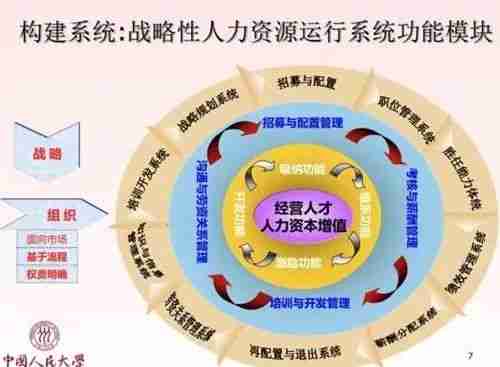
从模块上讲,人力资源有四大经典功能:
(1)吸纳功能。你的组织是否具有人才吸纳能力,把真正优秀的人才吸纳进来。
(2)维系功能。人才进来之后,你能不能维系。
(3)激励功能。激发人的内在潜力。
(4)开发功能。
围绕这四大功能,人力资源有十大职能活动:
- 一大牵引与前瞻顶层设计系统:人力资源战略规划
- 两大基础系统:职位系统与胜任能力系统。虽然现在很多高科技企业强调职位不重要,其实职位和能力是永恒的,人与事是构建人力资源管理的两大基础。
- 一大基础平台:知识与数字化平台。这里的“数字化”最重要的是实现知识的流动、人与人的沟通和协同。
- 六大专业职能:招募与配置、考核与绩效管理、薪酬激励管理、再配置与退出管理、沟通与劳资关系管理、培训发展管理。企业不论大小,都会涉及这六个职能。
当然,现在还有“10+1”,(“1”)就是外包管理。但外包不是人力资源常设的职能。
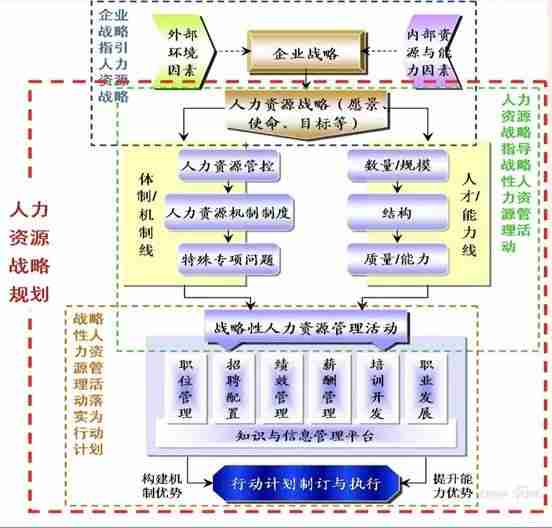
首席人才官必须认识到,一个企业要构建体系,应该包含什么样的专业职能。
把专业职能进一步合并,后面我们会讲腾讯的“三支柱”,它把人力资源分成了三个模块:一是COE中心,承接战略,落地文化;二是SSC,专业化与平台化管理;三是HRBP,支撑业务。
现在腾讯提高了人力资源平台化的力量,把SSC升级成了SDC中心,不只做日常化的平台工作,还开始开发人力资源产品和服务,打造人才供应链,打造员工服务链,提高人力资源的专业化、技术含量。
SDC为用户创造价值。人才也是“客户”,如何为客户提供产品和服务?人力资源管理也是一个产品、服务机构。HRBP推动业务发展,COE连接战略,牵引组织发展。
上述十大职能是经典的人力资源管理系统,现在很多企业用“三支柱”体系,一个对接战略,一个推动业务,一个平台化服务。这是华为、腾讯等国内很多大型企业都在用的系统。阿里在“三支柱”的框架里面加了“政委制”,HRBP变成了政委。但是“三支柱”在国内中小企业成功率不高。
简要总结:人力资源第一是门专业,第二是机制与制度系统。第三是技术与方法体系。
四、优秀CHO至少应掌握50项基本方法与技术
“思想红、根子正、嘴巴严、没专业、搞人事”,这是对我们传统组织人事干部形象的经典表述。
实际上,人力资源是有专业的。除了完整的学科体系,人力资源管理有技术、有工具方法、有技术含量。技术体现在什么方面?
从我们做咨询的角度讲,CHO至少应该了解(不一定要掌握)五十项基本技术与方法,真正优秀的CHO还要掌握它。人力资源管理要以专业性、技术性赢得专业自信。
(1)首先要掌握人才盘点技术,首席人才官首先要知道人才的“家底”,跟企业未来战略和经营发展需要有多大差距,人才盘点的方法论是什么,从哪些维度开展:常用的有“五定法”,阿里用的是九宫图法,很多企业用的是人才地图,现有人才如何提升要用IDP计划、DDI人才发展模型。
(2)人力资源是战略资源,人才要打提前量,你要有人才战略规划技术,涉及人才需求分析与预测技术、基于战略成功关键的核心人才地图、人才战略规划模型、人才战略五星模型、人才战略标杆基准法。
(3)刚才我们提到了,三支柱人力资源管理体系设计、HRBP体系设计五步法与阿里政委制。作为首席人才官,你起码要了解三支柱是什么,企业应该用传统人力资源管理体系还是引入“三支柱”体系,什么是HRBP,阿里的“政委”跟HRBP是什么关系。
(4)人才机制与制度系统设计。组织最重要的是人才,激活人才靠什么?靠机制。这里面涉及文化价值引领机制、内外市场选拔任用机制、绩效承诺与责任担当机制、授权赋能机制、价值评价与监督机制、价值分配与激励机制、竞争淘汰与退出机制、持续奋斗者机制、能力发展与自我批判机制。
(5)事业合伙人机制与制度设计方案。现在对知识型员工越来越强调共创共享,事业合伙。你就要清楚合伙人标准、合伙人治理与决策、合伙人责、权、利机制设计,我们华夏基石提出了合伙人机制的三十二字方针,等等。
(6)人力资本价值与价值实现。现在很多企业都在制定人力资本定价模型,为什么要定价?因为我们对高管到底应该分多少钱,现在只是凭借双方之间的感觉,那么人力资本到底创造了多少价值,该分享多少,是有模型的,比如济南人力资源研究院提出的人才有价四CAI模型等。
(7)职业规划与人员编制技术。作为首席人才官,你得了解按照企业现有规模、利润到底需要多少人,职位类别、职务设计、人员编制与合理性检验六步法。企业高质量发展的核心是人均效能提升。企业做大以后,怎么判断人均效能,用多少人合适,这就是老板现在关心的东西。
现在都在谈扁平化,扁平化到底对不对,什么条件下才能扁平化。
不同企业的职位、职级不一样,职位类别和级别的设计非常有学问。华为当年为什么设计“资深副总裁”?因为要让一批老员工退出,让他们有感觉,让出位置,给足荣誉和待遇。这就是艺术。
(8)职务分析评价技术与职位(角色)说明书。他的角色是什么,如何对工作任务进行定义,他的工作任务跟公司战略是什么关系,如何确定任务的边界。
(9)职务价值评价技术。怎么评价这个岗位价值有多大,国际上是有方法的,一个叫海氏法,一个叫IPE法。作为人力资源总监,你得清楚海氏法适合什么企业,IPE法适合什么企业。
(10)员工职业通道、任职资格与管理体系设计。一个企业要设计多少职业通道,升职随着能力走,能力的标准是什么,怎么设计、认定,这里面也是有专业的。
(11)战略解码与绩效管理体系构建(BEM战略执行力模型、BLM业务战略领先模型、GROW模型与绩效辅导)
(12)PDCA循环与有效管理者技能基本功(目标与计划、辅导与方案、指导与纠偏、反馈与改进、管理者十二项基本功)
(13)KPI绩效指标体系与绩效管理(KPI设计与量化技术、成功关键图与KPI指标、QQTC四维度指标提炼模型)
(14)平衡计分卡与绩效体系设计(平衡计分卡与企业战略、战略地图法、基于平衡计分卡的指标框架),要注意,一个高速成长的企业、创业企业不能搞平衡计分卡,否则就搞死了。
(15)OKR设计与应用工作坊(谷歌OKR经典五步法、字节跳动OKR法)。我一直在跟踪OKR,字节跳动正在逐步抛弃OKR,因为OKR带来很多问题,现在OKR和人力资源部的绩效管理是两回事,OKR只是目标管理,不再是企业绩效管理的核心方法。OKR到底是什么?适用于什么企业?OKR的操作技术是什么?作为首席人才官,你得了解。
(16)EVA绩效考核体系设计(EVA核算与EVA激励计划)。国有企业的CHO应该了解什么叫EVA,EVA叫价值增值法,考核时不只考核所谓的利润,还要考核超过股东投资平均成本以上的增值部分。国际上对高管的激励主要是EVA激励,利润分享主要建立在EVA之上。
(17)360度评价与周边绩效评价(内部客户满意度评价)
(18)面向流程的绩效评价(流程绩效与里程碑绩效标准)。很多工程型项目、服务企业的考核是面向流程的,不是结果导向。
(19)6S绩效管理模型(宁高宁模型)
(20)企业全面薪酬体系框架与薪酬策略
(21)企业薪酬体系构建模型与技术(八步法、3P+1M模型:基于职务、能力、市场、绩效薪酬设计、宽带薪酬设计)
(22)国有企业强调比较多的,薪酬总额确定与薪酬总额核算方法。
(23)薪酬结构优化、调整方法与技术
(24)薪酬结构设计技术,比如长期薪酬与短期薪酬、固定薪酬与浮动薪酬到底保持什么样的比率最恰当
(25)员工满意度与敬业度调查(盖洛普Q12测评)、最佳雇主评价指标及模型
(26)市场薪酬调查四步法与分析技术
(27)企业中长期激励计划(股权激励计划、利润分享与虚拟股权设计、TUP计划)
(28)企业高管激励模型
(29)全面认可激励体系设计与积分制管理
(30)针对90后、00后的游戏化激励与管理
(31)企业招聘录用计划与招聘录用方案设计(社会招聘、校园招聘、内部选聘与竞聘)
(32)人员测评方案设计与工具方法应用(笔试、面试、心理测试方法综合应用:九型人格测试、DISC模型、IDP测试)
(33)评价中心技术与情景模拟测评技术(公文处理、无领导小组、角色扮演)
(34)华为最时髦的“小熵理论”、人才激活模型与方案设计(四能机制、竞聘上岗与末位淘汰、干部轮岗)
(35)领导力与干部管理技术(拉姆查兰领导力模型、左哈尔量子领导力、干部管理铁三角与干部管理建设七连环)
(36)HR管理健康报表与人才发展成熟度模型,这是国际通用的,定期对人力资源进行“体检”,了解我们的人力资源处于什么水平、面临什么问题。
(37)数字化与人才决策,数字化人才画像
(38)OD与组织发展(OD三板斧:组织诊断、组织变革、组织效能评估、麦肯锡7S组织诊断、华夏基石ETA诊断模型、韦斯伯德六合模型、系统变革模型、Lewin变革模型)。有时候大家搞不懂OD跟人力资源到底什么关系,有的企业把OD并到人力资源部,有的企业OD跟人力资源部平行。
(39)知识管理模型与知识地图(知识优化与知识更新闭环、内容营销、信息沟通与共享循环)
(40)人才辈出方法论与人才梯队建设模型、之字型与火箭型人才
(41)学习地图制作步骤与方法、沙盘模拟培训、行动学习法
(42)家族传承与企业接班人计划
(43)企业人才退出与再配置设计(员工退出途径、员工劝退方法)
(44)组织能力建设与组织效能提升
(45)企业人才优化提升与人才效能提升方案(人效指标量化、人效评估技术、人效监测仪表盘)
(46)企业高层治理机制设计与领导力发展计划(轮值CEO、EMT团队、基于价值观的领导力)
(47)对标管理与世界一流企业人力资源对标
(48)企业领导共识工作坊与团队行动学习
(49)企业价值管理循环体系设计(价值创造、价值评价、价值分配)
(50)顶层设计技术与价值观评价(华夏基石六维模型、丹尼森企业文化模型、奎因企业文化模型、沙因企业文化模型、阿里六脉神剑文化评价、华为劳动态度评价)
以上每个技术都是一门课,都需要培训半天到一天。我就不展开了。
各位对基本的50项技术了解多少?如果你都说不出来,不了解它的作用和价值,我认为还得补课。我60岁了,从定义到应用,对这50项技术还是能如数家珍。
作为首席人才官,你面对老板需要解决的战略问题、业务问题时,一定要体现你的专业性,除了思想、意识跟得上老板,你还要善用工具方法。
虽然我们CHO班的主题叫“经营者思维”,但经营者思维的基点还是专业。
最近我又在提炼人力资源管理者的100种工具方法,全世界通用,从概念、工具到应用价值全部列出来。
作为人力资源管理者,你不一定全掌握,但起码要知道它的价值、用在什么地方,为解决企业的战略问题、业务问题提供系统解决方案。
如开篇所讲,人力资源不是“思想红、根子正、嘴巴严、没专业”,人力资源是有专业、有技术的,所以我们一定要确立人力资源的专业形象与专业自信。
翻译:
CHO should have professional confidence and systematic thinking
Good morning, everyone! The previous teachers have talked about the basic ideas, significance and value of the course design of the chief talent Officer CHO class of Huaxia Cornerstone. I want to start the class today by talking about some basic, essential things about human resource management from a professional perspective and a CEO perspective.
My basic point of view is that human resource managers should first stick to their profession and establish professional confidence. In other words, human resource management is a science and a profession. They should win respect and create value for the enterprise with their professional ability. This is the basic responsibility of human resource managers.
At the same time, we should break out of the cognitive limitations of the professional function of human resources. Nowadays, talent has become the core competitive factor of Chinese enterprises. Especially in the industrial Internet era, human resource management should not be limited to the professional function of human resources, but should have a broader vision and a greater space for value creation. Therefore, we say that we should look at specialties outside the profession and have the operator’s thinking.
The theme of this course is “Operator thinking of CHO”.
The chief talent officer should think about human resource issues in the organization like entrepreneurs and ceos. The word “chief” means that the chief talent officer should think about human resource issues from the perspective of human resource professional function, CEO, operation and strategy, and corporate governance.
We say that human resources are the first operating resource, the first strategic element and the first driving force of an enterprise. How to become the first factor/first driving force for business success and sustainable growth? This requires us to make three major contributions through HR system solutions: first, support strategy; Second, drive business growth and help business managers solve human problems. Third, to achieve organizational and talent development.
As a chief talent officer, it is more important to have systematic thinking rather than limited tools and methods. Ultimately, it’s about improving the organization’s ability to win wars.
Human resources itself is a profession, a science, and a profession. “Learn specialty, specialize, make a living, be good at this.” This is our 16-word definition of professionalism.
We must make it clear that human resource management is different from other disciplines in that it is a cross-applied discipline.
Its management object is people with thoughts and emotions, and it is organic matter of life. It cannot be treated like things, and it cannot be disintegrated and broken up to manage and study people apart from the humanistic environment and working groups. People engaged in human resource management must have a wide range of knowledge, management, psychology, sociology, economics, law, etc., are the theoretical basis of human resource management. At the same time, human resource managers should have the humanistic spirit and feelings, to be human.
Why do people matter? Taylor (American management scientist Frederick Winslow Taylor) is an efficiency engineer, when he proposed “scientific management”, is from the study of the workers in front of the machine tool how to improve the efficiency of work, he selected the best employees, study their best time and action, summary, refining, simplification, standardization, standardization, and then use this set of standardized action training workers. All of a sudden it’s more efficient. This is where “scientific management” comes in. Therefore, “scientific management” is essentially the study of human beings and the respect of human values. So Taylor says that scientific management is a psychological revolution. It is not the assumption that scientific management is based on economic man as many of our textbooks now say. Scientific management does not treat human beings as human beings and loses humanity in scientific management. This is a misunderstanding of scientific management.
Participate in and promote the construction of China’s human resources professional system
When was the human resources profession established?
The establishment of human resources major in China began in 1993, when the Ministry of Education officially approved the establishment of undergraduate courses in human resources. It was approved in 2003 that we could have Dr. Whether we teach a subject completely or not, you will see whether there is a bachelor’s degree, a master’s degree and a doctor’s degree. From 1993 to 2003, a complete human resource discipline system was established in China with the School of Labor and Personnel of Renmin University of China as the core.
People may ask, Mr. Peng, how did you get into the field of human resource management?
I didn’t major in human resources when I was an undergraduate. I went to college in ’79. My undergraduate degree was national economic planning. I was the top scorer of the liberal arts college entrance examination in Yichun City. People ask me what school to apply for. At that time I hold the attitude of an official, which school can be an official? Renmin University can be an official, it is said that Renmin University at least train the secretary of the local party committee as high officials. Which major can be the most official, “power”? National economic plan. It was a decision made with one’s heart set on becoming an official.
After four years of study, I was not interested in the planned economy, but I always wanted to be an official. So when I graduated from college, I went to the Ministry of Labor as an intern. At that time, the leader of the Bureau of Planning and Labor said, you can work as a secretary in the general Office after graduation. Why didn’t I go to work for the Ministry of Labor?
When I was considering whether to get a job or study for a master’s degree, I met Professor Zhao Lukuan, the leader of labor economics in our country. At that time, he set up the “Labor Economy laboratory” under our department, and was expanding the “labor economy laboratory” to an independent research institute of labor economy at the same level as the department, to recruit more graduate students. At that time, few people knew what “labor economy” was.
It is not like the fierce entrance examination now, at that time, the teacher begged students “you can be my student”.
Mr. Zhao came to me and said, “Don’t go to work for the government. You can study for my master’s degree.”
I said, “What master’s?”
“The labor economy is better than your planned economy.”
“What does the labor economy do?”
“The two major issues that will determine China’s future social and economic development are employment and income distribution.”
In 1979, Teacher Zhao published a full-page article in People’s Daily, which was the first one in China to propose “distribution according to work”. He is also head of the wage group of the Policy Research Office of the State Council.
I listen to Zhao teacher such a “fudge”, asked how to test this major.
“All you have to do is apply for the exam. Don’t worry about anything else.”
As a result, I found that only two people registered, professional gave me 89 points, so “muddled” read the master of labor economics.
Labor economy originally belongs to applied economics, which studies macro issues. Why do I engage in micro human resources research and teaching?
In 1985, the Labor and Personnel School of Renmin University began to recruit students, but there was a shortage of teachers. “There is a teacher in Shanghai, Lu Hongjun, opened personnel function evaluation training class in Beijing, about how to scientifically select talents, a set of tools and methods. I recommend you to be a teaching assistant for Mr. Lu and attend classes for a week for free. When you come back, you will teach a course on how to evaluate people. Now both professional cadres and undergraduates need to teach this course.”
To do assessment, we need to strengthen some basic knowledge. Therefore, Mr. Zhao recommended me to audit general psychology and psychometrics at Beijing Normal University, and Mr. Yuan Fang’s labor sociology at Peking University. In this way, I took the textbook of psychometrics printed by Beijing Normal University and the personnel function Evaluation by Teacher Lu Hongjun as the model. I opened a course called Personnel Quality Evaluation for the cadre students of Labor College, and independently wrote the first textbook of Personnel Quality Evaluation. It was 1985. When I was still a graduate student, I stepped on the platform and turned from macro to micro. After my master’s degree in 1986, I naturally stayed in school and became a teacher.
At that time, there were only labor economics majors in our discipline system, not human resources majors.
I was responsible for the preparation and establishment of the “Teaching and Research Department of Personnel Administration Management”. In 1988, I was appointed as the deputy director of the Labor and Personnel Department of Renmin University upon the strong recommendation of Mr. Zhao and Mr. Dong Keyong. At that time, in Renmin University, it was called the School of Labor and Personnel externally and the Department of Labor and Personnel internally, and the school appointed Mr. Zhao as the dean and director of the Department of Labor and Personnel, Dong Mr. Keyong and I were appointed deputy director of the Department of Labor and Personnel. Later, Mr. Dong Keyong took over as the dean, and I was changed from the deputy director of the Department of Labor and Personnel to the deputy Dean of the School of Labor and Personnel.
Why do I stress the need to employ young people and promote young officials? At that time, I was a lecturer. In our department of Personnel Administration, we had respected professors such as Professor Yu Zuyao, Professor Quan Zhimin, Professor Sun Tong, Professor Zhang Desxin, and Professor Lu Guotai, who had higher professional titles, seniority and knowledge than us. However, they were not interested in official positions, but were willing to act as a ladder and fully supported young people to take up administrative jobs.
Therefore, we started to establish the Department of Human Resources.
Without any major, we started to recruit students as “Human resources major”, which recruited labor economics and taught human resources management. On the basis of the introduction of western human resources teaching materials and subject system, we made continuous improvement to form a unified teaching materials and subject system, which was constantly upgraded from 1988. In 1993, the undergraduate catalog of the Ministry of Education officially included the major of Human resources.
I never left Renmin University. Although I founded Huaxia Cornerstone Management Consulting Company, we have always positioned ourselves as a research consulting company.
Strategic human resource management is the trend
As chief talent officers, we must realize that human resource management is a systems engineering. Whether abroad or in China, strategic human resource management is a big trend.
In terms of modules, human resources has four classic functions:
(1) Absorption function. Does your organization have the talent capacity to bring in really good people?
(2) Maintenance function. After the talent comes in, can you maintain.
(3) incentive function. Bring out your inner potential.
(4) Develop functions.
Around these four functions, human resources has ten functional activities:
(1) A major traction and forward-looking top-level design system: human resource strategic planning
(2)Two basic systems: position system and competency system. Although many high-tech enterprises emphasize that position is not important, in fact, position and ability are eternal, and people and things are the two foundations of human resource management.
(3)One basic platform: knowledge and digitization platform. The most important thing in “digitization” here is to realize the flow of knowledge, communication and collaboration between people.
(4)Six professional functions: recruitment and allocation, assessment and performance management, salary incentive management, reallocation and exit management, communication and labor relations management, training and development management. All six functions are involved in enterprises, large or small.
Now, of course, there is “10+1″, (” 1 “) outsourcing management. But outsourcing is not a permanent function of human resources.
The chief talent officer must recognise what specialised functions an organisation should include in building systems.
Further merging professional functions, we will talk about Tencent’s “three pillars” later, which divides human resources into three modules: one is COE center, undertaking strategy and landing culture; SSC, specialization and platform management; The third is HRBP, which supports the business.
Now Tencent has improved the power of human resource platform, upgraded the SSC to SDC center, not only does the daily platform work, but also starts to develop human resource products and services, build talent supply chain, build employee service chain, and improve the professional and technical content of human resources.
SDCS create value for users. Talent is also “customer”, how to provide products and services for customers? Human resource management is also a product, service organization. HRBP drives business development, COE connectivity strategy, and organizational development.
The above ten functions are classic human resource management systems. Now many enterprises use the “three-pillar” system, one is to connect the strategy, one is to promote the business, and one is to serve the platform. This is the system used by many large Chinese companies such as Huawei and Tencent. Ali added “commissar” to the “three-pillar” framework, and HRBP became commissar. However, the success rate of the “three pillars” in domestic smes is not high.
Brief summary: Human resources is a profession, the second is the mechanism and system. The third is technology and method system.
Excellent CHO should master at least 50 basic methods and techniques
“Thought red, root is right, mouth strict, no professional, do personnel”, this is the classic expression of our traditional organization personnel cadre image.
In fact, there is a profession in human resources. In addition to the complete disciplinary system, human resource management has technology, tools and methods, and technical content. In what ways is the technology embodied?
From our perspective of consulting, CHO should know (not necessarily master) at least 50 basic techniques and methods, and truly excellent CHO should master them. Human resource management should win professional confidence with professionalism and technology.
50 basic methods and techniques to master for a good CHO
(1) The chief talent officer should first master the technology of talent inventory. The chief talent officer should first know the “background” of talent, how far it is from the future strategy and operation development needs of the enterprise, what is the methodology of talent inventory and from what dimensions: Commonly used are “five fixed method”, Ali uses the nine palace diagram method, many enterprises use talent map, how to improve the existing talent should use IDP plan, DDI talent development model.
(2) Human resources are strategic resources, and talents should take the lead. You should have talent strategic planning technology, which involves talent demand analysis and prediction technology, core talent map based on strategic success keys, talent strategic planning model, talent strategy five-star model, talent strategy benchmarking method.
(3) We have just mentioned the three-pillar human resource management system design, the five-step method of HRBP system design and Ali political commission system. As the chief talent officer, you should at least understand what the three pillars are, whether the enterprise should use the traditional human resource management system or introduce the “three pillars” system, what is HRBP, and what is the relationship between Ali’s “commissar” and HRBP.
(4) Talent mechanism and system design. The most important thing in an organization is talent, so how do you activate talent? By mechanism. It involves cultural value leading mechanism, internal and external market selection and appointment mechanism, performance commitment and responsibility mechanism, authorization and empowerment mechanism, value evaluation and supervision mechanism, value distribution and incentive mechanism, competition elimination and withdrawal mechanism, continuous striver mechanism, ability development and self-criticism mechanism.
50 basic methods and techniques to master for a good CHO
(5) Business partner mechanism and system design scheme. Now more and more emphasis on knowledge workers to create and share, business partnership. You need to be clear about partner standards, partner governance and decision-making, partner responsibility, rights, interests mechanism design, we put forward the partner mechanism of the 32 words policy, and so on.
(6) Human capital value and value realization. Now many enterprises are developing human capital pricing model, why price? Because we only rely on the feeling between the two sides about how much money the executives should share, then there are models for how much value human capital creates and how much it should share, such as the four-CAI model of talent value proposed by Jinan Human Resources Research Institute.
(7) Career planning and staffing technology. As chief talent officer, you need to know how many people you need based on your company’s current size and profitability, the six-step process of job category, job design, staffing, and justification. The core of high-quality development of enterprises is to improve per capita efficiency. After the enterprise is big, how to judge the per capita efficiency, how many people are appropriate, this is what the boss is now concerned about.
Now we are all talking about flattening, whether flattening is right or not, and under what conditions can we flatten.
The positions and ranks of different enterprises are not the same, and the design of job categories and levels is very learned. Why did Huawei design a “senior vice president”? Because to let a group of old staff out, let them have a feeling, give up the position, give enough honor and treatment. This is art.
50 basic methods and techniques to master for a good CHO
(8) Job analysis and evaluation techniques and job (role) specification. What is his role, how to define the job task, how does his job task relate to the company strategy, how to determine the boundaries of the task.
(9) Job value evaluation technology. How to evaluate the value of this post, there are international methods, one is called Hay’s method, the other is called IPE method. As a human resources director, you need to know what business is suitable for the Hay method and what is suitable for the IPE law.
(10) Design of career channels, qualifications and management system for employees. How many career channels should an enterprise design, promotion with ability, ability standards, how to design, identify, there are professional.
(11) Strategy decoding and performance management system construction (BEM strategy execution model, BLM business strategy leadership model, GROW model and performance coaching)
(12) PDCA cycle and effective management skills Basic skills (target and plan, guidance and program, guidance and correction, feedback and improvement, 12 basic skills of management)
(13) KPI performance indicator system and performance management (KPI design and quantification technology, success key chart and KPI index, QQTC four-dimension index refining model)
(14) Design of balanced scorecard and performance system (balanced scorecard and enterprise strategy, strategic map method, index framework based on balanced scorecard). It should be noted that a fast-growing enterprise or start-up enterprise should not conduct balanced scorecard, otherwise it will die.
50 basic methods and techniques to master for a good CHO
(15) OKR Design and Application Workshop (Google OKR Classic five-step method, Bytedance OKR method). I have been following OKR and ByteDance is gradually abandoning OKR because OKR brings a lot of problems. Now OKR is not the same as HR performance management. OKR is just management by objectives, no longer the core method of enterprise performance management. What exactly is OKR? What kind of enterprise does it apply to? What is the operating technique of OKR? As chief talent officer, you have to understand.
(16) Design of EVA performance appraisal system (EVA accounting and EVA incentive plan). CHO of state-owned enterprises should know what EVA is. EVA is called value-added method. When assessing not only the so-called profit, but also the value-added part that exceeds the average cost of shareholder investment. In the world, the incentive for senior executives is mainly EVA incentive, and profit sharing is mainly based on EVA.
(17) 360-degree evaluation and peripheral performance evaluation (internal customer satisfaction evaluation)
(18) Process oriented performance evaluation (process performance and milestone performance criteria). Evaluation of many engineering projects and service enterprises is process-oriented rather than result-oriented.
(19) 6S performance management model (Ning Gaoning Model)
(20) Enterprise comprehensive compensation system framework and compensation strategy
50 basic methods and techniques to master for a good CHO
(21) Enterprise compensation system construction model and technology (eight-step method, 3P+1M model: based on job, ability, market, performance compensation design, broadband compensation design)
(22) State-owned enterprises emphasize more methods of determining total compensation and calculating total compensation.
(23) Methods and techniques of salary structure optimization and adjustment
(24) Salary structure design techniques, such as what is the most appropriate ratio between long-term salary and short-term salary, fixed salary and floating salary
(25) Employee satisfaction and engagement survey (Gallup Q12 evaluation), best employer evaluation index and model
(26) Four-step method and analysis technique of market salary survey
(27) Medium and long term incentive plan (equity incentive plan, profit sharing and virtual equity design, TUP plan)
(28) Enterprise executive incentive model
(29) Fully recognize the design of incentive system and the management of points system
(30) Gamification incentive and management for the post-90s and post-00s
50 basic methods and techniques to master for a good CHO
(31) Enterprise recruitment plan and recruitment scheme design (social recruitment, campus recruitment, internal recruitment and competition)
(32) Personnel evaluation scheme design and application of tools and methods (comprehensive application of written test, interview and psychological testing methods: Enneagram personality test, DISC model and IDP test)
(33) Evaluation center technology and scenario simulation evaluation technology (document processing, no leading group, role playing)
(34) Huawei’s most fashionable “small entropy theory”, talent activation model and scheme design (four ability mechanism, competitive recruitment and elimination of the last position, cadre rotation)
(35) Leadership and cadre management technology (Ramcharan Leadership model, Zohar Quantum leadership, Iron Triangle of cadre Management and cadre management construction)
(36) HR management health report and maturity model of talent development, which are internationally common, carry out regular “physical examination” of human resources to know what level our human resources are at and what problems they are facing.
(37) Digitalization and talent decision, digital talent portrait
50 basic methods and techniques to master for a good CHO
(38) OD and organizational development (OD three tools: organizational diagnosis, organizational change, organizational effectiveness evaluation, McKinsey 7S organizational diagnosis, Huaxia Cornerstone ETA diagnostic model, Weisburd Six Fit model, System change model, Lewin change model). Sometimes people do not understand the relationship between OD and human resources. Some enterprises transfer OD to the human resources department, and some enterprises parallel OD to the human resources Department.
(39) Knowledge management model and knowledge map (knowledge optimization and knowledge update loop, content marketing, information communication and sharing loop)
(40) Talent generation methodology and talent echelon construction model, font type and rocket type talent
(41) Learning the steps and methods of map making, sand table simulation training and action learning method
(42) Family succession and business succession planning
(43) Design of exit and reconfiguration of enterprise talents (exit channels and dissuasion methods for employees)
(44) Building organizational capacity and improving organizational effectiveness
50 basic methods and techniques to master for a good CHO
(45) Enterprise talent optimization and talent efficiency improvement plan (human effectiveness index quantification, human effectiveness evaluation technology, human effectiveness monitoring dashboard)
(46) Design of corporate high-level governance mechanism and leadership development plan (rotating CEO, EMT team, values-based leadership)
(47) Benchmarking management and human resources benchmarking of world-class enterprises
(48) Business leadership consensus workshop and team action learning
(49) Design of circular system of enterprise value management (value creation, value evaluation, value distribution)
(50) Evaluation of top-level design technology and values (Huaxia Cornerstone six-dimensional model, Denison corporate culture model, Quinn corporate culture model, Schein corporate culture model, Ali Liumai Excalior Cultural Evaluation, Huawei labor attitude evaluation)
Each of the above techniques is a course that requires a half day to a day of training. I’m not going to expand it.
How much do you know about the basic 50 techniques? If you can’t say it, if you don’t understand its function and value, I think you have to catch up. I’m 60 years old, and I still know all about these 50 technologies, from definition to application.
As the chief talent officer, you must be professional when facing the strategic and business problems that your boss needs to solve. In addition to keeping up with your boss in mind and consciousness, you must also use tools and methods.
Although the theme of our CHO class is called “operator thinking”, the basic point of operator thinking is professional.
Recently, I’ve been distilling 100 tools for human resource managers, from concept to tool to application value, all around the world.
As a human resource manager, you may not know all of it, but at least you should know its value, where it is used, and provide systematic solutions to solve the strategic problems and business problems of the enterprise.
As mentioned in the beginning, human resources are not “red in thought, honest in root, strict in mouth and no professional”. Human resources are professional and skilled, so we must establish the professional image and professional confidence of human resources.
本文由数字化转型网(www.szhzxw.cn)转载而成,来源:华夏基石e洞察;编辑/翻译:数字化转型网宁檬树。

免责声明: 本网站(http://www.szhzxw.cn/)内容主要来自原创、合作媒体供稿和第三方投稿,凡在本网站出现的信息,均仅供参考。本网站将尽力确保所提供信息的准确性及可靠性,但不保证有关资料的准确性及可靠性,读者在使用前请进一步核实,并对任何自主决定的行为负责。本网站对有关资料所引致的错误、不确或遗漏,概不负任何法律责任。
本网站刊载的所有内容(包括但不仅限文字、图片、LOGO、音频、视频、软件、程序等) 版权归原作者所有。任何单位或个人认为本网站中的内容可能涉嫌侵犯其知识产权或存在不实内容时,请及时通知本站,予以删除。