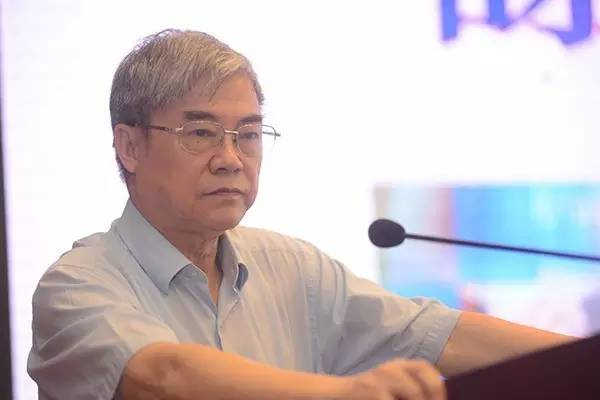
“物联网是两化融合的切入点、社会管理的支撑点、民生服务的新亮点。”7月11日,中国工程院院士、国家标准化专家委员会主任、国家物联网专家组组长邬贺铨在“2016国际开放物联技术与标准峰会暨W3C万维物联网兴趣组会议”上如是表示。本次会议由物联网产业技术创新战略联盟、W3C(万维网联盟)、中国电子科技集团公司联合主办,中国电子科技集团公司信息科学研究院承办。
邬贺铨在会上针对窄带物联网、车联网和产业互联网进行了深入探讨。
邬贺铨表示,对于车联网,有公司提出,到2020年全世界车联网的规模达到1152亿欧元,中国占到361亿欧元。MIT麻省理工学院列举了2015年十大科技突破,其中车联网位列第三位。
邬贺铨认为,汽车就是个大型的物联网节点,一个汽车有十多个CPU,高档车有上千万行到上亿行软件程序,有200个传感器,有上百个电控单元,汽车电子系统已经占到汽车成本的30%到60%,未来汽车创新80%来自于汽车电子系统。有人预计,车联网未来的发展很快,有可能用眼神来操作汽车,这样比用手和脚刹车都要快16倍。
据邬贺铨介绍,特斯拉是电动汽车领域做的比较好的,其特点就是利用物联网技术实时监控电池组状态,通过软件灵活调节每个电池组的充放电电流,做到每个电池组瞬时的电压是一样的,这样并联的电池不会发热。在国外还有一种观点认为未来电动汽车不必换电池也不必安充电桩,实际上可以让整条马路都可以为汽车充电,者就需要利用物联网技术对汽车识别与认证及对充电电量计费。
他认为物联网支撑工业4.0/产业互联网与“互联网+”。其应用到人们生活的方方面面,比如到俄罗斯去旅游,但不会俄语,用手机上的APP扫一下指示牌,就可以通过软件对指示牌内容进行翻译。
对于产业互联网,邬贺铨认为中国提出的“互联网+”行动计划比工业4.0和产业互联网还要更进一步,它不仅包括产业互联网,还包括消费互联网和政务互联网,物联网是“互联网+”的基础。
同时,物联网是两化融合的切入点、社会管理的支撑点、民生服务的新亮点。物联网产生大数据,大数据支撑物联网,从物联网到大数据再到智能化构成了从感知到认知的全过程;物联网与移动互联网、云计算、大数据相伴发展,物联网成为“大智移云”时代的重要支柱,而“大智移云”时代也为物联网发展开拓了广阔市场。
物联网是产业互联网的核心技术,推动实现信息—物理系统融合;窄带物联网、车联网和产业互联网等新技术将扩展物联网的应用;物联网将渗透到生活生产的方方面面,届时人们将感觉不到物联网的存在,但它时刻影响着人们的体验。我们需要抓住物联网发展的机遇,加大创新力度,建设感知中国和智慧中国。
他认为,物联网的应用分成三个方面:第一是低速率,即100Kbps以下,主要用于传感器、电表、水表等等,这类应用要占到整个物联网的60%;第二是中速率的即1Mbps以内,主要应用于智能家居、POS机等等,基本上占到30%的应用;第三是高速率的即10Mbps以上,如视频监控,这类应用大概能占到10%以上。
现在大量的应用是要求广域的,光纤适用于连接例如视频监控等容量比较大的传感器,但对于低容量和低功耗的传感器,用光纤就不是很合算了,主要为人的通信而设计的2G/3G/4G虽然也可以用于广域低功耗物联网,但也是不经济的,因此现在真正接到运营商网络上的物联网终端只有6%。实际上我们需要有一种专为广域物联网而设计的技术,毕竟像智慧城市需要有能连续覆盖全城的物联网,不可能是碎片化的,因此低功耗的广域物联网是有实际需求的,窄带物联网(NB-IOT)技术应运而生。
对于窄带物联网NB-IOT,邬贺铨认为有四大特点:第一是广覆盖,频带窄可获得高的功率谱密度,因此增益比GSM高20个dB,覆盖能力比GSM高100倍。
第二是大连接,因为它用了窄带的技术,而且在信令上做了一些简化,在基站上也简化,所以做到了一个扇区可以支持5万个连接,而2G只有14个连接,4G只有1200个连接,也就意味着窄带物联网连接数比现在移动通信高50倍。
第三是低功耗,这种节能模式跟手机的节能不一样,虽然注册在网上,但是终端处于深度睡眠,在深度睡眠的时候,功耗只有15个微瓦,如果NB-IOT终端只每天发送一次200Byte报文的话,一个AA电池可以让终端待机时间10年,即10年不用换电池。
第四是低成本,通信协议只有500KB,片内存储系可以大大减少,用了单天线,半双工,射频成本低。目前单个接连模块成本不超过5美元,应用上规模后模块成本将下降到1美元。有市场研究公司认为,窄带物联网未来会覆盖25%的物联网连接,到2020年,可以达到70亿个的连接数。
翻译:
“The Internet of Things is the entry point of the integration of the two, the support point of social management, and the new highlight of people’s livelihood services.” On July 11, Wu Hequan, academician of the Chinese Academy of Engineering, director of the National Standardization Expert Committee, and leader of the National Internet of Things Expert Group, said at the “2016 International Open Internet of Things Technology and Standards Summit and W3C World Wide Internet of Things Interest Group Meeting”. The conference was jointly sponsored by the Internet of Things Industrial Technology Innovation Strategic Alliance, W3C(World Wide Web Consortium) and China Electronics Technology Group Corporation, and hosted by China Electronics Technology Group Corporation Information Science Research Institute.
At the meeting, Wu Hequan conducted in-depth discussions on narrowband Internet of Things, Internet of vehicles and industrial Internet.
Wu Hequan said that for the Internet of vehicles, some companies have proposed that by 2020, the scale of the world’s Internet of vehicles will reach 115.2 billion euros, and China will account for 36.1 billion euros. The Massachusetts Institute of Technology has listed the top 10 technological breakthroughs of 2015, of which the Internet of cars ranks third.
Wu Hequan believes that the car is a large Internet of things node, a car has more than ten cpus, high-end cars have tens of millions of lines to hundreds of millions of lines of software programs, there are 200 sensors, there are hundreds of electronic control units, automotive electronic systems have accounted for 30% to 60% of the cost of the car, 80% of future automotive innovation from the automotive electronic system. Some people predict that the future development of the Internet of cars will be very fast, and it is possible to operate the car with eyes, which is 16 times faster than using the hand and foot brake.
According to Wu Hequan, Tesla is better in the field of electric vehicles. Which is characterized by the use of Internet of Things technology to monitor the status of the battery pack in real time. And flexibly adjust the charge and discharge current of each battery pack through software. So that the instantaneous voltage of each battery pack is the same. So that the parallel battery will not heat up. In foreign countries, there is also a view that the future of electric vehicles do not have to change the battery or install a charging pile. In fact, the whole road can be charged for the car. You need to use the Internet of Things technology to identify and certify the car and charge the charge.
He believes that the Internet of Things supports Industry 4.0/ Industrial Internet and “Internet +”.
It is applied to all aspects of people’s lives, such as traveling to Russia. But can not speak Russian, scan the sign with the APP on the mobile phone. You can translate the content of the sign through the software.
For the industrial Internet, Wu Hequan believes that China’s “Internet +” action plan is further than Industry 4.0 and the industrial Internet, which not only includes the industrial Internet. But also includes the consumer Internet and the government Internet. And the Internet of Things is the basis of “Internet +”.
At the same time, the Internet of Things is the entry point of the integration of the two, the support point of social management, and the new highlight of people’s livelihood services.
The Internet of Things generates big data, and big data supports the Internet of Things. From the Internet of Things to big data and then to intelligence. It constitutes the whole process from perception to cognition. With the development of mobile Internet, cloud computing and big data. The Internet of Things has become an important pillar of the era of “big wisdom moving cloud”. And the era of “big wisdom moving cloud” has also opened up a broad market for the development of the Internet of Things.
The Internet of Things is the core technology of the industrial Internet, which promotes the integration of information and physical systems. New technologies such as narrowband Internet of Things. Internet of vehicles and Industrial Internet will expand the application of Internet of Things. The Internet of Things will penetrate into all aspects of life and production. And people will not feel the existence of the Internet of Things, but it will always affect people’s experience. We need to seize the opportunity of the development of the Internet of Things, increase innovation efforts. And build a sense of China and a smart China.
He believes that the application of the Internet of Things is divided into three aspects:
the first is low rate, that is, below 100Kbps, mainly used for sensors, electricity meters, water meters, etc.. Such applications account for 60% of the entire Internet of Things. The second is the medium rate, that is, within 1Mbps, mainly used in smart homes, POS machines, etc., basically accounting for 30% of the application; The third is the high rate of more than 10Mbps. Such as video surveillance, such applications can probably account for more than 10%.
Now a large number of applications are required wide area, optical fiber is suitable for connecting large capacity sensors such as video surveillance, but for low-capacity and low-power sensors, it is not very cost-effective to use optical fiber, mainly designed for human communication, although 2G/3G/4G can also be used for wide-area low-power Internet of things, but it is also uneconomical. As a result, only 6% of iot terminals are actually connected to carrier networks. In fact, we need to have a technology designed for the wide area Internet of things, after all, like smart cities need to have the Internet of things that can continuously cover the city, it can not be fragmented, so low power wide area Internet of Things is a practical demand, narrowband Internet of Things (NB-IOT) technology came into being.
For narrowband Internet of things NB-IOT, Wu Hequan believes that there are four major characteristics:
the first is wide coverage, narrow band can obtain high power spectral density. So the gain is 20 dB higher than GSM, and the coverage capacity is 100 times higher than GSM.
The second is the big connection, because it uses narrowband technology. And has made some simplification in signaling and simplification in the base station. So it can support 50,000 connections in a sector, while 2G has only 14 connections, and 4G has only 1200 connections. Which means that the number of narrowband Internet of Things connections is 50 times higher than the current mobile communication.
The third is low power consumption, this energy saving mode is not the same as the energy saving of mobile phones, although registered on the Internet, but the terminal is in deep sleep, in deep sleep, power consumption is only 15 microwatts, if the NB-IOT terminal only sends 200Byte messages once a day, an AA battery can make the terminal standby time of 10 years, that is, 10 years without changing the battery.
The fourth is low cost, the communication protocol is only 500KB. The on-chip storage system can be greatly reduced, with a single antenna, half duplex, low radio frequency cost. At present, the cost of a single connection module is no more than $5. And the cost of the module will drop to $1 after the application is scaled up. Some market research companies believe that narrowband iot will cover 25% of iot connections in the future. nd by 2020, it can reach 7 billion connections.
本文由数字化转型网(www.szhzxw.cn)转载而成,来源于中国电子报;编辑/翻译:数字化转型网宁檬树。

免责声明: 本网站(http://www.szhzxw.cn/)内容主要来自原创、合作媒体供稿和第三方投稿,凡在本网站出现的信息,均仅供参考。本网站将尽力确保所提供信息的准确性及可靠性,但不保证有关资料的准确性及可靠性,读者在使用前请进一步核实,并对任何自主决定的行为负责。本网站对有关资料所引致的错误、不确或遗漏,概不负任何法律责任。
本网站刊载的所有内容(包括但不仅限文字、图片、LOGO、音频、视频、软件、程序等) 版权归原作者所有。任何单位或个人认为本网站中的内容可能涉嫌侵犯其知识产权或存在不实内容时,请及时通知本站,予以删除。