本文为数字化转型网szhzxw.cn PLM专题系列文章六:PLM系统的核心功能和信息集成需求。本文讲述了PLM系统的六大核心功能需求和两大类PLM系统集成。数字化转型网szhzxw.cn
PLM系统的核心价值在于确保产品全生命周期数据的一致性,通过多学科、异地协同提升研发效率,缩短研发周期和产品上市时间,并通过支撑模块化设计提升企业个性化定制的能力。
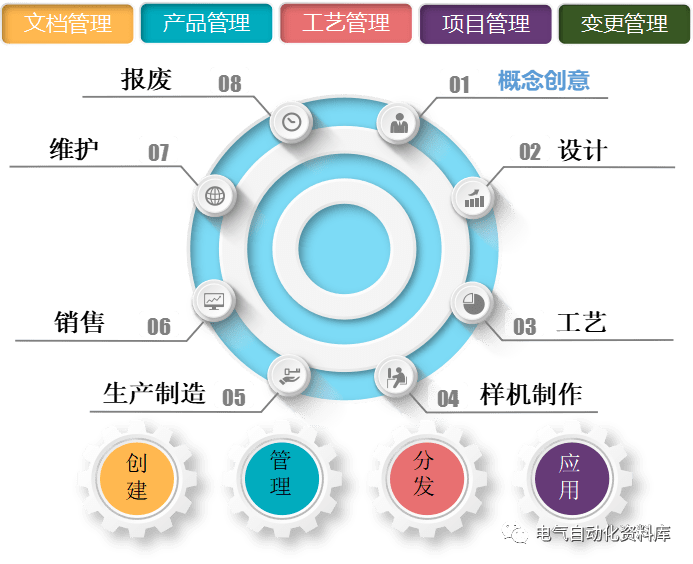
一、PLM系统核心功能需求
企业对PLM系统的共性需求主要集中在产品图文档管理、零部件分类管理、产品结构与配置管理、研发过程管理、产品需求管理、协同研发等方面:数字化转型网szhzxw.cn
PLM系统核心功能需求一:图文档管理
PLM系统核心功能需求其中一个是图文档管理。图文档管理是以产品为核心,实现产品数据的可视化产品数据的安全性(难点在于多体系的权限管理机制、产品数据的准确性(难点是版本的有效管理)。需要管理的产品数据包括可行性评估报告、设计任务书、设计规范、二维图纸、三维模型、产品仿真相关数据、产品试验数据、各种工艺数据文件、产品规格书制造资源文件、技术手册、使用手册等。针对产品数据的管理需要保证数据的完整性、安全性、版本有效性和可追溯。并且针对海量的产品数据,需要有便捷的数据检索方式方便产品数据重用。
PLM系统核心功能需求二:零部件分类管理数字化转型网szhzxw.cn
PLM系统核心功能需求其中一个是零部件分类管理。企业将产品零部件按照相似性(如结构形状相似或制造工艺相似等)原则进行划分,并根据零部件特征属性辅以编码加以识别、管理,在PLM系统中,需要通过满足零部件分类管理的要求,以达到便于检索、借用和重用的目的。
PLM系统核心功能需求三:产品结构与配置管理
PLM系统核心功能需求其中一个是产品结构与配置管理。每个产品都有自身的装配结构,装配结构则反映出产品的物料清单,即产品BOM。企业可以产品结构为组织核心,将定义最终产品的所有工程数据和文档联系起来,实现产品数据按产品结构层次关系、文档关联关系、版本关系进行组织、管理与控制。此外,对于产品结构管理还需要具有BOM变换的能力,如设计BOM向工艺BOM、制造BOM、销售BOM、服务BOM等多种类型的BOM转换,应用于不同的业务场景。
目前企业为了适应产品的个性化需求,采用多样的配置模式实现产品的多样性,将产品结构中的零部件按照一定的条件进行组合,得到特定的产品结构。因此,在PLM系统中,需要满足通过配置项(即配置条件)、结构选项、互换件、替换件、供应商等实现产品配置,并可对每一个产品配置实现版本有效性和追溯管理,来描述更为复杂的产品结构。
PLM系统核心功能需求四:研发过程管理数字化转型网szhzxw.cn
PLM系统核心功能需求其中一个是研发过程管理。 产品研发过程包括产品图文档的签审流程、研发项目管理以及工程变更等方面。
PLM系统核心功能需求中的研发过程管理包括图文档的签审流程管理,即需要在PLM中可自定义文档的签审工作流,根据文档类别实现流程执行自动化、可视化。
PLM系统核心功能需求中的研发过程管理包括研发项目管理,即需要对产品研发过程中的计划、执行和控制等活动,以及与这些活动相关的资源进行管理,并将它们与产品数据和流程相关联在一起,最终达到对项目的进度、成本和质量的管理。
PLM系统核心功能需求中的研发过程管理包括工程变更管理,即需要将企业的工程变更流程固化到PLM中,对于不同来源的变更需求,按照流程创建变更申请(ECR)、自动发送相关组织或角色进行影响评估和审批,通过变更执行过程的自动流转监控和形成变更过程记录,并与版本管理关联,基于正确的版本实施变更和形成新的版本基线,实现工程变更的闭环管理。
PLM系统核心功能需求五:产品需求管理数字化转型网szhzxw.cn
PLM系统核心功能需求其中一个是产品需求管理。产品研发需求管理的核心是收集需求、获取需求、分析需求、描述需求、确认与验证需求、管理需求等。PLM系统需要依据需求管理规范,针对产品全生命周期所有过程(需求开发、概念设计、详细设计、生产制造、销售、使用、维护以及回收等)的需求管理目标,明确各阶段需求管理的相关角色和职责,实施需求的建立与维护、查看、访问控制,在产品全生命周期内动态地反馈与需求相关的各种信息(如需求版本、状态跟踪等),确保需求管理的顺利实施和发挥效用。
PLM系统核心功能需求六:协同研发管理
PLM系统核心功能需求其中一个是协同研发管理。协同研发管理主要是实现企业内部协同和企业间的协同研发管理。其中企业内部协同管理一方面是研发体系内各专业组之间的协同研发,尤其是异地协同;另一方面是研发部门与其他部门之间的协同(如采购、项目部等)。企业间的协同主要是与上下游供应链之间的协同。
二、 PLM系统集成需求
产品研发数据是产品全生命周期以及企业管理运营的重要数据源,在研发过程中,研发部门与其他业务部门以及外部上下游合作伙伴存在大量的信息交互和工作协同,因此,PLM系统需要与其他业务信息系统实现数据和流程的集成,实现基于统一数据源的产品全生命周期管理。数字化转型网szhzxw.cn
PLM系统集成有两大类:
(1)PLM系统与CAx集成
PLM系统作为产品研发设计的平台,与CAx(CAD、CAPP、CAE、CAM)等工具软件存在大量的交互,两者的集成内容主要包括数据交换(如产品模型信息、产品结构信息以及零部件基本属性信息、工艺信息等)、二维图纸/三维模型浏览、文件检入检出、产品结构同步等。
(2)PLM系统与其他信息系统集成数字化转型网szhzxw.cn
PLM系统与ERP、MES、QMS以及SRM等信息系统集成,传递产品BOM信息以及制造工艺信息,实现产品数据充分共享。与ERP系统集成,PLM可向ERP传递设计BOM、工艺路线等信息用于生产计划及物料需求计划制定,可从ERP系统获取物料库存以及成本信息用于产品设计的物料选型。与MES系统集成,可将加工图样、产品工艺信息、作业指导书传递到作业现场,实现无纸化,反过来,可从MES系统收集生产现场各类数据,用于设计与工艺优化。与QMS系统集成,可将质量检验标准传递给质量管理系统,反之,可获取质量记录,用于设计与工艺缺陷的知识积累,不断完善设计与制造的失效模式分析(DFMEA和PFMEA)。
更多有关PLM相关文章,例如PLM资料、PLM成功案例、PLM方案等可在数字化转型网PLM专栏里进行阅读;如果您需要PLM相关资料包报可点击蓝字填写问卷与我们取得联系;更多精彩内容可进入读者群与百万读者一同交流~数字化转型网szhzxw.cn

翻译:PLM专题系列文章(六):PLM系统的核心功能和信息集成需求
This paper is the sixth article of the special series of digital transformation network szhzxw.cn PLM. The core function and information integration requirements of PLM system. This paper describes the six core functional requirements of PLM system and two types of PLM system integration.
The core value of PLM system is to ensure the consistency of data throughout the product life cycle. Improve research and development efficiency through multidisciplinary and remote collaboration. Shorten the research and development cycle and product time to market. And enhance the ability of enterprise customization by supporting modular design.
Digital Transformation Network PLM special article six: LM system core functions and information integration requirements数字化转型网szhzxw.cn
First, PLM system core functional requirements
Common requirements for PLM system are mainly concentrated in product diagram document management, component classification management, product structure and configuration management, research and development process management, product demand management, collaborative research and development, etc.
PLM system core function requirement one: graph document management
One of the core functional requirements of PLM system is graph document management. The graph document management is based on the product as the core. Realizing the visualization of product data and the security of product data (the difficulty lies in the authority management mechanism of multiple systems and the accuracy of product data (the difficulty is the effective management of version). Product data to be managed include feasibility evaluation report, design specification, design specification, two-dimensional drawings, three-dimensional models, product simulation data, product test data, various process data files, product specifications manufacturing resource files, technical manuals, user manuals, etc. The management of product data needs to ensure data integrity, security, version validity and traceability. And for the massive product data. It is necessary to have a convenient data retrieval method to facilitate the reuse of product data.数字化转型网szhzxw.cn
PLM system core function requirement 2: parts classification management
One of the core functional requirements of PLM system is component classification management. The enterprise divides the product parts according to the principle of similarity (such as similar structure shape or similar manufacturing process). And identifies and manages the parts according to their characteristics and attributes with coding. In the PLM system, it is necessary to meet the requirements of the classification management of parts to achieve the purpose of easy retrieval, borrowing and reuse.
PLM system core function requirement 3: product structure and configuration management
One of the core functional requirements of PLM systems is product structure and configuration management. Each product has its own assembly structure, which reflects the bill of materials (BOM) of the product. The enterprise can take the product structure as the organizational core, connect all the engineering data and documents that define the final product. And realize the organization, management and control of product data according to the hierarchical relationship of product structure, document association relationship and version relationship. In addition, the product structure management also requires the ability of BOM transformation. Such as the transformation of design BOM to process BOM, manufacturing BOM, sales BOM, service BOM and other types of BOM. Which can be applied to different business scenarios.
数字化转型网szhzxw.cn
At present, in order to meet the individual needs of products, enterprises adopt various configuration modes to achieve the diversity of products, and combine the parts in the product structure according to certain conditions to get a specific product structure. Therefore, in a PLM system, product configurations need to be achieved through configuration items (i.e., configuration conditions), structural options, interchanges, replacements, suppliers, etc., and each product configuration can achieve version validity and traceability management to describe a more complex product structure.
PLM system core function requirement four: R & D process management
One of the core functional requirements of PLM system is development process management. The product development process includes the approval process of product drawing documents, research and development project management and engineering changes.
The research and development process management in the core functional requirements of PLM system includes the approval process management of graph documents, that is, the approval workflow of documents can be customized in PLM, and the automation and visualization of process execution can be realized according to the categories of documents.
The research and development process management in the core functional requirements of PLM system includes the research and development project management, that is, it needs to manage the planning, execution and control activities in the process of product research and development, as well as the resources related to these activities, and connect them with the product data and processes, so as to finally manage the project schedule, cost and quality.数字化转型网szhzxw.cn
The research and development process management in the core functional requirements of PLM system includes engineering change management, that is, the engineering change process of the enterprise needs to be solidified in PLM. For the change requirements from different sources, the change application (ECR) should be created according to the process and automatically sent to relevant organizations or roles for impact assessment and approval. Through the automatic flow monitoring of the change execution process and the formation of the change process record, which is associated with the version management, the change is implemented based on the correct version and the new version baseline is formed, so as to realize the closed-loop management of engineering changes.
PLM system core function requirement five: product requirement management
One of the core functional requirements of PLM systems is product requirements management. The core of demand management of product research and development is to collect demand, obtain demand, analyze demand, describe demand, confirm and verify demand, and manage demand. According to the requirements management specification, the PLM system needs to define the roles and responsibilities related to demand management at each stage and implement the establishment, maintenance, viewing and access control of requirements, aiming at the demand management objectives of all processes in the whole product life cycle (demand development, conceptual design, detailed design, production and manufacturing, sales, use, maintenance and recovery, etc.). Dynamically feedback various information related to requirements (such as requirement version, status tracking, etc.) in the whole life cycle of products to ensure the smooth implementation and effectiveness of demand management.
PLM system core function requirement six: collaborative R&D management
One of the core functional requirements of PLM system is collaborative R&D management. Collaborative R & D management is mainly to achieve internal and inter-enterprise collaborative R & D management. On the one hand, enterprise internal collaborative management is the collaborative research and development among professional groups within the research and development system, especially in different places. On the other hand is the collaboration between R&D department and other departments (such as purchasing, project department, etc.). The collaboration between enterprises is mainly between the upstream and downstream supply chains.数字化转型网szhzxw.cn
Ii. PLM system integration requirements
Product research and development data is an important data source for product life cycle and enterprise management and operation. In the process of research and development, the research and development department has a large amount of information interaction and collaboration with other business departments and external upstream and downstream partners. Therefore, PLM system needs to realize data and process integration with other business information systems. Realize product lifecycle management based on unified data source.
There are two broad categories of PLM system integration:
(1) Integration of PLM system and CAx
As a platform for product development and design, PLM system interacts with CAx(CAD, CAPP, CAE, CAM) and other tools and software. The integration content of the two mainly includes data exchange (such as product model information, product structure information, basic attribute information of parts and components, process information, etc.), two-dimensional drawing/three-dimensional model browsing, file check in and check out, product structure synchronization, etc.数字化转型网szhzxw.cn
(2) Integration of PLM system with other information systems
PLM system integrates with ERP, MES, QMS, SRM and other information systems to deliver product BOM information and manufacturing process information. And realize the full sharing of product data. Integrated with ERP system. PLM can transmit design BOM, process route and other information to ERP for making production plan and material requirement plan. And obtain material inventory and cost information from ERP system for material selection of product design.
Integrated with MES system, processing drawings, product process information and operation instructions can be transferred to the operation site to achieve paperless. In turn, all kinds of production site data can be collected from MES system for design and process optimization. Integrated with the QMS system, quality inspection standards can be passed to the quality management system. On the contrary, quality records can be obtained for the knowledge accumulation of design and process defects, and constantly improve the design and manufacturing failure mode analysis (DFMEA and PFMEA).
More PLM related articles, such as PLM materials, PLM success stories and PLM solutions, can be read in the PLM column of the Digital Transformation network. If you need PLM related information package, please click the blue word to fill in the questionnaire and contact us; More exciting content can enter the readership and millions of readers to communicate with each other ~数字化转型网szhzxw.cn
本文由数字化转型网(www.szhzxw.cn)转载而成,来源:电气自动化资料库;编辑/翻译:数字化转型网默然。
免责声明: 本网站(https://www.szhzxw.cn/)内容主要来自原创、合作媒体供稿和第三方投稿,凡在本网站出现的信息,均仅供参考。本网站将尽力确保所提供信息的准确性及可靠性,但不保证有关资料的准确性及可靠性,读者在使用前请进一步核实,并对任何自主决定的行为负责。本网站对有关资料所引致的错误、不确或遗漏,概不负任何法律责任。
本网站刊载的所有内容(包括但不仅限文字、图片、LOGO、音频、视频、软件、程序等) 版权归原作者所有。任何单位或个人认为本网站中的内容可能涉嫌侵犯其知识产权或存在不实内容时,请及时通知本站,予以删除。