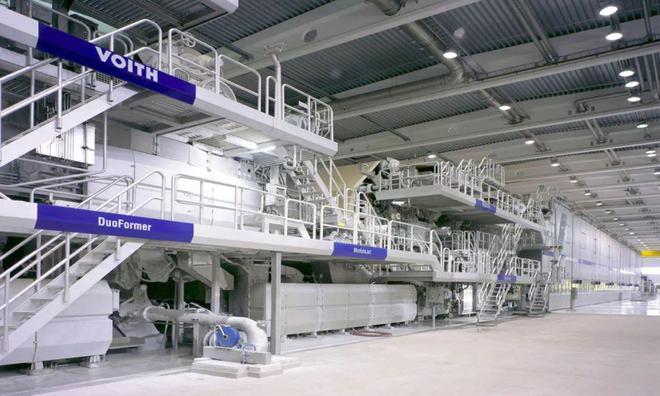
作为世界工厂,无疑我国的制造业扮演着不可替代的重要角色,不论是对内拉动经济增长和就业,还是对外输出原材料与工业品,都需要依托制造业的快速发展来实现。随着疫情影响的消退,科技的进一步发展,效率提升已然成为诸多制造业企业所面临的必答题。时代在向前发展,市场快速多变,需求追求个性差异,都在逼迫着制造业企业推行数字化转型,通过数字化手段提升企业内部、上下游合作伙伴之间的集成与协同,从而实现效率与价值的双重提升。但不可避免的是比以往遇到很多的挑战与问题,后疫情时代该如何从容应对?
正如古语所言,“以史为镜,可以知兴替”,在疫情持续影响的三年里,让我们看到了更多以往所忽视的问题。如今后疫情时代悄然而至,面对当下的市场环境,更像是狂风暴雨后的万物复苏,对于不同的制造业企业来说,也是一个新的起点。后疫情时代的数字化,从战略到执行,从计划到实施,制造业企业的CIO们是如何做的,一起来看!
从不同的角度切入,对于制造业企业数字化来说有着不同的意义和价值,因此本文从以下四个角度展开,来与各位读者共勉。
【 角度一 】
第一,从企业技术革新和业务发展的维度看,数字化是以技术手段促进价值链提升的过程,整个过程贯穿于制造业企业研发、工艺、生产、检验、采购、仓储、营销、物流、服务等诸多环节,因此提升产品和服务模式的创新才是终极目标。正如制造企业的刘总所述,他所在企业并不会采用IT倒逼管理的方式去推进数字化,而是采用体系先行的方式让用户充分理解相应的理念与方法。另外遵循面向未来投资的原则,争取系统上线后能够支撑公司3-5年、乃至5-10年的发展。当然这需要整个公司的股东与管理层明确到底想要做成一家什么样的企业,希望未来对标的企业是什么样的,而不是仅仅着眼于当下的业务和需求。
在实施推广阶段,需要遵循的原则是价值导向,洞察将要实施项目的真正价值,是否与制定的目标对齐,而不是陷于底层需求,无法自拔。实施后坚持和奉行长期主义,所谓“罗马不是一天建成的”,尤其是数字化项目,需要长期坚持才能获得回报,更要避免去做“大跃进”式的项目。在长期主义的理念下,要做好持续的反思,挖掘出不完美的点,即使是明知道不可能达到100分,也要知道为什么丢掉那20分、30分,并向着100分努力。
另外需要注意的是,从数字化的整体视角来看,运营重于实施,系统上线并不是数字化终点,真正创造价值的是系统和系统背后支撑的人,因此如果没有做到足够重视运维,那么即使系统再好,后续的数据质量也将难以把握,数字化所带来的效率提升也将是无源之水,无本之木。
【 角度二 】
第二,从制造型企业数字化转型的要素维度看,需要制造业企业进一步深化应用新一代数字技术,建立涵盖数据、技术、平台、流程、组织、战略六要素的数字化转型系统性解决方案,并且要保证这些要素的互动创新和持续优化,为企业新型能力建设、运行和优化提供解决方案支持。
对于数字化处于起步阶段的制造企业来说,应用的系统大多是一些比较常用的系统。因此前期的规划是极为重要的。某企业的艾总谈到,在他进入到现在从业的企业后,首先根据企业的战略规划制定了未来3年与本年度年的计划。当然这需要率先对于业务部门进行诊断,充分了解企业中的组织能力、数字化成熟度、人财物的投入能力、执行路径的生态等等。
在制定了相应的规划后,还需要召集各个部门的负责人,一起进行讨论,来明确该规划是否符合各部门的预期,同时就当下现状、存在的问题,以及解决方案进行讨论,从而使计划尽可能与业务部门达成共识,以促进后期项目的顺利落地。客观来说,智能制造是一个制造企业中各个部分数字化水平的整体写照,其中包含了研发、设计、产品、物流、销售等多个维度,因此智能制造蓝图的设计与规划是至关重要的。
此外在具体实施的过程中,极有可能涉及到系统的替换,大部分企业替换系统的原因都是因为难以满足企业发展的需求,难以支撑当下或者是未来的业务发展。所以想要保证企业在未来3-5年的发展具备更强有力的支撑,在选型供应商的时候,不妨可以选择一些大型的服务商来支撑企业的数字化。
【 角度三 】
第三,从制造型企业数字化转型的过程维度看,通过对于流程的梳理,能够帮助企业构建数字化转型策划、支持、实施与运行、评测与改进的PDCA过程管控机制,并且通过解决过程中出现的问题,来推动数字化转型系统性解决方案的构建与优化,实现不同流程之间的高效协调联动。
对于底子相对薄弱的企业来说,进行规划时既要做好基础的信息化建设,同时要注意未来需要拔高的内容。数字化发展到当下阶段,数字化相对薄弱的制造企业也已经布局了PLM、MES、ERP等系统,但是它们的痛点在于信息孤岛和无法集成,因此可以从流程入手,洞察各个业务板块的业务流程,梳理清晰,并通过数字化手段来实现弯道超车。
某企业张总认为,推进数字化要从战略出发,并且在战略落地时一定要考虑清楚企业的注重点在哪里,并逐步渗透,而且对于一些特定的项目必须要深入底层,而不是高高在上,做理论家。从企业的实际出发,因地制宜,避免生搬硬套大理论是最容易犯的一个错误。
后疫情时代,能够预见的是对于制造业来说,生产和销售将是两个矛盾点,销售端面临的是海量的数据涌入,如何进行分拣,精准对接给到相关人员是不容易实现的。而生产端仍然面临着劳动力紧张的问题。因此对于制造企业来讲,首先要在销售端判断如何利用智能AI、低代码敏捷开发形式,打造CRM系统来支撑前端的销售与交付;另外一点就是在生产端让高层、投资方的改变认知,将之前应该投入,却被预算限制的系统进行铺设,实打实的为企业从前端接单到交付端提升效率。不论何种类型的企业,都需要按照自己的特点去做,负责数字化的部门也要参与到经营活动中,深入了解自身的产品,了解公司的实质,这样才能使数字化之路更加脚踏实地。
【角度四 】
第四,从制造型企业数字化转型的管理维度看,推动企业建立涵盖数字化治理、组织机制、管理方式、组织文化、创新模式等的治理体系,才能够为企业新型能力的建设、运行和优化提供机制保障。除了前文所提到的处于数字化初级阶段的企业,也有很多制造企业的数字化程度相对完善。某企业的沈总介绍说,他所在的企业相对来说IT的建设比较成熟,但不变的是整体上领导层的期待仍然是实现快速增长,这也是企业未来5到10年的核心诉求。当然在企业推进数字化的过程中暴露出两个最大的问题,第一是在国内的厂区最大的难点就是招不到人,劳动力紧张是最大的问题;在国外的厂区最大的挑战是品质,整个流程中人员多了以后,品质就会出现问题。因此最佳的解决方案是打造智能工厂,减少制造过程中人员的参与度。
在打造智能工厂时,由于所在企业的特性,大部分同类企业的数字化与自动化建设的前期做法都是一致的,也有迹可循,但是后期的封装是没有太多案例的,因此也是摸着石头过河。现阶段对于他所在企业来说,SAP和MES的建设都已经相对完善,最重要的就是要实现MES到机器,再到人之间的打通,也就是打通最后一公里,这样才能真正实现数字化,使机器更好地代替人的工作。
需要注意的是,在打造了智能工厂以后,IT与OT的融合会成为一个亟需解决的问题。另外需要注意的点是,打造智能工厂要尽量找新的工厂实施,老工厂想要实施改造不仅成本高昂,而且很多厂区无法达到改造要求。如果必须要在老厂区的基础上进行升级改造,切记要分步骤进行,不可一口吃成一个胖子。
总的来说,基于以上四个维度的考量,归根结底数字化的终极目标仍然是帮助制造企业优化存量,不断探索增量空间。通过三年疫情的洗礼,能够发现受到疫情影响较大的,是那些劳动力密集型的企业,而影响较小的,是自动化程度高,不依靠人就能运作的企业。因此数字化对于制造型企业的价值是显而易见的,不但能够为产品和工艺设计降低试错成本和周期;同时能够提升生产敏捷性,实现大批量标准化生产;另外在整个产业链上,能够促进上下游信息协同,放大企业内的生产及服务能力。相信在政策利好、企业领导层认知不断深入、数字化持续增效的背景下,后疫情时代我国制造业的发展将迎来一片更加繁荣的景象!
翻译:
As the factory of the world, there is no doubt that our manufacturing industry plays an irreplaceable role. Whether it is driving domestic economic growth and employment, or exporting raw materials and industrial products, it needs to rely on the rapid development of the manufacturing industry to achieve. With the fading of the impact of the epidemic and the further development of science and technology, the improvement of efficiency has become a must for many manufacturing enterprises.
The Times are moving forward, the market is changing rapidly, the demand pursuit personality difference, are forcing the manufacturing enterprises to carry out digital transformation, through digital means to improve the integration and collaboration between the enterprise and the upstream and downstream partners, so as to achieve the double improvement of efficiency and value. However, it is inevitable to encounter a lot of challenges and problems than before. How to cope with the post-epidemic era?
Recently, CIO Development Center successfully held the high-tech industry KOL private meeting, a number of senior CIO to share their past based on the practice of valuable experience. As the old saying goes, “History is a mirror that tells the future.” In the three years since the epidemic began, we have seen more problems that we had neglected in the past. Now the post-epidemic era is quietly coming. Facing the current market environment, it is more like the recovery of everything after a storm, which is also a new starting point for different manufacturing enterprises. The digitalization in the post-epidemic era, from strategy to implementation, from plan to implementation, how do CIOs of manufacturing enterprises do, let’s take a look!
From different perspectives, digitalization of manufacturing enterprises has different meanings and values. Therefore, this paper is expanded from the following four perspectives to encourage readers together.
【 Angle 1 】
First, from the perspective of enterprise technological innovation and business development, digitalization is a process of promoting the value chain by technological means. The whole process runs through the research and development, process, production, inspection, procurement, storage, marketing, logistics, service and many other links of manufacturing enterprises. Therefore, to improve the innovation of product and service mode is the ultimate goal.
As Mr. Liu from a manufacturing enterprise said, his company does not adopt IT forced management to promote digitalization, but adopts a system-first approach to let users fully understand the corresponding ideas and methods. In addition, following the principle of investment for the future, the system can support the development of the company for 3-5 years or even 5-10 years after its launch. Of course, this requires the shareholders and management of the whole company to make clear what kind of enterprise they want to build and what kind of target enterprise they hope to have in the future, rather than just focusing on the current business and needs.
In the implementation and promotion stage, the principle to be followed is value-oriented, which is to observe the real value of the project to be implemented
In the implementation and promotion stage, the principle to be followed is value-oriented, which is to observe the real value of the project to be implemented and whether it is aligned with the established goals, rather than being stuck in the bottom needs and unable to extricated themselves. The so-called “Rome was not built in a day”, especially the digital project, need long-term persistence to get returns, more to avoid to do “great leap forward” type of projects. Under the concept of long-termism, we should do a good job of continuous reflection, dig out the imperfect points, even if we know that it is impossible to reach 100 points, we should know why we lost 20 or 30 points, and strive for 100 points.
In addition, it should be noted that from the overall perspective of digitalization, operation is more important than implementation. System launch is not the end point of digitalization. What really creates value is the system and the people behind the system. A tree without roots.
【 Angle two 】
Second, from the dimension of factors of digital transformation of manufacturing enterprises, it is necessary for manufacturing enterprises to further deepen the application of new generation digital technology, establish a systematic solution of digital transformation covering six elements of data, technology, platform, process, organization and strategy, and ensure the interactive innovation and continuous optimization of these elements. Provide solutions and support for new capacity building, operation and optimization of enterprises.
For the manufacturing enterprises in the initial stage of digitization, the applied systems are mostly some of the more common systems. So early planning is extremely important. Ai General manager of an enterprise said that after he entered the enterprise he is now engaged in, he first made plans for the next three years and this year according to the strategic planning of the enterprise. Of course, it is necessary to take the lead in diagnosing business departments, and fully understand the organizational capacity, digital maturity, human and financial investment capacity, and implementation path ecology in the enterprise.
After formulating the corresponding plan, it is also necessary to convene the heads of all departments for discussion, so as to clarify whether the plan conforms to the expectations of all departments.
After formulating the corresponding plan, it is also necessary to convene the heads of all departments for discussion. So as to clarify whether the plan conforms to the expectations of all departments. At the same time, the current situation, existing problems and solutions are discussed. So as to reach a consensus with the business departments as far as possible. So as to promote the smooth implementation of the later project. Objectively speaking, intelligent manufacturing is an overall portrayal of the digital level of each part of a manufacturing enterprise. Including research and development, design, product, logistics, sales and other dimensions, so the design and planning of intelligent manufacturing blueprint is crucial.
In addition, system replacement is likely to be involved in the specific implementation process. The reason why most enterprises replace the system is that it is difficult to meet the needs of enterprise development and support the current or future business development. Therefore, in order to ensure the development of the enterprise in the next 3-5 years with stronger support, when selecting suppliers, you may wish to choose some large service providers to support the digitalization of the enterprise.
【 Angle Three 】
Thirdly, from the process dimension of manufacturing enterprises’ digital transformation. The sorting out of the process can help enterprises to build the PDCA process control mechanism of digital transformation planning, support, implementation and operation, evaluation and improvement, and promote the construction and optimization of systematic solutions for digital transformation by solving problems in the process. Realize efficient coordination and linkage between different processes.
For enterprises with relatively weak foundation. It is necessary to do a good job in the information construction and pay attention to the content that needs to be improved in the future when planning. At the present stage of digital development. Manufacturing enterprises with relatively weak digitalization have already laid out PLM, MES, ERP and other systems. But their pain point lies in information island and inability to integrate. Therefore, they can start with the process, have an insight into the business process of each business segment. Sort out clearly, and realize the curve overtaking through digital means.
In the opinion of General Manager Zhang of an enterprise. The promotion of digitalization should start from the strategy. And in the implementation of the strategy must consider clearly where the enterprise pays attention to, and gradually penetrate. And for some specific projects must go to the bottom, rather than high, do theorists. Starting from the actual situation of enterprises, adapting to local conditions and avoiding copying big theories is the most easy mistake to make.
In the post-epidemic era, it can be predicted that for the manufacturing industry
In the post-epidemic era, it can be predicted that for the manufacturing industry, production and sales will be two contradictory points. The sales end is faced with the influx of massive data. So it is not easy to carry out sorting and accurately connect to relevant personnel. And the production side still faces the problem of labor shortage. Therefore, for manufacturing enterprises. They should first judge how to use intelligent AI and low-code agile development form at the sales end to build CRM system to support front-end sales and delivery.
Another point is to change the cognition of the top management and investors at the production end. And lay the system that should be invested before but is limited by the budget, which can realistically improve the efficiency of the enterprise from the front end to the delivery end. No matter what type of enterprise, it is necessary to act according to its own characteristics. The department responsible for digitalization should also participate in business activities to have an in-depth understanding of its own products and the essence of the company. Only in this way can the road of digitalization be more down-to-earth.
【 Angle Four 】
Fourthly, from the management dimension of manufacturing enterprises’ digital transformation, promoting enterprises to establish a governance system covering digital governance, organizational mechanism, management mode, organizational culture, innovation mode, etc., can provide mechanism guarantee for the construction, operation and optimization of enterprises’ new capabilities. In addition to the enterprises in the initial stage of digitalization mentioned above. There are also many manufacturing enterprises with relatively complete digitalization degree.
Shen General manager of an enterprise said that his company’s IT construction is relatively mature. But unchanged is the overall expectation of the leadership is still to achieve rapid growth, which is also the core appeal of the enterprise in the next 5 to 10 years. Of course, two biggest problems have been exposed in the process of promoting digitalization of enterprises. The first is that the biggest difficulty in domestic factory is that it cannot recruit people. And labor shortage is the biggest problem. The biggest challenge in foreign factories is quality. When there are more people in the whole process, quality problems will occur. So the best solution is to build smart factories that reduce human involvement in the manufacturing process.
When building smart factories, due to the characteristics of the enterprises, most similar enterprises have the same digitalization
When building smart factories, due to the characteristics of the enterprises. Most similar enterprises have the same digitalization and automation construction practices in the early stage. And there are also traces to follow, but there are not too many cases in the later encapsulation. So it is also feeling the stones across the river. At the present stage, the construction of SAP and MES has been relatively perfect for his company. The most important thing is to realize the connection between MES and machine and then people. That is, to get through the last kilometer, so as to truly realize digitalization and make machines better replace people’s work.
IT should be noted that after building smart factories. The integration of IT and OT will become an urgent problem to be solved. In addition, it is important to note that to build smart factories. We should try to find new factories for implementation. If old factories want to implement transformation. It is not only expensive, but also many factories cannot meet the transformation requirements. If upgrading must be carried out on the basis of the old factory, remember to do it step by step and not eat into a fat man.
Conclusion
In general, based on the above four dimensions. The ultimate goal of digitization is still to help manufacturing enterprises optimize the stock and constantly explore the incremental space. Through the baptism of the three-year epidemic. It can be found that the most affected by the epidemic are those labor-intensive enterprises. While the less affected are those enterprises with a high degree of automation and can operate without relying on people. Therefore, the value of digitalization to manufacturing enterprises is obvious. Not only can reduce the cost and cycle of trial and error for product and process design.
At the same time, it can improve the production agility and realize mass standardized production. In addition, in the whole industrial chain. It can promote the upstream and downstream information coordination, and enlarge the production and service capacity of enterprises. It is believed that under the background of favorable policies, in-depth awareness of enterprise leadership and continuous digitalization. The development of China’s manufacturing industry in the post-epidemic era will usher in a more prosperous scene!
本文由数字化转型网(www.szhzxw.cn)转载而成,来源:CIO发展中心;编辑/翻译:数字化转型网宁檬树。

免责声明: 本网站(https://www.szhzxw.cn/)内容主要来自原创、合作媒体供稿和第三方投稿,凡在本网站出现的信息,均仅供参考。本网站将尽力确保所提供信息的准确性及可靠性,但不保证有关资料的准确性及可靠性,读者在使用前请进一步核实,并对任何自主决定的行为负责。本网站对有关资料所引致的错误、不确或遗漏,概不负任何法律责任。
本网站刊载的所有内容(包括但不仅限文字、图片、LOGO、音频、视频、软件、程序等) 版权归原作者所有。任何单位或个人认为本网站中的内容可能涉嫌侵犯其知识产权或存在不实内容时,请及时通知本站,予以删除。