随着一种“新武器”的出现,生成式人工智能的垃圾邮件拦截者和生成式人工智能垃圾邮件发送者之间的“军备竞赛”即将升级。
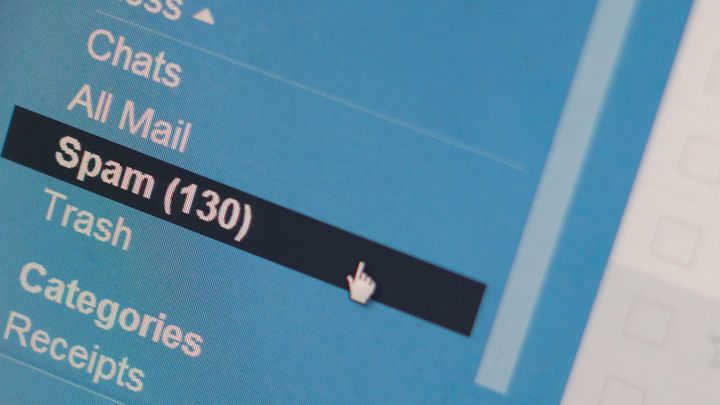
每天,来自尼日利亚王子、特药小贩和不容错过的投资推广者的信息都塞满了电子邮件收件箱。垃圾邮件过滤器的改进似乎只会激发新的技术来突破保护。
现在,随着一种“新武器”的出现,生成式人工智能的垃圾邮件拦截者和生成式人工智能垃圾邮件发送者之间的“军备竞赛”即将升级。随着最近人工智能技术的进步,垃圾邮件发送者可能会有新的工具来逃避过滤器,吸引人们的注意力,并说服他们点击、购买或放弃个人信息。
作为南佛罗里达大学先进人类和机器推理实验室的主任,我研究人工智能、自然语言处理和人类推理的交叉。我研究了人工智能如何学习人们的个人偏好、信仰和个性怪癖。
这可以用来更好地理解如何与人互动,帮助他们学习或为他们提供有用的建议。但这也意味着你应该为更聪明的垃圾邮件做好准备,它们知道你的弱点,并可以利用它们来对付你。
一、由AI人工智能生成的垃圾邮箱?
那么,什么是垃圾邮件?
垃圾邮件被定义为由未知实体发送的未经请求的商业电子邮件。这个词有时会延伸到短信、社交媒体上的直接信息和对产品的虚假评论。垃圾邮件发送者想要促使你采取行动:购买东西、点击网络钓鱼链接、安装恶意软件或改变观点。
垃圾邮件是有利可图的。一封电子邮件可以在几个小时内赚到1000美元,垃圾邮件发送者只需花几美元——不包括初始设置。一个在线制药垃圾邮件活动每天可能产生大约7000美元的收入。
合法的广告商也希望你采取行动——购买他们的产品,接受他们的调查,订阅时事通讯——但是,根据联邦法规,营销人员的电子邮件可能会链接到已建立的公司网站,并包含退订选项,而垃圾邮件可能不会。
垃圾邮件发送者也无法访问用户注册的邮件列表。相反,垃圾邮件发送者使用反直觉的策略,如“尼日利亚王子”骗局,在这个骗局中,一个尼日利亚王子声称需要你的帮助来解锁一大笔钱,并承诺会给你很好的奖励。精明的“数字原生代”会立即驳回这样的请求,但荒谬的请求实际上可能会选择naïveté或高龄用户,过滤掉那些最有可能上当受骗的人。
然而,人工智能的进步意味着垃圾邮件发送者可能不必依赖这种偶然的方法。人工智能可以让他们针对个人,并根据容易获取的信息(如社交媒体帖子)使他们的信息更具说服力。
二、垃圾邮件的人工智能未来
您可能听说过像ChatGPT这样的生成式大型语言模型的进步。这些生成法学硕士执行的任务看似简单:给定一个文本序列,预测下一个是哪个令牌——把它想象成一个单词的一部分。然后,预测哪个令牌紧随其后。如此循环往复。
在某种程度上,在一个足够大的LLM上完成足够多的文本,似乎足以使这些模型具有在许多其他任务上表现出色的能力。
使用该技术的多种方式已经出现,展示了该技术快速适应和了解个人的能力。例如,法学硕士可以用你的写作风格写完整的电子邮件,只给你一些写作的例子。还有一个经典的例子——十多年前——塔吉特在一位顾客的父亲知道之前就发现她怀孕了。
垃圾邮件发送者和营销人员都将受益于能够用更少的数据预测更多的个人信息。根据你的LinkedIn页面、一些帖子和一两张个人资料图片,拥有法学硕士学位的垃圾邮件发送者可能会对你的政治倾向、婚姻状况或生活重点做出相当准确的猜测。
我们的研究表明,在一个被称为语义流畅性任务的单词生成任务中,llm可以用来预测一个人接下来会说哪个单词,其准确度远远超过其他人工智能方法。我们还表明,法学硕士可以从推理能力测试中选择某些类型的问题,并预测人们对该问题的反应。这表明法学硕士已经对典型的人类推理能力有了一定的了解。
如果垃圾邮件发送者通过了最初的过滤,让你阅读一封邮件,点击一个链接,甚至参与对话,他们应用定制说服的能力就会大大提高。在这里,法学硕士可以再次改变游戏规则。早期的研究结果表明,法学硕士可以被用来就从政治到公共卫生政策等话题进行有说服力的辩论。
三、这对人工智能的发展有好处?
然而,人工智能并不偏袒任何一方。垃圾邮件过滤器也应该受益于人工智能的进步,使它们能够对不受欢迎的电子邮件设置新的障碍。
垃圾邮件发送者经常试图用特殊字符、拼写错误的单词或隐藏的文本来欺骗过滤器,依靠人类对小文本异常的原谅倾向——例如,“c1ck . here n0w”。但随着人工智能在理解垃圾邮件方面做得越来越好,过滤器可以更好地识别和阻止不想要的垃圾邮件——甚至可能让想要的垃圾邮件通过,比如你明确注册的营销邮件。想象一下,有一个过滤器可以在你阅读电子邮件之前预测你是否想要阅读它。
尽管人们对人工智能的担忧越来越多——特斯拉、SpaceX和推特的首席执行官埃隆·马斯克、苹果创始人史蒂夫·沃兹尼亚克和其他科技领袖呼吁暂停人工智能的发展就证明了这一点——但这项技术的进步可能会带来很多好处。人工智能可以帮助我们了解人类推理的弱点是如何被坏人利用的,并提出对抗恶意活动的方法。
所有的新技术都会带来奇迹和危险。区别在于谁创建和控制这些工具,以及如何使用它们。
想了解更多关于人工智能、聊天机器人和机器学习的未来吗?查看我们对人工智能的全面报道,或浏览我们的最佳免费AI艺术生成器指南以及我们所知道的关于OpenAI的ChatGPT的一切。
John Licato,南佛罗里达大学计算机科学助理教授,AMHR实验室主任,本文基于知识共享许可协议,转载自The Conversation。
翻译原文:
Personalized AI-Written Spam May Soon Be Flooding Your Inbox
The arms race between spam blockers and spam senders is about to escalate with the emergence of a new weapon: generative artificial intelligence.
Each day, messages from Nigerian princes, peddlers of wonder drugs and promoters of can’t-miss investments choke email inboxes. Improvements to spam filters only seem to inspire new techniques to break through the protections.
Now, the arms race between spam blockers and spam senders is about to escalate with the emergence of a new weapon: generative artificial intelligence. With recent advances in AI made famous by ChatGPT, spammers could have new tools to evade filters, grab people’s attention and convince them to click, buy or give up personal information.
As director of the Advancing Human and Machine Reasoning lab at the University of South Florida, I research the intersection of artificial intelligence, natural language processing and human reasoning. I have studied how AI can learn the individual preferences, beliefs and personality quirks of people.
This can be used to better understand how to interact with people, help them learn or provide them with helpful suggestions. But this also means you should brace for smarter spam that knows your weak spots – and can use them against you.
Spam, AI, spam, AI, spam, AI
So, what is spam?
Spam is defined as unsolicited commercial emails sent by an unknown entity. The term is sometimes extended to text messages, direct messages on social media and fake reviews on products. Spammers want to nudge you toward action: buying something, clicking on phishing links, installing malware or changing views.
Spam is profitable. One email blast can make US$1,000 in only a few hours, costing spammers only a few dollars – excluding initial setup. An online pharmaceutical spam campaign might generate around $7,000 per day.
Legitimate advertisers also want to nudge you to action – buying their products, taking their surveys, signing up for newsletters – but whereas a marketer email may link to an established company website and contain an unsubscribe option in accordance with federal regulations, a spam email may not.
Spammers also lack access to mailing lists that users signed up for. Instead, spammers utilize counter-intuitive strategies such as the “Nigerian prince” scam, in which a Nigerian prince claims to need your help to unlock an absurd amount of money, promising to reward you nicely. Savvy digital natives immediately dismiss such pleas, but the absurdity of the request may actually select for naïveté or advanced age, filtering for those most likely to fall for the scams.
Advances in AI, however, mean spammers might not have to rely on such hit-or-miss approaches. AI could allow them to target individuals and make their messages more persuasive based on easily accessible information, such as social media posts.
The AI-enabled future of spam
Chances are you’ve heard about the advances in generative large language models like ChatGPT. The task these generative LLMs perform is deceptively simple: given a text sequence, predict which token – think of this as a part of a word – comes next. Then, predict which token comes after that. And so on, over and over.
Somehow, training on that task alone, when done with enough text on a large enough LLM, seems to be enough to imbue these models with the ability to perform surprisingly well on a lot of other tasks.
Multiple ways to use the technology have already emerged, showcasing the technology’s ability to quickly adapt to, and learn about, individuals. For example, LLMs can write full emails in your writing style, given only a few examples of how you write. And there’s the classic example – now over a decade old – of Target figuring out a customer was pregnant before her father knew.
Spammers and marketers alike would benefit from being able to predict more about individuals with less data.
Given your LinkedIn page, a few posts and a profile image or two, LLM-armed spammers might make reasonably accurate guesses about your political leanings, marital status or life priorities.
Our research showed that LLMs could be used to predict which word an individual will say next with a degree of accuracy far surpassing other AI approaches, in a word-generation task called the semantic fluency task. We also showed that LLMs can take certain types of questions from tests of reasoning abilities and predict how people will respond to that question. This suggests that LLMs already have some knowledge of what typical human reasoning ability looks like.
If spammers make it past initial filters and get you to read an email, click a link or even engage in conversation, their ability to apply customized persuasion increases dramatically. Here again, LLMs can change the game. Early results suggest that LLMs can be used to argue persuasively on topics ranging from politics to public health policy.
Good for the gander
AI, however, doesn’t favor one side or the other. Spam filters also should benefit from advances in AI, allowing them to erect new barriers to unwanted emails.
Despite growing concerns about AI – as evidenced by Tesla, SpaceX and Twitter CEO Elon Musk, Apple founder Steve Wozniak and other tech leaders calling for a pause in AI development – a lot of good could come from advances in the technology. AI can help us understand how weaknesses in human reasoning might be exploited by bad actors and come up with ways to counter malevolent activities.
All new technologies can result in both wonder and danger. The difference lies in who creates and controls the tools, and how they are used.
Want to know more about AI, chatbots, and the future of machine learning? Check out our full coverage of artificial intelligence. Or browse our guides to The Best Free AI Art Generators and Everything We Know About OpenAI’s ChatGPT.
John Licato, Assistant Professor of Computer Science and Director of AMHR Lab, University of South Florida
This article is republished from The Conversation under a Creative Commons license. Read the original article.
本文由数字化转型网(www.szhzxw.cn)根据公开资料整理撰写而成,作者:数字化转型网郑木铎;编辑/翻译:数字化转型网宁檬树。

免责声明: 本网站(https://www.szhzxw.cn/)内容主要来自原创、合作媒体供稿和第三方投稿,凡在本网站出现的信息,均仅供参考。本网站将尽力确保所提供信息的准确性及可靠性,但不保证有关资料的准确性及可靠性,读者在使用前请进一步核实,并对任何自主决定的行为负责。本网站对有关资料所引致的错误、不确或遗漏,概不负任何法律责任。
本网站刊载的所有内容(包括但不仅限文字、图片、LOGO、音频、视频、软件、程序等) 版权归原作者所有。任何单位或个人认为本网站中的内容可能涉嫌侵犯其知识产权或存在不实内容时,请及时通知本站,予以删除。