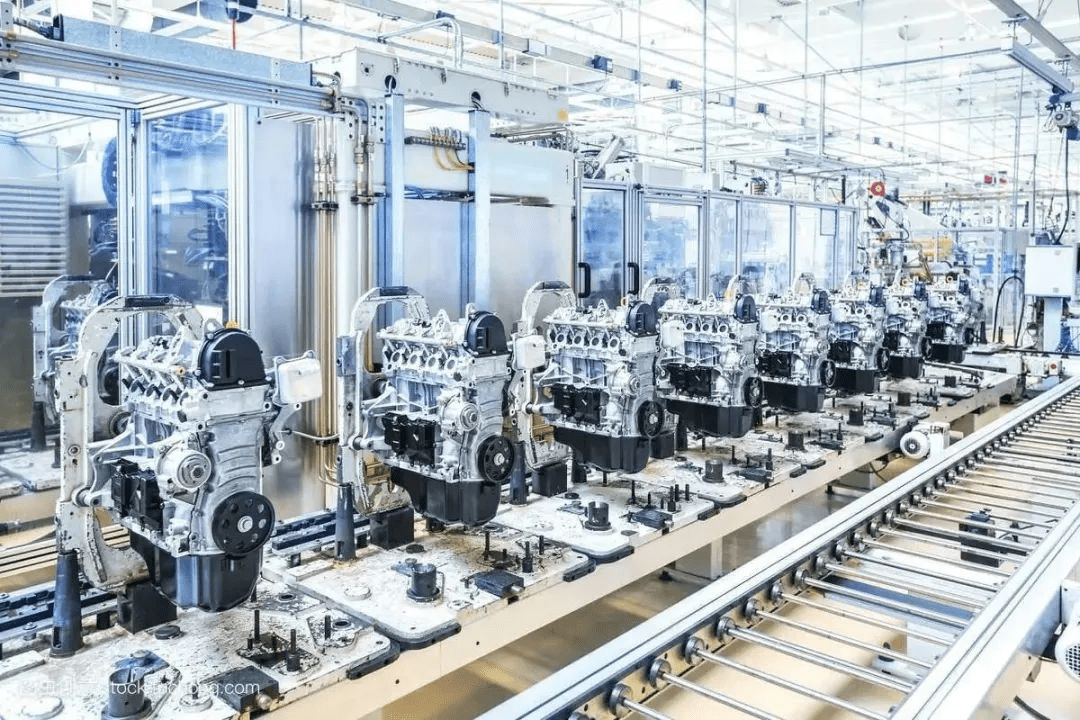
本文结合全球工程机械TOP5企业(卡特彼勒、徐工、三一、中联等)的供应链情况、汽车行业(丰田汽车、大众汽车等)汽车供应链,进行撰写。
写完,读完此文不易!
个人觉得SC管理就是对三流的管理1、物流;2、资金流;3、信息流。
1、物流:
实物流规划的核心是解决实物流转过程中所出现的错配问题。例如:推拉结合是客户期望交付期与供应链可实现交付期之间的平衡决策;延迟策略是定制化需求与标准化流程之间的平衡决策。诸如此类问题,都在实物流规划中进行解决;
2、资金流(很多企业这块由财务部进行管理)
资金流规划主要解决的是供应链上资金在时间上错配的问题,因此首先需要对现金周期进行计算。对于错配部分需要有针对性地提出解决方案,目标是实现正的现金流入。对于资金错配导致资金缺口的部分,可以考虑使用供应链金融工具。数字化转型网szhzxw.cn
3、信息流(个人认为这个是重点,但事实很多企业都轻视这块)
内部协同是能力基础,外部协同是能力拓展,为此需要部署统一的流程。无论是S&OP还是CPFR,其名称都不重要,关键是理解并运用了它的核心思想和方法论,来搭建信息协同平台。需要注意的是:流程的建立优先,IT系统需要服从于流程。
- 美国精益专家,John Shook, 在其专著《精益》中对精益的定义:“以消除浪费的方式寻求缩短从收到客户订单到向客户发货的时间哲学“。
- IBM对供应链的定义:借助信息技术和电子商务,将供应链上业务伙伴的业务流程相互集成,从而有效地管理从原材料采购、产品制造、分销,到交付给最终用户的全过程。在提高客户满意度的同时,降低成本、提高企业效率。
- 我们对精益供应链的定义:“一个理想的供应链行为示例,即一个供应链中所有关联企业的业务流程集成统一的整体,以迅速、经济、流畅的方式向终端用户交付最终产品或服务”
- 因此,我们可以说精益供应链由三部分组成1. 精益供应管理(战略采购)2. 精益运营管理(企业内部管理)
3. 精益物流管理(满足客户需求的交付系统)
了解什么是精益供应链管理之后,我们在看供应链管理在“韦尔奇”与“克里斯多夫”两个人眼中的地位:
“如果你在供应链运作上不具有竞争优势,那就干脆不要竞争。”——杰克.韦尔奇。
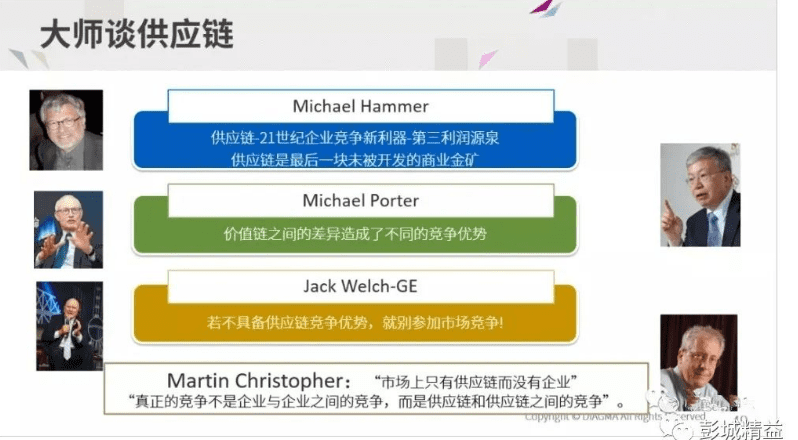
“市场上只有供应链而没有企业”,“真正的竞争不是企业与企业之间的竞争,而且供应链与供应链之间的竞争”。——英国管理学者,马丁. 克里斯多夫。数字化转型网szhzxw.cn
一、市场分析
中国机械制造行业发展现状
机械制造业是国民经济的支柱产业,现代制造业正在改变着人们的生产方式、生活方式、经营管理模式乃至社会的组织结构和文化。由于中国潜在的巨大市场和丰富的劳动力资源,发达国家的先进制造业正在向中国转移,中国正在成为世界的制造大国。我国在家电等若干产品的产量已居世界第一位。但是在自主知识产权的创新设计、先进制造工艺和装备及现代化管理等方面仍然存在很大差距。
中国机械制造业管理现状与特点中国机械制造业经过几十年的努力已经具有相当的规模,积累了大量的技术和经验。但是随着世界经济一体化的形成,由于中国潜在的巨大市场和丰富的劳动力资源,国外的技术、资金、产品大量涌入中国,中国企业面临前所未有的国内外激烈的竞争局面。竞争要求企业产品更新换代快、产品质量高、价格低、交货及时、服务好。这些市场竞争的武器与企业管理的模式、管理方法、管理手段、组织结构、业务流程密切相关。然而相当部分中国企业及人们的思想意识仍然受计划经济的影响,上述竞争武器与发达国家相比存在很大差距。具体体现在:
1. 生产计划控制的模式落后尚未真正实施好ERP的机械制造企业几乎100%采用台套计划的方式。即以产品最长生产周期作为构成产品各种物料的采购提前期和生产提前期。过分夸大的提前期是造成库存和在制品储备高,流动资金占用大的根本原因。生产计划与采购计划脱节,零件成套水平差,不能准时交货。或者用高储备来保交货期。距离现代管理方法物料需求计划MRP、准时生产JIT、供应商管库存VMI、同步生产相差甚远。数字化转型网szhzxw.cn
2. 企业应变能力差今天的市场瞬息万变,需求多样化。按订单装配MTO,按订单制造MTO,按订单设计MTD,大规模定制MC。品种规格繁多,生产、采购异常复杂。从客户—销售—设计—生产—采购—财务—成本,需要一个完整的供应链管理,才能动态快速地响应客户需求,适应千变万化市场和客户定制化的要求。
3. 成本计算不准确,成本控制差,人工成本核算一般只能计算产品成本,无法计算零部件成本。成本费用分摊很粗,大量成本数据采集是人工归集的,数据准确性很差,使得成本计算不准确。一般不进行标准成本的计算,也很少进行成本分析,因此成本控制差。
4. 信息分散、不及时、不准确、不共享、制造业产、供、销、人、财、物是一个有机的整体,他们之间存在大量信息交换。然而人工管理信息分散、缺乏完善的基础数据,信息分散、不及时、不准确、不共享大大影响管理决策的科学性。
5. 职能式的组织架构设计而不是面向业务流程的扁平化的组织,一般业务流程不合理,业务流程的管理和控制不规范,随意性大。
6. 缺乏标准化、规范化、制度化、程式化的管理,管理的优劣因人而异。尽管通过ISO9000制定了一系列的程序文件,执行的效果可因企业和管理者而异。数字化转型网szhzxw.cn
7. 管理工具落后,部分企业仍处于手工分散管理或微机单项管理的阶段。有的企业也建立了全厂的计算机网络,但应用仍是分散的,没有实现信息的共享和资源的优化配置。
8. 现代化管理的新思想、新方法、新技术的应用差。例如:敏捷制造AM、精益生产、供应链管理SCM,更有为数不少的企业认为供应链就是采购。
(一)装备制造业供应链创新发展新趋势
继“中国制造2025”发展战略的实施,大型装备制造行业面临新的挑战:主要依靠资源要素投入、规模扩张的粗放发展模式难以为继,调整结构、转型升级、提质增效刻不容缓。整个行业呈现出专注于品质、品牌、服务、市场的同时,更加注重可持续的发展方式转变,更加追求中高端的发展定位。
装备制造业的市场竞争早已演变成供应链之间的竞争,企业要保持竞争优势,势必要重塑供应链运作模式,对整个链条各个环节进行整合。
(二)装备制造业供应链发展面临的主要问题
装备制造业在经历了规模快速扩张之后,由于供应链管理能力成长不足,在产业转型升级过程中,面临着非常大的困难:上游供应体系庞大,供方管控力度低、绩效水平差;中游计划管理薄弱,库存高涨、周转率低;下游需求管理不健全,产品、组织、流程复杂度高。数字化转型网szhzxw.cn
(三)工程机械供应链建设面临的难点
随着徐工、三一、卡特彼勒、中联重科等全球化发展的步伐不断加快,支撑全球研发、生产、服务的供应链体系建设初具规模与产业链全面转型发展的实现,需继续深化全球一体化供应链建设。
供应链建设中WMS 作为主要模块,进行供应链升级主要是为了解决以下两个痛点问题:
01 仓库空间利用率低
物料与库位之间采用定点定位的管理模式,因物料类别和批次量的差异,空间利用率低
02 库位、人员管理不到位
ERP 系统管理颗粒度不够,只能管理到仓位号,无法实现最佳路径的推荐,无人员负荷等管理。
原有的仓储管理系统已无法满足公司现有业务的需求:数字化转型网szhzxw.cn
采购入库的时候,都是固定库位,如库位空出来也不能放物品,不能记录这个货物,买了一件货物,只能放在固定位置;
从内部供应商的零部件送到生产线,中间缺少分拣、入库环节,经常发生送到生产线会用错零件、少零件的情况;
在转序的时候,每道工序都容易出现问题;
正在上条码,但是在配送方面总出错,货物老是配不齐……
工程机械品类繁多,工程机械离散程度高,因此每个主机厂面临不同行业,不同客户群,不同的模式诉求。卓越供应链将围绕“标准化、规范化、流程化、制度化、数字化”五化方面打造工程机械数字化供应链平台,提升供应链体系实力,为未来长期的数字化供应链发展需求提前布局。
遍及全球的服务体系需要坚实的供应链来支撑,聚焦供应链管理“1-3-1”核心主线,致力于补齐公司供应链管理短板,打造最具竞争力的成本,推动供应链体系标准化、规范化、流程化、制度化、数字化“五化”能力提升,打造行业领先的全球数字化供应链信息系统,为全球供应伙伴构建一条阳光透明、高效协同、极具效率的“数字化链路”。此次实施 Infor WMS 将实现以下目标:数字化转型网szhzxw.cn
01 搭建 WMS 仓储管理系统(集团级)
满足不同配送模式需求及精益化仓储管理需求,实现跨区域跨业务的多仓库管理;
02 全流程库存可视化管控
集中管理供应商备货、在途、VMI仓、线边仓、保税公司仓库、分子公司自有仓库、工厂已入库库存数据;
03 作业标准化、规范化
统一物料收发存等仓储作业规则和要求,实现先进先出,统一货权转移节点;数字化转型网szhzxw.cn
04 库存期量控制
建立安全库存标准、缺料计算模型及超量控制规则、建立呆滞物资反馈处理机制;
05 仓储作业效率提升
智能仓储设备集成、无纸化、移动化、条码化等。
二、解决方案
供应链平台以推进装备制造企业实现转型发展为导向,建设具有中国特色的供应链管理体系,通过模式创新推动供应链伙伴的协同发展,通过信息技术的融合应用来打通供应链的信息协同。
国内企业案例分享
某企业供应链的3点印象
(一)构建全球供应链网络布局
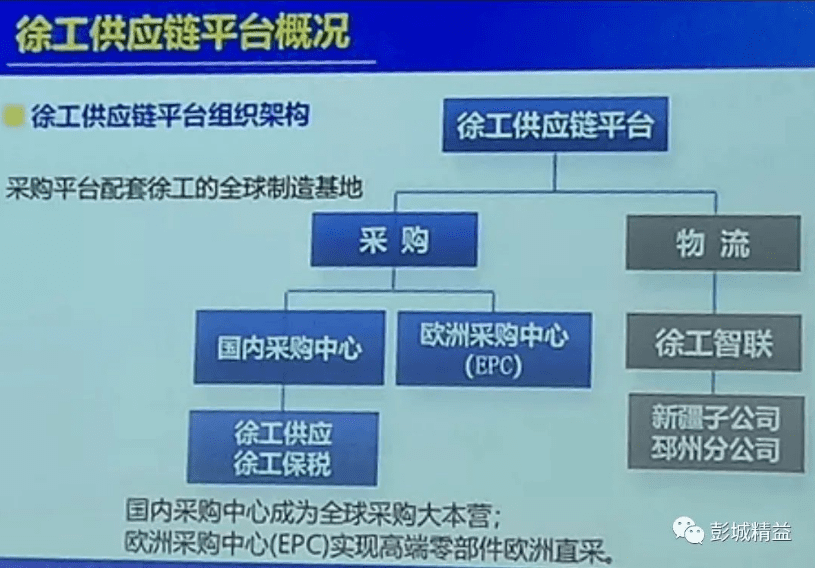
以国内采购中心为全球化采购大本营,通过欧洲采购中心实现高端零部件欧洲直采模式,依托这两大采购中心,建设徐工全球采购网络,为徐工实现全球采购资源的最佳配置。数字化转型网szhzxw.cn
(二)打造专业供应链运作模式
目前已形成前端战略采购模式、中端智能制造协同模式、后端跨界融合无车承运模式,并在此三大模式的基础上开始试点构建”采购物流一体化”新模式。
1、战略采购
实施矩阵式品类管理,深化实施战略采购;创新供应商分类管理,对供应商进行两个层级的细分,搭建供应商W-SRM分类管理体系,区分七种合作模式,有针对性地推动战略采购策略实施;构建轮式风险评估模型,输出供应商风险指数,强化风险管控;改善供应商准入机制,搭建质量预防体系,推进“共享共赢”的新型供应链关系,逐年提升联盟型、伙伴型供应商比例,培育与企业战略匹配的忠诚专业供应商队伍。
2、两级式生产物流运作体系
生产物流业务板块的全面建设,是构建全球一体化供应链平台、实现制造“2025战略”的重大支撑,承载着助力企业稳步发展的重大战略使命。数字化转型网szhzxw.cn
创新地打造“总部物流中心集成仓储+厂内配送供线”的两级式生产物流运作体系。
以生产物流管理系统(WMS)为支撑,通过SRM、PLMS、SAP、MES系统间的深度无缝对接,形成数据联动,规避了各环节的信息孤岛,实现了供应链前端物流、仓储、配送一体化运作。徐工智联集配中心内基本已经全面实现了仓储管理与物流管理的“条码化”、“移动化”、“无纸化”和“可视化”,实现了仓储收货、拣货、配送、过账全流程信息协同与业务协同,信息传递效率提升200%,运作效率提升30%。
3、无车承运
针对成品、零部件运输业务,供应链平台搭建了智慧物流信息平台(ITMS),“线上平台+线下实体”相结合,打造“平台化”运营的供应链终端物流模式,整合货源、车源,帮助客户实现供应链终端物流的有效管控。通过在线下单、在线抢单竞价、安排运力、运输过程跟踪、电子签收、线上回单审核等功能,对内可以支撑集团整机运输业务、零部件、备件运输业务的高质量闭环管理;对外可以进行社会化输出,在保障基础业务的同时积极拓展外部业务,在经过多次调研与业务洽谈,承接了江浙鲁等地区制造型企业的外向运输业务,并完成与平台的对接,助推徐工智联由企业物流向物流企业的转变。
4、采购物流一体化协同
采购物流一体化的核心是订单全生命周期管理,通过打破原有思维定式,重塑组织机构及业务流程,将驻厂采购部职能向两端转移,一端前移至供应商管理端,深化管理,促进物料配套及时率和交验合格率提升;另一端下沉至物流管理端,拓展采购订单跟踪及实现物流预警职能。形成全新的供应商交期管理模式,消除采购与物流部分工作重叠的问题,提升供应链效率。
(三)带动产业上下游发展提升
供应链建设,不仅支撑着自身业务的全球化拓展,同时也带动产业链上下游企业转型升级。
1、绿色供方结构优化
在供应商管理方面,摒弃以往仅仅以质量、成本、交期、服务方面评价供应商的观念,增加对供应商环境方面的要求,督促其自主开展绿色采购。作为“中国绿色供应链联盟”首批会员单位,以市场机制倒逼推动供应商绿色发展。数字化转型网szhzxw.cn
2、通过集成提升与创新,促进产业链共同提升管理水平、生产水平及技术水平,联合供应商开展精益化成本分析,针对传动类、液压类等十几种关键品类典型物料,为40余家供应商搭建了采购件成本分析模型,优化成本控制;根据供应商特性,实施多元化质量帮扶提升,对供应商产品制造过程中的生产工艺、方法、设备、工具以及质量管理等方面进行改善和优化;开展核心零部件国产化创新替代,其中液压类、传动类、钢材、油品等主要核心品类国产化替代成果显著,带动上游产业技术升级创新。
3、积极探索供应链金融业务
通过与财务公司合作,共同推动上游供应商融资业务,根据业务需要在财务公司滚动形成供应商融资池,为供应商拓宽融资渠道,提升供应商资源保障能力,降低供应商融资成本,实现公司集中管控效益,增强供应商与徐工的合作信心。
建设“智+”信息化平台
通过打造SRM供应商关系管理系统、PLMS生产物流管理系统、ITMS智慧物流信息平台、全球零部件采购物流系统、采购件成本智能核算系统、一采通徐工集团电子采购系统,构建了成套化信息系统,实现供应链协同可视。
(一)供应链效率明显增强
通过深度挖掘供应链潜能,动态智能跟踪供应链条的运营,实现管理效率提升。
(二)供应链降本效果显著
在全球采购环节,通过两大采购中心的运营,强化供应商管理,近五年累计实现采购降本5.99亿元人民币;在成品物流环节,通过“平台化”运营集成整合货源、车源,为客户创造了约3000万/年的运输降本,同时帮助客户实现供应链终端的有效管控;通过智能供应链系统的推广应用,供应链一体化运营成本可降低约18%。数字化转型网szhzxw.cn
(三)促进上下游企业共同提升
通过信息化手段把模块化作业的采购、物流、生产、营销等环节一一打通,促进上下游企业高度协同与提升。
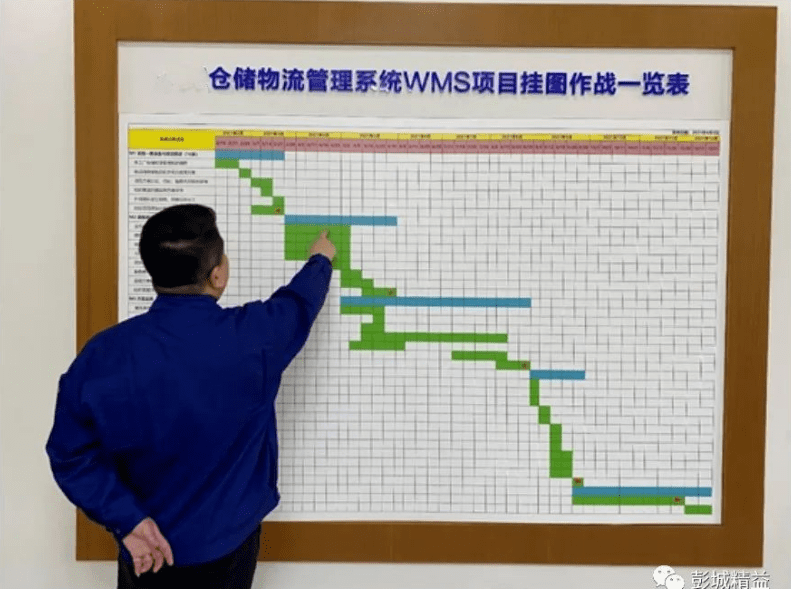
WMS案例:
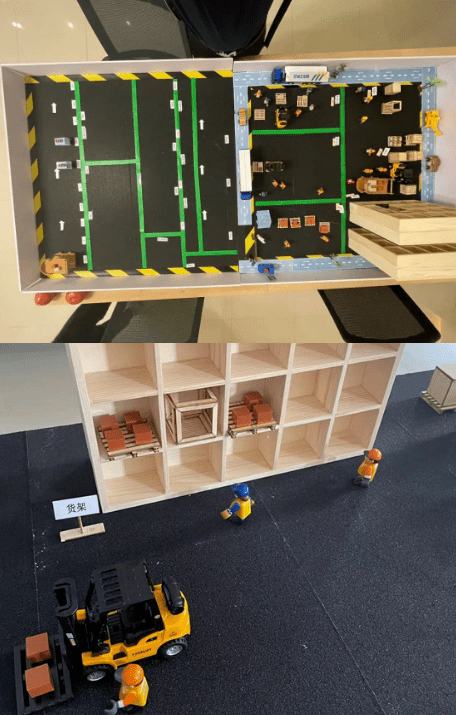
三、全球供应链建设具体做法(参考)
一是通过供应链各主体协同运作、资源整合,降低供应链运营成本,提高物流配送效率与综合服务能力,实现物流、信息流、商流、资金流的融合与统一,支撑企业向服务型制造企业转型升级。
二是聚焦业务模式变革、技术研发、管理创新等多个方面,推动供应链协同化、服务化、体系化建设,实现上下游企业间、信息系统间的紧密协同和无缝集成。数字化转型网szhzxw.cn
三是利用“线上平台+线下实体”相结合的供应链运营模式,通过物联网、移动互联网、云计算、大数据等信息技术应用,聚焦跨界产业链,打造集全球战略采购、物流集成服务于一体的平台化、多元化、一站式供应链服务能力,带动产业转型发展。
下文我从10大方面着手,如何推进全球供应链体系的打造,全面提升工程机械供应链的质量、技术、成本、交期及抗风险能力进行说明。
(一)零部件分类管理。
根据零部件特性的不同,从零部件的价值和技术两个维度,将零部件分为四个大类管理,
即战略类、杠杆类、一般类、瓶颈类。
战略类,与此类物料的供应商建立长期的战略合作关系,并与之在流程等方面实施整合。
杠杆类,提供公开、公平、公正的竞争平台,充分发挥此类物料的供应商的能动性,激发其提质增效的热情;发挥平台优势,总结固化出一套同行业交流共享成果经验的机制,强力提升供应链的整体水平。
瓶颈类,采取联合攻关、提供优质试验条件等方式攻克行业难题,不断促使其向战略类和杠杆类物料转变。数字化转型网szhzxw.cn
一般类,精简采购流程,为此类物料的供应商提供畅通的物流、信息流、资金流通道,集中优势精力挖潜供应链的过度设计、不足设计、质量过剩、质量短板,不断优化过程及质量管理。
(二)供应商穿透管理。
1.指标导向,持续提升供应链绩效管理能力。围绕供应链“同盟军”的打造,深度聚焦供应商“五项能力”建设,包括协同研发能力、产能保障能力、成本优化能力、质量保证能力和运营管理能力,建立了以到货及时率、校验不良率、市场早期故障率、成本优化达成率、CPK提升完成率等为核心的五大绩效管理指标,建立月度、季度常态化监控机制,动态管理供应商类型与星级,持续优化,优胜劣汰,使企业供应商资源库一直处于公平竞争的活水状态。
2.体系协同,对供应商生产过程实施精准监控。体系作为管理的灵魂,建立了供应商体系审核、产品审核、过程审核的三大审核体系,实施供应商过程管理,关注供应商关键工序过程能力(CPK),对这些关键工序人员实施培训和资质认证,对其 5M1E进行监控、评价、确认,制定了清洁度、焊接、涂装等专项控制标准,循环开展过程飞行检查。数字化转型网szhzxw.cn
3.机制优化,联动提升供应商产品质量。深耕供应链质量管理机制优化,建立了目标体系、预防体系、控制体系及协同改善体系联动的全方位多维度质量管理体系,重点聚焦 QA、QC、QE及 QI能力建设。紧抓质量数据、质量分析的牛鼻子,闭环管理故障改进;联合供应商实施 FMEA分析,对纠正的质量失效点建立预防机制。坚持事前预防和事后改善相结合,依托产品和过程持续改善体系(CPI)。
(三)采购物流一体化。
精准划分产业链上的采购和物流的职能,打破原有思维定式,重组组织机构及业务流程,内部挖潜,发挥物流岗位掌控物流、信息流的优势,下沉物流管理,拓展采购订单跟踪及实物流预警职能,实时追踪订单,保持链条上下游信息对称,订单执行透明化、同步化、可追溯化,大幅度提升供应链制造协同能力、交货及精益化水平;更为重要的是,最大程度的释放采购岗位职能,使采购职能大幅度的向供应商端前移,集中精力做好供应商前期规划、供应商准入、供应商审核、供应商帮扶、供应商产能管理等工作,促进物流配套及时率及交验合格率的提升。
(四)零部件统型设计。
在主机厂及供给侧,矩阵推广通用化和模块化的设计理念,降低产品全生命周期综合成本。在研发阶段,新品开发费用大幅度降低,提升新品的开发效率;在量产阶段,相同型号零部件的体量增加助力了供应链的成本降低和生产效率的提升;在售后服务阶段,大大节省了售后服务零部件维修及更换费用,对供应链的库存周转率、资金占用都起到了决定性作用。数字化转型网szhzxw.cn
(五)产品研发早介入。
借鉴 IATF16949体系标准管理理念,从新产品试制前准备、价格审核、取样试制、量产前评估到批量生产,助力主机厂实施 APQP产品质量先期策划,采购早期介入产品研发阶段,为技术部门推荐优质零部件供应商的成熟设计和商务方案,供应商参与到产品的研发阶段提升了主机产品研发的效果、效率;更重要的是,使选配的零部件更加科学合理,选定的配套供应商的成本、质量、产能符合所研发新品的市场定位。
(六)推行供应商帮扶。
1.搭建供应商全面帮扶的方案及标准。借助*工内部优质资源、供应链优质资源(如调度油漆供方专项扶持其他零部件供方的涂装工艺、质量,借助焊材供方的专业焊接技能定向辅导其他零部件供方的焊接工艺、质量等)、第三方资源帮助供方快速、精准提升质量,通过科学引领、标准对标、载体搭建、协同共享等提升供方帮扶的穿透力。在 APQP、8D、QC、6Sigm等工具培训形成常态化机制的基础上,借助*工技师学院的师资力量又增设了同盟军技能人才(焊工、涂装工、数控车工、数控铣工、铸造工等)培训认证制度,供应链管控能力、技术水平不断攀升。
2.形成网状的协同共享机制。帮扶过程中与一级供应商、二级供应商的职能部室全方位对接,协调调度相同行业甚至个别跨界跨行供应商的深度融合,联合提升。数字化转型网szhzxw.cn
(七)合作合资国产化。
对于具有核心技术的优秀供应商,通过合资合作,技术转让等形式深度的合作。对于核心进口零部件,进一步加大国产化的力度。联合宝钢研发高强钢,就是其中的一个经典案例, 21世纪前,吊臂板被国外高强钢制造商垄断,高强钢板全部依赖进口,原材料的产业现状严重制约了民族工程机械产业链的优化升级,2001年至 2013年,某企业联合宝钢攻克了钢水纯净度、应力控制、冲压成型、焊接性能、板形板面、力学性能、机加工性能等重重难关,先后成功研发出了600兆帕、700兆帕、960级钢板,至 2016年,更是突破了1100级兆帕超高强钢。这些国产高强钢均是率先在产品上批量使用,进而拓展到国内整个工程机械行业,使得钢材价格降低至进口钢材的50%,为工程机械的快速发展夯实了基础。
(八)布局全球供应链。
基于全球产业布局,成立全球采购委员会,委员会覆盖在德国、英国、印度、巴西和中国的采购组织成员。通过全球采购组织的互联互通,实现全球资源的最佳配置,为整个供应链条技术提供关键零部件(如原材料、液压、动力传动、电器件及铸锻件等)初选、备选及切换建议,分享国际采购市场变化和趋势;与供应链同盟军共享二级及以上关键零部件采购渠道及信息,搭建跨国供应链体系联盟,共享采购资源,携手应对采购风险及压力。数字化转型网szhzxw.cn
(九)信息化平台建设。
打造智能化“同盟军”体系,搭建一站式的业务操作与信息交互平台,通过 SRM、PLMS、SAP、MES系统间的深度无缝对接,形成数据联动,规避了各环节的信息孤岛,增强供应链数据分析预测能力,提升采购决策、内外部协同效率。从物流预测、计划、交付到执行、监控、异常处理,对供应链采购、质量、运输配送、工艺等进行全方位管理,打造具有互联性、共享性、可视化的敏捷供应链网,实现供应链的信息协同及生产标准化管理。先后组织上海柴油机股份有限公司、徐州新润智能科技有限公司等十余家供应商参与国家工信部电子科学技术情报研究所的智能供应链项目,探索并完善及上下游企业间信息共享与高效业务协同,实现采购、仓储、物流、服务的一体化管理,更好的推动*工与供应商实现合作共赢。
(十)绿色供应链成型。
将“绿色、智慧、创新、共赢”作为供应链的战略定位,全力打造“绿色”供应链,行业首批通过国家级绿色供应链认证,参与起草了工程机械行业绿色供应链管理标准,自身绿色发展的同时,从行业高度带动供应链,全面推进绿色设计和绿色制造。将绿色环保纳入引进新供应商的准入标准,严把供应商的绿色关卡,倒逼上游供应商绿色发展。定期发布、实时在线监控供应链绿色环保措施执行情况,绿色信息公开透明。
最后,常常说的一句话:中国要有真正的未来,必须成为制造业强国。要成为制造业强国,没有强大的供应链管理,几乎不可能实现!那么,跳出工程机械行业,整个制造业供应链如何建设?有没有参照物?
有,汽车行业!
汽车行业供应链构建与分析(全文)
(未完待续)
翻译:
This paper combines the supply chain situation of the global TOP5 construction machinery enterprises (Caterpillar, Xugong, Sany, Zoomlion, etc.), and the automotive supply chain of the automotive industry (Toyota Motor, Volkswagen, etc.).
Finish writing, read this article is not easy!
Personally think SC management is the third-rate management. 1. Logistics; 2. Capital flow; 3. Information flow.
1、Logistics:
The core of physical flow planning is to solve the mismatch problem in the process of physical flow. For example, the combination of push and pull is a balanced decision between the expected delivery time of the customer and the delivery time that the supply chain can achieve; A delay strategy is a balanced decision between customized requirements and standardized processes. All these problems are solved in physical flow planning.
2、Capital flow (many enterprises are managed by the finance department)
Cash flow planning mainly solves the problem of time mismatch of funds in the supply chain, so it is necessary to calculate the cash cycle first. The mismatch component needs to be addressed in a targeted way, with the goal of achieving positive cash inflows. For the part of capital mismatch resulting in capital gap, you can consider the use of supply chain finance tools.
3、Information flow (personally think this is the focus, but the fact that many companies despise this)
Internal collaboration is the foundation of capability. And external collaboration is the expansion of capability, for which a unified process needs to be deployed. Whether S&OP or CPFR, its name is not important. The key is to understand and apply its core ideas and methodology to build an information collaboration platform. IT should be noted that the establishment of the process takes precedence. And the IT system needs to obey the process.
John Shook, an American Lean expert, defined Lean in his book Lean as “a philosophy that seeks to reduce the time from receipt of a customer order to delivery to the customer in a way that eliminates waste.”
IBM’s definition of supply chain: With the help of information technology and e-commerce. The business processes of business partners in the supply chain are integrated with each other. So as to effectively manage the whole process from raw material procurement, product manufacturing, distribution, to delivery to the end user. Reduce costs and improve enterprise efficiency while improving customer satisfaction.
Our definition of Lean Supply chain: “An ideal example of supply chain behavior where the business processes of all associated enterprises in a supply chain are integrated into a unified whole to deliver the final product or service to the end user in a rapid, economical, and smooth manner.”
Therefore, we can say that lean supply chain consists of three parts:
1. Lean supply management (strategic procurement)
2. Lean operation management (internal management)
3. Lean logistics management (delivery system to meet customer needs)
After understanding what lean supply chain management is. We look at the position of supply chain management in the eyes of “Welch” and “Christopher” : “If you don’t have a competitive advantage in supply chain operations, don’t compete at all.” — Jack Welch.
“There is only supply chain and no enterprise in the market,” and “the real competition is not the competition between enterprises. But the competition between supply chains and supply chains.” — Martin, British management scholar. Christopher.数字化转型网szhzxw.cn
First, market analysis
China machinery manufacturing industry development status
Machinery manufacturing industry is the pillar industry of the national economy. And modern manufacturing industry is changing people’s production mode, lifestyle, management mode and even social organizational structure and culture. Due to China’s potential huge market and rich labor resources, advanced manufacturing industries in developed countries are transferring to China, and China is becoming a manufacturing power in the world. China ranks first in the world in the output of several products such as household appliances. However, there is still a big gap in the innovative design of independent intellectual property rights, advanced manufacturing processes and equipment, and modern management.
China’s machinery manufacturing industry management status and characteristics after decades of efforts. China’s machinery manufacturing industry has a considerable scale, accumulated a lot of technology and experience. However, with the formation of world economic integration, due to China’s huge potential market and abundant labor resources, foreign technology, capital and products are pouring into China in large numbers. And Chinese enterprises are facing unprecedented fierce competition at home and abroad. Competition requires enterprises to replace products quickly, high product quality, low price, timely delivery, good service. These weapons of market competition are closely related to the mode, management method, management means, organizational structure and business process of enterprise management. However, the ideology of a considerable part of Chinese enterprises and people is still affected by the planned economy. And there is a big gap between the above-mentioned competitive weapons and those of developed countries. 数字化转型网szhzxw.cn
It is reflected in:
1. The mode of production planning control is backward. Almost 100% of machinery manufacturing enterprises that have not really implemented ERP have adopted the mode of set planning. That is, the longest production cycle of a product is taken as the purchase lead time and production lead time of various materials constituting a product. The over-exaggerated lead time is the root cause of the high inventory and work-in-process reserves and the large occupation of working capital. The production plan is out of line with the procurement plan. The level of the complete set of parts is poor, and the delivery cannot be on time. Or use high reserves to guarantee delivery. It is far from the modern management methods of material requirement planning MRP, just-in-time production JIT, supplier management inventory VMI and synchronous production.
2. Poor adaptability of enterprises Today’s market is rapidly changing and demands are diverse. Assemble MTO to order, manufacture MTO to order, design MTD to order, and mass customize MC. There are many varieties and specifications, and the production and procurement are extremely complicated. From customer – sales – design – production – procurement – finance – cost, need a complete supply chain management. In order to dynamically and quickly respond to customer needs, to adapt to the ever-changing market and customer customization requirements.
3. Inaccurate cost calculation, poor cost control, labor cost accounting can only calculate the cost of products, can not calculate the cost of parts. Cost allocation is very coarse, a large number of cost data collection is manual collection. The accuracy of the data is poor, which makes the cost calculation inaccurate. Standard cost calculations are generally not carried out, and cost analysis is rarely carried out, so cost control is poor.数字化转型网szhzxw.cn
It is reflected in:
4. Information is scattered, not timely, inaccurate, not shared, manufacturing production, supply, marketing, people, goods and things are an organic whole, there is a large amount of information exchange between them. However, manual management information is scattered, lack of perfect basic data, information is scattered, not timely, inaccurate, and not shared greatly affect the scientific management decision.
5. The functional organizational structure design is not a flat organization oriented to business processes, and the general business processes are unreasonable. The management and control of business processes are not standardized, and the randomness is large.
6. Lack of standardized, standardized, institutionalized and stylized management, the advantages and disadvantages of management vary from person to person. Although a series of procedure documents have been developed through ISO9000. The effect of implementation can vary from company to company and from manager to manager.
7. Management tools lag behind, and some enterprises are still in the stage of manual decentralized management or microcomputer management. Some enterprises have also established a whole-plant computer network, but the application is still scattered, and there is no sharing of information and optimal allocation of resources.
8. The application of new ideas, new methods and new technologies in modern management is poor. For example, agile manufacturing AM, lean production, supply chain management SCM, and a large number of enterprises believe that supply chain is procurement.数字化转型网szhzxw.cn
(1) The new trend of innovation and development of the supply chain of equipment manufacturing industry
Following the implementation of the “Made in China 2025” development strategy, the large-scale equipment manufacturing industry is facing new challenges: the extensive development model that mainly relies on the input of resource factors and scale expansion is difficult to sustain, and it is urgent to adjust the structure, transform and upgrade, and improve the quality and efficiency. The whole industry shows a focus on quality, brand, service, market at the same time, pay more attention to sustainable development mode change, more pursuit of high-end development positioning.
The market competition of the equipment manufacturing industry has long evolved into the competition between supply chains, and enterprises are bound to reshape the operation mode of the supply chain and integrate all links of the entire chain to maintain their competitive advantage.
(2) The main problems facing the supply chain development of the equipment manufacturing industry
After the rapid expansion of scale, the equipment manufacturing industry is faced with great difficulties in the process of industrial transformation and upgrading due to the insufficient growth of supply chain management ability: the upstream supply system is huge, the supplier control is low, and the performance level is poor; Middle stream planning management is weak, inventory is high, turnover is low; The downstream demand management is not sound, and the product, organization, and process complexity are high.
(3) Difficulties faced by construction machinery supply chain construction
As the pace of globalization of Xugong, Sany, Caterpillar, Zoomlion and other companies continues to accelerate, the construction of the supply chain system supporting global research and development, production and service has begun to take shape and the realization of the comprehensive transformation and development of the industrial chain needs to continue to deepen the construction of the global integrated supply chain.
As the main module in supply chain construction, WMS upgrades the supply chain mainly to solve the following two pain points:
01 The warehouse space utilization is low
Due to the difference of material category and batch quantity, the space utilization rate is low due to the fixed-point positioning management mode between materials and storage locations
02 Warehouse location and personnel management is not in place
ERP system management granularity is not enough, can only manage to the position number, can not achieve the best path recommendation, no personnel load management.
The original warehouse management system can no longer meet the needs of the company’s existing business:数字化转型网szhzxw.cn
When purchasing storage, it is a fixed storage location. If the storage location is empty, it can not put items, and it can not record the goods. If you buy a piece of goods, it can only be placed in a fixed position.
When parts from internal suppliers are sent to the production line, there is a lack of sorting and warehousing links in the middle, and wrong parts and fewer parts are often used when they are sent to the production line.
Each process is prone to problems when changing the order;
Bar code is being added, but there are always mistakes in distribution, the goods are always mismatched…
There are many types of construction machinery, and the degree of dispersion of construction machinery is high, so each Oems faces different industries, different customer groups, and different model appeals.
Excellent supply chain will focus on the five aspects of “standardization, standardization, process, institutionalization, digitalization” to build a construction machinery digital supply chain platform, enhance the strength of the supply chain system, and lay out in advance for the future long-term digital supply chain development needs.
The global service system needs a solid supply chain to support, focusing on the “1-3-1” core line of supply chain management, committed to complement the company’s supply chain management shortcomings, create the most competitive cost, and promote the standardization, standardization, process, institutionalization and digitalization of the supply chain system. Build an industry-leading global digital supply chain information system, and build a transparent, highly collaborative, highly efficient “digital link” for global supply partners. 数字化转型网szhzxw.cn
The implementation of Infor WMS will achieve the following objectives:
01 Build WMS Warehouse management system (Group level)
To meet the needs of different distribution modes and lean warehouse management, to achieve cross-regional and cross-business multi-warehouse management;
02 Whole process inventory visualization control
Centralized management of supplier inventory, in transit, VMI warehouse, line warehouse, bonded company warehouse, molecular company’s own warehouse, factory inventory data;
03 Operation standardization and standardization
Unify the warehouse operation rules and requirements such as material receiving and storage, realize first-in-first-out, and unify the transfer node of goods rights;
04 Inventory duration control
Establish the safety stock standard, the calculation model of the shortage of materials and the rule of oversupply control, and establish the feedback processing mechanism of sluggish materials;
05 Storage operation efficiency improvement数字化转型网szhzxw.cn
Intelligent storage equipment integration, paperless, mobile, bar code, etc.
Second, the solution
The supply chain platform is guided by promoting the transformation and development of equipment manufacturing enterprises, building a supply chain management system with Chinese characteristics, promoting the coordinated development of supply chain partners through model innovation, and opening up the information collaboration of the supply chain through the integration and application of information technology.
Domestic enterprise case sharing
Three impressions of a company’s supply chain
(1) Build a global supply chain network layout
With the domestic procurement center as the global procurement base camp, through the European procurement center to achieve high-end parts of the European direct procurement model, relying on these two major procurement centers, the construction of Xugong global procurement network, Xugong to achieve the best allocation of global procurement resources.
(2) Build a professional supply chain operation model
At present, a front-end strategic procurement model, a mid-end intelligent manufacturing collaborative model, and a back-end cross-border integration car-free transport model have been formed, and on the basis of these three models, a pilot project has begun to build a new model of “procurement logistics integration”.数字化转型网szhzxw.cn
1. Strategic procurement
Implement matrix category management, deepen the implementation of strategic procurement; Innovate supplier classification management, subdivide suppliers into two levels, build supplier W-SRM classification management system, distinguish seven cooperation modes, and promote the implementation of strategic procurement strategies in a targeted manner; Build a wheeled risk assessment model, output supplier risk index, and strengthen risk management and control; Improve the supplier access mechanism, build a quality prevention system, promote a new type of supply chain relationship of “sharing and win-win”, increase the proportion of alliance and partnership suppliers year by year, and cultivate a loyal professional supplier team that matches the enterprise strategy.
2. Two-level production logistics operation system
The comprehensive construction of the production logistics business sector is a major support for the construction of a global integrated supply chain platform and the realization of the manufacturing “2025 strategy”, and carries the major strategic mission of helping the steady development of enterprises.
Innovatively build a two-level production logistics operation system of “headquarters logistics center integrated warehousing + in-plant distribution line”.
Supported by the production logistics management system (WMS), through the deep and seamless connection between SRM, PLMS, SAP and MES systems, data linkage is formed, which avoids the information island of each link and realizes the integrated operation of front-end logistics, warehousing and distribution of the supply chain. The “barcode”, “mobile”, “paperless” and “visualization” of warehouse management and logistics management have been fully realized in Xugong Zhilink Assembly Center, and the whole process of warehouse receiving, picking, distribution and Posting has been realized, and the information transmission efficiency has been increased by 200% and the operation efficiency has been increased by 30%.
3. no car transport
For the transportation of finished products and parts, the supply chain platform has built an intelligent logistics information platform (ITMS), combining “online platform + offline entity” to create a “platform” operation of the supply chain terminal logistics model, integrating the source of goods and vehicle sources, and helping customers achieve effective management and control of supply chain terminal logistics. 数字化转型网szhzxw.cn
Through online ordering, online bidding, capacity arrangement, transportation process tracking, electronic receipt, online receipt review and other functions, it can support high-quality closed-loop management of the group’s complete machine transportation business, spare parts and spare parts transportation business; External social output can be carried out, while protecting the basic business, actively expand external business, after many investigations and business negotiations, to undertake the external transport business of manufacturing enterprises in Jiangsu, Zhejiang and Shandong regions, and complete the docking with the platform, and promote the transformation of Xugong Zhilian from enterprise logistics to logistics enterprises.
4. procurement logistics integration coordination
The core of procurement logistics integration is the whole life cycle management of orders. By breaking the original mindset, reshaping the organization and business process, the functions of the purchasing department in the factory are transferred to both ends, one end is moved forward to the supplier management end, and the management is deepened to promote the timely rate of material matching and the passing rate of inspection. The other end sinks to the logistics management end, expanding the purchase order tracking and realizing the logistics early warning function. Form a new supplier delivery management model, eliminate the problem of overlapping procurement and logistics, and improve the efficiency of the supply chain.数字化转型网szhzxw.cn
(3) Promote the development of upstream and downstream industries
Supply chain construction not only supports the global expansion of its own business, but also drives the transformation and upgrading of upstream and downstream enterprises in the industrial chain.
1. Optimization of green supplier structure
In terms of supplier management, we abandon the previous concept of evaluating suppliers only in terms of quality, cost, delivery and service, increase the requirements on suppliers’ environment, and urge them to carry out green procurement independently. As the first member of the “China Green Supply Chain Alliance”, the market mechanism is forced to promote the green development of suppliers.
2. Through integrated improvement and innovation, promote the industrial chain to jointly improve the management level, production level and technical level, cooperate with suppliers to carry out lean cost analysis, and set up purchase parts cost analysis models for more than 40 suppliers to optimize cost control for more than 10 typical materials of key categories such as transmission and hydraulic; According to the characteristics of suppliers, implement diversified quality assistance and improvement, and improve and optimize the production process, methods, equipment, tools and quality management in the manufacturing process of suppliers; Carry out the innovation and replacement of core components, including hydraulic, transmission, steel, oil and other main core categories of domestic substitution results are remarkable, driving the upstream industry technology upgrading and innovation.
3. Actively explore supply chain finance business
Through cooperation with finance companies, we will jointly promote upstream supplier financing business, form a supplier financing pool in finance companies on a rolling basis according to business needs, broaden financing channels for suppliers, improve suppliers’ resource guarantee ability, reduce suppliers’ financing costs, achieve centralized management and control benefits, and enhance suppliers’ confidence in cooperation with Xugong.数字化转型网szhzxw.cn
Build a “smart +” information platform
Through the creation of SRM supplier relationship management system, PLMS production logistics management system, ITMS intelligent logistics information platform, global parts procurement logistics system, purchase parts cost intelligent accounting system, and Xugong electronic procurement system, a set of information systems has been built to achieve supply chain coordination and visibility.
(1) The efficiency of the supply chain has been significantly enhanced
By deeply tapping the potential of the supply chain, dynamically and intelligently tracking the operation of the supply chain to improve management efficiency.数字化转型网szhzxw.cn
(2) Supply chain cost reduction effect is remarkable
In the global procurement process, through the operation of two major procurement centers, strengthen supplier management, and achieve a total procurement cost reduction of 599 million yuan in the past five years; In the logistics of finished products, through “platform” operation integration and integration of goods and vehicle sources, it has created about 30 million yuan/year transportation cost reduction for customers, and helped customers realize effective control of supply chain terminals; Through the promotion and application of intelligent supply chain system, the operational cost of supply chain integration can be reduced by about 18%.
(3) Promote the joint upgrading of upstream and downstream enterprises
Through information means, the procurement, logistics, production, marketing and other links of modular operations are opened one by one, and the upstream and downstream enterprises are promoted to a high degree of coordination and improvement.数字化转型网szhzxw.cn
WMS Case:
Third, specific Practices of Global Supply chain Construction (Reference)
First, through the cooperative operation and resource integration of the main bodies of the supply chain, the operation cost of the supply chain can be reduced, the efficiency of logistics distribution and comprehensive service ability can be improved, the integration and unification of logistics, information flow, business flow and capital flow can be realized, and the transformation and upgrading of enterprises to service-oriented manufacturing enterprises can be supported.
The second is to focus on business model change, technology research and development, management innovation and other aspects, promote the supply chain synergy, service, systematic construction, to achieve close collaboration and seamless integration between upstream and downstream enterprises, information systems.
Third, the use of “online platform + offline entity” combined supply chain operation mode, through the Internet of things, mobile Internet, cloud computing, big data and other information technology applications, focusing on cross-border industrial chain, to create a global strategic procurement, logistics integration services in one of the platform, diversified, one-stop supply chain service capabilities, drive industrial transformation and development.数字化转型网szhzxw.cn
Below, I will start from 10 aspects, how to promote the construction of the global supply chain system, and comprehensively improve the quality, technology, cost, delivery and risk resistance of the construction machinery supply chain to explain.
(A) parts classification management.
According to the different characteristics of parts, parts are divided into four categories of management from the two dimensions of parts value and technology.数字化转型网szhzxw.cn
That is, strategic class, leverage class, general class, bottleneck class.
Strategic category, establish long-term strategic cooperative relationship with suppliers of such materials, and integrate with them in process and other aspects.
Leverage class, to provide an open, fair and just competition platform, give full play to the initiative of suppliers of such materials, stimulate their enthusiasm for improving quality and efficiency; Give full play to the advantages of the platform, summarize and solidified a set of mechanisms for the industry to exchange and share results and experience, and strongly improve the overall level of the supply chain.
Bottleneck class, take joint research, provide high-quality test conditions and other ways to overcome industry problems, and constantly promote its transformation to strategic and leverage materials.
General class, streamline the procurement process, provide suppliers of such materials with smooth logistics, information flow, capital circulation channel, focus on the advantages of the potential supply chain of excessive design, insufficient design, quality excess, quality shortboard, and constantly optimize the process and quality management.数字化转型网szhzxw.cn
(2) Supplier penetration management.
- Indicator oriented, continuous improvement of supply chain performance management capabilities. Focusing on the building of supply chain “Allies”, we deeply focus on the construction of “five capabilities” of suppliers, including collaborative research and development capabilities, capacity assurance capabilities, cost optimization capabilities, quality assurance capabilities and operation management capabilities. Established five performance management indicators with the core of timely arrival rate, calibration defect rate, early market failure rate, cost optimization achievement rate, CPK improvement completion rate, established monthly and quarterly normal monitoring mechanism, dynamic management of supplier types and star ratings, continuous optimization, survival of the fittest, so that the enterprise supplier resource pool has been in a fair competition state of living water.数字化转型网szhzxw.cn
- System coordination, accurate monitoring of the supplier’s production process. System, as the soul of management, has established three audit systems of supplier system audit, product audit and process audit, implemented supplier process management, paid attention to the supplier’s key process capability (CPK), conducted training and qualification certification for these key process personnel, and monitored, evaluated and confirmed their 5M1E. Special control standards such as cleanliness, welding and coating have been formulated, and flight inspection of the process has been carried out on a cyclic basis.
- Mechanism optimization, linkage to improve supplier product quality. Deep cultivation of supply chain quality management mechanism optimization, the establishment of a comprehensive and multidimensional quality management system of target system, prevention system, control system and collaborative improvement system linkage, focusing on QA, QC, QE and QI capacity building. Grasp the quality data, quality analysis of the bull nose, closed-loop management fault improvement; Conduct FMEA analysis with suppliers to establish prevention mechanism for corrected quality failure points. Adhere to the combination of pre-prevention and post-improvement, relying on the product and process continuous improvement system (CPI).
(3) Procurement logistics integration.
Accurately divide the functions of procurement and logistics in the industrial chain, break the original mindset, reorganize the organization and business process, tap internal potential, give full play to the advantages of logistics positions in controlling logistics and information flow, sink logistics management, expand the function of purchase order tracking and physical flow warning, track orders in real time, and maintain the information symmetry of the upstream and downstream of the chain. Order execution transparency, synchronization, traceability, greatly improve the supply chain manufacturing collaboration, delivery and lean level; More importantly, we should release the functions of procurement posts to the greatest extent, move the procurement functions to the supplier side significantly, concentrate on supplier pre-planning, supplier access, supplier audit, supplier assistance, supplier production capacity management and other work, and promote the timely rate of logistics supporting and inspection pass rate.数字化转型网szhzxw.cn
(4) Uniform design of parts.
In the O&M and supply side, the matrix promotes the design concept of universality and modularization to reduce the comprehensive cost of the product life cycle. In the research and development stage, the cost of new product development is greatly reduced, and the development efficiency of new products is improved. In the mass production stage, the increase in the volume of the same type of parts has helped to reduce the cost of the supply chain and improve production efficiency; In the after-sales service stage, it greatly saves the maintenance and replacement costs of after-sales service parts, and plays a decisive role in the inventory turnover rate and capital occupation of the supply chain.
(5) Product research and development early intervention.
Learn from IATF16949 system standard management concept, prepare new products before trial production, price review, sample trial production, pre-volume evaluation to mass production, assist Oems to implement APQP product quality planning in advance, purchase early intervention in product research and development stage, recommend quality parts suppliers mature design and business solutions for technical departments. The supplier’s participation in the product development stage improves the effectiveness and efficiency of the host product development; More importantly, the selected parts are more scientific and reasonable, and the cost, quality and capacity of the selected supporting suppliers are in line with the market positioning of the new products developed.数字化转型网szhzxw.cn
(6) Promote supplier assistance.
- Set up plans and standards for suppliers’ comprehensive assistance. With the help of high-quality internal resources, high-quality resources in the supply chain (such as dispatching paint suppliers to support the painting process and quality of other parts suppliers, guiding the welding process and quality of other parts suppliers with the help of professional welding skills of welding materials suppliers), third-party resources to help suppliers quickly and accurately improve quality. Through scientific guidance, standard benchmarking, carrier construction, collaborative sharing, etc., to improve the penetration of the supplier’s help. In the APQP, 8D, QC, 6Sigm and other tools training on the basis of the formation of a normal mechanism, with the help of the faculty of * technician college has added the allied skills talents (welders, painting workers, CNC turning workers, CNC milling workers, casting workers, etc.) training and certification system, supply chain control ability, technical level continues to rise.
- Form a network collaborative sharing mechanism. In the process of help, it fully docking with the functional departments and offices of first-level suppliers and second-level suppliers, coordinating and dispatching the deep integration of the same industry and even individual cross-border and cross-bank suppliers, and jointly improving.数字化转型网szhzxw.cn
(7) Localization of joint ventures.
For excellent suppliers with core technologies, in-depth cooperation through joint venture cooperation, technology transfer and other forms. For the core imported parts, further increase the efforts of localization. United Baosteel research and development of high-strength steel, is one of the classic cases, the 21st century ago, the boom plate was monopolized by foreign high-strength steel manufacturers, high-strength steel plates are all dependent on imports, the industry status of raw materials seriously restricted the optimization and upgrading of the national construction machinery industry chain, 2001 to 2013, 数字化转型网szhzxw.cn
A company united Baosteel to overcome the purity of steel, stress control, stamping, welding performance, plate shape, mechanical properties, machining performance and other difficulties, has successfully developed 600 mpa, 700 mpa, 960 steel plate, to 2016, is a breakthrough in the 1100 mpa ultra-high strength steel. These domestic high-strength steels are the first to be used in batches of products, and then expand to the entire domestic construction machinery industry, making the price of steel reduced to 50% of imported steel, which lays a solid foundation for the rapid development of construction machinery.
(8) Layout of global supply chains.
Based on the global industry layout, the Global Procurement Committee was established, covering the members of the procurement organization in Germany, the United Kingdom, India, Brazil and China. Through the interconnection of global procurement organizations, to achieve the best allocation of global resources, to provide key components of the entire supply chain technology (such as raw materials, hydraulic, power transmission, electrical components and castings and forgings, etc.) primary, alternative and switching recommendations, to share changes and trends in the international procurement market; Share the procurement channels and information of secondary and above key parts with supply chain Allies, build a multinational supply chain system alliance, share procurement resources, and work together to deal with procurement risks and pressures.数字化转型网szhzxw.cn
(9) Information platform construction.
Create an intelligent “alliance” system, build a one-stop business operation and information interaction platform, through the deep and seamless docking between SRM, PLMS, SAP and MES systems, form data linkage, avoid the information islands of each link, enhance the supply chain data analysis and prediction ability, improve procurement decision-making, internal and external collaboration efficiency. From logistics forecasting, planning, delivery to implementation, monitoring and exception handling, we conduct comprehensive management of supply chain procurement, quality, transportation and distribution, technology, etc., build an agile supply chain network with interconnection, sharing and visualization, and realize supply chain information coordination and production standardization management. 数字化转型网szhzxw.cn
It has organized more than 10 suppliers, including Shanghai Diesel Engine Co., LTD., Xuzhou Xinrun Intelligent Technology Co., LTD., to participate in the intelligent supply chain project of the Electronic Science and Technology Information Institute of the Ministry of Industry and Information Technology, to explore and improve information sharing and efficient business collaboration between upstream and downstream enterprises, and realize the integrated management of procurement, warehousing, logistics and service. Better promote labor and suppliers to achieve win-win cooperation.
(10) Green supply chain takes shape.
The “green, wisdom, innovation, win-win” as the strategic positioning of the supply chain, to create a “green” supply chain, the industry passed the first national green supply chain certification, participated in the drafting of the construction machinery industry green supply chain management standards, their own green development at the same time, from the industry to highly drive the supply chain, comprehensively promote green design and green manufacturing. The green environmental protection will be included in the entry criteria for the introduction of new suppliers, and the green level of suppliers will be strictly enforced, forcing upstream suppliers to develop green. Regularly publish and real-time online monitor the implementation of green environmental protection measures in the supply chain, and green information is open and transparent.
Finally, it is often said that for China to have a real future, it must become a manufacturing powerhouse. To become a manufacturing power, without strong supply chain management, almost impossible to achieve!
So, out of the construction machinery industry, how to build the entire manufacturing supply chain? Is there any reference?数字化转型网szhzxw.cn
Yes, the auto industry!
Construction and Analysis of Automotive Supply Chain (Full text)
本文由数字化转型网(www.szhzxw.cn)转载而成,来源于彭城精益,作者:兰先生;编辑/翻译:数字化转型网宁檬树。

免责声明: 本网站(https://www.szhzxw.cn/)内容主要来自原创、合作媒体供稿和第三方投稿,凡在本网站出现的信息,均仅供参考。本网站将尽力确保所提供信息的准确性及可靠性,但不保证有关资料的准确性及可靠性,读者在使用前请进一步核实,并对任何自主决定的行为负责。本网站对有关资料所引致的错误、不确或遗漏,概不负任何法律责任。
本网站刊载的所有内容(包括但不仅限文字、图片、LOGO、音频、视频、软件、程序等) 版权归原作者所有。任何单位或个人认为本网站中的内容可能涉嫌侵犯其知识产权或存在不实内容时,请及时通知本站,予以删除。