
随着5G、大数据、AI、云计算、物联网、数字孪生等新技术变革与发展,工厂建设与改造中越来越多地植入高新技术,工厂也逐步数字化、智能化、智慧化,以满足各类工厂生产、管理的新需求。
智慧工厂是以5G、AI、数字孪生、云计算等新技术为基础,融合工厂内人、机、料、法、环等核心要素,实现工厂统一的生产管理,满足多系统数据打通,实现精细化、动态的控制与协调,实现数字工厂向智慧工厂转变,实现降本增效、安全生产、绿色环保等多维指标改善。
一、现状及问题
工业生产企业,特别是化工等重工业企业,近年来出现了信息化手段不能支撑日益增长的生产力、生产成本及安全环保管理难等问题,急需提升数字化管理效率和竞争力。以化工类工厂现状为例,主要有三个方面较为突出的问题。 数字化转型网(www.szhzxw.cn)
1)企业数据现状方面表现为信息孤岛和无数据资产。企业系统集成平台不完善,全厂区各信息化系统数据独立,形成信息孤岛;企业无底层数据平台,依托于应用系统存储数据,缺乏统一的数据资产。
2)生产现状方面表现为运输环节中煤炭车排队效率低;称重环节中人工检测及记录,每车耗时3~5分钟,人力成本高,且效率低;生产环节中配煤过程缺乏系统化支撑,人工报表统计慢、准确度低等,缺乏生产看板,调度方式依赖于电话、对讲等。
3)安环现状方面人工巡检安全漏洞大、效率低、人工成本高;高危区域人员管控不足;环保数据无法及时及全面掌握,缺乏预警机制。
二、5G+智慧工厂建设方案
1. 建设原则
5G+智慧工厂建设以5G技术为引领,夯实IT基础设施,深化工业应用,以工业互联网平台为主线,综合利用自动化、物联网、云计算、大数据等成熟技术,分别从企业数据驱动转型和生产管理业务重塑两个纬度,起步智慧工厂建设。
总体设计首先建立企业数字化依赖的网、云、集控、平台基础设施,其次从全流程数字化管理、局部智能化等方面选取稳定性、先进性、适用性强的场景组成完整方案。
2. 总体设计
(1)一个顶层设计
总体设计方案从设备监测控制、基础技术分层建设及生产运营分层设计,各层级内分版块设计,如图1所示。设备控制层统筹规划自动化设备、仪表等智能设备、视频摄像设备、质量检测仪器等设备的数据采集和有限远程控制。基础技术层参考通信互联网行业分层模式,进行了四个层级细分,分别从网、通信、云、关键性基础能力进行设计。L4层侧重5G+PON网络技术下,为工业生产网(内网)、管理网(外网)及互联网组网与有限互通提供设计;L3层侧重于融合通信整合;L2层侧重企业工业云计算、边缘计算及数据中心建设设计;L1层将常见软硬结合数据存储、分析、GIS等基础能力进行设计。生产营运层以人、机、料、法、环的分类,以生产与质量、能源消耗、安全与环境、设备健康管理四个方面为重点内容。

(2)四个主体结构
根据顶层设计的框架,确定基础设施、数据中心、平台应用、前端展示四个方面的主体结构。基础设施包括6大内容:工厂混合云、全光环网改造、5G网络、设备智能感知、监控点位增设、模块化机房建设。数据中心包括一个工业互联网核心平台及物联网、大数据仓库、视频云、视频AI分析四个能力接口。平台应用包括无人磅站、煤场卸货车辆指引、安全环保监测、3D智能盘库、化工/燃气厂区机器人巡检、智能机器人烟道巡检、炼焦4大车远程控制和调度和数字化党建八大应用。前端展示包括一个可视化平台、指挥调度大屏和移动办公小屏。 数字化转型网(www.szhzxw.cn)
3. 详细方案
(1)基础设施
1) 5G+企业全光网建设
①工业环网改造。以光缆基础网为基础,建立一套工业环网,将承载不同业务的网络整合,消除多张网络并用带来的建设费用高、维护升级困难等问题。以企业总机房为中心机房,机房内安装智能城域网接入设备(以具体业务为依据合理配置),上联到智能城域网,承载5G网络。部署设备包含:1台核心路由器、1台防火墙、1台上网行为管理器、2台核心交换机(一主一备)、2台OLT(一主一备)、若干ONU、MDU、语音网关、语音控制器等设备,承载厂区语音通话、办公、监控、生产,如图2所示。
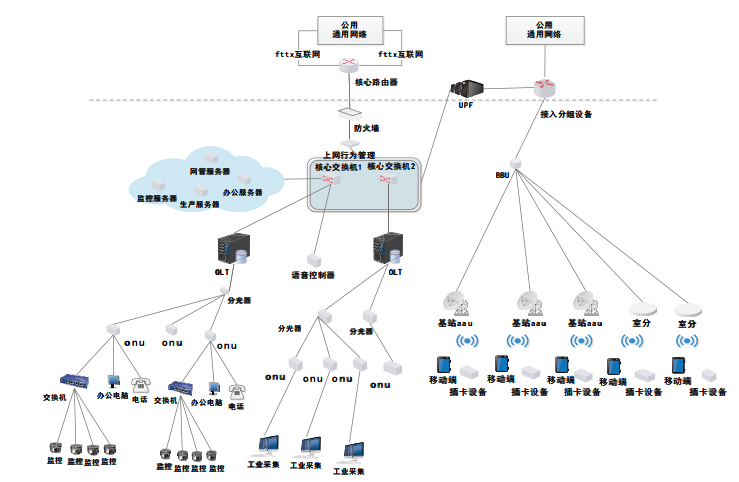
②监控和办公全光网络改造。以某厂实际情况为例,在厂区内架设光缆至厂区各个业务点,用于收敛厂区内的监控、固话、办公网络、工业生产采集点等业务。通过PON光纤网络汇聚至总机房,在厂区内形成全光的网络。
③5G网络覆盖。整个厂区做到室外5G全覆盖,厂区炼煤区域轨道、无人地磅等核心区域主要通过5G实现视频监控采集及实时处理;根据需求制定室外覆盖方案,各个基站AAU设备和通过厂区光缆环网连接至厂区机房BBU设 备 , 再连接至厂区机房智网6180h设备10GE光口,厂区办公楼需做5G室内深度覆盖。
④MEC(边缘计算技术)设备部署。基础能力包括5G边缘路由分流、边缘API网关、ICT-IaaS/CaaS服务、云边协同等服务。5G中实现超低时延,5G系统本身的作用是有限的,将MEC插入到核心网之前,则可以迅速将时延缩短。价值体现在敏感数据不出园区,提升数据安全保障,提高网络性能,实现云网融合,运用创新5G与边缘计算的组合,避免现场复杂走线、可灵活改造升级,同时保证了高性能视频数据采集与低时延自动化机械控制。 数字化转型网(www.szhzxw.cn)
2) 工业私有云建设
资源池网络建设的逻辑拓扑如图3所示。
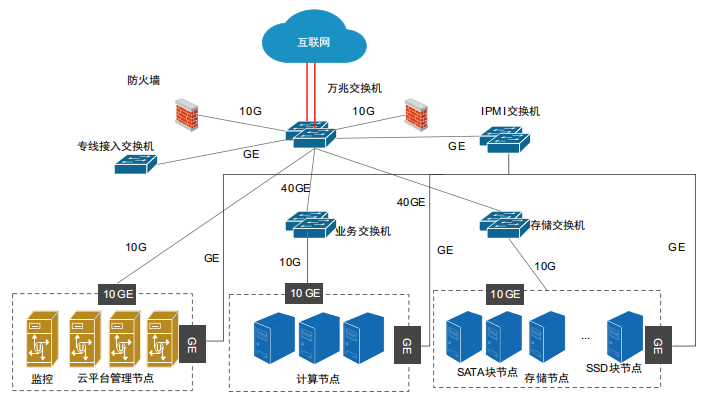
其中,三个逻辑区域分别为计算节点集群、存储节点集群、监控管理集群。物理连接方面延续沃云标准架构中的组网模式,万兆交换机分别承载计算和存储区域内的数据流量,通过核心交换机将数据汇聚,其中核心交换机旁挂防火墙保障安全边界。
3) 监控点位升级
厂区原有的视频监控系统前端点位升级,可利旧可用性较强的数字摄像机,模拟摄像机全部替换。因厂区环境不同,室外采用400万像素防爆网络高清摄像机,室内采用400万像素网络高清摄像机。
(2)数据中心
1) 工业互联网平台
①主要功能
工业互联网基础平台主要提供应用开发和微服务技术,应用开发旨在提供快速开发集成工具,为SaaS层提供支撑,微服务技术为搭建可复用的微服务组件库(如知识组件、算法组件、原理模型组件等)提供技术支撑,工业互联网基础平台采用云原生技术,支持微服务、分布式计算与存储、容器服务、多租户,并独创了云端动态领域模型,是基于微服务架构的云端在线应用开发平台。工业互联网基础平台包括分布式云基础设施、微服务运行时、公共平台基础服务、企业平台服务、低代码开发平台、CAS和组织用户服务、连接和集成服务、IOT平台和大数据服务。
②接口设计
平台具有API开放接口,主要目的是提供标准化的开放平台能力以支持其他场景的功能扩展或完善,为生态应用进入业务提供便利和赋能。 数字化转型网(www.szhzxw.cn)
平台提供内外对等的开放性,所有单据的操作都可以一键发布成API,如果系统有n个单据,每个单据有10个操作,那么可以不用任何代码,直接发布n×10个API服务。
UI可以操作的功能均可开放,参考Rest RPC的规范,主要特性包括:
支持多类型服务发布;多层级认证和授权模型;遵规,易于开发和维护。平台支持的API类型主要包括如下三类。
操作服务:操作服务关联一个具体的业务对象(基础资料或者单据),并可将其操作(含自定义操作Donothing)发布成服务,系统根据发布的服务自动生成服务接口及出入参契约。
AI服务:为满足Chatbot交互而生成的特殊服务契约,AI服务也会依附于具体的业务对象,但是他不依赖于任何的操作,而是通过自定义的AI命令和应用进行适配,所携带的参数也可以完全自定义。
自定义服务:是指可以设计将任何功能开放出来的服务,这类型的服务不依附于任何业务对象,出入参数也可完全自定义。
③安全措施
平台认证和鉴权采用OAuth2.0协议,各业务系统身份信息同步要求数据传输采用SSL加密通道。在统一认证账号方面,采用三权分立设计体系,增强系统安全性。
双重验证:主要包括客户端的验证和服务端的验证,可以防止用户在客户端恶意篡改数据,跳过客户端验证去直接操作数据库。
安全编码:用户通过表单提交的所有数据,在服务器端都要进行安全编码,防止用户提交非法脚本或执行SQL,从而获取敏感数据等操作。
密码加密:用户登录时的密码进行混合加密(将对称加密和非对称加密进行结合),加密方法不可逆,即便是密文被泄露也不会有任何问题。
访问验证:对客户端请求的所有链接都进行权限校验,以此来防止用户直接在浏览器上敲入地址进行越权访问。对操作权限进行精准控制,对所有管理链接都进行权限验证,并且可以控制前端元件是否显示。
2) 大数据仓库能力和接口
结合某企业产业多样、企业规模体量中等、数字化建设刚刚起步等现状,从高可靠基础建设和高收益重点领域先行的原则,制订数据架构。 数字化转型网(www.szhzxw.cn)
①技术架构
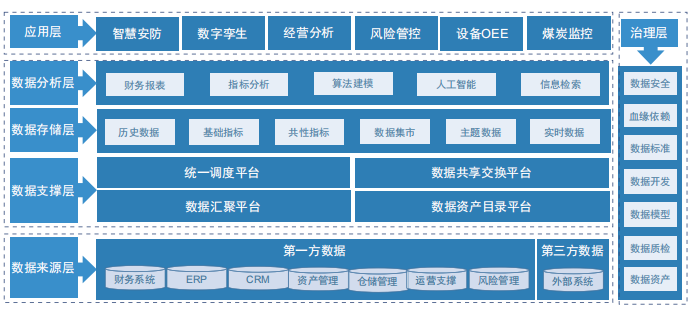
如图4所示,数据架构主要特点有:建设数据中台,汇集企业数据(财务系统、ERP、CRM、设备数据等各原有和新建系统中的数据),梳理并持续更新数据资产目录,提供数据汇聚、数据存储、数据分析、数据共享、数据交换、数据治理、数据复用等能力,为不同用户提供一站式全业务链的数据服务。以“业务数据化、数据资产化、资产服务化、服务业务化”为纲领,建设数据能力,构建数据驱动的智能企业。
②接口设计
针对企业数据来源多样性,将不同类型数据(结构型数据、半结构型数据、非结构型数据)汇聚到数据湖/数据仓库中,满足企业的不同数据需求。
数据接入是将工厂组织中的各类数据按照预先制定的数据抽取策略,完成数据从数据源向数据指标抽取的过程,是数据标准化的先驱工作。
在实际数据抽取业务场景中主要面临以下问题与考验。
一是面对庞大增量数据。分散的数据来源无法做到数据一致性、完整性,数据质量问题日益突出。数据定义不统一,在数据流程中容易产生错误,需要重新了解和分析元数据输入。
二是面临整合不同外部系统压力。为解决这一问题,可通过标准的数据接入体系,以对多样化的数据源进行管理为宗旨,支持关系型数据库、文件系统等数据源的接入管理,同时提供对数据源详情的查看,并定时或手动刷新数据源信息,便于用户实时查看数据源的变化。接入管理包含数据接入类型、接入方式、采集任务调度、异常处理等功能,实现各类数据资源的集中采集管理。
三是解决文件接入问题。各车间按照生产任务每日手工填报生产数据。系统支持Excel格式的大批量数据的高效导入和全过程管控,并可读取其中的每个Sheet页签,表头设置支持自动生成表头和把第一行作为表头。数据导入后提供用户查询、分析等功能。 数字化转型网(www.szhzxw.cn)
四是解决数据源对接问题。支持对接数据库进行数据采集,系统对数据源进行集中管理。针对关系型数据库、非关系型数据库、大数据数据源进行数据源配置,支持多种数据源的连接,具体包括MYSQL、Oracle、HIVE、Impala、GaussDB。
五是解决物联网数据接入问题。目前化工厂设备数据大多具备PLC或DCS数据监测采集接口,通过物联网平台实现实时数据接入。
3) 视频AI分析能力
本方案在园区门岗、生产区域及其它重点区域调用或部署前端采集、抓拍设备,将业务数据汇聚集中回传到数据中心,由算法服务器和管理平台提供相应的技术服务。视频AI能力部署如图5所示。
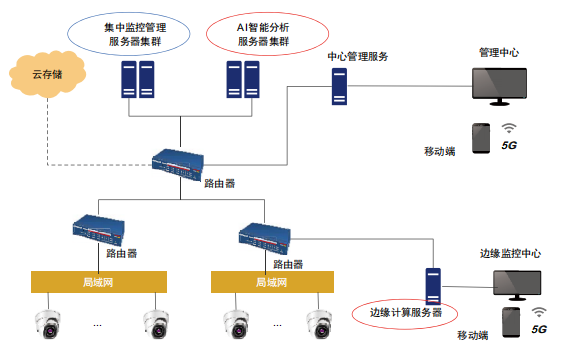
AI视频分析系统可以与整体方案进行数据交互,同步现有人员、车辆信息数据,便于工作人员管理,同时服务各个系统间的信息共享和业务协同。系统提供对外接口,可定制化开发数据传输对接原有和新建系统,实现系统间联动,提高方案可行性和系统可用性。总体架构由基础设施层、数据服务层、引擎服务层、应用平台层组成,如图6所示。
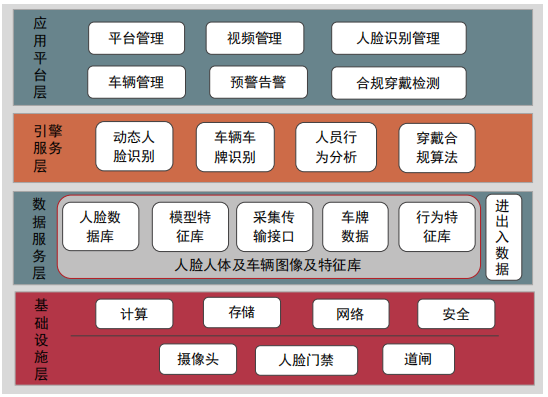
主要功能包含视频接入和解码、视频智能分析、异常结果上报、异常报警通知、分析结果存储和综合管理后台等。通过各服务模块之间的协作,实现客户现有视频监控平台的视频接入、实时解码以及对后续各类场景智能分析算法的调度,并将异常结果进行上报和通知等功能。实现场景含车牌识别、手机使用检测、安全帽、工作服穿戴检测等。 数字化转型网(www.szhzxw.cn)
在接口设计上,通过制定数据接口对接标准,开发统一的数据接口,为现有业务系统提供数据交换、集成接口,采用Web Service、API、HTTP、XML等技术,实现数据的获取,方便与其他应用系统的衔接。通过标准的开发接口,如文本、视频、图片、文档、评论、日志、站点、栏目等网站数据接口,提供数据的查询、写入、导入、导出等功能,方便地实现与其他应用系统的衔接。本方案对接安全环保平台、无人值守磅站、可视化大屏。
(3)平台应用
1) 无人值守磅站
建立由企业为中心的顶层数据,厂区相对独立的一卡通无人值守系统,实现自动、自助、结合人工方式与信息化系统达到无缝对接。整个系统采用集中管理、分布式部署的设计模式,所有的业务数据(数据、语音、控制信号等)通过客户端PC和软件系统进行就地处理,通过办公网络与控制中心进行交互。
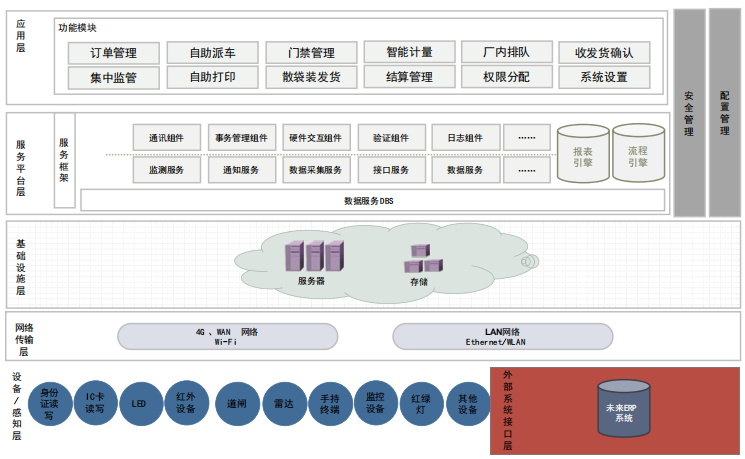
如图7所示,系统设计采用三层架构:感知层、传输层(网络传输层及基础设施层)、业务应用层(应用层及服务平台层)。 数字化转型网(www.szhzxw.cn)
2) 安全环保平台
主要功能包括法律法规和标准录入及查询、机构及职责、风险管理、制度管理、教育培训、生产设施及工艺安全、作业安全、职业健康、危险化学品管理、事故与应急管理、检查与自评、环境管理、能源管理、移动应用等14项子功能。接口设计方面,平台自身提供开放API接口供第三方系统或SDK定制程序调用 , 接口遵循REST标准,返回格式均为JSON对象。本次项目主要对接DCS、PLC等控制系统以及散点仪表生产实时数据 ; 另外对接可燃及有毒气体泄漏报警、环境污染监测、气象监测、视频监控、能源仪表等系统数据。
3) DCS数据采集
实时数据库系统是开发数据采集系统的支撑软件。在流程行业中,大量使用实时数据库系统进行控制系统监控,系统先进控制和优化控制,并为企业的生产管理和调度、数据分析、决策支持及远程在线浏览提供实时数据服务和多种数据管理功能。
结合现场各类设备、衡器、液位、传感器开发支持多协议的数据接口,实现现场数据实时采集,采集支持多种方式:支持OPC协议的标准OPC方式、支持DDE协议的标准DDE通讯方式、支持MODBUS协议的标准MODBUS通信方式、通过ODBC协议的ODBC通信方式、通过API编写的专有通信方式、通过编写设备的专有协议驱动方式等。
实时数据应用包括工艺流程图、岗位操作记录、报警历史记录、平稳率计算、KPI指标计算等。
4) 生产执行系统
打造全流程数字化生产执行管理体系,涵盖物料、人员、质检、计量、调度、统计等模块,实现了从原料进厂到产品出厂全流程管控,系统投用后,能极大促进生产经营管理的科学化、规范化、透明化和精益化。 数字化转型网(www.szhzxw.cn)
主要功能包括生产计划、生产调度、物料管理、操作管理、巡检管理、生产统计6项功能。
(4)前端展示
1) 大数据可视化平台
为指挥中心量身打造超高清小间距LED大屏显示解决方案,支持无缝、无边框、无限拼接,可自定义整屏尺寸,任意分辨率下,画面显示效果精准完整。
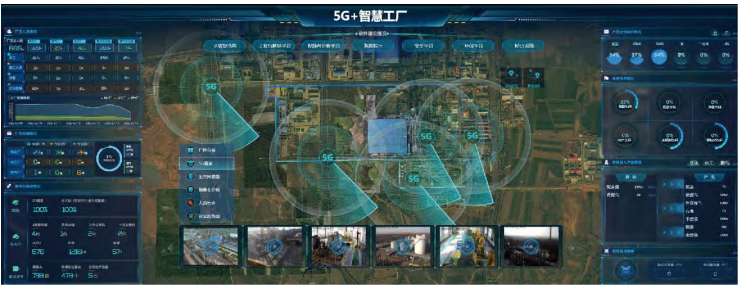
如图8所示,大屏主要内容包括生产监测主题(含生产过程监测、设备运维监测)、应急调度专题(含数据监测告警、突发事件监测、园区可视化巡检、可视化通讯指挥)、经营分析专题应用三大方向的应用。
2) 移动端小屏
随着大数据行业的快速发展,数据可视化设计在移动端的应用越来越多,数据可视化在移动端的主要体现是“数据图表”,基于最常用的数据设计组件,如柱状图、折线图、环形图等,快速了解到工厂生产及管理信息,避免使用“复杂”的数据表现形式,实现手机端展示简单易懂。相对PC,手机屏幕展示的区域有限,不适宜展现数据纬度过多的数据。本方案主要对接可视化大屏、钉钉图表。
三、应用效果与总结
5G+智慧工厂方案已成功落地某千万级化工企业项目。基础设施方面实现了5G网络、光纤100%覆盖;AI摄像头代替人全厂巡检;智能过磅机代替人自动称重;高精度人员定位,24小时实时预警。
数字平台方面已搭建七大数字应用平台—工业互联网平台、大数据仓库、视频AI平台、大数据可视化平台、安环管理平台、智能质检平台、MES管理系统。通过以上信息化建设,企业减岗17位,实现每年节约人工成本100万元;产能提升3%,增产近6万吨冶金焦,增收近1 200万元;环保预警5次,重大事故预警1次,减少生产损失近1 000万元。 数字化转型网(www.szhzxw.cn)
通过建立全场景实时准确的数据支撑智能决策体系,实现由人工经验管理决策向数据驱动管理决策模式转变。实现安全管理智能化、能源管控智能化、环保管理一体化,助力节能减排、降本增效、应急指挥决策。基于本方案应用实践探索,可为同类智慧工厂建设提供成熟、先进、稳定的模型参考,具有显著的技术实践示范意义。

翻译:
5G+ smart factory planning and practice
With the change and development of new technologies such as 5G, big data, AI, cloud computing, Internet of Things, and digital twins, more and more high-tech technologies are implanted in factory construction and transformation, and factories are gradually digitized, intelligent, and intelligent to meet the new needs of various types of factory production and management.
Smart factory is based on new technologies such as 5G, AI, digital twin, cloud computing, and integrates core elements such as people, machines, materials, methods, and environment in the factory to achieve unified production management of the factory, meet the multi-system data opening, achieve refined and dynamic control and coordination, and realize the transformation of digital factory to smart factory. Achieve cost reduction and efficiency improvement, production safety, green environmental protection and other multi-dimensional indicators. 数字化转型网(www.szhzxw.cn)
Current situation and problems
Industrial production enterprises, especially heavy industry enterprises such as chemical industry, have faced problems in recent years that informatization means cannot support the increasing productivity, production costs and safety and environmental protection management difficulties, and there is an urgent need to improve the efficiency and competitiveness of digital management. Taking the current situation of chemical factories as an example, there are mainly three outstanding problems.
1) The status quo of enterprise data is represented by information islands and no data assets. The enterprise system integration platform is not perfect, and the information system data of the whole factory area is independent, forming an information island; Enterprises have no underlying data platform, rely on application systems to store data, and lack unified data assets.
2) In terms of production status, the queuing efficiency of coal trucks in the transport link is low; The manual detection and recording in the weighing link takes 3 to 5 minutes per car, with high labor cost and low efficiency; The coal mixing process in the production link lacks systematic support, the manual report statistics are slow, the accuracy is low, the production kanban is lacking, and the scheduling mode relies on telephone and intercom.
3) In terms of the current situation of the safety environment, manual inspection has large security loopholes, low efficiency and high labor cost; Insufficient personnel control in high-risk areas; Environmental protection data can not be timely and comprehensive grasp, lack of early warning mechanism.
Second, 5G+ smart factory construction plan
1. Construction principles
5G+ Smart factory construction With 5G technology as the lead, consolidate IT infrastructure, deepen industrial applications, industrial Internet platform as the main line, comprehensive use of automation, Internet of things, cloud computing, big data and other mature technologies, respectively from the enterprise data-driven transformation and production management business reshaping two dimensions, start the construction of smart factories. 数字化转型网(www.szhzxw.cn)
The overall design first establishes the network, cloud, centralized control and platform infrastructure that the enterprise relies on for digitalization, and then selects stable, advanced and applicable scenarios from the aspects of the whole process digital management and local intelligence to form a complete scheme.
2. Overall design
(1) A top-level design
The overall design scheme consists of equipment monitoring and control, layered construction of basic technology and layered design of production and operation, and sub-section design within each level, as shown in Figure 1. Equipment control layer overall planning automation equipment, instrumentation and other intelligent equipment, video camera equipment, quality testing equipment and other equipment data acquisition and limited remote control. The basic technology layer refers to the hierarchical model of the communication Internet industry, and carries out four level subdivisions, respectively from the network, communication, cloud, and key basic capabilities. Layer 4 focuses on 5G+PON network technology, providing design for industrial production network (internal network), management network (external network) and Internet networking and limited interworking; L3 layer focuses on fusion communication integration; L2 layer focuses on enterprise industrial cloud computing, edge computing and data center construction design; L1 layer combines common soft and hard capabilities with basic capabilities such as data storage, analysis, and GIS. The production and operation layer is classified by people, machinery, materials, law and environment, focusing on four aspects: production and quality, energy consumption, safety and environment, and equipment health management.
Figure 1 Top-level design
(2) Four main structures
According to the framework of top-level design, the main structure of infrastructure, data center, platform application and front-end display is determined. The infrastructure includes six major contents: factory hybrid cloud, full halo network transformation, 5G network, equipment intelligent perception, monitoring point addition, and modular machine room construction. The data center includes an industrial Internet core platform and four capability interfaces for Internet of Things, big data warehouse, video cloud, and video AI analysis. Platform applications include unmanned pound station, coal yard unloading vehicle guidance, safety and environmental monitoring, 3D intelligent inventory, chemical/gas plant robot inspection, intelligent robot flue inspection, coking 4 vehicles remote control and scheduling and digital party building eight applications. The front end display includes a visualization platform, a large command and dispatch screen and a small mobile office screen.
3. Detailed plan
(1) Infrastructure
1) 5G+ enterprise all-optical network construction
① Industrial ring network transformation. Based on the optical cable basic network, a set of industrial ring network is established, which integrates the networks carrying different services and eliminates the problems such as high construction costs and difficult maintenance and upgrading caused by the use of multiple networks. The main equipment room of the enterprise is the central equipment room. In the equipment room, the smart metropolitan Area network (MAN) access device (reasonably configured based on specific services) is installed, connected to the smart metropolitan area network, and carries the 5G network. The deployment equipment includes: 1 core router, 1 firewall, 1 online behavior manager, 2 core switches (one active and one standby), 2 OLTs (one active and one standby), several ONUs, MDU, voice gateways, voice controllers and other devices, which carry the voice call, office, monitoring and production of the plant, as shown in Figure 2.
FIG. 2 Schematic diagram of industrial ring network transformation
② Monitoring and office all-optical network transformation. Taking the actual situation of a factory as an example, the optical cable is set up in the factory to each business point of the factory, which is used to converge the monitoring, fixed line, office network, industrial production collection point and other services in the factory. The PON fiber network is converged to the main machine room to form an all-optical network in the factory. 数字化转型网(www.szhzxw.cn)
③5G network coverage. The entire factory can achieve full coverage of outdoor 5G, and the core areas of the coal refining area of the factory, such as the track and unmanned weighbridge, mainly achieve video surveillance acquisition and real-time processing through 5G; The outdoor coverage plan is developed according to the requirements. Each base station AAU device is connected to the BBU of the plant room through the optical cable ring network of the plant room, and then connected to the 10GE optical port of the 6180h device of the intelligent network of the plant room. The office building of the plant room needs to be covered with 5G indoor depth.
④MEC(edge computing technology) device deployment. Basic capabilities include 5G edge routing, edge API gateway, ICT-IaaS/CaaS services, cloud edge collaboration and other services. To achieve ultra-low latency in 5G, the role of the 5G system itself is limited, and the delay can be quickly shortened before MEC is inserted into the core network. The value is reflected in the sensitive data does not leave the park, improves data security, improves network performance, realizes cloud network integration, uses the combination of innovative 5G and edge computing, avoids complex on-site routing, can be flexibly transformed and upgraded, and ensures high-performance video data acquisition and low-delay automated mechanical control.
2) Industrial private cloud construction
Figure 3 shows the logical topology of resource pool network construction.
Figure 3 Logical topology of resource pool network construction
The three logical zones are a compute node cluster, a storage node cluster, and a monitoring and management cluster. In terms of physical connection, the networking mode of the Woyun standard architecture continues. The 10-gigabit switch carries the data traffic in the computing and storage areas respectively, and the data is aggregated through the core switch. The core switch is connected to the firewall to ensure the security boundary.
3) Monitoring point upgrade
The front-end of the original video surveillance system in the factory is upgraded, and the old digital cameras with strong availability can be replaced by analog cameras. Due to the different environment of the factory, the outdoor uses 4 million pixel explosion-proof network HD camera, and the indoor uses 4 million pixel network HD camera. 数字化转型网(www.szhzxw.cn)
(2) Data center
1) Industrial Internet platform
① Main functions
The basic platform of industrial Internet mainly provides application development and microservice technology, and application development aims to provide rapid development and integration tools to provide support for the SaaS layer. Microservice technology provides technical support for building reusable microservice component libraries (such as knowledge component, algorithm component, principle model component, etc.). The basic platform of industrial Internet adopts cloud native technology. Support microservices, distributed computing and storage, container services, multi-tenant, and the original cloud dynamic domain model, is a cloud online application development platform based on microservices architecture. The Industrial Internet infrastructure includes distributed cloud infrastructure, microservice runtimes, common platform infrastructure services, enterprise platform services, low-code development platforms, CAS and organizational user services, connectivity and integration services, IOT platforms, and big data services.
② Interface design
The platform has an API open interface, the main purpose is to provide standardized open platform capabilities to support the function expansion or improvement of other scenarios, and to facilitate and empower ecological applications to enter the business.
The platform provides the openness of internal and external equivalence, and all the operation of documents can be published as apis with one click. If the system has n documents and each document has 10 operations, then n×10 API services can be published directly without any code.
All functions that the UI can operate can be opened, referring to the Rest RPC specification, the main features include: 数字化转型网(www.szhzxw.cn)
Support multiple types of service release; Multi-level authentication and authorization model; Compliant, easy to develop and maintain. There are three types of apis supported by the platform.
Operation service: An operation service is associated with a specific business object (basic data or documents), and its operations (including the user-defined operation Donothing) can be published as services. The system automatically generates service interfaces and access contracts based on published services.
AI service: In order to meet the special service contract generated by Chatbot interaction, AI service will also be attached to the specific business object, but it does not depend on any operation, but through the customized AI command and application adaptation, the carried parameters can also be fully customized.
Custom service: It refers to the service that can be designed to open out any function, this type of service is not attached to any business object, and the access parameters can be fully customized.
③ Safety measures
OAuth2.0 protocol is adopted for platform authentication and authentication, and the synchronization of identity information of each business system requires SSL encryption channel for data transmission. In terms of unified authentication accounts, the three rights separation design system is adopted to enhance system security. 数字化转型网(www.szhzxw.cn)
Dual authentication: Mainly includes client authentication and server authentication, which can prevent users from maliciously tampering with data on the client and directly operating the database by skipping client authentication.
Secure encoding: All data submitted by users through the form must be securely encoded on the server side to prevent users from submitting illegal scripts or executing SQL to obtain sensitive data.
Password encryption: The user login password is mixed encryption (symmetric encryption and asymmetric encryption combination), the encryption method is irreversible, even if the ciphertext is leaked will not have any problems.
Access verification: All the links requested by the client are checked for permission, so as to prevent users from entering the address directly on the browser for unauthorized access. Precise control of operation permissions, permission verification for all management links, and control whether front-end components are displayed.
2) Big data warehouse capability and interface
Combined with the current situation of an enterprise with diverse industries, medium enterprise size, and just starting digital construction, the data architecture is formulated from the principle of high-reliable infrastructure construction and high-yield key areas first.
① Technical architecture
As shown in Figure 4, the main features of the data architecture are: Build a data center, collect enterprise data (financial system, ERP, CRM, equipment data and other existing and new system data), sort out and continuously update the data asset catalog, provide data aggregation, data storage, data analysis, data sharing, data exchange, data governance, data reuse and other capabilities, to provide one-stop data services for different users in the whole business chain. With the program of “business data, data asset, asset service and service business”, we will build data capability and build a data-driven intelligent enterprise. 数字化转型网(www.szhzxw.cn)
Figure 4 Technical architecture of big data warehouse
② Interface design
In view of the diversity of enterprise data sources, different types of data (structured data, semi-structured data, unstructured data) are aggregated into the data lake/data warehouse to meet the different data requirements of enterprises.
Data access is the process of extracting all kinds of data from the data source to the data index according to the pre-established data extraction strategy, which is the pioneer work of data standardization.
In the actual data extraction business scenario, we mainly face the following problems and tests.
One is to face huge incremental data. Data consistency and integrity cannot be achieved from scattered data sources, and data quality problems are becoming increasingly prominent. Data definitions are not uniform, and errors are likely to occur in the data flow. Therefore, you need to re-understand and analyze the metadata input.
The second is the pressure to integrate different external systems. In order to solve this problem, the standard data access system can be used to manage diverse data sources, support the access management of relational databases, file systems and other data sources, and provide the view of data source details, and periodically or manually refresh the data source information, so that users can view the changes of data sources in real time. Access management includes data access type, access mode, collection task scheduling, and exception handling to implement centralized collection and management of various data resources. 数字化转型网(www.szhzxw.cn)
Third, solve the file access problem. Each workshop manually fill in the production data according to the production task every day. The system supports efficient import and whole process control of large quantities of data in Excel format, and can read each Sheet TAB. The table header Settings support automatic header generation and the first row as the table header. After data import, users can query and analyze the data.
Fourth, solve the problem of data source interconnection. The system can connect to the database for data collection and centrally manage data sources. Data source configuration for relational databases, non-relational databases, and big data sources supports the connection of multiple data sources, including MYSQL, Oracle, HIVE, Impala, and GaussDB.
Fifth, solve the problem of Internet of Things data access. At present, most of the chemical plant equipment data has PLC or DCS data monitoring and acquisition interface, and real-time data access is achieved through the Internet of Things platform.
3) Video AI analysis capability
The solution invokes or deploies front-end acquisition and capture equipment at the gate, production area and other key areas of the park, and gathers and sends business data back to the data center, and the algorithm server and management platform provide corresponding technical services. Video AI capability deployment is shown in Figure 5. 数字化转型网(www.szhzxw.cn)
Figure 5 Video AI capability deployment diagram
The AI video analysis system can conduct data interaction with the overall program, synchronize existing personnel and vehicle information data, facilitate staff management, and serve information sharing and business collaboration between various systems. The system provides external interfaces to customize data transmission and interconnect with existing and new systems to realize system linkage and improve solution feasibility and system availability. The overall architecture is composed of infrastructure layer, data service layer, engine service layer and application platform layer, as shown in Figure 6.
Figure 6 Technical architecture of video AI capabilities
The main functions include video access and decoding, video intelligent analysis, abnormal result reporting, abnormal alarm notification, analysis result storage and integrated management background. Through the cooperation between various service modules, the functions of video access, real-time decoding and scheduling of intelligent analysis algorithms for various subsequent scenarios of the customer’s existing video surveillance platform are realized, and abnormal results are reported and notified. The implementation scenarios include license plate recognition, mobile phone use detection, helmet, work clothes wearing detection, etc.
In the interface design, through the formulation of data interface docking standards, the development of a unified data interface for the existing business system to provide data exchange, integration interface, the use of Web Service, API, HTTP, XML and other technologies, to achieve data acquisition, facilitate the connection with other application systems. Through the standard development interface, such as text, video, pictures, documents, comments, logs, sites, columns and other website data interface, to provide data query, write, import, export and other functions, convenient to achieve the connection with other application systems. This scheme is connected with the safety and environmental protection platform, unattended weighing station and visual large screen.
(3) Platform application
1) Unattended pound station
The establishment of enterprise-centered top-level data, the factory area is relatively independent of the card unattended system, to achieve automatic, self-help, combined with manual methods and information system to achieve seamless docking. The whole system adopts the design mode of centralized management and distributed deployment, and all business data (data, voice, control signals, etc.) are processed locally through the client PC and software system, and interact with the control center through the office network. 数字化转型网(www.szhzxw.cn)
FIG. 7 Technical architecture of unattended pound station system design
As shown in Figure 7, the system design adopts a three-layer architecture: perception layer, transport layer (network transport layer and infrastructure layer), and business application layer (application layer and service platform layer).
2) Safety and environmental protection platform
The main functions include 14 sub-functions such as entry and inquiry of laws, regulations and standards, institutions and responsibilities, risk management, system management, education and training, production facilities and process safety, operation safety, occupational health, hazardous chemicals management, accident and emergency management, inspection and self-assessment, environmental management, energy management, and mobile applications. In terms of interface design, the platform itself provides open API interfaces for third-party systems or SDK custom programs to call, interfaces comply with REST standards, and the return format is JSON object. This project is mainly connected with DCS, PLC and other control systems as well as the real-time production data of scatter instruments; In addition, the docking of flammable and toxic gas leakage alarm, environmental pollution monitoring, meteorological monitoring, video surveillance, energy instrumentation and other system data.
3) DCS data collection
Real-time database system is the supporting software for developing data acquisition system. In the process industry, a large number of real-time database systems are used for control system monitoring, system advanced control and optimization control, and provide real-time data services and a variety of data management functions for enterprise production management and scheduling, data analysis, decision support and remote online browsing. 数字化转型网(www.szhzxw.cn)
Combined with all kinds of on-site equipment, weighing instruments, liquid levels, sensors to develop multi-protocol data interfaces to achieve real-time field data acquisition, collection supports a variety of ways: Standard OPC mode supporting OPC protocol, standard DDE communication mode supporting DDE protocol, standard MODBUS communication mode supporting MODBUS protocol, ODBC communication mode through ODBC protocol, proprietary communication mode written through API, proprietary protocol driver mode by writing devices, etc.
Real-time data applications include process flow chart, post operation record, alarm history record, stability rate calculation, KPI index calculation, etc.
4) Production execution system
Create a full-process digital production execution management system, covering materials, personnel, quality inspection, measurement, scheduling, statistics and other modules, to achieve the control of the whole process from raw materials into the factory to products, after the system is put into use, it can greatly promote the scientific, standardized, transparent and lean production management.
The main functions include production planning, production scheduling, material management, operation management, inspection management, production statistics 6 functions.
(4) Front-end display
1) Big data visualization platform
Tailored for the command center to create ultra-high-definition small-pitch LED large-screen display solution, support seamless, borderless, unlimited splicing, can customize the whole screen size, any resolution, the picture display effect is accurate and complete.
Figure 8 Service panorama display platform
As shown in Figure 8, the main content of the large screen includes the application of production monitoring topics (including production process monitoring and equipment operation and maintenance monitoring), emergency dispatching topics (including data monitoring and alarm, emergency monitoring, visual inspection of the park, visual communication command), and special application of business analysis. 数字化转型网(www.szhzxw.cn)
2) Mobile terminal small screen
With the rapid development of big data industry, more and more applications of data visualization design are being applied in mobile terminal. Data visualization on mobile terminal is mainly reflected in “data chart”, which is based on the most commonly used data design components, such as bar chart, line chart, ring chart, etc., to quickly understand the production and management information of the factory and avoid the use of “complex” data presentation forms. The mobile display is easy to understand. Compared with PC, mobile phone screen display area is limited, it is not suitable to display data with too much data latitude. This scheme mainly docking visual large screen, nail chart.
Third, application effect and summary
The 5G+ smart factory program has successfully landed in a ten-million-level chemical enterprise project. In terms of infrastructure, 100% coverage of 5G network and optical fiber has been achieved. AI cameras instead of people plant inspection; Intelligent weighing machine instead of human automatic weighing; High-precision personnel positioning, 24-hour real-time warning.
In terms of digital platform, seven digital application platforms have been built – industrial Internet platform, big data warehouse, video AI platform, big data visualization platform, safety management platform, intelligent quality inspection platform, MES management system. Through the above information construction, the company reduced the number of jobs 17, to achieve annual labor cost savings of 1 million yuan; Production capacity increased by 3%, an increase of nearly 60,000 tons of metallurgical coke, and an increase of nearly 12 million yuan; Five environmental warnings, one major accident warning, reducing production losses of nearly 10 million yuan.
By establishing the intelligent decision-making system supported by real-time and accurate data of the whole scene, the transformation from manual experience management decision-making to data-driven management decision-making mode is realized. Realize intelligent safety management, intelligent energy control, and integrated environmental protection management to help energy conservation and emission reduction, cost reduction and efficiency improvement, and emergency command and decision-making. Based on the application practice exploration of this scheme, it can provide a mature, advanced and stable model reference for the construction of similar smart factories, and has significant technical practice demonstration significance. 数字化转型网(www.szhzxw.cn)
本文由数字化转型网(www.szhzxw.cn)转载而成,来源于新工业网;编辑/翻译:数字化转型网宁檬树。
免责声明: 本网站(https://www.szhzxw.cn/)内容主要来自原创、合作媒体供稿和第三方投稿,凡在本网站出现的信息,均仅供参考。本网站将尽力确保所提供信息的准确性及可靠性,但不保证有关资料的准确性及可靠性,读者在使用前请进一步核实,并对任何自主决定的行为负责。本网站对有关资料所引致的错误、不确或遗漏,概不负任何法律责任。
本网站刊载的所有内容(包括但不仅限文字、图片、LOGO、音频、视频、软件、程序等) 版权归原作者所有。任何单位或个人认为本网站中的内容可能涉嫌侵犯其知识产权或存在不实内容时,请及时通知本站,予以删除。