

2024年5月22日,“经济新动能:面向世界的创新”研讨会在北京沈家本故居举办。
中国社会科学院大学教授、国务院原副秘书长江小涓,清华大学苏世民书院院长、清华大学中国科技政策研究中心主任薛澜,中泰国际金融有限公司首席经济学家李迅雷和复旦大学经济学院教授、复旦大学中国社会主义市场经济研究中心常务副主任陈钊从数字、治理、资本、制度等角度剖析了创新经济的潜力和挑战,提出了政策建议。 数字化转型网(www.szhzxw.cn)
江小涓教授发表了题为“数智时代的创新挑战和应对思考”的主旨演讲。她认为,现在数据密集型的创新范式下,大型数字企业成为创新的枢纽和核心,同时开源、开放的组织互动方式成为创新的潮流。中国应进一步开放公共数据和向产业界汇聚人才,提升创新能力。以下为江小涓教授的演讲精要,经演讲者审订。
一、大型数字科技企业和平台成为创新的枢纽和核心
数智时代的科技创新有重要变化,这种变化不是原来维度的调整,而是“海量数据”这个新维度的加入,使得创新具有了“数据密集型创新”的新特征。我们近期一个研究的主题叫“数据和数据关系驱动的创新”。我们发现,数据成为创新的重要资源,同时也重新定义了创新各主体之间的关系。数据极大增加了我们洞察和理解世界的能力,也使得关联分析、知识图谱等需要海量计算的知识发现路径成为可能。
在这样的背景下,科技成果向产业应用转化的创新链条发生了根本性变化。作为海量数据的生产者、汇聚者和聚合挖掘者的平台企业,在创新链条中的地位大大提升,位势不断增强。原来的产业成果转化链条,是高校进行基础研究,研究机构进行前沿技术开发,然后企业完成产业转化和应用。
这个模式存在科技成果向产业应用的转化率较低的问题。2022年,国家知识产权局发布的《中国专利调查报告》显示,高校发明专利产业化率为3.9%,很多研究投入没有产业结果。而数据驱动的创新范式带来了四方面的改变。
首先,数据能力支撑大型数字企业产学研一体化创新。大型数字企业成为产学研一体化创新的核心,因为它能生产和汇聚海量数据,能准确感知市场需求和应用场景,同时有能力快速大规模投入。以车联网平台为例,数字企业占据核心和枢纽地位,以平行、并联的方式将基础到应用的各个创新环节都关联起来。在这个模式下不再存在科研成果转换的问题。
其次,数据能力支撑大型数字企业从事前沿技术创新。在自动驾驶、云计算、渲染引擎、虚拟现实这几个最重要的前沿技术领域中,从2007年开始,全球发明专利的企业数量超过了高校和研究机构,从2015年开始,中国发明专利排名靠前的几乎全都是企业。大型平台企业成为前沿技术研究中的重要力量。
第三,数据能力支撑大型数字企业从事基础研究。大型数字企业从事基础研究的能力极大加强,积极探索0-1的原始创新。在人工智能国际顶刊的文章发表数上,2011年全球范围企业发表超过高校,2016年起中国企业的文章发表也超过了高校。 数字化转型网(www.szhzxw.cn)
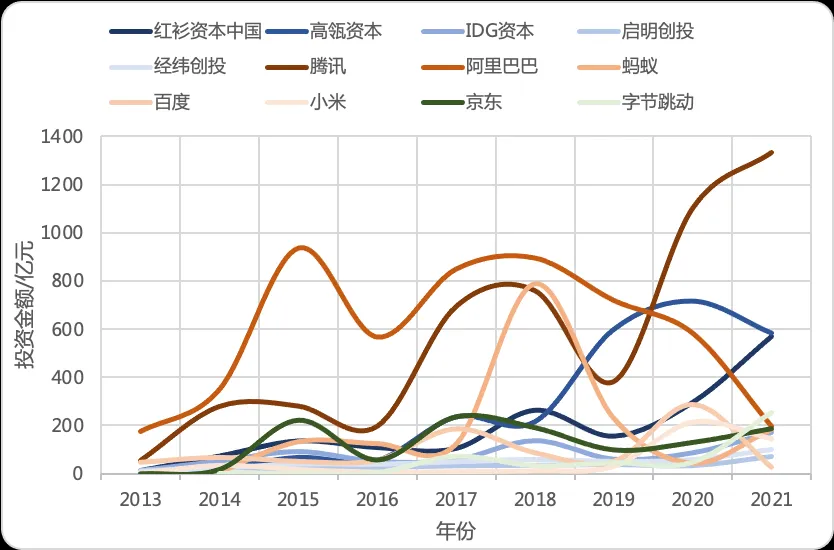
最后,数字能力支撑大型数字企业投资新创企业。现在投资的真正主流部分是大型数字企业做的CVC(编注:企业风险投资,Corporate Venture Capital)企业创投资金。2013年到2021年的数字企业CVC对外投资金额显示(图1),除了蚂蚁和阿里在2019年受到严格监管后投资额下降,其他对外投资额上升最快的都是大型平台企业。数字平台的创投资金是独角兽企业和新创企业重要的来源,2021年中国独角兽排名前100的企业中,近2/3的企业获得过大型数字企业的投资,A、B两轮中获得过数字科技企业投资的比例占到近一半。和传统创投资金财务投资特征明显的情形相比,数字企业创投资金具有更明显的战略投资者特征,更偏向于耐心资本、长期主义,重要性不断增加。
因此,由于数据、数据关系、获得数据的能力、计算数据的能力、挖掘数据的能力等因素,大型数字科技企业和平台成为创新的枢纽和核心。在数字和数字相关的十大领域中,原来横向传递式的创新方式发生了根本性改变。 数字化转型网(www.szhzxw.cn)
二、开源成为软件、网络和数字领域的开发和创新模式
目前大家担心的问题是,大企业为主导会形成垄断吗?数据越来越多,数据还可以自我生产和人工合成。大模型的规模经济和范围经济效应特别显著,规模效应递增的特点由“边际”转变为“质变”(涌现)。这有可能带来市场结构和竞争关系的根本改变,少数头部企业越来越大。国内外有关人工智能的讨论中,除了社会和伦理问题之外,经济学家非常担心新模式对于市场结构的影响。
同时,数据和场景需求会影响创新组织的演进。数据越好,应用场景越多,更可能带来开源开放,使后起者获得加速发展的机会。
数字时代,开源成为一种创新理念与文化形式,指共创共享的技术创新。开源技术源于软件,指源代码向公众开放的软件技术。开源能够汇聚众智、多方协同,获得透明高效的海量数据、大量自动化协作工具、世界范围内智慧资源的分布式协作和接力式开发,推动技术持续迭代演进和大范围联结产品、企业和产业,构建大规模生产和应用场景。 数字化转型网(www.szhzxw.cn)
开源发展到今天,已经成为软件、网络和数字领域的开发和创新模式。全球97%的软件开发者和99%的企业使用开源软件,72%以上移动操作系统基于开源Linux内核,全球70%以上的新立项软件项目采用开源模式,最近两年采用开源模式的达到了80%以上。
开源背后是需求的驱动,是这个时代对场景和数据的需要,也是应用者、开发者的需求,从而产生了开源这一本质性的创新变化。最近二十年的云计算、大数据、AI的发展均受益于开源。
在软件时代,趋势是边际效应递增,可以复用和复制的软件产品会让大者愈大。但是开源模式限制了规模递增导致的大者愈大,加快了后起者的追赶速度。从2009年到2016年的全球操作系统市场份额中,微软(闭源)占比从90%下降到不足40%,安卓(开源)占比上升到超过40%。
人工智能大模型时代,领先企业更多采用闭源模式,后起企业采用开源模式。不过,通用大模型时代的规模递增比软件业更加显著,大模型的涌现会出现后发者没有的能力。未来期待多种模型能够形成竞争格局,希望在多种因素的博弈下,市场竞争性不会受到破坏性的影响。从现在闭源的、开源的进展来看,很难对未来格局下判断。不论什么模式,我们希望能够维护多年来促进创新的竞争性市场结构。
当下的大科学都是开放科学。新的科学发现要么看得越来越远、越来越广,要么就是探究得越来越深、越来越细。海量数据处理和人力资本需求,催生多国合作大科学项目。例如,2021年新批的17个国家共同建设的平方公里阵列射电望远镜项目,接受面积达一平方公里,它由很多小天文台组合成各种曲面,比当前世界上最大同类设备搜寻速度提高1万倍。
三、发挥优势弥补短板,提升中国数智时代创新能力
在数字智能时代,中国创新能力面临三个“关键”。
第一是数据问题。AI大模型作为新的生产力范式,已经在各行各业中展现出不可替代的价值。中国要在AI大模型的竞争中迎头赶上,补齐数据短板迫在眉睫。而中国目前数据不太好用、也不够多。中国的优势是公共部门强大,数据量和数据结构良好。政府角度要尽快强力推动政府数据和公有企事业单位的数据进一步开放。这是我们的产业优势,也是我们的制度强项。
大模型厂商使用的模型训练数据可分为开源数据集、网络爬虫数据、商业采购及合作授权数据、自有业务数据和合成数据五类。在各类数据中,公共数据可作为中国发挥产业优势和制度优势、增加数据供给的关键抓手。 数字化转型网(www.szhzxw.cn)
由于公共部门的绝对和相对规模大,中国公共数据相对体量大。中国有大量的政府部门和企事业单位,出于公共目的对公民进行合理数据采集,这使得中国的公共数据量为全球之最。有研究表明,中国政府部分掌握的数据资源占全社会数据资源总量的50%-80%(这个具体数据的可靠性我有点吃不准,但中国公共数据量大的判断不会错),但开放共享不够,数据利用效率不够高。
公共数据开放是国际共识。2011年,巴西、印尼、墨西哥、挪威、南非、菲律宾、英国和美国签署了《开放数据声明》,推动公共数据开放。开放数据的定义是“公众可获取的、能够被用户完整观测和使用的数据”。目前全球七十余个国家都参与其中。 数字化转型网(www.szhzxw.cn)
中国现在开放的数据多是在社会、企业APP上获取的,以及部分公共数据。目前数据的开放度对于社会需求和投喂机器远远不够。中国应发挥制度优势,以最大力度开放公共数据,并推动企事业单位的数据与其它各类数据汇聚融通,为数智产业发展提供关键要素。
第二是人才问题。研究显示,从2002年到2014年,学术界在开发最先进的AI系统方面处于领先地位。2014年到2022年,32个重要的机器学习模型都诞生在产业界,学术界仅有3个,2023年的数据比例相似。关键原因是尖端人工智能研究需要大量的数据、算力、算法。在快速的技术迭代中,只有少数大科技平台能够汇聚最重要的力量。
全世界范围内,大平台企业能够从高校吸引图灵奖,甚至诺奖学者担任首席科学家。不过,在中国,这两年的趋势反而是平台的首席科学家回到高校。从1980年代开始,中国的国有企业大工程师会在周末给乡镇企业做产品、做设计。1990年代一大批学者“下海”,即使后面“下海”不行了,也是愿意去做实践。而今天出现高校相较企业更有优势的局面。出现中国产业界顶级的科学家向高校回流的现象,与时代的趋势不符。
企业吸引人才需要政策支撑。人工智能大模型需要快速汇聚海量资源和工程化技术能力,而且应用落地也要细颗粒度的专业知识。因而,在这一轮发展中产业界的地位更重要,无论是资金、导向、帽子,这些吸引人才的各类资源都需要向企业汇聚。 数字化转型网(www.szhzxw.cn)
第三是关键场景。对于拥有海量数据的国有大企事业单位来讲,除了依靠数据完成自身业务,也需要为社会创新提供数据支持,推动数据原生企业,即由数据支撑的新的创新企业的发展。比如英国2023年成立了国家智能数据委员会,推动开放金融、开放能源、开放通信等数据开放行动。
美国“开放银行”行动也已推动多年。该行动中,当客户希望到其他金融机构获得服务的时候,之前为其提供过服务的银行应允许它带走所有在这个银行的存档数据。这些数据可以用于用户画像和信用评估,从而为中小型互联网金融机构提供客户过往信用记录的支持。
中国的医疗、交通、金融、电力都由国有大企事业单位经营,相关数据具有结构化、实时数据更新、迭代良好等特点。
数据优势企业不能只为自己“数据增强”,还要为更多企业“数据使能”,推动社会创新。这就需要通过引导和规制等多种方式让这些开放,让更多的企业能够用这些存量数据来创新,从而实现数据支撑的创新。
我们要相信中国互联网企业的创新意愿和能力。按营收增长和股市表现看,中国互联网行业头部企业的表现比较复杂,虽然几个传统头部企业最近几年的增长趋缓,按市值衡量的股市表现也不够理想,但中国同时有一批极具活力和成长性的头部企业市值和收益表现俱佳。头部企业总体活跃度和排序变化度,也是产业活力的重要指标。(表2)。 数字化转型网(www.szhzxw.cn)
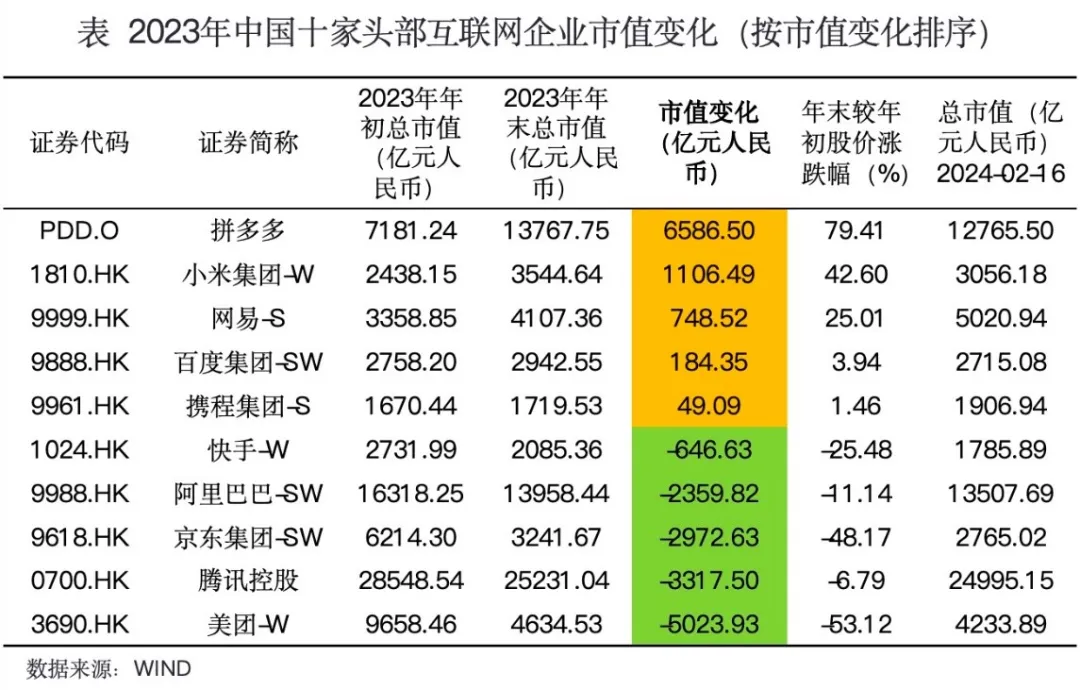
因此,虽然目前阿里、京东、腾讯几家在资本市场上表现不甚如人意,和美国的前四大(互联网企业)相比差距拉大,但并不能说明我国数字企业的全局情况。要相信我们的企业我们创业者的创新意愿和愿意付出的努力,中国很多互联网企业在过去几年艰难的环境下仍实现了发展。全球APP下载量前10中一直有中国企业,有三五个当然不一定是老企业。中国互联网企业的活力很大程度上体现在有一个高速成长的创新企业簇群上。 数字化转型网(www.szhzxw.cn)
翻译:
Jiang Xiaojuan: In the era of digital intelligence, China’s innovation ability faces three “keys”
On May 22, 2024, the seminar “New Economic Momentum: Innovation for the World” was held at the former Residence of Shenjiaben in Beijing.
Jiang Xiaojuan, Professor of the Chinese Academy of Social Sciences and former Deputy Secretary-General of The State Council; Xue LAN, Dean of Schwarzman College and Director of the China Science and Technology Policy Research Center of Tsinghua University; Li Xunlei, chief economist of Zhongtai International Finance Co., LTD., and Chen Zhao, professor of the School of Economics at Fudan University and executive deputy director of the China Socialist Market Economy Research Center at Fudan University, analyzed the potential and challenges of the innovation economy from the perspectives of numbers, governance, capital and institutions, and put forward policy recommendations.
Professor Jiang Xiaojuan delivered a keynote speech entitled “Innovation Challenges and coping Thoughts in the Age of digital Intelligence”. She believes that under the current data-intensive innovation paradigm, large digital enterprises have become the hub and core of innovation, while open source and open organizational interaction have become the trend of innovation. China should further open up public data and pool talents with industry to enhance innovation capacity. The following are the highlights of Professor Jiang Xiaojuan’s speech, as reviewed by the speaker.
First, large digital technology enterprises and platforms become the hub and core of innovation
There is an important change in scientific and technological innovation in the era of digital intelligence. This change is not the adjustment of the original dimension, but the addition of the new dimension of “massive data”, which makes the innovation have a new feature of “data-intensive innovation”. One of our recent research topics is “Data and data relationship-driven innovation.” We found that data became an important resource for innovation and also redefined the relationship between the various entities of innovation. Data has greatly increased our ability to see and understand the world, and it has also made possible knowledge discovery paths that require massive calculations, such as association analysis and knowledge graphs.
In this context, the innovation chain that transforms scientific and technological achievements into industrial applications has undergone fundamental changes. As the producer, aggregator and aggregator of mass data, the platform enterprise has greatly improved its position in the innovation chain and its position has been continuously strengthened. The original industrial achievement transformation chain is that universities carry out basic research, research institutions carry out cutting-edge technology development, and then enterprises complete industrial transformation and application.
This model has the problem of low conversion rate of scientific and technological achievements to industrial application. In 2022, the “China Patent Survey Report” issued by the State Intellectual Property Office shows that the industrialization rate of invention patents in universities is 3.9%, and many research investments have no industrial results. The data-driven innovation paradigm has brought about four changes. 数字化转型网(www.szhzxw.cn)
First of all, data capabilities support the integration of industrial, academic and research innovation in large digital enterprises. Large digital enterprises become the core of industry-university-research integration innovation, because it can produce and gather massive data, can accurately perceive market demand and application scenarios, and has the ability to quickly and large-scale investment. Taking the vehicle networking platform as an example, digital enterprises occupy the core and hub position, linking the various innovation links from the foundation to the application in a parallel and parallel way. Under this model, there is no longer the problem of transferring scientific research results.
Second, data capabilities enable large digital enterprises to engage in cutting-edge technological innovation. In the most important frontier technology fields of autonomous driving, cloud computing, rendering engine, virtual reality, since 2007, the number of global invention patents exceeded the number of universities and research institutions, and since 2015, almost all of the top Chinese invention patents are enterprises. Large platform enterprises have become an important force in cutting-edge technology research.
Third, data capabilities enable large digital companies to engage in basic research. The ability of large digital enterprises to engage in basic research has been greatly strengthened, and the original innovation of 0-1 has been actively explored. In terms of the number of articles published in the top journal of Artificial Intelligence International, the number of articles published by global enterprises exceeded that of universities in 2011, and the number of articles published by Chinese enterprises has also exceeded that of universities since 2016. 数字化转型网(www.szhzxw.cn)
Finally, digital capabilities enable large digital companies to invest in start-ups. The real mainstream part of investment now is CVC (Corporate Venture Capital) funding by large digital companies. According to the amount of CVC outbound investment of digital enterprises from 2013 to 2021 (Figure 1), except Ant and Ali, whose investment decreased after being strictly regulated in 2019, the other outbound investment rose fastest were large platform enterprises. Venture capital from digital platforms is an important source of unicorn companies and new startups. Among the top 100 Chinese unicorn companies in 2021, nearly 2/3 of them have received investment from large digital companies, and the proportion of digital technology companies that have received investment in A and B rounds accounts for nearly half. Compared with the obvious financial investment characteristics of traditional venture capital, digital enterprise venture capital has more obvious strategic investor characteristics, more inclined to patient capital, long-term doctrine, and its importance is increasing.
Figure 1: Chart of outbound investment amount of traditional VC and digital enterprise CVC from 2013 to 2021 Source: Jiang Xiaojuan speech PPT
Therefore, due to data, data relations, the ability to obtain data, the ability to calculate data, the ability to mine data and other factors, large digital technology enterprises and platforms have become the hub and core of innovation. In the top 10 digital and digital-related areas, the original horizontal delivery of innovation has undergone a fundamental change.
Second, open source becomes the model for development and innovation in software, networking and digital fields
At present, people are worried about the question is, will large enterprises dominate and form a monopoly? More and more data, data can also be self-produced and artificial synthesis. The economies of scale and scope of large models are particularly significant, and the characteristics of increasing scale effect change from “marginal” to “qualitative change” (emergence). This has the potential to bring about fundamental changes in market structure and competitive relations, with a small number of leading players getting bigger. In addition to social and ethical issues, economists are very concerned about the impact of the new model on market structure. 数字化转型网(www.szhzxw.cn)
At the same time, data and scenario requirements affect the evolution of innovative organizations. The better the data, the more application scenarios, the more likely to bring open source, so that the latecomers get the opportunity to accelerate development.
In the digital age, open source has become an innovative concept and cultural form, which refers to the technological innovation of co-creation and sharing. Open source technology is derived from software, which refers to software technology whose source code is open to the public. Open source can gather wisdom and multi-party collaboration, obtain transparent and efficient mass data, a large number of automated collaboration tools, distributed collaboration and relay development of worldwide intelligent resources, promote the continuous iterative evolution of technology and connect products, enterprises and industries in a wide range, and build large-scale production and application scenarios.
Open source has evolved to become the model for development and innovation in software, networking, and digital domains. 97% of the world’s software developers and 99% of enterprises use open source software, more than 72% of mobile operating systems are based on the open source Linux kernel, more than 70% of the world’s new software projects adopt the open source model, and more than 80% have adopted the open source model in the last two years.
Behind open source is the demand-driven, is the era of the need for scenes and data, but also the needs of users, developers, resulting in open source this essential innovation changes. The last two decades of cloud computing, big data, and AI have all benefited from open source.
In the software era, the trend is to increase the marginal effect, and the software products that can be reused and copied will make the big ones bigger. But the open source model limits the size of the big players resulting from increasing scale, accelerating the speed of the latecomers to catch up. From 2009 to 2016, Microsoft’s (closed source) share of the global operating system market fell from 90% to less than 40%, and Android’s (open source) share rose to more than 40%.
In the era of large model of artificial intelligence, leading enterprises use more closed-source models, and later enterprises use open source models. However, the increase in scale in the era of general purpose big models is more significant than in the software industry, and the emergence of big models will create capabilities that latecomers do not have. In the future, it is expected that a variety of models can form a competitive pattern, and it is hoped that the market competition will not be damaged under the game of multiple factors. From the current closed-source, open source progress, it is difficult to judge the future pattern. Whatever the model, we want to preserve the competitive market structure that has fostered innovation over the years. 数字化转型网(www.szhzxw.cn)
Big science today is all open science. New scientific discoveries either look farther and wider, or they go deeper and deeper and finer. Massive data processing and human capital requirements have led to the creation of multinational collaborative big science projects. For example, in 2021, a new batch of 17 countries jointly built the Square kilometer Array radio telescope project, accepting an area of one square kilometer, it is composed of many small observatories into various curved surfaces, and the search speed is 10,000 times higher than the current largest similar equipment in the world.
Third, give full play to advantages to make up for shortcomings, and enhance China’s innovation ability in the era of digital intelligence
In the era of digital intelligence, China’s innovation capacity faces three “keys”.
The first is data. As a new productivity paradigm, AI large model has shown irreplaceable value in all walks of life. China wants to catch up in the competition of AI large models, and it is urgent to make up for data shortcomings. And China’s data is not very easy to use and not enough. China’s advantages are a strong public sector, good data volume and data structure. The government should strongly promote the further opening of government data and the data of public enterprises and institutions as soon as possible. This is our industrial advantage, but also our institutional strength.
The model training data used by large model manufacturers can be divided into five categories: open source data set, web crawler data, commercial procurement and cooperative authorization data, own business data and synthetic data. Among all kinds of data, public data can be used as a key starting point for China to exert its industrial and institutional advantages and increase data supply.
Due to the large absolute and relative scale of the public sector, the relative volume of public data in China is large. China has a large number of government departments, enterprises and institutions that conduct reasonable data collection on citizens for public purposes, which makes China’s public data volume the largest in the world. Some studies have shown that the data resources partially owned by the Chinese government account for 50%-80% of the total data resources of the whole society (I am a little unsure about the reliability of this specific data, but the judgment that China has a large amount of public data is not wrong), but the open sharing is not enough and the efficiency of data utilization is not high enough. 数字化转型网(www.szhzxw.cn)
The openness of public data is an international consensus. In 2011, Brazil, Indonesia, Mexico, Norway, South Africa, the Philippines, the United Kingdom and the United States signed the Open Data Statement to promote open public data. Open data is defined as “data that is publicly available and can be fully observed and used by users.” More than 70 countries around the world are now participating.
Most of the open data in China is obtained from social and enterprise apps, as well as some public data. The current openness of data is far from enough for social needs and feeding machines. China should give full play to its institutional advantages, make maximum efforts to open up public data, and promote the integration of data from enterprises and public institutions with other types of data, so as to provide key elements for the development of intelligent industries.
The second problem is talent. The study shows that from 2002 to 2014, academia took the lead in developing state-of-the-art AI systems. Between 2014 and 2022, 32 significant machine learning models will be born in industry, compared to just three in academia, and a similar proportion will be available in 2023. The key reason is that cutting-edge AI research requires huge amounts of data, computing power, and algorithms. In the rapid iteration of technology, only a few big tech platforms can bring together the most important forces. 数字化转型网(www.szhzxw.cn)
Around the world, big platform companies are able to attract Turing Prize and even Nobel Prize scholars from universities to serve as chief scientists. However, in China, the trend in the past two years has been for the platform’s chief scientists to return to universities. Since the 1980s, China’s state-owned enterprise engineers have worked on products and designs for township enterprises on weekends. In the 1990s, a large number of scholars “went into the sea”, and even if they could not “go into the sea” later, they were willing to do practice. Today, universities have more advantages than enterprises. The phenomenon of top scientists in Chinese industry returning to universities is not in line with the trend of The Times.
Enterprises need policy support to attract talents. Large AI models require rapid aggregation of massive resources and engineering technical capabilities, and the application of fine-grained expertise. Therefore, in this round of development, the position of the industry is more important, whether it is capital, orientation, hat, these various resources to attract talent need to converge to the enterprise.
The third is the key scenario. For large state-owned enterprises and institutions with massive data, in addition to relying on data to complete their own business, they also need to provide data support for social innovation and promote the development of data-native enterprises, that is, new innovative enterprises supported by data. For example, the United Kingdom established the National Intelligent Data Committee in 2023 to promote open finance, open energy, open communications and other data opening actions. 数字化转型网(www.szhzxw.cn)
The “open banking” initiative in the United States has also been pushing for years. In this action, when a customer wishes to obtain services from another financial institution, the bank that has previously provided the customer with services should allow it to take away all the archived data at that bank. This data can be used for user profiles and credit assessments to support small and medium-sized Internet financial institutions with their customers’ past credit history.
China’s medical care, transportation, finance, and electricity are all operated by state-owned enterprises and public institutions, and the relevant data is characterized by structure, real-time data update, and good iteration. 数字化转型网(www.szhzxw.cn)
Data advantage enterprises can not only “data enhancement” for themselves, but also “data enabling” for more enterprises to promote social innovation. This requires a variety of ways such as guidance and regulation to make these open, so that more enterprises can use these stock data to innovate, so as to achieve data-supported innovation.
We need to believe in the willingness and ability of Chinese Internet companies to innovate. In terms of revenue growth and stock market performance, the performance of the leading enterprises in China’s Internet industry is more complicated. Although the growth of several traditional leading enterprises has slowed down in recent years, and the performance of the stock market as measured by market value is not ideal, China also has a number of dynamic and growing leading enterprises with good market value and income performance. The overall activity of the head enterprise and the degree of ranking change are also important indicators of industrial vitality. (Table 2).
Table 1: Market value changes of China’s top ten Internet companies in 2012. Chart source: Jiang Xiaojuan speech PPT
Therefore, although the current Ali, Jingdong, Tencent several in the capital market performance is not satisfactory, and the gap between the four largest (Internet companies) in the United States has widened, but it does not explain the overall situation of China’s digital enterprises. We should believe in the innovation willingness and efforts of our entrepreneurs. Many Internet companies in China have achieved development in the difficult environment in the past few years. There have always been Chinese companies in the top 10 global APP downloads, and three or five of them are not necessarily old companies. The vitality of China’s Internet enterprises is largely due to a cluster of fast-growing innovative enterprises. 数字化转型网(www.szhzxw.cn)
本文由数字化转型网(www.szhzxw.cn)转载而成,来源于澎湃研究所;编辑/翻译:数字化转型网宁檬树。

免责声明: 本网站(https://www.szhzxw.cn/)内容主要来自原创、合作媒体供稿和第三方投稿,凡在本网站出现的信息,均仅供参考。本网站将尽力确保所提供信息的准确性及可靠性,但不保证有关资料的准确性及可靠性,读者在使用前请进一步核实,并对任何自主决定的行为负责。本网站对有关资料所引致的错误、不确或遗漏,概不负任何法律责任。
本网站刊载的所有内容(包括但不仅限文字、图片、LOGO、音频、视频、软件、程序等) 版权归原作者所有。任何单位或个人认为本网站中的内容可能涉嫌侵犯其知识产权或存在不实内容时,请及时通知本站,予以删除。