
数字化转型网人工智能专题
与全球关注人工智能的顶尖精英一起学习!数字化转型网建立了一个专门讨论人工智能技术、产业、学术的研究学习社区,与各位研习社同学一起成长!欢迎扫码加入!

本文将从以下几个方面讲述生成式AI时代下的数据战略:
1、人工智能发展迎来新拐点;企业积极探索生成式AI应用,机遇与挑战并存
2、面向生成式AI应用,企业数据战略需要把握的四个关键点
3、生成式AI时代下的数据战略之业界探索实践
一、生成式AI飞速发展,开启企业全面重塑新时代
(一)人工智能发展迎来新拐点,将深刻改变未来商业模式
生成式AI正在唤醒全球对人工智能变革潜力的认知,激发起前所未有的关注和创造力浪潮。
根据埃森哲调研,74%的全球商业领袖高管表示,将增加在数据和 (包含生成式AI)方面的投入,这一比例较2023年大幅跃升了24个百分点。在中国的受访高管中,同样有高达71%的人持以同样态度。“生成式AI将创造巨大价值”已经成为绝大多数企业高管的共识。
ChatGPT、文心一言、通义千问、DALLE、Stable Diffusion 等一系列易于使用的生成式AI服务,正在迅速推动技术在商业领域和社会公众中的普及,这将对企业产生极为深远的影响。
由于大语言模型具有处理大规模数据集的能力,它可以“掌握”企业长期以来积累的所有信息,包括创办至今的发展历程、业务特点和商业意图,甚至细致到产品、市场和客户。
所有用语言记录传达的内容,如应用、系统、文档、电子邮件、聊天、视频和音频等等,都将进行创新、优化和重望,最终走向全新的高度。 数字化转型网(www.szhzxw.cn)
● ChatGPT推出仅两个月,月活跃用户就达到了1亿,成为有史以来增长最快的消费应用程序。
● 埃森哲研究发现,所有行业中 40%的工作时间都将得到 GPT-4等大语言模型的协助。这是因为,语言任务占到了企业人员工作总时长的62%,其中65%的时间可以借助生成式AI和自动化技术来提升工作活动的生产力。
(二)基础模型的进步正在彻底改变企业使用生成式 AI 的方式和地点
98% 的全球高管认为,人工智能基础模型将在未来3到5年内在其组织的战略中发挥重要作用。
97% 的全球高管认为人工智能基础模型将实现跨数据类型的连接,智能的使用地点和方式。
受调查的 10 个组织中,有6家计划将 ChatGPT 用于学习目的,超过一半的组织计划在 2023 年进行试点案例。超过十分之四的人希望进行大量投资。 数字化转型网(www.szhzxw.cn)
22 个职业类型中,有5个将受到人工智能大量影响,接近所有工作时间的一半以上。
40% 的工作时间都可能会受到大语言模型(LLM)的影响,无论行业。
(三)企业积极探索生成式 AI 应用,机遇与挑战并存
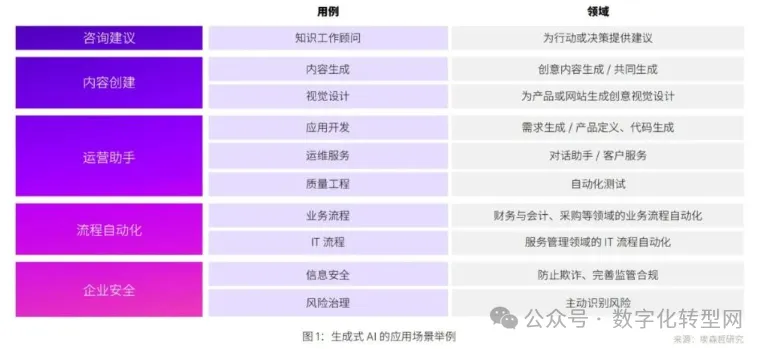
生成式AI对于各行业企业都有潜在的巨大价值。生成式AI可被广泛应用于咨询建议、内容创建、运营助手、流程自动化、企业安全等方面:通过提高生产力、提高效率、提升客户体验等方式,预计生成式 AI 将为企业带来5亿美元到30亿美元不等的价值。
同时,日新月异的技术发展也将带来新的挑战
要让基础模型在企业中发挥适当作用,就必须了解其最佳应用场景。许多人工智能应用程序使用的数据类型,已超出基础模型的处理范围。同时,基础模型可以尝试的一些应用模式,从根本上说仍更适合狭义的人工智能。 数字化转型网(www.szhzxw.cn)
快速增长的计算需求,以及处理大规模计算所需的相关成本和专业知识,是当前面临的最大障碍。多方报告显示,大型人工智能模型训练所需的计算量正呈指数级增长,从每10个月翻一番,加快至每3、4个月翻一番。⁹模型即使经过训练后,还需通过微调才可处理不同任务,因此所有下游应用的运行和托管成本亦十分高昂。
同时,要实现生成式AI的潜力,数据也扮演着至关重要的角色。数据不仅是生成式AI的燃料,更是支撑其模型训练和创新的基石。因此,对于企业而言,未来的数据战略将不仅聚焦于收集和管理数据,更要关注模型的训练方式、内容生成的质量和数据应用的广度。企业需要不断地审视、调整和优化其数据战略,以一个全面的数据战略布局来有效应对生成式AI时代下的挑战。
二、迎接生成式AI时代,重新审视企业数据战略
面向生成式AI应用,企业数据战略需把握四大关键点:
01 找准应用方向,激发创新价值:选择一些低风险领域进行可行性评估,然后开展生成式AI试点,探索创新的潜力。 数字化转型网(www.szhzxw.cn)
02 准备专有数据,确保数据安全:花时间和精力来准备数据基础,且这个数据基础需要在云平台上进行管理,确保数据的安全性和可靠性。
03 驱动数据管理,打造最佳实践:利用高质量的数据,显著提升模型训练与数据应用成效,助力企业高效实现数据管理目标。
04 重构基础设施,实现高效运营:考虑支撑人工智能所需的基础设施、架构、运营模式和治理结构等,同时密切关注成本和可持续能源消耗。
【关键点一】找准应用方向,激发创新价值
对于不同行业而言,生成式AI将不同程度地改变其工作方式,企业应找准方向实现突破。
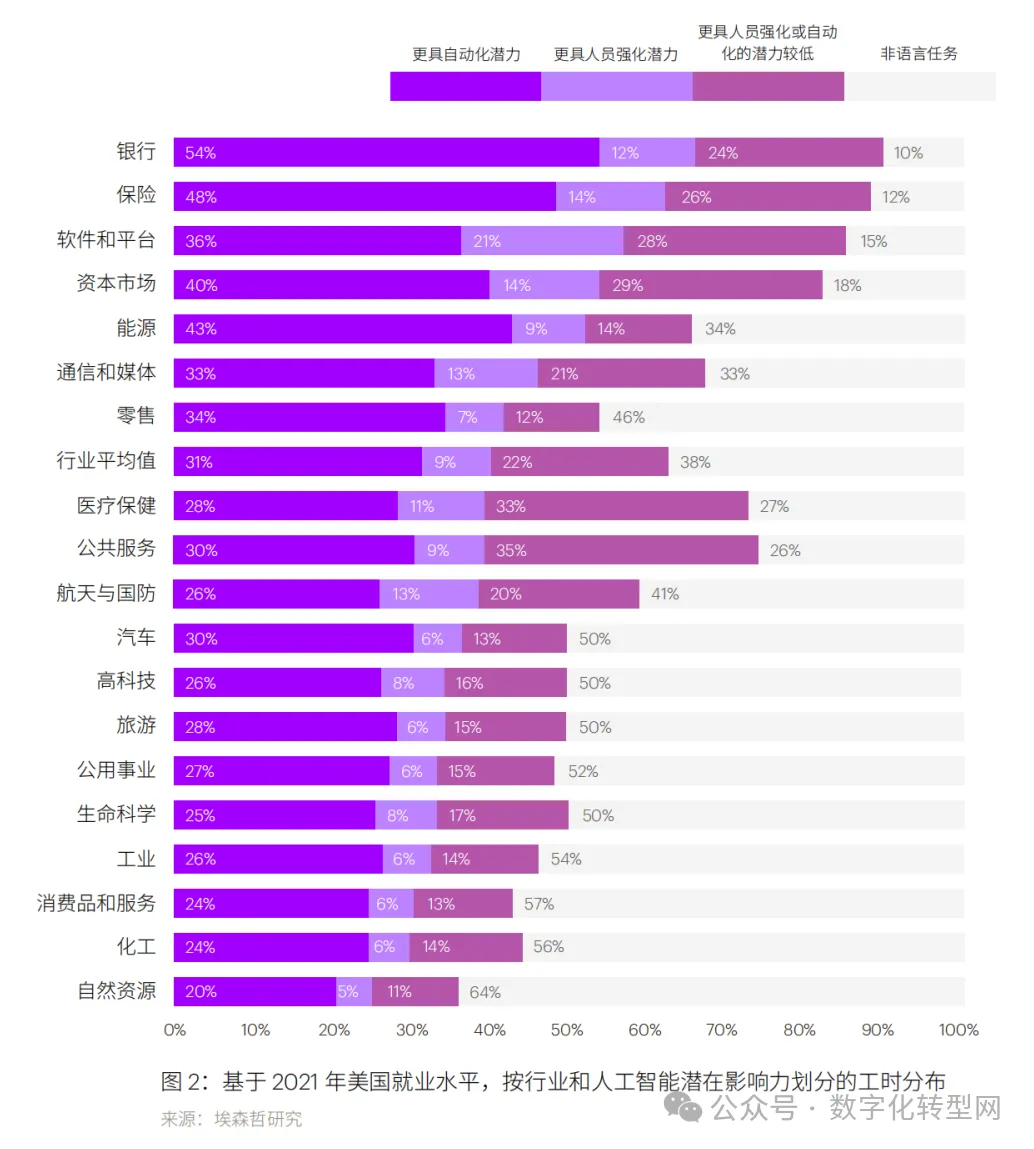
在美国,语言任务占据总工作时长的62%。在语言任务的总体份额中,65%很可能实现自动化或得到大语言模型的协助。
根据埃森哲研究预测,未来所有行业中,将有40%的工作受到大语言模型的影响。企业应当迅速行动,寻找适合自己的创新机会。 数字化转型网(www.szhzxw.cn)
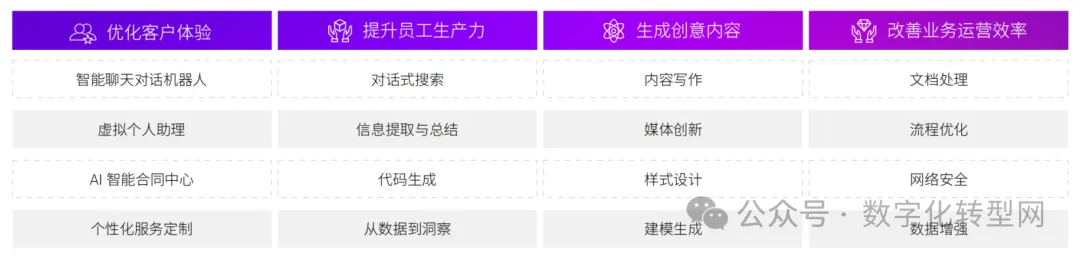
生成式AI创新场景大量涌现,激发相关技术产品与服务,助力企业价值实现。
各行业大量的生成式AI创新场景激发出对技术产品和服务的需求,如:
● 利用对话机器人、虚拟个人助手减少客户投诉,精确定位客户需求,优化客户体验
● 基于生成式AI的代码助手极大提升了软件开发的效率和质量,提升员工生产力
● 利用样式设计助手点燃设计灵感,激活创新思维,生成创意内容
● 借助文档处理助手,自动化企业文档检索、数据提取等流程,改善业务运营效率
【关键点之二】准备专有数据,确保数据安全
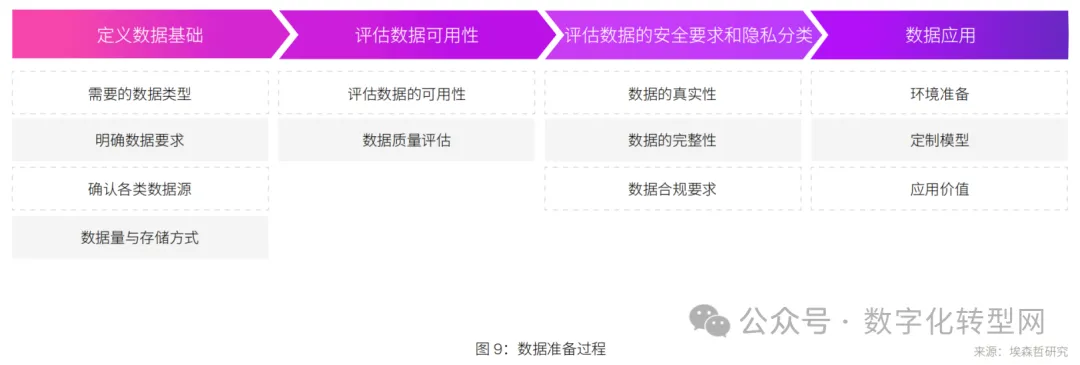
基础模型需要大量精心组织的数据来学习,因此,破解数据挑战已成为每家企业的当务之急。
企业需要采用一种战略性、规范化的方法,获取、开发、提炼、保护和部署数据。
凭借此类平台的跨职能特征、企业级的分析工具,以及将数据存储在云端仓库或数据湖当中,数据能够摆脱组织孤岛的束缚,在整个企业中普遍使用。随后,企业可以在某一地点或通过分布式计算策略(如数据网格),统一分析所有业务数据。
生成式AI时代下的数据风险同样需要引起重视
越来越多的企业已开始积极探索相关应用,以期提升创新效率、实现高质增长。然而生成式AI应用的风险贯穿于模型设计、搭建、使用各个阶段,并会产生长远的效应。
然而生成式AI应用的风险贯穿于模型设计、搭建、使用各个阶段,并会产生长远的效应。
比如,生成式AI基于学习需要而对用户数据的留存、分析是否侵犯了个人和商业隐私,以及相关数据保护法案; 数字化转型网(www.szhzxw.cn)
生成式AI的运作核心是机器学习,其价值与数据的质量和真实性密切相关,如果一台基础模型长期浸染在存有偏差的数据当中,它就会被这些数据“诱导”,从而输出错误的信息或执行歧视性操作;
另一方面,某些群体特质也会使生成式AI为其打上固化标签,“一刀切”地去执行某些程序,而失去了应有的公平性。
【关键点之三】驱动数据管理,打造最佳实践
生成式AI帮助自动化数据管理手动流程,并确保所生成输出的准确性。将智能嵌入数据治理将提高数据使用者的整体生产力。
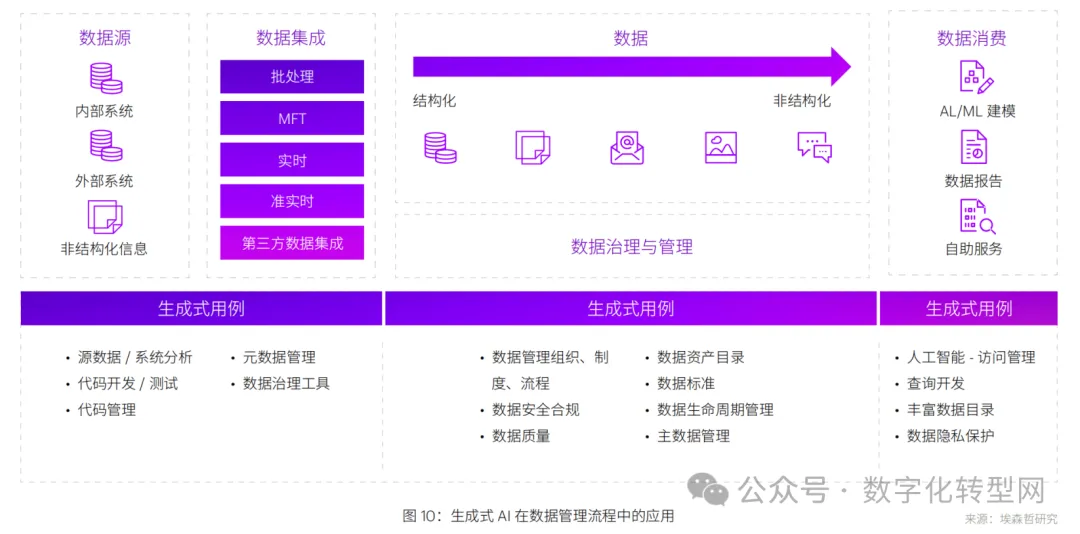
通过生成式AI驱动数据管理,能够:
● 优化分析和洞察,为数据驱动型决策提供支持
● 通过一致性在整个组织内实现适合用途的数据使用情况
● 通过数据民主化、协作和素养实现业务运营
● 支持数据隐私工作,以实现消费者隐私和法规遵从性
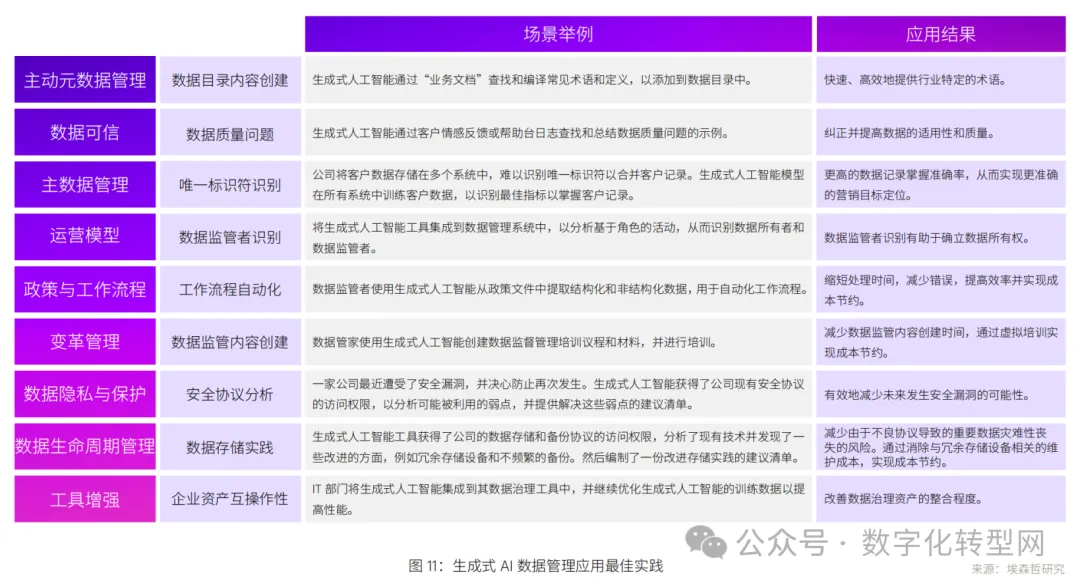
生成式AI将在多方面赋能数据管理工作,助力企业实现数据管理目标
(1)主动元数据管理
通过使用算法训练与业务文档和元数据相匹配,加速数据目录的开发,提高数据的查找和解释能力。
(2)数据质量可信
识别、总结和纠正数据质量问题。 数字化转型网(www.szhzxw.cn)
(3)主数据管理
创建数据质量规则,帮助标准化和合并记录,并优化匹配规则以创建“黄金记录”。
(4)运营模型
基于角色的活动识别和支持数据所有者和数据监管者,并定义数据治理角色和责任。
(5)政策与工作流程
提供数据治理最佳实践建议,帮助起草和解释与政策相关的内容,并优化数据工作流程。
(6)变革管理
创建通信内容,减少内容创建时间,部署聊天机器人以提供帮助,优化利益相关者、培训和需求管理。
(7)数据隐私与保护
基于监管要求、国家法规的指导,提出政策建议,数据访问控制和限制程序,确保数据安全和数据分类合规。 数字化转型网(www.szhzxw.cn)
(8)数据生命周期管理
部署数据创建、存储和备份技术以支持数据生命周期管理,制定存档策略,并主动识别需要存档或处置的数据。
(9)工具增强
提升数据治理工具的搜索功能,与企业资产进行连接,并分析工具间的差距。
【关键点之四】重构基础设施,实现高效运营
为了充分利用大语言模型和生成式AI,企业应认真考虑所需的数据基础设施和运营模式,同时密切关注成本和可持续能源消耗
01 能力提升:
● 利用云的弹性及时响应对数据处理的需求,提供强大处理能力及无限扩展性
● 摆脱传统平台束缚,更容易打破数据孤岛,重塑数据架构
● 自动化的数据集成,零代码、高可用
● 自助式的数据访问服务,随时满足业务人员的数据获取需求
● 标准化的机器学习,使业务分析师更易掌握和使用,实现快速赋能
02 成本降低: 数字化转型网(www.szhzxw.cn)
● 降低数据中心建设投入成本
● 降低数据库迁移成本及运维费用
● 降低数据分析平台构建、使用及维护费用
● 降低ETL成本
● 节省数据安全费用

四、总结
生成式AI的快速发展已经掀起企业变革的浪潮。在这一时代背景下,企业正面临着包括数据应用、数据管理以及基础设施等多方面的挑战。这些挑战既是一种考验,也为企业提供了重新评估和优化数据战略的宝贵机遇,帮助企业更快适应未来发展的需求。
一方面,企业需准确把握应用方向,有效激发创新价值,实现更具前瞻性的业务发展。
同时,准备专有数据以确保数据的安全性,为企业提供可靠的数据支持。通过生成式AI驱动数据管理,创造最佳实践,有助于企业以更高效的方式运用数据资源。
最后,通过重构基础设施,企业可以实现更高效的运营模式,进一步提升生成式AI的应用效果。
这四大关键点相互交织,共同构筑一个完善的数据战略框架。在不断演变的技术潮流中,持续优化和调整数据战略将成为企业在生成式AI时代中脱颖而出的关键要素,助力更精准、更高效、更具创新性地应用生成式AI技术,在竞争激烈的未来市场中占据领先地位。 数字化转型网(www.szhzxw.cn)
数字化转型网人工智能专题
与全球关注人工智能的顶尖精英一起学习!数字化转型网建立了一个专门讨论人工智能技术、产业、学术的研究学习社区,与各位研习社同学一起成长!欢迎扫码加入!
翻译:
Data strategy in the era of generative AI
Digital Transformation Network Artificial Intelligence topics
Learn with the world’s top AI professionals! Digital Transformation Network has established a research and learning community dedicated to discussing artificial intelligence technology, industry, and academia, and grow together with you! Welcome to scan code to join!
This article will talk about the data strategy in the era of generative AI from the following aspects:
1. The development of artificial intelligence ushered in a new inflection point; Enterprises actively explore the application of generative AI, opportunities and challenges coexist
2. For generative AI applications, enterprise data strategy needs to grasp four key points
3. Industry exploration and practice of data strategy in the era of generative AI
First, the rapid development of generative AI has opened a new era of comprehensive reshaping of enterprises
(1) The development of artificial intelligence has ushered in a new inflection point, which will profoundly change the future business model
Generative AI is awakening global awareness of the transformative potential of AI, sparking an unprecedented wave of attention and creativity. 数字化转型网(www.szhzxw.cn)
According to Accenture, 74 percent of global business leaders say they will increase their investment in data and (including generative AI), a significant jump of 24 percentage points from 2023. A whopping 71% of executives surveyed in China felt the same way. “Generative AI will create tremendous value” has become the consensus of the vast majority of business executives.
A series of easy-to-use generative AI services such as ChatGPT, Wenxin Yiyi, Tongyi Qianwen, DALLE, and Stable Diffusion are rapidly promoting the popularization of technology in the business field and the public, which will have a profound impact on enterprises.
Because the large language model has the ability to process large-scale data sets, it can “grasp” all the information accumulated by the enterprise over a long period of time, including the development history, business characteristics and business intentions, and even the details of products, markets and customers.
All content communicated in language – applications, systems, documents, email, chat, video, audio, and more – will be innovated, optimized, and reimagined to new heights.
ChatGPT reached 100 million monthly active users just two months after its launch, making it the fastest growing consumer app ever. 数字化转型网(www.szhzxw.cn)
Accenture research has found that 40% of working hours across all industries will be assisted by large language models such as GPT-4. This is because language tasks account for 62 percent of the total hours worked by employees, and 65 percent of that time could be used to enhance the productivity of work activities through generative AI and automation technologies.
(2) Advances in foundational models are revolutionizing how and where businesses use generative AI
98% of global executives believe that AI foundation models will play an important role in their organization’s strategy in the next 3 to 5 years.
97% of global executives believe that AI foundation models will enable connectivity across data types, where and how intelligence is used.
Six of the 10 organizations surveyed plan to use ChatGPT for learning purposes, with more than half planning pilot cases by 2023. More than four in 10 want to invest a lot.
Five out of 22 job types will be significantly impacted by AI, accounting for more than half of all working hours. 数字化转型网(www.szhzxw.cn)
40% of working hours can be affected by a Large Language model (LLM), regardless of industry.
(3) Enterprises actively explore the application of generative AI, and opportunities and challenges coexist
Generative AI has the potential to be of great value to businesses across all industries. Generative AI can be used in consulting advice, content creation, operations assistant, process automation, enterprise security, and more: It is expected to bring between $500 million and $3 billion in value to enterprises through increased productivity, increased efficiency, and improved customer experience.
At the same time, the rapid development of technology will also bring new challenges
For the underlying model to function properly in the enterprise, it is essential to understand its best application scenarios. Many AI applications use data types that are beyond the scope of the underlying model. At the same time, some of the application patterns that the base model can try are still fundamentally better suited to narrow AI. 数字化转型网(www.szhzxw.cn)
The rapidly growing demand for computing, along with the associated costs and expertise needed to handle large-scale computing, is the biggest obstacle today. Multiple reports show that the amount of computing required to train large AI models is increasing exponentially, from doubling every 10 months to doubling every three to four months. ⁹ models, even after training, need to be fine-tuned to handle different tasks, so all downstream applications are expensive to run and host.
At the same time, to realize the potential of generative AI, data also plays a crucial role. Data is not only the fuel of generative AI, but also the cornerstone of its model training and innovation. Therefore, for enterprises, the future data strategy will focus not only on collecting and managing data, but also on how models are trained, the quality of content generation, and the breadth of data applications. Enterprises need to continuously review, adjust, and optimize their data strategy to effectively address the challenges of the era of generative AI with a comprehensive data strategy layout.
Second, meet the era of generative AI and re-examine enterprise data strategy
For generative AI applications, the enterprise data strategy needs to grasp four key points:
Find the application direction and stimulate the value of innovation: select some low-risk areas for feasibility assessment, and then carry out generative AI pilot to explore the potential of innovation.
02 Prepare proprietary data and ensure data security: Spend time and effort to prepare the data foundation, and this data foundation needs to be managed on the cloud platform to ensure data security and reliability.
03 Drive data management and create best practices: Use high-quality data to significantly improve model training and data application effectiveness, and help enterprises efficiently achieve data management goals. 数字化转型网(www.szhzxw.cn)
Restructure infrastructure for efficient operations: Consider the infrastructure, architecture, operating models and governance structures needed to support AI, while keeping a close eye on costs and sustainable energy consumption.
[Key point 1] Find the application direction and stimulate the value of innovation
For different industries, generative AI will change the way they work to varying degrees, and companies should find the right direction to achieve breakthroughs.
In the United States, language tasks account for 62% of total work hours. Of the overall share of language tasks, 65% are likely to be automated or assisted by a large language model.
According to Accenture research, 40% of jobs in all industries will be affected by large language models in the future. Companies should move quickly to find innovation opportunities that suit them.
A large number of generative AI innovation scenarios have emerged, stimulating related technical products and services, and helping enterprises realize value.
A large number of generative AI innovation scenarios across industries have sparked demand for technology products and services, such as: 数字化转型网(www.szhzxw.cn)
● Use conversational robots and virtual personal assistants to reduce customer complaints, pinpoint customer needs, and optimize customer experience
● The code assistant based on generative AI greatly improves the efficiency and quality of software development and improves employee productivity
● Use style design assistant to ignite design inspiration, activate innovative thinking, and generate creative content
● With the help of document processing assistant, automate enterprise document retrieval, data extraction and other processes to improve business operation efficiency
[Key Point 2] Prepare proprietary data to ensure data security
The underlying models require large amounts of carefully organized data to learn from, so cracking the data challenge has become a priority for every business.
Enterprises need to adopt a strategic and disciplined approach to acquiring, developing, refining, securing and deploying data.
With the cross-functional nature of such platforms, enterprise-grade analytics tools, and the storage of data in cloud warehouses or data lakes, data can be freed from organizational silos and used across the enterprise. Companies can then analyze all business data in one place or through distributed computing strategies, such as data grids.
The data risk in the era of generative AI also needs attention
More and more enterprises have begun to actively explore related applications in order to improve innovation efficiency and achieve high-quality growth. However, the risks of generative AI applications run through all stages of model design, construction, and use, and will have long-term effects.
However, the risks of generative AI applications run through all stages of model design, construction, and use, and will have long-term effects. 数字化转型网(www.szhzxw.cn)
For example, whether the retention and analysis of user data for learning needs by generative AI violates personal and commercial privacy, and relevant data protection legislation;
The core of generative AI is machine learning, and its value is closely related to the quality and authenticity of data. If a basic model is immersed in biased data for a long time, it will be “induced” by these data to output wrong information or perform discriminatory actions.
On the other hand, certain group characteristics will also make generative AI label it as a solidified, “one-size-fits-all” to perform certain procedures, and lose its due fairness.
【 Key Point 3 】 Drive data management and create best practices
Generative AI helps automate manual processes for data management and ensures the accuracy of the generated output. Embedding intelligence in data governance will increase the overall productivity of data consumers. 数字化转型网(www.szhzxw.cn)
With generative AI-driven data management, you can:
● Optimize analytics and insights to support data-driven decision making
● Achieve fit-for-purpose data usage across the organization through consistency
● Enabling business operations through data democratization, collaboration, and literacy
● Support data privacy efforts to achieve consumer privacy and regulatory compliance
Generative AI will empower data management in many ways and help enterprises achieve their data management goals
(1) Active metadata management
Accelerate the development of data catalogs and improve the ability to find and interpret data by using algorithms trained to match business documents and metadata.
(2) Reliable data quality
Identify, summarize and correct data quality issues.
(3) Master data management
Create data quality rules that help standardize and merge records, and optimize matching rules to create “gold records.” 数字化转型网(www.szhzxw.cn)
(4) Operation model
Role-based activities identify and support data owners and data regulators, and define data governance roles and responsibilities.
(5) Policy and workflow
Provide advice on data governance best practices, help draft and interpret policy-related content, and optimize data workflows.
(6) Change management
Create communication content, reduce content creation time, deploy chatbots to help, optimize stakeholders, training, and demand management.
(7) Data privacy and protection
Based on the guidance of regulatory requirements and national regulations, propose policy recommendations, data access control and restriction procedures to ensure data security and data classification compliance. 数字化转型网(www.szhzxw.cn)
(8) Data lifecycle management
Deploy data creation, storage, and backup technologies to support data lifecycle management, develop archiving policies, and proactively identify data that needs to be archived or disposed of.
(9) Tool enhancement
Improve the search capabilities of data governance tools, connect with enterprise assets, and analyze gaps between tools.
[Key Point 4] Rebuild infrastructure for efficient operations
To take full advantage of large language models and generative AI, companies should carefully consider the required data infrastructure and operational models, while keeping a close eye on costs and sustainable energy consumption
01 Ability Improvement:
● Use the elasticity of the cloud to respond to the demand for data processing in a timely manner, providing powerful processing power and unlimited scalability
● Get rid of the shackles of traditional platforms, it is easier to break data silos and reshape data architecture
● Automated data integration, zero code, high availability
● Self-service data access service to meet the data acquisition needs of business personnel at any time
● Standardized machine learning that makes it easier for business analysts to grasp and use for fast empowerment
02 Cost reduction: 数字化转型网(www.szhzxw.cn)
● Reduce input cost of data center construction
● Reduce the cost of database migration and operation and maintenance
● Reduce the cost of building, using and maintaining the data analysis platform
● Reduce ETL costs
● Save on data security costs
Summary
The rapid development of generative AI has set off a wave of enterprise change. In this era, enterprises are facing multiple challenges including data application, data management and infrastructure. These challenges are both a test and a valuable opportunity to re-evaluate and optimize data strategies to help companies adapt more quickly to the needs of future growth.
On the one hand, enterprises need to accurately grasp the application direction, effectively stimulate the value of innovation, and achieve more forward-looking business development.
At the same time, prepare proprietary data to ensure data security and provide reliable data support for enterprises. Data management is driven by generative AI to create best practices that help businesses use data resources in a more efficient way.
Finally, by refactoring infrastructure, enterprises can achieve more efficient operating models and further enhance the application effect of generative AI.
These four key points interweave together to build a sound data strategy framework. In the constantly evolving technology trend, the continuous optimization and adjustment of data strategy will become a key factor for enterprises to stand out in the era of generative AI, helping more accurate, more efficient and more innovative application of generative AI technology, and occupy a leading position in the competitive future market. 数字化转型网(www.szhzxw.cn)
Digital Transformation Network Artificial Intelligence topics
Learn with the world’s top AI professionals! Digital Transformation Network has established a research and learning community dedicated to discussing artificial intelligence technology, industry, and academia, and grow together with you! Welcome to scan code to join!
本文由数字化转型网(www.szhzxw.cn)转载而成,来源于数字化转型网公众号;编辑/翻译:数字化转型网宁檬树。