流程自动化、流程挖掘和集成分类三者的界限正在变的模糊。供应商关于数字化转型和流程自动化做出难以区分的声明,提出了类似的结果。然而,不同之处在于他们的基本方法,我称之为决定客户结果的企业架构。在许多情况下,结果仅限于效率。但市场需要更多的东西,以端到端自动化能力的形式,将效率推向其他结果,如创新、增长和真正的业务弹性。
一、企业架构(DNA Matters)
每隔几年,就会有一个病毒式传播的故事,讲述出生时分开的同卵双胞胎如何在成年后发现彼此。这些发现凸显了基因的力量,它决定了兄弟姐妹一生中相似的结果。纪录片《三个完全相同的陌生人》讲述了三胞胎以科学的名义出生时被不道德地分开的令人难以置信的故事。这个悲剧故事也很吸引人;尽管三种完全不同的成长方式,行为模式和生活结果在他们的一生中反复出现。
无论是生物的还是技术的,DNA的力量是不可避免的。如今,社会正在思考“技术基因”如何决定结果,比如算法如何影响民主。我一直在更深入地研究和思考平台架构如何导致预期或意外的后果。
现在是时候仔细研究自动化平台的技术基因了。我曾在三家最大的机器人过程自动化(RPA)供应商担任领导职务,现在在更广泛的自动化类别中为几个组织提供建议。随着过程自动化、过程挖掘和集成类别的发展,供应商承诺的结果听起来是一样的。尽管如此,自动化平台的DNA仍然会给客户带来不同的结果。
流程自动化始于两个承诺:将不同的系统联合在一起,释放位于流程和后台功能中的大量数据。不幸的是,在中国目前十几岁的增长时期,这两个承诺都没有实现。
虽然任务自动化将系统绑定在一起,但底层机器人架构使得解决机器人的脆弱性、可伸缩性以及最重要的集成各种自动化技术(即流程挖掘、智能文档处理、AI/ML、机器人操作分析、业务价值分析和流程生命周期分析)变得非常困难。
同样,随着技术供应商跨入下一个最佳阶段,以超级自动化和极其高效、非常灵活的自主企业为特征,大量特定于业务的数据仍然是一个遥远的现实。
数字转型不能通过纯粹的技术支持、服务主导的方法来实现,并承诺用低代码、灵活的应用程序等来构建自主的企业。与此同时,许多客户只是在寻找自动化来实现最初的核心承诺。
Leslie Willcocks|知识资本合伙人|作者兼伦敦经济学院名誉教授:“自动化正在把巨大的商业价值留在桌面上。在这个过程中构建数字平台,组织可以通过以下方法提高效率至少是200%,通过推广应用,再提高500%提高效率。但真正有价值的财富来自于成熟一个平台,提供业务灵活性,操作适应性,战略选择和弹性,以相对较低的成本。这源于对底层企业架构的核心关注,这有助于获得巨大的价值。”
二、更好,更快,更便宜(Better, faster, cheaper)
我最近读了一篇文章,其中自信地列出了作者对自动化成功定义的看法:为了对业务有任何价值,它必须“更好、更快或更便宜”。这并不奇怪。“更好、更快、更便宜”完美地抓住了自动化的主导叙事:纯粹的效率。假设公司应该通过自动化来改善他们已经在做的相同任务,从而创造经济价值。
效率叙事是由平台DNA驱动的(想想企业架构)。它的流行恰逢RPA和过程挖掘的兴起。UiPath、Automation Anywhere、Celonis和其他公司花费了大量资金(大约40亿美元)来说服业务领导者,他们的流程中隐藏着一座金矿,只要他们能使流程更好、更快、更便宜,他们就会成功。RPA和流程挖掘市场的规模证明了这种方法的价值。
效率固然重要,但它足以帮助企业赢得未来十年的胜利吗?如果以史为鉴,答案是否定的。在技术领域,创新胜过效率。为此,企业领导人不能让更好、更快、更便宜的心态影响他们对自动化潜力的看法。事实上,自动化为创新和增长提供了难以置信的机会,将组织推向机遇的新领域。
Maxim Ioffe | WESCO全球智能自动化领导者:“多年使用不连接的系统导致了不连接的团队和不连接的流程。将系统与RPA连接起来可能是微不足道的,但在业务准备好打破筒仓并重新设计端到端流程之前,它的ROI非常有限。追求完整的ROI将IA项目从技术游戏转变为技术+变更管理。”
三、更深入地研究自动化及自动化背后的企业架构
让我们来看看当今市场上的一些不同的过程自动化解决方案,并讨论他们的解决方案是如何发展的,以及他们的DNA将如何影响他们的结果:
机器人过程自动化:尽管在过去的两年里,RPA供应商进行了多次并购,比如UiPath收购了Cloud Elements, Blue Prism几乎与Tibco合并,但RPA解决方案的底层架构仍然是基于机器人的。换句话说,这些平台是为机器人设计的,可以模仿人类采取的一系列步骤。RPA平台,无论并购捆绑了什么,从根本上来说,仍然是为了提供更好、更快、更便宜的服务,因为设计流程的最简单方法是复制公司中人们已经在做的事情,而不管信息是通过屏幕抓取还是API访问的。
Ankit Thakkar | Thermofisher自动化和金融数字化领导者:“自动化不仅仅关乎速度和成本。Bot架构是非侵入性的,可以帮助你快速获得胜利,但可能不是一个长期的战略解决方案,而API集成不需要这种级别的治理,但可能会有很高的前期成本。业务目标决定选择,其中企业架构是一个巨大的影响因素。”
流程挖掘:恰当地命名为流程挖掘的供应商绘制出公司中发生的事情,并设计采用历史观点:检查您已经在做的事情,并使其更好、更快、更便宜。
在这两种方法中,完全是新领域和创新的用例是很少的。快速浏览一下Gartner的RPA用例或流程挖掘用例列表就可以清楚地看到,每种技术都只是对人们在公司里已经做了几十年的工作进行了重新梳理。
“从根本上说,业务基因组图谱是将业务更深层次地分解为其基本工作流。就像人类基因组图谱一样,商业基因组图谱可能带来的好处将是指数级的,而不仅仅是增量式的。”
Skan.ai联合创始人兼首席运营官/首席运营官
四、无法用制造这些问题的思维水平来解决
毫无疑问,自动化为自主企业提供了动力。但这还不够,如果自动化的定义是RPA的话。基于人工智能的分析,具有可预测和可操作的见解,机器学习和行为分析,持久的治理,以及其他可能是一个有效的、真正自主的企业所需要的。我们还没到那一步。
Jeanne Ross |前麻省理工学院信息系统研究中心主任:“我们所面临的重大问题,无法用制造这些问题的思维水平来解决。”
这个未来的陈述虽然是可以实现的——“最终您将拥有动态组合自己,然后分解自己的流程”,但它需要不同层次的思考、架构和健全的治理。如果我们满怀激情地朝着这个方向前进,而没有吸取自动化的一个细分领域是如何成长起来的教训,我们可能会留下一个失败的客户期望。
Rameshwar Balanagu | Avaya数字战略和企业架构总监:“在当今庞大的自动化领域,建立企业架构蓝图(DNA)的需求比以往任何时候都更加重要。缺乏这一点导致了今天普遍存在的许多自动化故障。但如果您的业务目标纯粹是任务自动化,RPA可以完成这项工作。如果你正在寻求数字化转型,请先从蓝图开始。”
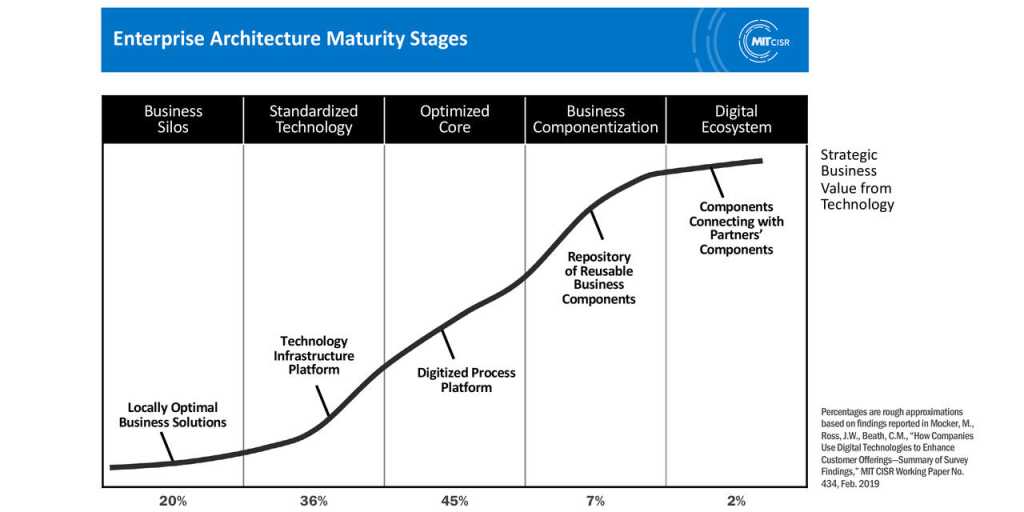
成熟的公司要经历企业架构成熟的五个阶段——从业务竖井到标准化技术,再到优化核心,再到业务模块化,然后是数字生态系统。
五、寻找创新企业架构
建立在集成基础上的自动化方法在它们可以完成的事情上显得最灵活,从长期来看最有价值。当然,你仍然可以做得更好、更快、更便宜,但你也可以做得更多。
集成方法的核心(您也可以将其称为api优先方法,正如一些供应商所做的那样)不是以前所做的复制,而是能够将不同的系统编织在一起以完全实现新功能。当其他类别使现有流程更好、更快、更便宜时,集成平台吸引企业戴上厨师的帽子,将一系列平台混合在一起,看看它们能做出什么样的新配方。
有人说“如果数据是新的石油,那么api就是新的管道”,也有人说像德勤( Deloitte’s)这样的话:“api是被广泛视为下一个业务开发和收入产生迭代的基石。”因此,RPA和过程挖掘领域的参与者一直在收购API供应商也就不足为奇了。Gartner指出,到2023年,“几乎所有主要的RPA供应商都将提供更广泛的流程自动化和集成平台,将屏幕抓取与api结合起来。”
尽管存在这种趋势,但一些人正确地观察到,内置平台的DNA比附加平台具有巨大的优势。Workato首席执行官Vijay Tella表示:“并购往往能满足市场需求,但不一定能解决客户的痛点。
在《谁移动了我的机器人》一书中,我与微软和汉诺威保险公司进行了一次对话,汉诺威保险公司自动化副总裁Prashant Hinge表示,当他做出需要持续3-5年的供应商决策时,他每次都会选择内置或螺栓式。
今天,市场需要端到端流程的自动化。去年,Gartner指出,他们不建议将RPA作为一项长期战略业务战略。其他人则将这项技术称为“快速而肮脏”的解决方案。事实是,RPA和流程挖掘带来了效率,但没有达到真正的业务弹性。
企业的弹性——以及未来10年的成功——将来自于它一直存在的地方:通过创新有效和高效地捕捉绿地机会。
自动化也不例外。企业架构很重要。
原文:
The process automation, process mining, and integration categories are blurring. Vendors, by making indistinguishable claims about digital transformation and process automation, suggest similar outcomes. However, what differs are their fundamental approaches, which I call the “automation DNA” that dictates customer outcomes. In many cases, the outcomes are limited to efficiency. But the market demands something more, in the form of end-to-end automation capabilities that push beyond efficiency into other outcomes such as innovation, growth, and true business resiliency.
DNA matters
Every few years, a viral story breaks about how identical twins, separated at birth, discovered one another as adults. These discoveries highlight the power of genetics, which dictate similar outcomes across the siblings’ lives. The documentary film Three Identical Strangers tells the incredible story of triplets unethically separated at birth in the name of science. The tragic tale is also fascinating; Despite three completely different upbringings, patterns of behavior and life outcomes repeated across their lives.
Whether biological or technological, the power of DNA is unavoidable. Today, society is reckoning with how “technological genetics” dictate outcomes, such as how algorithms impact democracy. I have been researching and thinking more deeply about how platform architectures can lead to intended or unintended consequences.
It is time to look closely at the technological genetics of automation platforms. I’ve spent time in leadership roles at the three largest robotic process automation (RPA) vendors and now advise several organizations in the broader automation category. As the process automation, process mining, and integration categories have evolved, the outcomes that vendors promise to have are sounding the same. Despite this, the DNA of automation platforms still leads to different outcomes for customers.
Process automation began with two promises: uniting disparate systems together and unleashing the massive trove of data that sits within your processes and back-office functions. In its current teenage years of growth, unfortunately, both these promises are unfulfilled.
While task automation tapes systems together
While task automation tapes systems together, the underlying bot architecture makes it superiorly difficult to address bot fragility, scalability, and most importantly integrating various automation technologies, i.e. process mining, intelligent document processing, AI/ML, bot operational analytics, business value analytics and process lifecycle analytics together.
Equally so, the massive trove of business-specific data is still a distant reality as technology vendors leapfrog to the next best phrase, featuring hyper-automation and an extremely efficient and very flexible autonomous enterprise.
Digital transformation cannot be achieved through purely tech-enabled, service-led approaches, with the promise to build autonomous enterprises with low code, flexible applications, etc. In the meantime, many customers are simply looking for automation to fulfill the core, initial promises made.
“Automation is leaving massive business value on the table. In the process
of building digital platforms, organizations can increase efficiency by at
least 200%, and by a further 500% through promoting applications that
increase effectiveness. But the real value bonanza comes from maturing
a platform that gives business flexibility, operational adaptability, strategic
options and resilience at a relatively low cost. This stems from a core focus on the underlying enterprise architecture, which contributes to this value bonanza.”
– Leslie Willcocks | Knowledge Capital Partners | Author & Emeritus Professor, London School of Economics
Better, faster, cheaper
I recently read a post that confidently listed the author’s opinion of what defines automation success: it must be “better, faster, or cheaper” in order to be considered of any value to the business. This is not surprising. “Better, faster, cheaper” perfectly captures the dominant narrative about automation: pure efficiency. The assumption is that companies should create economic value with automation by improving the same tasks that they are already doing.
The efficiency narrative is driven by platform DNA (think enterprise architecture). Its popularity coincides with the rise of RPA and process mining. UiPath, Automation Anywhere, Celonis, and others spend a lot of money (approximately $4 billion) to convince business leaders that there is a gold mine hidden in their processes, and if they only make them better, faster, and cheaper, they will succeed. The approach has value, evidenced by the size of the RPA and process mining markets.
Efficiency is great, but is it enough to help businesses win over the next decade? If history is a guide, the answer is no. In technology, innovation beats efficiency. To that end, business leaders cannot allow the better, faster, cheaper mindset to cloud their view of automation’s potential. In fact, automation offers incredible chances for innovation and growth, pushing organizations into greenfield areas of opportunity.
“Years of working with disconnected systems led to disconnected teams and disconnected processes. Connecting systems with RPA may be trivial, but it has very limited ROI until the business is ready to break the silos and redesign end to end processes. Going after full ROI moves an IA program from a technology play into technology + change management.”
– Maxim Ioffe | Global Intelligent Automation Leader, WESCO
A deeper dive into automation genetics
Let’s take a look at a few different process automation solutions in the market today and talk about how their solutions have evolved vs. how their DNA will impact their outcomes:
Robotic Process Automation: Although the last two years have seen multiple M&A rounds with RPA vendors buying up API connectors such as UiPath acquiring Cloud Elements, and Blue Prism nearly merging with Tibco, the underlying architecture of RPA solutions remains bot-based. In other words, the platforms are architected for bots to mimic a series of steps that humans take. RPA platforms, no matter what is bolted on by M&A, are still fundamentally designed to offer better, faster, cheaper because the easiest way to design a process is to copy what humans in your company are already doing, regardless of if the information is accessed by screen scraping or API.
“Automation is more than just about speed and cost. Bot architecture is non-invasive, can help you to get a quick win but may not be a long-term strategic solution, while API integration does not need that level of governance but could have high upfront costs. Business objective determines the choice, in which enterprise architecture is a huge influencer.”
— Ankit Thakkar | Automation & Finance Digitization Leader, Thermofisher
Process Mining:
Aptly named process mining vendors map out what happens in companies and by design take a historical point of view: examine what you are already doing and make it better, faster, and cheaper.
In both of these approaches, use cases that are completely greenfield and innovative are rare. A quick glance at the Gartner list of RPA use cases or process mining use case list makes it clear that each technology is simply rehashing work that people have been doing in companies for decades.
“Business genome mapping is fundamentally a deeper decomposition of business into its elemental workflows. As is the case with human genome mapping, what benefits might accrue from business genome mapping will be exponential and not just incremental.”
–Manish Garg | Co-founder & CPO/COO, Skan.ai
All you need is love autonomy
There is no doubt that automation powers the autonomous enterprise. But that’s not enough, if one’s definition of automation is RPA. AI-based analytics with predictable and actionable insights, machine learning and behavioral analytics, perdurable governance and possibly more are needed for an effective, truly autonomous enterprise. We are not there yet.
“The significant problems we face cannot be solved by the same level of thinking that created them.”
— Jeanne Ross | Former Director at CISR (Centre for Information Systems Research), MIT
This future statement, while achievable – “Ultimately you will have processes that compose themselves on the fly and then decompose themselves”, requires a different level of thinking, architecture, and sound governance. Should we march towards it with unbridled passion, without learning the lessons of how a sub-segment of automation has grown up, we might leave behind a wake of failed customer expectations.
“The need to establish an enterprise architecture blueprint (DNA) is even more crucial than ever before in today’s sprawling Automation landscape. Absence of that leads to many of the automation failures prevalent today. But if your business objective is purely task automation, RPA can do the job. If you are looking for digital transformation, start with the blueprint first.”
– Rameshwar Balanagu | Director Digital Strategy & Enterprise Architecture, Avaya
Established companies go through five stages of enterprise architecture maturity — moving from business silos to standardized technology to optimized core to business modularity and then a digital ecosystem.
Searching for innovation DNA
Automation approaches that are built on a foundation of integration appear nimblest in what they can accomplish and most valuable in the long term. You can certainly still accomplish better, faster, cheaper, but you can also do more.
The DNA of the integration approach (you could also call this the API-first approach, as some vendors have) is not a replication of what has been done before, but the ability to weave disparate systems together to achieve new things entirely. While other categories make existing processes better, faster, cheaper, integration platforms beckon companies to don their chef hat and mix up a collection of platforms to see what new recipe they can achieve.
Some have expressed that in terms of “If data is the new oil, APIs are the new pipelines” or still others in terms like Deloitte’s: “APIs are the cornerstone of what is widely seen as the next iteration of business development and revenue generation.” It is no surprise, then, that players in the RPA and process mining categories have been buying up API vendors. Gartner notes that by 2023, “almost all major RPA vendors will offer a broader process automation and integration platform combining screen scraping with APIs.”
Despite this trend, some are correctly observing that the DNA of built-in platforms offer towering advantages over bolt-on.
“Mergers and acquisitions often confirm a market need but don’t necessarily solve the customer’s pain point,” observes Workato CEO Vijay Tella.
In Who Moved My Bots I led a conversation with Microsoft and Hanover Insurance where Prashant Hinge, VP of Automation at Hanover Insurance says, when he makes vendor decisions that need to last for 3-5 years, he is going to choose built-in vs. bolt-on every time.
Today, the market demands automation for end-to-end processes. Last year Gartner noted that they did not recommend RPA as a long-term strategic business strategy. Others have labeled the tech a “quick and dirty” solution. Truth is, RPA and process mining bring efficiencies, but fall short on true business resiliency.
Business resiliency – and success in the next 10 years – will come from the same place it always has: the effective and efficient capture of greenfield opportunities through innovation.
Automation is no exception to this rule. Enterprise architecture (DNA) matters.
本文由数字化转型网翻译而成,作者:Shail Khiyara;翻译:数字化转型网郑亚茹;审核翻译:数字化转型网默然。

免责声明: 本网站(https://www.szhzxw.cn/)内容主要来自原创、合作媒体供稿和第三方投稿,凡在本网站出现的信息,均仅供参考。本网站将尽力确保所提供信息的准确性及可靠性,但不保证有关资料的准确性及可靠性,读者在使用前请进一步核实,并对任何自主决定的行为负责。本网站对有关资料所引致的错误、不确或遗漏,概不负任何法律责任。
本网站刊载的所有内容(包括但不仅限文字、图片、LOGO、音频、视频、软件、程序等) 版权归原作者所有。任何单位或个人认为本网站中的内容可能涉嫌侵犯其知识产权或存在不实内容时,请及时通知本站,予以删除。